REVIEW · BANGKOK
Bangkok: Grand Palace & Wat Pho Half-Day Japanese Tour
Book on Viator →Operated by Fun Group Bangkok · Bookable on Viator
Bangkok’s temples feel different with a guide. This half-day Japanese tour strings together Bangkok’s top sights—Grand Palace and Wat Phra Kaew, Wat Pho, and Wat Arun—while also explaining the everyday link between Buddhism and the Thai monarchy. I like that you’re not just sightseeing; you’re moving with a plan through places that are otherwise easy to skim right past.
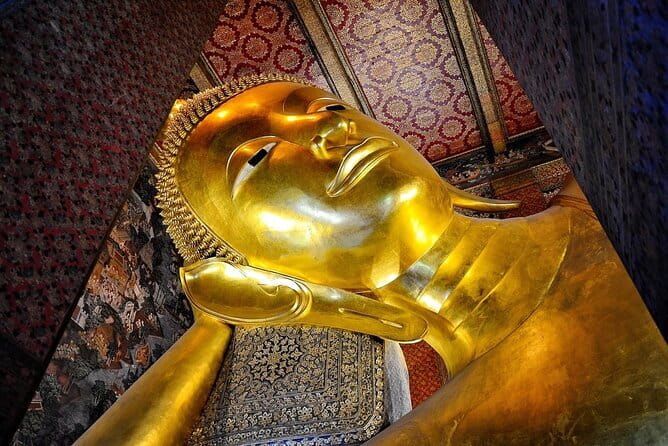
Two things I really like: first, you get included admission tickets at the big paid stops, so you’re not juggling counters and schedules. Second, Wat Pho’s highlight—the golden Reclining Buddha plus the mother-of-pearl inlays on the soles of the feet—lands better when you know what you’re looking for (and it’s also the Thai traditional massage headquarters).
The main consideration is crowd pressure and photo limits: Grand Palace can be extremely busy, and photography inside the Emerald Buddha and inside the Grand Palace is prohibited, so if you want lots of interior shots, plan your expectations.
In This Review
- Key highlights that make this tour worth your time
- Half-day timing: what 4 hours actually feels like in Bangkok
- Pickup at 9:00 and the River City meet: how to avoid stress
- Wat Phra Kaew and the Grand Palace: dazzling color with real crowd pressure
- Wat Pho in 45 minutes: the Reclining Buddha and massage HQ
- Wat Arun (Temple of Dawn) for about 50 minutes: mosaics and river views
- Japanese guide energy: what you’ll notice beyond the script
- Transportation and pacing: boats, tuk-tuks, and staying sane
- Value check: price vs what you actually get
- What to wear and bring: the shoe-removal reality
- Photography rules you must plan around
- Who this tour suits best (and who might prefer DIY)
- Should you book this Bangkok Grand Palace and Wat Pho half-day tour?
- FAQ
- How long is the Bangkok Grand Palace & Wat Pho half-day tour?
- What time does the tour start?
- Where does the tour start and end?
- Is hotel pickup included?
- Which temples are included?
- Are admission fees included?
- Is there a Japanese guide?
- Is bottled water included?
- Are photos and videos allowed?
- What should I wear and bring?
Key highlights that make this tour worth your time
- Japanese guide focused on what you’re seeing, not just where to stand
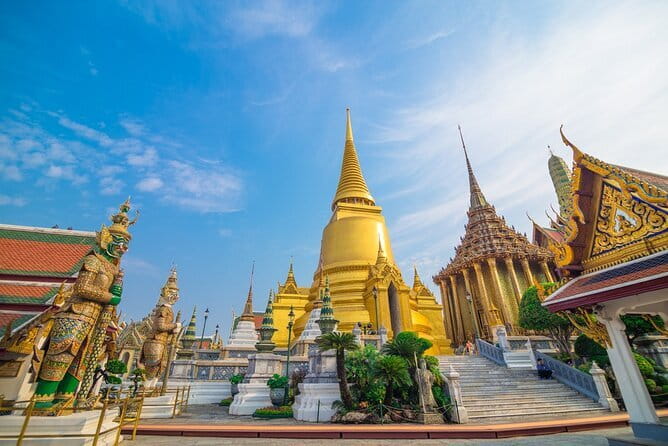
- Grand Palace + Wat Phra Kaew as a single, efficient block with admissions included
- Wat Pho’s Reclining Buddha details plus Thai traditional massage headquarters context
- Temple of Dawn (Wat Arun) with free admission and the mosaic patterns up close
- Local transport vibes including boats and tuk-tuks for a more Bangkok-feeling day
- Small group size (max 12), which keeps the pace from turning into a cattle line
Half-day timing: what 4 hours actually feels like in Bangkok
This is a true half-day structure: you start around 9:00 am and you’re finished at Wat Arun. The total on-the-ground time is about four hours, and the visits are timed tightly enough that you’ll likely feel you’re seeing a lot more than you would on your own in the same window.
That morning start is a big deal. You’ll get cooler walking and better light for the color-heavy scenes at the Grand Palace complex and Wat Phra Kaew. The tour also uses local routes and transport (including boats and tuk-tuks), so you’re not just stuck in one long vehicle ride.
If you’re the type who likes to linger, you’ll need to compromise a bit. Each stop is allocated with a specific visit length, so you’ll be there “enough,” not “forever.” The upside: you don’t lose half your morning guessing routes.
A few more Bangkok tours and experiences worth a look
Pickup at 9:00 and the River City meet: how to avoid stress
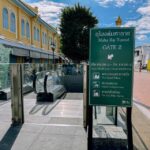
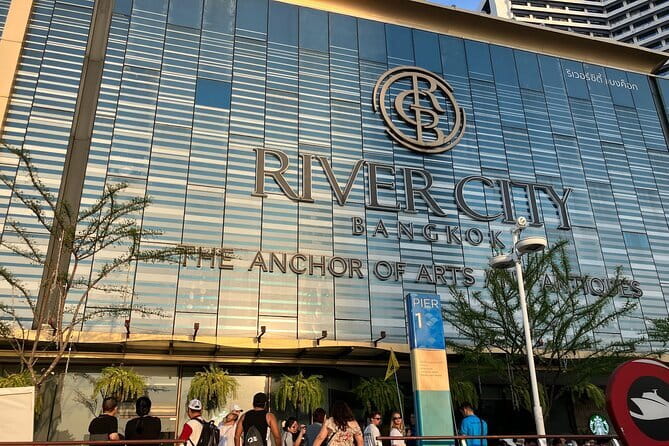
You meet at River City Bangkok (23 Soi Charoen Krung 24 area). The listed start time is 9:00 am, but the final pickup time (if you’re in the hotel pickup zone) is confirmed the evening before, so check your email or messages the night before.
Hotel pickup is limited to select areas in central Bangkok, including parts of Sathorn, Silom, Siam, Pratunam, Khao San Road, Charun Krung Road, and the Sukhumvit area (between Soi 1–57 and Soi 2–36). If your hotel is outside that zone, you’ll likely start from River City instead.
Practical tip: arrive at the meeting point at least 10 minutes early. The tour runs on time even if you’re late, and with temple logistics (and shoe-removal), late arrivals can knock you into a rushing mode.
Wat Phra Kaew and the Grand Palace: dazzling color with real crowd pressure
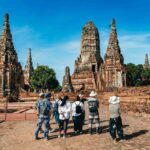
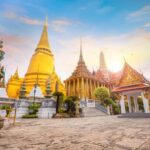
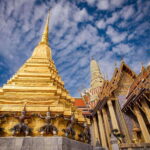
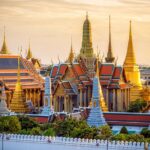
This is the star pairing of the morning: Wat Phra Kaew (Temple of the Emerald Buddha) together with the Grand Palace. You’ll spend about 1 hour 30 minutes here, and the emphasis is on the visual wow factor—artistic decorations, bold colors, and ornate details that feel very different from the everyday city around it.
The value of a guided route inside this complex isn’t just convenience. It helps you understand what you’re seeing in context, especially the way Buddhism and the Thai monarchy show up in daily life and public space. When someone can explain that link, the whole place stops feeling like “pretty buildings” and starts feeling like an operating system of beliefs and tradition.
Now the drawback: Grand Palace can be extremely busy, and that matters because this stop is popular with photographers, tour groups, and casual visitors. One guide-led tip I strongly recommend is to focus on “what’s in front of me” shots rather than trying to capture everything. You’ll get more satisfying photos that way, even if the crowd shifts your angles.
Important rule: photography and video recording are prohibited for the Emerald Buddha and inside the Grand Palace. You can still take plenty of exterior and non-restricted images, but keep your camera ready and obey posted signs so you don’t get pulled out of the flow.
Wat Pho in 45 minutes: the Reclining Buddha and massage HQ
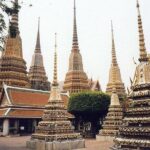
After the Grand Palace area, you head to Wat Pho, where the stop is about 45 minutes. Wat Pho is famous here for two reasons: the golden Reclining Buddha and the mother-of-pearl inlays on the soles of the Buddha’s feet. Those inlays are the kind of detail you might notice as a tourist, but a guide helps you spot them with intention.
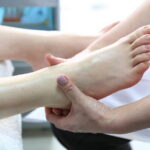
Wat Pho is also identified as the headquarters of Thai traditional massage. That matters because it gives you a different lens: you’re not only looking at religious art, you’re standing somewhere tied to a living tradition of care and technique.
The pacing at Wat Pho is smart for half-day travelers. You get enough time for the main sights without turning it into an exhausting marathon. And since you’ll be removing your shoes often throughout temple visits, this stop’s layout and shoe rules are something to plan for in your footwear choice.
If you’re someone who loves explanations, the Japanese guidance is often where this tour earns its fans. In past experiences, guides have been praised for being friendly and for giving clear, easy-to-follow history and meaning—not just “here’s a building.”
Wat Arun (Temple of Dawn) for about 50 minutes: mosaics and river views
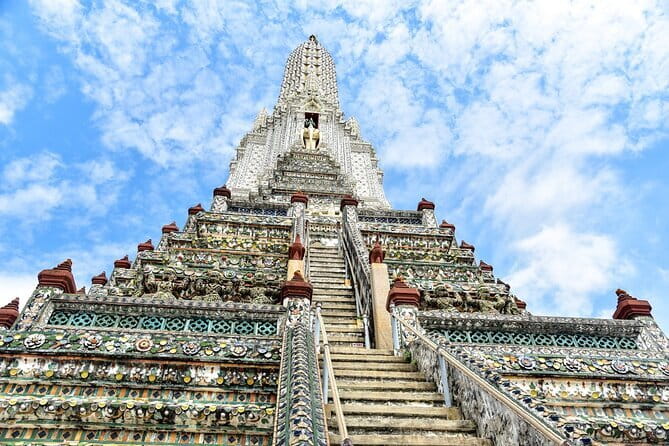
The final major stop is Wat Arun (Temple of Dawn) with about 50 minutes on site. Admission here is free as part of this tour, and you’ll spend your time getting closer to the temple structure where the delicate mosaic patterns come into view.
This is also a nice end-of-tour choice because Wat Arun sits along the river area, which means you can stretch your legs afterward without needing a big plan. The tour ends at Wat Arun, so you can move on to whatever fits your energy and time.
One advantage of finishing at Wat Arun is what comes next. After the tour, you can relax at a café along the river, explore Khao San Road, visit the flower market, or head toward Chinatown for street food. If you like practical shopping for handmade items, Sampeng Lane is another option mentioned for craft supplies.

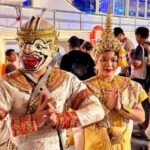

Japanese guide energy: what you’ll notice beyond the script
The tour includes a Japanese guide, and the difference you’ll feel is mostly in how the sites connect. A guide can translate the meaning of the visual details—why certain patterns matter, what specific objects represent, and how the monarchy shows up alongside Buddhism in public life.
From the guide names that show up in past groups, you might meet someone like Ron or TARO (and sometimes Taro/Ta-ro in different spellings). Several guests specifically call out guides who are kind, who keep the pace smooth, and who add small moments that make temple-hopping feel less stressful. One neat detail: guides have been described as helping with small needs during the day, like stepping in to get water for the group after temple time.
It’s also a good tour if you’re worried about being lost in a crowd. The route keeps you moving between major sites without you having to continuously re-check maps, figure out timing, or negotiate transport between stops.
Transportation and pacing: boats, tuk-tuks, and staying sane
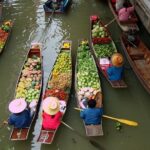
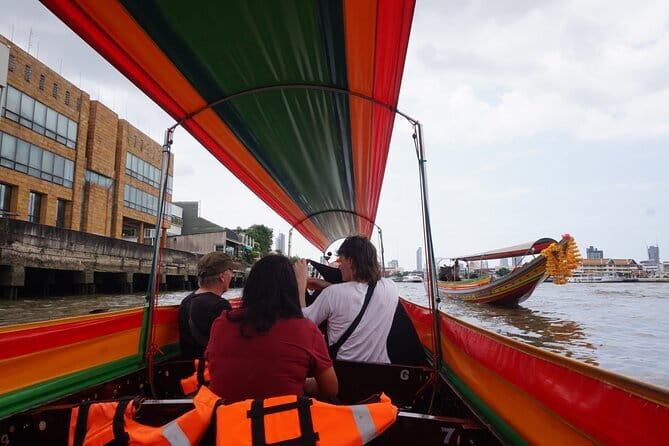
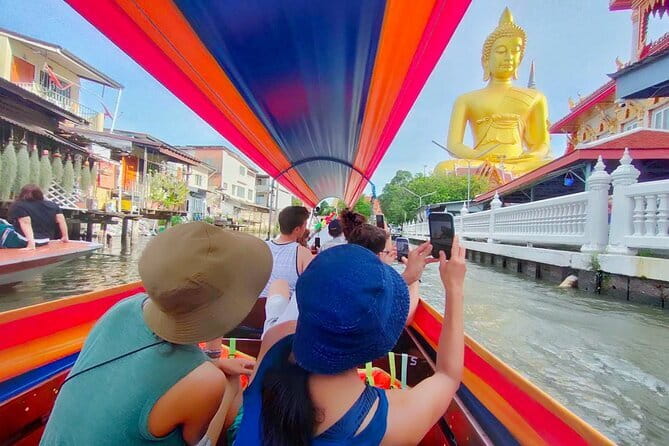
You’ll experience some of Bangkok’s local transportation feel, including boats and tuk-tuks. That’s not just fun—it’s practical. It breaks up the day so you’re not stuck only on walking and one bus ride, and it helps you connect the temple area with the city’s rhythm.
Pacing is balanced for a half-day: you’ll have guided time inside each temple zone, plus transit time between locations. Because the group is limited to a maximum of 12 travelers, it’s usually easier to keep the pace than in large group tours.
The main tradeoff is time. Since this is only about four hours, you’ll be moving often. If you’re planning your day around this tour, keep your next activity flexible. You’ll want a little decompression time afterward, especially if the heat and crowd density build later in the day.
Value check: price vs what you actually get
The price is $85.37 per person for about four hours. That number looks reasonable when you count what’s included: a Japanese guide, admission fees at the paid temple stops (Wat Phra Kaew/Grand Palace and Wat Pho), bottled water, hotel pickup in select areas, and insurance.
If you were doing this on your own, your “cost” isn’t just tickets. It’s time lost figuring out ticket timing, managing shoe rules, and navigating between sites during the busiest hours. This tour also gives you transport options (including boats and tuk-tuks), which are the sort of things that can take extra decision-making when you’re tired and walking.
Is it always the best value for everyone? If you already feel confident navigating these areas, and you don’t care much about explanation, you could do it cheaper on paper. But if you want the meaning behind what you’re looking at, plus you want to keep your day on track, this is a solid value.
What to wear and bring: the shoe-removal reality
This tour has a clear practical rhythm: you’ll frequently remove your shoes. So wear shoes that are easy to take off and that won’t punish you when you need to put them back on quickly.
Clothing matters too. You’ll want a cover-up and clothing that appropriately covers your skin out of respect for Buddhist culture and manners. Shorts shorter than knee-length are not recommended for the tour, so choose longer shorts, loose pants, or a light skirt with leggings underneath.
Bring your passport if you can (a copy is acceptable), because you may be asked for ID when entering the Grand Palace. It’s an easy thing to forget when you assume “a photo is enough,” but the tour guidance specifically flags ID checks.
For the day itself, pack light—this tour asks you to leave large luggage at your hotel. It’s not designed for suitcases rolling around temple courtyards.
Photography rules you must plan around
This is one of the biggest “know before you go” issues. Photography and video recording are prohibited for the Emerald Buddha and inside the Grand Palace.
That means your photo plan should be split:
- Expect lots of visible, colorful scenes outside and in areas where photos are allowed.
- Expect that some of the most famous indoor moments won’t be photographable.
If you’re traveling with a partner, agree ahead of time that the goal is memory and meaning, not only a camera roll. You can still capture plenty of Bangkok temple aesthetics, but you’ll need to follow the rules to keep the tour moving.
Who this tour suits best (and who might prefer DIY)
This tour is a good fit if you:
- Want to hit three major temple areas in a short window.
- Like Japanese explanations and want context for what’s displayed.
- Prefer a guided pace over negotiating transport and ticket steps yourself.
- Are traveling with limited time on your last day in Bangkok.
It’s less ideal if you:
- Want to spend extra hours inside the Grand Palace complex without crowds.
- Are specifically chasing lots of interior photos of the Emerald Buddha area (since photography is prohibited).
- Need frequent downtime stops, because the schedule is tight.
Should you book this Bangkok Grand Palace and Wat Pho half-day tour?
If your time in Bangkok is tight, I’d book it. You get three headline temple stops, the paid admissions are handled, and the Japanese guide helps you see connections that are hard to catch on your own—especially around how Buddhism and the Thai monarchy show up in daily life.
I’d hesitate only if your top goal is interior photography inside the Grand Palace and Emerald Buddha area, or if you hate crowds so much that even a timed visit will feel like pressure. In that case, a DIY plan with a different time-of-day strategy might fit better.
For most travelers—especially first-timers or anyone trying to do temples without wasting hours—this is a clean, efficient way to make your Bangkok morning count.
FAQ
How long is the Bangkok Grand Palace & Wat Pho half-day tour?
It runs for about 4 hours (approx.).
What time does the tour start?
The start time is listed as 9:00 am, and you’ll get the final pickup time the evening before if you’re in the pickup area.
Where does the tour start and end?
It starts at River City Bangkok and ends at Wat Arun Ratchawararam Ratchawaramahawihan, with drop-off at Wat Arun.
Is hotel pickup included?
Hotel pickup is available in certain areas of central Bangkok, including places like Sathorn, Silom, Siam, Pratunam, Khao San Road, Charun Krung Road, and parts of Sukhumvit.
Which temples are included?
You visit Wat Phra Kaew (Emerald Buddha) and the Grand Palace, Wat Pho (Reclining Buddha), and Wat Arun (Temple of Dawn).
Are admission fees included?
Yes. Admission tickets are included for Wat Phra Kaew/Grand Palace and Wat Pho. Wat Arun admission is listed as free.
Is there a Japanese guide?
Yes, the tour includes a Japanese guide.
Is bottled water included?
Yes, bottled water is included.
Are photos and videos allowed?
Photography and video recording of the Emerald Buddha and inside the Grand Palace are prohibited.
What should I wear and bring?
Wear clothing that covers your skin appropriately (shorts shorter than knee-length are not recommended). Bring your passport (a copy is acceptable) since ID may be requested at the Grand Palace. Wear shoes that are easy to take off, and leave large luggage at your hotel.