REVIEW · BOPHUT
Thai Cooking Class | Since 2012 | Farm to Table
Book on Viator →Operated by Island Organics Thai Cooking Class · Bookable on Viator
Your lunch learns to cook itself.
This Koh Samui class with Chef Lat feels like Thai food education plus a real farm outing, all in a purpose-built kitchen. You’ll start with the micro-farm and then cook your way through classic Thai techniques (including curry paste and coconut cream) while enjoying herbal drinks and dessert.
I especially like two things: you get hands-on cooking at your own station, and you work with ingredients grown onsite instead of mystery produce. The whole flow is built for learning—prep, cook, taste, adjust—without any fancy gatekeeping.
One consideration: it’s not a casual drop-in for everyone. Children under 10 can’t attend, cruise ships can’t be scheduled, and you’ll want decent weather since the experience depends on it.
In This Review
- Key things to know before you go
- Farm-to-table on Koh Samui starts in the garden
- Meet Chef Lat and get cooking fast
- The micro-farm tour: herbs, produce, and the moringa tree
- Curry paste, coconut cream, and herbal drinks: the core skills
- Four traditional recipes, cooked by you
- What you eat, and why the class doesn’t end at the table
- Price and time: $84.79 for a lot more than a meal
- Dietary options and comfort: it’s built to be workable
- Who this experience fits best (and who should consider alternatives)
- Should you book Island Organics Thai Cooking Class with Chef Lat?
- FAQ
- What time does the class start?
- How long is the cooking class?
- Is pickup available?
- How many people are in the group?
- What recipes and cooking skills are included?
- Are there vegan or gluten-free options?
- Can children attend?
- What if the weather is bad?
Key things to know before you go
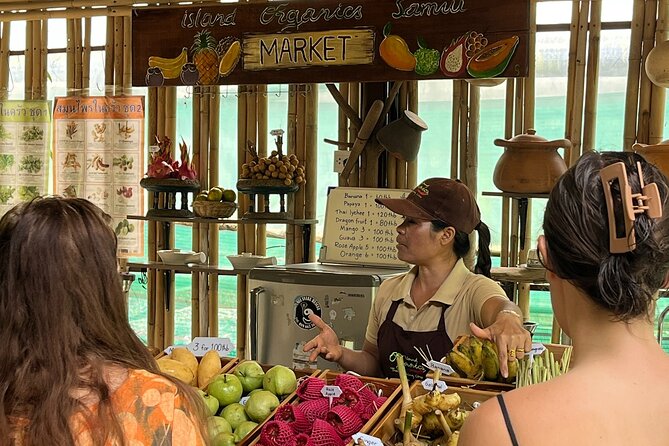
- Farm walk first, then you cook what you harvested
- 4 Thai recipes plus curry paste, coconut cream, and a herbal drink
- Small class size (up to 16) with practical, step-by-step guidance
- All ingredients and equipment are included
- Diet options available, including vegan and gluten free
- Scan the QR code for recipes and extra farm details
Farm-to-table on Koh Samui starts in the garden
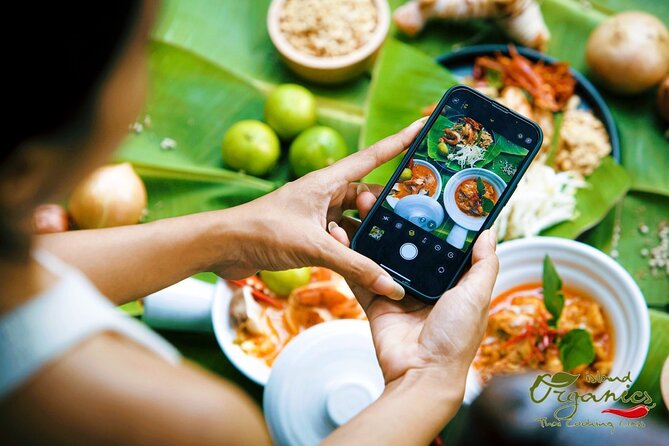
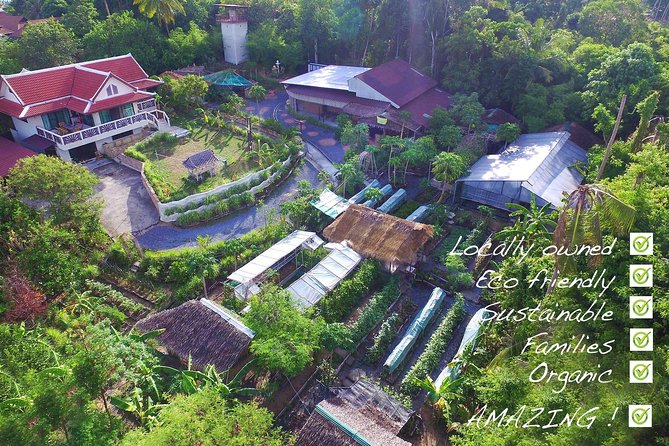
On Koh Samui, Thai cooking classes often stop at a kitchen counter. Here, the day starts outside—at the organic micro-farm—so your food starts as living ingredients, not prepackaged ones.
You’ll see a working setup growing Thai herbs, vegetables, fruits, and even mushrooms. More than a photo-op, this gives you a practical reason for the flavors: Thai cooking leans hard on fresh aromatics, and the class design makes sure you taste that difference early on.
They also highlight the no-chemical approach to growing and cooking. If you care about where flavors come from (and not just how to copy a dish), that farm-first plan matters.
You can also read our reviews of more cooking classes in Bophut


Meet Chef Lat and get cooking fast
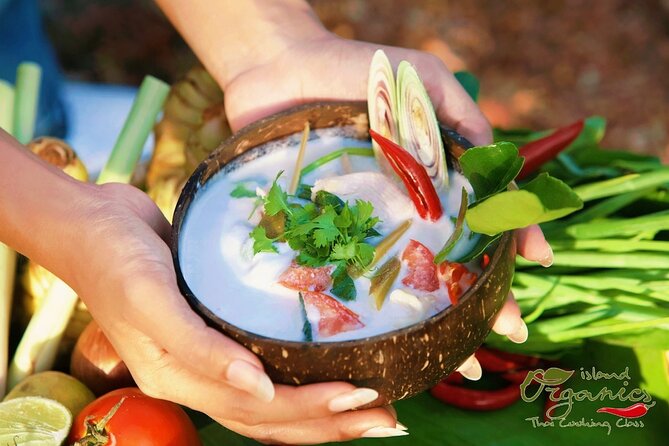
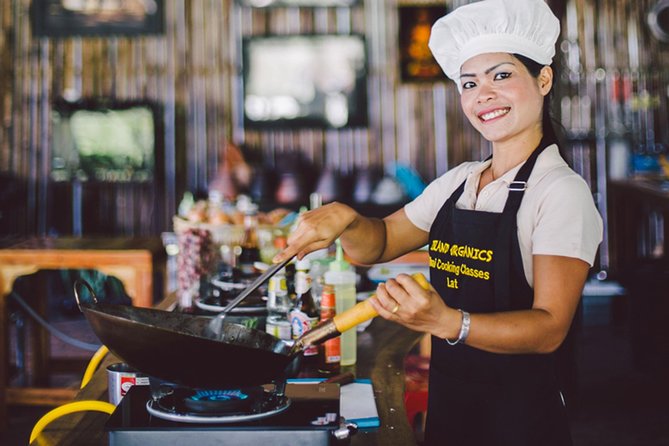
This isn’t a demo where you watch from the sidelines. Chef Lat teaches, but you’re also doing—prep work, stove work, knife work, stir-fry work. Multiple reviews mention that even people with little or no cooking experience can follow along, because the process is broken into clear steps.
The kitchen setup is purpose-built for Thai cooking. You should expect a hands-on rhythm: cold drink on arrival, stations set up, ingredients ready to go, and ongoing support from the team while your dishes come together.
Also, the class size is capped at 16 travelers. That small group matters because it reduces waiting time and makes it easier to ask questions when you’re mid-recipe (like when your curry paste smells right, but the texture needs another tweak).
The micro-farm tour: herbs, produce, and the moringa tree
Before you touch a wok, you’ll walk through the farm area and get oriented to what grows there. The micro-farm focuses on Thai herbs, vegetables, fruits, and mushrooms, plus it’s tied directly to the recipes you’ll cook.
You may also be able to harvest herbs and vegetables yourself. That matters more than it sounds. When you pick ingredients and then use them minutes later, you start understanding what Thai cooks mean by balance—hot, sour, sweet, salty, and the green snap from fresh herbs.
Then there’s moringa—the so-called miracle tree—which they grow and explain in the context of Thai food and lifestyle. Moringa is also available for sale as powder or capsules, so if you’re curious, you can ask about what they recommend.
Finally, you’ll get extra farm context through a QR code. It includes recipes and additional info about how the farm started from a sandy patch of soil and grew into a food paradise over many years.
Curry paste, coconut cream, and herbal drinks: the core skills
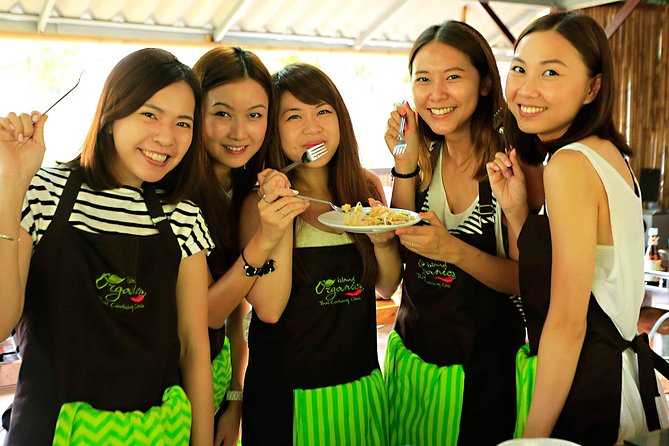
The best Thai cooking classes teach you technique, not just dish names. This one does that with hands-on lessons in curry pastes, coconut cream, and an herbal drink.
Why that’s valuable: once you can make curry paste and understand how coconut cream behaves, you can adjust spice level and richness at home. Thai cooking often changes by ingredient freshness and personal preference. Learning the base skills gives you control.
They also build in comfort and rhythm: complimentary herbal drinks show up during the experience, and there’s dessert afterward. In plain terms, you’re not just working hard—you’re refueled.
If you’ve ever been frustrated by recipes that taste close but not quite right, this is the kind of class where the missing piece is often aroma and balance. Cooking the base components yourself is a big step toward getting that right later.
Four traditional recipes, cooked by you
You’ll practice four traditional Thai recipes during the session. The class is structured so you prep and cook yourself rather than relying on a helper to do the work while you take photos.
Classic dishes mentioned include Pad Thai and Tom Yum (sometimes with chicken in coconut cream or milk soup), plus other familiar Thai favorites like papaya salad. Even if your exact four-dish lineup varies, the underlying methods are consistent: fresh aromatics, correct sauce balance, and correct timing on heat.
A practical advantage: the kitchen is kept close to where the ingredients come from. When the herbs and produce are onsite, the flavors you use in class are less of a guessing game than if you’re trying to recreate the same effect with substitutes.
And yes—come hungry. One review described the portions as enough to leave you full, and the class format is clearly designed around you cooking and then eating what you make.




What you eat, and why the class doesn’t end at the table
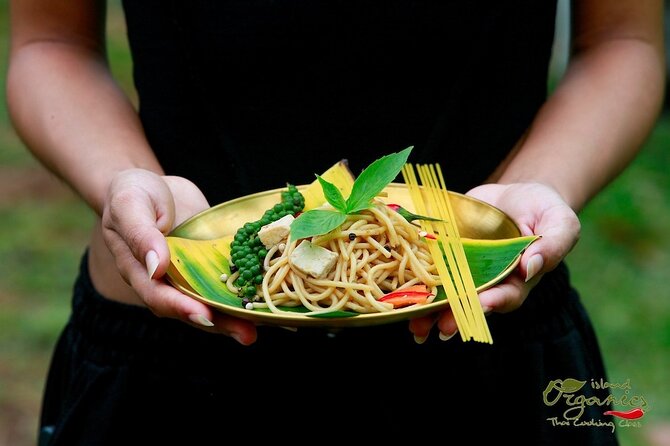
At the end, you get to relax and enjoy the food you cooked. This isn’t just about getting a meal—it’s about learning how the dishes should taste when they’re finished.
There’s also dessert included, and it ties into the overall “chemical-free culinary adventure” theme. Thai meals often end with something cooling or gently sweet, so dessert here fits the flow rather than feeling like a random add-on.
The take-home part is also useful. They provide recipe access through a QR code, and multiple mentions point to a digital guide you can keep. That’s important if you want to cook again at home without trying to remember every tiny step.
Price and time: $84.79 for a lot more than a meal
At $84.79 per person, you’re paying for a real, structured learning experience: a farm tour, a hands-on kitchen class, ingredients and equipment included, and time with Chef Lat and her team.
Think about what you get for that money:
- 4 recipes plus core techniques like curry paste and coconut cream
- included ingredients and equipment, so you’re not shopping or guessing
- small group size (max 16), which improves the teaching quality
- pickup offered in some cases, which reduces stress on a vacation day
For the 4 hours (approx.) duration, it breaks down to more than just a lunchtime activity. You’re turning that time into skills you can reuse—especially if you plan to cook Thai food again after your trip.
Dietary options and comfort: it’s built to be workable
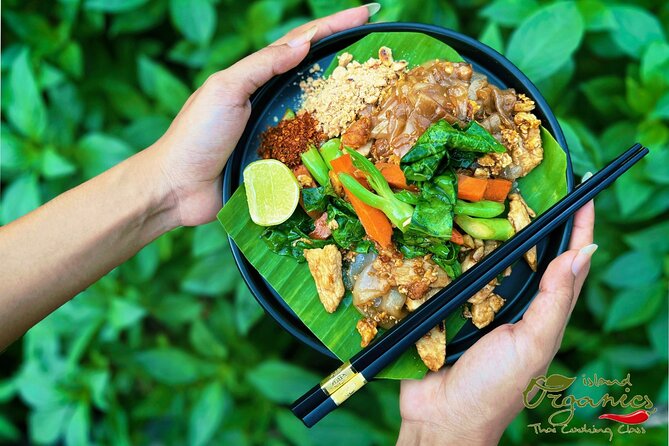
They list options for vegetarian, vegan, and gluten free. That matters because Thai cooking can be easy to adapt, but only if a class is willing to plan for it.
Also, the class includes complimentary herbal drinks and tools and support so you can actually cook. Reviews repeatedly mention things like towels and cold drinks, which sounds small until you’re wiping steam off your hands and wanting to stay comfortable.
As for who should go: if you like Thai flavors—lime, chili, herbs, coconut—you’ll probably have a great time. If you want a calm, quiet “watch and snack” experience, this is not that kind of class.
Who this experience fits best (and who should consider alternatives)
This class is a strong match for:
- People who want hands-on cooking instead of a passive tasting
- Food lovers who care where ingredients come from, especially the micro-farm angle
- Couples and small groups, since the group size is limited to 16
It may be less ideal if:
- You’re traveling on a cruise ship, because they can’t host those bookings due to timing and logistics
- You need to bring kids under 10, because children under 10 can’t attend
- Weather is a problem in your travel window, since the experience requires good conditions
If you’re on Koh Samui and you want one activity that combines learning, eating, and a genuine sense of place, this is built for that.
Should you book Island Organics Thai Cooking Class with Chef Lat?
Yes, if you want a Thai cooking class that actually teaches you skills and not just recipes. The farm-first setup, the hands-on kitchen work, and the included techniques (curry paste, coconut cream, herbal drink) make it more practical than most.
Book it if you:
- like the idea of cooking with fresh onsite produce
- want a small-group class with a fun, energetic teacher
- want recipes you can take home via QR access
Skip it if:
- your group includes kids under 10
- you’re on a cruise ship schedule
- you’re looking for a purely low-effort activity
FAQ
What time does the class start?
The class starts at 10:00 am and ends back at the meeting point.
How long is the cooking class?
It runs for about 4 hours.
Is pickup available?
Pickup is offered.
How many people are in the group?
The class has a maximum of 16 travelers.
What recipes and cooking skills are included?
You’ll cook four traditional Thai recipes and also learn key skills like making curry paste, coconut cream, and a herbal drink.
Are there vegan or gluten-free options?
Yes. Veg, vegan, and gluten free options are available.
Can children attend?
Children under 10 years of age are not able to attend for safety concerns.
What if the weather is bad?
This experience requires good weather. If it’s canceled due to poor weather, you’ll be offered a different date or a full refund.