REVIEW · BOPHUT
Koh Samui Jungle Kitchen – Evening Cooking Class (max 8 guests)
Book on Viator →Operated by Jungle Kitchen · Bookable on Viator
Charcoal Thai cooking with jungle views. Koh Samui Jungle Kitchen turns a normal cooking class into an evening in a quiet hillside garden, where you’ll learn Thai techniques on a long shared work table and eat with panoramic views toward Koh Phangan. Jungle sounds and no-electricity cooking are part of the point here.
I really like the organic garden tour that comes before you cook, because it gives context for what you’re about to chop and stir. I also love the hands-on curry paste from scratch moment, since it teaches the flavors you can recreate at home, not just the dish.
One thing to consider: this is an outdoor, hill-based setup that starts around 5:00 PM, so you’ll want to arrive on time and be ready for a warm jungle evening.
In This Review
- Key things that make this class special
- Entering Jungle Kitchen on Samui’s Hill: Timing, Size, and What You’ll Actually Get
- 4.5 Hours of Cooking Done the Traditional Way: From Garden Tour to Charcoal Dinner
- Organic Gardens First: Why the Harvest Stop Changes How You Cook
- The 8-Metre Handmade Table and Charcoal Cooking: Thai Techniques You’ll Actually Remember
- Dinner with Koh Phangan Views and Elephant Sanctuary Sounds: The Part That Makes It Feel Like an Escape
- Price and Value: Is $127.13 a Good Deal on Samui?
- Tips to Get the Most Out of the Evening: What to Bring and How to Prep
- Who Should Book This Samui Cooking Class (and Who Might Not)
- Should You Book Koh Samui Jungle Kitchen?
- FAQ
- How long is the evening cooking class?
- What time does it run on Koh Samui?
- How many people are in the class?
- What dishes will I cook?
- Is the cooking done with electricity?
- Can they adjust the menu for dietary restrictions?
- Is there an option for hotel transfers, and what about cancellations?
Key things that make this class special
- Max 8 people keeps the instruction personal and the pace relaxed
- Menu tailored to you after the team asks about what you cannot eat
- Organic gardens + ingredient harvest before the cooking begins
- Hand tools and no electricity, with food cooked over charcoal
- Three core dishes plus an extra one, so you leave with more than a single recipe
- Dinner with Koh Phangan views, plus occasional trumpeting from the nearby elephant sanctuary area
Entering Jungle Kitchen on Samui’s Hill: Timing, Size, and What You’ll Actually Get
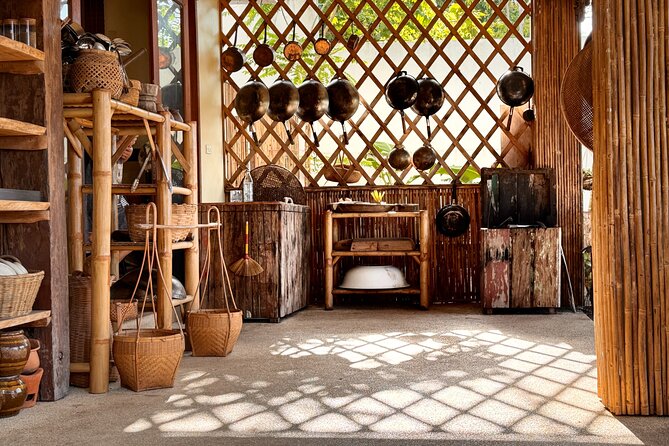
Koh Samui Jungle Kitchen runs in the evening, typically from 5:00 PM to 9:00 PM, with the class clocking in at about 4 hours 30 minutes. The activity ends back at the meeting point, and you’ll use a mobile ticket. It’s also capped at a maximum of 8 people, which matters because Thai cooking is hands-on. When the group is small, your questions get answered while you’re standing at the chopping area.
The meeting point is listed as G2RG+PV, Ko Samui District, Surat Thani, Thailand. If you upgrade, you can add round-trip transfers from your hotel, which is a big help on Samui when you’re done with the island roads and just want the evening to feel easy. Some people also report pickup connected to Fisherman’s Village, but the reliable move is to confirm your own plan when you book.
This is not a classroom vibe. Expect outdoor space, a garden setting, and a working kitchen built around traditional tools. If you want a glossy, air-conditioned cooking show, this may not be your match. If you want a calm evening where you actually learn how Thai flavors come together, you’ll probably have a great time.
You can also read our reviews of more cooking classes in Bophut

4.5 Hours of Cooking Done the Traditional Way: From Garden Tour to Charcoal Dinner
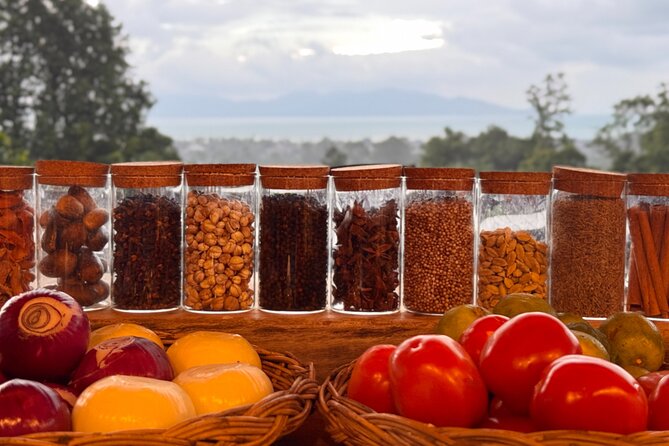
The evening has a clear flow: you start with a welcome drink and a briefing, then you head out to the organic gardens, and only afterward do you move into the cooking. The organizers contact you in the days before class with questions about dietary restrictions and any favorite dishes you’d like to propose, and then they build a menu that fits.
Here’s the core structure of what you’ll cook:
- A soup or Thai salad
- A Thai curry made from scratch
- A noodle or stir-fry dish
- Plus an additional dish prepared by the Jungle Kitchen team
Once you’re seated at the cooking setup, the class is very tactile. You’ll chop herbs, help prepare ingredients, and get involved in classic Thai steps like grinding and paste-making. There’s a short break, then the cooking shifts to charcoal. After that, you eat dinner in the gardens with panoramic views toward Koh Phangan, and the evening typically wraps up shortly after 9:00 PM. Recipes are shared soon after, which is important because it turns your hands-on work into usable home cooking.
Organic Gardens First: Why the Harvest Stop Changes How You Cook
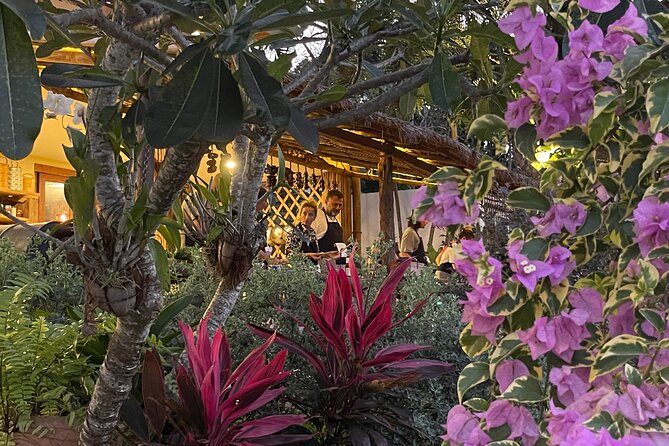
The garden tour is not just a pleasant walk. It’s the reason this class feels like more than a meal-making workshop. You’ll see the plants used in Thai cooking and harvest some ingredients for your dishes, which helps you understand what you’re adding and why it tastes the way it does.
A big part of your learning comes from seeing herbs and ingredients up close before they hit the knife board. When you tour first, you notice texture, smell, and size, and that makes later steps easier. It also gives you the confidence to recreate dishes at home, because you’re not guessing what something was supposed to look like.
One more practical detail: the garden stop helps you get into the rhythm of the evening. By the time you reach the cooking table, you’re warmed up, curious, and ready to work. If you tend to prefer structured experiences, the tour + cooking sequence will feel reassuring. If you just want to get straight to cooking, you’ll still appreciate that short lead-in because it makes the flavors click.
The 8-Metre Handmade Table and Charcoal Cooking: Thai Techniques You’ll Actually Remember
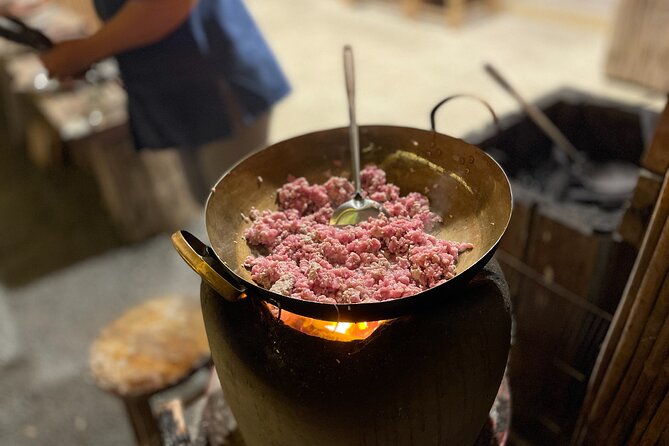
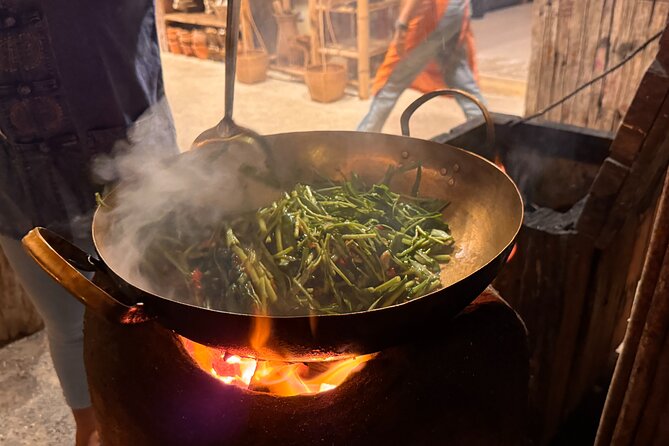
This is where the class gets most interesting. You cook on an 8 metre long handmade table, and the work is designed around tools and techniques that don’t rely on a modern electric setup. The information provided is explicit: the dishes are cooked without electricity, using tried-and-true methods.
You’ll learn by doing. Expect a lot of prep: chopping herbs and working with Thai ingredients in ways that don’t feel rushed. One detail that comes up clearly in the class experience is making curry paste from scratch. That step teaches more than one recipe. Once you understand the rhythm of paste-making and the way flavors build, you can adapt the technique later with different herbs, aromatics, and pastes you find at home.
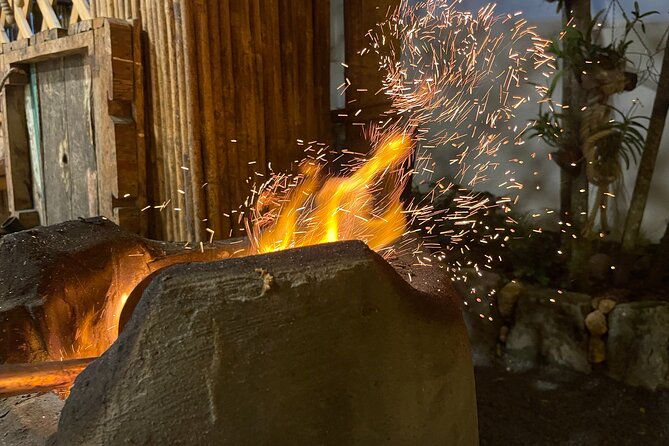
The actual cooking happens over charcoal. That changes the whole feel of the meal. Charcoal cooking tends to deliver heat that’s more gradual and slightly different from standard stovetop control, so the instructors guide you through timing and adjustments. It’s the kind of practical skill you can’t get from a quick cooking demo.
In short, you’re learning the method behind the food:
- how Thai curry paste gets built
- how your dish components come together
- how to handle ingredients and heat in a more traditional setup
If you enjoy food craft, this will feel satisfying. If you’re not comfortable cooking outdoors with basic equipment, you may find the pace more intense than a restaurant-style meal class.
Dinner with Koh Phangan Views and Elephant Sanctuary Sounds: The Part That Makes It Feel Like an Escape
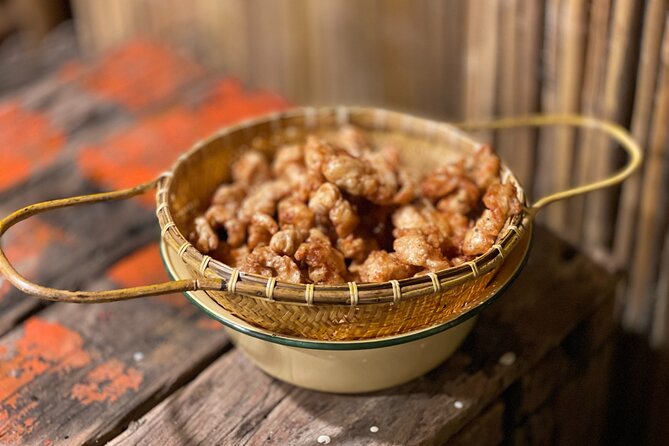
After cooking, the class turns into dinner in the gardens. This is where Koh Samui’s hills actually earn their reputation. You’ll eat with panoramic views over Koh Phangan, and you’ll be surrounded by the sounds of a real working natural environment.
One charming detail from the experience description: there can be occasional trumpeting from the neighboring elephant sanctuary area. It’s not constant, but it’s enough to remind you that you’re not in a fake set. That’s part of what people come for—the sense that the evening belongs to the place, not a scripted tourist stop.
Dinner is also family-style, meaning you’ll eat what you helped prepare. That matters because it ties instruction to payoff. You’re not just watching someone cook; you’re tasting your results while the flavors are still fresh in your mind.
The class usually finishes shortly after 9:00 PM, so it’s a good dinner plan on your itinerary if you want something scheduled without needing a separate restaurant reservation.
You can also read our reviews of more evening experiences in Bophut




Price and Value: Is $127.13 a Good Deal on Samui?
At $127.13 per person, this sits in the mid-range for cooking classes in Thailand, and the value depends on what you care about. If your goal is only to eat a tasty Thai meal, you could spend less. But if your goal is skill-building—Thai techniques, paste-making, and how dishes come together—this price starts to look fair.
Here’s why the cost can make sense:
- You get a small group (up to 8), which supports hands-on learning.
- The menu is tailored to dietary needs and preferences via questions before the class.
- You cook three core dishes plus an additional one, so your “recipe haul” is bigger than average.
- You start with organic garden ingredients, not generic produce from a market bin.
- The cooking uses traditional methods—hand tools and charcoal—so the class is about technique, not just assembly.
If you add round-trip transfers, your all-in total will rise, but it can be worth it if you’re staying far from the garden area or you don’t want to coordinate a late return. Since the class ends just after 9pm, smooth transport can be the difference between a relaxing evening and a stressful one.
Tips to Get the Most Out of the Evening: What to Bring and How to Prep
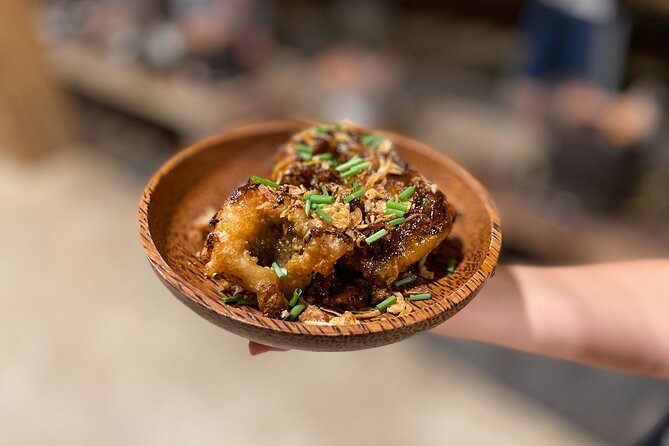
This class strongly rewards a simple mindset: come hungry, pay attention, and don’t rush the learning steps. The experience runs from early evening into late evening, and it’s outdoors, so plan like you’re going to cook in a garden, not like you’re going to sit through a studio workshop.
My practical suggestions:
- Wear comfortable closed-toe shoes with decent grip. The cooking area is outdoors and you’ll move between table and garden.
- Dress in light layers. Evenings can cool slightly, but Thailand’s humidity can still be high.
- If you have dietary restrictions, reply to the pre-class questions early so the menu can be built around you.
- If you want to learn curry paste properly, slow down. That step is usually where people speed up and then wonder why flavors don’t match later.
One more smart move: be ready to taste and adjust as you cook. Traditional Thai cooking often balances sour, salty, and spicy in ways that feel intuitive once you’re handling the ingredients. If you keep your hands working and your senses open, the recipes you receive afterward will actually make sense.
Also note: the class lists that service animals are allowed, which can matter if you’re traveling with an animal and want peace of mind.
Who Should Book This Samui Cooking Class (and Who Might Not)
This is a great fit if you:
- want a small-group cooking class rather than a big-tour production
- like the idea of Thai cooking with traditional tools and no electricity
- enjoy learning from ingredients, not just following steps
- want a dinner plan that includes Koh Phangan views and outdoor atmosphere
It may be less ideal if you:
- prefer cooking in a fully modern kitchen
- need a class that’s mostly sitting and watching
- are sensitive to outdoor conditions in the evening
If your ideal night on Samui is calm, hands-on, and a little bit off the main road, this class matches that style. If you want nightlife, you’ll have to adjust your expectations since the evening is structured and ends after 9pm.
Should You Book Koh Samui Jungle Kitchen?
I’d book it if you want Thai cooking instruction with real technique: garden ingredients first, curry paste made from scratch, and a charcoal dinner that feels connected to the setting. The max-8 group size and the tailored menu questions are real quality signals, because they directly affect how much you learn.
I’d skip or rethink if you’re short on time, hate outdoor cooking environments, or only want a simple meal with minimal hands-on work. In that case, you might prefer a normal restaurant dinner.
If you’re somewhere in the middle, start with your priorities. If you’re here for skills you’ll use at home, this is a solid value at $127.13, especially with the extra dish and the traditional method.
FAQ
How long is the evening cooking class?
The class duration is about 4 hours 30 minutes.
What time does it run on Koh Samui?
It runs in the evening, with opening hours listed as 5:00 PM to 9:00 PM, and it usually finishes shortly after 9pm.
How many people are in the class?
The class has a maximum size of 8 travelers, which keeps it small and hands-on.
What dishes will I cook?
You’ll typically cook a soup or Thai salad, a Thai curry made from scratch, and a noodle or stir-fry dish, plus there’s an additional dish prepared as part of the experience.
Is the cooking done with electricity?
No. The class states the dishes are cooked without electricity, using traditional tools and charcoal.
Can they adjust the menu for dietary restrictions?
Yes. In the days before class, Jungle Kitchen contacts you with questions about what you cannot eat and any favorite dishes you want, and then builds a suitable menu.
Is there an option for hotel transfers, and what about cancellations?
You can upgrade to include round-trip transfers from your hotel. The experience also offers free cancellation if you cancel up to 24 hours in advance for a full refund.