REVIEW · CHIANG RAI
Full Day Group Tour in Chiang Rai
Book on Viator →Operated by manachiangrai tour · Bookable on Viator
Chiang Rai, packed into one smooth day. This small-group tour (max 15) led by guides like John and Sam mixes big sights with stories you usually miss, starting with the world-famous White Temple. I like the easy hotel pickup and the way the guide keeps each stop meaningful, not just a photo line. One thing to plan for: several major sights charge extra entry fees, and those add up.
The day runs about 9 to 10 hours starting around 8:00 am, so you’ll be in the van a while. Still, the pace feels relaxed thanks to frequent short breaks and a no-pressure setup—there’s room to step outside if temples or museums aren’t your thing.
In This Review
- Quick hits you’ll feel on day one
- Why this Chiang Rai route feels so much easier than DIY
- Price and what you really get for $38
- How the 7-stop plan actually plays out in real time
- Wat Rong Khun White Temple: modern art, heavy symbolism, good photo angles
- Wat Rong Suea Ten Blue Temple: short stop, strong visual identity
- Baan Dam Black House Museum: the kind of weird you’ll actually enjoy
- Longneck Karen village: cultural visit with a clear budget and respectful mindset
- Choui Fong Tea plantation: a calm pause with real northern Thailand flavor
- Golden Triangle: rivers, borders, and a complicated past explained
- House of Opium Museum: the 1990 story behind the artifacts
- Lunch, timing, and what to bring for a 9–10 hour day
- Who this tour suits best (and who should consider something else)
- Should you book this Chiang Rai full-day group tour?
- FAQ
- What time does the tour start, and how long is it?
- Is hotel pickup included?
- What’s included in the tour price?
- Which entrance fees are not included?
- How many people are in the group?
- Is cancellation free?
- Do I need to speak Thai?
Quick hits you’ll feel on day one
- Max 15 people means you’re not just another seat on a big bus
- Hotel pickup + round-trip transport keeps the day simple
- Wat Rong Khun (White Temple) is a UNESCO World Heritage site and a modern art statement by Ajarn Chalermchai
- Golden Triangle + House of Opium Museum gives context for a border region shaped by opium poppies
- Ticket costs aren’t included for key stops (Wat Rong Khun, Baan Dam, Longneck Karen village, Opium Museum)
Why this Chiang Rai route feels so much easier than DIY
Chiang Rai has plenty to see, but the north-side highlights are spread out. This tour is built to solve that problem with pickup from Chiang Rai city and round-trip transport, so you don’t waste your best daylight figuring out rides.
The group is intentionally small, and that changes the vibe. You get a guide who can actually talk to you, not just announce the next stop, and the pacing stays human even when the day is long.
Also, the itinerary is designed for “first-timer logic.” You’ll hit the flashy temples, then pivot to art, a hill-tribe village visit, tea, and the Golden Triangle area—so your day tells a story, not just a checklist.
A few more Chiang Rai tours and experiences worth a look

Price and what you really get for $38
The base price is $38 per person, which is strong value for a full day of transport, a guide, lunch, insurance, and bottled water. If you’re on a tight schedule in Chiang Rai, this is one of the few ways to see serious distance-driven sights without paying for multiple separate transfers.
Here’s the catch: entry tickets for several stops are not included. Based on the listed fees, budget extra for:
- Wat Rong Khun: THB 200
- Baan Dam (Black House) Museum: THB 80
- Longneck Karen village: THB 300
- House of Opium Museum: THB 50
Total extra for those four stops: THB 630. That doesn’t make the tour “expensive,” but it does mean you should arrive ready with cash and a little mental math.
How the 7-stop plan actually plays out in real time
You start at 8:00 am, and travel time is baked into the overall 9 to 10 hour duration. Each stop is timed to balance sightseeing with getting to the next location, so you’ll spend enough time to look around and take photos—but not enough to treat it like a slow museum crawl.
This is also why the guide matters. A good guide helps you notice what you’d otherwise miss at places like the White Temple and Black House, and it makes short visits feel longer in a good way.
One practical perk I appreciate: the tour setup gives you flexibility. If you don’t want to enter a temple or museum, you can often wait nearby instead of feeling forced into every ticketed space.
Wat Rong Khun White Temple: modern art, heavy symbolism, good photo angles
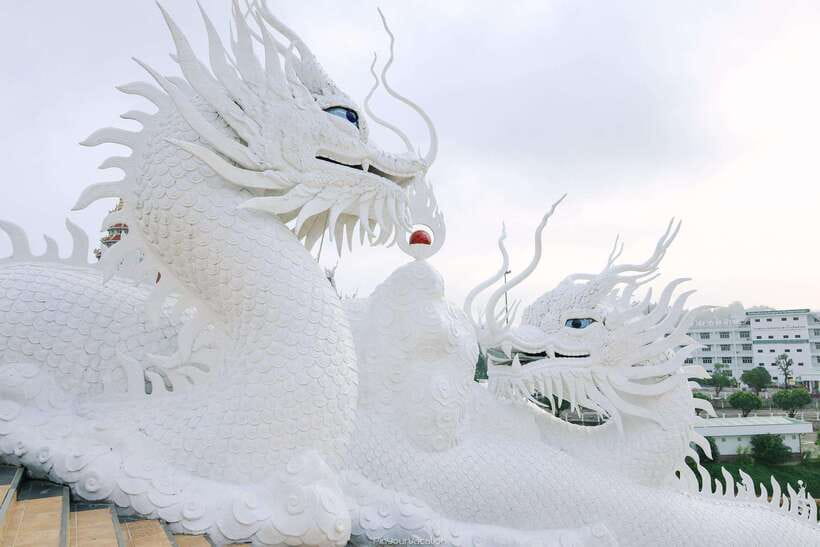
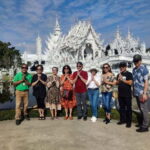
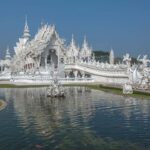
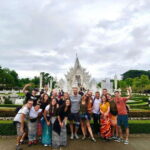
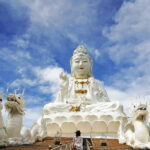
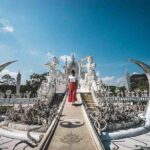
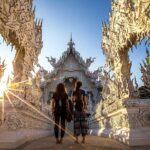
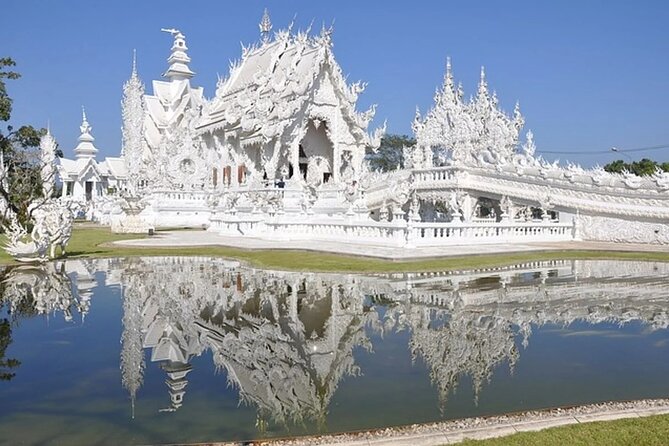
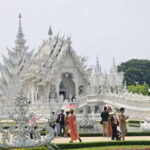
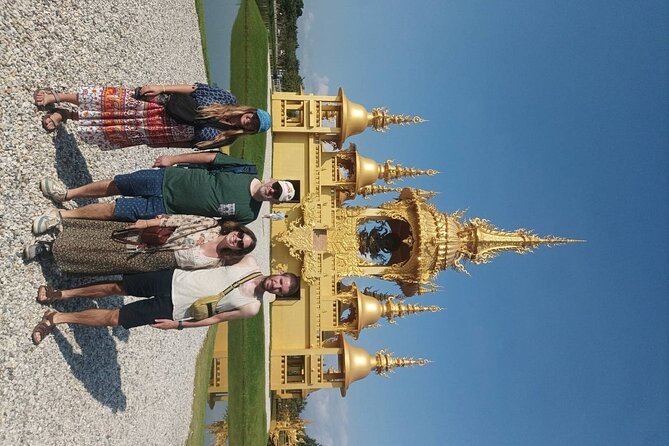
The day begins at Wat Rong Khun (White Temple), an eye-catching temple built by Ajarn Chalermchai and recognized as a UNESCO World Heritage site. Expect about 1 hour here, which is enough to walk the grounds, find the best viewpoints, and still absorb the details.
What I like about the White Temple is that it’s not just pretty. It’s a modern, intentionally symbolic work, with a look that feels cleaner and more contemporary than most Thai temple exteriors. The guide context helps you read it beyond the surface shine.
Plan to dress respectfully, and if you’re the type who likes to linger, you may wish you had 20 more minutes. Still, the time slot is a fair trade inside a full-day schedule.
Wat Rong Suea Ten Blue Temple: short stop, strong visual identity

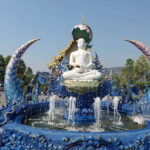
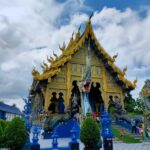
Next comes Wat Rong Suea Ten (Blue Temple) for about 30 minutes. Admission is free, and the style is distinct enough that you’ll remember it even if the rest of the day blurs together.
This stop is less about deep museum-level detail and more about enjoying the atmosphere and the art direction. In a day like this, it’s a nice breather after the White Temple’s big visual impact.
If you’re someone who hates rushing, this is a good moment to slow your pace. Sit for a few minutes, look around, and let the color scheme sink in.

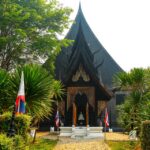
Baan Dam Black House Museum: the kind of weird you’ll actually enjoy
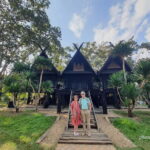
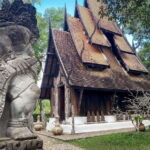
Then you go to Baan Dam (Black House) Museum, with about 50 minutes on the clock and an extra ticket cost of THB 80. This is the stop that often surprises people, because it doesn’t follow a standard “museum expectations” layout.
The Black House is tied to an important Thai artist known for creating something uniquely his own. The result is a house-museum that feels handcrafted and personal, like walking through one person’s imagination rather than a traditional gallery.
The main drawback? This is the kind of place where you’ll want a guide’s framing. Without it, you might just see rooms and textures. With the guide, it becomes easier to connect the dots and understand why the space is built the way it is.
Longneck Karen village: cultural visit with a clear budget and respectful mindset
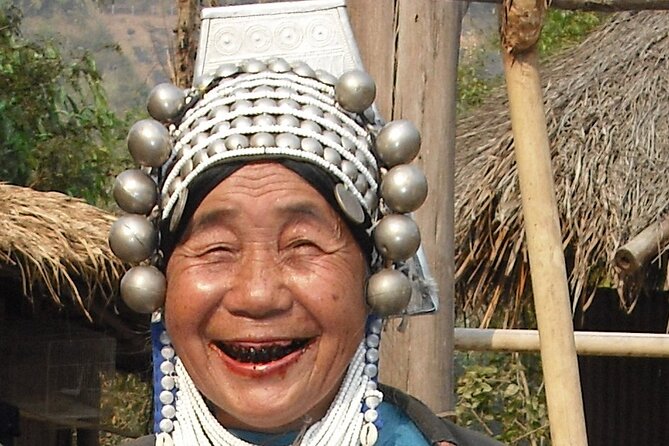
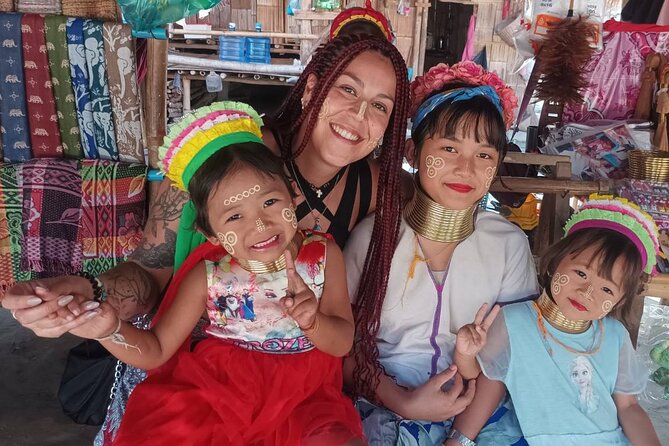
Next is Longneck Karen village, a visit focused on the long-neck Karen (pa daung) community. You’ll have about 40 minutes and an entry fee of THB 300 (not included in the tour price).
This is one of those stops where expectations matter. Don’t show up only for spectacle. Treat it as a cultural visit, ask questions where appropriate, and keep your behavior respectful—especially if photography rules or local routines are in play.
The time is short on purpose, because you still have tea and the border region ahead. If you’re looking for a deep ethnographic experience, you might want something longer than a day tour. But if you want context plus logistics handled for you, this fits.
Choui Fong Tea plantation: a calm pause with real northern Thailand flavor
After temples and museums, you get a change of pace at Choui Fong Tea plantation, for about 30 minutes with free admission. The plantation is known for the climate and soil that support high-quality tea, and you’ll typically get a straightforward look at how tea leaves are harvested and processed.
I like this stop because it breaks up the day. It’s easier to breathe here, and the sights and smells don’t feel like the same “look and move” pattern as the earlier stops.
Don’t expect a long sit-down experience. It’s a quick visit, designed to inform and refresh before the Golden Triangle leg.
Golden Triangle: rivers, borders, and a complicated past explained
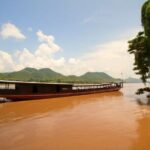
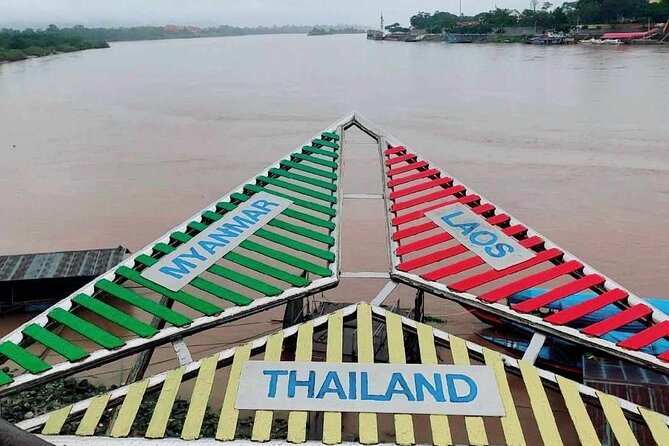
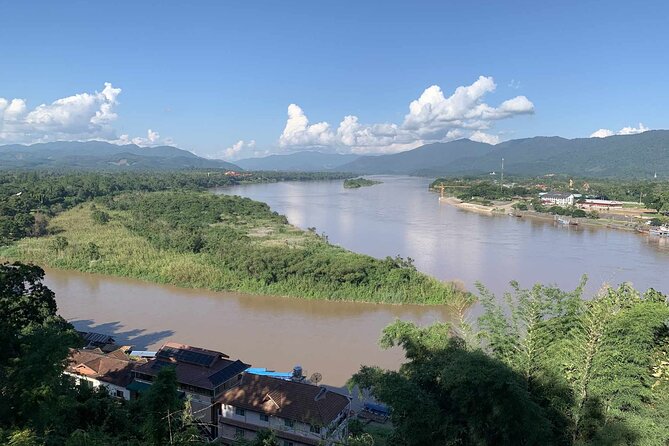
Next is the Golden Triangle, named for the region where the Ruak and Mae Khong rivers meet near the borders of Myanmar, Thailand, and Laos. You’ll spend about 1 hour, and entry is free.
This part of the day is powerful because it connects geography to history. The area is also known for opium poppy cultivation and processing, and the guide context helps you understand why the border matters beyond maps and checkpoints.
If you enjoy viewpoints, this is one of the best parts of the tour to take your time with photos and orientation. If it’s busy, just remember: you’re here for the big picture too, not only individual shots.
House of Opium Museum: the 1990 story behind the artifacts
To close the story, you’ll visit the House of Opium Museum for about 40 minutes. Admission costs THB 50 and is not included.
This museum was founded by Patcharee Srimatyakul in 1990, and it focuses on her collection of opium-related paraphernalia and memorabilia. It’s not just about the plants—it’s about the human and social trail left behind by the trade.
The best use of your time here is to let the guide connect what you saw at the Golden Triangle to what you’re seeing inside. Done well, it turns a difficult subject into something you can understand without getting overwhelmed.
Lunch, timing, and what to bring for a 9–10 hour day
Lunch is included, and from what I’ve seen in the way this tour is run, it’s meant to be a real break, not a rushed snack stop. Many people describe it as tasty and filling, and that matters on a long day when you’re moving between multiple locations.
Because you’re out for most of the day, bring the usual comfort basics:
- A light layer for the van ride (AC can run cool)
- Sunscreen and water-friendly habits, even though bottled water is provided
- Shoes you can walk in for temple grounds and museum floors
Also, expect a steady rhythm: short stop, walk, look, listen, then you’re on to the next place. That’s how you fit seven locations into one day without burning out.
Who this tour suits best (and who should consider something else)
This is a smart fit if you:
- Have limited time in Chiang Rai and want the main highlights plus the hard-to-reach angles
- Like having a guide explain what you’re seeing at each stop
- Prefer a small-group day over a large bus
It’s also a good option if you appreciate balance: temples and art, then tea and border history, all in one day.
You might want a different plan if you hate long van days or you want to stay in one place for hours at a time. The schedule gives you a taste of each highlight, not a slow, in-depth stay.
Should you book this Chiang Rai full-day group tour?
Yes, I’d book it if you want a well-organized day that covers Chiang Rai’s most famous sights and the north-side stops most people skip. For the price, the value is in the logistics: pickup, transport, guide time, lunch, insurance, and bottled water, plus a route that tells a story.
If you’re comfortable budgeting extra for Wat Rong Khun, Baan Dam, Longneck Karen village, and the Opium Museum, this becomes even better. Just go in ready for a long day, respect local rules at cultural sites, and let the guide’s explanations do the heavy lifting.
FAQ
What time does the tour start, and how long is it?
The tour starts at 8:00 am and runs about 9 to 10 hours, with travel time included in the total duration.
Is hotel pickup included?
Yes. The tour offers hotel pickup from Chiang Rai city and includes round-trip transport.
What’s included in the tour price?
The price includes lunch, a guide, insurance, transportation, and bottled water.
Which entrance fees are not included?
Entrance fees are not included for Wat Rong Khun (THB 200), Baan Dam Museum (THB 80), Longneck Karen Village (THB 300), and the House of Opium Museum (THB 50).
How many people are in the group?
The tour has a maximum group size of 15 travelers.
Is cancellation free?
Yes. You can cancel up to 24 hours in advance for a full refund.
Do I need to speak Thai?
The tour runs with a guide, and multiple guide experiences mention English being used for explanations.