REVIEW · CHIANG RAI
Unforgettable tour of Chiang Rai Private tour
Book on GetYourGuide →Operated by R U tour and trek · Bookable on GetYourGuide
Temples, tea, and the Golden Triangle, in one day. I like the hotel pickup and drop-off because it makes the day start easy, and I really enjoy the no-rush pace that gives you time to take in each stop.
One thing to budget for is the optional Opium Museum ticket, since the main price covers most other entry fees. You can expect to pay 50 baht per person for that add-on.
In This Review
- Key highlights at a glance
- A private Chiang Rai day that moves at a human pace
- Hotel pickup and drop-off that saves your brain
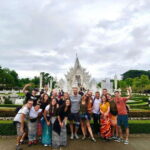
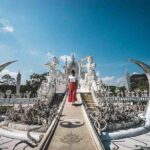
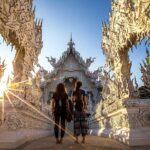
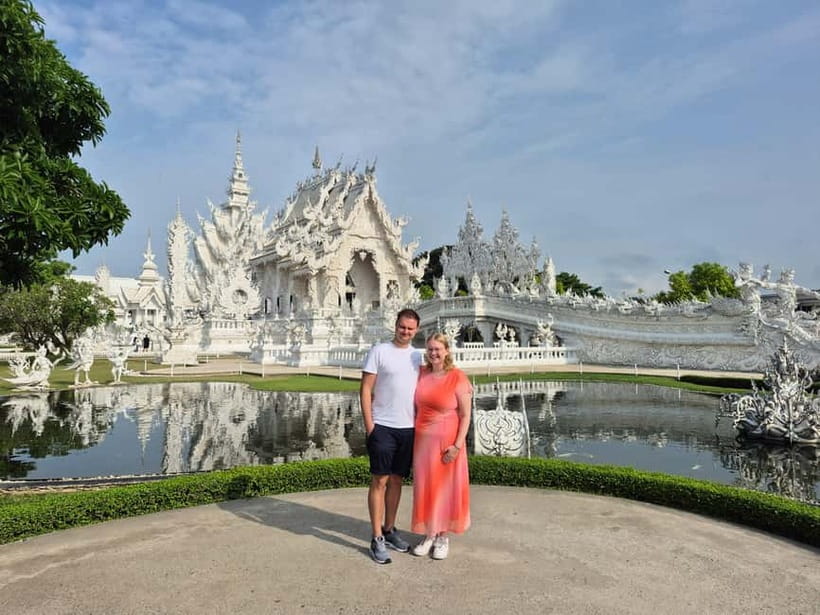
- Wat Rong Khun (White Temple): modern art inside a temple you can read
- Blue Temple (Wat Rong Suea Ten): northern style with explanations that matter
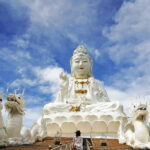
- Huay Pla Kang Guanyin: a giant Goddess and views from inside
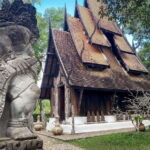
- Black House Museum: art in a real-feeling setting
- Lunch that keeps the day moving
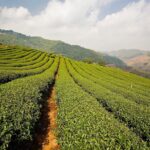
- Tea plantation views and Oolong tasting
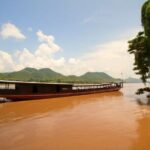
- Golden Triangle: the view where three countries feel close
- House of opium: understanding the region beyond postcards
- What’s included, and why it feels worth $84
- Guide quality: the part you can’t fake
- Who this tour fits best (and who should skip it)
- Price and logistics: what to plan for on your side
- Should you book this Chiang Rai private tour?
- FAQ
- What is included in the tour price?
- Is the Opium Museum included?
- Do I get hotel pickup and drop-off?
- What should I bring?
- Who is this tour not suitable for?
- Can I get a refund if I cancel?
Key highlights at a glance
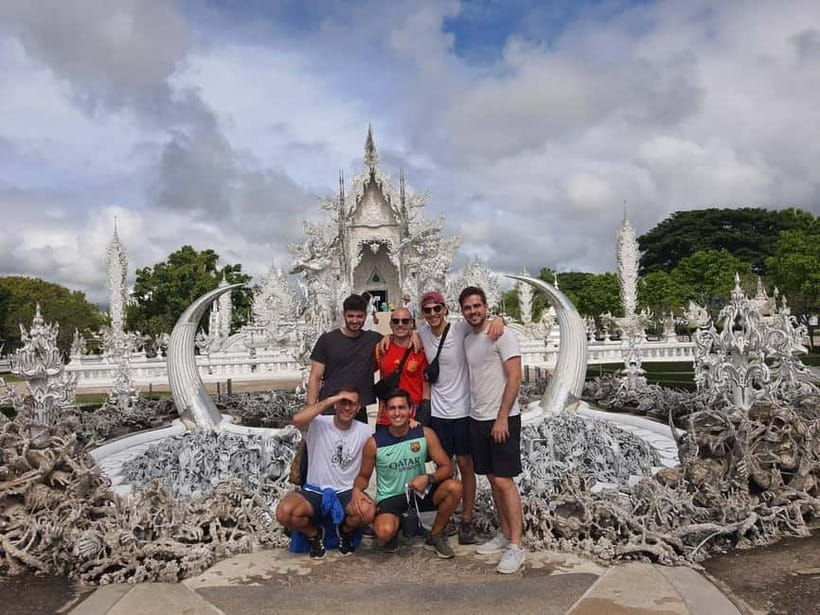
- Wat Rong Khun (White Temple) first: modern art meets sacred design in a way that feels unlike any other temple in Thailand
- Wat Rong Suea Ten (Blue Temple): northern-style Buddhist details with explanations that make it easier to understand
- Huay Pla Kang Guanyin: a massive Goddess of Mercy plus city views from inside the site
- Black House Museum: art inside a structure built to look like the original home of a master artist
- Tea plantation stop: big views and an Oolong tea tasting
- Golden Triangle viewpoints: scenery split between Thailand, Laos, and Myanmar by the Mae Kok and Ruak rivers
A private Chiang Rai day that moves at a human pace
This is a private Chiang Rai tour built around temples and close-up cultural context. The big win for me is that it doesn’t feel like a checklist where you’re constantly being chased to the next photo spot. You get hotel pickup, then a guide who keeps the day flowing while still giving you time at each place.
At $84 per person, it’s also pretty good value for what you get: lunch is included, you have an English-speaking guide, insurance is included, and several key temple tickets are covered. The only notable extra cost is the Opium Museum ticket, which is clearly called out ahead of time.
This is also a day with rules: baby strollers aren’t allowed, and alcohol and drugs are not. If you’re traveling with very young kids, it may not fit—babies under 1 year aren’t suitable.
You can also read our reviews of more private tours in Chiang Rai
Hotel pickup and drop-off that saves your brain
Starting with pickup is a smart choice in Chiang Rai. When you’re hopping between temple areas, it’s easy to waste energy on finding the right meeting point, negotiating taxis, and guessing routes. With pickup and drop-off included from hotels in the Chiang Rai Province area close to the city center (within 3 kilometers from Bus Terminal 1), you can focus on the sights instead of logistics.
Even better, the guide approach sounds flexible: you can ask for pickup at your hotel rather than only using the designated pickup points. That kind of small accommodation makes a private tour feel genuinely private.
Bring cash and a credit card. The tour info specifically flags both, which usually means there are small purchases you may want to make during the day.
Wat Rong Khun (White Temple): modern art inside a temple you can read
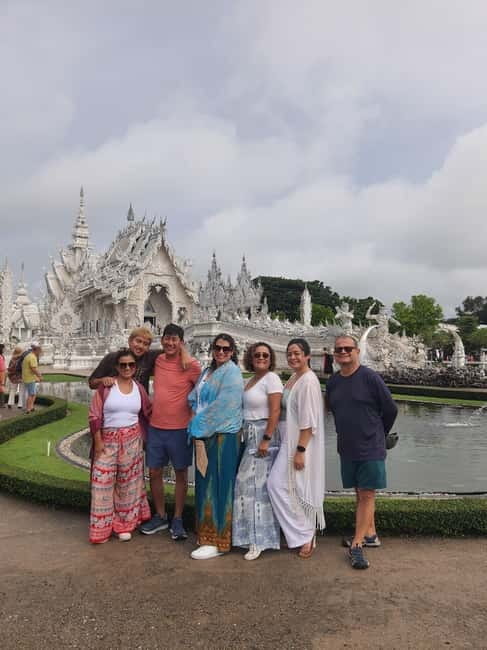
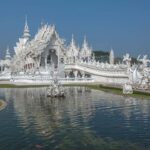
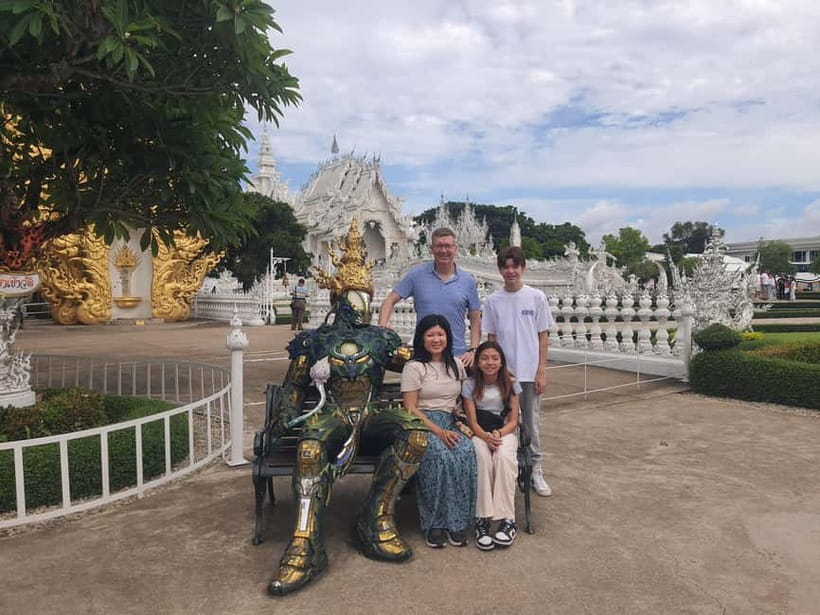
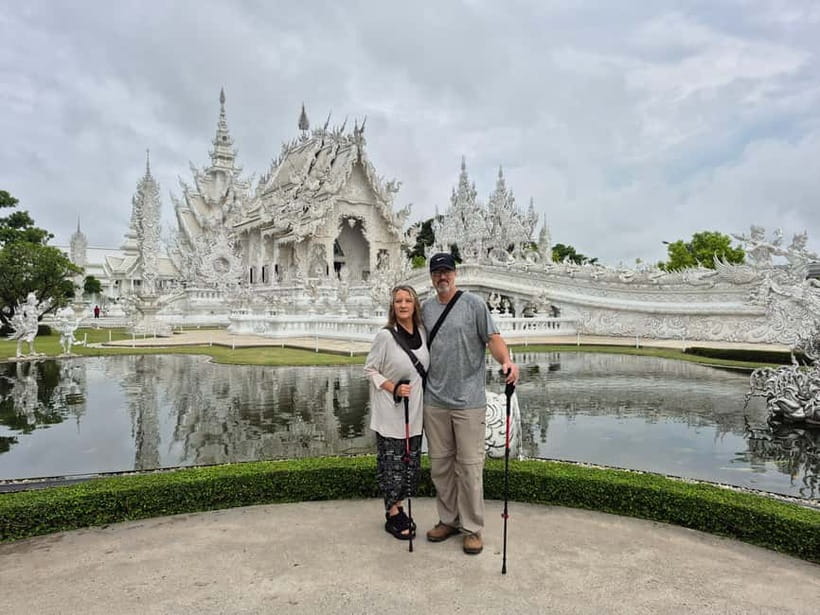
The day kicks off at Wat Rong Khun, the White Temple. This isn’t just a pretty building with nice lighting. The design uses modern art ideas and symbolic details in a way that makes the place feel more like an argument about faith and art than a simple monument.
I love the way this stop works early in the itinerary. First, your brain is fresh, so you notice the details in the architecture and artwork. Second, it sets expectations for the rest of the day: Chiang Rai’s temples aren’t only traditional, and the guide’s explanations help you connect the dots.
The ticket is included, so you can spend your mental energy on looking, not figuring out fees.
Tip for your visit: wear comfortable shoes. Even with a no-rush pace, temple grounds can involve walking and moving between viewpoints.
Blue Temple (Wat Rong Suea Ten): northern style with explanations that matter
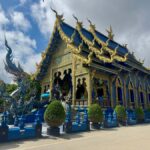
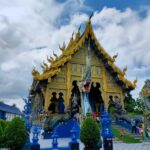
Next comes Wat Rong Suea Ten, the Blue Temple. This one leans into northern Buddhist style, and it’s the kind of place where a guide changes the experience. With an English-speaking guide, you’re not just photographing a striking color scheme. You’re getting context about Buddha history and what specific elements are meant to communicate.
This is also a good contrast to the White Temple. One is famous for modern artistic expression, while the other helps you understand regional temple character. Together, they give you a more complete picture of how Buddhism can look different across northern Thailand.
The value here is timing and interpretation. You don’t need to become an expert on day one, but you do want enough background to make the temple details feel meaningful.
Huay Pla Kang Guanyin: a giant Goddess and views from inside
Then you hit the stop everyone notices on the way in: a giant Lady Buddha (Guanyin / Goddess of Mercy) over 30 meters tall. This part isn’t only about scale. The design includes a way to see scenic views of the city from inside the Goddess area.
The ticket for Wat Huay Pla Kang is included, which is great because this is the kind of place where entry fees can surprise you on your own schedule. With a guide, you also get direction on where to spend time and what to look for, without wasting energy circling around.
One practical note: if your travel style is more laid-back than photo-focused, this is still worth it because the viewpoint element gives you a break from temple-to-temple intensity. You can pause, breathe, and take in Chiang Rai from a different angle.

Black House Museum: art in a real-feeling setting
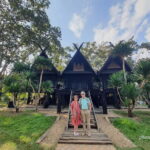
The Black House Museum is known for art, but what’s interesting is the setting. The museum is designed like the original house of a master artist, so it feels less like a random collection of objects and more like a place built around creativity.
A museum like this works best with time and a guide who can point out what you’re looking at. The tour includes the ticket, so you avoid the extra step of figuring out where to go and what to pay.
If you like Thailand beyond the typical temple-and-market routine, this stop is a good counterweight. It keeps the day from turning into only sacred sites and viewpoints.
Lunch that keeps the day moving
Lunch is included. That matters more than it sounds because it reduces decision fatigue. When you’re juggling multiple sites in one day, you don’t want to spend your best energy hunting for food that fits your taste and budget.
The tour also includes some water. You’ll still want to stay sensible in Chiang Rai’s heat, but having water provided helps you start the day without stress.
Tea plantation views and Oolong tasting
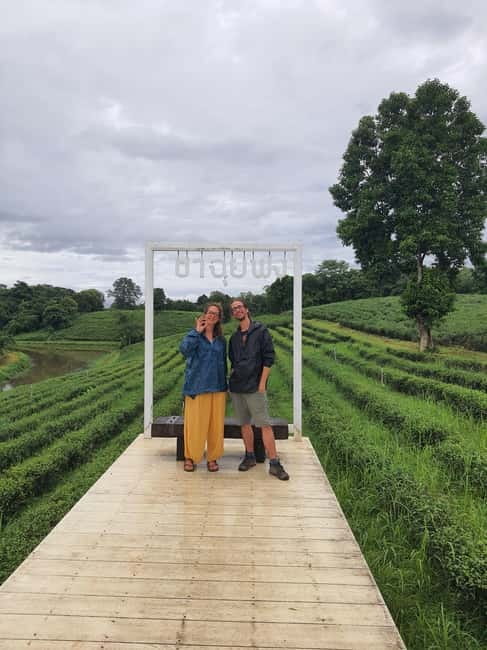
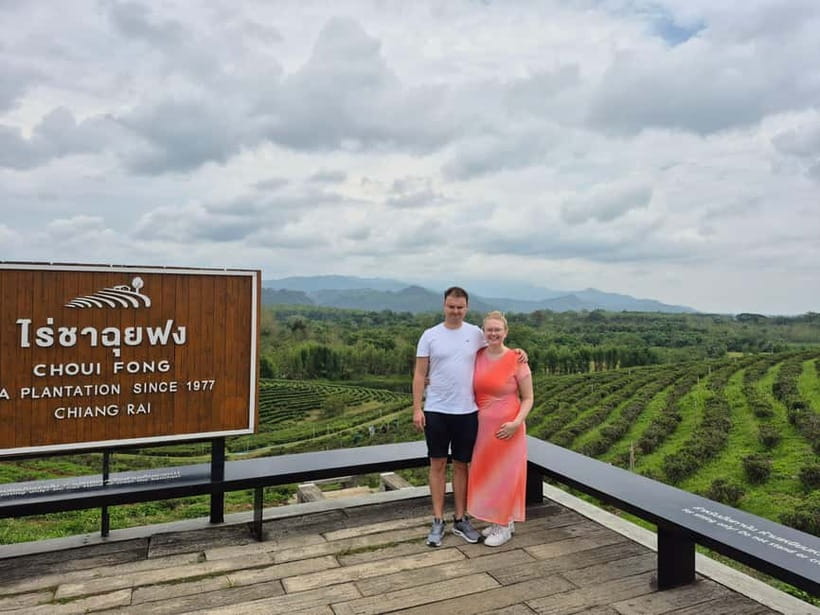
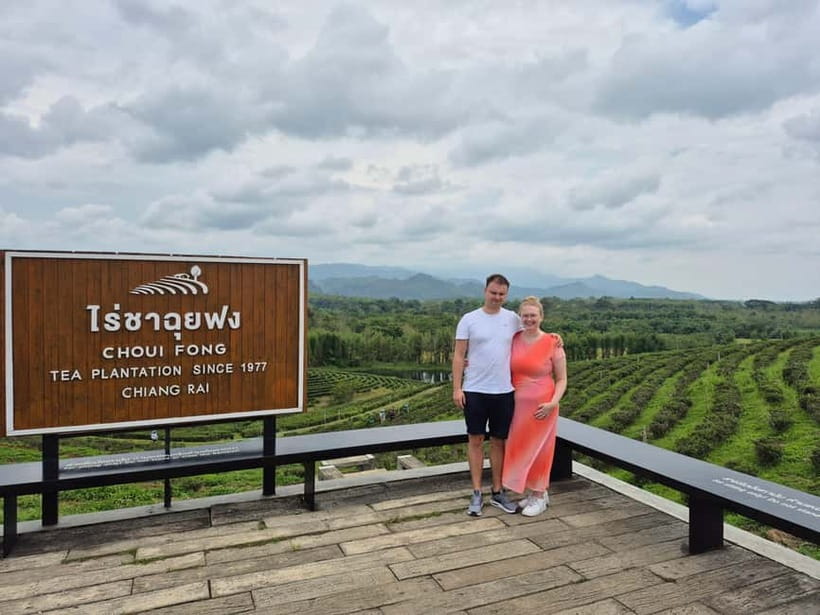
After temples and museums, the itinerary shifts to something calmer: a tea plantation stop. You’ll get to see one of the biggest scenic tea plantation views and taste Chinese Oolong tea.
This is a smart mid-day change of pace. Instead of more stone steps and indoor exhibits, you get open air, greenery, and a sensory break. And the tasting adds a practical connection—you’re not just looking at tea as a product, you’re experiencing the taste.
What to do here: slow down. This is one of the stops where you’ll enjoy the views most if you stop rushing and let your eyes adjust.
Golden Triangle: the view where three countries feel close
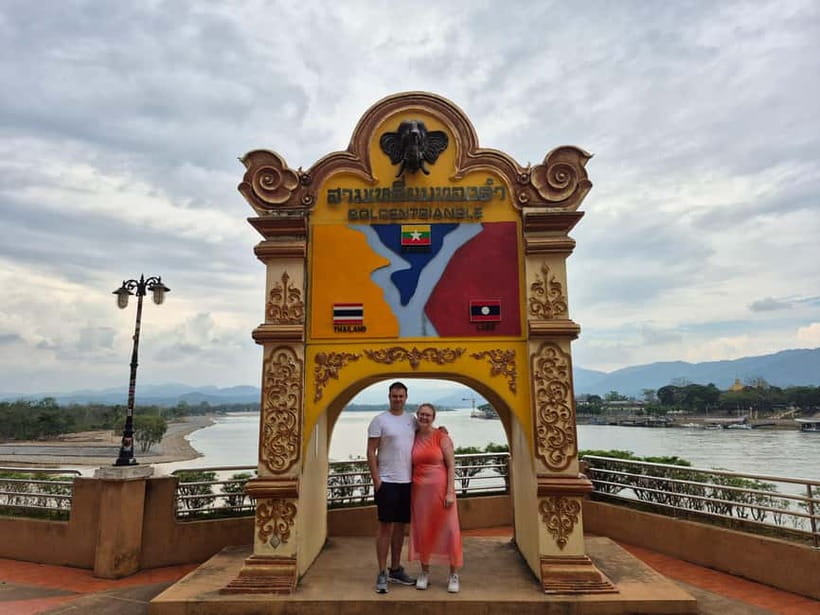
The Golden Triangle viewpoint is where Chiang Rai turns international in a visually obvious way. You’ll see the scenery of three countries—Thailand, Laos, and Myanmar—divided by the Mae Kok and Ruak rivers.
Even if you’ve seen photos before, the real value here is how the guide helps you frame what you’re seeing. Rivers as natural borders are easier to understand in person, and the sense of place can feel surprisingly clear from the viewpoints.
This is also the stop where your timing matters. If you arrive at the right moment, you get better visibility and a better sense of distance. Since the tour is private and uses a no-rush pace, you’re more likely to get that calm window instead of being pushed out the second you arrive.
House of opium: understanding the region beyond postcards
Finally, you’ll visit the House of opium, focused on historical information about opium and the background of the Golden Triangle. The knowledge here is more about context than spectacle.
Important: the Opium Museum ticket is not included. You’ll need to pay 50 baht per person for that part.
This is the kind of stop where I suggest you go in with the right mindset. You’re not there to judge people from a distance, and you’re not there for entertainment. You’re there to understand why this area’s history is so complicated and why the Golden Triangle became such a key term in modern history.
What’s included, and why it feels worth $84
Let’s talk value in plain terms. For $84 per person, this tour includes:
- Lunch
- Insurance
- Some water
- English-speaking guide
- White Temple tickets (Wat Rong Khun)
- Black House Museum ticket
- Wat Huay Pla Kang ticket
Not included:
- Opium Museum ticket (50 baht per person)
When I judge value, I don’t just look at the base price. I look at how many places you’re paying for and how much effort you save. Here, you’re covering multiple major paid entries and getting a guide who can explain what you’re looking at. That turns the day from self-guided travel into guided learning plus convenience.
Also, the “reserve & pay later” style option can help if your schedule is still settling. It’s the kind of flexibility that reduces stress when you’re planning around weather or other bookings.
Guide quality: the part you can’t fake
The best part of this tour is the guide experience. In real-world terms, a guide either helps you understand the sights or turns the day into movement without meaning. Here, guides are praised for giving lots of explanations about culture and customs, and for moving safely from stop to stop while still allowing enough time at each place.
You’ll hear names like Vam and Kongla come up in the feedback. Both are described as patient, explanation-first, and good at helping with photos. That matters because temple days are full of small moments—how you stand, where you look, and what detail you notice—so having someone guide your timing makes the day feel smoother.
Who this tour fits best (and who should skip it)
This is a great match if you want:
- A temple-focused day with strong cultural context
- A tour that doesn’t feel rushed
- Included tickets for the big hitters, plus lunch
- An English-speaking guide who explains what you’re seeing
It’s less ideal if:
- You need a baby stroller (not allowed), or you’re traveling with babies under 1 year
- You’re older than 95 years (not suitable)
- You don’t want a longer day with multiple stops (even with a no-rush pace, it’s still a full route)
Price and logistics: what to plan for on your side
The price is clear, and so are the few add-ons. Expect the Opium Museum ticket to be the only extra named fee. Beyond that, you’ll probably want cash on hand for small purchases at tea or other stops.
Also, check your pickup plan early. Pickup is available from hotels in Chiang Rai Province not far from the city center within 3 kilometers from Bus Terminal 1. If your hotel is slightly outside that area, ask in advance whether pickup can still be arranged.
The tour is listed as not suitable for people over 95 years. If you’re close to that limit, it’s worth asking before booking so you don’t get stuck with a last-minute mismatch.
Should you book this Chiang Rai private tour?
I’d book this if you want a smooth, guided, temple-heavy day that covers the White Temple, Blue Temple, and the Guanyin viewpoint, plus a tea plantation and Golden Triangle scenery. The included tickets and lunch make it easier to spend money on experiences instead of constantly calculating entry fees.
Skip it only if you’re traveling with a baby stroller, you’re in the over-95 range, or you prefer a completely open itinerary with zero structured stops. Otherwise, this strikes a nice balance: you get major Chiang Rai highlights without the feeling of being rushed from one place to the next.
FAQ
What is included in the tour price?
The tour includes lunch, insurance, some water, an English-speaking guide, and tickets for Wat Rong Khun (White Temple), Black House Museum, and Wat Huay Pla Kang.
Is the Opium Museum included?
No. The Opium Museum ticket is not included and costs 50 baht per person.
Do I get hotel pickup and drop-off?
Yes. Pick-up is available from hotels in Chiang Rai Province within 3 kilometers from Bus Terminal 1. You can also ask the guide to pick you up at your hotel instead of the designated pick-up points.
What should I bring?
Bring both a credit card and cash.
Who is this tour not suitable for?
It is not suitable for babies under 1 year and not suitable for people over 95 years.
Can I get a refund if I cancel?
Yes. You can cancel up to 24 hours in advance for a full refund.