REVIEW · BANGKOK
Floating Market Full-Day Bicycle Tour from Bangkok
Book on GetYourGuide →Operated by Recreational Bangkok Biking · Bookable on GetYourGuide
Bangkok can feel loud, so this day trip is a switch to water and country roads. You start with the weird-and-wonderful Maeklong train-market, then move to canal life at Damnoen Saduak by long-tail boat. After that, you’re on a bike for quiet back roads and plantation trails, plus temple stops that add real local texture. One thing to consider: it’s an early start and a full 8-hour schedule with van transfers and multiple activity styles (market, boat, bike, temples), so it’s not a slow, do-nothing kind of day.
What I like most is the mix of worlds in one route. You get the spectacle of goods on train tracks, the slow maze of canals, and then the calmer rhythm of cycling through rural areas with coconut trees and seasonal fruit. Second, the trip includes the parts that usually add hassle and cost on your own—bike and helmet, boat ride, temple entrance fees, and a Thai lunch at a riverside spot. A possible drawback is price: at $125 it can feel steep compared with what you might pay for food or tuk-tuk rides in Thailand—though the included transfers, guide, and activities help justify it.
If you go in with the right expectations—curious, early-rising, and comfortable cycling on rural paths—you’ll probably find this one hits the sweet spot between iconic and genuinely local.
In This Review
- Key things that make this tour worth your time
- Starting early from Bangkok: the rhythm of a full 8 hours
- Maeklong Railway Market: the scene that changes when a train arrives
- Damnoen Saduak floating market: canals, shopping time, and what to look for
- Coconut plantation + sugar-making: a small stop with real payoff
- The bike ride: quiet roads after the spectacle
- Lunch at a Maeklong riverside restaurant: Thai food with a memorable setting
- Temples: Wat Bang Kung and Wat Bang Kae Noi for visual variety
- Wat Bang Kung: the banyan-tree chapel idea
- Wat Bang Kae Noi: wood carvings and wax statues
- Guide style and group vibe: what you can expect from the human side
- Price and value: is $125 fair for this day?
- Who this tour suits best (and who should think twice)
- Practical tips to make the day easier
- Should you book this Floating Market Bicycle Tour from Bangkok?
- FAQ
- What time does the pickup happen in Bangkok?
- How long is the tour from start to finish?
- Do I get a bicycle and helmet?
- Is there a long-tail boat ride?
- Which markets are visited?
- What temple stops are included?
- Is lunch included, and what kind of food is it?
- What languages is the live guide available in?
- Is free cancellation available?
Key things that make this tour worth your time
- Maeklong train-market on active tracks: stalls slide back when the train comes through, then pop back out right after.
- Long-tail boat through canal villages: the ride is a highlight, not just a transfer to the floating market.
- Damnoen Saduak floating market time window: you get a guided visit plus shopping time.
- Coconut plantation stop: you learn how palm and coconut sugar are made the traditional way.
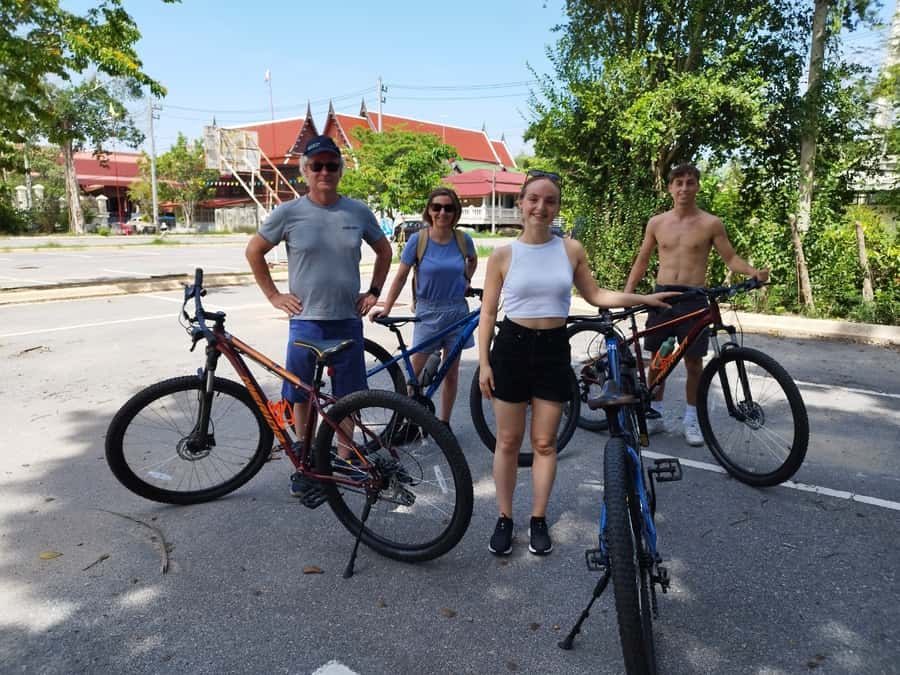
- Bike ride on quieter rural roads: plantation trails and unpaved flat roads, with helmet included.
- Two temples with strong visual hooks: Wat Bang Kung and Wat Bang Kae Noi add variety beyond markets.
Starting early from Bangkok: the rhythm of a full 8 hours
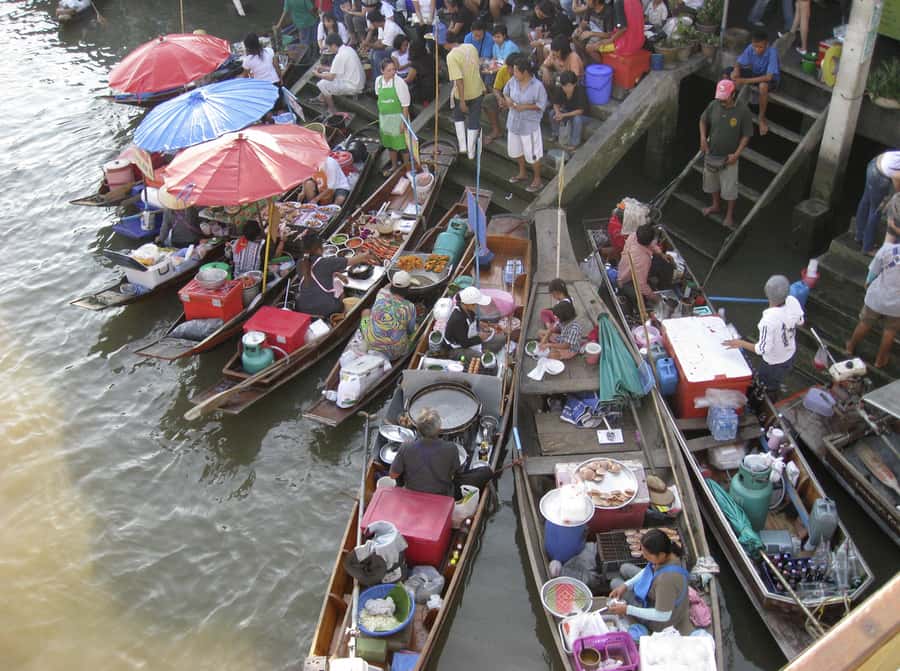
This is an 8-hour day that starts with pickup from your Bangkok hotel around 7:00 AM. From there, you’re mostly in “move mode”: van to get out to the provinces, then boat and bike once you’re in the right area.
That timing matters. You’ll reach Maeklong and Damnoen Saduak during the most active stretches of the day, when the markets feel alive and the canal scenery is at its best. If you’re the type who likes to sleep in, this one will push you—but it’s exactly why the day doesn’t feel rushed. You’re using the early hours to see the places people only hear about.
The van transfer time is broken into chunks, not one giant slog. Still, plan to be mentally ready for a schedule that changes gears often: market → van → floating market → long-tail boat → bike ride → temples → back to Bangkok.
You can also read our reviews of more shopping tours in Bangkok
Maeklong Railway Market: the scene that changes when a train arrives
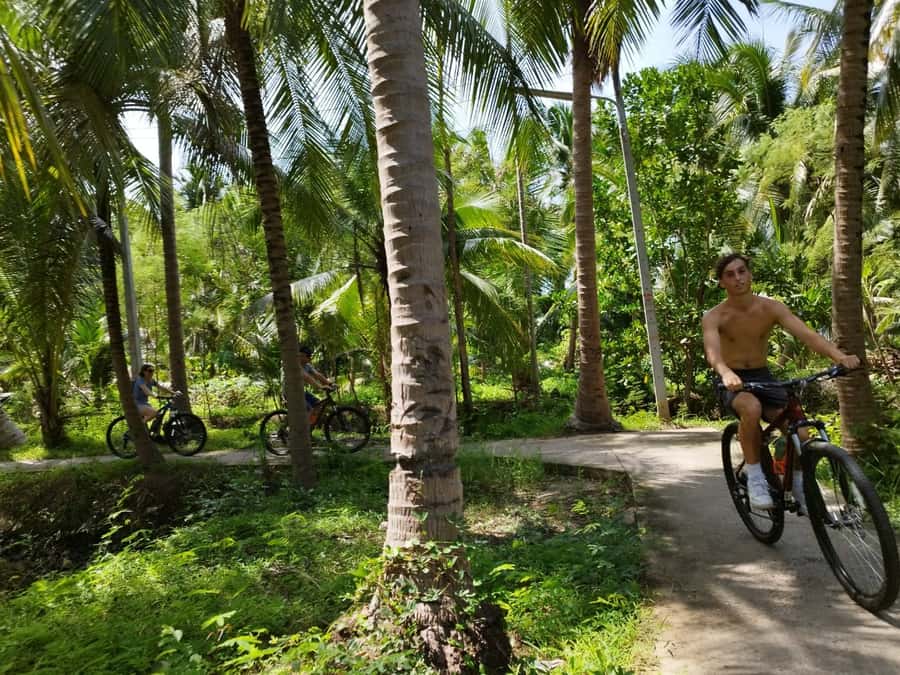
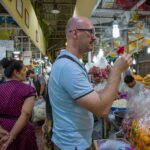
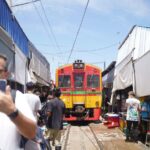
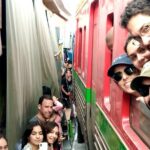
Maeklong Railway Market is the first real wow-moment. The stalls line up right along the railroad track, selling fresh produce, seafood, meats, clothing, and more.
Here’s what makes this place so memorable: when a train approaches, vendors retract their awnings and move merchandise to clear the rails. Then, once the train passes, the market springs back into its normal busy layout. It’s not staged in a way that feels like a show for tourists—it feels like people working with the rhythm of the rail line.
You’ll get a guided visit and a photo stop around 30 minutes. Use that short window wisely:
- Spend a minute watching how vendors coordinate the awning movement and track clearance.
- Take pictures before you start wandering too far, because the best angles can be close to the tracks.
- Don’t skip the food-market feel—there’s a lot to see even if you don’t plan to buy.
A small practical note: train-market days can be warm and busy. Bring sunglasses and keep water handy—this tour includes drinking water during the excursion, which helps.
Damnoen Saduak floating market: canals, shopping time, and what to look for
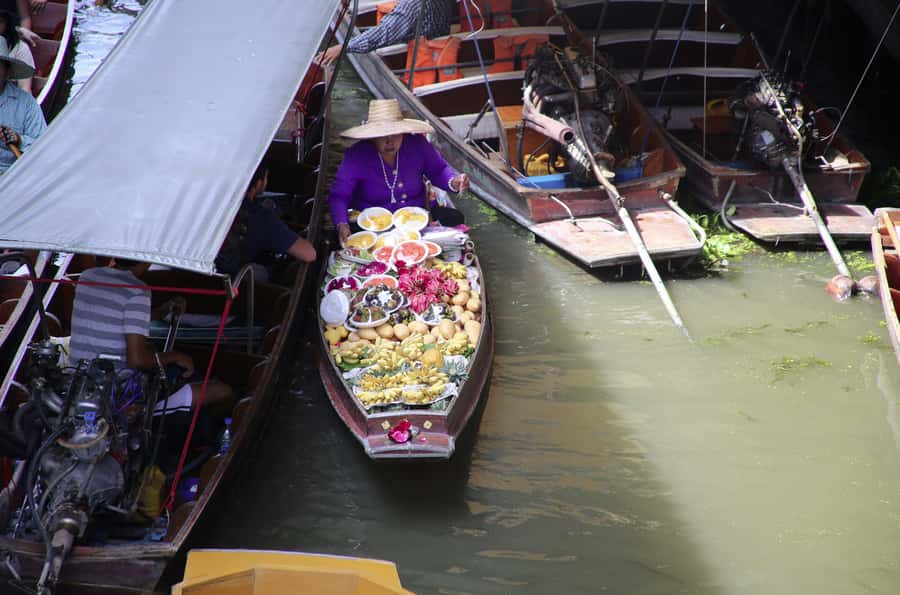
After Maeklong, you head to Damnoen Saduak with the day’s second big cultural shift: from rail-tracks to canals and floating activity.
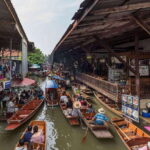
You’ll spend time at Damnoen Saduak with a guided visit and shopping time, plus time to look around at the arts-and-crafts market style of stalls. The stop is about 1 hour for the on-water market experience.
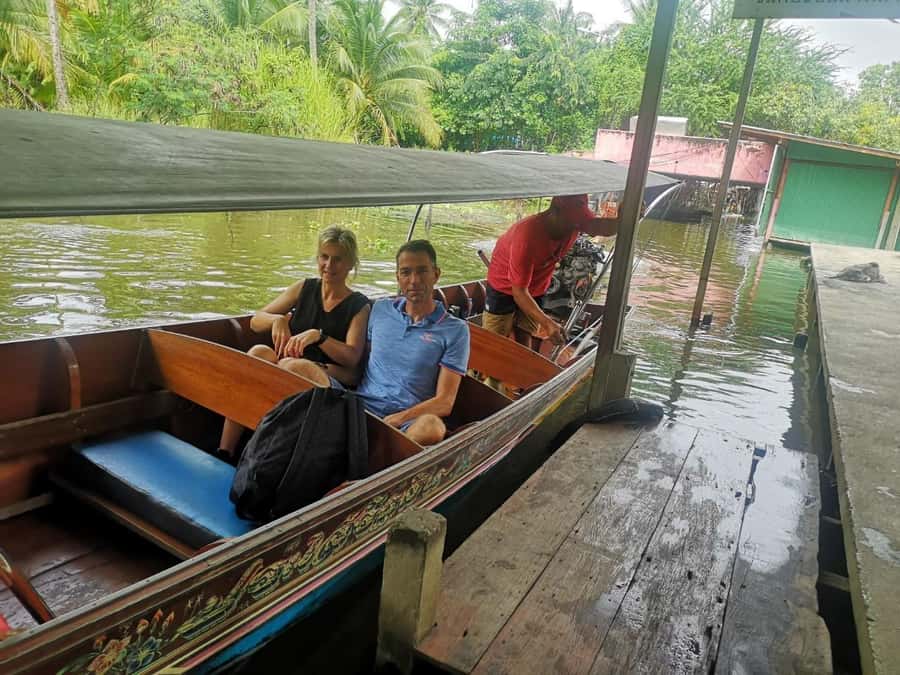
Then comes the long-tail boat ride—about 40 minutes—through a maze of canals cutting through local villages and plantations. This portion is where you understand why floating markets exist. You’re not just seeing boats; you’re moving through the waterways that shape daily life.
What I’d pay attention to during the boat ride:
- Canal density: how closely villages and plantations sit to the water.
- Daily patterns: movement feels different than the market area where everything is gathered for selling.
- Shadows and light: boats create a natural frame for photos, especially when you’re moving past greenery and village structures.
If you’re sensitive to motion, long-tail boats can feel bouncy. The ride is not described as extreme, but it’s still a boat experience—so don’t plan on doing your most delicate camera work without a stable grip.
Coconut plantation + sugar-making: a small stop with real payoff
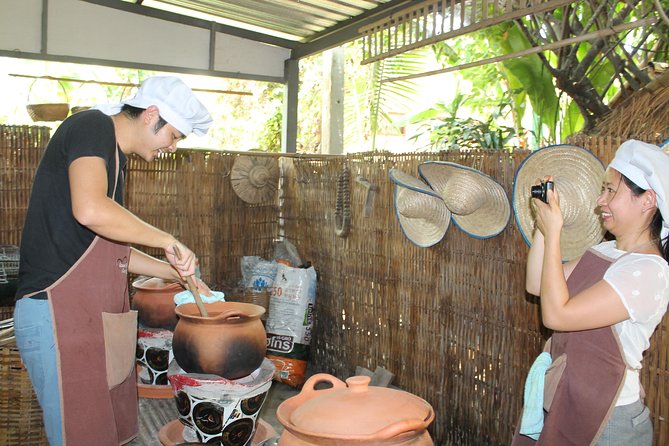
Between floating-market activity and cycling, there’s a coconut plantation visit where you see traditional production of palm and coconut sugar.
This is one of those stops that can be brief on some tours—but here it works because it connects to what you’ll see later on the bike ride: coconut trees, plantation trails, and rural rhythms. It also helps the day feel more grounded than a “photo-only” route.
You’ll learn the traditional process used in Thailand to make sugar from palm/coconut. The tour doesn’t describe every step in detail, so treat it like a guided overview rather than an industrial factory tour. Still, it’s exactly the kind of stop that helps the markets make sense. When you understand how common local products are made, even a simple snack becomes part of a bigger picture.
The bike ride: quiet roads after the spectacle
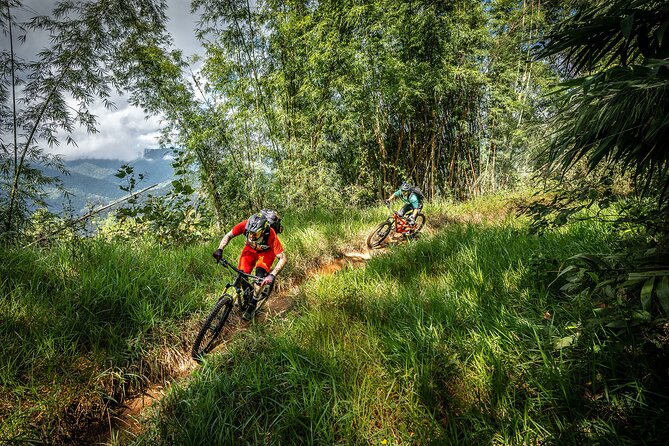
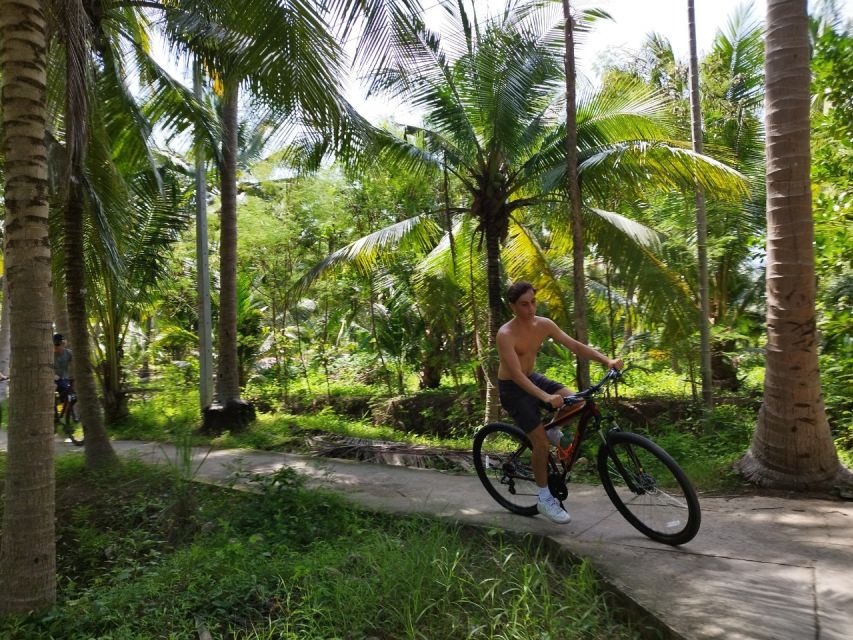
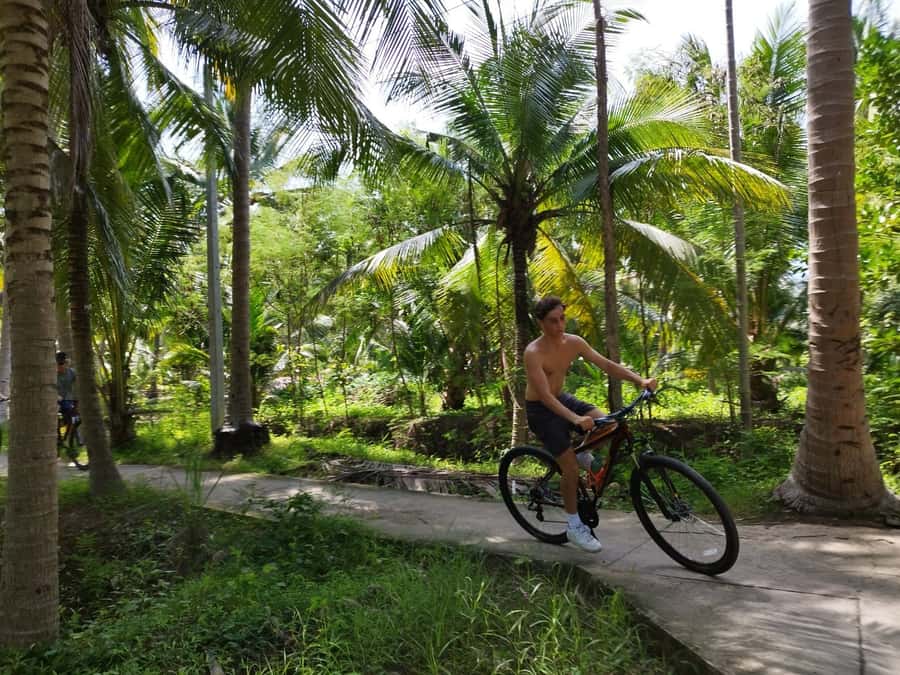
This is where the day becomes personal in a good way. Your bicycles are waiting after the floating market, and you head out along quiet country back roads, plantation trails, and unpaved flat roads.
You also get bicycle and helmet rental included, which is a practical win. You don’t need to worry about tracking down the right bike or borrowing a helmet at the last second.
What this cycling section is best at:
- Helping you see beyond the market perimeter.
- Moving at a human pace through rural areas rather than only from a tour van window.
- Getting a calmer, more scenic experience after crowded stops.
The pace also matters. Because you’re not cycling uphill mountains, this tour feels more about scenery and rhythm than athletic training. That said, unpaved roads and trails mean you’ll want to ride carefully and keep your eyes on the surface.
From a review perspective, people really mention how peaceful the ride feels once you’re away from the crowds. That makes sense: after long-tail boats and market noise, the quiet coconut route can feel like a reset.
A few more Bangkok tours and experiences worth a look

Lunch at a Maeklong riverside restaurant: Thai food with a memorable setting
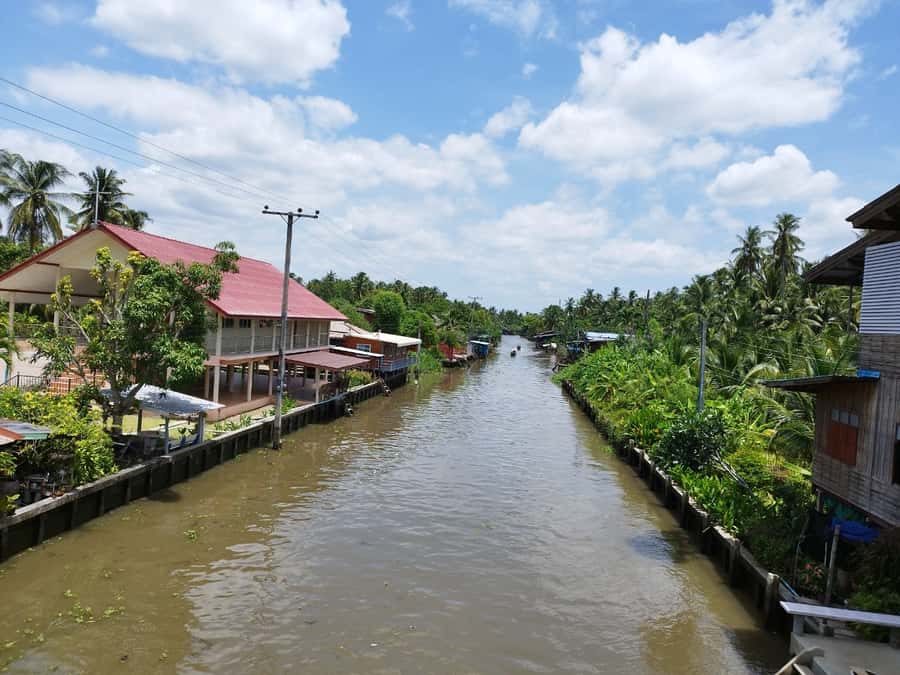
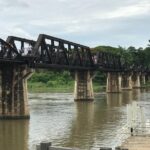
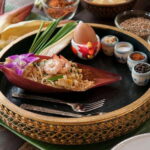
Lunch is included, served at a Maeklong riverside restaurant. One review highlights that the meal felt special because it was enjoyed in a unique setting—described as lunch under a bridge—so even if you’re not a “foodie,” this lunch stop aims to be more than just a quick meal.
Why I think this matters for value: tours that cut food quality often ruin the day. Here, the lunch is specifically called out as delicious Thai food in a local riverside setting, and it’s included in the price. That helps your total cost feel more predictable.
For what to do before lunch:
- Don’t over-snack at markets. Damnoen Saduak and Maeklong can lure you into buying small bites. If you want lunch to be a highlight, hold back a little.
- Stay flexible: menus aren’t described in the details provided, so plan on Thai dishes that fit a local riverside lunch style.
And after lunch? You’ll move from food mode back into “see more” mode, which includes additional sightseeing and temple stops later.
Temples: Wat Bang Kung and Wat Bang Kae Noi for visual variety
The temple portion is a smart contrast to the watery and market-focused theme of the day. You’ll visit Wat Bang Kung first, then Wat Bang Kae Noi.
Wat Bang Kung: the banyan-tree chapel idea
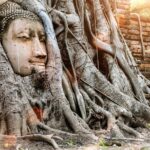
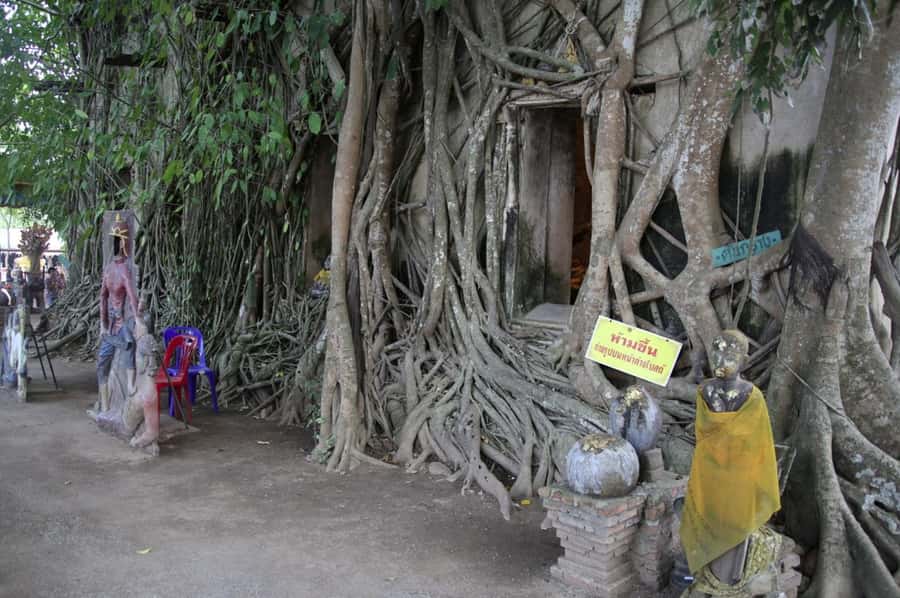
Wat Bang Kung is described as dating back more than 500 years and famous for a small chapel enclosed within the roots of a banyan tree—called Bot Prok Po. The idea is that the tree itself acts like the structural element of the temple. Without it, the place would not be the same.
Even if temples aren’t your main interest, this visual concept is unique. It gives you something to look at that isn’t a market stall or boat.
Wat Bang Kae Noi: wood carvings and wax statues
Wat Bang Kae Noi was built in 1868, and inside it has wood carvings depicting the life of Buddha. There are also three life-sized wax statues of famous Thai monks.
This temple brings a different feel from Wat Bang Kung. Instead of one signature visual concept, you get interior detail: carvings plus the wax-stature presence.
Your temple stops are short (photo stop + visit + guided tour), but the guides are there to explain what you’re looking at. If you like meaning with your photos, you’ll appreciate that.
Guide style and group vibe: what you can expect from the human side
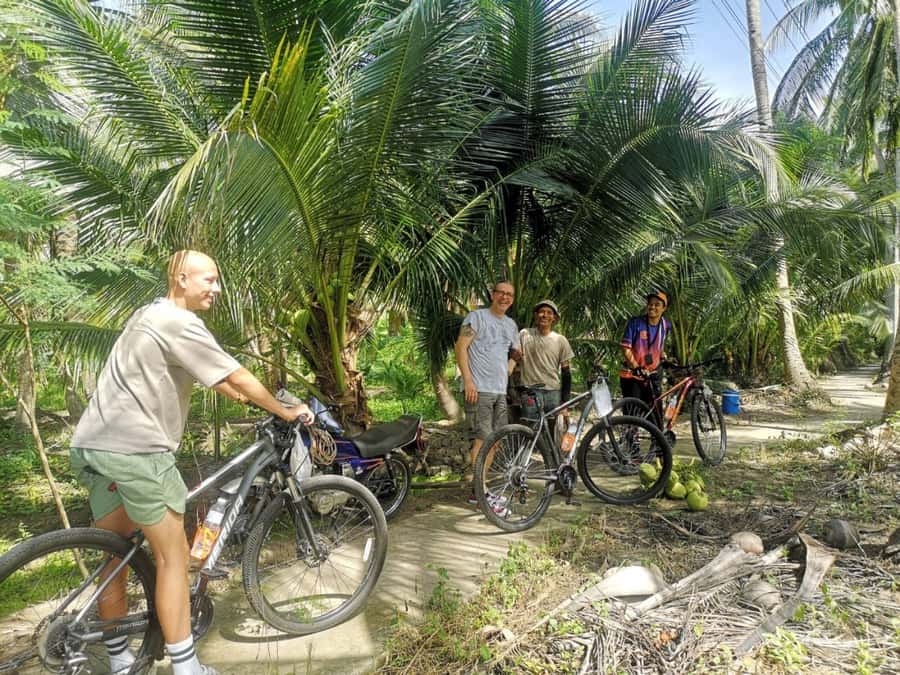
The tour includes a live guide in English and Thai, and private groups are available if you want a smaller setting. One review specifically mentions a guide named Thatipoom Donsomai and praises the day for being well paced and informative, with attention to details like timing.
Punctuality matters on tours like this. Markets and trains have their own schedules, and canal rides can only run so often. When a guide keeps things on track, you spend more time seeing and less time waiting in the heat.
Also note the travel-company detail: drivers will wait no longer than 5 minutes after the scheduled pickup time. So don’t aim for exactly “close enough.” Be ready in the lobby a bit early.
Price and value: is $125 fair for this day?
At $125 per person for a full day (about 8 hours), it’s not the cheapest way to do rural provinces from Bangkok. You can often eat cheaply and travel locally for less than that on your own. So why do tours still make sense here?
Because the included items add up in a way that’s hard to DIY without planning:
- Hotel pickup and transport out to the market areas and back to Bangkok
- Bicycle and helmet rental
- Long-tail boat canal ride
- Guided visits (Maeklong, floating market, temples)
- Temple entrance fees
- Lunch and drinking water
If you tried to piece it together yourself, you’d likely spend time coordinating transport, arranging a bike, and finding reliable canal-boat options, plus paying entrance fees. The guide compresses all of that into one smooth itinerary.
So I’d frame the price like this: you’re paying for convenience, plus access to coordinated timing, plus a guide who can explain what you’re seeing. If you’re the type who loves markets and wants the route to run like clockwork, $125 can feel fair.
If your goal is maximum freedom and minimum cost, this may feel pricey. In that case, you might consider a simpler market-focused half-day or a purely self-guided approach. But for a one-day hit of the best-known regional experiences, it’s built to deliver.
Who this tour suits best (and who should think twice)
This day works best if you:
- Want the big regional icons—Maeklong, Damnoen Saduak, and two temples—in one outing
- Like mixed travel styles (boat + bike + walking through markets)
- Prefer having a guide to interpret what you’re looking at
- Want lunch included in a planned meal stop
Think twice if you:
- Dislike early mornings and long days
- Don’t want to cycle on unpaved roads/trails
- Prefer free time over a structured schedule
Also consider your comfort with crowds. Maeklong and Damnoen Saduak are popular places. The tour does add guided structure, but it doesn’t magically remove busyness.
Practical tips to make the day easier
- Wear breathable clothes and closed-toe shoes. You’ll be moving between boat, bike, and market areas.
- Bring sun protection. Boats and open market sections can be exposed.
- Keep your camera ready, but don’t forget to slow down and watch the train-market sequence.
- If you’re prone to motion sickness, consider what usually helps you on boats. The long-tail ride is about 40 minutes.
- Keep some cash handy for market browsing. The tour includes shopping time, but personal purchases aren’t included.
Should you book this Floating Market Bicycle Tour from Bangkok?
I’d book it if you want a single day that connects Thailand’s water-world and countryside-world, with bikes and boats doing the heavy lifting. The route is packed, but it’s packed with variety: train-market spectacle, canal navigation, coconut sugar learning, a calm rural bike segment, riverside lunch, and two temple visits that look different from each other.
If you’re more budget-focused and want to wander at your own pace, you might feel the price more sharply. But if you want fewer planning headaches and more guided meaning, this one earns its place on your list.
FAQ
What time does the pickup happen in Bangkok?
Pickup is around 07:00 AM from your hotel. You should wait in the hotel lobby about 10 minutes before the scheduled pickup time, and the driver will wait no longer than 5 minutes after that.
How long is the tour from start to finish?
The tour duration is listed as about 8 hours.
Do I get a bicycle and helmet?
Yes. Bicycle and helmet rental are included.
Is there a long-tail boat ride?
Yes. You take a long-tail boat canal ride through the canals near Damnoen Saduak.
Which markets are visited?
You’ll visit the Maeklong Railway Market and the Damnoen Saduak floating market.
What temple stops are included?
The tour includes Wat Bang Kung and Wat Bang Kae Noi, with guided visits and entrance fees.
Is lunch included, and what kind of food is it?
Yes. Lunch is included at a local Maeklong riverside restaurant and is described as delicious Thai food.
What languages is the live guide available in?
The live tour guide is available in English and Thai.
Is free cancellation available?
Yes. Free cancellation is offered up to 24 hours in advance for a full refund. If you cancel 48–24 hours before departure, there is a 50% cancellation fee, and cancellations within 24 hours (or no-shows) have a 100% cancellation fee.