REVIEW · BANGKOK
Floating and Railway Markets Private Tour
Book on Viator →Operated by Thailand Insight Travel · Bookable on Viator
Markets can move, and so can your camera. This private day strings together Damnoen Saduak by motorboat and the Mae Klong Railway Market, where sellers pull back stalls when the train arrives.
I like the smooth logistics: hotel pickup and drop-off using a private air-conditioned vehicle, plus a licensed English-speaking guide that keeps the day organized. One thing to watch is the pace; you’re dealing with roughly 3.2 hours of roundtrip travel time between Bangkok and the railway area, and the floating market can feel very crowded.
In This Review
- Key highlights worth your attention
- Why Damnoen Saduak and Mae Klong work so well together
- How the schedule fits into a 7-hour day
- Getting out of Bangkok: pickup that saves you energy
- Hoop Rom Market (Mae Klong Railway Market): the pull-back show
- Samut Sakhon sea salt fields: whitish, not rice
- Coconut Sugar Farm: from nectar to palm sugar loaves
- Damnoen Saduak Floating Market: motorboats, canals, and crowd reality
- Lunch and what to expect with food timing
- Value check: what your $126.94 per person is buying
- Guide quality and communication: how to make the day smooth
- Who this tour fits best
- Should you book this Floating and Railway Markets tour?
- FAQ
- How long is the Floating and Railway Markets Private Tour?
- Is hotel pickup and drop-off included?
- What rides are included in the tour?
- Is lunch included?
- Are entrance tickets included?
- Is the tour private or shared?
- What insurance is provided?
Key highlights worth your attention
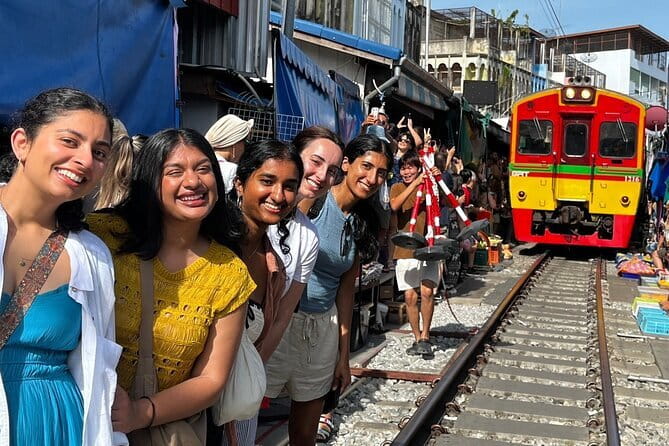
- Railway market timing: the train approach turns a normal walk into a moment with real urgency
- Motorboat through Damnoen Saduak: you get the water-lane view without having to figure it out yourself
- Sea salt fields in Samut Sakhon: not rice—whitish salt production tied to local know-how
- Coconut sugar farm demo: you’ll see how coconut nectar becomes sugar products
- Private, guided, and insured: hotel transport, an English guide, and travel accident insurance up to 1,000,000 THB per person
Why Damnoen Saduak and Mae Klong work so well together
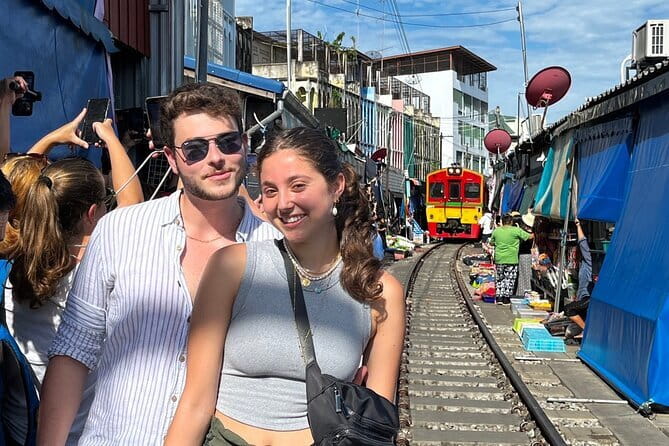
This tour hits two kinds of Thailand market life that most visitors never see in one day: commerce on the water and commerce on the tracks. Damnoen Saduak is built around boats and canals, while Mae Klong Railway Market is built around a train schedule and a very physical routine—people handling goods right up to the rail lines.
The payoff for you is practical. You’re not just looking at stalls from the outside. You’re watching how Thai workers adapt their setup in real time, and you get to connect that to other food-and-farm stops on the same route: sea salt and coconut sugar. That adds context to the souvenirs you’ll probably see later.
The best part is how varied it feels in a single day. You’re moving from roads and rural work zones to a market that looks like it’s floating, then into a market where the rail line is the main stage.
You can also read our reviews of more private tours in Bangkok



How the schedule fits into a 7-hour day
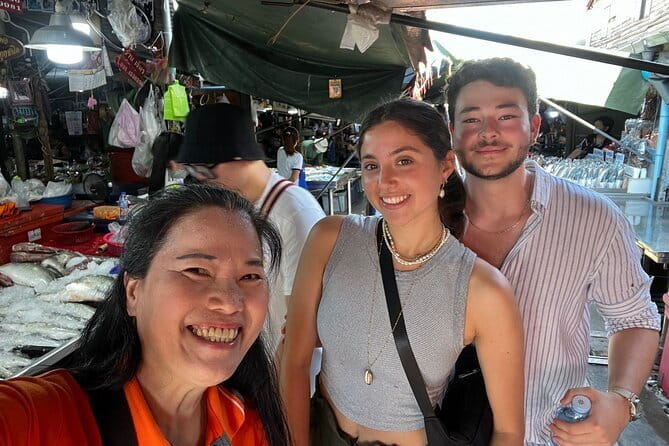
Plan for a long day with a lot of short, focused stops. The tour runs about 7 hours total, and the roundtrip travel time between Bangkok and the railway market area is around 3.2 hours. That means you’ll spend real time in the van before you settle into each activity.
Here’s the flow you should expect:
- Pickup in Bangkok and travel to the railway-market area first
- A quick stop in Samut Sakhon for salt fields
- Then the Mae Klong Railway Market itself
- A short farm stop for coconut sugar
- Finally, the Damnoen Saduak Floating Market by motorboat
- Return to your hotel
The durations also matter for your decision-making. The railway market time is around 1 hour 30 minutes, the floating market is about 1 hour 30 minutes, and the coconut sugar farm time is around 20 minutes. That last one is short, so you’ll want to pay attention and ask questions during the demo.
Getting out of Bangkok: pickup that saves you energy
You start with hotel pickup and drop-off, plus a private air-conditioned vehicle. In Bangkok, that matters. It keeps your day from turning into a transit project, and it reduces stress if you’re already dealing with traffic and heat.
Another small but important detail: you get a licensed English-speaking guide. Even when guides can have different accents, the guide’s job here is to translate what you’re seeing into simple explanations—why salt fields look like they do, what coconut nectar becomes, and what to watch for when the train nears the market.
If you prefer a more independent pace, private tours are helpful because you can ask for extra photo time without slowing down a big group. At the same time, it’s still one fixed day plan, so you won’t have unlimited control over timing.
Hoop Rom Market (Mae Klong Railway Market): the pull-back show
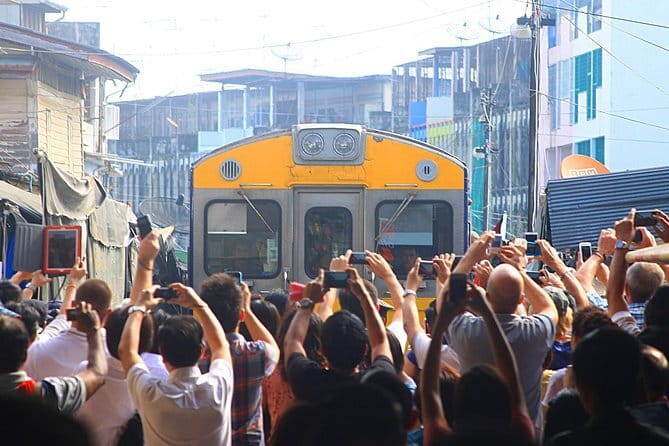
Mae Klong Railway Market is the star act for most people, and it’s for a reason. The market is famous for the way sellers retract stalls when the train approaches—so what you’re doing becomes time-sensitive sightseeing.
On your visit, you’ll ride a local train toward Mae Klong station, then walk through the market area. The train ride is more than transport. It’s part of the experience of seeing the environment from the same rail line the market relies on.
What I think is the key value here is that you’re witnessing a working system, not a staged performance. The setup changes because trains keep coming. That creates a real sense of urgency and attention—people know what’s happening, and they act fast.
One consideration: this stop can feel rushed if you’re the type who likes long, unhurried walking and slow photos. If you want fewer people in your shots, arrive ready to move quickly and use bursts of time rather than expecting to linger everywhere.
Samut Sakhon sea salt fields: whitish, not rice
A lot of people arrive expecting rice fields—and then they see something different. The salt fields are whitish, and that visual switch is part of the lesson. This stop is about sea salt production and the idea that local work turns into products used in cooking and skincare.
You’ll meet a salt farmer who explains the process. The tour highlights Thai local wisdom here, and the intention is clear: you’re not just shopping at markets, you’re seeing where ingredients come from.
Is it the most exciting stop? Not always. One downside you should take seriously is that this segment may feel less interesting if you’re hoping for major visuals or constant action. It’s more of an educational pause than a big spectacle.
Still, it’s a useful balancing act. After the railway market’s drama, the salt fields slow your brain down and give you a different kind of understanding: how water and sun turn into a staple commodity.



Coconut Sugar Farm: from nectar to palm sugar loaves

This part is short—around 20 minutes—but it’s designed like a focused lesson. You’ll observe how farmers produce coconut nectar and palm sugar products, including a demonstration involving:
- cutting coconut flower sources
- collecting nectar into a bamboo container
- using preservation woods in the process
The goal isn’t only to show steps. It’s to make the product make sense when you see it in shops later. Coconut sugar and palm sugar products can look similar in packaging, but the process explains why they have different textures and roles.
For your experience, the farm stop can be your best “hands-on understanding” moment of the day, especially if you like learning how everyday Thai ingredients are actually made.
Practical tip: because time is limited, be ready with one or two questions you care about—how the product is used, what makes it different, or how the process affects taste. A good guide can usually answer clearly, and this is one stop where Q&A genuinely improves your takeaway.
Damnoen Saduak Floating Market: motorboats, canals, and crowd reality
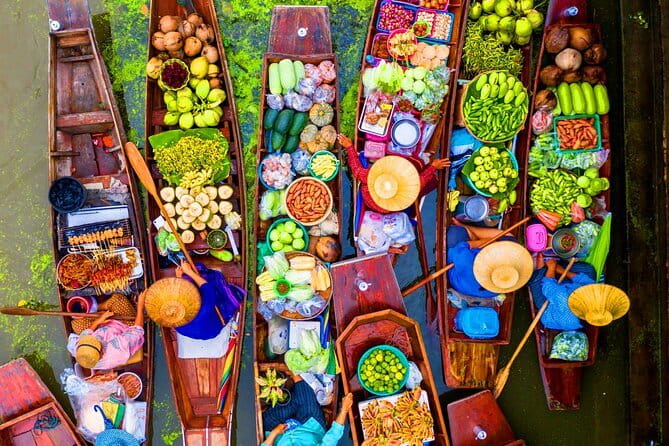
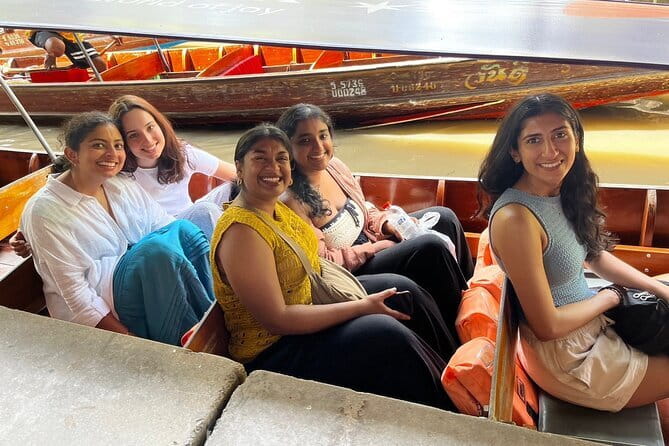
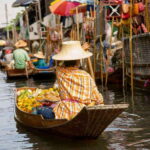
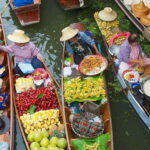
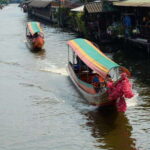
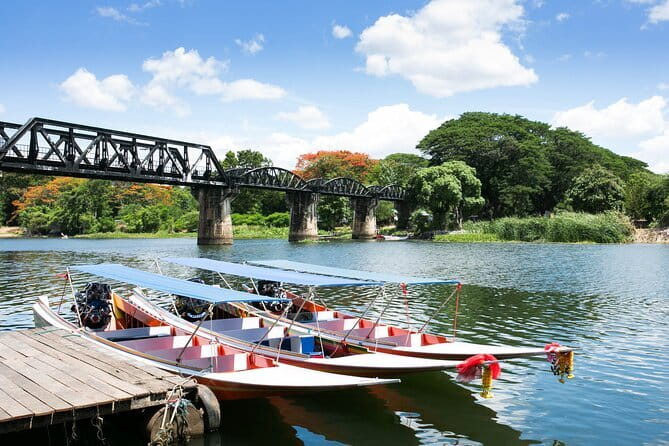
Damnoen Saduak is the classic canal market, and you’ll see it the best way this tour offers: a motorboat ride. That boat segment matters because it gives you a moving view through the canal lanes, letting you notice layout and vendor positioning without getting stuck on land.
You’ll spend about 1 hour 30 minutes at the floating market area. For photos, this is the moment to focus on quick, clear shots: people working, boats stacked with goods, and the canal life that you simply can’t capture the same way from shore.
Here’s the balanced truth you should plan for: the floating market can be very crowded, and crowding can make it harder to walk where you want or get photos without constant background noise. If you want space, be ready for a shoulder-to-shoulder style environment.
There’s also an ethics note to consider. One person flagged concerns about animal welfare in the floating market setting. This doesn’t mean every part of the market is the same, but if that topic matters a lot to you, keep your attention on how animals are handled around vendors and avoid lingering at areas that feel uncomfortable.
Lunch and what to expect with food timing
Lunch isn’t included. That’s normal for market days, but it changes your prep. With a full day plan and fixed stop times, you’ll likely be eating either before you go or after you return to Bangkok.
If you don’t want your stomach to steer your mood, bring a simple plan:
- If you eat early, you’ll stay comfortable during the mid-morning to early afternoon transit.
- If you wait until later, you’ll have a clearer sense of where you want to go back in Bangkok.
In other words, don’t count on a lunch rescue if the day runs quickly. The structure is built around market timing, not restaurant timing.
Value check: what your $126.94 per person is buying
At $126.94 per person, you’re paying for more than entry fees. You’re paying for the package that stitches the day together without you doing the logistics.
Here’s what’s included that drives value:
- Private air-conditioned vehicle with hotel pickup and drop-off
- Licensed English-speaking guide
- Motorboat ride in the floating market
- Train ride connected to the Mae Klong market experience
- Travel accident insurance up to 1,000,000 THB per person
Entrance costs are also handled for you in key spots. The tour notes free admission for parts of the day, and includes admission for others (like the railway market and the coconut sugar farm segment).
So when does it feel like a smart buy? If you want:
- a guided explanation so the markets mean something
- the correct rides (boat + rail) without hunting them down
- a private setup that fits your group better
When might it feel less worth it? If you’re perfectly happy doing Damnoen Saduak and Mae Klong on your own with minimal guidance, you could spend less by DIY. But most people don’t save much after factoring in time, transport stress, and the ride components.
Guide quality and communication: how to make the day smooth
English guide quality can make or break market days, and you’ll be in a lot of rapid visual and verbal moments. In the feedback you’ll find both praise for guide knowledge and at least one comment about the difficulty of understanding accents.
So here’s the practical approach:
- Ask your guide for the simplest version of what you’re seeing in each stop.
- If you don’t catch a point, ask them to repeat. Market days are chaotic; clarity matters.
- Treat explanations as optional bonus, not as the main event. The sights are already doing the heavy lifting.
From what this tour is set up to do, the guide’s job is to help you get your bearings fast and make sure you don’t miss the timing at the railway market.
Who this tour fits best
This is a strong choice if you:
- want both a canal market and a railway market in one day
- prefer private transport and hotel pickup
- like food-adjacent learning (salt and coconut sugar)
- travel with kids or anyone who enjoys visual surprises
It may be less ideal if you:
- want long, slow shopping time with lots of breathing room (crowding at Damnoen Saduak can limit that)
- strongly prioritize animal welfare concerns and don’t want to see any animals in market contexts
If your top priority is quiet, you’ll probably enjoy the salt farm and coconut sugar demo more than the market crowds.
Should you book this Floating and Railway Markets tour?
Book it if you want a full market day with the right transport pieces: motorboat on the canals and train-linked access at the railway market. The combination of sea salt and coconut sugar stops also gives you more context than a pure photo tour.
Skip it or reconsider if:
- you don’t like crowded spaces
- you want a very leisurely pace
- animal welfare issues would significantly affect your comfort at the floating market
If you do book, pack for heat, wear shoes you can stand in, and keep your expectations tuned to a fast, guided circuit. This tour works best when you treat the markets like scenes in motion, not like quiet museums.
FAQ
How long is the Floating and Railway Markets Private Tour?
It runs about 7 hours (approx.).
Is hotel pickup and drop-off included?
Yes. The tour includes hotel pickup and drop-off, plus a private air-conditioned vehicle.
What rides are included in the tour?
You’ll get a motorboat ride in the Damnoen Saduak Floating Market and a train ride connected to the Mae Klong Railway Market.
Is lunch included?
No, lunch is not included.
Are entrance tickets included?
Some admissions are listed as free, and others are included (for example, the railway market and the coconut sugar farm).
Is the tour private or shared?
It’s private. Only your group participates.
What insurance is provided?
The tour includes travel accident insurance up to 1,000,000 THB per person.