REVIEW · KRABI
Flavors of Krabi Food Tour
Book on Viator →Operated by Taste Krabi Food Tours · Bookable on Viator
Morning markets are the cheat code. The Flavors of Krabi Food Tour uses that early start to put you in step with local eating habits, not just tourist menus, and it pairs it with a small-group route through Krabi Town’s Thai, Thai-Chinese, and Southern Muslim food traditions. I especially like the chance to sample 10+ food and drink tastings across several family-run stops, and I love how the guide, View, shares what she actually knows about Krabi flavors. One possible drawback: it’s not set up for mobility issues, and the walking can be a lot if you don’t like moving around.
The route also feels built for real contrasts: fresh market bites, a dim sum stop by the river, on-rice Thai-Chinese comfort food with Thai herbal juices, and then a decades-old roti shop where Southern curries show up in a way most visitors never find. You’ll finish with a quick look at the street art and the Mud Crabs Sculpture, which helps the food connect to the town itself. For the price, you’re paying for structure and local access, not a single big meal—and if you go hungry and ask questions, you’ll get your money’s worth.
In This Review
- Key Things I’d Highlight Before You Go
- Why This Krabi Food Tour Starts at Maharaj Market
- Stop 1: Maharaj Market Snacks and Fruit in the Local Morning Rhythm
- Stop 2: Krabi Town River Stroll and Dim Sum Comfort
- Stop 3: Third-Generation Thai-Chinese Dishes and Herbal Juices
- Stop 4: Southern Muslim Roti Shop, Curry, and a Local Favorite
- Stop 5: The Mud Crabs Sculpture and Street Art in Pak Nam
- Timing, Pacing, and How the 3.5 Hours Actually Feels
- Price and Value: What $104 Buys in Real Eating Access
- What’s Included vs. What You Should Plan for
- Getting There: Meeting Point and Ending Landmark
- Who This Tour Fits Best (and Who Might Skip It)
- Should You Book Flavors of Krabi Food Tour?
- FAQ
- Does the tour include food and drinks?
- How long is the Flavors of Krabi Food Tour?
- How much does it cost?
- What time does the tour start?
- How many people are in the group?
- Is the guide English-speaking?
- Is there a rain poncho if the weather is bad?
- What if I need to cancel?
Key Things I’d Highlight Before You Go

- Small group size (up to 8 travelers) keeps the tasting pace comfortable.
- 8:00 am start means you catch Maharaj Market when locals are actually shopping and eating.
- 10+ tastings across multiple food styles (Thai, Thai-Chinese, and Southern Muslim).
- English-speaking guide (View is mentioned in feedback) helps you order and understand what you’re eating.
- Rain poncho available if weather turns on you.
- Street art and landmarks add a sense of place beyond food alone.
Why This Krabi Food Tour Starts at Maharaj Market

If you’ve eaten your way through big Thai cities, you know how quickly food tours can turn into a checklist: quick stop, quick sample, move on. This one feels different because it starts at the morning pulse of Krabi—Maharaj Market. You’re there about 50 minutes, and the point isn’t only to taste; it’s to watch how locals shop and what they gravitate toward early in the day.
At the market, you’ll get led through stalls with fresh produce and local snacks, plus a chance to try tropical fruits. The tastings here set the tone: you’ll taste things that feel simple but intentional, like the kind of food people eat before the day gets hot. It’s also a smart way to beat the crowds that show up later.
Practical note: because you’re starting early, I’d plan to be awake and ready right at 8:00 am. Bring a bottle of water if you run warm easily. Even with tastings included, you’ll likely want sips between stops.
You can also read our reviews of more food & drink experiences in Krabi



Stop 1: Maharaj Market Snacks and Fruit in the Local Morning Rhythm
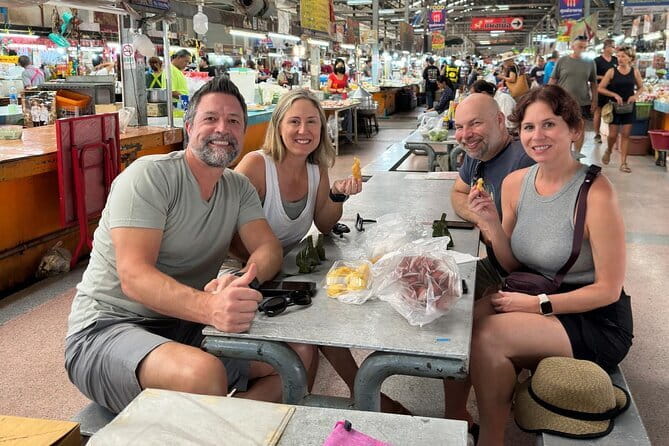
Maharaj Market is your warm-up, and it’s a good one. You’ll spend around 50 minutes wandering with your guide, learning what’s commonly eaten right away. The market includes a mix of Thai snacks and fresh fruit, which matters because it keeps the experience from being only one-note savory food.
What I like about a market stop like this is that you get context. You start noticing flavor patterns—how Thai sweetness balances salt, how textures show up even in street bites, and how vendors prepare food for daily customers rather than spectacle. By the time you reach the river area later, you’ll have a better sense of what you’re tasting and why it works.
Possible drawback: market food can be intense if you don’t like experimenting. If you’re the type who needs every dish to be familiar, you’ll want to go slow and ask your guide what’s mild versus spicy. The good news is that you can also tell them about dietary needs when booking.
Stop 2: Krabi Town River Stroll and Dim Sum Comfort

After the market, you’ll take a leisure stroll along the river to a popular local dim sum restaurant. This is another 50-minute stop, and it’s where the tour shifts from snack-size bites to something more structured.
Dim sum in Krabi town isn’t about tourist-style variety packs. It’s about comfort foods made for the day. You’ll get to sample steamed delicacies like dumplings and fluffy buns, with savory fillings that change from place to place. The setting also tends to feel more relaxed than a chaotic street stall, which gives you a breather mid-tour.
Here’s the practical upside: steamed dim sum is usually easier on a schedule. If you’re worried about being stuffed too early, this stop gives you something satisfying without feeling like a heavy lunch.
Tip: use this stop to reset your palate. After fruit and market snacks, you’ll likely appreciate the steadier textures and flavors of steamed food.
Stop 3: Third-Generation Thai-Chinese Dishes and Herbal Juices
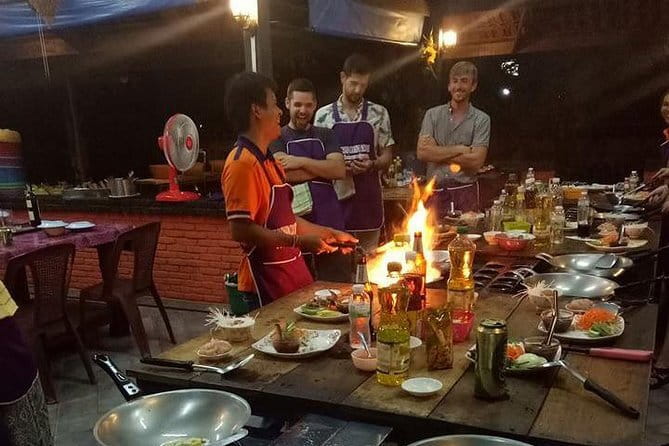
Next comes a third generation Thai-Chinese local spot, and the focus is comfort food served in a way locals actually eat—think on-rice meals plus drinks that cut through richness. This stop runs about 50 minutes and includes Thai herbal juices.
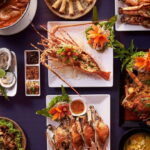
You’ll have a chance to try things such as homemade crispy pork and clay oven roasted pork, plus aromatic chicken. Even if you’ve had Thai-Chinese food elsewhere, this specific mix is useful because it introduces a different texture and cooking style: crisp pork provides crunch; clay-oven roasting adds deeper flavor; aromatic chicken rounds it out so you don’t feel like you’re only tasting one kind of richness.
Why I think this stop is valuable: it teaches you that Thai cuisine in coastal towns often blends influences. Krabi is shaped by trade and migration, and you can taste that in the food styles. On a food tour, that kind of context is what turns a set of samples into a real understanding.
If you’re cautious about pork-heavy meals, plan to eat slowly here. Let your guide know your preferences—this tour is designed to accommodate dietary requirements if you mention them in advance.
Stop 4: Southern Muslim Roti Shop, Curry, and a Local Favorite
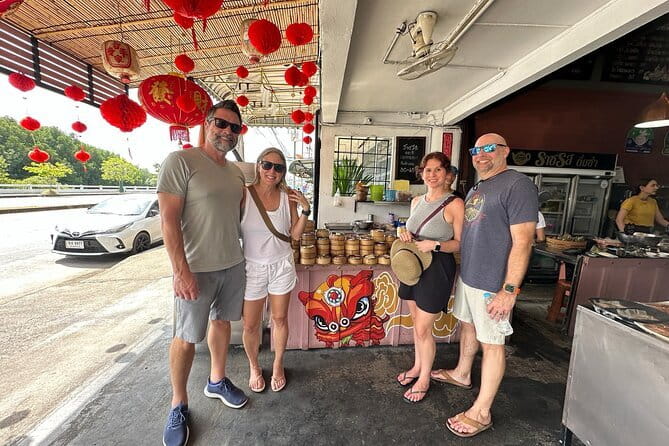
Then the tour turns to one of the most interesting culinary shifts: a family run Muslim roti shop. This final food stop is also about 50 minutes, and it’s centered on freshly made flatbreads that locals treat like a breakfast favorite.
Roti shops are one of those places where you get variety without needing a huge menu. Here, you’ll also taste authentic Southern curry and a Southern specialty dish described as rare to find in tourist areas. That’s the kind of detail that matters. It’s not only about eating; it’s about leaving with at least one dish you couldn’t easily reproduce by accident.
The flatbread part is especially satisfying because it’s fresh and warm, and it often ties together with curry or other toppings in a way that feels made-to-order. If you like contrast—soft bread with spicy-sweet sauce—this is where you’ll likely start craving your next bite before you’re even done with the last one.
One consideration: Southern curries can vary in heat and depth depending on the kitchen. If you’re sensitive to spice, tell your guide early and taste a little first before committing to larger bites.
A few more Krabi tours and experiences worth a look
Stop 5: The Mud Crabs Sculpture and Street Art in Pak Nam

Not every food tour includes a meaningful final walk, but this one does. You’ll also spend about 10 minutes at The Mud Crabs Sculpture, with time to notice street art murals around town. These murals focus on local wildlife and highlight local artists’ work.
This isn’t a random photo stop. It helps you connect what you ate to where you’re standing. Krabi’s food scene is part of the town’s daily life, and a quick look at the public art keeps the tour from ending the moment you finish your last dish.
If you enjoy street-level atmosphere, this short segment is a nice payoff. If you’re mostly there for food, it still works as a reset—something visual to balance all the flavors you just tried.
Timing, Pacing, and How the 3.5 Hours Actually Feels
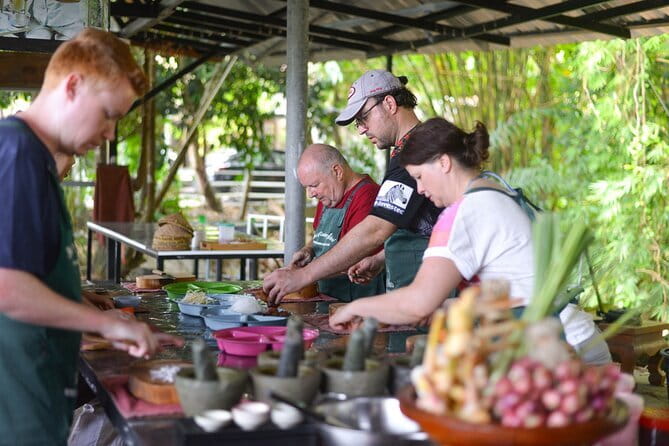
The whole experience runs about 3 hours 30 minutes (approx.), with each main stop timed around 50 minutes, plus a shorter final walk. That structure helps in a practical way: you’re not bouncing between restaurants every ten minutes, but you also aren’t stuck for too long in one place.
Starting at 8:00 am also changes the feel. You get cooler morning temperatures and a more local energy, especially at Maharaj Market. Your stomach benefits too: early tastings feel lighter, and you’re less likely to hit that midday slump where everything starts to taste the same.
Because the tour is capped at 8 travelers, the guide can keep things moving while still answering questions. That matters when you’re eating across multiple cuisines and want clarity on what’s in each dish.
Price and Value: What $104 Buys in Real Eating Access

At $104, you’re paying for more than a few snacks. You’re buying:
- 10+ food and drink tastings
- a professional English-speaking guide
- tourist accident insurance
- a rain poncho if required
The value is in the combination. Without a guide, you’d spend time figuring out where to go for the right mix of market food, dim sum, Thai-Chinese on-rice dishes, and Southern roti—then pay more in trial and error. Here, the route is assembled to keep you sampling distinct food styles instead of repeating the same flavors with different names.
Also, admission ticket details for the food stops are listed as free, which helps keep the price focused on food and guiding rather than add-ons.
When this is especially worth it: if you want a single morning solution that covers multiple cuisines in one go. If you’re the type who likes to wander without structure, you might spend less—but you’ll likely miss some of the specific local spots that the tour is built around.
What’s Included vs. What You Should Plan for
Included tastings mean you can go in with less guesswork. Still, bring some basics so you’re comfortable:
- wear shoes you can walk in (the tour is not suitable for mobility issues)
- expect a bit of walking between stops
- bring a drink of your own if you tend to get thirsty quickly
Not included items are personal expenses and hotel transfers (available as an add-on). If you’re staying out of the center, check how you’ll reach the meeting point without stress.
Getting There: Meeting Point and Ending Landmark
You’ll start at Krabi Street Art: Wild Life Wonder, located at 15 Soi Maharaj 9, Tambon Pak Nam, Amphoe Mueang Krabi. The tour ends at The Mud Crabs Sculpture at 3W88+VVJ, Pak Nam, Mueang Krabi District.
It’s described as near public transportation, which is helpful if you’re mixing this tour with other Krabi plans. If you like to arrive early and get your bearings fast, plan to show up a few minutes before 8:00 am.
Who This Tour Fits Best (and Who Might Skip It)
This food tour is a strong match if:
- you like organized tasting instead of random snack hunting
- you want variety across Thai, Thai-Chinese, and Southern Muslim flavors
- you enjoy early starts when markets are active and locals are moving
- you like small groups and a guide who can translate food choices into something meaningful
You might skip it if:
- you need a low-walking experience (it’s not suitable for people with mobility issues)
- you want a late start (it begins at 8:00 am)
- you dislike spicy food and don’t plan to communicate spice sensitivity in advance
Should You Book Flavors of Krabi Food Tour?
Yes, you should book it if you want a single morning that gives you real variety, not just “more street food.” The combination of market time, a dim sum stop, a Thai-Chinese pork and herbal juice meal, and a Southern roti shop makes it easier to understand Krabi’s food mix in a way you can’t easily duplicate on your own. Add the small group size and the guide’s local focus (View is specifically mentioned as passionate), and it’s a smart value play for first-timers.
If you’re already planning to do your own food wandering all day, you could skip. But if you want dependable local access with clear pacing, this is one of the more practical ways to eat well in Krabi—while also seeing a bit of the town’s street art.
FAQ
Does the tour include food and drinks?
Yes. You’ll get 10+ food & drink tastings during the tour.
How long is the Flavors of Krabi Food Tour?
It runs about 3 hours 30 minutes (approx.).
How much does it cost?
The price is $104.
What time does the tour start?
The start time is 8:00 am.
How many people are in the group?
The tour has a maximum of 8 travelers.
Is the guide English-speaking?
Yes. The tour includes a professional English speaking guide.
Is there a rain poncho if the weather is bad?
Yes. A rain poncho is included if required.
What if I need to cancel?
You can cancel for a full refund up to 24 hours in advance of the experience start time.