REVIEW · KO PHI PHI DON
Ferry Transfer from Krabi Klong Jilad Pier to Phi Phi Tonsai
Book on Viator →Operated by Andaman Wave Master · Bookable on Viator
Two hours to Phi Phi can feel effortless. This Krabi to Phi Phi ferry runs on a big, reliability-focused Royal Jet Cruiser that handles up to 500 passengers and aims to get you across in about 2 hours. You meet at Sai Thai Klong Jilad Pier, check in, and board right at departure time.
I especially like how this transfer is set up for an easy flow: there’s a restroom on board, and the crew is used to helping people load and unload luggage. Another strong point is comfort for the crossing—one review noted an air-conditioned waiting area and another described a spacious boat and smooth seas.
The one thing I’d plan around is that boarding ramps can be steep, which could be awkward if you have mobility challenges. Also, while the schedule is usually dependable, technical delays do happen, and the longer you’re stuck on the pier, the more likely your connection plans take a hit.
In This Review
- Key things to know before you go
- The Krabi to Phi Phi route in plain terms
- Where you meet: Sai Thai Klong Jilad Pier to reduce chaos
- What to do when you arrive
- Check-in, waiting area, and boarding: the real-world feel
- Boarding ramps: the main caution
- On board the Royal Jet Cruiser: comfort that’s mostly real
- Seating and air-conditioning quirks
- Windows and heat
- Luggage handling and onboard basics
- Timing: how the trip stays “two hours” and what can change
- Weather requirements
- Arrival at Tonsai Pier: getting your next move right
- What arrival feels like
- Price ($14.12) and value: what you’re actually buying
- Comfort vs. cost
- Who this Krabi–Phi Phi ferry suits best
- Who should think twice
- Should you book this ferry transfer?
- FAQ
- How long is the ferry transfer from Krabi Klong Jilad to Phi Phi Tonsai?
- Where is the meeting point for this ferry?
- Where does the ferry arrive on Phi Phi?
- What is included in the ticket price?
- Is the Tonsai Pier entry fee included?
- Is there an air-conditioned waiting area?
- Does this activity have a group size limit?
- Can I cancel for free?
Key things to know before you go
- Royal Jet Cruiser comfort: large ferry style (up to 500) with restroom onboard, designed for a stress-light crossing.
- Air-conditioned waiting area: you may find A/C where you check in and wait, which makes early departures easier.
- Tonsai Pier entry fee is extra: plan on 20 THB when you arrive at Tonsai Pier (not included).
- Steep boarding ramps: if you use mobility aids or have trouble with stairs/angles, this matters.
- Small-to-mid group feel: even though the boat can carry up to 500, this activity caps at 300 travelers.
- Weather-dependent travel: it requires good weather, and poor conditions can trigger a date change or refund.
The Krabi to Phi Phi route in plain terms
This is a straightforward ferry transfer between Krabi and Phi Phi Tonsai. You start at Sai Thai Klong Jilad Pier in Mueang Krabi, and you end at Tonsai Pier on Phi Phi.
The crossing time is listed as about 2 hours. In real life, the sea and operations can affect timing, so build in a little buffer if you’re trying to line this up with a hotel check-in or a paid excursion.
The goal here is comfort and reliability. A large ferry can also feel calmer than smaller boats—one review specifically praised it as a pleasant way to reach Phi Phi even when conditions were rough.
A few more Ko Phi Phi Don tours and experiences worth a look

Where you meet: Sai Thai Klong Jilad Pier to reduce chaos

Meeting point is Sai Thai Klong Jilad Pier, Sai Thai Klong Jilad Pier, Mueang Krabi District, Krabi 81000. Your ticket redemption point is the same place, which simplifies things: you don’t have to hunt down an office or a different counter.
It’s also described as near public transportation. That matters because Krabi pier logistics can be tricky—if your hotel is far from the water, you’ll thank yourself for something that’s easier to reach without a complex routing plan.
You’ll check in first, then board as the boat departs. That means you don’t have to hover at the ramp for hours with your bags, but you also shouldn’t arrive at the last second and hope it works out.
What to do when you arrive
Go early enough to find the ticket redemption point without sprinting. Keep your travel documents and booking details easy to grab; check-in is described as easy, but speed helps when pier crowds swell.
If you’re carrying a rolling suitcase, keep it upright while you’re moving through check-in. You’ll still do a short scramble at boarding, and anything loose is one more thing to manage.
Check-in, waiting area, and boarding: the real-world feel
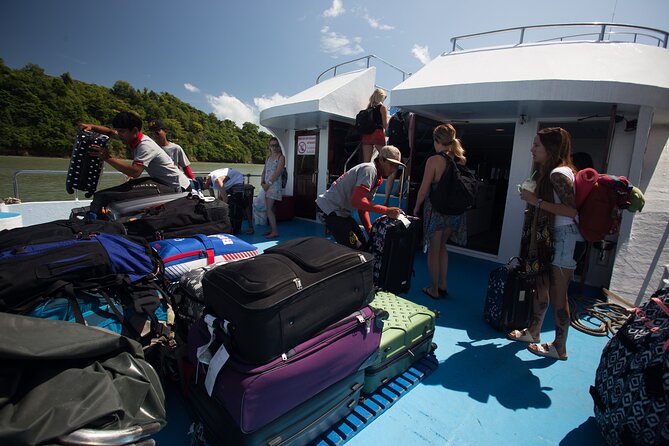
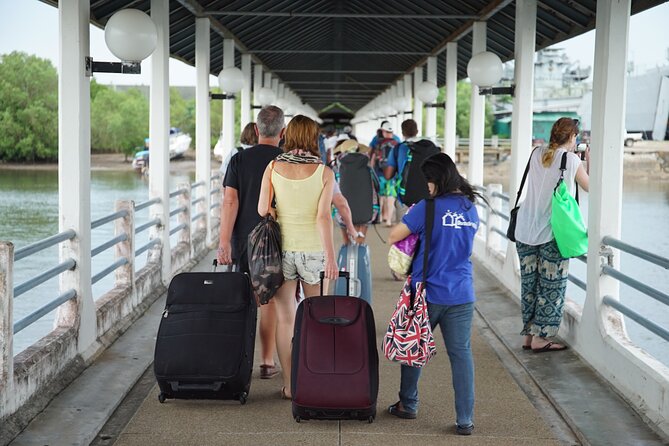
This transfer is designed so you meet all passengers at the meeting point, check in, and then board at departure time. Some days feel smooth and efficient; other days can feel more crowded, especially when multiple groups arrive in the same window.
One review highlighted an air-conditioned waiting area, plus an air-conditioned boat. That’s a big quality-of-life improvement in Krabi heat, especially if you’re traveling in the morning or during midday waiting.
Boarding ramps: the main caution
A practical drawback is that the boarding ramps are noted as steep for people with mobility challenges. If that applies to you, consider the equipment you’ll need (mobility aid, a travel companion, or a plan to minimize the struggle).
Even if you’re fine on your feet, steep ramps can slow everyone down. If your schedule is tight, this is one more reason to arrive early.






On board the Royal Jet Cruiser: comfort that’s mostly real
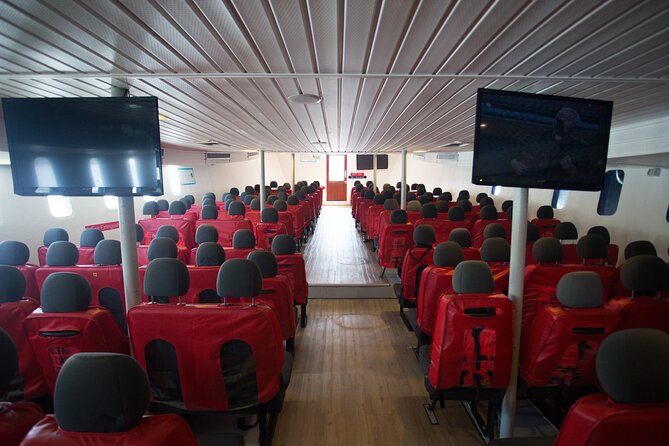
Once you’re on the boat, the tone is comfortable and functional. This ferry can handle a lot of passengers (up to 500), so you should expect a busy-but-organized environment rather than a quiet private boat.
Seating and air-conditioning quirks
Comfort is a common theme in the feedback. One review called the boat nice and spacious, and another described it as comfortable and quick.
The fine print is that air-conditioning may not be uniform. One reviewer specifically said the A/C worked in the middle of the cabin, not everywhere. If you tend to get warm, aim for seating where the airflow is stronger rather than chasing prime views at the edges.
If you choose the upper deck, another note warned that it can get hot and you’ll want sunscreen. Also, upper deck window positioning can affect shade, so treat the sunny sections as your choice—not an accident.
Windows and heat
You might find that the front or certain positions are warmer, and one review mentioned the windows were high and not as helpful for cooling or sightlines as expected. This is the kind of detail that changes comfort more than you’d think once you’re out on the sea.
A good tactic is simple: dress in layers. Bring something that handles sun and A/C. You’ll be happier than trying to guess the perfect seat before the boat moves.
Luggage handling and onboard basics
Luggage is usually managed with care. One review mentioned crew help while loading and unloading cases, and another said bags were stacked gently. That’s reassuring because ferry days often turn into chaos when luggage is tossed or delayed.
You also have a restroom onboard, which sounds basic but is huge on trips where you don’t want to wait until you’ve landed.
There may also be a small shop on board with snacks at reasonable prices, which is useful if you didn’t eat before arriving at the pier. If you’re prone to snack cravings during boat rides, pack a small water bottle and keep cash handy just in case.
Timing: how the trip stays “two hours” and what can change
The listed duration is about 2 hours, and many days run that way. Several notes praised smooth crossings and in-time departures.
But you should also respect the reality that technical issues can cause a delay. One bad experience described a speed-boat-style transfer running over an hour late due to technical reasons, and it also suggested the schedule can stretch when the operator waits for enough passengers to fill out the ride.
This doesn’t mean the whole system is unreliable—just that sea travel involves moving parts. If you have a hard deadline (like a ferry connection elsewhere or a pre-booked tour start time), give yourself more slack than you would for a city bus.
Weather requirements
The operator requires good weather. If conditions are poor, your transfer may be canceled, and you should be offered a different date or a full refund.
From a traveler’s viewpoint, this is practical. You’re not paying for risk—you’re paying for a service that will choose safer conditions rather than forcing a crossing in bad weather.
Arrival at Tonsai Pier: getting your next move right
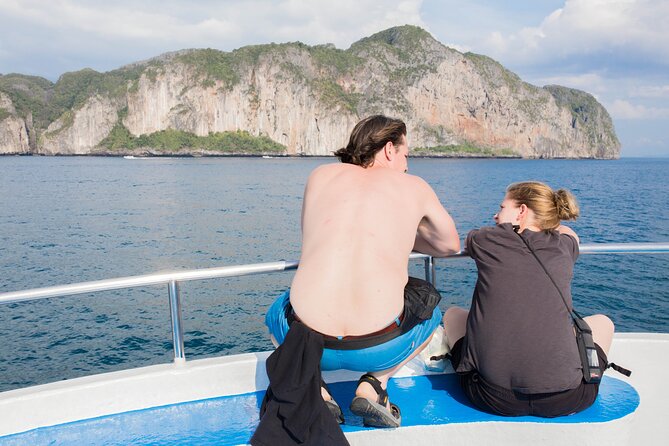
Your landing point is Tonsai Pier on Phi Phi. The end listing also references the area near Pier Hotel54, which is useful when you’re mapping how to walk or transfer onward once you’re off the boat.
Once you dock, treat the first 20–30 minutes as your transition window. You’ll want to collect your things, walk away from the ramp, and then confirm the direction of your next stop—Phi Phi can feel compact, but your hotel might still be a bit of a trek depending on where it sits.
Also remember the Tonsai Pier entry fee (20 THB) is not included in your ferry ticket. Plan to pay this on arrival so it doesn’t slow you down when you’re already tired and sunburn-prone.
What arrival feels like
The best-case scenario is simple: you arrive, you step off, and you’re immediately moving toward the next part of your day. Reviews that praised quick service and helpful crew suggest the unloading phase is generally organized.
If you’re traveling as a couple or with family, use this moment to decide your exact plan: snack first, cash first, or water first. It’s small, but those choices can prevent a scramble later.
Price ($14.12) and value: what you’re actually buying
The price is $14.12 per person, with an average booking time of about 41 days in advance. That advance-booking habit matters for two reasons: it helps you lock in timing, and it can reduce the chance you end up with fewer options during busy periods.
What you’re getting:
- Ferry ticket from Krabi to Phi Phi Tonsai
- Restroom on board
What costs extra:
- Tonsai Pier entry fee: 20 THB
So the true value equation is “close-to-everything included” with one small add-on on arrival. For most people, that’s a fair trade. You’re also not paying for a fancy tour script here—this is transport first, and transport well.
Comfort vs. cost
You’re not buying a luxury cruise package. You’re buying a large-ferry transfer that aims for safety and comfort, with real basic needs handled (restroom, organized boarding, comfort features like A/C where available).
If you’re choosing between cheaper options and a more comfortable ferry, the comfort differences can pay off fast. Heat, sun, and waiting can drain energy you might want later for Phi Phi beaches and walking.
Who this Krabi–Phi Phi ferry suits best
This transfer is a good fit if you want:
- a straightforward route from Krabi to Phi Phi Tonsai
- a boat that’s designed for comfort and safety
- an efficient crossing time around 2 hours
- an experience that works for many traveler types, including families and groups (with a noted cap of 300 travelers)
It’s especially handy if you like simple logistics and don’t want a complicated day plan. You’ll spend your energy enjoying Phi Phi, not negotiating multiple transport hops.
Who should think twice
If you have mobility challenges, the steep boarding ramps could be a dealbreaker without help. If you’re ultra tight on schedule, remember technical delays do happen, so plan for an earlier start or a later connection.
If your trip is the type where missing 60 minutes breaks everything, build in slack or plan a flexible buffer before your next booked activity.
Should you book this ferry transfer?
If your goal is a no-fuss, comfort-focused ride from Krabi (Klong Jilad Pier) to Phi Phi Tonsai, this is a solid choice. I’d book it if you value organized boarding, restroom access, and the chance of an air-conditioned wait instead of sitting in heat.
Do book with a small reality check: sea travel isn’t a guaranteed clock. Arrive early, keep your next plans flexible, and remember the 20 THB Tonsai Pier fee so you’re not dealing with surprise costs while you’re already on the island.
FAQ
How long is the ferry transfer from Krabi Klong Jilad to Phi Phi Tonsai?
The duration is approximately 2 hours.
Where is the meeting point for this ferry?
You meet at Sai Thai Klong Jilad Pier in Mueang Krabi District, Krabi.
Where does the ferry arrive on Phi Phi?
It arrives at Tonsai Pier on Phi Phi.
What is included in the ticket price?
The ticket includes the ferry ticket from Krabi to Phi Phi Tonsai and a restroom onboard.
Is the Tonsai Pier entry fee included?
No. The Tonsai Pier entry fee is 20 THB and is not included.
Is there an air-conditioned waiting area?
One review mentions that the waiting area was air conditioned, and that the boat was also air conditioned.
Does this activity have a group size limit?
Yes. There is a maximum of 300 travelers for this activity.
Can I cancel for free?
Yes, you can cancel for free up to 24 hours in advance for a full refund. If canceled due to poor weather, you’ll be offered a different date or a full refund.