REVIEW · CHIANG RAI
Chiang Rai Discovery:7 Attractions, Tickets & Lunch Included
Book on GetYourGuide →Operated by Scorpions Tours Chiang Rai · Bookable on GetYourGuide
Seven sights in one Chiang Rai day. What makes this tour work is the tight, guided flow: all entrance fees are covered and you get a proper Thai buffet lunch, so your brain stays on the sights. I like the small size (up to 9) because questions don’t get lost and you’re not stuck waiting for a slow group.
One thing to keep in mind: the schedule is efficient, with short guided windows and plenty of photo stops. If you’re the type who wants deep explanations at every site, you may wish the guide spent even more time on the smaller details—plus at least one person flagged that lunch can feel limited or served cold.
Local, English-speaking guide energy: You’ll move with an expert who shares context, not just directions.
All tickets + lunch included: No surprise add-ons once you’re picked up.
Artist-led art stops: The day includes time linked to acclaimed Thai artists, including the Black House setting.
Golden Triangle views with story time: Thailand–Laos–Myanmar at a scenic border point, plus the Opium House exhibits.
A built-in break from temples: Tea farm tasting gives you a calmer pause before the border area.
In This Review
- Why This One-Day Chiang Rai Route Feels Effortless
- Entering Wat Rong Khun (White Temple) with Its Pop-Myth Style
- Wat Rong Suea Ten (Blue Temple): A Different Mood for Your Photos
- Black House (Baan Dam Museum): Artist Thawan Duchanee’s Dark Wood World
- Long Neck Karen Village: Cultural Contact and Responsible Shopping
- Choui Fong Tea Farm: Tea Tasting That Actually Changes the Pace
- Golden Triangle and the House of Opium: When Views Meet Trading History
- Price and Value: What You Get for $77
- How the Day Flows: Short Visits, Big Coverage
- What to Bring (and What Not to Expect)
- Who Should Book This Chiang Rai Discovery Day
- Should You Book It?
- FAQ
- What’s included in the Chiang Rai Discovery tour price?
- How many people are in the group?
- What time and where do you get picked up?
- What sites are included in the day?
- Is the tour suitable for wheelchair users?
- How long is the tour?
Why This One-Day Chiang Rai Route Feels Effortless
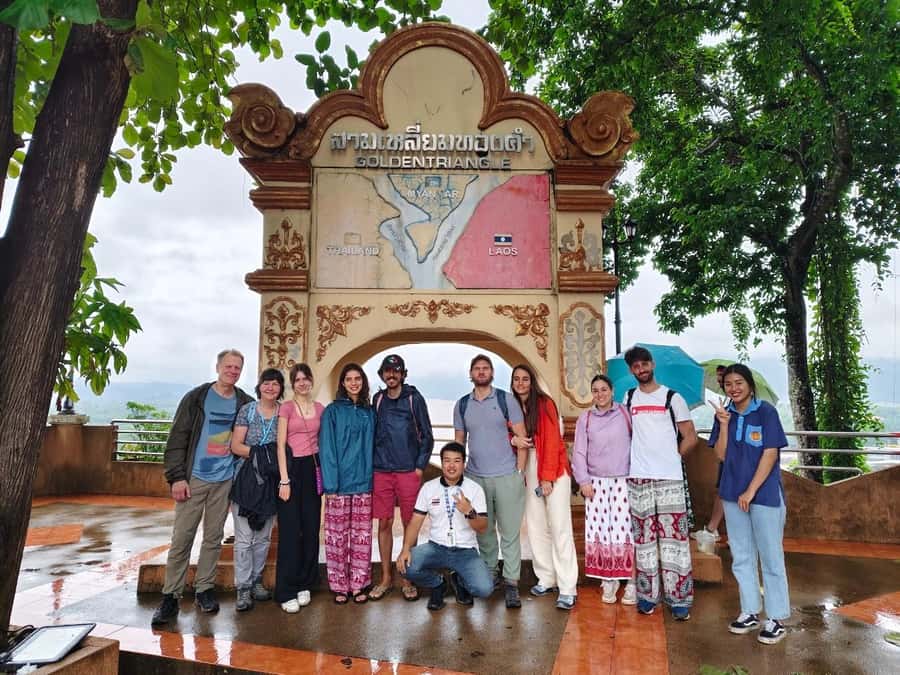
Chiang Rai can feel like a puzzle the first time you visit: temples are spread out, entrances vary, and transport planning can turn into a second job. This tour keeps you out of the logistics weeds. You start with hotel pickup (within 3 km of downtown Chiang Rai’s meeting office), then you ride in an air-conditioned vehicle with water topped up along the way. That matters. Heat and distance add up fast in Northern Thailand.
The biggest practical win is that you’re buying a complete day rather than juggling temples one by one. With this plan, you know you’ll hit the core signature stops in a single outing—White Temple, Blue Temple, Black House, Long Neck Karen Village, a tea plantation, the Golden Triangle area, and the House of Opium—without spending your afternoon tracking tickets.
And because it’s capped at 9 participants, the guide can actually keep momentum and manage the day smoothly. On days like this, momentum is comfort. You won’t feel like you’re herding cats with your camera.
That said, it’s still one day. You’ll have free time for photos and short walking segments, but it’s not a slow museum crawl.
Entering Wat Rong Khun (White Temple) with Its Pop-Myth Style
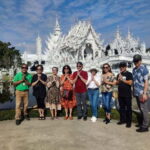
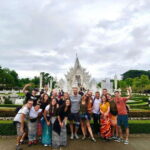
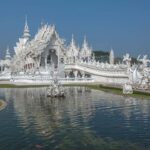
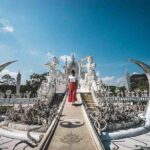
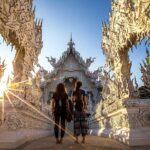
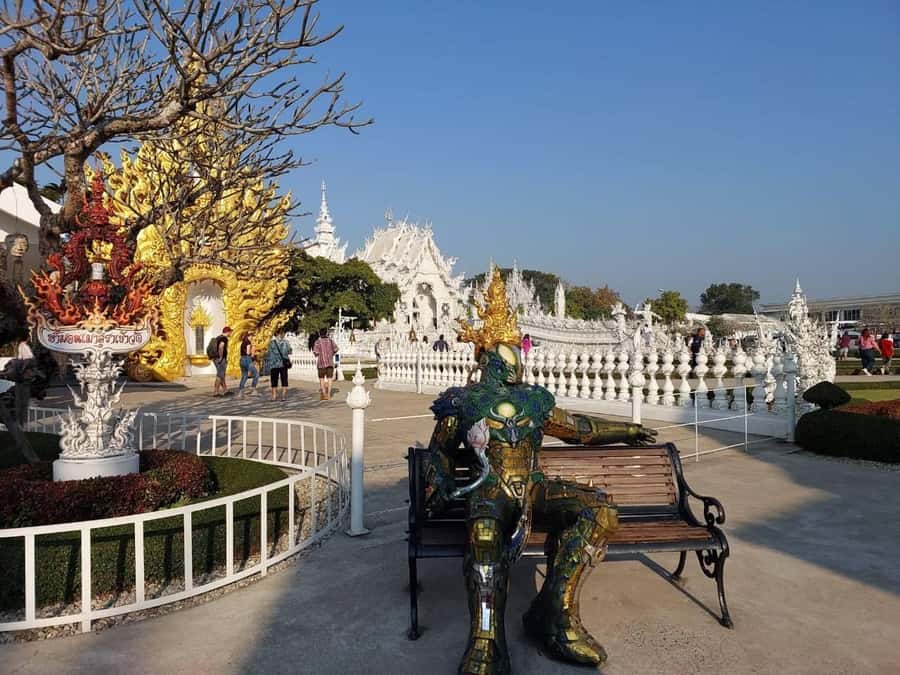
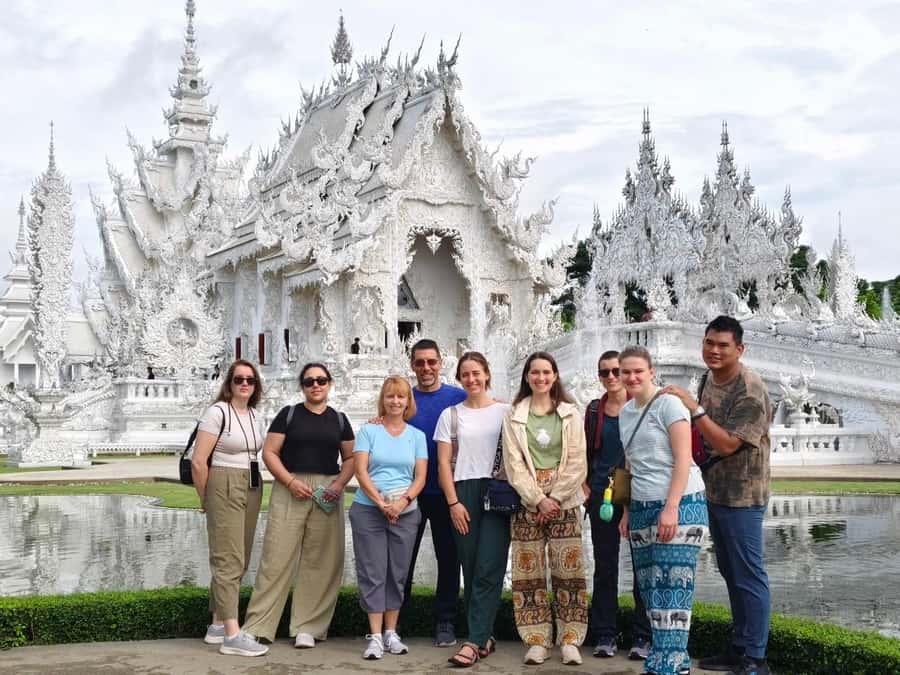
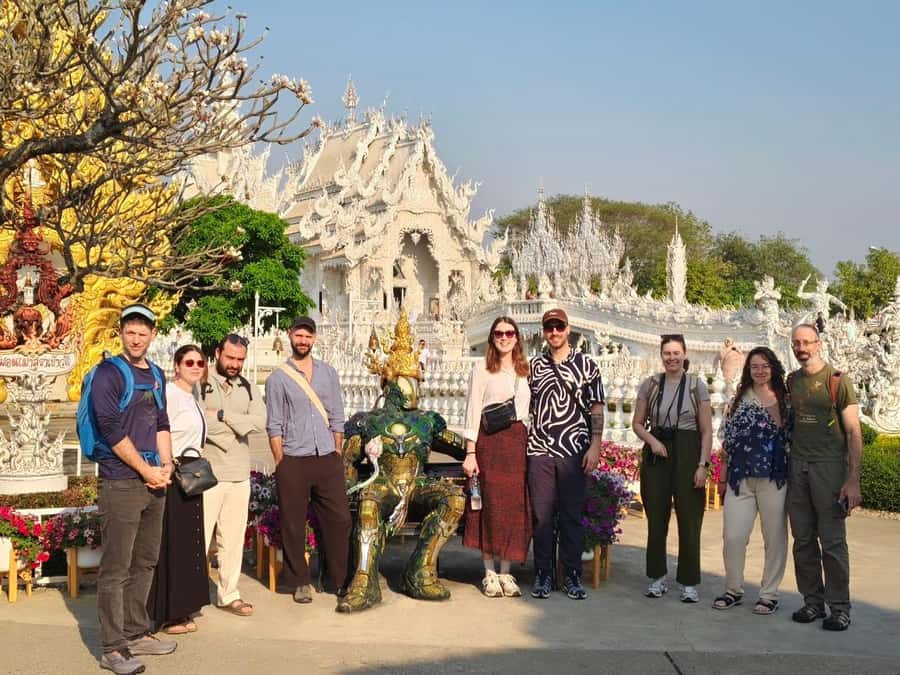
Wat Rong Khun, the White Temple, is where Chiang Rai starts getting surreal in a good way. You begin with a guided visit and time to wander and take photos. The famous look is the obvious hook: a clean, dazzling white façade and carefully worked details that reward close looking.
But what makes it memorable is the contrast. The temple’s murals mix Buddhist themes with modern pop-culture imagery. So even if you don’t know every symbol, you can still read the message: this is contemporary Thai artistry interpreting spiritual ideas, not just an old stone shrine.
You’ll also get a breather built into the stop—meaning you can walk, photograph, and reset before you hop to the next site. One helpful thing here is to pace yourself: look up for architecture, then come back down for the figures and smaller carvings. The White Temple often hits harder when you slow down for ten minutes inside the chaos of tourists and camera flashes.
A few more Chiang Rai tours and experiences worth a look
Wat Rong Suea Ten (Blue Temple): A Different Mood for Your Photos
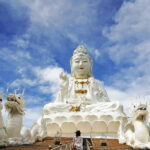
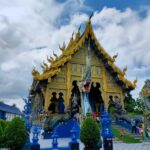
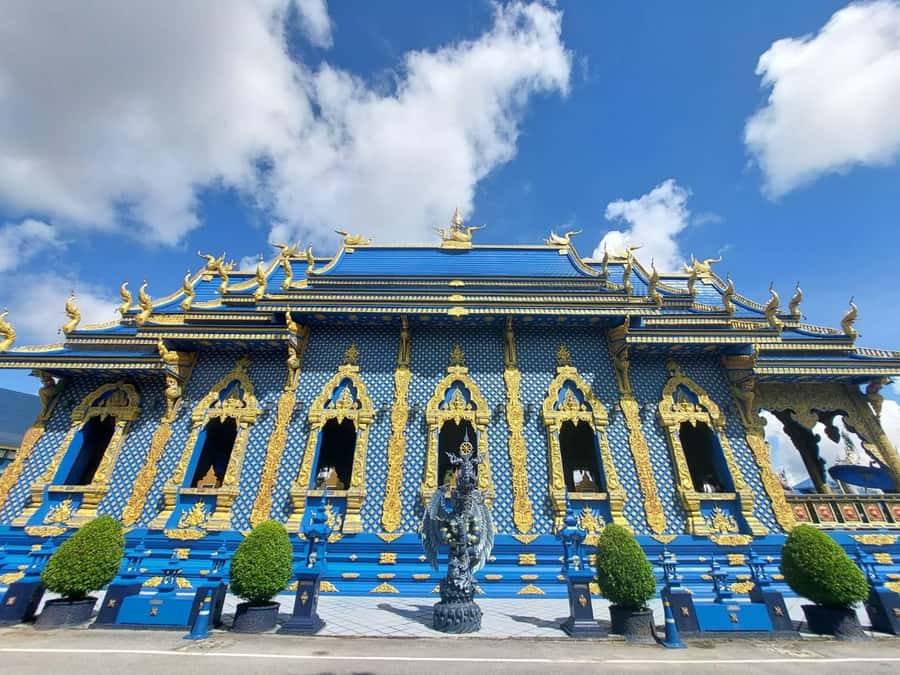
Next comes Wat Rong Suea Ten, often called the Blue Temple, and the vibe shifts. Instead of stark white-on-white drama, you get strong blues paired with a striking white Buddha statue. The guide helps you make sense of the space so you’re not just collecting images—you’re collecting impressions.
This stop is shorter than the White Temple, but it’s still worth treating like a separate moment. The blue surfaces and the murals tend to photograph well, and the quieter feel gives you a chance to slow down and think for a minute. If you like temples for art and atmosphere (not just the Instagram angle), this one is a nice palate cleanser.
Tip for your visit: wear sunglasses if the sun is strong, and bring a camera that can handle bright highlights. White details against blue backgrounds can look stunning—or blow out—depending on your settings.
Black House (Baan Dam Museum): Artist Thawan Duchanee’s Dark Wood World
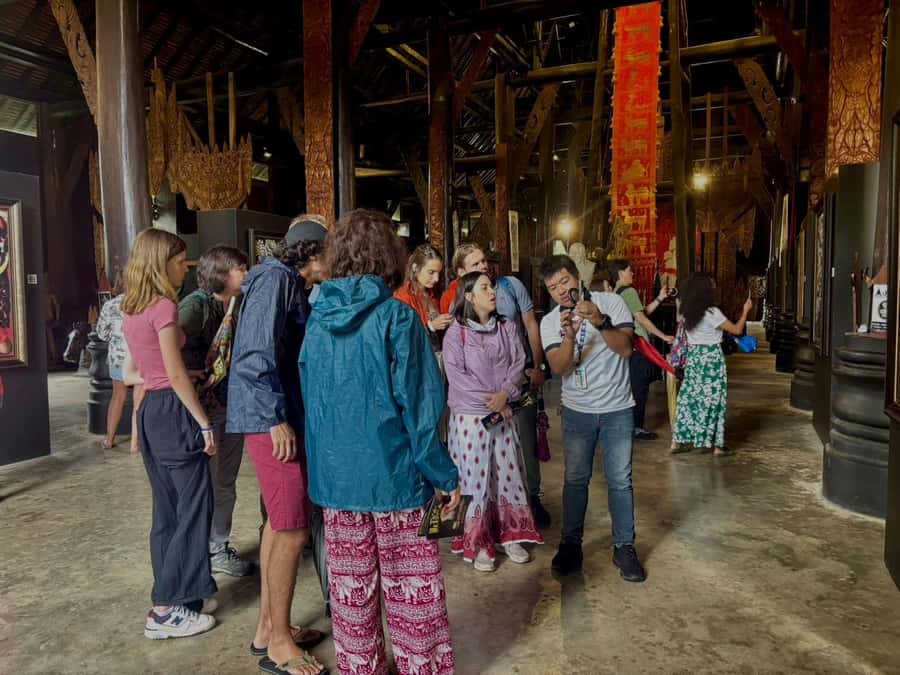
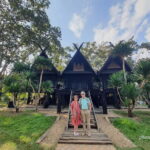
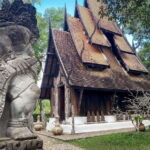
The Black House (Baan Dam Museum) is where the day turns from temple aesthetics into an artist’s long-form imagination. You’ll see over 40 dark wood structures filled with art and artifacts connected to the work of artist Thawan Duchanee.
This is also the stop tied to the tour highlight about exclusive access to a renowned national artist’s private collection. Even if you don’t catch every reference, the overall effect is clear: this isn’t a clean, linear museum. It’s a shaped environment where the objects feel like they belong to a single mind-space.
The guided portion helps because the Black House can be interpreted in many ways. If you’re the kind of traveler who enjoys symbolic thinking—what an object suggests, what a room communicates—this will likely be your favorite stop.
One practical note: because the buildings are arranged in an immersive-feeling way, it helps to wear comfortable shoes. Even with guided timing, you’re still walking between structures and taking in details.
Long Neck Karen Village: Cultural Contact and Responsible Shopping
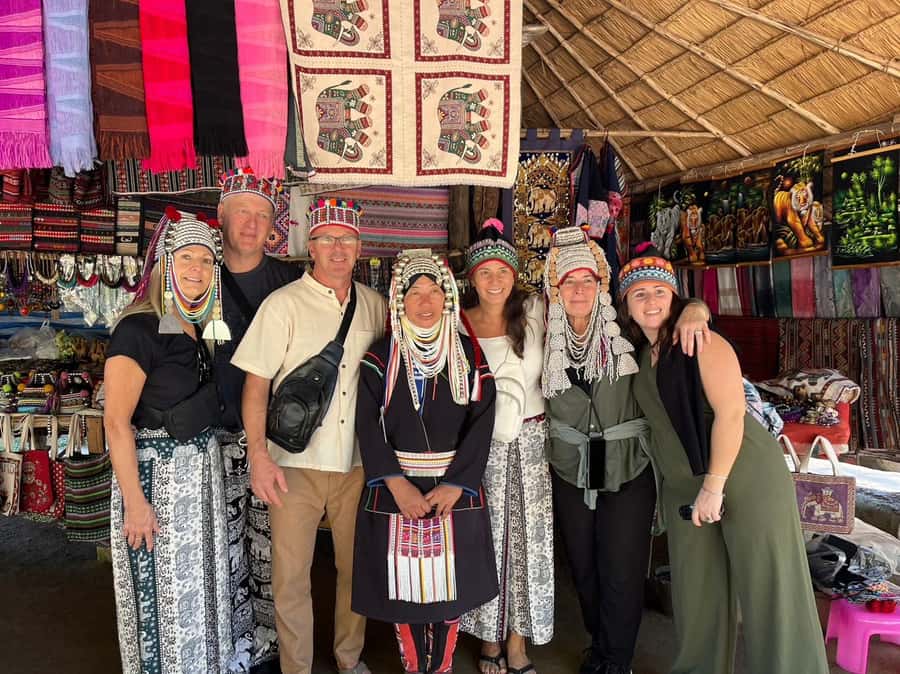
Then you head to the Long Neck Karen Village. This is the cultural portion of the route, centered on tradition and community life. You’ll meet community members, hear about their way of life, and have time for shopping for handmade crafts.
I like this stop as a reality check in a day of art temples. It shifts you from symbolic artistry into living culture you can actually talk to. If you buy crafts here, you’re supporting local artisans directly. That’s one of the easiest ways to keep your tourism spending from feeling abstract.
At the same time, be prepared for how this village experience works in a tour context. You’ll have a timed window, so you won’t get hours of conversation. Treat it like a short, respectful cultural exchange: ask questions, keep an open mind, and avoid turning the visit into spectacle.
Also, bring your patience. This is the kind of place where people want to pose, explain, and sell. A good guide helps you slow down and make the experience feel more human and less transactional.
Choui Fong Tea Farm: Tea Tasting That Actually Changes the Pace
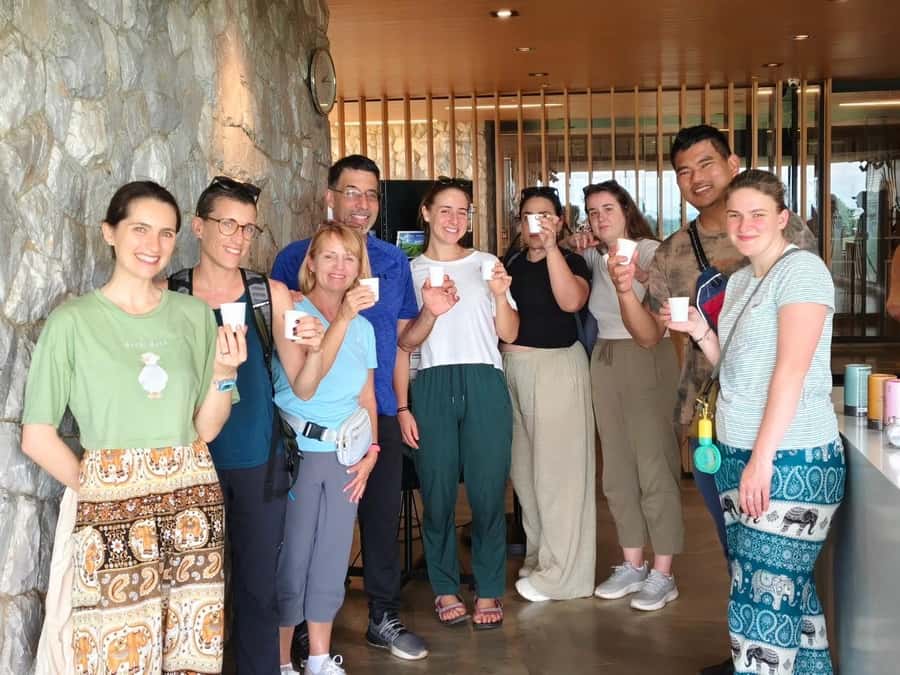
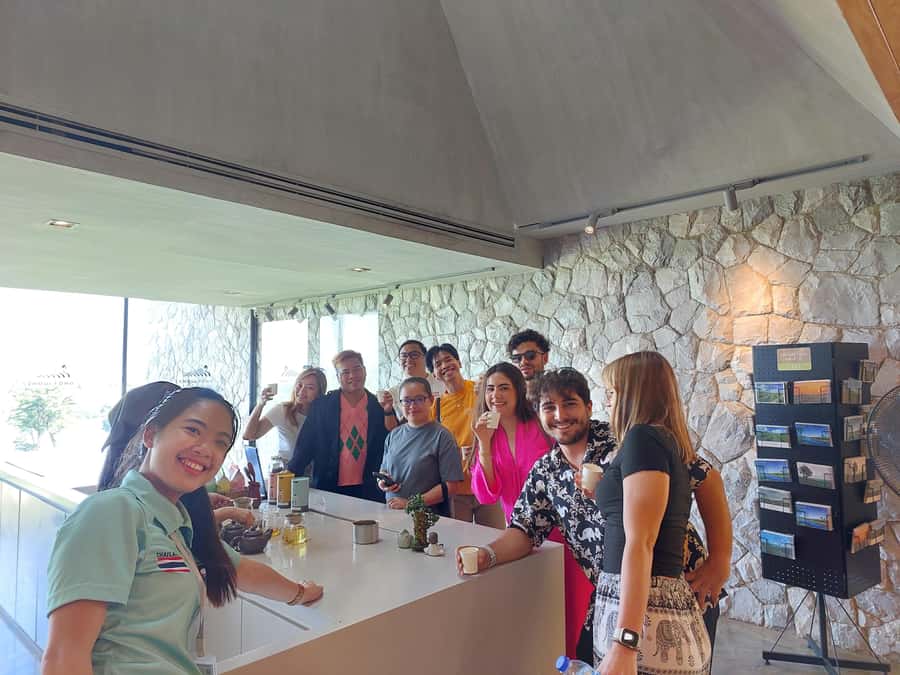
After the village, the itinerary turns greener at Choui Fong Tea Farm. You’ll enjoy a guided tea tasting session while surrounded by plantation scenery. There’s also time to relax in a café that looks over the fields, which is a smart move in an otherwise fast-moving day.
This stop works for two reasons:
- It’s sensory. Tea tasting gives you something tangible to do besides photograph.
- It breaks the pattern. Temples and museums can stack together in your head. Tea resets that mental camera.
If you’re sensitive to strong sun, this is one of the stops where hat and sunscreen matter. Even with breaks, you’re outdoors and walking some.
One more thing I’d watch: tea tastings can come with choices. Your guide can help you pick what fits your taste without making it feel like a sales pitch.
A few more Chiang Rai tours and experiences worth a look

Golden Triangle and the House of Opium: When Views Meet Trading History
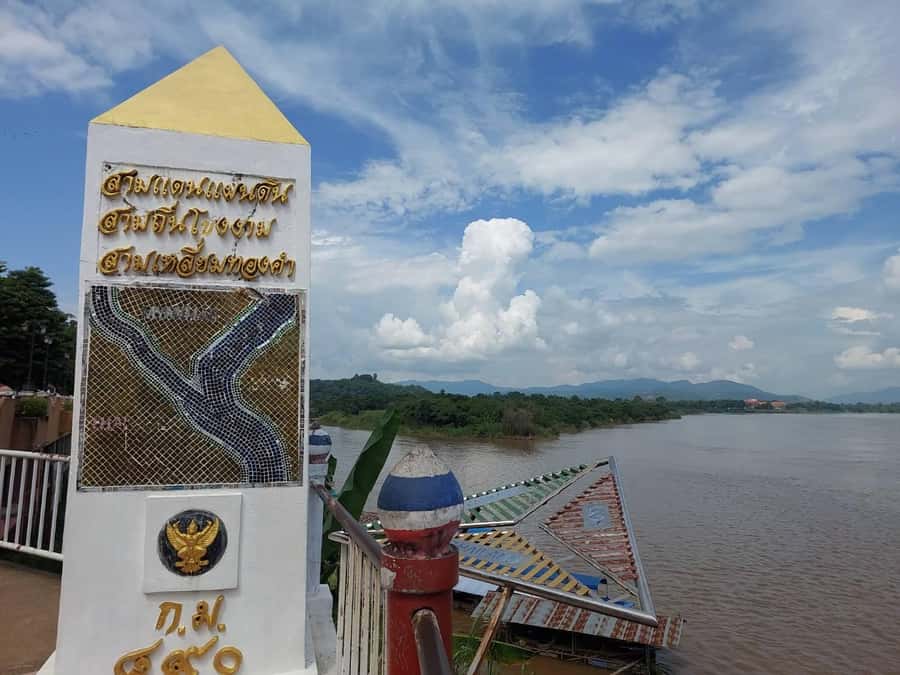
The Golden Triangle portion is the “three nations at once” payoff. You’ll stand at the historic crossroads where Thailand, Laos, and Myanmar meet. The focus is on the border viewpoint and the story of regional trade and history, especially how goods moved across the Mekong River area.
This is also where the House of Opium Museum closes the loop. The exhibits explain the complex history of opium trade and how it shaped local communities over time. Whether you know the topic already or not, the museum segment adds weight to the scenery. It keeps the day from becoming just a sightseeing checklist.
If you’re someone who needs “why this matters” to feel satisfied, this pair of stops will likely deliver. The Golden Triangle gives you the geography; the Opium House adds the human impact behind it.
Photography tip: border viewpoints can be hazy depending on the day. Still, the wide outlook is worth it. Give your eyes a moment to adjust before you take photos—what looks like fog sometimes turns into layers once you stop snapping immediately.
Price and Value: What You Get for $77
At $77 per person, the value comes from bundling. This isn’t just transport plus one or two attractions. Your ticket includes:
- Hotel pickup and drop-off within 3 km of the downtown meeting point
- A professional English-speaking guide
- A Thai buffet lunch
- All entrance fees for the listed sites (White Temple, Black House, Long Neck Village, and the House of Opium)
- On top of that: water and a comfortable air-conditioned vehicle
When I compare this kind of package to piecing things together on your own, the math usually favors the tour—mainly because you’re not trying to solve the order of stops, ticketing, and transport in a single day.
Now the balanced part: lunch is included, but it’s not guaranteed to please every palate or temperature expectation. At least one review noted the lunch felt cold and the choice wasn’t huge. So if food is a major priority for you, go in with realistic expectations: it’s practical, not gourmet.
Still, the day’s structure—seven signature sites with guided context—makes the price feel fair.
How the Day Flows: Short Visits, Big Coverage
This itinerary is designed to cover key sights without swallowing your whole day at a single location. You’ll move between stops with scheduled photo time, guided time, and free time. Typical stop lengths include roughly an hour at the White Temple, shorter segments at the Blue Temple and Opium House, and medium time at the Black House and Karen Village.
That pacing is a feature if you want an overview fast. It’s also a consideration if you’re hoping for long, quiet exploration. The tour is best for travelers who want to check off the essentials and get enough guidance to connect what you’re seeing.
The guide’s job here is crucial: they keep you oriented, help with context, and make sure you don’t get stuck in decision-making moments. People have specifically praised guides for English ability and for being friendly and helpful. Names mentioned include Will for strong English, and Geere (sometimes referred to as Tom Cruise) for a funny, attentive style, with a courteous driver named Sam referenced as well.
Even if you don’t get the same guide, this gives you a clue what the standard aims to be: clear communication and a smooth day.
What to Bring (and What Not to Expect)
For a comfortable day, pack practical basics:
- Comfortable shoes
- Sunglasses and a hat
- Sunscreen
- Camera
- Sunscreen
- Water (even though water is provided during the tour, you’ll still want extra coverage for walking)
Also note the rules: smoking and alcohol/drugs aren’t allowed.
If you’re sensitive to long walks between structures or uneven museum areas, plan on taking breaks. The tour includes some free time, so you’ll have moments to step aside and cool down.
Who Should Book This Chiang Rai Discovery Day
You’ll probably enjoy this tour if you:
- Want to see the most famous Chiang Rai sights in one day
- Appreciate guided context at temples, museums, and cultural stops
- Prefer a small group over a large bus experience
- Like having entrance fees and lunch taken care of
You might want to think twice if you:
- Want slow travel and long time at each site
- Expect lunch to be a highlight rather than a convenience
- Need wheelchair access (this tour isn’t suitable for wheelchair users based on the provided information)
Also, the tour focus stays on temples, museums, a village visit, a tea farm, and the Golden Triangle/Opium House. It doesn’t point toward animal shows or rides, which is a nice fit if you’re trying to avoid that style of tourism.
Should You Book It?
If you want a well-run, guided day that hits Chiang Rai’s signature attractions without the planning headache, I’d say yes. The value is in the bundle: entrance fees + lunch + transfers + an English-speaking guide within a small group—plus water and air-conditioned comfort while you cover a lot of ground.
Book this tour when you want an efficient day with enough explanation to make the sights feel connected. Skip it if you’re aiming for a slow, deeply reflective pace at every stop. Otherwise, this is a strong way to get your bearings fast and leave Chiang Rai with a real sense of what the region is about.
FAQ
What’s included in the Chiang Rai Discovery tour price?
The price includes hotel pickup and drop-off (within 3 km of the downtown Chiang Rai office), an air-conditioned vehicle, a professional English-speaking tour guide, a Thai buffet lunch, all entrance fees for the listed stops, and water during the journey.
How many people are in the group?
The tour is a small group limited to 9 participants.
What time and where do you get picked up?
Pickup is available from within 3 km of downtown Chiang Rai. You wait in your hotel lobby between 8:00 and 8:30 AM.
What sites are included in the day?
The tour visits Wat Rong Khun (White Temple), Wat Rong Suea Ten (Blue Temple), Baan Dam Museum (Black House), Long Neck Karen Village, Choui Fong Tea Farm, the Golden Triangle area (Thailand border), and the House of Opium Museum.
Is the tour suitable for wheelchair users?
No, the tour is not suitable for wheelchair users.
How long is the tour?
The experience is listed as 1 day.