REVIEW · BANGKOK
Bangkok’s Wireless Road: A Self-Guided Audio Tour
Book on Viator →Operated by VoiceMap Audio Tours · Bookable on Viator
Wireless Road is the kind of Bangkok street you miss at speed. This self-guided audio walk uses GPS timing so the story hits exactly when you’re in front of it, with local historian Paul Jorgensen doing the narration. I like that it’s built for real walking—about 50 minutes to 1 hour—and I love the focus on how everyday things (like signs, shops, and street symbols) connect to Thai beliefs and Bangkok’s growth.
The main thing to consider is simple: you’ll need your smartphone with the VoiceMap app and earphones, since the tour is audio-led and self-paced (it’s not a live guide you can stop and ask questions to).
In This Review
- Key highlights you’ll notice fast
- Why Wireless Road fits a self-guided audio format
- Starting at BTS Phloen Chit: how the walk is designed
- The Embassy-area story: where the British Embassy grounds show up
- Nai Lert and the rain trees: the green story behind a corridor
- The Green Mile: linking Lumphini and Benjakiti parks
- Shrines and beliefs: learning to read the Trimurti moment
- Wireless Road beyond landmarks: symbols, colors, and numbers
- Price and value: what $7.99 buys you in real terms
- What you should bring (and what you can skip)
- How long it takes, and how to pace without rushing
- Who this tour is best for (and who may want a different style)
- Should you book Bangkok’s Wireless Road audio tour?
- FAQ
- What is the duration of the Wireless Road audio tour?
- Where does the tour start and end?
- How much does the tour cost?
- Do I need to download the audio for offline use?
- Is the tour GPS-timed while I walk?
- Are entrance tickets included for stops on the route?
- Do I need a live guide in real time?
- Are service animals allowed?
- Is the tour refundable if my plans change?
Key highlights you’ll notice fast
- GPS-timed audio so you don’t have to constantly check your map
- Paul Jorgensen guides you through culture, history, and street-level meaning
- A walk that runs through the green spine between parks, not just shopping streets
- Stories tied to specific sights like the British Embassy grounds, rain trees, and a Trimurti shrine area
- Offline access for audio, maps, and geodata in the VoiceMap app
- Lifetime access to the tour so you can repeat it on another trip
Why Wireless Road fits a self-guided audio format
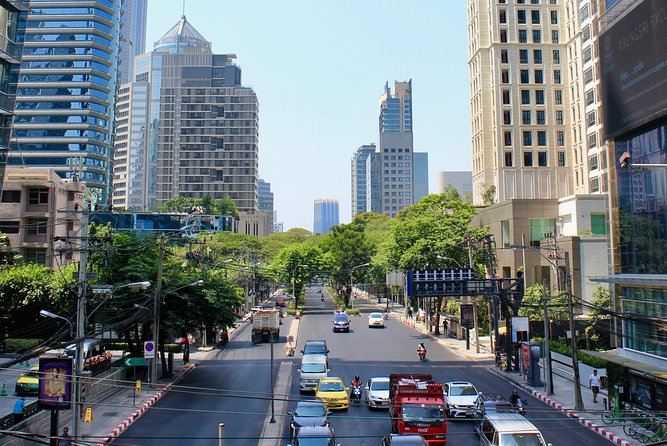
Wireless Road is a great test of whether an audio tour is actually useful. In this case, the format makes sense because the route is packed with small details—embassies, shrines, parks, and street clues—that you’d otherwise gloss over while sightseeing.
What makes this tour practical is the way it’s timed. The audio plays automatically at the right time and place as you walk, so you can keep your attention on what’s in front of you instead of constantly multitasking with your phone. You’re also free to move at your pace—step slower if you want photos, speed up if you’re just passing through.
And the theme is smart: you’re not only learning dates and names. You’re learning why Thais treat certain objects and numbers with meaning, why food and color matter, and what spirit houses say about belief and daily life. It turns a normal urban walk into a kind of street-level interpretation.
You can also read our reviews of more guided tours in Bangkok


Starting at BTS Phloen Chit: how the walk is designed
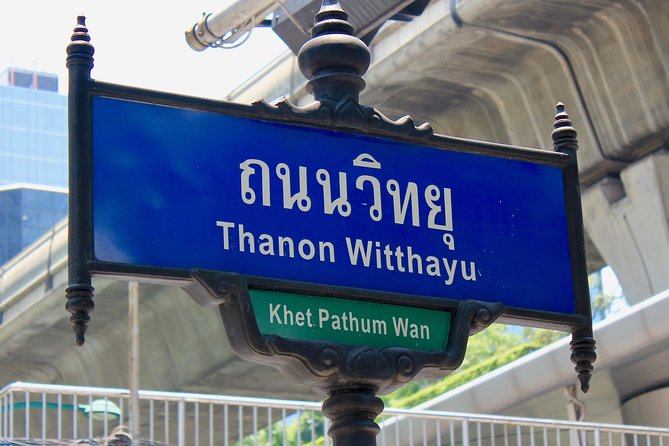
The tour starts (and ends) at Phloen Chit BTS Station. That matters because it anchors everything in one easy-to-find public transit hub. You can arrive, start the audio, and then walk the route back to where you started without complicated logistics.
Once you begin in the VoiceMap app, you put your phone in your pocket and use earphones. The audio is synced so you’re not hunting for each stop. If you’re the type who likes to know what’s happening before you look—this format works well. If you prefer to roam and discover—this also works, but you’ll probably want to stay roughly on the route so the audio timing stays accurate.
One more detail I appreciate: the tour includes offline audio, maps, and geodata. In Bangkok, connectivity can be unpredictable, and offline access lets you keep walking without worrying about losing the thread.
The Embassy-area story: where the British Embassy grounds show up
Early on, you’ll move into a stretch where the architecture and location have political weight, even when the street feels casual. One of the stops is tied to a shopping mall that arose out of the grounds of the British Embassy.
This is one of those moments where the tour’s approach really pays off. Instead of saying the area is historic and leaving it at that, it gives you a reason to look twice at what you’re seeing now. You start noticing how Bangkok’s city fabric changes over time—how land use evolves, how institutions shift, and how that history lingers in the built environment.
If you like travel that makes you see the same place from a different angle, this stop is a highlight. The practical value is that it trains your attention. After you learn why that mall sits where it does, other nearby landmarks start to feel less random.
Nai Lert and the rain trees: the green story behind a corridor
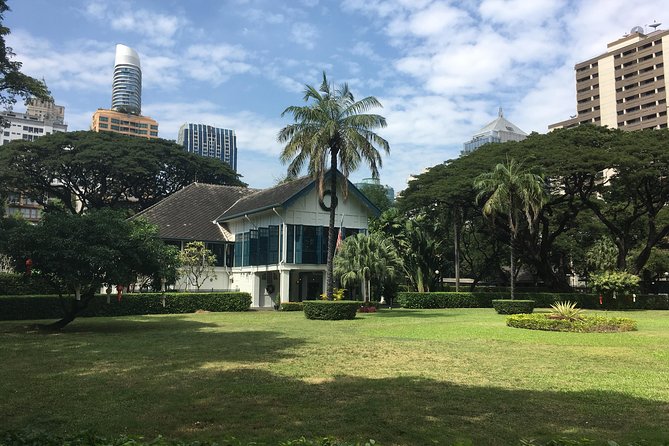
This route earns its nickname-worthy “green walk” feel for a reason: the narration focuses on rain trees in the neighborhood and credits entrepreneur Nai Lert for them.
Rain trees are one of those Bangkok features you may have seen before without knowing the why. Here, you get their unique history, and that changes how you experience the sidewalk and shade. Trees stop being background and become part of the city’s human story—how people shaped public space, how neighborhoods became more walkable, and how environmental design can feel almost like city identity.
The big benefit for you: you’ll walk slower here if you can. Not because you have to, but because the trees become a reference point. You start timing your pauses to match the story, and you get more out of the visuals in between audio cues.
The Green Mile: linking Lumphini and Benjakiti parks
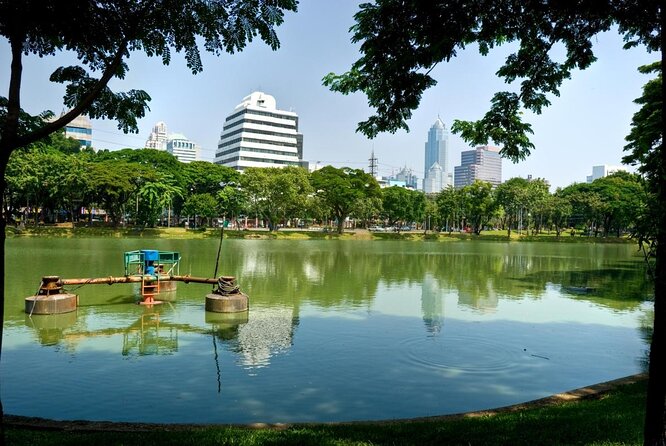
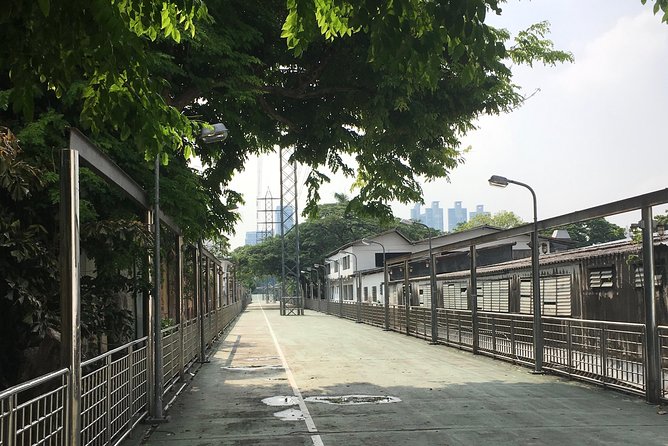
A big chunk of the walk is about connection—specifically the Green Mile, a special pedestrian pathway linking Lumphini Park and Benjakiti Park.
This is the part of the tour that feels like a reset. Bangkok can be loud and fast. The Green Mile gives you a gentler rhythm: a dedicated walking thread between two major parks. And because the audio is telling you what you’re walking through, you don’t feel like you’re just moving from one tourist postcard to another.
Even if you’re not a parks person, this segment helps you understand Bangkok as a city that builds green space into everyday movement. It’s one of the places where “meaning” becomes visible in the physical experience—shade, foot traffic, and the way the route invites walking.
A practical note: keep an eye on where you are on the pathway. Since the audio is GPS timed, try not to cut off-route unless you’re okay with losing sync for a little while.
A few more Bangkok tours and experiences worth a look





Shrines and beliefs: learning to read the Trimurti moment

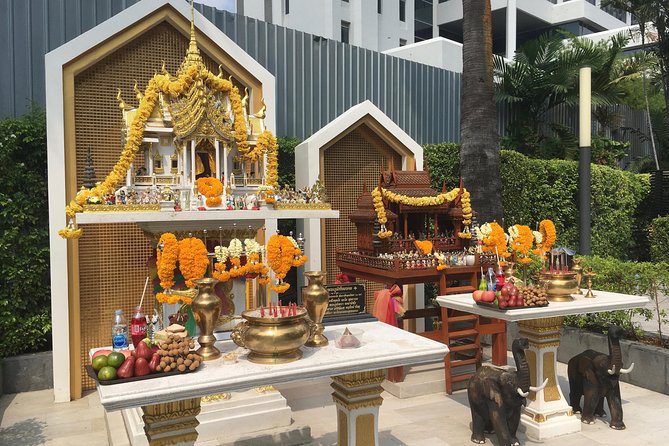
Religion in Bangkok isn’t just inside temples. It appears in street corners, shrines, and small rituals. This tour leans into that idea, including stories about spirit houses and Thai beliefs, so the city’s spiritual details make more sense as you pass them.
One named stop is a shrine to the Hindu god Trimurti. That’s a specific cue, and it’s where the tour’s storytelling approach feels extra useful. Instead of treating the shrine like a decoration, you’ll learn how Hindu symbolism and Thai religious practice show up in the public realm.
What you should take away: when you learn what a shrine represents, you start noticing how people behave around it—how they respect the space, how it fits into neighborhood routines. Even if you’re not deeply familiar with Hindu gods, the narration helps you connect the dots enough to appreciate what you’re seeing.
If you’re traveling with someone who usually skips religious sites, this stop can be a nice bridge. It keeps things cultural and practical rather than preachy.
Wireless Road beyond landmarks: symbols, colors, and numbers
The tour doesn’t stop at big sights. It works through the kind of details you’d normally walk past—because you’re busy, or because they blend into the city.
The audio includes stories behind groups of motorcycle taxis and convenience stores, plus mentions of Hindu gods, the Thai flag, and the number nine. There’s also an explanation of how Wireless Road got its name, and how the street’s identity relates to the area’s development.
This is where the tour earns its “different Bangkok light” promise. You stop viewing the city as a collection of unrelated places. You start seeing patterns: street culture, commerce, and symbolic language all interact.
If you like souvenirs but also like understanding what you’re buying and seeing, you’ll probably leave with a stronger mental model of how Thai culture expresses values through everyday visuals. You’re also more likely to catch details during your future walks, because your brain has been trained to look.
Price and value: what $7.99 buys you in real terms
At $7.99 per person, the biggest value isn’t just the affordability. It’s that you’re paying for a guided interpretation that runs hands-free for about an hour, with lifetime access afterward.
Lifetime access is rare for a paid walking experience. It means you can repeat it later in your trip, or use it as a refresher on another visit. That turns the cost into something closer to a long-term guide tool rather than a one-and-done activity.
Also, the tour doesn’t force paid add-ons. There are no museum entrance fees built in, and you’re not required to buy tickets to enjoy the walk. You’re simply walking a neighborhood and letting the audio add meaning to what’s already there.
What you’ll still need to budget for is what the listing doesn’t include: a phone and earphones on your end, plus your own way of getting to Phloen Chit BTS. But once you’re there, the tour is basically “pay once, walk it whenever you want.”
What you should bring (and what you can skip)
This experience is designed around self-guided audio, so you can keep your packing light.
Bring:
- a smartphone with the VoiceMap app installed
- earphones (so you can hear the narration)
- a charged phone, because you’ll want the GPS-timed audio to keep working
You can skip:
- museum tickets or paid attractions along the route
- long planning sessions between stops, since the audio is set to play as you walk
If you’re doing this in a busy part of Bangkok, I’d also suggest simple street sense: stay aware at crosswalks, keep your phone secured when you’re not using it, and take your time when the route moves between open sidewalks and park areas.
How long it takes, and how to pace without rushing
This walk is listed at about 50 minutes to 1 hour. In practice, that timing will depend on how often you pause for photos and how closely you stay on the route for GPS sync.
If you want to maximize learning, use this pacing rule: don’t try to speed-run the stories. Let the audio finish the thought, then look around. Wireless Road is easier to understand when your eyes and ears work together.
If you’re short on time, you can still treat it as a strong orientation walk. Even without lingering, the act of hearing context behind places like the British Embassy site, rain trees, and the Green Mile usually gives you a quick “now I get it” effect.
Because the audio can be played anytime (the tour is listed as available daily across the full day), you can slot it around other plans without feeling trapped by a strict tour schedule.
Who this tour is best for (and who may want a different style)
You’ll love this if you:
- enjoy learning culture and context while walking
- like independence—starting and stopping with your own pace
- want a short but meaningful intro to central Bangkok neighborhoods
- appreciate when symbols (flag, numbers, religious references) get explained in a normal, human way
You might want a different kind of tour if you:
- prefer live Q&A with a person you can talk to on the spot
- hate using a phone while walking (even though your phone can stay mostly in your pocket)
- need a route that clearly works even when you leave the main path for long stretches
For most people, though, this hits a sweet spot: it’s structured enough to feel guided, but flexible enough to feel like you’re exploring.
Should you book Bangkok’s Wireless Road audio tour?
I’d book it if you want an hour of walking that teaches you how Bangkok’s present-day street scenes connect to belief, symbolism, and development. The combination of GPS-timed audio and a local historian’s context makes the walk feel purposeful without turning it into a checklist.
Book it especially if you’ll be in the Phloen Chit / Lumphini area and want to see more than just views. The stops tied to the British Embassy grounds, the rain trees story from Nai Lert, the Green Mile between Lumphini and Benjakiti, and the Trimurti shrine give you a set of anchor points that stick in your memory.
Skip it only if you dislike self-guided audio or you don’t want to carry a smartphone for navigation and playback.
FAQ
What is the duration of the Wireless Road audio tour?
The tour takes about 50 minutes to 1 hour.
Where does the tour start and end?
It starts and ends back at Phloen Chit BTS Station.
How much does the tour cost?
The price is $7.99 per person.
Do I need to download the audio for offline use?
Yes. The VoiceMap app provides offline access to audio, maps, and geodata.
Is the tour GPS-timed while I walk?
Yes. The audio plays automatically at the right time and place as you walk.
Are entrance tickets included for stops on the route?
No. Tickets or entrance fees to museums or other attractions are not included.
Do I need a live guide in real time?
No. It’s self-guided audio narration provided through the VoiceMap application.
Are service animals allowed?
Yes, service animals are allowed.
Is the tour refundable if my plans change?
No. The experience is non-refundable and cannot be changed for any reason.