REVIEW · BANGKOK
Bangkok Self-Guided Audio Tour
Book on Viator →Operated by Uvamai Niche Tourism · Bookable on Viator
Gold Buddhas and temple time, minus the tour bus. This Bangkok self-guided audio tour strings together 12 top sites for $9, and I love the offline-ready audio that keeps working when Wi‑Fi doesn’t. I also love flexible start-and-end times, so you can set the pace and skip what isn’t your thing.
Your main trade-off: the audio can feel superficial, and some tracks may be poorly translated, so it may not satisfy if you want deep, precise detail.
In This Review
- Key points before you go
- How you’ll access the Bangkok audio guide: SoundCloud plus a clickable map
- Pricing and value check: $9 is cheap, but admissions are on you
- Planning your 3-hour day: 12 stops that don’t have to be 12 strict stops
- Wat Traimit (Golden Buddha) to Chinatown: a strong start with gold and chaos
- Wat Pho and Wat Arun: the reclining Buddha and porcelain stairs
- Grand Palace plus Wat Phra Kaew: where “ten minutes” can feel short
- National Museum Bangkok and Wat Saket: artifacts and skyline payoff
- Marble Temple, BACC, Lumpini Park, and MOCA: art and breathing room
- The biggest watch-out: short audio + translation quality
- What to bring and how to avoid tech hiccups
- Should you book the Bangkok self-guided audio tour?
- FAQ
- How long is the Bangkok self-guided audio tour?
- How many attractions are included?
- Does the audio tour work offline?
- Are entrance tickets included?
- How do I access the audio guides and map?
- Is this tour refundable or changeable?
Key points before you go
- Offline-ready audio so you’re not stuck begging your phone for signal
- Flexible start/end with the freedom to linger longer at what grabs you
- Two links in your email: a SoundCloud audio link plus a Google My Maps link
- 12 attractions, ~3 hours total with audio designed for quick context at each stop
- Some admissions are free (including Wat Pho, Bangkok Art & Culture Centre, and Lumpini Park), but most ticketed sights are not included
- Validity up to 6 days from your access window, letting you redo sections if you missed something
How you’ll access the Bangkok audio guide: SoundCloud plus a clickable map
This is built for independent exploring, not a timed bus tour. After you book, you’ll get confirmation and then, before your starting time on your selected date, an email with two private links.
One link opens a secure SoundCloud web page for the audio guides. You can play individual attraction tracks or the whole tour to help you plan your route before you head out. The other link is a Google My Maps page with pins for each of the 12 stops. Each pin links to its matching audio, so at each location you’re basically clicking your way into the next story.
You’re not given a separate audio device. Expect to use your own phone and your own headphones (and you’ll want internet access if you’re not fully relying on the offline option). The tour also notes you can listen offline, which is great in Bangkok, where signal strength can be hit or miss.
One more practical note: the tour uses a mobile ticket, and it’s a private tour/activity, meaning only your group will participate. That’s a quiet win if you dislike crowds in group settings.
You can also read our reviews of more guided tours in Bangkok

Pricing and value check: $9 is cheap, but admissions are on you
At $9.00 per person, this is a low-cost way to add context to a day out. The value isn’t the audio itself (it’s short), it’s that you get a structured route through major sights without paying for a guide’s time.
Here’s the catch: entry fees aren’t included. The audio gives you the story, but you still have to pay for most of the sites when they require tickets. Only a few stops are listed as free:
- Wat Phra Chetuphon Wimon Mangkhalaram Rajwaramahawihan (Wat Pho) – admission ticket free
- Bangkok Art & Culture Centre – admission ticket free
- Lumpini Park – admission ticket free
Other stops are explicitly listed as not included, including the big headline sites like Wat Traimit, Wat Arun, the Grand Palace, Wat Phra Kaew, and the National Museum Bangkok.
So when you do the math, think of the $9 as paying for navigation and narration, not museum access. Also remember you’ll pay for your own transport if you need it—pick-up/drop-off isn’t included.
Planning your 3-hour day: 12 stops that don’t have to be 12 strict stops
The audio is designed around short visits—each stop is about 10 minutes of audio time. If you followed it perfectly start-to-finish, you’d still want time for walking, queues, and just looking.
The tour duration is listed as about 3 hours, but it’s not meant to trap you. The key advantage is flexibility: you can start and end whenever you want, set your own pace, and skip stops that don’t interest you.
That matters for Bangkok because one day can go in wildly different directions depending on your energy level. Some places you’ll want a quick glance and a photo. Others you’ll want longer, especially areas with lots to see.
Also, the tour notes you can split the experience across multiple days. That’s useful if you’d rather take your time at the Grand Palace complex or if another plan steals your afternoon.
Wat Traimit (Golden Buddha) to Chinatown: a strong start with gold and chaos
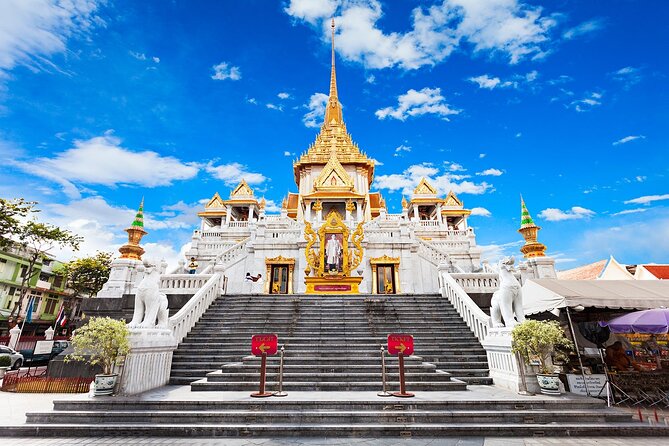
I like how the tour begins with Wat Traimit, home of the Temple of the Golden Buddha (Wat Traimit). The audio focuses on the history of the world’s largest solid gold Buddha statue and how it was discovered by accident. Even if you’re not a big temple history person, the “how did it get found?” angle is the kind that keeps your attention.
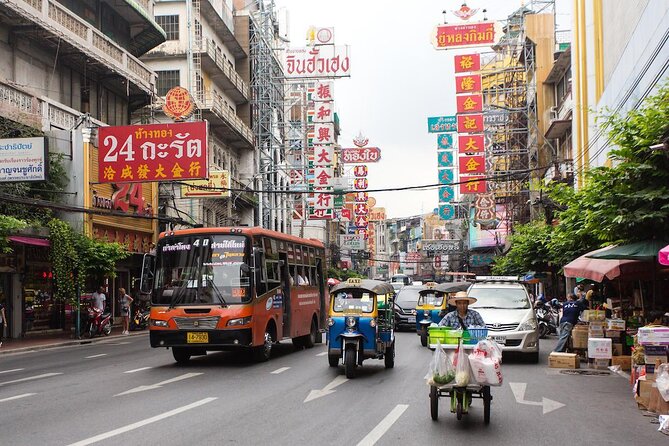
Then you move into Chinatown (Bangkok), which shifts the feel from quiet religious space to daily city life. The guide points you toward the Chinese community’s cultural heritage, markets, and the street-food scene. This is a smart contrast because it prevents your day from becoming only temple after temple.
Practical tip: Chinatown is a good place to snack, but bring cash and keep your phone secured. You’ll be using your map and audio repeatedly, so treat your phone like a wallet.
Wat Pho and Wat Arun: the reclining Buddha and porcelain stairs
Next up is Wat Phra Chetuphon Wimon Mangkhalaram Rajwaramahawihan (Wat Pho). The audio calls out that it’s Bangkok’s oldest and largest temple complex and highlights the famous Reclining Buddha. It also includes traditional Thai medicine and massage, which is a nice added layer beyond the usual “here’s a big Buddha, move along” framing.
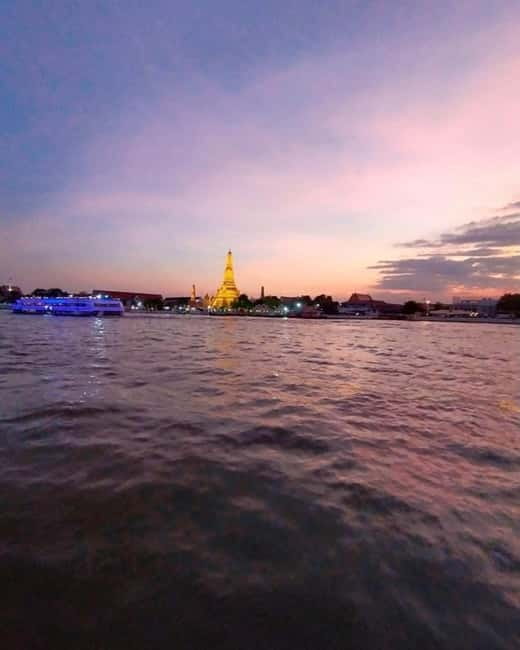
After that comes Temple of Dawn (Wat Arun). This is one of the most photogenic stops on most Bangkok routes, and the narration leans into the details—its architecture and intricate porcelain decorations. It also connects the site’s symbolism in Thai Buddhism and how the temple evolved over different historical periods.
If you prefer learning while you look, this pair works well. Wat Pho gives you a broad temple complex overview, while Wat Arun gives you a more visual, “read the building” kind of story.
A few more Bangkok tours and experiences worth a look




Grand Palace plus Wat Phra Kaew: where “ten minutes” can feel short
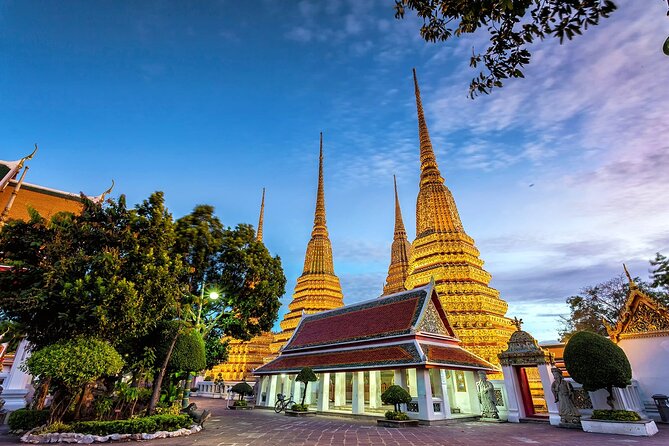
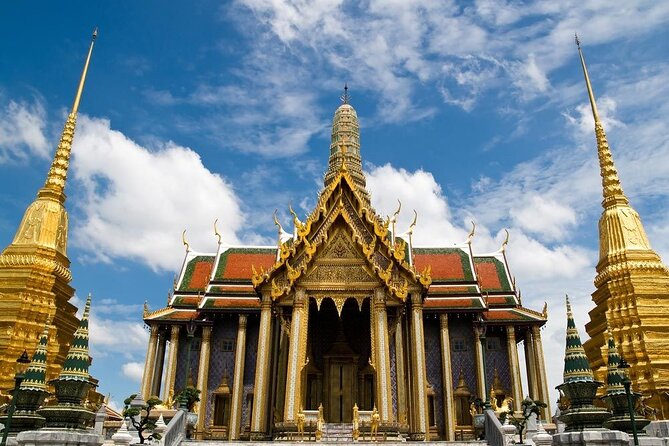
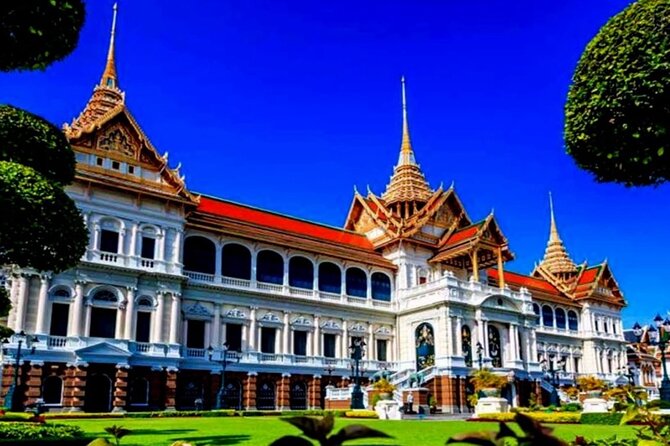
The tour’s heart is the royal zone: the Grand Palace, followed immediately by Wat Phra Kaew (Temple of the Emerald Buddha) inside the palace complex.
The audio for the Grand Palace is focused on Thailand’s monarchy—what the palace represents and its role in Thai history and governance. Then Wat Phra Kaew gets the deeper spotlight as the most sacred Buddhist temple in Thailand, with the legend of the Emerald Buddha.
Here’s the consideration: even if the audio portion is about 10 minutes, these areas are huge. If you’re the type who wants to read every sign and take slow, careful photos, you may want extra time beyond what the audio suggests. On the other hand, if you’re okay moving briskly and want a history thread to keep you oriented, this works nicely.
National Museum Bangkok and Wat Saket: artifacts and skyline payoff
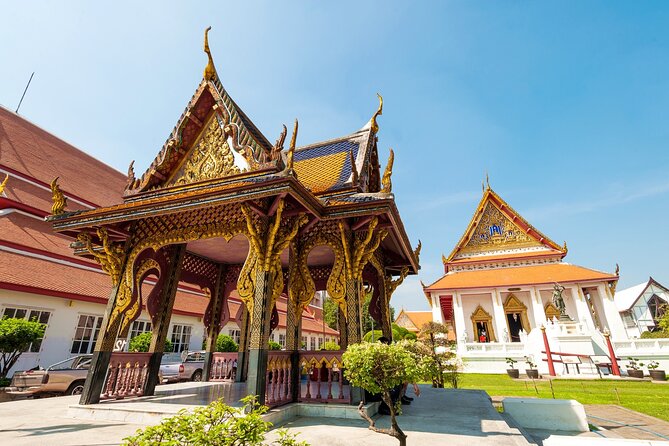
After the royal zone, you get National Museum Bangkok. The narration is set up as a journey through Thai history—from prehistory up through the Bangkok period. You’re pointed toward how artifacts tell Thailand’s broader cultural story.
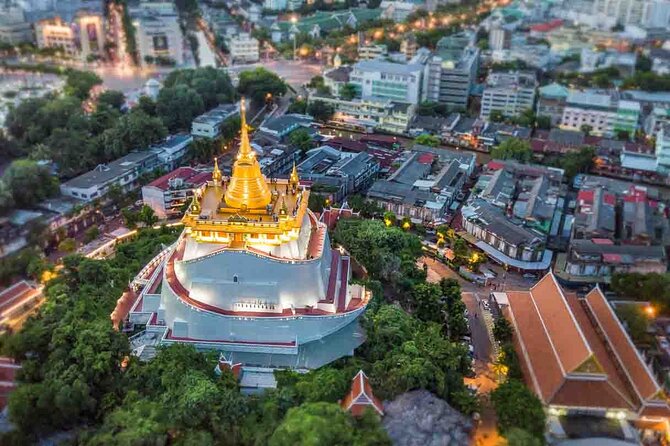
Then the tour climbs to the Golden Mount (Wat Saket). This one is both literal and practical: the audio emphasizes that it’s an artificial hill with construction during the Ayutthaya period and explains its significance in Buddhist cosmology. It also highlights the payoff: climb to the top for panoramic views of Bangkok.
This is a great place to slow down, even if you’re moving fast elsewhere. You get the view, the physical exertion, and a story that makes the structure feel more intentional than just another hill in the city.
Marble Temple, BACC, Lumpini Park, and MOCA: art and breathing room

Not every stop here is a temple. That’s a big reason I’d consider this tour for a mixed day.
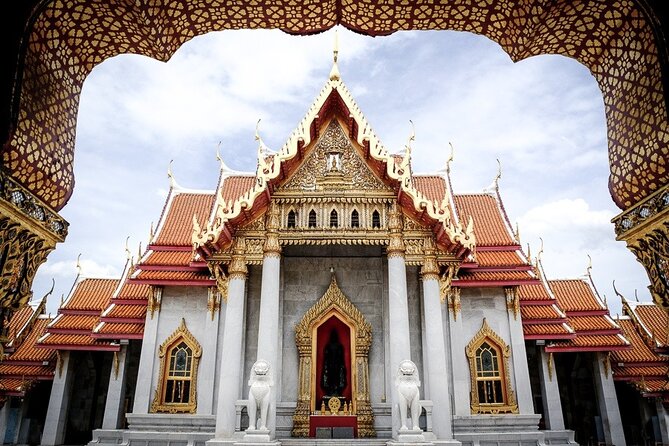
First, Wat Benchamabophit (The Marble Temple). The audio calls out the Italian marble and the blend of Thai and European architectural styles. If you’re tired of repeating temple shapes, this is a nice change in materials and look.
Then comes Bangkok Art & Culture Centre (BACC), which is listed as admission free. The audio frames it as a modern hub for contemporary Thai art and points you toward how Thailand’s art scene fits into the global contemporary art world.
Next is Lumpini Park, another free stop. The narration focuses on it as a green oasis in central Bangkok, originally described as a royal gift to the city and important as a recreational space for Bangkok residents. This is built-in recovery time. You can sit, cool off, and refocus before your last museum stop.
Finally, Museum of Contemporary Art (MOCA). The audio positions MOCA as Thailand’s largest private museum of contemporary art and connects what you’ll see to modern artistic movements and their cultural meaning.
If your day is getting hot and your legs are getting loud, the park plus the contemporary culture stops give you a break from the sacred-stone circuit.
The biggest watch-out: short audio + translation quality
I’ll say this plainly. The booking price is low, and the audio tracks are short—so you should expect a high-level story, not a deep lecture.
That limitation shows up most in translation quality. The experience has feedback for being superficial and poorly translated, which can really affect how much you enjoy complex history or subtle temple symbolism. The provider’s response frames the audio as focused and easy to absorb while actively exploring, but the reality is: if you care about precise wording and nuanced context, you may feel like you’re reading thin notes rather than getting real understanding.
The silver lining is that the audio can still function as a reference. It can help you point your attention at what matters. When you do that, even basic narration can make the visit more satisfying than going in completely blind.
What to bring and how to avoid tech hiccups
Because audio devices aren’t included, your success depends on your setup. Bring:
- Headphones (so you can clearly hear audio at busy stops)
- A charged phone and a backup power source if you have one
- Your phone’s offline audio plan (the tour says offline listening is possible, but test it before you need it)
You’ll use your phone for the map too, so keep the screen brightness reasonable and avoid low-battery surprises. If your phone dies midway through the Grand Palace complex, you’ll still see the sights—but you’ll lose the whole reason you booked this.
Also, since the tour is near public transportation, you may combine walking with metro or boat depending on your own route. Just plan enough buffer time between stops so you don’t feel stressed.
Should you book the Bangkok self-guided audio tour?
Book it if:
- You want a budget-friendly way to cover 12 key Bangkok sights in a single day
- You like flexible start/end and the ability to skip stops
- You’re comfortable learning with a short audio framework while you explore
- You can handle your own tech (headphones, phone battery, and using the links)
Skip it (or consider a different format) if:
- You want detailed explanations that read like a proper guidebook
- Translation quality matters a lot to you
- You expect the audio to feel like a personal, expert-led tour rather than a quick set of references
With a 3.3 rating from a small number of reviews, it’s not a slam dunk. But it can still be a good deal if you treat it as navigation plus basic context—and you bring your own curiosity to the rest.
FAQ
How long is the Bangkok self-guided audio tour?
The tour is listed as about 3 hours.
How many attractions are included?
It covers 12 attractions in one playlist.
Does the audio tour work offline?
Yes, the tour says you can listen to the audio tour offline.
Are entrance tickets included?
No. Entry fees are not included. Some specific stops are marked as free, but most ticketed sites are not included.
How do I access the audio guides and map?
On your selected date and before your starting time, you receive an email with two private links: one to the audio guides (SoundCloud) and one to an interactive Google My Maps map.
Is this tour refundable or changeable?
No. The experience is non-refundable and cannot be changed for any reason.