REVIEW · BANGKOK
Bangkok Chinatown: Self-Guided Mystery Puzzle Quest
Book on Viator →Operated by Questo · Bookable on Viator
Chinatown turns into a game board. This self-guided outdoor mystery quest in Bangkok uses your phone to send you from place to place, and it works offline as you wander. No guide, no group herding, just you solving challenges and picking up the stories behind each stop.
I love the way the route is built around real locations you’d otherwise slow down for, like Wat Traimit and the old-school shop stops in Chinatown. I also like the flexibility: you can start anytime and pause and resume, which makes a tight trip feel less like a schedule and more like a stroll.
One thing to consider: if you’re depending on pinpoint accuracy from Google Maps, this kind of quest can feel frustrating when directions don’t match what you see on-screen. One negative report specifically cited navigation hiccups and confusing instructions, so budget a little extra patience and time.
In This Review
- Key things to know before you play
- A phone-first mystery walk in Bangkok’s Chinatown
- Price, time, and whether it’s good value
- Where you start and end (and how that affects your day)
- Stop 1: Kan Kee Nam Tao Thong herbal drinks and clue hunting
- Stop 2: Wat Traimit and the 5.5-tonne Golden Buddha
- Stop 3: Eiah-Sae coffee shop and the sound of generations
- Stop 4: Wat Lokanukroh inside the Sampeng market area
- Stop 5: Leng Buai Ia Shrine, a 1658 refuge for business prosperity
- Stop 6: From Wat Leng Noei Yi to a Mahayana Buddhism landmark
- The biggest practical upside: you control the pace
- The main risk: navigation depends on the app and your patience
- Who should book this Chinatown puzzle quest
- Should you book it
- FAQ
- FAQ
- How long is the Bangkok Chinatown self-guided puzzle quest?
- How much does it cost?
- Do I need a tour guide?
- Do I need an internet connection while playing?
- Can I start at any time?
- Where does the experience start and end?
- Are there group discounts?
- Is it private or shared with other people?
- Is it accessible for most travelers, and are service animals allowed?
- What if I need to cancel?
Key things to know before you play
- Phone-led directions instead of a tour guide: you follow the app from clue to clue at your own pace.
- Offline play: you do not need an internet connection while exploring.
- A short, concentrated route: the run time is about 1 hour 30 minutes.
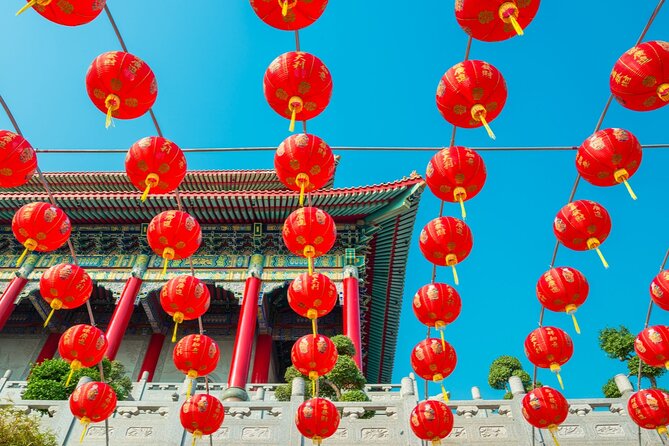
- Chinatown stops with strong cultural flavor: temples and shrines sit alongside long-running local businesses.
- Group option: one person can buy access for the whole group so everyone plays on their own smartphone.
- Flexible timing: it’s available 24/7, and you can start at any hour.
A phone-first mystery walk in Bangkok’s Chinatown
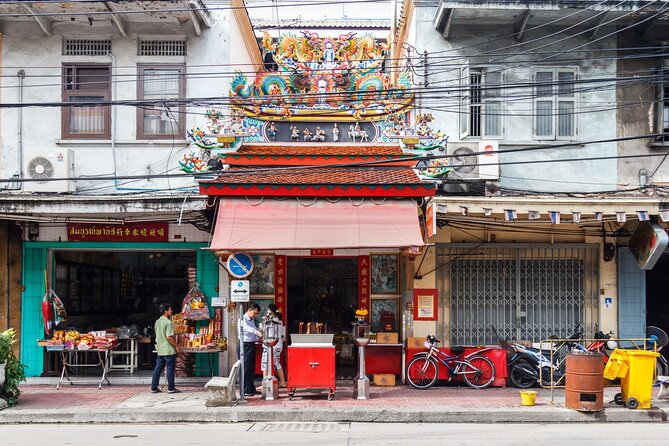
This experience is built like an outdoor escape game, but the reward is travel. You move through Bangkok’s Chinatown while the app gives you challenges that guide you to the next location. As you solve each step, the story attached to that place shows up, turning ordinary street-level wandering into something that feels purposeful.
What makes this format handy for real travel is the balance between structure and freedom. You still get an ordered path (challenge, then next stop), but you’re not stuck listening to anyone all day. You also avoid the classic tour problem of waiting for a group to catch up. If you like to look slowly at signage, shopfronts, or temple details, this style fits.
And since it’s designed to run without internet while you’re out exploring, you’re less likely to get derailed by spotty data. That matters in Bangkok, where you can go from decent signal to dead zones quickly.
You can also read our reviews of more guided tours in Bangkok


Price, time, and whether it’s good value
At $6.99 per person, you’re paying for a low-cost “do-it-yourself” city game. That’s not just the app idea—it’s the practicality. For roughly 90 minutes, you get a guided route through several specific sites: an old herbal drink maker, Wat Traimit, a near-century-old coffee shop, Wat Lokanukroh inside the Sampeng market area, Leng Buai Ia Shrine, and the final temple where Mahayana Buddhism was introduced.
You’re also buying flexibility. You can start at any time between 12:00 AM and 11:30 PM, take breaks, and resume later. For travelers who have a packed itinerary, the ability to pause is a big deal: you can step into a shop, cool off, or adjust to your energy level without feeling like you’re breaking a “tour.”
One reality check: because it’s self-guided, you’re relying on the phone instructions. If you want zero problem-solving and you hate navigation challenges, then you may prefer a traditional guided walk instead.
Where you start and end (and how that affects your day)
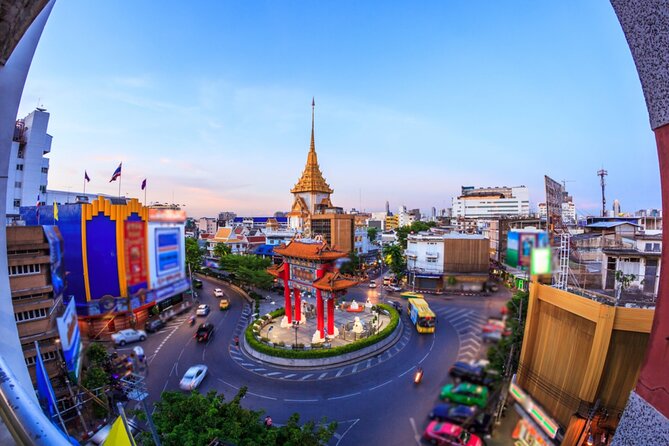
The start point is listed as Rong Muang, Pathum Wan, Bangkok 10330. After that, the app guides you step by step to a wedding store, following instructions closely to reach it. That first stretch matters because puzzle quests depend on a smooth start. If you’re already confused at the beginning, the whole game can feel harder than it should.
The end point is at 586 ถ. เจริญกรุง in the Pom Prap Sattru Phai area. Planning your next move is easier if you treat the route as a Chinatown connector: it brings you into the temple-and-shrine district while also dropping you near a major road area for onward travel.
Stop 1: Kan Kee Nam Tao Thong herbal drinks and clue hunting
Your first challenge happens around Kan Kee Nam Tao Thong, famous for making Chinese herbal drinks and known as a generations-old shop (about 100 years old). This is a smart opening choice because it’s not a temple facade you pass once and forget. It’s a living business, the kind of Chinatown detail that often feels more interesting than the big monuments.
How the game works here: you look around to find answers to the challenge so you can move forward. In practice, that means you’ll pay closer attention to storefront clues, signs, and the everyday rhythm of a busy area.
The travel value of this first stop is simple: you’re easing into Chinatown before the religious landmarks. If you want to sample local drinks and snack at places popular with locals, this is the kind of location that makes those breaks feel “part of the quest,” not an accidental detour.
Stop 2: Wat Traimit and the 5.5-tonne Golden Buddha
Next comes Wat Traimit (Temple of the Golden Buddha), where the star attraction is a 5.5-tonne seated Buddha. The gold sculpture dates back to the 13th century, sits nearly 5 meters tall, and you’re told it’s about 450 meters west of Hualampong Railway Station.
Again, the experience isn’t a lecture. You’re meant to look around, answer the challenge, and then get the story attached to this place. That means you’ll probably notice more than you would on a quick visit. Even if you’re not a “temple details” person, having a puzzle prompt nudges you to look up, scan surroundings, and connect the space to what you’re learning.
Drawback to keep in mind: since the app is doing the guiding, you might miss out on context you’d get from a human guide. If you love deep explanations and historical timelines, you may want to pair this with some extra reading either before or after the quest.
A few more Bangkok tours and experiences worth a look



Stop 3: Eiah-Sae coffee shop and the sound of generations
The third stop is Eiah-Sae coffee shop, described as almost a century old and passed down through generations. What stands out in the description is the atmosphere: it’s homey and noisy.
For your experience, that means this is likely where the quest becomes very human-scale. You can expect to be surrounded by daily activity while you solve the next clue. It’s also one of the better “pause and reset” moments because a coffee shop is a natural place to rest your legs, cool down, and then get back to the next leg.
Also, this location fits a theme the whole route has: Chinatown isn’t only religious sites. It’s trade, habit, and family businesses. That’s what makes the quest feel like a real neighborhood walk, not just a checklist.
Stop 4: Wat Lokanukroh inside the Sampeng market area
Then you head toward Wat Lokanukroh, noted as one of the smallest temples in Bangkok. The interesting point here is that no monks live there, yet people still come to pray and offer ceremonies. The temple sits in the heart of the Sampeng Market area.
This stop is worth your attention because it challenges a common travel assumption. A temple doesn’t have to be a monastery to matter. Here, worship continues in the middle of commercial life, showing how Chinese and Thai religious customs blend into everyday movement and shopping.
For the quest format, this also means the “look for answers” part may involve noticing elements that you might otherwise treat as background. You’ll likely need to slow down and focus, especially in a market zone where everything is visually active.
Stop 5: Leng Buai Ia Shrine, a 1658 refuge for business prosperity
Your next major cultural stop is Leng Buai Ia Shrine, identified as the oldest Chinese shrine in Thailand. It was built in 1658 during the Central Ayutthaya period, and the idea here is very business-linked: Chinese businessmen came to the shrine for refuge and prayed for prosperity for their business.
There’s also an architectural note: it’s in a traditional Chinese architectural style.
This is the moment in the quest when the “mystery puzzle” part can feel most meaningful. When the story behind a shrine is about trade, safety, and success, you start to see why Chinatown’s religious sites are placed where they are. They’re not only about faith in the abstract; they’re tied to practical life and community needs.
Stop 6: From Wat Leng Noei Yi to a Mahayana Buddhism landmark
The final temple stop is described through its background as Wat Leng Noei Yi, opened in the 1870s. It served as an introduction of Mahayana Buddhism in Bangkok. Later, King Chulalongkorn renamed it to its present title.
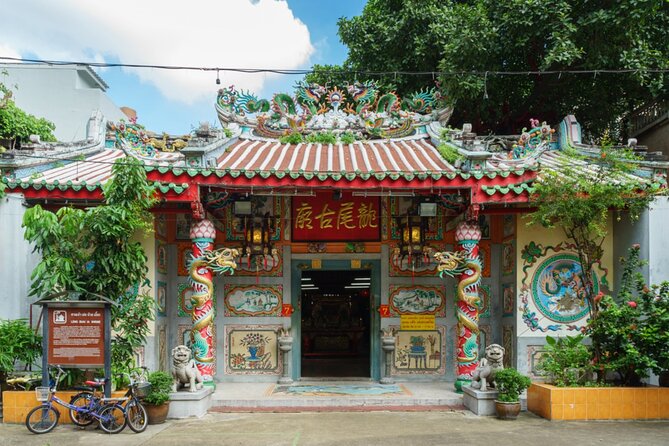
You’re also given a visual roadmap: the temple is decorated with plenty of animal and floral motifs plus Chinese dragon motifs. The ordination hall houses a gold colored Buddha.
In a typical visit, a place like this could be overwhelming because there’s so much decoration. In this quest format, the app’s clue prompts push you to focus on what matters for the story, instead of wandering through details without direction.
The biggest practical upside: you control the pace
For me, the clearest strength of this kind of experience is that it works with your travel rhythm. If you’re the type who likes to linger for photos, step into a shopfront, or take a quick break when it’s too hot, this format gives you permission to do that.
Because it can be used 24/7 and has a start at any hour approach, you don’t have to force Chinatown into a narrow window. It also means you can choose a time that matches your energy level—short and bright, or calmer and more relaxed.
The main risk: navigation depends on the app and your patience
The only explicit complaint provided points to a real issue with city puzzle quests: if instructions are confusing, and if map locations don’t line up cleanly, the “solve and move on” loop can become exhausting. One person reported having to give up after finding several locations inaccurate on Google Maps.
If you do book this, I suggest planning like a puzzle traveler, not like a sightseeing tourist:
- keep enough battery for your phone (the quest runs on your device)
- give yourself a little buffer time so one wrong turn doesn’t ruin your whole day
- don’t let the game make you rush past the places—you’ll likely need to look around anyway
This won’t be a dealbreaker for everyone. But it is worth respecting if you’re the type who gets stressed by wayfinding.
Who should book this Chinatown puzzle quest
This works best for you if:
- you want to explore Chinatown temples and old shops without a guide
- you like puzzles and small challenges that turn walking into an activity
- you prefer self-paced travel with breaks built in
- you’re happy using your phone as the main guide
It may not be your best choice if you:
- want a lot of historical explanation from a person
- hate navigating with an app
- rely heavily on map accuracy and you get frustrated when it’s off
Should you book it
If you’re looking for a low-cost way to visit several major Chinatown stops in a compact 1.5-hour loop, and you like the idea of learning the stories through clues, this is a smart pick. The best part is that it blends religious sites with everyday neighborhood places like Kan Kee Nam Tao Thong and Eiah-Sae—so you get a more complete feel for Chinatown than a temple-only walk.
If you hate app-based directions or you know you get stuck when Google Maps and reality don’t match, consider giving yourself extra time or choosing a traditional guided option instead. The game can be great fun, but it expects you to be comfortable solving and searching.
FAQ
FAQ
How long is the Bangkok Chinatown self-guided puzzle quest?
It takes about 1 hour 30 minutes (approx.).
How much does it cost?
The price is $6.99 per person.
Do I need a tour guide?
No. There is no physical tour guide. You follow instructions through the app.
Do I need an internet connection while playing?
No. The experience is designed to be played offline, and you do not need an internet connection while exploring.
Can I start at any time?
Yes. You can start at any hour, and it runs 24/7.
Where does the experience start and end?
It starts at Rong Muang, Pathum Wan, Bangkok 10330, and ends at 586 ถ. เจริญกรุง, Pom Prap Sattru Phai, Pom Prap Sattru Phai, Krung Thep Maha Nakhon 10100.
Are there group discounts?
Yes. If you’re part of a group, one person can purchase access for everyone by selecting the total number of people. All group members can play on their own smartphones.
Is it private or shared with other people?
It is listed as a private tour/activity, so only your group participates.
Is it accessible for most travelers, and are service animals allowed?
Most travelers can participate, and service animals are allowed.
What if I need to cancel?
You can cancel for free up to 24 hours in advance for a full refund. If you cancel less than 24 hours before the start time, the amount paid is not refunded.