REVIEW · BANGKOK
River Kwai Jungle Rafts: 2-Day Kanchanaburi Escape from Bangkok
Book on Viator →Operated by Asian Trails LTD · Bookable on Viator
Two nights on water, and real WWII weight. This River Kwai Jungle Rafts escape threads together major World War II stops—the Bridge over the River Kwai, Hellfire Pass, and the Death Railway—with an off-grid overnight by the water. I also like how the trip is handled for you: pickup, transportation, tickets, and a professional English-speaking guide keep the logistics from eating your vacation time.
One thing to watch: the jungle raft stay is simple and hot, and the accommodation can have no air-conditioning, limited amenities, and no Wi‑Fi or warm water depending on the setup. That’s part of the charm, but it’s not a spa hotel.
In This Review
- Key things that make this tour worth your time
- From Bangkok at 6:00 a.m. to the River Kwai
- Thailand–Burma Railway Centre: the story before the photos
- Bridge over the River Kwai: photos first, but with weight
- Hellfire Pass Interpretive Centre: a sobering boat ride into the memorial
- Jungle Rafts overnight: off-grid calm with real comfort limits
- Mon Tribal Village and the Death Railway train: nature, culture, and the tracks themselves
- Price and logistics: where the $209 fits (and where you might spend extra)
- What to bring (so heat, boats, and humidity don’t ruin your day)
- Who should book this River Kwai escape—and who should think twice
- Should you book River Kwai Jungle Rafts?
- FAQ
- FAQ
- What time does the tour start?
- What’s included with the guide?
- What meals are included?
- Where do I stay overnight?
- Does the tour include a Death Railway train ride?
- Do I get pickup in Bangkok?
- How large is the group?
- Can I get a refund if I cancel?
Key things that make this tour worth your time
- Small-group feel with a max of 15 travelers, plus private or seat-in-coach options
- Guided World War II context across multiple key sites, not just one photo stop
- Hellfire Pass by boat, reaching the memorial area with the river and jungle around you
- Overnight on a floating raft—quiet, scenic, and intentionally off-grid
- Mon tribal village + dance, with a short jungle hike and local cultural moments
- Death Railway train ride on real tracks, as part of the journey downstream
From Bangkok at 6:00 a.m. to the River Kwai
This tour starts early—6:00 a.m.—with pickup (when you’re in the downtown Bangkok hotel zone). That means you’ll be on the road while Bangkok is still yawning. It’s a long-ish day on day one, but the trade-off is you avoid doing Kanchanaburi as a stressful self-made puzzle.
The drive is done in a car/mini-van/coach with a professional driver. You’ll then switch to long-tail boats for parts of the route, including the transfer to the river raft area and the cruise portion tied to Hellfire Pass. This mix is one reason the tour feels like an actual experience, not just a checklist.
One practical note: you can bring only one suitcase and one carry-on per person on transfers because of limited luggage space. Pack light. Also, protect your electronics—this region is humid, and the tour explicitly warns that water can damage devices.
A few more Bangkok tours and experiences worth a look

Thailand–Burma Railway Centre: the story before the photos
Day one kicks off at the Thailand–Burma Railway Centre, a stop designed to give you the background before you see the famous landmarks. This is where you get the historical framing: what the railway meant, why it’s remembered, and how the POW experience ties into the wider WWII story in the region.
Even though this museum time is listed at about 1 hour, the key value is mental. You arrive at the river later with better context. The museum is interactive, and it’s the kind of place where you’ll catch details that make the later sites hit harder.
The timing also matters. Starting here early keeps the day from turning into a rushed blur of monuments and names.
Bridge over the River Kwai: photos first, but with weight
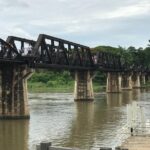
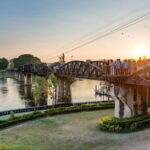
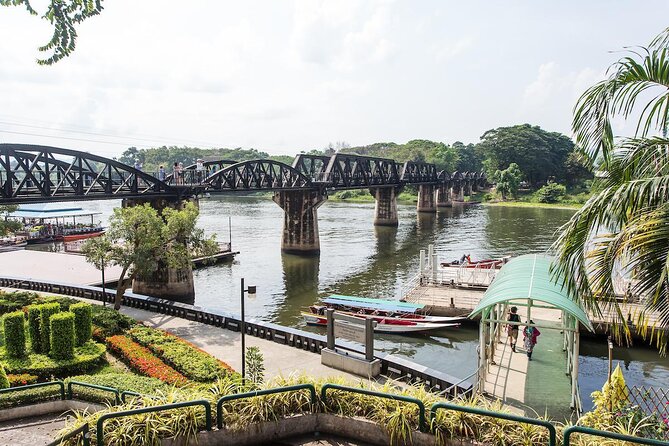
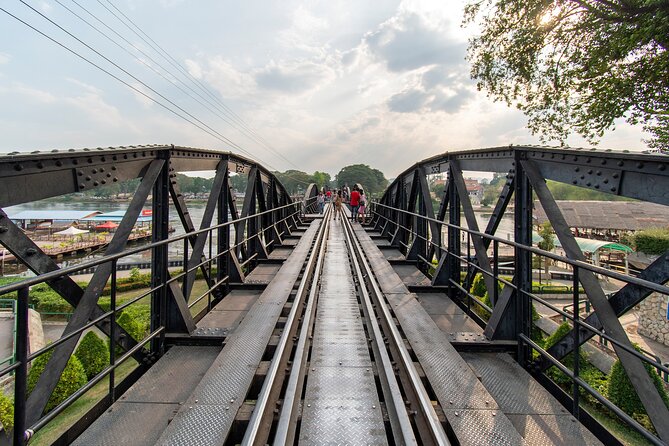
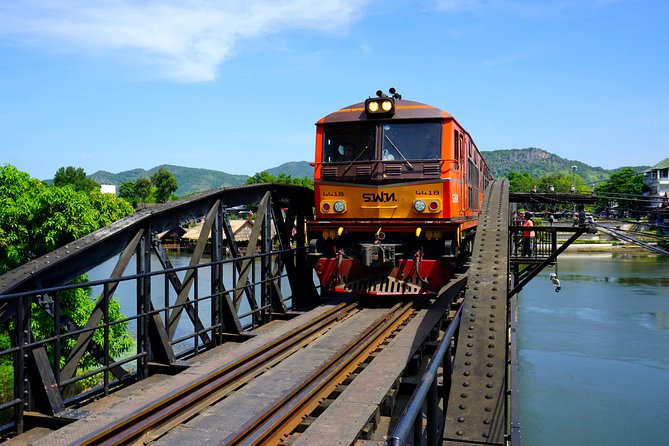
After the museum, you head to the Bridge over the River Kwai. You’ll get time to snap photos in the morning light. It’s the obvious landmark, and it draws people for good reason—this is one of those places you’ve seen in books or films, and it feels real the moment you’re standing there.
Then the tour pivots from “look” to “move.” You board a long-tail boat and drift along the river toward the Jungle Rafts, where you’ll sleep. That boat time is more than transportation. It gives you a buffer between heavy history stops—plus it’s scenic in a way that makes the day feel like a journey, not a march.
If you’re sensitive to heat or sun, start thinking now: you’ll be outside, and the itinerary is run in tropical daylight.
Hellfire Pass Interpretive Centre: a sobering boat ride into the memorial
Lunch happens after you reach the raft area (in the floating restaurant), and then you head out by boat to Hellfire Pass and the Hellfire Pass Interpretive Centre. This is one of the stops that many people remember most clearly, because it connects the human cost to the actual geography.
Hellfire Pass is not just a viewpoint. It’s presented as the place where POW labor helped carve a cutting through extreme rock, done with basic tools and harsh conditions. The interpretive centre is what turns scenery into understanding—so you’re not just looking at a dramatic cut in the rock. You’re learning what it meant and why it was so difficult.
A small but real tip: bring a hat and sunglasses. The tour specifically asks for sun protection, and this area can feel bright even on cloud cover. Expect strong sun and long stretches outside, especially on boat transfers.
Also, your group may have different guide delivery styles. One name you might hear in the field is Sam, who was praised for being passionate and clear. Another guide name that came up was Lady, also praised for knowledgeable commentary. On the other hand, one group noted that a guide named Susan was harder to understand due to English clarity. If you’re the kind of traveler who relies on narration to get meaning from WWII sites, try to ask your guide during the morning briefing if there will be any changes in leadership for day two.
Jungle Rafts overnight: off-grid calm with real comfort limits
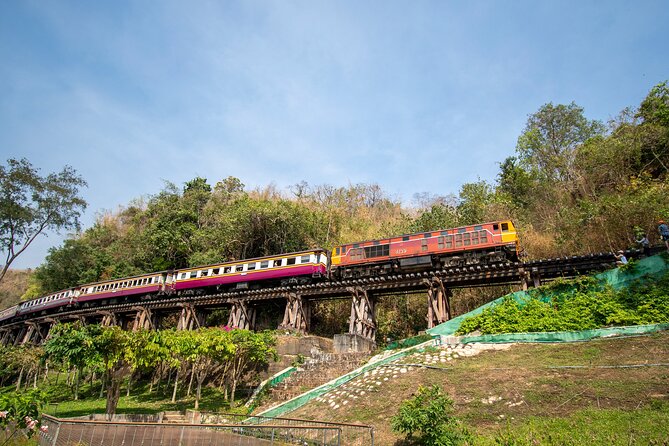
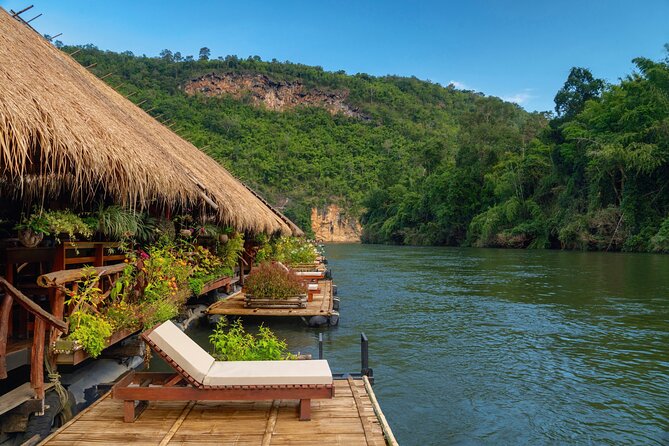
This is the main event for the “jungle rafts” part of the name. Your overnight is on a floating raft property, and it’s intentionally simple. The tour operator notes that the lodging can have basic amenities, may include fan-only rooms, and may have no Wi‑Fi and/or no warm water. Sometimes there’s no air-conditioning.
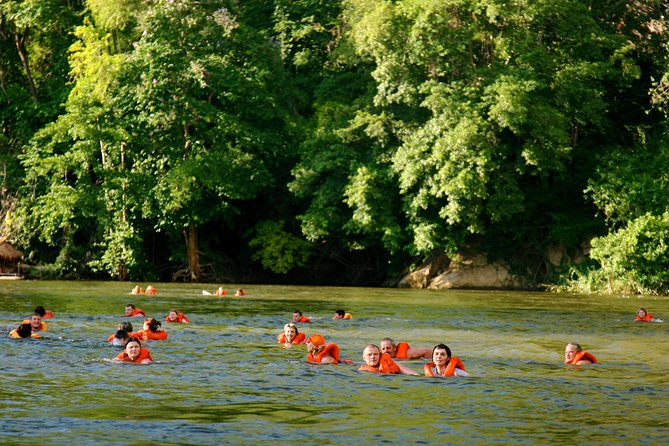
Here’s why it’s still good value: you’re paying for a location and atmosphere you can’t fake. Being on the water changes your whole tempo. Daytime feels like the sites. Night feels like river air, quiet sounds, and the kind of slow decompression that’s hard to recreate if you just do Kanchanaburi as day trips.
The trade-off is comfort is not the same as a city hotel. It will likely be hot and humid. One review specifically called out the lack of electricity as a factor you should expect, and the tour info warns that natural conditions can affect electronics. So do what makes sense: keep your phone charged before sunset, wrap devices for splash and humidity, and plan for a more rustic sleep.
Included with your raft stay is a traditional Mon dance performance, which helps you shift from WWII weight into living culture. It’s a nice emotional balance—history, then community.


Mon Tribal Village and the Death Railway train: nature, culture, and the tracks themselves
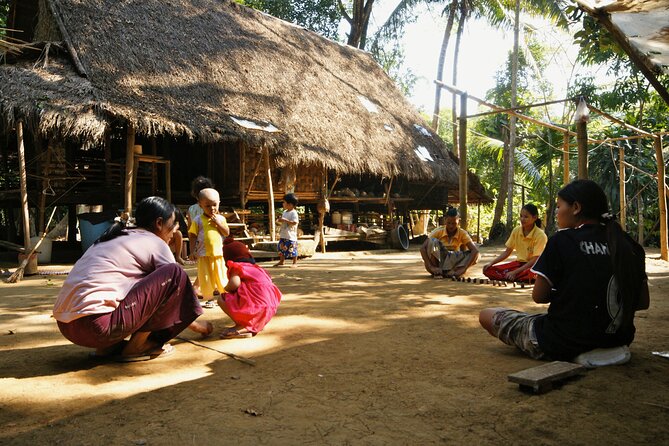
Day two starts with breakfast on the raft area, then you head to a nearby Mon tribal village. You’ll do a short hike into the jungle around the village. This is one of the more refreshing parts of the trip because it’s not another museum stop. It’s a chance to see how a community lives in the region and to notice the rhythm of daily life.
You may also have a Mon cultural moment tied to the raft stay (the tour includes a Mon dance performance), but the village time adds something different: walking the path and seeing the environment up close.
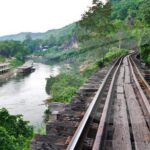
Then comes the big transport finale: when you return to the raft area, you check out, board a boat downstream, and take a local train ride across the Death Railway—over tracks built by POW labor. This is where you feel the “on-the-ground” reality. You’re not reading about rail lines. You’re riding over them.
Why this matters: the Death Railway is easy to turn into a story in your head. A train ride forces your brain to treat it as infrastructure—something that still shapes movement and the layout of the region today.
Price and logistics: where the $209 fits (and where you might spend extra)
At $209 per person, this is priced like an organized, multi-transport experience with multiple major admissions included and an overnight on the river. What you’re really paying for is:
- A coordinated route from Bangkok that would be annoying to piece together yourself
- A professional English-speaking guide for the WWII interpretation pieces
- The raft overnight in a location that’s part of the story
- The train ticket for the Death Railway ride
- Entrance fees for the included stops
You’re not paying for luxury. You’re paying for time saved and access delivered.
Where extra costs can pop up: not every meal may include bottled water, and one group mentioned paying for water at lunch. The tour does say snacks, drinks and/or refreshments are provided during the day, but you should still be practical. Bring a refillable bottle if you prefer, or keep some small cash on hand.
One money tip from the raft area experience: one review noted that the team handled cash with smaller notes more easily. So if you know you’ll want snacks or drinks on the spot, carry some smaller bills.
What to bring (so heat, boats, and humidity don’t ruin your day)
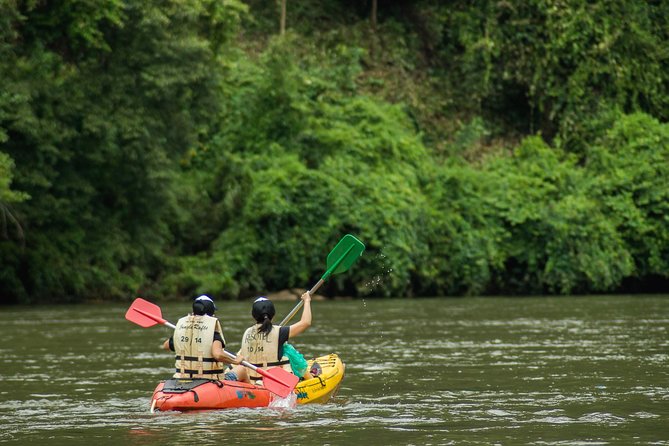
Because this trip is a soft-adventure mix of boats, trains, and open-air walking, pack like you’re doing a day in the tropics plus an off-grid overnight.
Bring:
- Sunglasses, a hat/cap, and high SPF sunscreen (the tour requests sun protection even when it’s cloudy)
- A light, breathable outfit and a backup layer for boat wind
- Waterproofing for electronics (the tour warns that water damages devices)
- Comfortable shoes with grip (you’ll be on uneven paths and you’ll climb steps)
Also, the tour notes that driving can involve uneven/off-road bumpy roads, so consider your own comfort level if you have neck/back issues or limited mobility.
Who should book this River Kwai escape—and who should think twice
You should book if:
- You want WWII context in Kanchanaburi, not just a quick photo run
- The idea of an overnight on a floating raft sounds fun, not stressful
- You like guided interpretation at memorial sites (Hellfire Pass is a meaning stop)
- You value the built-in transport chain: car/van + long-tail boats + train
You might think twice if:
- You want reliable hotel-style comfort (electricity, air-conditioning, warm showers, strong Wi‑Fi)
- You’re sensitive to heat/humidity
- You dislike early mornings. This starts at 6:00 a.m.
- You’re uncomfortable with steps, boats, and uneven walking surfaces
Should you book River Kwai Jungle Rafts?
If your goal is a meaningful Kanchanaburi visit with less hassle, this is a strong pick. You get the big WWII sites spaced out in a way that makes sense—museum first, then bridge, then Hellfire Pass—and you end the experience with the Death Railway train ride on actual tracks. The raft overnight is not “comfortable hotel.” It’s worth it if you’re okay trading mod cons for a setting that makes the whole region feel more alive.
If you want to feel the geography of history—river, jungle, and rail—this tour earns its place.
FAQ
FAQ
What time does the tour start?
The start time is 6:00 a.m.
What’s included with the guide?
You’ll have a professional English-speaking guide for a 2-day guided tour.
What meals are included?
Breakfast and lunch are included, along with meals as indicated in the program (food only). Snacks, drinks and/or refreshments are also provided during the tour.
Where do I stay overnight?
You’ll stay overnight in sharing twin/double room accommodation during the tour on a floating raft.
Does the tour include a Death Railway train ride?
Yes. The tour includes a train ticket for a ride over the Death Railway.
Do I get pickup in Bangkok?
Pickup is offered within downtown Bangkok areas and for main hotels only. Areas outside the central zone may not be included and can require supplementary charges.
How large is the group?
The maximum group size is 15 travelers.
Can I get a refund if I cancel?
No. The experience is non-refundable and cannot be changed for any reason.