REVIEW · BANGKOK
Private Tour: Temples Tour of Bangkok
Book on Viator →Operated by Mam Holidays Thailand Co Ltd · Bookable on Viator
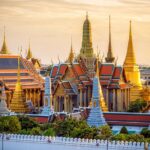
Gold Buddha, river boat, and three temples. This private Bangkok temples tour is built for focus: you start with Wat Traimit’s towering golden statue, then cross the Chao Phraya for Wat Arun, and end at Wat Pho’s giant reclining Buddha. I also love that you get hotel pickup and a private air-conditioned car, so you’re not wrestling traffic or figuring out transport between sites.
One watch-out: the experience depends a lot on your guide’s English level. Even when the guide is friendly and the route is efficient, communication can be stronger with some guides than others, so you’ll get more out of it if you’re comfortable with fewer details if the English is limited.
You meet your guide in central Bangkok around 9:00 am, then you’ll be on the move for about five hours, with entrance tickets and the river boat ride handled. After Wat Pho, you’ll usually be back for an early-afternoon drop-off, which is perfect when you have another plan later that day.
In This Review
- Key highlights worth clocking
- A tight five-hour plan that still feels unhurried
- Wat Traimit: seeing a 5.5-ton gold statue up close
- The drive through Chinatown and Pak Khlong Flower Talat
- Wat Arun by boat: Temple of Dawn with the river in play
- Wat Pho: reclining Buddha and the temple school legacy
- Guides make or break it: what to look for on the day
- Timing, pace, and what “private” really means here
- Dress code and comfort tips that keep you out of trouble
- Price and value: why this cost can make sense
- Who should book this private temples tour?
- Final call: should you book this tour?
Key highlights worth clocking
- Wat Traimit’s solid-gold Buddha: a 10-foot, 5.5-ton seated statue tied to the Sukhothai era
- Chao Phraya boat ride to Wat Arun: the Temple of Dawn looks best with the river in your view
- Wat Arun’s glass-and-porcelain mosaics: colored details on the pagoda exterior that reward slow looking
- Wat Pho’s reclining Buddha and gold leaf: 150 feet long, with mother-of-pearl details on the feet
- Pak Khlong Flower Market stop: a quick, real taste of local life between temple walls
- Private pace: you get a car and guide for just your group, not a stampede schedule
A tight five-hour plan that still feels unhurried
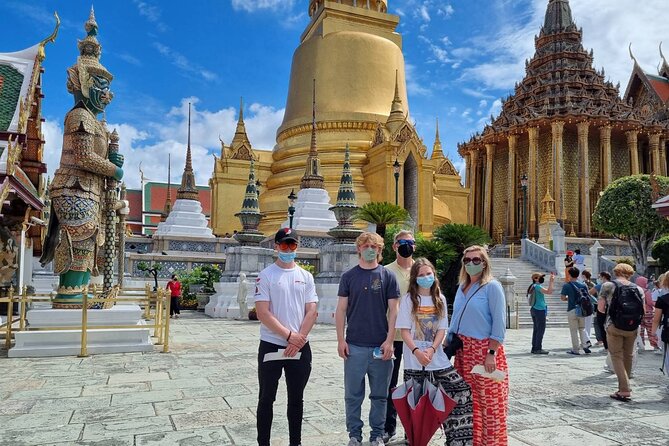
This tour is designed for people who want the big Bangkok temple hits without turning the day into a transportation scavenger hunt. You’re collected from your central Bangkok hotel (the operator notes they can’t pick up from some Airbnb locations when there’s no house name/number), then you ride in a private, air-conditioned car with an English-speaking guide at the time of sightseeing.
What you’re paying for isn’t just the temples. It’s the friction removal: safe, straightforward routing between sites, paid entrances, and a boat ride across the river at the right moment. When traffic or heat can slow you down, this setup helps you keep your day on track.
You should still expect walking—temples and markets mean steps, pavement, and sun. But the tour is paced so you can actually look. Several guides on this route are praised for letting people explore at their own speed instead of rushing you out the door.
You can also read our reviews of more private tours in Bangkok


Wat Traimit: seeing a 5.5-ton gold statue up close
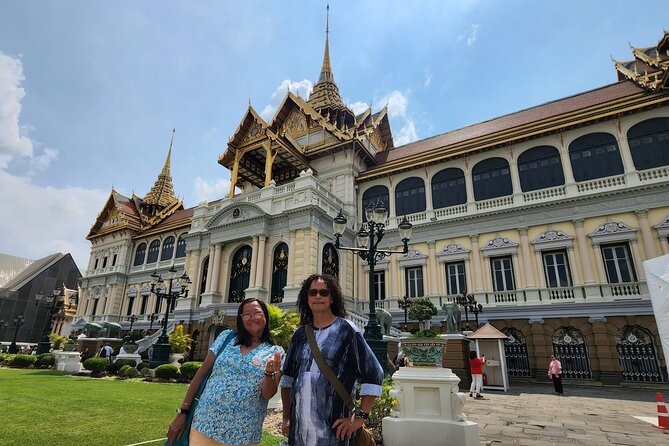
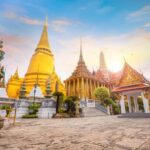
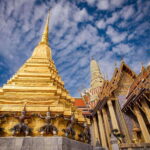
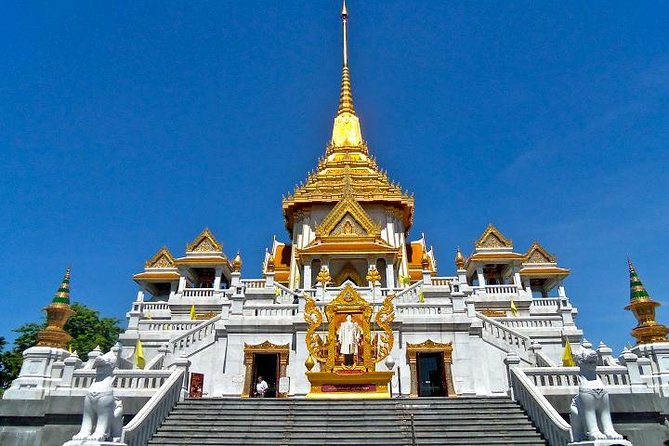
Wat Traimit (the Temple of the Golden Buddha) is the reason this tour gets people talking fast. The star attraction is a seated Buddha statue about 10 feet (3 meters) tall and roughly 5.5 tons. The statue is said to date back to the 13th century, tied to the Sukhothai period, and the guide’s explanation is part of why it works.
Even if you’ve seen gold imagery in photos, this is different. The statue’s scale changes how you see the room—your eye keeps lifting back to it. It’s the kind of stop that’s worth slowing down for, because the gold isn’t just decorative. It’s the whole point of the temple’s identity.
Tip for your visit: give yourself a minute to orient your bearings before you start taking photos. Temple interiors can be busy, and it’s easier if you know where the main viewing angle sits rather than chasing shots.
The drive through Chinatown and Pak Khlong Flower Talat
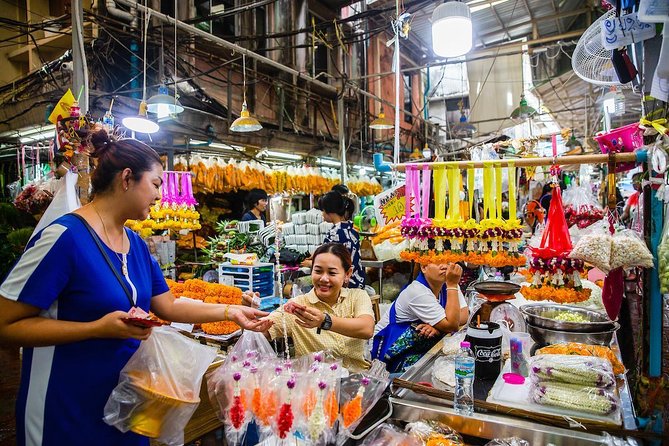
Between temples, the tour includes a quick stop at Pak Khlong Flower Talat Original. It’s not long—think about half an hour—but it gives you a slice of Bangkok life that’s very different from temple courtyards.
You’ll ride through areas like Chinatown and a central flower market zone, which helps you understand how these temples sit inside a living city rather than a museum bubble. The flower market is busy in the human sense: vendors, shoppers, color, and movement. It also creates a nice emotional “reset” before the next temple, because your brain stops only thinking about architecture and starts noticing everyday detail again.
If you plan to buy flowers or small keepsakes, have small cash ready. You’ll also want to watch your belongings—markets can be tight.
Wat Arun by boat: Temple of Dawn with the river in play
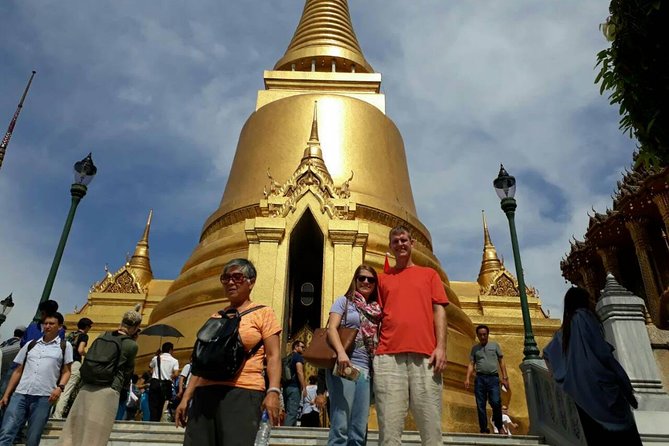
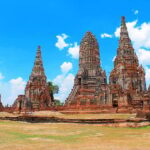
Wat Arun (the Temple of Dawn) is where the day becomes visually memorable. The tour reaches it via a boat crossing on the Chao Phraya River, typically from the Tha Tien pier side. That ride matters more than it sounds. Looking at Wat Arun from the water changes the scale. The spire isn’t just a structure—it’s a landmark you feel in your line of sight.
Once you arrive, you’re treated to a temple famous for a pagoda-style spire about 259 feet (79 meters) high. Inside, you’ll see a golden Buddha image and murals. Outside, the spire’s surface is packed with intricate colored glass mosaics and Chinese porcelain details, so don’t rush your eyes over it. You’ll get the best effect if you pause at a few angles rather than trying to photograph everything at once.
Practical angle: the light on Wat Arun shifts as you move. If you’re serious about photos, take a few shots, step aside, and then come back for another round. That short rhythm often beats frantic “spray and pray” shooting.
Wat Pho: reclining Buddha and the temple school legacy
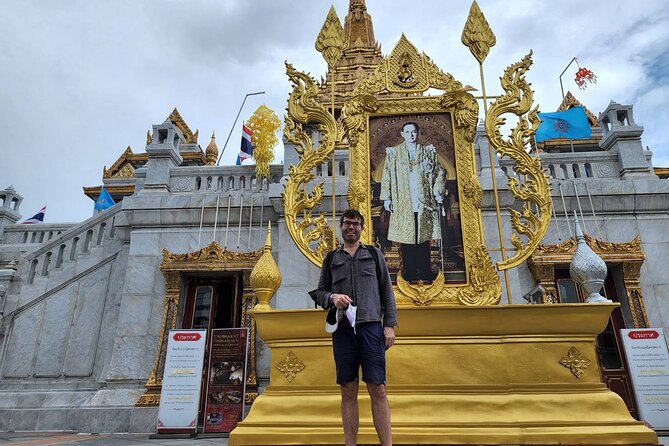
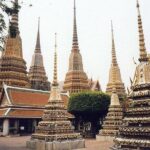
The final major temple stop is Wat Pho, also known as the Temple of the Reclining Buddha. The showpiece is the massive reclining Buddha covered in gold leaf, about 150 feet (46 meters) long. Walking along the statue’s length gives you a real sense of scale—this isn’t a statue you glance at and move on from.
What I love here is the detail that’s easy to miss when you’re sightseeing fast. The feet have mother-of-pearl decorations, and the feet themselves are enormous—about 16.4 feet (5 meters). It’s the kind of detail that makes you wonder how long it took to create.
Wat Pho also isn’t just art and gold. The tour includes context on the temple’s role in learning. It was Thailand’s first public university and a center associated with teaching astrology, medicine, and literature. Even if your guide’s English isn’t perfect, this kind of background helps you connect what you’re seeing to why the temple mattered beyond worship.
You’ll have time to look through chapels, murals, ceramic statues, and rare artifacts (as the tour description frames it). If you’re the type who likes to compare how each temple feels, Wat Pho is a satisfying finale—more layered, more educational, and more visually dense than the quick-hit moments at the earlier stops.


Guides make or break it: what to look for on the day
This tour is consistently praised for guide performance, especially for people who want history explained in a way they can follow. In the best cases, the day feels like a friendly hangout with expert context—guides like Bella, Aye, Khun Aey, Aei, and Miss Sakorn Donphaisri come up in the strongest stories, with visitors highlighting patience, humor, and the ability to tailor the pace.
But here’s the honest part: the “English-speaking guide” label can land differently depending on who you get. Some guests report that English can be limited, which changes the experience. When communication is weaker, you may still get the route and the access, but you’ll rely more on your own observation than on the story behind each site.
How you can stack the odds in your favor:
- Ask your guide right away what they can cover in English and how much detail they can share.
- If English is limited, pivot to questions with short prompts like What is the main point here? or What should I notice first?
- Use your phone to save the names you hear (Wat Traimit, Wat Arun, Wat Pho). Then you can connect details as you go.
Also, many guides are praised for navigation skills—knowing where to stand, how to avoid wasted time, and how to keep you moving without feeling herded.
Timing, pace, and what “private” really means here
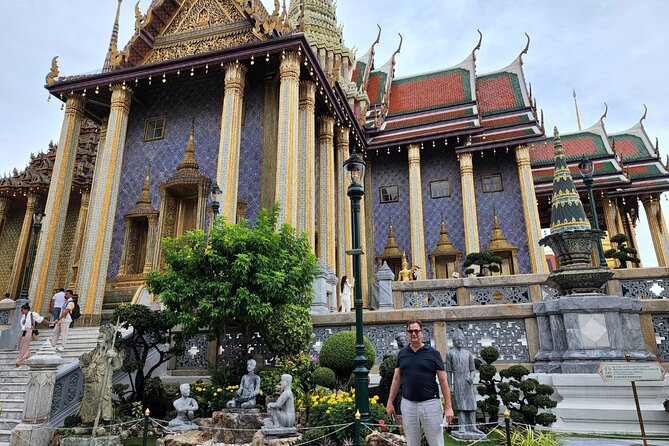
This is a private tour, so you’re not stuck with a group that wants to bolt every time the clock beeps. That matters in Bangkok, where temple lines, heat, and traffic can throw off shared schedules.
The typical flow is:
- morning start with Wat Traimit
- a market/area stop en route
- boat crossing for Wat Arun
- walking and market passing toward Wat Pho
- finish with a drop-off in the early afternoon
Private also means you can adjust within reason. If someone wants more time at Wat Arun’s exterior mosaics or needs extra bathroom breaks, it’s easier for the guide to handle. One of the most common compliments is that the pace feels relaxed rather than rushed.
One more practical note: there’s no included food. You’re going to be outdoors and walking, so plan for water and a snack if you need it. If you show up hungry, your day can feel longer than it should.
Dress code and comfort tips that keep you out of trouble
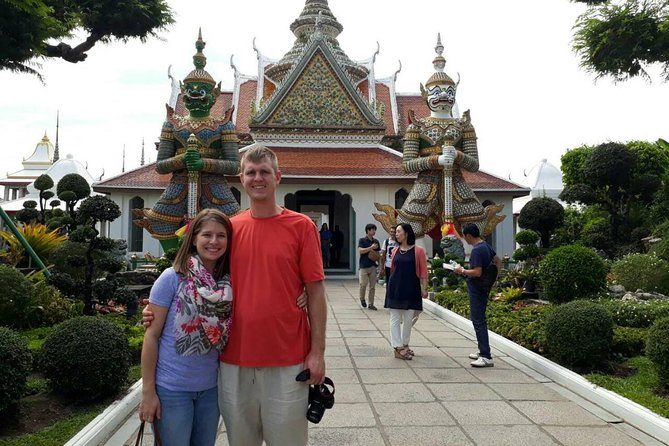
Temple rules are real in Bangkok. The tour notes that proper dress is required before entry.
For men: long pants and shirts with sleeves are required. Tank tops aren’t allowed. If you wear sandals or flip-flops, you must wear socks—no bare feet.
For women: dress modestly with no bare shoulders and no see-through clothing.
This sounds basic, but it’s a common trip-stopper if you forget. Bangkok heat makes it tempting to dress too casual, so I’d rather you plan for comfort with rules in mind. A lightweight button-up or thin long-sleeve shirt can be a lifesaver. For women, a light scarf you can pull up on your shoulders can solve a lot of issues fast.
Comfort also matters for temples that require more walking. Wear shoes you can handle on uneven surfaces.
Price and value: why this cost can make sense
At about $129.88 per person for an approximately five-hour private tour, the price feels steep if you’re comparing it to group tours. But the value piece is the combo:
- private air-conditioned transport
- hotel pickup and drop-off within Bangkok City area
- an English-speaking guide during the visit
- entrance fees included
- Chao Phraya boat ride included
- a real route plan that ties three major temples together
Where it becomes especially worth it:
- you’re a couple or small group splitting the cost
- you’re short on time and want the “big three” (Wat Traimit, Wat Arun, Wat Pho)
- you want context, not just selfies and quick exits
- you’re new to Bangkok and don’t want to figure out river crossing timing and navigation on your own
Where it might feel less worth it:
- you’re traveling solo and hate paying for private time
- you strongly depend on detailed English explanations and your guide’s English level ends up being limited
- you prefer a slower, self-directed temple day with lots of stops for food and side streets
In other words, it’s not just paying for temples. You’re paying for smooth logistics plus guided interpretation—when the guide’s language is strong, that’s when the price really earns its keep.
Who should book this private temples tour?
I’d point you here if any of these fit your trip style:
- First time in Bangkok and you want your bearings fast
- You want a short itinerary that still includes real Bangkok textures (like the flower market)
- You care about meaning and history, not just postcard views
- You’d rather pay for convenience than spend your day figuring out routes
It can be a great choice for couples and solo travelers too—one solo visitor even described this as perfect for short time and personal pacing. If you’re flexible and ok with some variability in English detail, you’ll still likely enjoy the core sights and the private comfort.
If you already know Thai temple history well and prefer to wander without a guide, you might find the structure limiting. But for most people, the “three temples + boat ride” format is an efficient, memorable day.
Final call: should you book this tour?
If you want a smart Bangkok temples day with hotel pickup, paid entrances, and a Chao Phraya boat ride, this is a solid buy. The biggest determinant isn’t the temples—it’s the guide. When your guide’s English is strong, the stories and explanations make the statues and spires feel way more alive.
If your English is a must-have, message your expectations before you go and be ready to ask simple questions on the day. Either way, Wat Traimit, Wat Arun, and Wat Pho are worth structuring—this tour saves you the guesswork and gets you to the right places with less stress.