REVIEW · BANGKOK
Private Tour from Bangkok: Railway and Floating Markets Tour
Book on Viator →Operated by Intrepid Urban Adventures - Thailand · Bookable on Viator
Bangkok at dawn can feel like a different country. This private tour pairs two headline markets outside the city: the Maeklong Railway Market and the Damnoen Saduak Floating Market, with a small boat ride through village canals and time to snack and wander at your own pace. If you like street-level scenes where you can actually watch how local business works, this one delivers.
I love that it is private and paced for you, not a cattle-car group schedule. You also get practical add-ons that make the day more useful, like Thai snack and seasonal fruits and tips on what else to eat and see while you are in town.
One consideration: the day starts very early (6:30 am), and you need to arrive on time because there is only a short wait before you miss key railway timing.
In This Review
- Key highlights worth knowing
- Entering Maeklong: the early start that makes or breaks it
- A private vehicle ride that buys you time
- Mae Klong Railway Market: watching the track-side routine
- What to do while you are there
- The main drawback: it is heavily tour-facing
- Damnoen Saduak Floating Market: canal views and market banks
- Boat ride: why it is more than transport
- Walking the banks
- Palm sugar in a village plantation: the most grounded stop
- What you likely take away
- How the day flows: timing, walking, and what “private” means here
- The walking factor
- Returning to Bangkok: plan for traffic
- Price and value: is $130.22 worth it for a private market day?
- Guide energy: what “friendly local” looks like in practice
- Who should book this, and who should skip it
- Should you book: my decision rule
- FAQ
- FAQ
- What time does the tour start?
- Where do we meet for the tour?
- How long is the tour?
- How far is Mae Klong from Bangkok?
- What tickets are included?
- Do we ride a boat?
- Is palm sugar included?
- Is the tour really private?
- What should I wear?
- Are children allowed?
- Is it cancelable for a full refund?
Key highlights worth knowing
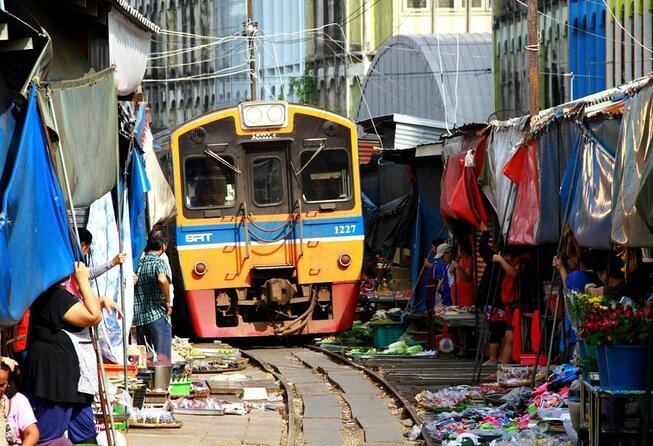
- Maeklong’s active railway setting: vendors set up extremely close to the track and adapt fast when the train comes.
- Damnoen Saduak by boat first: you get the canal view before walking the market banks.
- Small boat through narrow village canals: it changes the feel from Bangkok traffic to slower waterways.
- Local village palm sugar visit: you meet a family plantation making palm sugar year-round.
- Taste stops built in: Thai snack and seasonal fruits are included, so you are not stuck guessing what to buy.
Entering Maeklong: the early start that makes or breaks it
This tour’s whole rhythm is built around one reality: the train schedule at Maeklong does not care about your sleep habits. The pickup starts at 6:30 am from the National Stadium BTS area (you meet at the lobby of Lub d Siam Hostel), and the guidance is clear: be there early, because the tour cannot wait beyond a short window.
That early departure is also why this feels more real than the usual half-day market hop. You see vendors and shoppers as the day kicks off, not after the crowds have fully multiplied. I like tours that respect how the markets actually function, and this one is timed for the moment when the railway action happens.
You can also read our reviews of more private tours in Bangkok



A private vehicle ride that buys you time
Between Bangkok and Maeklong, you are driven by a private vehicle. That matters more than it sounds. If you have ever tried to shuffle taxis and buses at sunrise, you know how much stress eats your energy for photography, walking, and eating. With the drive handled, you can arrive ready to focus.
Mae Klong Railway Market: watching the track-side routine
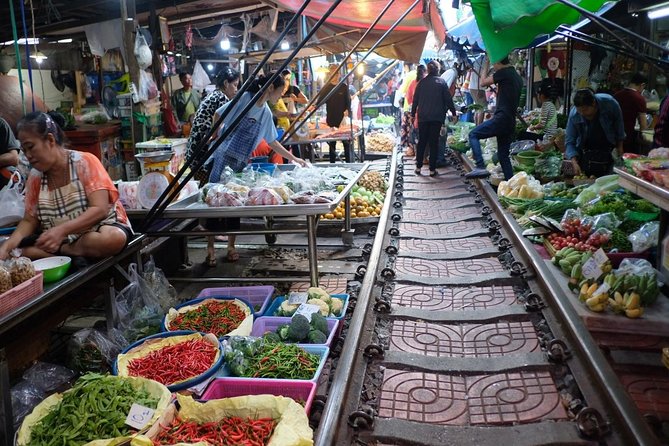
Mae Klong Railway Market (also called Hoop Rom Market) is the big draw, and it earns its reputation. Vendors line up their goods along an active railway line, with produce, fabrics, and cooking supplies laid out very near the track edge—sometimes right on the rails.
Then the train comes, and you see the choreography. Vendors gather their items and lower awnings or canopies, and shoppers step aside so the train can pass. It is a surreal sight the first time you see it, partly because the setup looks so close to danger, and partly because everyone knows the routine.
What to do while you are there
You get about three hours at this stop, including admission. In that time, I suggest you do three things in order:
First, walk the edges once slowly and take in how the stalls are arranged against the tracks. Next, watch the way vendors react before you start aiming your camera at the train moment. Finally, plan a snack or small purchase, but only after you understand what is easy to reach once crowds shift.
The main drawback: it is heavily tour-facing
Here is the honest balance. This market can feel very organized for visitors, especially if you are expecting a purely local daily routine. If you dislike crowds and people photographing people photographing the train, you might find the atmosphere a bit stage-like.
Still, the spectacle itself is real: you are watching an active railway market in operation, not a museum reenactment. If your goal is to see the mechanism behind the show, the railway stop is worth it.



Damnoen Saduak Floating Market: canal views and market banks
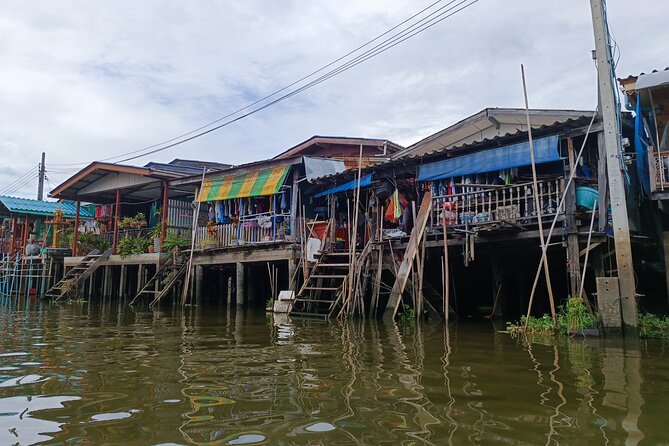
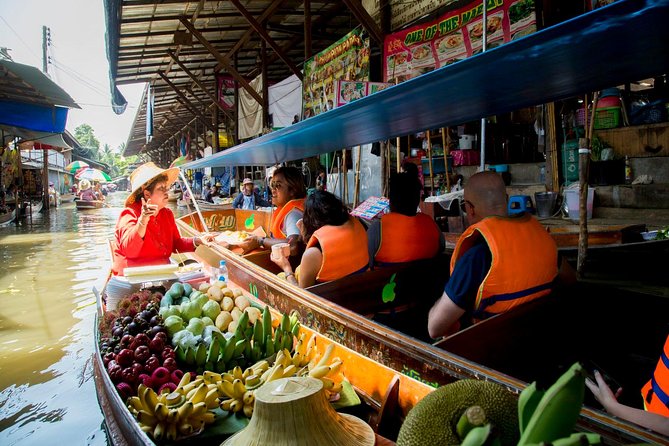
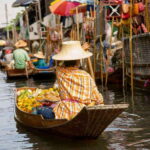
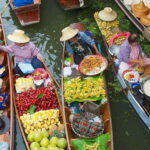
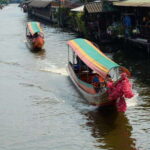
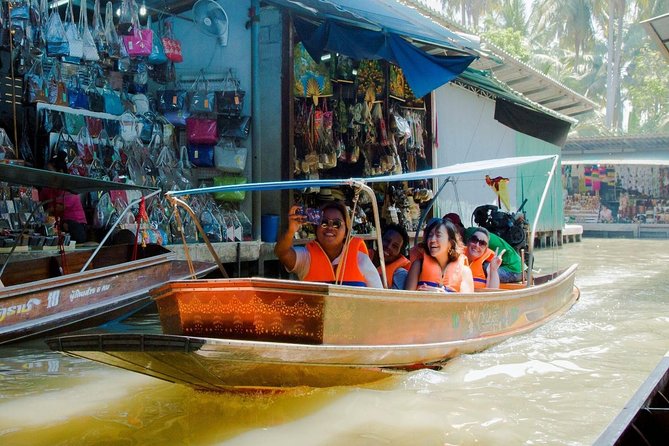
After Maeklong, you head to Damnoen Saduak Floating Market, and the day shifts from tracks to water. This is where the tour earns easy points for atmosphere. You board a small boat to ride through narrow village canals, then you step out to explore the market on foot.
The canal portion is where your day changes speed. You can look left and right as homes and shoreline activity slide by, instead of concentrating on a single busy corridor. It is also the moment when the market starts feeling like a network of waterways rather than a single photo location.
Boat ride: why it is more than transport
The boat ride is not just a shortcut. It helps you understand where sellers position themselves and how movement works along the river lanes. If you are the type who likes “how it works” travel rather than only “what it looks like,” this part will land well.
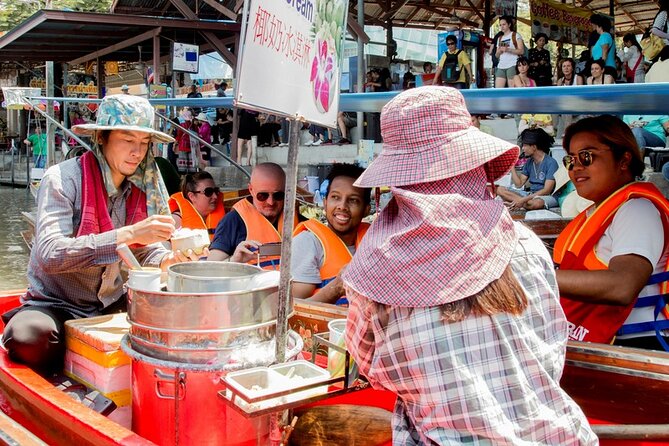
Also, you can pause the experience if something catches your eye. The guide can help you stop to chat with vendors and potentially buy something to take home or eat right there.
Walking the banks
Once you leave the boat, you explore more of the market area on land. The tour notes you will find Thai foods like seasonal tropical fruits from local orchards, plus souvenirs on both sides of the river banks. Since admission here is free, your money can go straight toward what you actually want to taste and buy.
A practical tip: start with fruit and simple snacks before you commit to souvenirs. That way, you spend hungry, not rushed, and you can use the flavors to guide what to buy.
Palm sugar in a village plantation: the most grounded stop
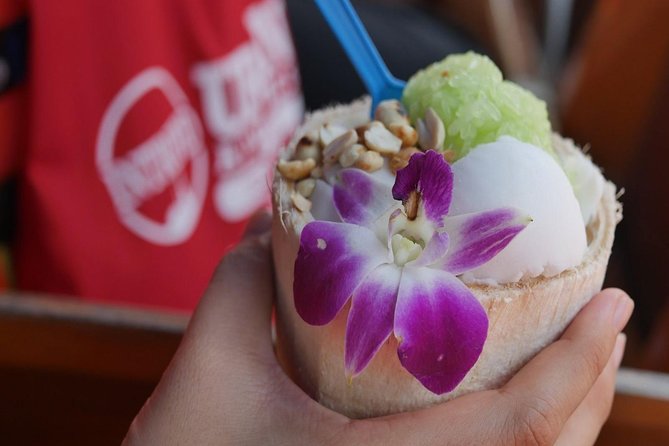
One of the best parts of this day is the palm sugar element, because it shifts away from the tourist checklist. Instead of a big tourist-style plantation set up only to show visitors how it works, the tour visits a local family-run village plantation where palm sugar is made daily throughout the year.
This is not just about learning. The tour frames it as local impact: your small group visit provides additional income for a family that has been there for generations. If you care about spending your time where it supports real livelihoods, this is the portion that feels most purposeful.
What you likely take away
You probably will not leave with a chemistry degree in sugar processing, but you will come away with a clearer sense of scale and routine—how something made daily can become a normal part of village life rather than a one-off performance for visitors.
Even better, it sits naturally between two big spectacle stops. After railway chaos and floating market motion, the plantation gives your brain a calmer scene.
How the day flows: timing, walking, and what “private” means here
This tour runs about seven hours total. The stops are long enough to matter: roughly three hours at Maeklong and about three hours at Damnoen Saduak, plus travel time and the palm sugar visit.
“Private tour” also matters in small ways. Your guide can adjust pacing if you want more time looking at stalls or less time moving between sellers. You are not forced into a strict line every few minutes.
The walking factor
You will be walking during the market parts, and you will also be on uneven terrain near water in places. The tour suggests dressing casually and comfortably, and I agree. Think breathable clothing, solid shoes, and a light layer for early morning air.
If you wear sandals, consider whether you like wet patches and uneven steps. Comfortable shoes win here.
Returning to Bangkok: plan for traffic
The itinerary brings you back around noon. The only realistic wild card is road traffic on the way back into Bangkok. The tour notes that delays are possible, so if you have another booking the same afternoon, build in buffer time.
Price and value: is $130.22 worth it for a private market day?
At $130.22 per person, this is not a budget impulse buy—but it also is not trying to be. The value comes from what is bundled:
- A private vehicle drive out to Maeklong
- Guided visits at both signature markets
- A small boat ride into Damnoen Saduak canals
- Included tastings: Thai snack and seasonal fruits
- Palm sugar plantation visit focused on a local family
- A friendly English-speaking guide
When you compare that to the cost of piecing it together yourself—especially getting to Maeklong early enough to catch the train moment—this pricing starts to make more sense. Your time is expensive too. One smooth early-morning start plus a guide who knows where to stand and when to move is the kind of convenience that actually saves your trip.
Guide energy: what “friendly local” looks like in practice
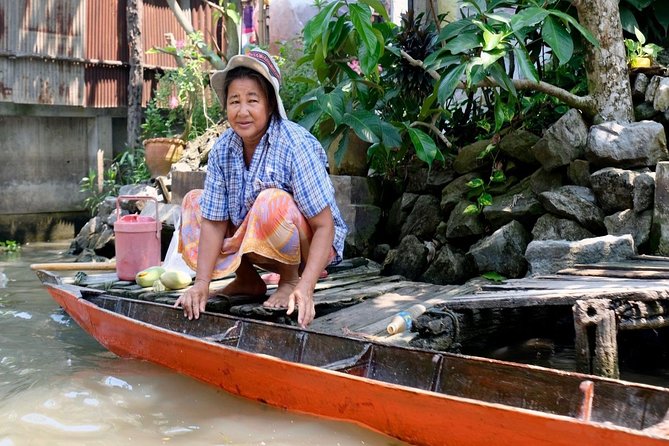
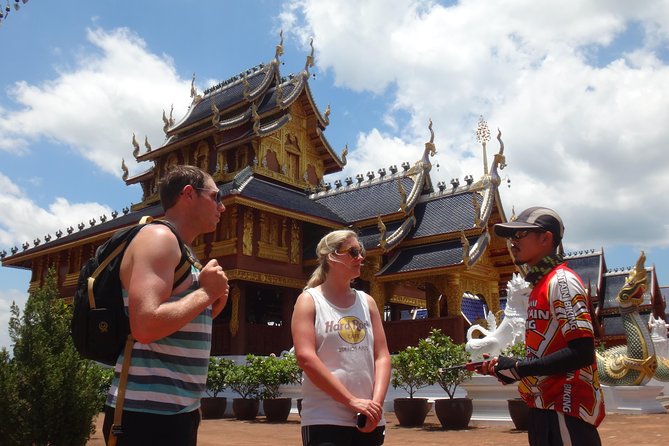
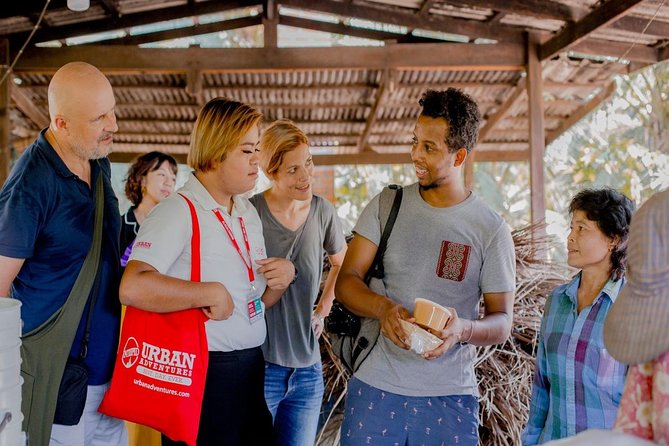
The tour emphasizes a friendly English-speaking guide, and the guide names Pam and Tik Tok show up in the experience you might be assigned. If you end up with a guide like them, you can expect more than directions—you should get help reading what is worth buying, when to switch from watching to shopping, and how to time your walking so you are not fighting crowds at the wrong moment.
Guides also make the day feel less like a checklist. You can ask what else to see and eat during your stay, which is useful if you only have a short Bangkok window.
Who should book this, and who should skip it
This tour fits best if you want:
- A first-time, high-impact look at two famous markets outside Bangkok
- A private pace and personal attention
- A mix of spectacle (railway) and atmosphere (floating canals)
- At least one stop that supports a local family-run food craft
You might skip it if:
- You hate early mornings and do not want to deal with strict timing for the train
- You want markets that feel purely local with minimal tourist flow
- You are very sensitive to the idea of markets becoming photo-centric (the railway and floating scenes can be heavy on visitors)
In other words, go for it if you like market theater with a real working-world core. Pass if you want quiet and off-grid.
Should you book: my decision rule
If your priority is to see the Maeklong train-market moment and also experience Damnoen Saduak by boat, this is one of the cleaner ways to do it. The timing, included tastings, and the palm sugar village stop make it more than a drive-by photo tour.
I would book it if you can handle an early 6:30 am start and you plan to stay flexible around the return traffic. If that early start sounds like torture, you may want to look for a later-market alternative.
FAQ
FAQ
What time does the tour start?
It starts at 6:30 am. You need to arrive on time at the meeting point, and you are advised to get there at least 15 minutes early.
Where do we meet for the tour?
You meet at National Stadium BTS Station area, at the lobby of Lub d Siam Hostel (925/9 Rama I Rd, Wang Mai, Pathum Wan).
How long is the tour?
The tour runs about 7 hours.
How far is Mae Klong from Bangkok?
You will drive about 2 hours to the railway market (the tour describes this as roughly a 1.5-hour drive to the market area plus travel time in the schedule).
What tickets are included?
The tour includes admission to Mae Klong Railway Market. Admission to Damnoen Saduak Floating Market is listed as free.
Do we ride a boat?
Yes. You take a small boat through narrow village canals to reach Damnoen Saduak, then you also have time to explore around the market banks.
Is palm sugar included?
You visit a local family-run village palm sugar plantation as part of the itinerary. Tastings include Thai snack and seasonal fruits, and the plantation stop supports a local family.
Is the tour really private?
Yes. It is listed as a private tour/activity, meaning only your group participates.
What should I wear?
Dress casually and comfortably for walking. You should be prepared for walking around markets and being out early in the morning.
Are children allowed?
Children ages 6 to 11 are permitted at the child rate. Children under 6 are not permitted.
Is it cancelable for a full refund?
You can cancel for a full refund if you do it up to 24 hours before the experience starts.