REVIEW · BANGKOK
Private Historic River Kwai Death Railway, War Cemetery and Hellfire Pass Tour
Book on Viator →Operated by Idaytrip · Bookable on Viator
War leaves footprints you can still walk. This private Death Railway day pulls you through World War II sites with a guide who keeps the story clear, not confusing. I especially like the early start that helps your day feel manageable, and the included lunch and bottled water that keep you going between stops.
This is also one of those days that’s emotionally heavy, so a possible drawback is that it moves at a steady pace and packs in several locations. If your guide is the kind of storyteller people praise—like Nan—or you end up with a driver who’s good at handling Thai traffic, like Peter, the long drive is easier to take.
In This Review
- Key Points to Know Before You Go
- How the Private Pick-up and Early Start Pay Off
- Kanchanaburi War Cemetery: Numbers You Can Feel
- Hellfire Pass Interpretive Centre and Memorial Walking Trail
- Death Railway Museum Stop and the River Side Reality Check
- Tham Kra Sae Bridge and the Buddha Cave Detail
- Bridge over the River Kwai: A Brief Walk With Heavy Meaning
- Price, Lunch, and the Value of Having a Guide
- How Physically Demanding Is It, Really?
- Should You Book This Death Railway Private Tour?
- FAQ
- What time does the tour start?
- How long is the tour?
- Is hotel pick-up included?
- Is lunch included?
- What about entrance fees?
- Is this tour private?
- Is there a cancellation refund option?
Key Points to Know Before You Go
- A full guided day: a professional guide handles the context, so the memorials hit harder for the right reasons.
- Hellfire Pass is the centerpiece: museum time plus a memorial walking trail that connects the history to the terrain.
- Practical comfort included: air-conditioned transport, bottled water, and lunch are part of the price.
- A sobering set of sites: War Cemetery, Death Railway walking moments, and the famous River Kwai bridge.
- Free entry at multiple stops: if you’re thinking solo travel, the guide’s value matters here.
How the Private Pick-up and Early Start Pay Off
The day starts early, around 6:30 am, with hotel transfer in an air-conditioned vehicle. That matters more than it sounds. Kanchanaburi is a distance day from Bangkok, and leaving early helps you spend more time at the memorials instead of sitting in traffic wondering what hour it is.
This tour is private for your group. That’s a real advantage for a subject like the Death Railway because you can ask the follow-up questions that come up while you’re standing in the right place. When you’re on a group schedule, you often get that forced pace where you’re looking at the map instead of the meaning. Here, the guide’s job is to slow it down just enough to make the sites connect.
You’ll also have the basics handled: bottled water, entrance fees, and lunch. On long memorial days, the small comforts keep you from turning tiredness into irritability. Also, lunch included means you don’t have to hunt for food far from the sites while the rest of your morning is already spent thinking about war.
You can also read our reviews of more private tours in Bangkok


Kanchanaburi War Cemetery: Numbers You Can Feel
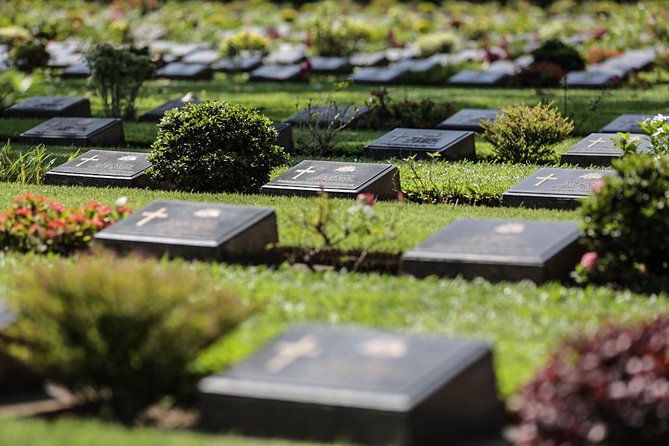
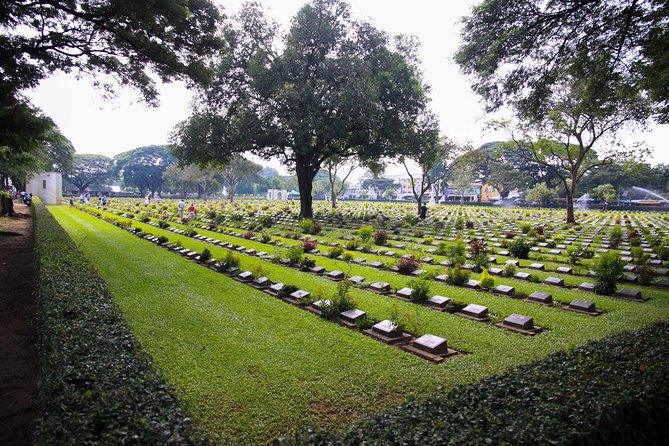
Your first stop is the Kanchanaburi War Cemetery, a well-kept place designed for reflection and remembrance. It contains the remains of 6,982 Allied POWs who died during construction of the Thai-Burma Death Railway. That specific number is powerful because it’s not an idea—it’s a count tied to individuals.
This stop is also emotionally different from a typical “attraction.” You’re walking through a memorial environment where the design tells you to slow down. You’re likely to notice how quiet it feels compared with the rest of your day. Even with a guide, the tone here is respectful rather than performative.
A benefit of doing this early is that it sets your frame for everything after. Later you’ll be walking parts of the railway, visiting memorial infrastructure, and seeing the famous bridge image used in pop culture. Starting at the cemetery gives you the reality check first. You don’t get pulled into sightseeing mode; you stay grounded.
The time at this stop is around 30 minutes, which can feel short if you’re the type who likes to read everything line by line. Still, the cemetery isn’t chaotic, and a guided stop makes your brain less busy—especially if you want to understand what you’re seeing without trying to translate everything on your own.
Hellfire Pass Interpretive Centre and Memorial Walking Trail
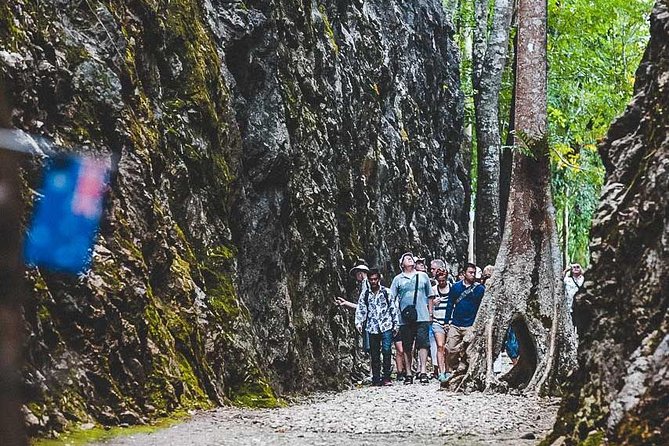
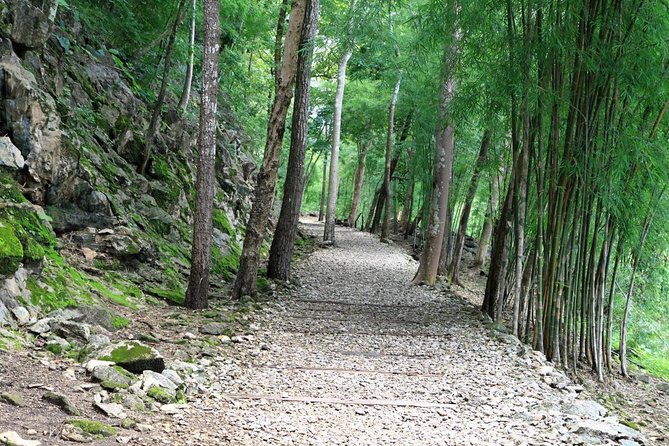
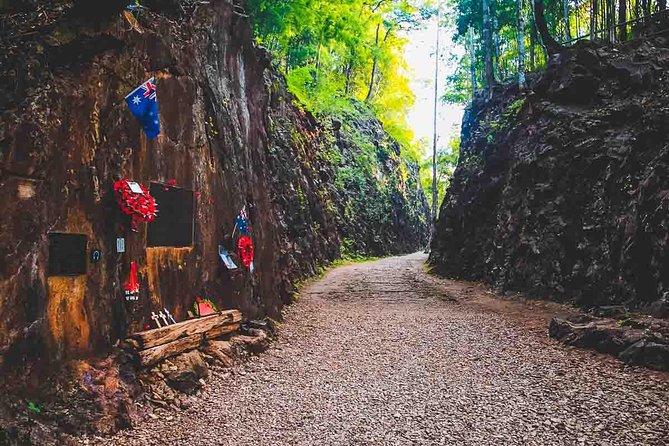
If you remember only one part of the day, make it Hellfire Pass. The interpretive centre and memorial walking trail are where the terrain and the history meet.
This cutting on the Death Railway cost the lives of more than 16,000 Allied prisoners and countless Asian laborers during World War II. That’s a staggering figure, and it’s exactly the kind of information that can feel abstract until you see the place itself. The memorial walking trail takes you along the route tied to the story, and the centre provides the background so you’re not just looking at a scar in the landscape.
Time here is about 2 hours, with museum time and the walking trail. That duration is about right. You need enough minutes to absorb the centre, then enough time outside to connect what you read to what your eyes catch. It’s not a rushed stop where you blink and move on.
One practical note: the trail is walking, and the day overall expects moderate physical fitness. You don’t need to be an athlete, but you do need to be comfortable moving for stretches. Wear comfortable shoes with grip, and bring a light layer if you get cold in AC vehicles before you head out.
If your guide is the kind of person people praise for making the story land—again, Nan is mentioned as a standout name—expect the explanation to feel direct and human, not like a textbook recital.
Death Railway Museum Stop and the River Side Reality Check
After Hellfire Pass, you’ll head to the Death Railway Museum and Research Centre area for another short stop, around 30 minutes. This is where you get more about how the railway system worked and how research helps preserve the stories tied to it.
Even though it’s shorter than Hellfire Pass, it adds texture. The cemetery gives you the human cost. Hellfire Pass gives you the terrain and the scale. This museum stop gives you the why and how behind what you’re seeing—without needing to study for weeks before your trip.
You’ll also take a walk along the Death Railway itself during the day. It’s a small walk, but it’s one of those moments that changes your brain. Standing near the route where construction happened, you stop thinking of the Death Railway as a phrase and start thinking of it as a place where people had to work under brutal conditions.
This is also where your guide’s role really matters. A good guide can point out what you might otherwise miss—details that help you understand the geography and the layout, not just the headline facts.
Tham Kra Sae Bridge and the Buddha Cave Detail
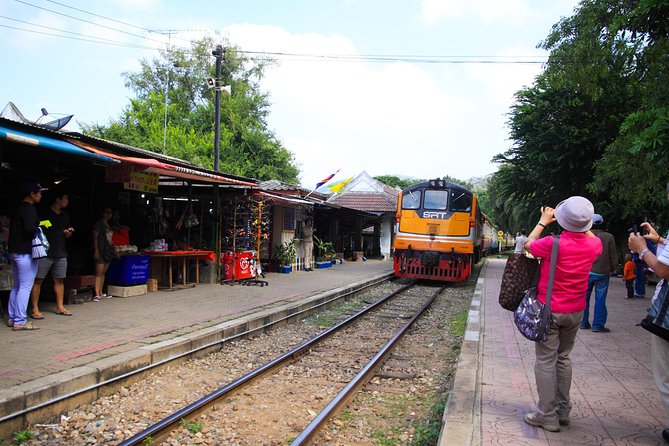
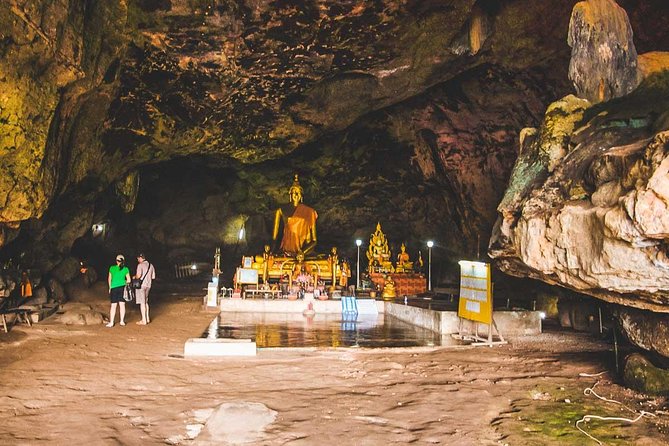
Next up is the Tham Kra Sae Bridge area. Here, you’ll visit a cave with a Buddha image inside. The tour also notes that this cave was formerly a camp for POWs during construction of the railway.
This is a tricky kind of stop because it blends sacred imagery with wartime suffering. That combination can feel surprising at first, but it’s also part of why this area matters: it shows how places can carry layers of meaning across time.
The time here is about 15 minutes, so it’s not a long wandering stop. It’s more of a quick but meaningful look, anchored by your guide’s context.
If you’re the kind of person who likes to understand why a site is preserved and shown to visitors, you’ll likely appreciate how this stop connects POW camp life with the geography. It’s not just a photo moment.
You can also read our reviews of more historical tours in Bangkok

Bridge over the River Kwai: A Brief Walk With Heavy Meaning
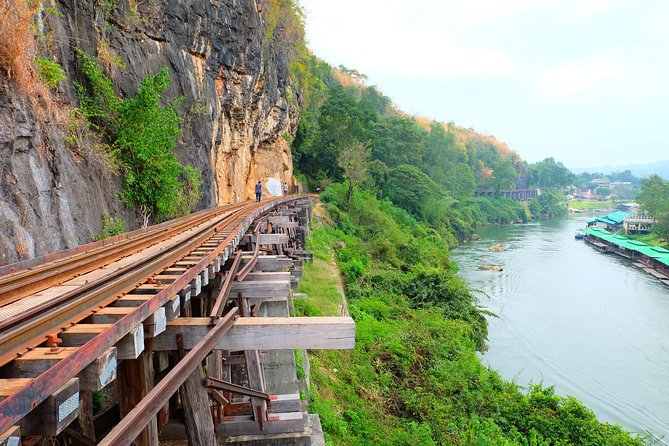
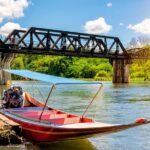
The final major highlight is the River Khwae Bridge, the famous Bridge over the River Kwai. You’ll spend around 1 hour here, including time walking along the bridge itself.
The famous bridge has been shown so often that it can start to feel like a movie set. But in this setting, you’re not watching a scene—you’re standing where the war left its mark. Your guide’s explanations help you shift from the cultural image to the wartime reality.
This stop is free-entry, so the bridge’s accessibility is part of its appeal for independent travel. Still, doing it with a guide is where the value usually shows up: you’re better able to connect the bridge to the bigger Death Railway story, not just take it as a landmark.
Also, since this is one of the most recognizable places, it can get busy. The private format helps because your day isn’t shared with a huge crowd schedule, and your guide can steer you toward the best way to pace your time there.
Expect that the bridge stop doesn’t feel like a “finish line.” It often feels like the end of a long emotional circuit—where the earlier stops make the last one hit harder.
Price, Lunch, and the Value of Having a Guide
At $162.40 per person (about a 10-hour day), this isn’t the cheapest way to do Kanchanaburi. But it’s also not trying to be. The price buys you a few key things:
- Air-conditioned private transport from Bangkok
- A professional guide who handles the story so you’re not piecing it together on the fly
- Lunch, bottled water, and entrance fees
Here’s the balancing point: some of the sites are free to enter, so in theory you could hire a driver and go yourself. That idea makes sense if you already know the story or you’re comfortable reading and researching while you’re there. But if your goal is to understand what you’re seeing in real time—especially at Hellfire Pass—having a guide is what turns “I visited places” into “I understood places.”
You’re also saving mental load. A day like this involves timing, transit, and stopping at multiple sites without guessing whether you’re at the right spot. The included logistics remove that strain, which is honestly worth something.
For value math, think about groups. There are notes about group discounts, so if you can travel with friends, the per-person cost may feel more reasonable. And since it’s a private tour, you avoid the pacing mismatch that can happen when you’re stuck waiting for people who aren’t ready to move on.
Finally, this subject deserves the guide. Death Railway sites are easy to visit and hard to interpret. This tour leans into interpretation, and that’s where the money usually justifies itself.
How Physically Demanding Is It, Really?
The tour is described for moderate physical fitness. In practice, that means you should be ready for several short walks and at least one more active segment at Hellfire Pass’s memorial trail.
You’re not climbing mountains, but you are walking on paths and spending time outdoors. Your best bet is to wear supportive shoes and plan for uneven ground in memorial areas. Bring water comfort too—bottled water is included, but you’ll still feel better if you’re ready for the heat.
Emotionally, it’s also demanding. The war cemetery, Hellfire Pass, and POW-related stops can hit hard even if you came prepared. If you tend to get overwhelmed easily, consider taking a slower pace during stops and giving yourself a few quiet minutes even when the day is moving.
The good news: the tour keeps you supported with air-conditioned vehicle time between sites, and the guide can steer your attention so you’re not lost.
Should You Book This Death Railway Private Tour?
Book this tour if you want a guided, structured Death Railway day with comfort built in—pickup, lunch, entrance fees, and a guide who helps you understand what you’re looking at. It’s a strong choice if you care about context at Hellfire Pass and you don’t want to spend your energy figuring out logistics while you’re already carrying a heavy topic.
Skip it or rethink it if you’re price-focused and you already plan to drive yourself with your own reading beforehand. Since several stops are free-entry, self-guided can be cheaper. But you’ll need to invest time learning the story so the sites don’t feel like disconnected stops.
For most people, the decision comes down to one thing: do you want the day to feel like history you understand, or like places you passed through? If you want the first option, this private tour is a sensible way to spend a day in Kanchanaburi.
FAQ
What time does the tour start?
The start time is 6:30 am.
How long is the tour?
It runs for about 10 hours.
Is hotel pick-up included?
Yes. Hotel transfers in an air-conditioned vehicle are provided.
Is lunch included?
Yes. Lunch is included, so you don’t need to pack food.
What about entrance fees?
Entrance fees are included. The Hellfire Pass Interpretive Centre admission is included, and the other listed sites have free admission.
Is this tour private?
Yes. It’s a private tour, and only your group participates.
Is there a cancellation refund option?
Yes. You can cancel for a full refund up to 24 hours before the experience start time.