REVIEW · PHUKET
Phuket: Elephant Sanctuary Tour, Cooking Class & Lunch
Book on GetYourGuide →Operated by Khao Lak Ethical Elephant Sanctuary · Bookable on GetYourGuide
Elephants and Thai cooking in one ethical day. This Phuket-area day tour takes you to a welfare-first sanctuary in Khao Lak, then pairs a guided walk and river-time elephant watching with a Thai lunch and a hands-on cooking class. If you want the kind of elephant experience that feels less like a show and more like you’re sharing space responsibly, this is the format.
I love how the day is structured around respectful viewing—no touching, no feeding, no close interaction—while your guide explains foraging, communication, and natural behavior. I also like the added value of the Thai meal and cooking lesson, where you’re not just fed, you learn something practical you can repeat at home.
One consideration: the drive from Phuket toward Khao Lak is part of the deal. It’s an all-day commitment (about 7 hours total), and the waterfall stop may be more of a look than a swim if water levels are low.
In This Review
- Key takeaways before you go
- Why this Khao Lak elephant sanctuary day feels different
- Phuket to Khao Lak: the long drive that actually helps
- Your guide and the sanctuary’s welfare-first approach
- The sanctuary walk: trees, paths, and natural elephant behavior
- River bathing watching: comfort first, privacy second
- Sai Rung Waterfall stop: a short break, and why the day stays flexible
- Lunch and the 1-dish Thai cooking class: the value you’ll use again
- Helping in the elephant garden and staying respectful the whole time
- What to pack (so the day stays fun, not miserable)
- Who should book this elephant + cooking day
- Is it worth the price?
- Should you book this Phuket elephant sanctuary tour?
- FAQ
- How long is the Phuket: Elephant Sanctuary Tour, Cooking Class & Lunch?
- Is hotel pickup included?
- Are you allowed to touch or feed the elephants?
- Will I get to see elephants bathing?
- What happens at Sai Rung Waterfall if swimming is not possible?
- What’s included in the price?
- What should I bring?
- Is the tour wheelchair accessible?
- Is there free cancellation?
Key takeaways before you go
- Welfare rules are clear: limited contact, no touching, no feeding, no close interaction
- You watch natural bathing from a designated observation area, keeping elephants comfortable
- Your lunch comes with a view of elephants in their watery area while you eat
- Thai cooking is the real bonus: you’ll make one dish and eat what you cook
- Expect heat and bugs: bring sunscreen, repellent, and closed-toe shoes for the outdoor parts
Why this Khao Lak elephant sanctuary day feels different
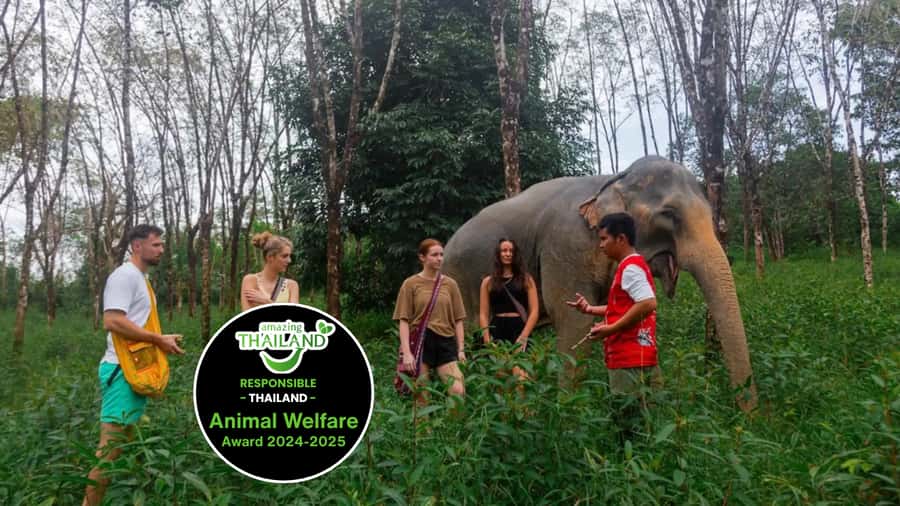
If you’ve seen the usual elephant “attractions,” you already know the vibe can go sideways fast: crowds, constant demand on the animals, and humans treating elephants like photo props. This program is built around a different goal—elephant welfare comes first, and your role is to observe and participate only in ways that don’t pressure the animals.
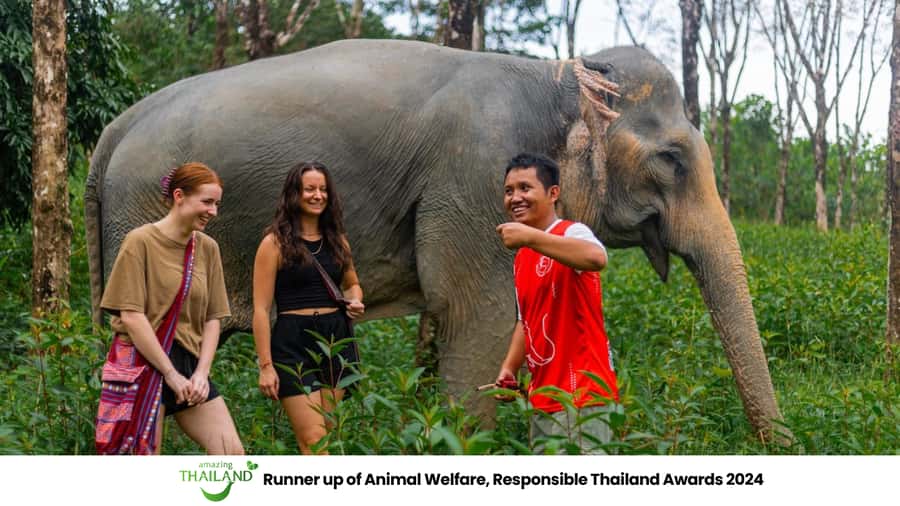
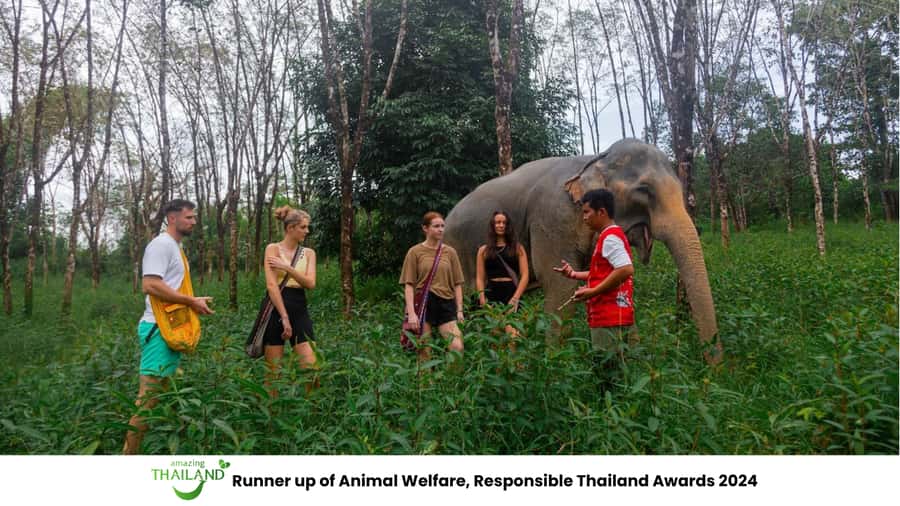
The sanctuary is recognized as a runner-up in the Animal Welfare category of the Responsible Thailand Awards for both 2024 and 2025. That matters because it signals what they prioritize, not just what they advertise. The day is designed so you’re learning the basics of elephant life—how they forage, how they communicate, and how they behave—while they keep doing what elephants naturally do.
You can also read our reviews of more cooking classes in Phuket

Phuket to Khao Lak: the long drive that actually helps
The day starts with hotel pickup (where available), then you settle into an air-conditioned van for about 2 hours. Most people underestimate how much an uncomfortable transfer can ruin a “special” day. Here, you get a comfortable ride and time to mentally switch gears before you reach the sanctuary.
The included pickup and drop-off is a big value point. At $102 per person, you’re not just paying for elephant time; you’re paying for transport, guide support, lunch, water, the cooking class, and the waterfall stop. It’s a “pay once, show up and flow” kind of tour.
Practical note: if your hotel is outside the pickup zone, you’ll meet at the Khaolak Elephant Sanctuary near Sai Rung Waterfall. Either way, show up on time—lateness can mean you’re marked as a no-show.
Your guide and the sanctuary’s welfare-first approach
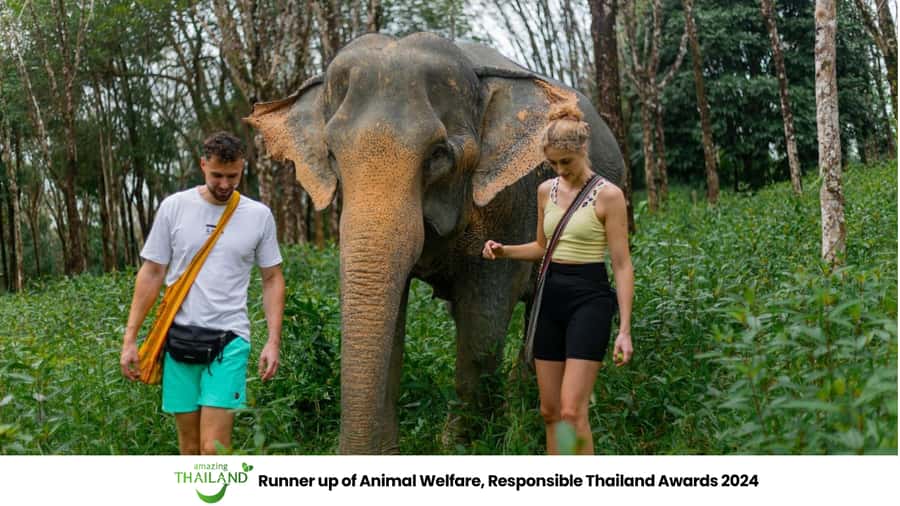
Once you arrive, your eco English-speaking guide sets the tone. You’ll get a straightforward explanation of how the sanctuary works and why access is limited: no touching, no feeding, and no close interaction. You’ll also hear stories about the elephants in their care—unique backgrounds and individual personalities—so you’re not just looking at large animals, you’re understanding living beings with histories.
Several guides show up across different dates in the day’s experience (names like Tony, Sai, and Paul appear frequently). The common thread is how they manage the day: you’re supported, not lost; questions are encouraged, and the focus stays on elephant welfare rather than “look at me” moments.
The sanctuary walk: trees, paths, and natural elephant behavior
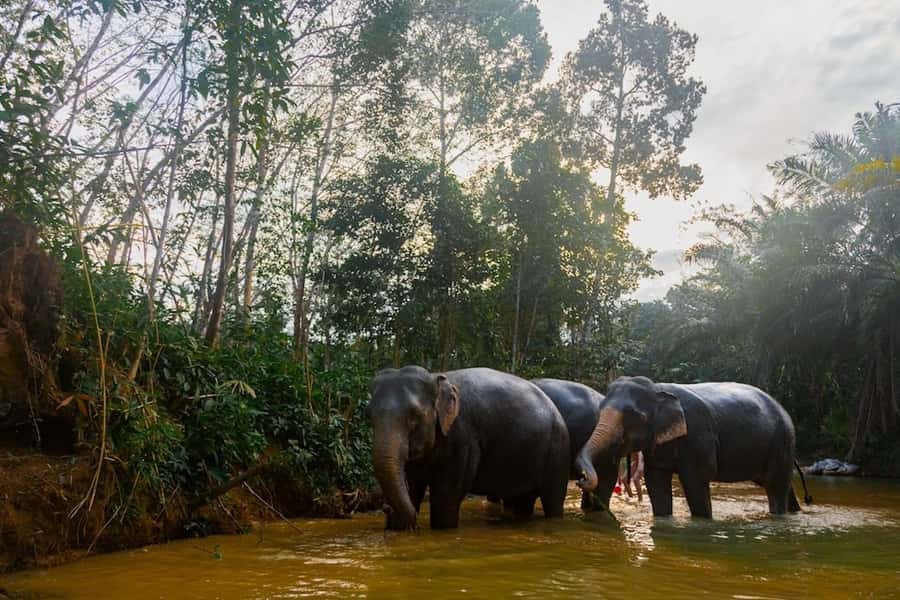
The guided walk is about 2.5 hours, and it’s one of the best ways to slow down. Instead of rushing from one selfie spot to another, you move through a tree-lined sanctuary reserve. Your guide helps you notice details most people miss: how elephants use space, how they move, and what their behavior can tell you.
What you do (and don’t do) matters here. The tour rules emphasize no touching and no feeding and keep distance respectful. That sounds strict, but it’s actually the point. When elephants don’t have humans grabbing, poking, or crowding them, they can choose when to approach, feed, or move on.
You’ll still get hands-on learning through safe tasks. One of the day’s highlighted activities is helping with the hand-on cutting of grass from the garden for elephants. Reviews also mention other daily-routine-style tasks like assisting with food prep (banana leaves or similar elephant foods, depending on what the day requires). Treat these moments as support work—quiet, supervised, and focused on routine—rather than a dramatic “feed the elephant” stunt.
River bathing watching: comfort first, privacy second
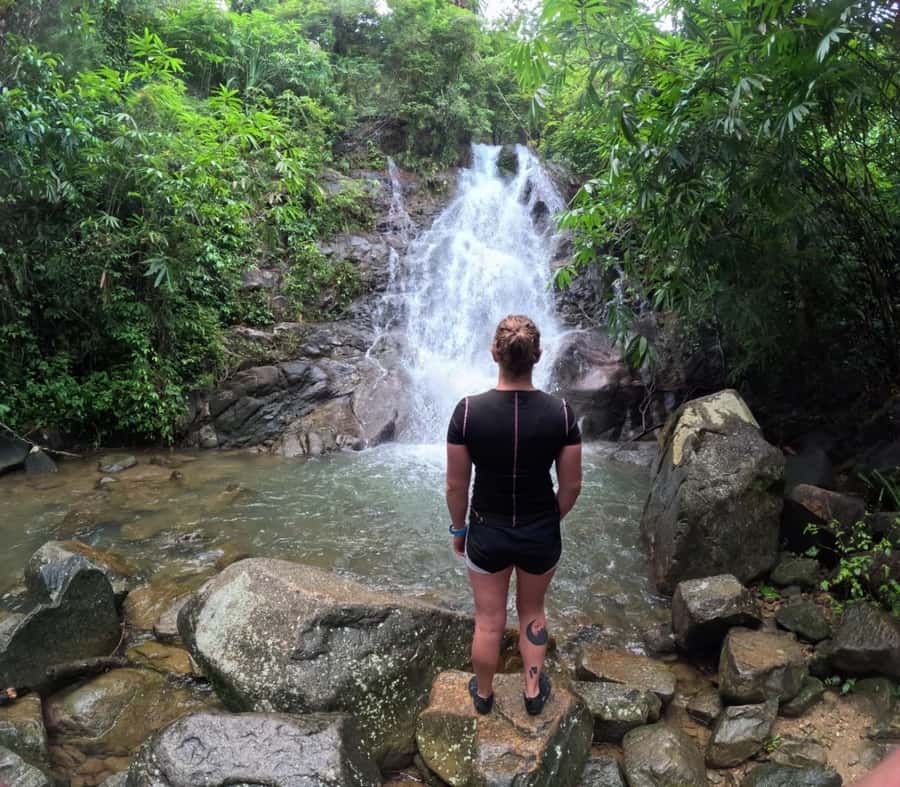
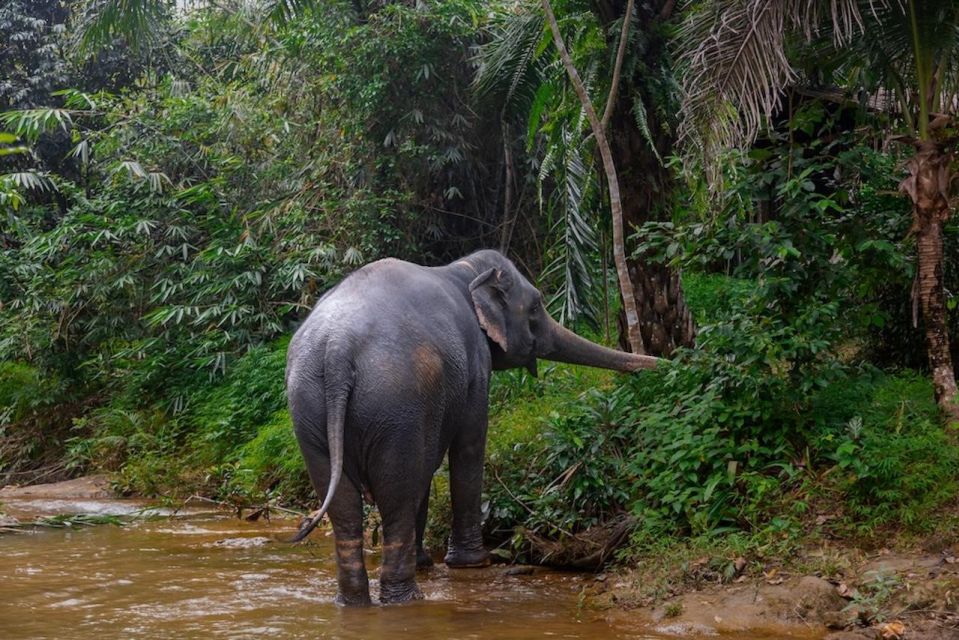
After the walk, you shift to an observation setup for elephant bathing rituals. The program uses a designated observation area so elephants can enjoy water without being surrounded. You’re there to watch and learn, not to force closeness.
This section of the day is often where people go quiet in a good way. Elephants tend to move with a purpose even when they’re playing. You might see them splash, settle into the water, and go through their bathing routines while your guide explains what you’re witnessing.
If you’re the type who wants to be hands-on with water, check your expectations carefully. The official approach here is observation from a set area with welfare rules in place. Still, some days on similar programs can include additional water-related activities; if you want that, ask what is planned for your specific departure day.
A few more Phuket tours and experiences worth a look




Sai Rung Waterfall stop: a short break, and why the day stays flexible
You’ll head to Sai Rung Waterfall for about 30 minutes. This is a breather stop—time to stand back, take photos, and reset after the elephant walk. Even when it’s not the main focus, it adds variety to a day that would otherwise be all sanctuary.
Here’s the honest part: swimming is not guaranteed. If the water level is low and swimming isn’t possible, the plan changes to an alternative experience at Khao Lak Waterside. The operator isn’t obligated to warn you in advance, so mentally prepare for “looks like it might be a dry day” scenarios. This is still a worthwhile stop, just don’t base your plans on a specific water activity.
Lunch and the 1-dish Thai cooking class: the value you’ll use again
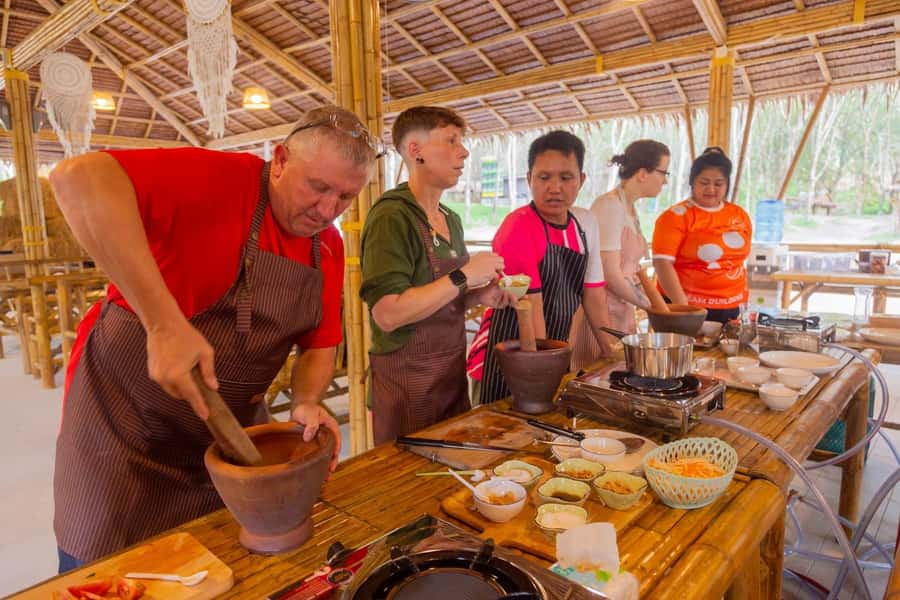
Next comes lunch at 77 Soi Nam Tok Sai Rung, followed by a simple Thai cooking activity. This is where the experience becomes more than sightseeing. You’ll get a traditional Thai meal in a peaceful setting and then take what you learned into a hands-on cooking session.
A highlight is that lunch happens while elephants are playing freely in the water area nearby. That changes the feel of your meal. Instead of eating in silence or under a loud tour-group vibe, you eat with elephants moving in their environment—gentle, rhythmic background life.
For cooking, the format is a 1-dish class. In practice, the dish many people mention most often is pad Thai, and it’s a favorite because it’s recognizable and practical to recreate later. Reviews also describe the cooking class adjusting to food preferences. One group eating vegetarian meals had their lunch and cooking adapted accordingly, so if you have dietary needs, tell the team ahead of time and you’ll likely get the flexibility you want.
Helping in the elephant garden and staying respectful the whole time
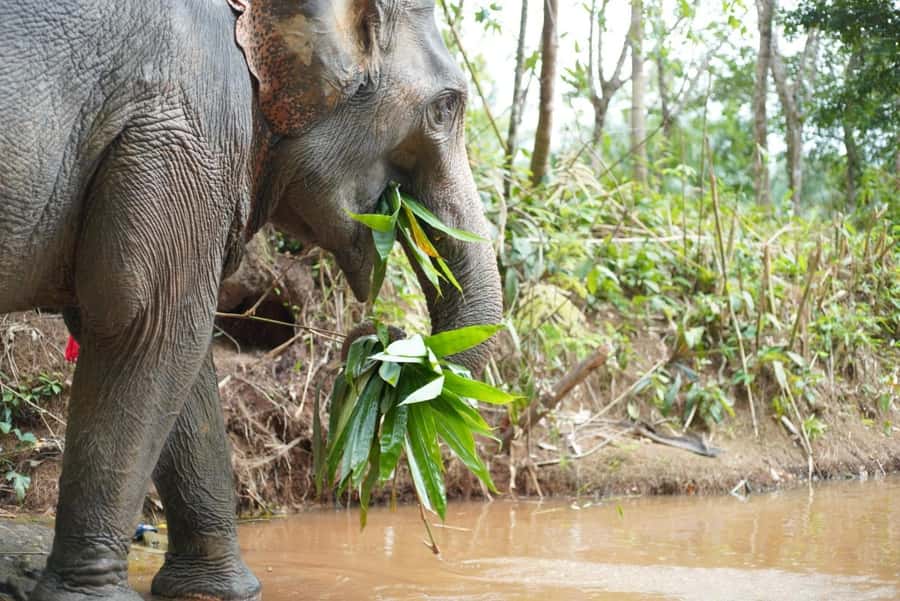
One of the day’s best “I’m part of the routine” moments is participating in how the elephants are cared for through the garden work. The activity described for this tour includes assisting with cutting grass from the garden. You’re not meant to treat elephants like a theme park attraction. You’re helping support a normal feeding supply chain in a welfare-first environment.
This is also a reminder for your expectations. Even when you’re participating, the day stays structured around elephant comfort and safety. No chasing. No demanding. No crowding. Your guide keeps the mood calm and the rules clear, so you get meaningful involvement without turning it into chaos.
What to pack (so the day stays fun, not miserable)
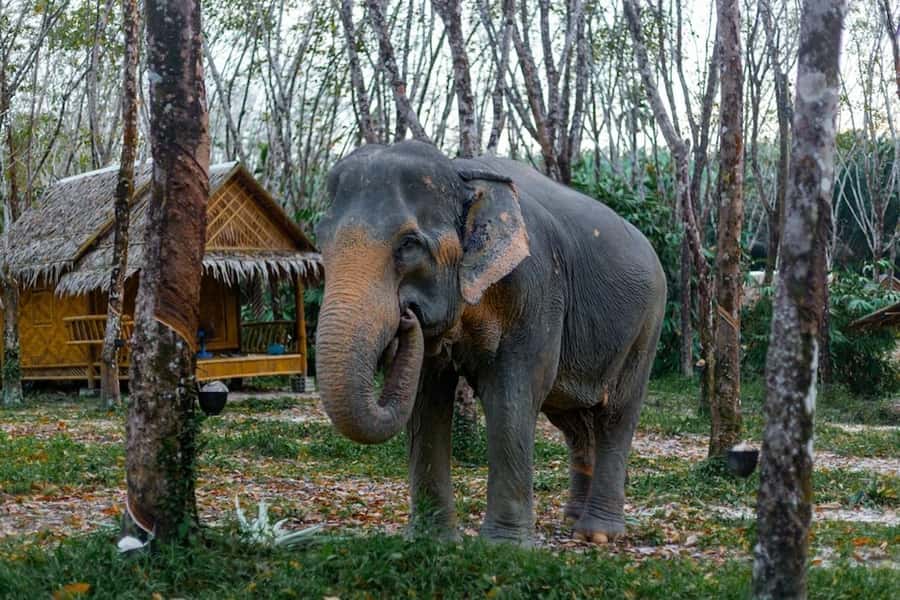
This is an outdoor day with heat and insects, plus some time walking. Bring:
- Sunglasses
- Sun hat
- Sunscreen
- Insect repellent
- Closed-toe shoes
Also consider packing a small towel or extra layer in your day bag. The sanctuary and water areas can mean you’ll get splashed or damp at times, and you’ll feel better if you’ve planned for it.
Who should book this elephant + cooking day
This is a strong fit if:
- You care about animal welfare and want a sanctuary setting with clear limits (no touching, no feeding, no close interaction)
- You want a guided education, not just photos
- You’d like a Thai cooking class plus lunch, so the day gives you both memories and skills
- You don’t mind a longer drive from Phuket to Khao Lak in exchange for a better-feeling elephant experience
It may be less ideal if:
- You need wheelchair-friendly access (it’s not suitable for wheelchair users)
- You expect an all-out, fully interactive contact experience. The emphasis is on safe observation and supervised support tasks instead.
Is it worth the price?
At $102 per person, you’re paying for a full half-day that expands into a full day: hotel pickup/drop-off, air-conditioned van transport, a live guide, lunch, water, a waterfall stop, and a Thai cooking class. Many elephant days charge for transportation and access on top of food, and here the meal and instruction are included.
If you value welfare rules and you’ll actually use the cooking skills after you return home, this pricing feels fair. If you mainly want a cheap shortcut to elephants with zero education and minimal guide time, you might find the structure too guided. For the people who want both ethics and a real Thailand day, it’s a solid deal.
Should you book this Phuket elephant sanctuary tour?
I’d book it if you want the kind of elephant day that treats elephants like living animals first, not entertainment first. The welfare-first approach, the observation-style bathing viewing, and the combination of lunch plus a cooking class make it more complete than a one-note attraction.
Go for it if your must-have list includes: a guided sanctuary walk, learning how elephants live, and a Thai meal you helped make. Just be ready for a longer drive and for water at Sai Rung Waterfall to be weather-dependent.
If that sounds like your kind of day, you’ll likely leave satisfied, fed, and with a story worth telling.
FAQ
How long is the Phuket: Elephant Sanctuary Tour, Cooking Class & Lunch?
The total duration is about 7 hours.
Is hotel pickup included?
Hotel pickup is optional. The driver can pick you up from anywhere in Khaolak, and you should meet your driver in the hotel lobby at least 10 minutes before pickup time. If your hotel is outside the pickup area, you’ll meet at the Khaolak Elephant Sanctuary near Sai Rung Waterfall.
Are you allowed to touch or feed the elephants?
The tour description says no touching, no feeding, and no close interaction. You’ll be in a safe, sustainable environment with the guide explaining elephant behavior and routines.
Will I get to see elephants bathing?
Yes. You’ll watch the elephants enjoying their natural bathing rituals from a designated observation area.
What happens at Sai Rung Waterfall if swimming is not possible?
If water levels are low and swimming cannot happen, the operator will offer an alternative experience at Khaolak Waterside. They are not obligated to inform customers in advance of the change.
What’s included in the price?
Included are hotel pickup and drop-off, air-conditioned van transport, guides, lunch, water, a 1-dish cooking class, and a waterfall visit.
What should I bring?
Bring sunglasses, a sun hat, sunscreen, insect repellent, and closed-toe shoes.
Is the tour wheelchair accessible?
No. It’s not suitable for wheelchair users.
Is there free cancellation?
Yes. You can cancel up to 24 hours in advance for a full refund.