REVIEW · PHUKET
Nang Yam Thai Cooking Experience Full Day Tour, Museum & Samet Nangshe Viewpoint
Book on Viator →Operated by Andaman Dream · Bookable on Viator
Cook lunch where herbs grow, with Phang Nga extras. I love the small-group feel (max 10 people) because you actually get time to ask questions, and the open-air farm cooking pavilion where your meal comes together step by step. You also get a strong mix of local culture beyond food, from a private history museum to a sunset-style viewpoint stop.
The one thing to plan for: it’s a long, mostly outdoors day (about 10 hours), with heat and sun possible during the market and cooking portions. If you don’t do well in that rhythm, bring patience and water discipline.
If you end up with a guide like Marsha (one group’s cooking guide), the day tends to feel calm and well-paced, with clear instructions and lots of hands-on time. You’ll be working with ingredients that are prepared for you, so you spend less time sorting and more time learning what Thai cooking is really about—balance, timing, and fresh aromatics.
In This Review
- Key things I’d bet you’ll like
- A Full-Day Food, History, and Viewpoint Route from Phuket
- Getting There in Comfort (and Why It Matters)
- Benyaran Museum: Antique Displays, 20th-Century Stories
- Khok Kloi Fresh Market: Learn Ingredients by Smell and Sight
- Open-Air Farm Cooking at Benyaran Park: Five Dishes You Can Replicate
- Coffee, Tea, and Khanom Krok: A Small Break with Big Flavor
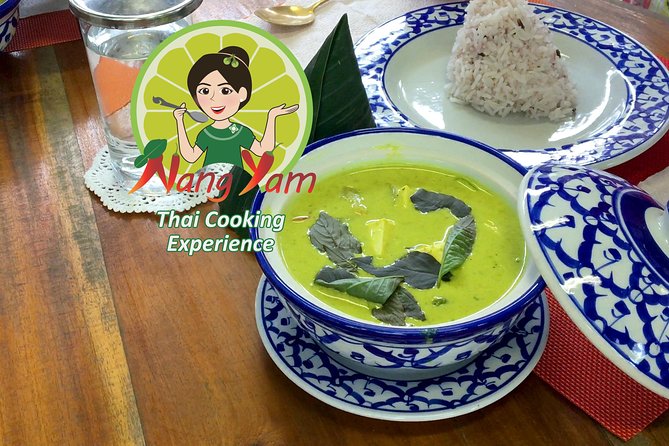
- Lunch: Your Five Dishes Served with Jasmine Rice
- Samet Nangshe Viewpoint: The Right Ending After a Long Day
- Small Group Size: Why Max 10 People Makes It Better
- Price and Value: What You’re Getting for $126
- Who Should Book This Nang Yam Tour?
- Should You Book? My Decision Checklist
- FAQ
- How long is the Nang Yam Thai Cooking Experience full-day tour?
- Is hotel pickup and drop-off included?
- What cooking class content is included?
- Do you get lunch during the tour?
- Is the market stop part of the experience?
- Is vegan food available?
- What stops are included besides the cooking class?
Key things I’d bet you’ll like
- Max 10 people makes the cooking class feel personal instead of rushed
- Five-dish class at a farm pavilion gives you more than a snack-level demo
- Prepped ingredients at your station helps the class stay practical and easy
- Local market stop at Khok Kloi means you see what you’re cooking with
- Benyaran Museum visit adds real context with 20th-century artifacts and old-school displays
- Samet Nangshe viewpoint is a satisfying final stop with wide Phang Nga Bay views
A Full-Day Food, History, and Viewpoint Route from Phuket
This tour strings together four experiences that each hit a different part of the Phang Nga story—food shopping, cooking skills, history, and a big-view finale. It’s built for people who don’t want a half-day cooking class that ends before it really starts. Instead, you get a full day that moves from local ingredients to your plate, with pauses for cultural stops that explain the region beyond the kitchen.
You’ll start with hotel pickup in an air-conditioned minivan, then head toward Phang Nga province. Along the way, you pass the Sarasin Bridge (an easy “I’m really out of Phuket now” marker). The driving time is about 1.5 hours depending on where you’re staying. That means you’re not just hopping between attractions—you’re actually traveling like a local day trip.
I also like that the day is structured enough to keep you busy but not so packed that you never catch your breath. You get one hour for the museum, three hours for cooking, and shorter blocks for the market and viewpoint. Each part has a purpose.
You can also read our reviews of more museum experiences in Phuket


Getting There in Comfort (and Why It Matters)
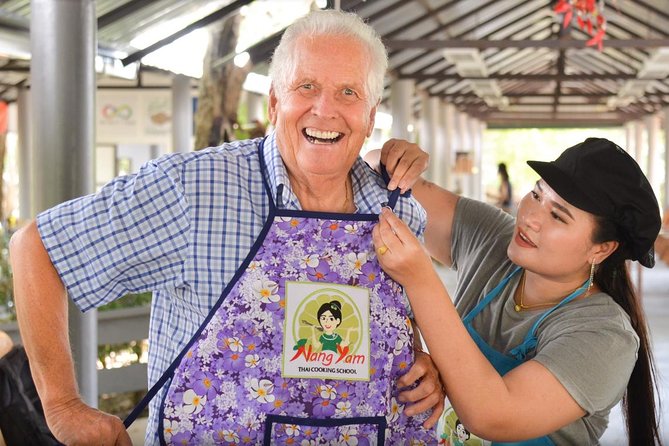
You’ll be picked up from your hotel and driven in a comfortable air-conditioned minivan. That’s not just convenience—it matters because this tour is long, and you’ll be outdoors during the market and cooking class. Having a cooled ride at the start helps you arrive ready, not drained.
The tour uses a mobile ticket, and it includes facility and landing fees, so you’re not hunting for extra payments on the day. There’s also a complimentary welcome bag with drinking water, dried fruit, tropical fruit, a wet towel, and a wristband. That little mix is genuinely useful. Markets and farms tend to mean you’ll be exposed to sun and movement, so the water and towel aren’t just nice extras.
One more practical point: the tour requires good weather. If weather disrupts the plan, you’ll be offered another date or a full refund. Since two of the main moments—farm cooking and the viewpoint—depend on conditions, this is a day that really benefits from a stable sky.
Benyaran Museum: Antique Displays, 20th-Century Stories
The Benyaran Museum stop is about an hour, and it’s not a huge public museum setup. It’s a private history museum with a collection built and owned by Mr. Ronnachai Jindapon. The feel is more personal—like you’re stepping into someone’s carefully kept memories rather than scanning through an endless gallery.
What makes it fun is the variety of older everyday items. You’ll see old-fashioned pharmacy displays and vintage radios and TV sets sitting in antique wooden cabinets. It’s the kind of place where you’ll find yourself slowing down, asking what things were used for, and comparing how people lived not that long ago.
Potential drawback: if you’re expecting only ancient artifacts in a grand archaeological style, you might be surprised. This museum leans into the 20th-century angle and old domestic tech, not ancient ruins. Still, if you like cultural context and objects with stories, it’s a smart break from the outdoor heat before you get to the farm cooking.
Khok Kloi Fresh Market: Learn Ingredients by Smell and Sight
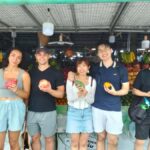
Next comes the Khok Kloi Fresh Market stop (about 30 minutes). This isn’t just a photo stop. The market is designed to show you the range of foods and cooking ingredients you’ll use later—fruits, vegetables, and Thai staples you can actually recognize after tasting and cooking.
The market experience hits multiple senses fast. You’ll get the visual clutter of stalls, the sounds of vendors, and the smell of fresh produce—exactly what you want before a Thai cooking class. In at least one group, people also enjoyed the chance to try local cakes during the day, which adds a sweet break between savory learning moments.
A consideration: 30 minutes goes quickly. If you enjoy lingering and bargaining for a lot of shopping, this may feel brief. But for a cooking-class tour, the timing is useful. You see what matters, learn the logic of ingredients, and then you move on while the day still feels energetic.
Tip for comfort: markets can be warm and a bit crowded. Wear shoes you can stand in, and keep water handy (you’ll have some from your welcome bag).
Open-Air Farm Cooking at Benyaran Park: Five Dishes You Can Replicate
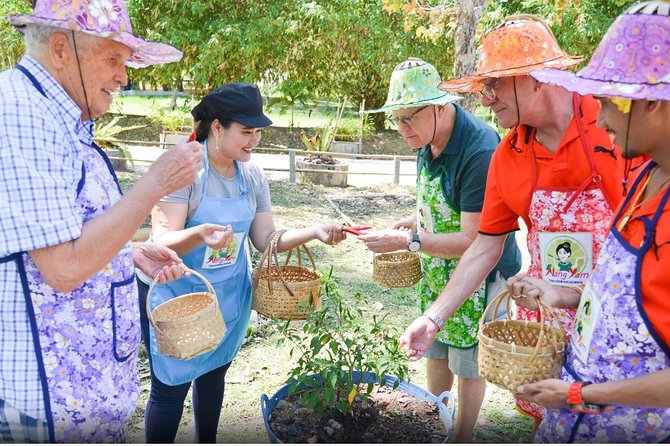
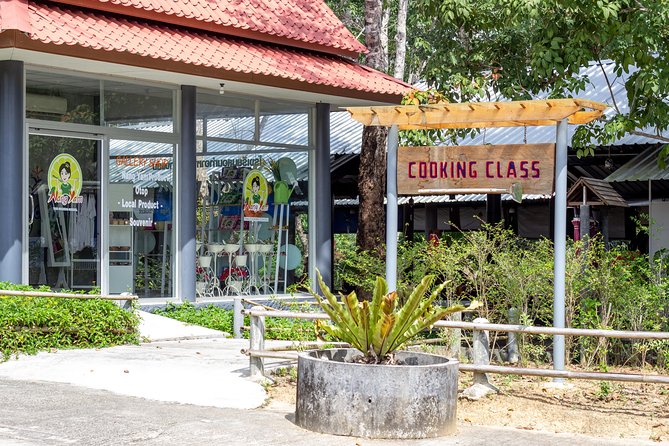
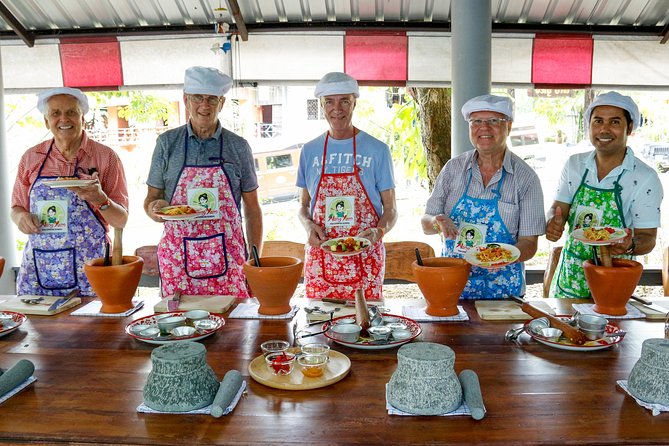
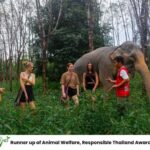
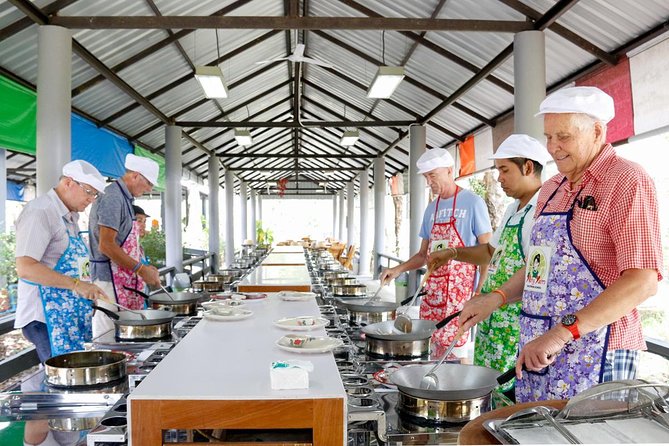
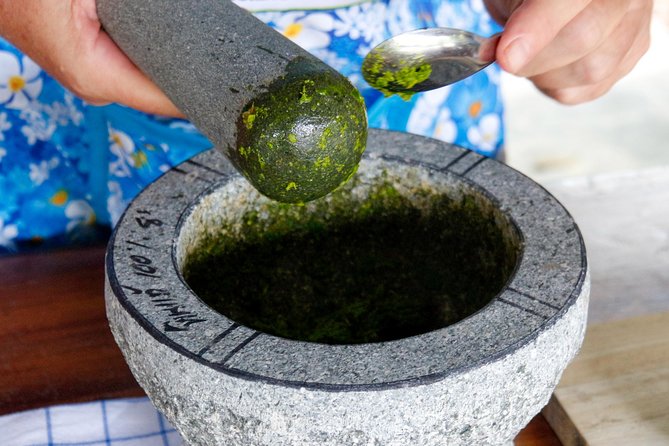
This is the main event, and it happens in the open-air kitchen pavilion at Benyaran Park, set on an organic farm area. The class lasts about three hours, and the structure is practical: you’ll cook five dishes with an individual cooking station that comes fully equipped.
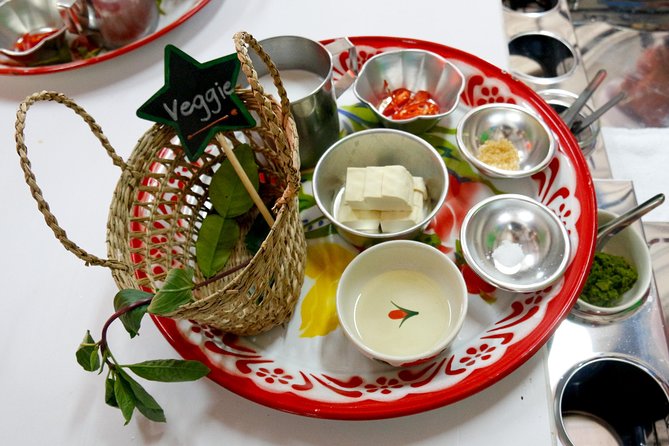
What you’ll likely appreciate is how straightforward the class feels. Ingredients are ready weighed and sorted for you, so you’re not stuck turning into a human measuring cup before you even start. That means you can focus on technique and flavor building—Thai cooking’s core strengths: balancing salty, sweet, sour, and heat, plus using fresh herbs with intent.
In the class, you’ll also do some ingredient selection tied to the farm setting. One highlight from recent experiences is the chance to pick fresh herbs from the school’s garden, which helps the learning feel real instead of purely instructional. When you choose an herb yourself, you understand what you’re adding and why it changes the dish.
Also, the class includes a full color recipe booklet and a certificate. That’s great value because it turns the day into something you can repeat at home. You won’t be relying on memory alone.
One more thing I like: vegan options are available. Thai food often works well with adjustments, and it’s better when the tour is set up to handle those needs rather than just hoping you can adapt on your own.
You can also read our reviews of more cooking classes in Phuket
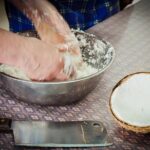
Coffee, Tea, and Khanom Krok: A Small Break with Big Flavor
Between the cooking activity and the meal portion, you’ll get a herbal tea break with a traditional Thai dessert called Khanom Krok. This is one of those moments where you pause, sip something herbal, and reset your palate before the next step.
It’s also a nice cultural touch. Khanom Krok has a distinctive character, and it reminds you this isn’t just about copying recipes—it’s about experiencing the rhythm of Thai eating. You’ll likely appreciate this more if you tend to get hungry while cooking. (I know I do. My brain starts negotiating for snacks before the first dish is even plated.)
Lunch: Your Five Dishes Served with Jasmine Rice
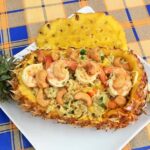
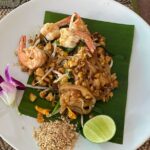
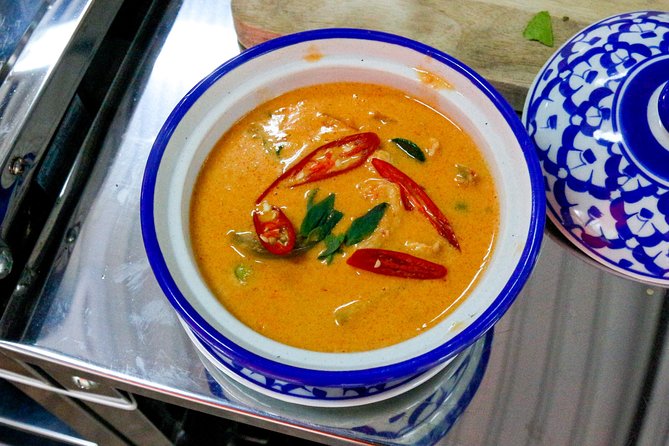
After cooking, lunch is served with your dishes plus Thai jasmine rice. This is exactly what you want from a cooking class: you don’t just make food and then stand around hoping you’ll taste it later. You eat what you cooked, while the flavors are still fresh and the day’s learning is still top-of-mind.
This meal format also makes the day feel complete. The five-dish structure matters because it gives you variety. You’ll likely end up tasting different textures and flavor profiles, which helps you understand how Thai meals are built around more than one “main” item.
Practical note: because you’re cooking and eating on the same day, don’t plan a heavy second activity right after pickup times. You’ll be full, a bit tired, and happy about it. In a good way.
Samet Nangshe Viewpoint: The Right Ending After a Long Day
To finish, you’ll head to Samet Nangshe Viewpoint for panoramic views of Phang Nga Bay, with the timing leaning toward late afternoon twilight. The stop is about 30 minutes, which is short, but that’s often enough for a few photos and a calm look before you head back.
This is the payoff moment. After learning ingredients and cooking techniques, you get a view that makes the region feel real and expansive. It helps the day avoid feeling like it’s only about indoor tasks.
Consideration: this part also depends on weather. Clearer skies make the viewpoint experience stronger. If clouds roll in or rain hits, your experience may be more limited, which is why the tour’s good-weather requirement matters.
Small Group Size: Why Max 10 People Makes It Better
The tour limits group size to a maximum of 10 people, and that’s not a minor detail. A smaller group means you get closer attention during the class. You’re more likely to have your questions answered, and you’re less likely to feel like you’re waiting your turn for equipment or instruction.
It also makes the day feel easier socially. You can chat with other participants while still staying focused on what you’re doing. That matters because cooking classes are hands-on and more enjoyable when they don’t feel like a lecture hall.
One more logistics note: solo travelers may not be accepted, since the minimum number of travelers per booking is 2. If you’re traveling alone, double-check before you book. If you can join another pair, you’ll likely be fine.
Price and Value: What You’re Getting for $126
At $126 for roughly 10 hours, this isn’t the cheapest cooking option. But it’s also not just a single activity. You’re getting hotel pickup and drop-off by air-conditioned minivan, a private history museum visit, a local market stop, a three-hour farm cooking class for five dishes, plus lunch, and herbal tea with Khanom Krok.
That bundled value is the real story. Many cooking classes cost a similar amount but skip the museum, the market, or the viewpoint. Here, you’re paying for a full day of connected experiences: you see ingredients, cook with them, then finish with a regional viewpoint and cultural context.
Add in the included items like the recipe booklet, certificate, welcome bag, and travel accident insurance, and the price starts to feel more reasonable. You’re also not expected to bring anything like equipment—your cooking station is provided.
If you want a day that teaches Thai cooking in a way you can repeat at home, and you also want Phang Nga context beyond scenic driving, this price looks fair.
Who Should Book This Nang Yam Tour?
You’ll enjoy this most if you like hands-on learning and you want more than one flavor-related moment in a single day. It’s a strong fit for food-focused travelers who don’t mind a full schedule and can handle some outdoor time.
It also suits people who like structure. The day is broken into clear blocks—museum, cooking, market, viewpoint—so you always know what’s next. And if you’re cooking-curious but worry you’ll feel lost, the class seems designed to keep you moving with prepared ingredients and a complete setup.
Consider it less if you dislike long days, strong sun, or you want lots of free time for wandering. The market stop and viewpoint stop are short by design, so you don’t get to roam for hours.
Should You Book? My Decision Checklist
Book this tour if you want a full-day Thai cooking experience with real ingredient context plus cultural stops in Phang Nga. I like that you cook five dishes, eat what you made, and leave with recipes and a certificate. The museum adds variety, and the Samet Nangshe viewpoint provides a satisfying end.
Skip it (or ask questions first) if you’re sensitive to heat and a long schedule, or if you’re traveling solo and the minimum group rule doesn’t work for your dates. Also, if weather is unpredictable during your Phuket stay, consider scheduling this on a day where you have flexibility.
If your goal is a memorable day where Thai cooking feels practical and connected to place, this is a smart bet.
FAQ
How long is the Nang Yam Thai Cooking Experience full-day tour?
It runs for about 10 hours (approx.).
Is hotel pickup and drop-off included?
Yes. The tour includes hotel pickup and drop-off by air-conditioned minivan.
What cooking class content is included?
You’ll cook five dishes at an open-air pavilion at the farm. The class includes an individual cooking station with complete equipment.
Do you get lunch during the tour?
Yes. You’ll have a served lunch with your dishes plus Thai jasmine rice.
Is the market stop part of the experience?
Yes. You’ll visit Khok Kloi Fresh Market for about 30 minutes.
Is vegan food available?
Yes. Vegan options are available.
What stops are included besides the cooking class?
Besides the cooking class, the tour includes Benyaran Museum (about 1 hour), Khok Kloi Fresh Market, and Samet Nangshe Viewpoint (about 30 minutes).