REVIEW · BANGKOK
Kanchanaburi River Kwai & Death Railway Small Group tour
Book on Viator →Operated by TripGuru Thailand · Bookable on Viator
A day trip to the River Kwai can feel like a movie scene. It’s also one of the most grounded ways to understand what WWII meant for real people, with a small group and a guide who keeps the story clear. You get the big sights plus thoughtful stops: the war cemetery, the bridge area, the JEATH War Museum, and a viewpoint where you can watch a train pass.
I especially like the pacing: you’re not rushing through everything like a checklist. You get time for reflection at the Kanchanaburi War Cemetery, then real photo moments along the bridge and railway-adjacent viewpoints. The other big plus is convenience: the day includes hotel pickup and drop-off in Bangkok, so you’re not figuring out transport on your own.
One possible drawback: the JEATH War Museum experience may feel a bit uneven. Some visitors note that parts of the museum look run down or not maintained at the level you might expect.
In This Review
- Key Things to Know Before You Go
- A Small-Group Day Trip That Balances Sights With WWII Meaning
- Price and Logistics: What Your $99 Gets You
- Bangkok Pickup and a Real 11-Hour Rhythm
- Kanchanaburi War Cemetery: Where the Day Becomes Personal
- Walking the Bridge Over the River Kwai: Photos, Footsteps, and Optional Boats
- JEATH War Museum: Strong Content, But Check Expectations
- Tiger Cave Temple (Wat Tham Suea) and the Railway Train-Spot Moment
- How This Tour Really Teaches the Death Railway Story
- Photo Stops and Timing: Where You’ll Want Your Camera Ready
- What to Bring (and What to Skip)
- Value: When This Tour Is a Best Fit
- Should You Book This Kanchanaburi River Kwai & Death Railway Small Group Tour?
Key Things to Know Before You Go
- Max 9 travelers means more chance to ask questions and get answers you actually care about
- Hotel pickup is included on request, with an air-conditioned vehicle and bottled water
- You’ll spend real time at the Kanchanaburi War Cemetery (about 1 hour) for quiet, meaningful context
- Bridge stops are built for photos and time to walk at street level
- The train-viewing moment comes from the Tiger Cave Temple (Wat Tham Suea) area near the railway section
- Lunch isn’t included, so plan on buying or bringing something to eat
A Small-Group Day Trip That Balances Sights With WWII Meaning
This tour is designed for one main purpose: understanding the human scale of the WWII story tied to Kanchanaburi and the railway. You’re not only seeing the famous names people tag on social media. You’re also getting the “why it happened” context, with stops that move from memorial to memorial-adjacent sites, then to the railway setting itself.
The small group size matters more than it sounds. With up to nine travelers, the guide can actually manage questions and the flow of the day, especially around walking routes and timing the train-viewing moment. It also feels less like you’re being herded, which helps when you’re visiting a war cemetery where the mood should stay respectful.
You can also read our reviews of more tours and experiences in Bangkok.



Price and Logistics: What Your $99 Gets You
At about $99 per person for an 11-hour day, this is a straightforward deal compared to what you’d pay if you booked transport plus a guide separately. The value really comes from the included parts that cost money or time on your own: air-conditioned vehicle, English-speaking guide, bottled water, and hotel pickup and drop-off.
Also pay attention to what’s not included. Lunch isn’t included, and entrance coverage is limited to the War Museum ticket (THB 50). The bridge areas and the Tiger Cave Temple/railway viewpoint are free, but you’ll want a plan for food so the day doesn’t feel like it’s running on snacks.
If you’re trying to fit Kanchanaburi into a tight Bangkok schedule, this kind of guided day trip is one of the cleanest ways to do it without extra hassle.
Bangkok Pickup and a Real 11-Hour Rhythm
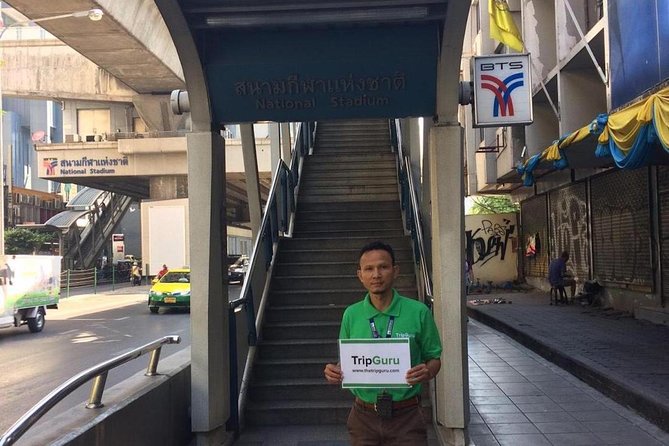
Your tour starts at National Stadium BTS Station. The day ends back at the same meeting point, which is helpful if you like knowing exactly where you’ll be later.
The rhythm is built around travel time plus multiple stops that each serve a different job: a long reflective memorial stop, walking/photo time by the river and bridge, a focused museum stop, and then a final viewpoint toward the railway setting. Expect a full day, not a half-day “highlights” loop.
Also note the practicality of the setup: the tour is near public transportation, and you’ll be in an air-conditioned vehicle for the road portions. That’s not glamorous, but in Thailand heat, it makes the whole day feel manageable.
Kanchanaburi War Cemetery: Where the Day Becomes Personal
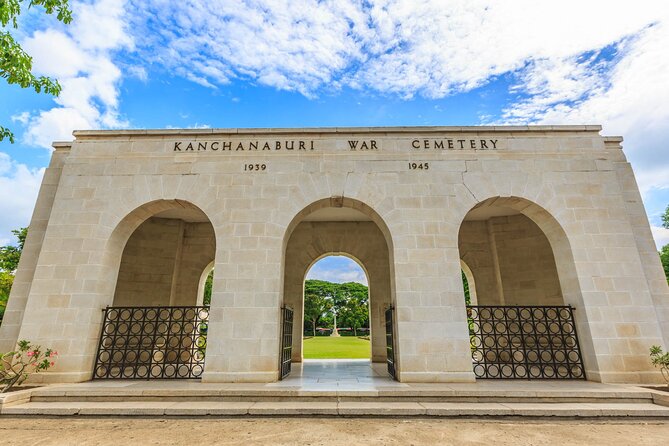
The Kanchanaburi War Cemetery is your first major stop, and it sets the tone. You’ll have about 1 hour here, and the admission is included.
This is the kind of place where the best advice is simple: slow down. Take time to read what you can, stand still when you need to, and let the memorial space do its work. The cemetery is described as well-maintained, and it’s clearly set up for visitors to reflect. There are also exhibits that help you connect names and suffering to the broader WWII story.
If you’re visiting with kids or anyone who struggles with “war talk” in museums, this stop often works better than you’d expect. It’s quieter, more visual, and it grounds the rest of the day so the railway story doesn’t float in abstraction.
Walking the Bridge Over the River Kwai: Photos, Footsteps, and Optional Boats
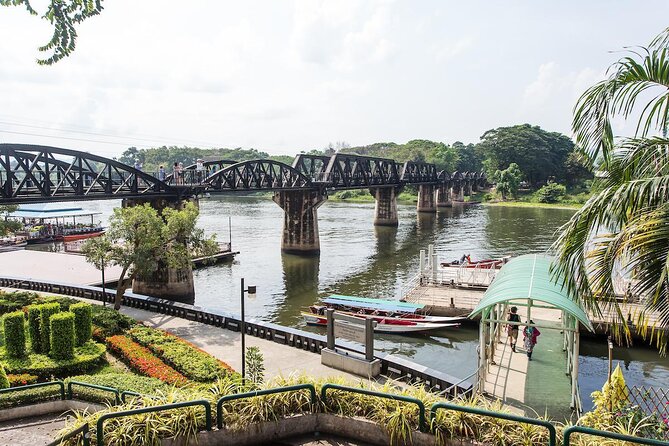
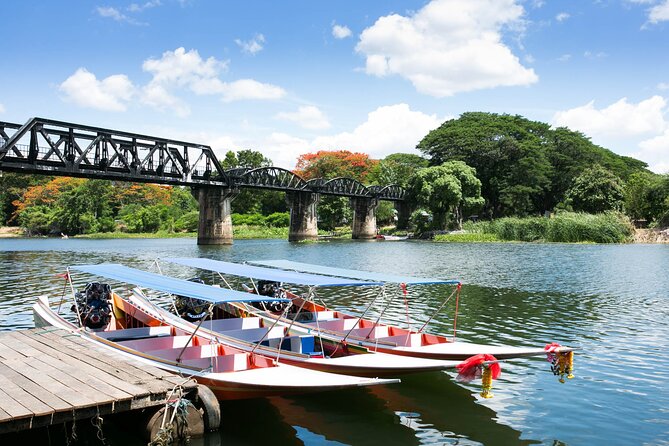
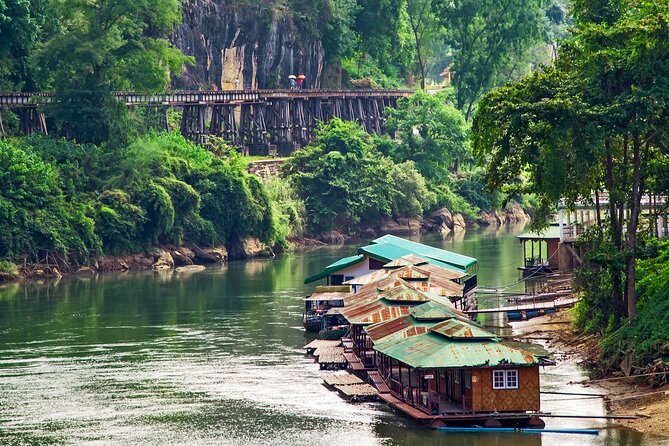
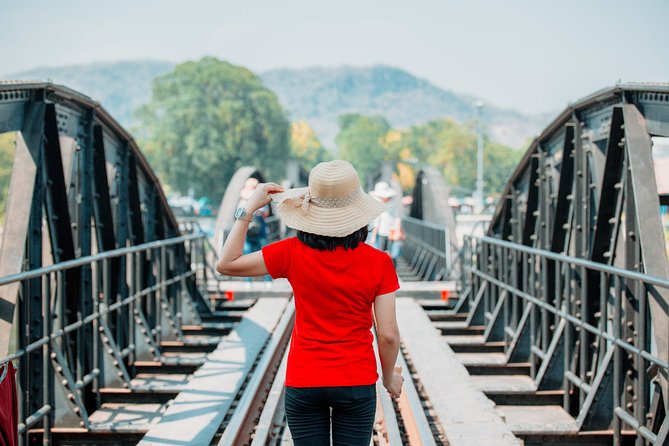
Next you move into the River Kwai / Bridge over the River Kwai area. You’ll have short walking blocks, including time specifically tied to crossing/walking by the bridge and nearby riverside spots.
This is one of those famous places where your expectations can go either way. If you expect a theme-park version, you might miss what makes it moving: the bridge is physical, close, and impossible to ignore once you’re there. You’ll be able to step into the scene, take photos, and see how the railway area sits in relation to the water.
You may also see mention of boat visits being optional. If you’re interested, it’s worth asking your guide what timing looks like that day, since the day’s flow depends on train schedules and other stops.
Also, since you’ll be walking outdoors, bring something simple for comfort: a hat, sunscreen, and shoes that don’t make you regret every step.



JEATH War Museum: Strong Content, But Check Expectations
The JEATH War Museum is about 40 minutes, with the ticket included. It’s right near the bridge area, so you don’t waste time transitioning.
What you’ll find here is the kind of WWII display that tries to stick to story: memorabilia, plus murals and writing on the walls. The museum is designed to make the railway history feel less like a distant textbook topic and more like a lived reality.
Now for the caveat. One of the key criticisms you should take seriously is that the museum can feel run down or not as well maintained as you might hope. That doesn’t automatically mean the story isn’t worth hearing. It just means you should show up ready for a more basic presentation rather than a glossy, modern museum experience.
If you’re sensitive to how sites look, keep your focus on the content: what’s being shown, what’s being explained, and how the artifacts connect back to the labor and suffering behind the railway.
Tiger Cave Temple (Wat Tham Suea) and the Railway Train-Spot Moment
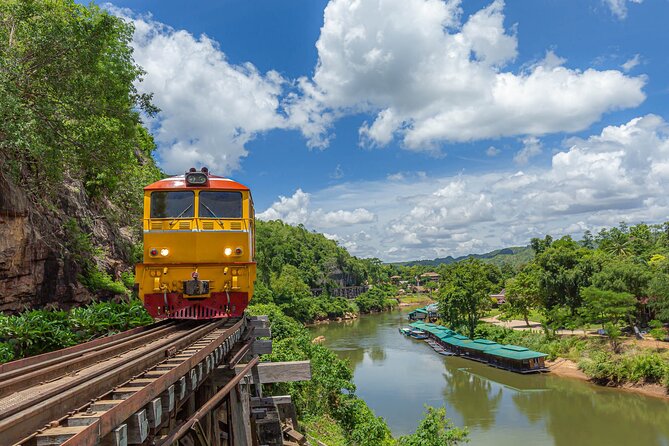
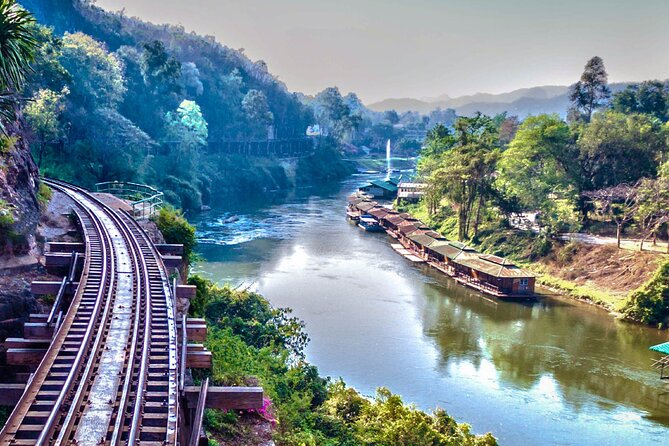
The final stop is Tiger Cave Temple (Wat Tham Suea), paired with the railway viewing area near Tham Krasae Station. You’ll have about 30 minutes.
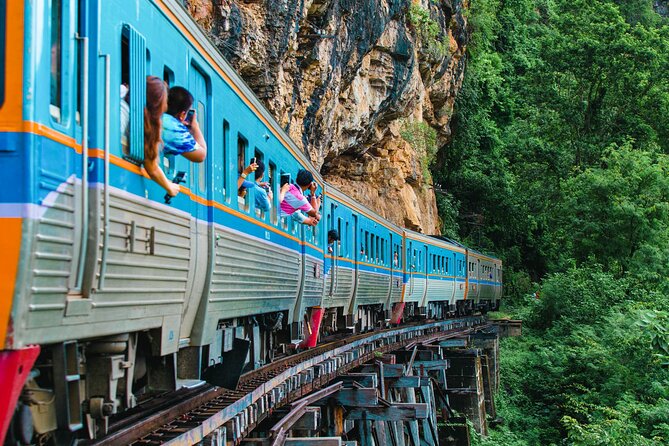
This is where the day turns visual in a different way. Instead of only memorials and museum displays, you’re watching the railway setting itself. The train passes by from the viewpoint described as part of a picturesque railway section that snakes around a cliff. Even if you’re not a rail fan, this moment gives you a sense of why the area mattered so much during the war.
There’s also a practical benefit here: the viewpoint timing is built around when you can actually see a train, which is the kind of thing that’s hard to “DIY” without local knowledge. A guided day helps because the driver and guide are working within the real-world timing.
How This Tour Really Teaches the Death Railway Story
What makes this day feel worthwhile is how the stops connect.
- The war cemetery gives you emotional and historical grounding.
- The bridge walking time lets you understand the geography you’ve been hearing about.
- The JEATH museum adds details and artifacts so you’re not just watching iconic landmarks.
- The Tiger Cave Temple area gives you the modern-day reality of the railway line still being used.
A detail I liked from the experience descriptions is the emphasis on what POW labor looked like in practical terms—one note references how Dutch POWs carved the trackway from rock. That kind of specific, physical description helps you picture the work rather than keeping it as a vague concept.
If you go in expecting only photos, you’ll leave with photos. If you go in ready to connect the places, you’ll leave with a clearer mental map of the railway’s WWII meaning.
Photo Stops and Timing: Where You’ll Want Your Camera Ready
You’ll get plenty of chances to pause, walk, and shoot photos, especially around the bridge and river areas. The short stops are long enough to get that “I’m standing here” shot without turning the whole day into a marathon.
For the temple/railway viewpoint, treat it like a “wait and watch” moment. Have your camera or phone charged and your settings ready. That way, when the train comes through, you’re not fumbling with storage or screen brightness.
Also, don’t ignore the storytelling moments where you’re not taking pictures. If you keep snapping nonstop, you’ll miss the memorial cues that make the day meaningful.
What to Bring (and What to Skip)
This is a long day, mostly outdoors during walking sections, with road travel in an air-conditioned vehicle.
Bring:
- Comfortable walking shoes
- Sun protection (hat, sunscreen)
- A light layer if you get chilly in AC
- A water bottle if you want extra, even though bottled water is provided
Skip:
- Anything you’ll stress about carrying. You’ll be on and off vehicle multiple times, and you’ll want an easy day.
And since lunch isn’t included, plan your food timing. If you’re the type who forgets to eat, this is a good time to set a reminder before you leave Bangkok.
Value: When This Tour Is a Best Fit
This tour is a smart choice if you want:
- A guided, English-speaking day that covers the key sites in one shot
- A maximum nine-person group that keeps things manageable
- Convenience from Bangkok, including hotel pickup and drop-off
- WWII context delivered through real places, not just a lecture
It’s also a good pick for families who want a structured day. One review note highlighted how visiting the cemetery and Death Railway sites felt special enough to show children. If you go with kids, the cemetery stop can be heavy, but it often lands as a more meaningful, grounded experience than “just going to see the bridge.”
If you’re the kind of traveler who only wants pristine, modern museums, you might find parts of the JEATH museum disappointing. If you go with flexible expectations and focus on what you can learn, the rest of the day still delivers.
Should You Book This Kanchanaburi River Kwai & Death Railway Small Group Tour?
I’d book it if you want one full day that combines the Bridge over the River Kwai, the JEATH War Museum, the Kanchanaburi War Cemetery, and a train-viewing moment near Wat Tham Suea, all with pickup and a small group.
Skip it or reconsider if your #1 priority is a high-polish museum experience with perfect facilities. The War Museum stop may feel more basic than you expect, even though the content is the point.
If your goal is a respectful, photo-friendly, story-driven WWII day from Bangkok, this one is a solid value.