REVIEW · KANCHANABURI
From Bangkok: Kanchanaburi War Cemetery and Death Railway..
Book on GetYourGuide →Operated by Travstore Travel Management Company Ltd · Bookable on GetYourGuide
A WWII day trip in Kanchanaburi hits hard in a good way. This full-day tour from Bangkok pairs War Cemetery remembrance with stops that explain how the Burma–Siam Railway shaped lives, including the JEATH War Museum and the iconic Bridge over the River Kwai. It’s also a practical outing: you get an English-speaking guide, admission fees, and lunch built in. One consideration: the day can run long, and the Death Railway train is optional and may not work the way you expect, so confirm what is included before you line up.
If you want a thoughtful, photo-worthy day that isn’t just scenery, this is the right mix. You’ll walk through places tied to Allied prisoners’ sacrifices, then shift to museum explanations and the big River Kwai moment. You’ll also spend a chunk of time on the road, and you’ll finish at MBK Shopping Mall in Bangkok unless you request an extra-cost drop back to your hotel.
In This Review
- Key things to know before you go
- Bangkok to Kanchanaburi: the long day you’re trading for meaning
- Kanchanaburi War Cemetery: where the day becomes personal
- JEATH War Museum: how WWII artifacts make the story stick
- Bridge over the River Kwai: the famous walk, with real context
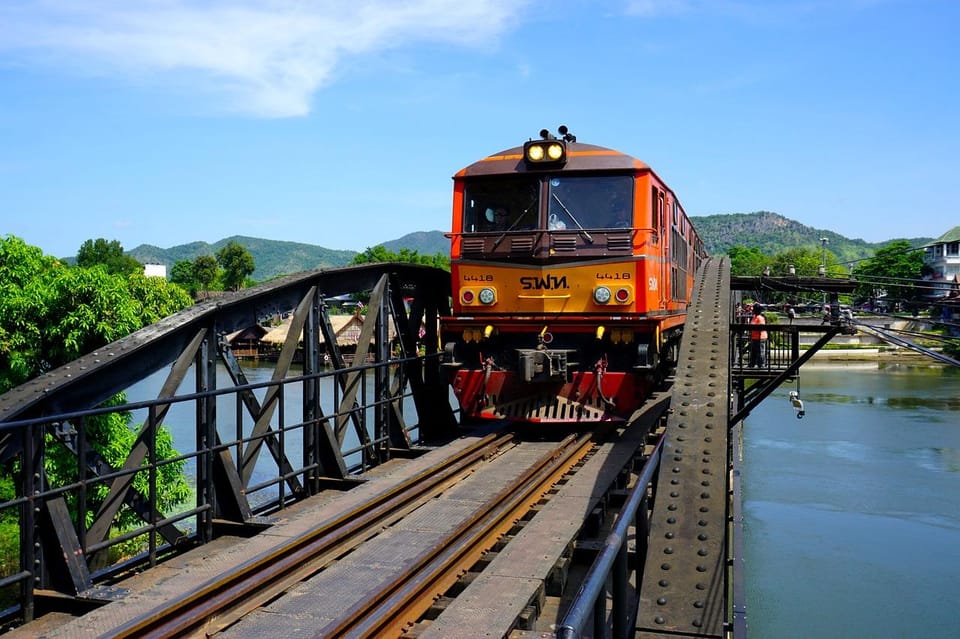
- Death Railway option: wooden-bridge views and the train question
- Lunch on the road: where you refuel without losing the day
- Price and value: what $85 covers and what you should double-check
- Timing, comfort, and heat: how to make the day feel manageable
- Who should book this WWII day trip, and who should skip
- Should you book this tour?
- FAQ
- What’s included in the tour price?
- Is the Death Railway train ride included?
- Where do you get picked up and where do you get dropped off?
- What should I bring for the day?
- Is the tour suitable for wheelchair users or people with back problems?
- What contact details do I need to provide?
Key things to know before you go
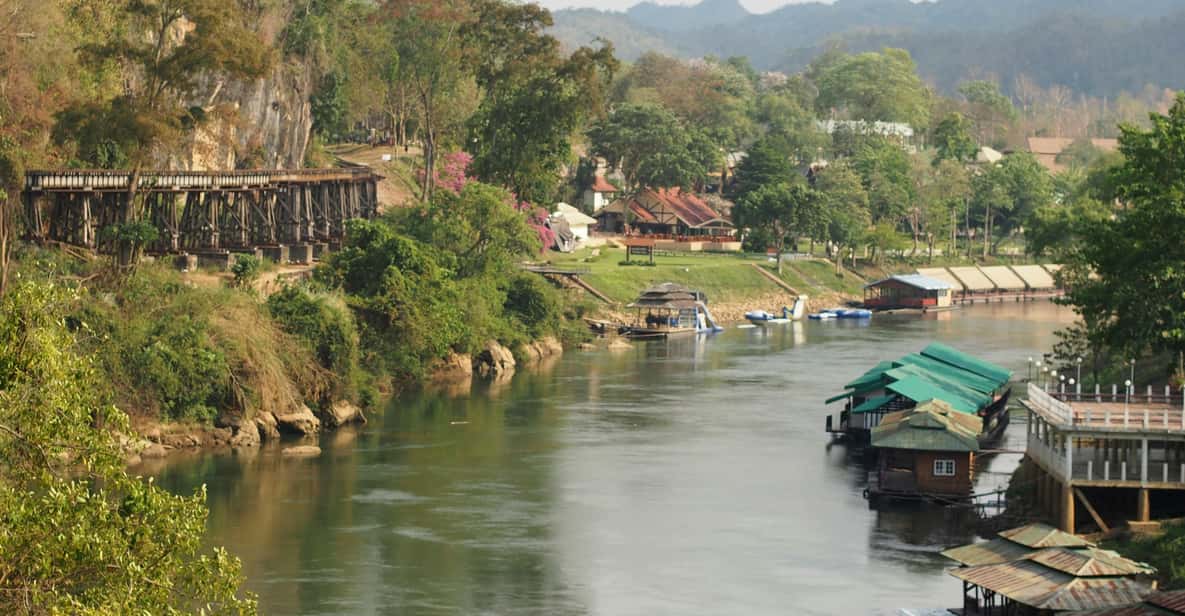
- A full-day route, with real walking: plan on comfortable shoes and time on your feet, especially around the cemetery and bridge areas
- War Cemetery first, then the stories: you don’t just look at landmarks; you also get context at the JEATH War Museum
- Bridge over the River Kwai is the centerpiece: expect to take your time and soak in the scale before moving on
- Death Railway train is optional: train transport isn’t listed as included, so factor extra cost and time
- Lunch is included: it’s part of the value, and it helps you keep energy for the rest of the day
- Group plans can shift: some departures can be combined with other stops, which can affect how long you have at each site
Bangkok to Kanchanaburi: the long day you’re trading for meaning
This is a classic “leave Bangkok early, come back late” kind of tour. You’re paying for more than sightseeing: you’re paying to have someone organize the route, cover admissions, and guide you through a heavy topic without you having to figure it all out on your own. At $85 per person, the value comes from what’s included (guide, fees, lunch) and from not having to piece together transport to several separate sites.
Because it’s a long day, your best move is to treat it like one plan, not a series of quick stops. You’ll be moving between locations in central Thailand, then doing walking outdoors in sun exposure. Bring water, sunscreen, and a hat, and keep your camera ready—but also leave room to pause. Places like the War Cemetery don’t reward rushing.
Finally, note that the tour pick-up is from your hotel area in Bangkok, and the drop is at MBK Shopping Mall. If MBK isn’t convenient for you at the end, you may need to arrange a different drop at extra cost.
You can also read our reviews of more tours and experiences in Kanchanaburi.
Kanchanaburi War Cemetery: where the day becomes personal
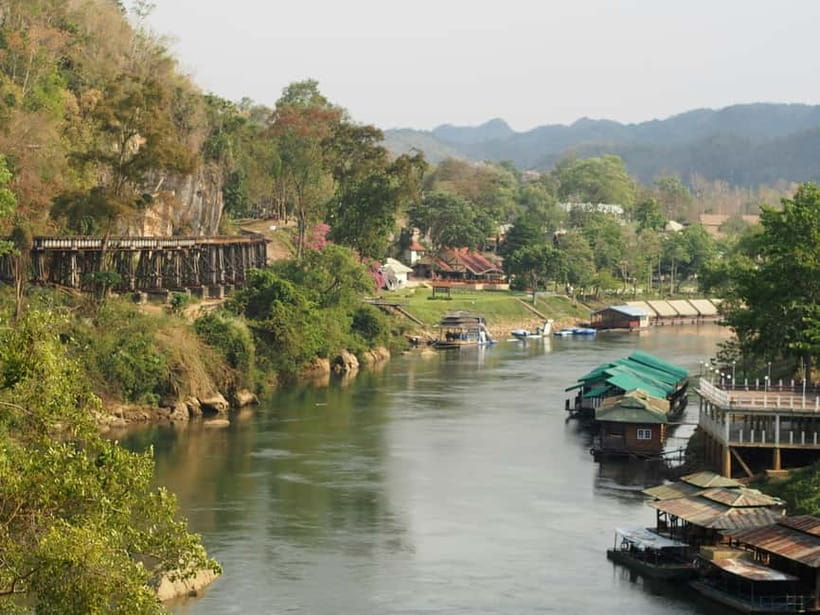
The day starts with the Kanchanaburi War Cemetery, which is the emotional anchor of the whole itinerary. This is where you pay tribute to fallen WWII soldiers and reflect on the sacrifices connected to the Burma–Siam Railway period. If you’re the kind of person who likes to understand what you’re seeing, this stop gives your later visits weight. The museum and bridge become more than landmarks when you’ve just stood in a place meant for remembrance.
What I recommend here is simple: slow down your pace. The cemetery is not about maximizing photos; it’s about honoring the people laid to rest. If you know a name or family connection, take a moment to look carefully and stand quietly. If you don’t, you can still observe the rows, read what’s available, and let the setting do its work.
Also keep in mind logistics. Outdoor memorial areas can be exposed to heat, and you’ll likely be walking among paths and open spaces. Comfortable shoes matter.
One last practical note: because this stop is often the most important for many people, you’ll want your schedule to protect it. If you’re booking specifically to find a relative’s grave, I’d confirm in advance how much time your day includes at the cemetery and what happens if the group is delayed.
JEATH War Museum: how WWII artifacts make the story stick
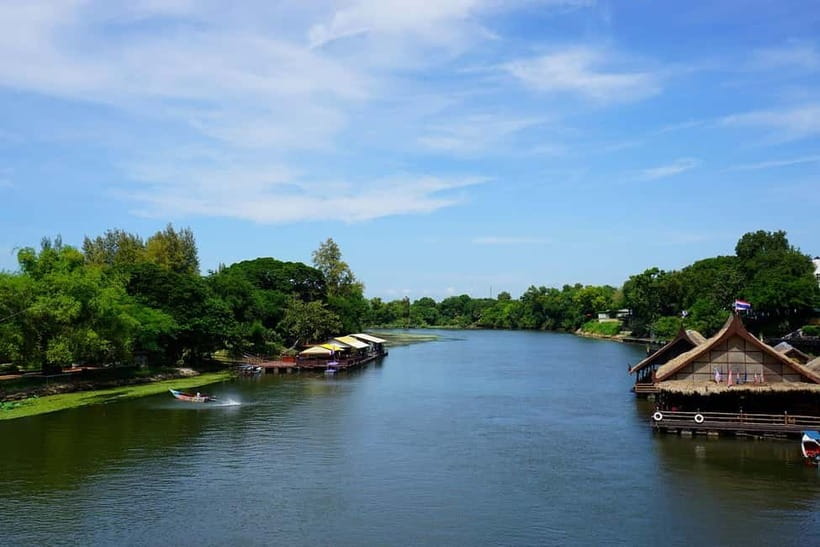
After the cemetery, the tour shifts to learning mode at the JEATH War Museum. The museum is designed to explain WWII and the Burma–Siam Railway context through objects and narratives. This matters because the cemetery and bridge can feel symbolic on their own. The museum gives you the missing links: what the railway was, how it affected people, and why this part of Thailand became so intertwined with wartime suffering.
You don’t need to be a WWII expert to benefit. The museum approach is about making sense of the timeline and themes through what you can see and read. If you’re traveling with someone who usually skips museums, this is a good test case because the artifacts can turn abstract history into something more concrete.
What can slow you down here is that museums are easy to skim and hard to rush well. Give yourself enough time to read the labels and look at the objects up close. You’ll get more out of it if you take pauses rather than trying to cover every display at high speed.
Bridge over the River Kwai: the famous walk, with real context
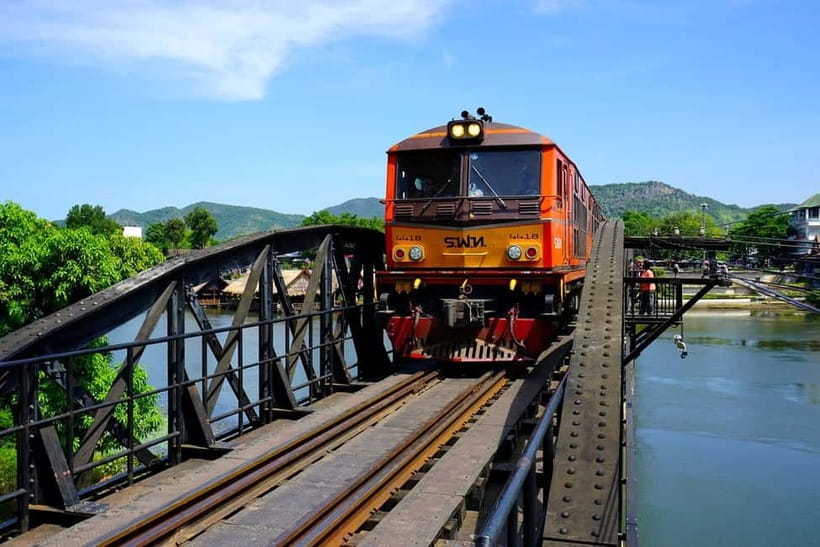
Then comes the headline moment: walking across the Bridge over the River Kwai. This bridge is one of those places that has a global reputation, so it can feel “too famous” if you treat it like a checklist item. The difference on this tour is that you approach it after the cemetery and museum. That sequence changes the vibe. The bridge becomes a physical reminder of how infrastructure and conflict can collide.
When you cross, pay attention to scale and craftsmanship. Even if you’ve seen photos before, you’ll notice details you can’t appreciate from postcards. Take a few minutes to look around from different angles and let the river and surroundings set the scene. It’s also a good place to stop thinking purely in terms of war movies and start thinking about the lived reality behind the name.
There’s also a practical side: the bridge area can be busy, and you’ll be sharing walk space. Move slowly, keep your balance, and don’t forget your sunscreen and hat if the sun is strong.
Death Railway option: wooden-bridge views and the train question
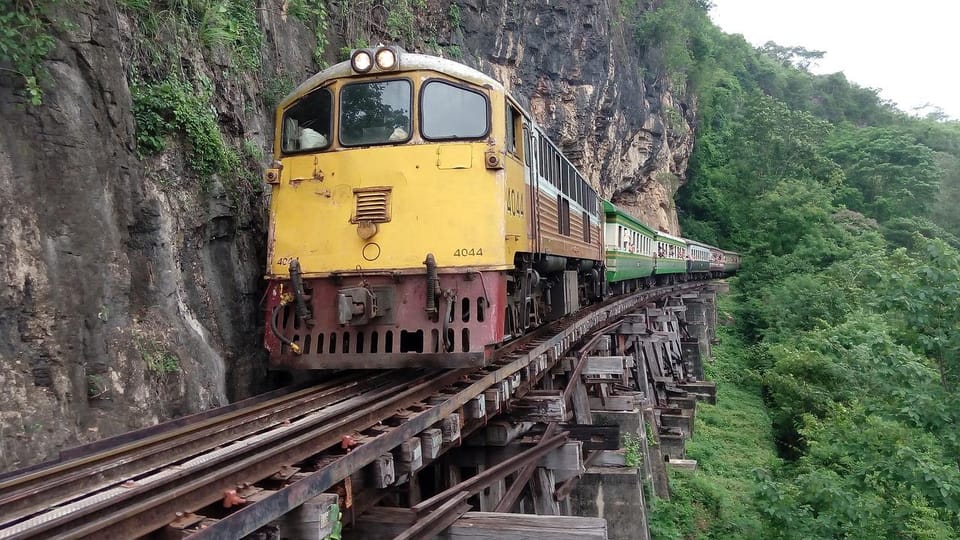
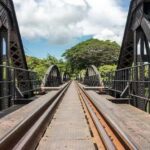
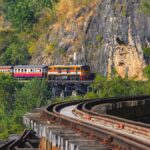
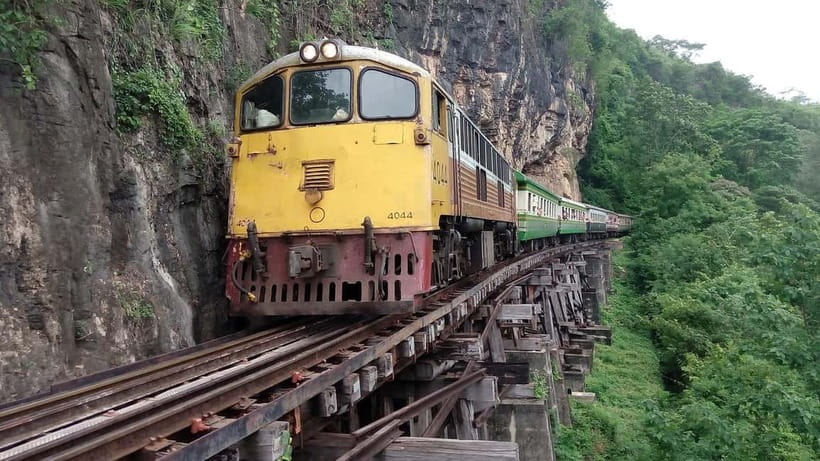
The tour includes a chance to experience the Death Railway area, with the option of a ride on the Death Railway train. The big detail is that train transportation is not listed as included, even though the train ride is described as optional. Translation: you should expect possible extra cost and extra time on your day if you choose to do it.
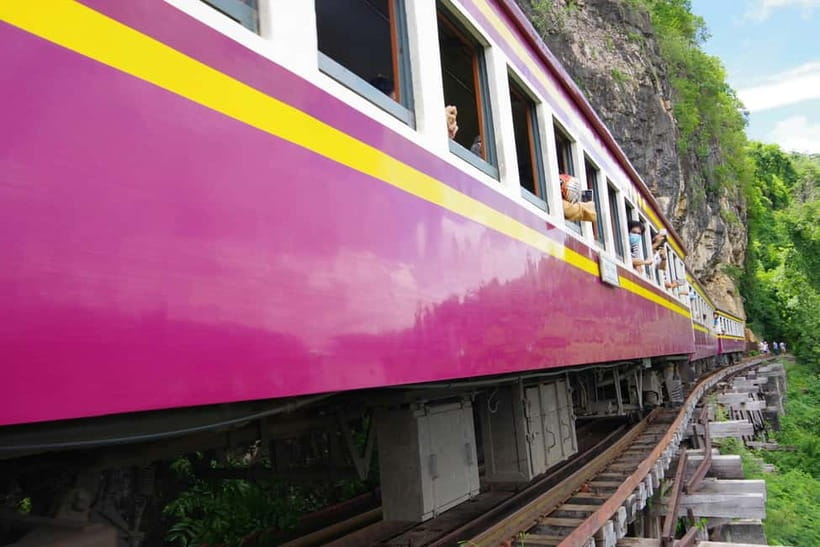
If you do take the train, set expectations that it can be crowded. On busy departures, you may not have the kind of comfort you want for a long ride. Still, the payoff can be the scenery and the wooden bridge feel of the railway route. This is one of those times where the photo can’t replace being there, because the surroundings and motion make the railway’s character feel more real.
If you care most about the cemetery and don’t want your schedule stressed, consider treating the train as a bonus. Choose based on how important the ride is to you versus how much time you want to keep for the memorial stops.


Lunch on the road: where you refuel without losing the day
Lunch is included, served at a local restaurant during the route. This is one of the smartest inclusions for a day trip like this. A paid-on-your-own meal can turn into a time sink, and you might end up with food that doesn’t match what you expected.
For what it’s worth, the lunch break is also a natural “breather” moment in an otherwise emotionally heavy day. You’re shifting from remembrance and history into a calmer part of the day where you can reset. If you’re sensitive to strong heat, this is where you should drink water and take shade when you can.
I’d plan to eat at a normal pace and keep snacks minimal. The tour is built around the lunch stop, and if the day runs long, you’ll want energy for the later bridge and railway portion.
Price and value: what $85 covers and what you should double-check
At $85 per person, this tour has a straightforward value story: you’re paying for an English-speaking guide, admission fees, lunch, and hotel pick-up in Bangkok, plus a drop at MBK. That’s a real savings compared with trying to coordinate separate tickets and entry fees yourself, especially if you don’t want to wrestle with timing.
Where you might see extra costs or confusion is around the optional parts. The Death Railway train ride is optional, and train transportation isn’t marked as included. If you want the train, plan for the possibility that you’ll need to pay on the day and confirm class/booking details with your guide before boarding.
Also consider the end-of-day logistics. Dropping at MBK is convenient for many people, but if you’re far from there and you expected a hotel drop, you should check whether you need an additional-cost return transfer.
Finally, a note on reliability. Some bookings can have schedule changes because tours may be combined with other outings. That can affect how much time you get at the cemetery. If the cemetery is your main priority, ask your guide how the day is structured and whether the cemetery time is protected.
Timing, comfort, and heat: how to make the day feel manageable
This isn’t a sit-and-go trip. It’s walking in public spaces, moving between stops, and doing long-distance transfers from Bangkok. The “make it work” checklist is basic but important:
- Wear comfortable shoes for outdoor paths and the bridge area
- Bring sunscreen, a hat, and water
- Keep your camera ready, but don’t treat every moment as a photo session
- Pace yourself at the War Cemetery so you don’t feel rushed
You should also plan for a full day away from Bangkok, so arrange your own schedule accordingly. If you have a late dinner or next-day plans, keep them flexible.
Who should book this WWII day trip, and who should skip
This tour is a strong fit if you want a structured, English-guided way to visit key WWII-related sites in Kanchanaburi from Bangkok. It also works well if you want both emotional context (cemetery) and explanatory context (JEATH Museum) plus the famous bridge walk.
It’s also not for everyone. The tour is not suitable for wheelchair users, people with back problems, or pregnant women. If you’re unsure, be honest about your walking tolerance. This itinerary involves outdoor walking and transitions that can be difficult if you can’t move comfortably for long periods.
If you’re the type who likes to understand how a famous location fits into a larger story, this tour can click quickly. The route order matters, and it’s one reason the experience can feel more meaningful than a simple sightseeing day.
Should you book this tour?
I’d book it if your priority is a guided, English-first visit to the War Cemetery plus the JEATH War Museum and Bridge over the River Kwai, with lunch handled for you. The price-to-inclusions ratio is solid, and the pairing of remembrance plus learning is what makes it more than a photo run.
I’d be cautious if your goal is very specific—like finding a particular grave and needing ample time. In that case, confirm the day’s schedule and ask how long you’ll have at the cemetery. I’d also confirm details around the Death Railway train option so you don’t get surprised by added costs or timing.
If you’re okay with a long day, enjoy guided context, and want a respectful but unforgettable route, this is a worthwhile choice. Just go in prepared: bring sun protection, wear shoes you can trust, and keep your expectations aligned with the optional train piece.
FAQ
What’s included in the tour price?
The tour includes an English-speaking guide, admission fees, lunch, and hotel pick-up from Bangkok. You’ll also be dropped at MBK Shopping Mall in Bangkok.
Is the Death Railway train ride included?
No. Train transportation is not included. The Death Railway train ride is described as optional, so you should expect to handle it separately if you choose it.
Where do you get picked up and where do you get dropped off?
You get picked up from your hotel in Bangkok. You’re dropped at MBK Shopping Mall in Bangkok. A drop to your hotel from MBK can be provided on request for an additional cost.
What should I bring for the day?
Bring comfortable shoes, a sun hat, camera, sunscreen, and water.
Is the tour suitable for wheelchair users or people with back problems?
No. The tour is not suitable for wheelchair users or people with back problems. It also isn’t suitable for pregnant women.
What contact details do I need to provide?
You’ll need to provide your hotel name, guest name, and a WhatsApp-enabled phone number (or a local Thai phone number). This is used to ensure smooth communication before and during the experience.