REVIEW · KANCHANABURI
Bangkok: Kanchanaburi and Erawan Waterfall Private Tour
Book on GetYourGuide →Operated by Amazing Asia Tours · Bookable on GetYourGuide
Misty falls and war stories in one long day. This private trip strings together Erawan National Park’s seven-tier waterfalls, plus Kanchanaburi’s WWII sights with an English-speaking guide. I especially like how the day balances moving around with real context, and I love the chance to time your River Kwai visit around the train crossing. One thing to consider: it’s a full 11 hours with plenty of road time, so you’ll want comfortable shoes and a relaxed mindset.
My favorite part is the Erawan hike. You can go for the higher levels if you feel steady on your feet, or you can stay lower and still enjoy the waterfall pools. The other standout is the guided WWII stop at the Allied Cemetery and the JEATH War Museum, which helps you understand what the railway construction meant for both Asian laborers and European POWs. A possible drawback is that the level of detail can vary by day; if you want very specific commentary about the rail area and the train moment, you may want to ask your guide questions directly.
A small, practical win: you ride in a comfortable air-conditioned private van and you’re not bouncing between groups. If your guide happens to be Ken, you can expect a calm, check-in style and clear explanations, and I’ve also seen the same kind of responsiveness credited to guides like Pam. You’ll still get a lot packed in—just plan your energy like it’s a hike day, not a sightseeing stroll.
In This Review
- Key Things You’ll Notice on This Tour
- A Private Van Day Trip From Bangkok to Kanchanaburi
- Allied Cemetery and JEATH War Museum: WWII History You Can Actually Place
- River Kwai Bridge and the Train Moment That Makes It Feel Real
- Lunch in Kanchanaburi: Refuel Without Complicating Your Day
- Erawan Waterfalls in National Park: Seven Plateaus, Pools, and Caves
- How hard is it?
- For people with less mobility
- What to do with your free time
- Comfort and Timing: How to Make the Long Day Feel Manageable
- Price and Value: Is $195 Worth It?
- Who This Tour Fits Best (and Who Might Skip It)
- Should You Book the Bangkok–Kanchanaburi–Erawan Private Tour?
- FAQ
- What time does the tour start in Bangkok?
- How long is the tour?
- Is this a private tour?
- Does the guide speak English?
- What are the main stops during the day?
- Is lunch included?
- Are entrance fees included?
- Can I swim at Erawan Waterfalls?
- Is the climb in Erawan National Park difficult?
- What should I bring?
- Is pickup available from my Bangkok hotel?
Key Things You’ll Notice on This Tour
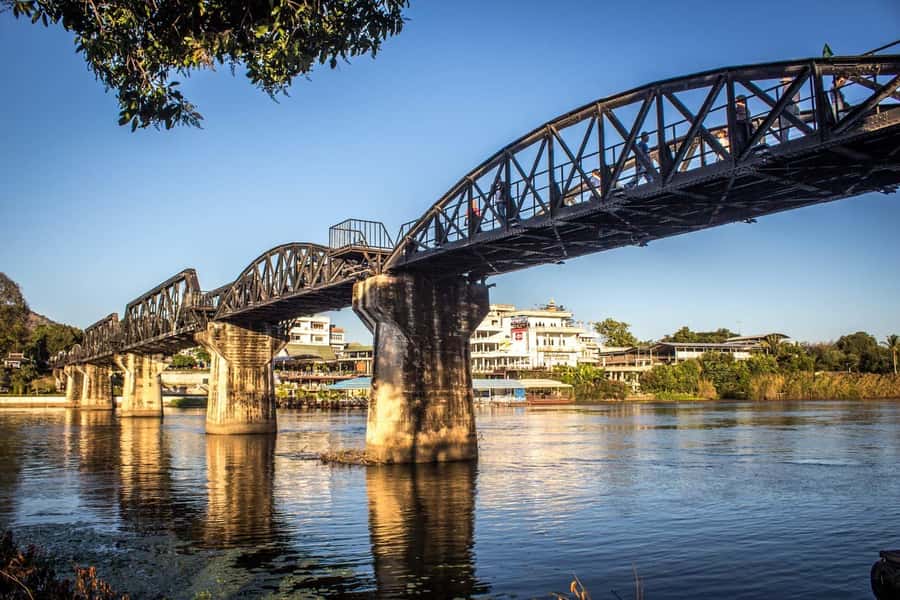
- River Kwai bridge at train time: you wait for the local train for a memorable photo and a true “in motion” moment
- Allied Cemetery + JEATH museum: WWII history tied to the Myanmar railway and occupation-era realities
- Erawan’s seven plateaus: a waterfall route with multiple swimming spots and caves behind the water
- Optional top-level effort: the climb can be challenging, but you can stop at the base and still enjoy plenty
- Lunch included: a local restaurant meal (with bottled water on board for the long day)
- Private, air-conditioned transport: hotel pickup and drop-off keeps the day from feeling chaotic
A Private Van Day Trip From Bangkok to Kanchanaburi
This tour is built for people who want a straightforward, door-to-door day—without the stress of arranging transport, tickets, and timing across provinces. Pickup starts at 7:00 AM from centrally located Bangkok areas (Pratunam, Sukhumvit, Silom, and Sathorn hotels), and the schedule has you on the road for about 2.5 hours to reach Kanchanaburi.
What I like about starting early is simple: it gives you enough daylight to do the WWII sights in a thoughtful order, then still reach Erawan with time to enjoy the falls (and not just snap a few pictures and sprint back to the car). It’s still long, though. You’ll be sitting, then walking, then sitting again. Treat the van ride like a warm-up.
Also, this is private. That matters more than it sounds, because you can move at a pace that makes sense for your stamina. In practice, guides like Ken are good about checking comfort levels and adjusting timing so you’re not rushed through the important stops.
You can also read our reviews of more private tours in Kanchanaburi
Allied Cemetery and JEATH War Museum: WWII History You Can Actually Place
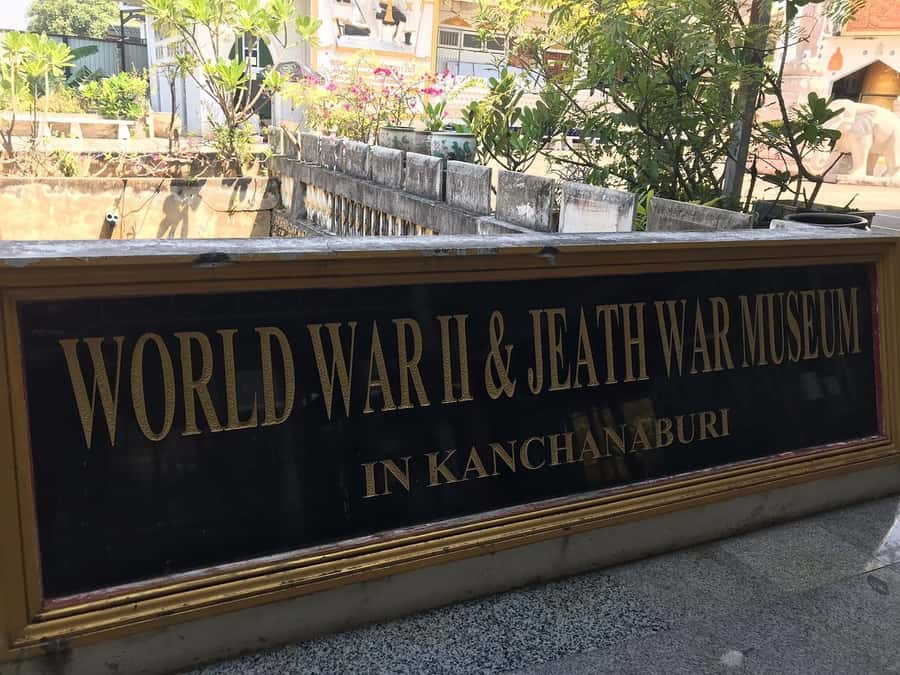
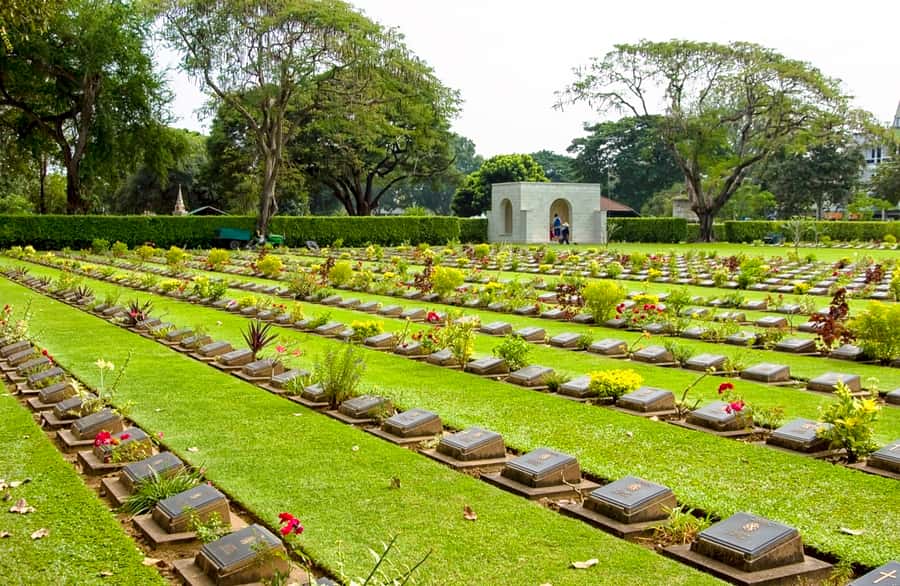
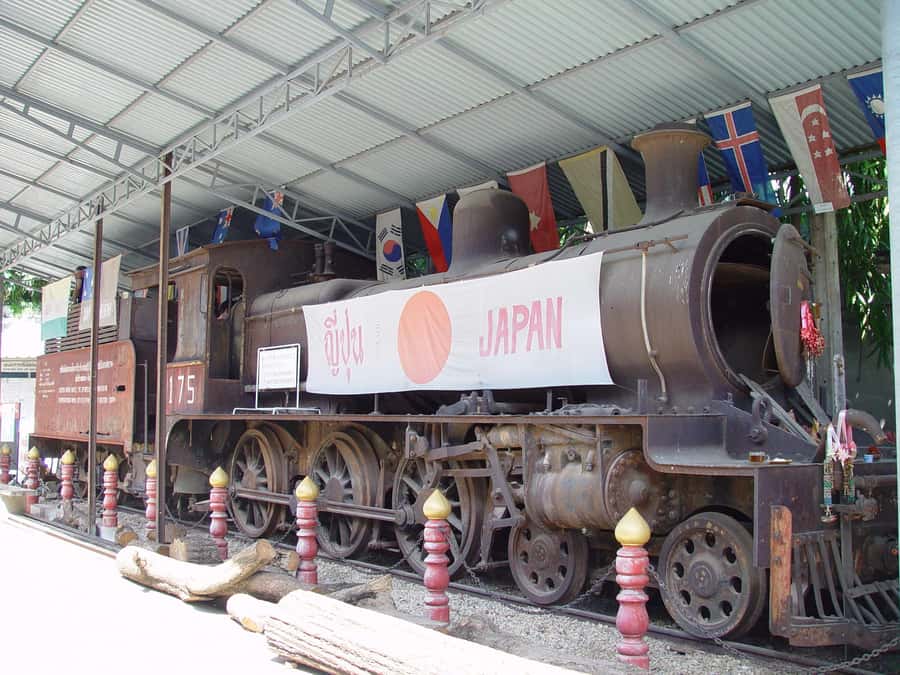
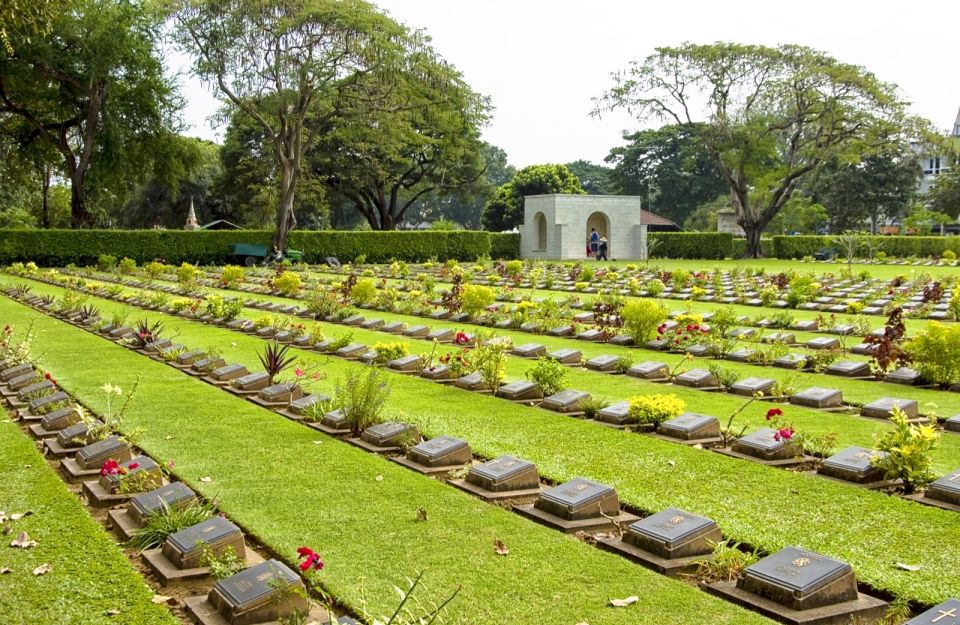
The day’s first major stop is the Kanchanaburi War Cemetery, followed by the JEATH War Museum. This is where the trip becomes more than a pretty day out. You’re learning how the area was affected during WWII and how the railway project shaped life under Japanese occupation.
Here’s what stands out in this section: the museum focus isn’t vague. It connects the Myanmar railway to the conditions faced by Asian convicts and European POWs. That detail helps you understand why the railway is remembered the way it is today—less like a postcard object, more like a story with real human cost.
For your own experience, plan to spend a little time reading and looking before you rush to the next spot. The guide’s English explanations can help you translate the history quickly, but the impact lands best when you slow down for a few minutes at each display or grave.
If you’re the kind of traveler who wants extra specificity—like exactly how certain parts of the rail system operated—don’t be shy. I found the best tours are the ones where you ask a focused question and get an answer tailored to what you’re looking at. One of the few mixed comments I’ve seen on similar tours was about wanting more explanation at the spoor/rail and train element, which is a good reminder to engage your guide when you’re there.
River Kwai Bridge and the Train Moment That Makes It Feel Real
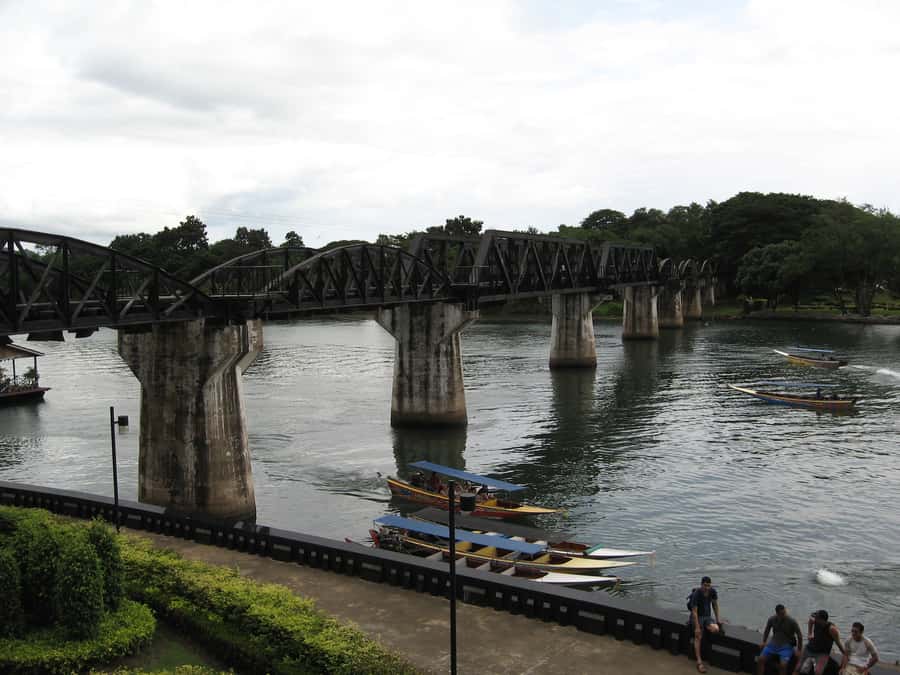
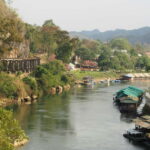
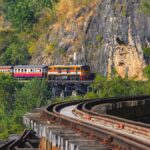
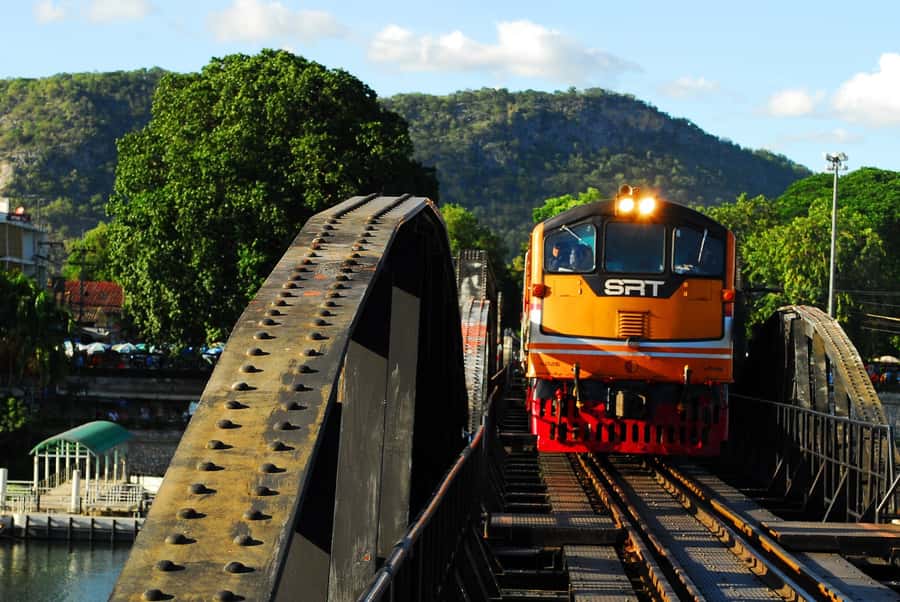
After lunch is later, but the bridge moment happens early enough to still feel crisp. You’ll visit the iconic bridge over the River Kwai, and the plan includes waiting for the local train to pass.
That’s a smart choice. The bridge isn’t just a static view. When the train comes through, the whole scene suddenly makes sense—how the railway and the river interact, how it sits in real daily life, not just in history books.
What you can do here is simple:
- Keep your camera ready, but don’t block others while you wait.
- Take a look from more than one angle if there’s room.
- Then, when the train arrives, focus on the feeling of movement across the river rather than chasing the perfect shot.
This stop can be short compared with the museum and the waterfalls, but it’s one of the best “wow, I get it now” moments of the day. It turns a landmark into a living function.
Lunch in Kanchanaburi: Refuel Without Complicating Your Day
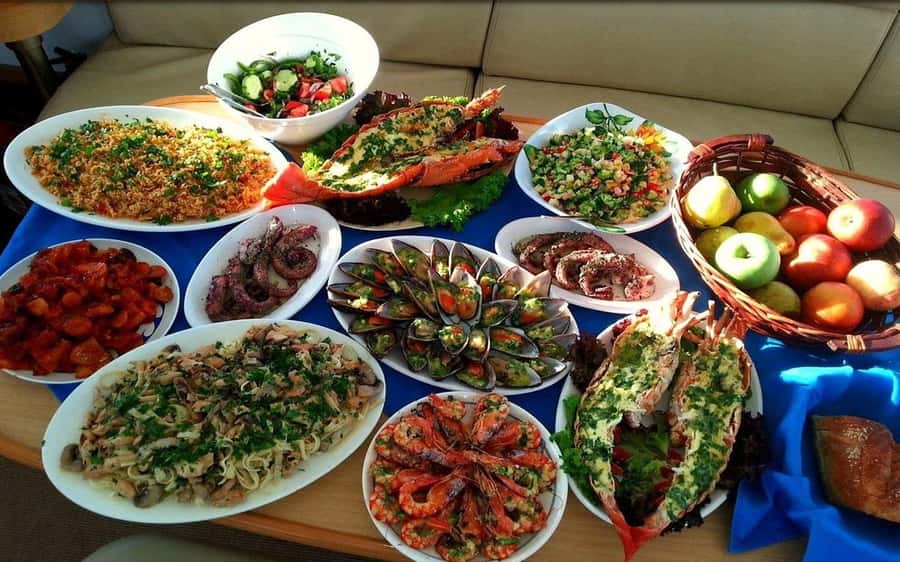
Lunch happens at a local restaurant in Kanchanaburi. It’s included, which is one less decision you have to make on a long day. In practice, the meal is a good reset between the history-heavy stops and the physical nature time at Erawan.
Based on how guides tend to plan it, you’ll get choices that are meant to suit a group day—simple, filling, and not too fussy. I like that guides such as Ken are often described as picking good food and getting you enough time to eat without dragging it out.
If you have dietary restrictions, it’s worth mentioning them ahead of time or directly to your guide on pickup, since lunch is part of the fixed flow. The goal is to avoid a stressful scramble while everyone else is already seated.
Erawan Waterfalls in National Park: Seven Plateaus, Pools, and Caves
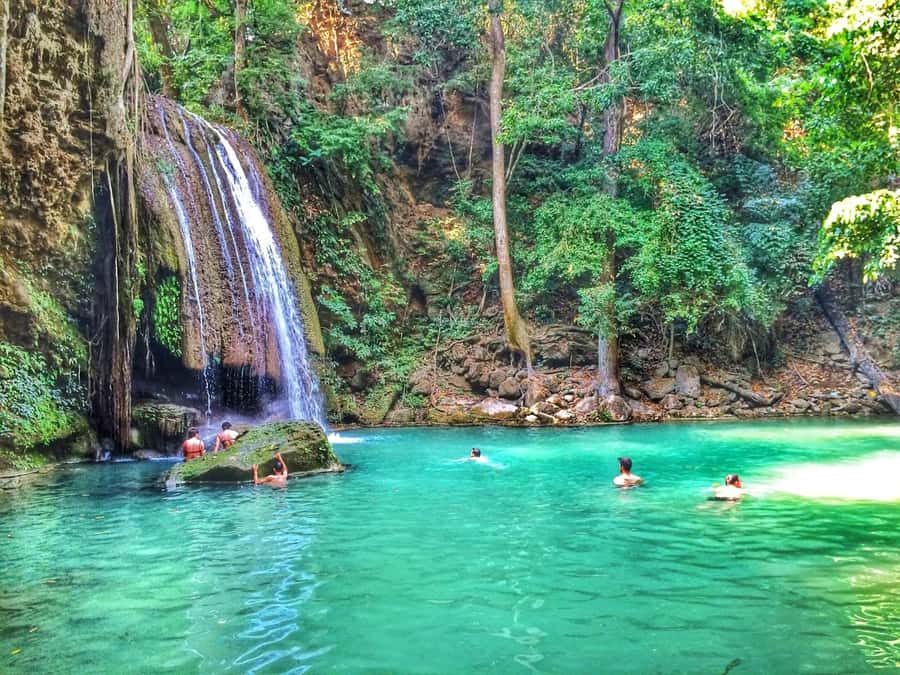
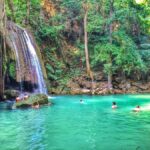
Then comes the main event: Erawan Waterfalls in Erawan National Park. This is one of those places where photos don’t fully explain the scale and sound. The waterfall system includes seven plateaus, and there are caves and hidden sections behind the moving walls of water.
You’ll have a guided portion to help you understand the route and what to look for, followed by free time so you can linger. This split is helpful. The guide gets you oriented, and then you can decide how much effort you want to spend climbing.

How hard is it?
The climb to the top can be a bit difficult. The good news is you don’t have to force it. You can enjoy the waterfalls from the base and still get a great experience. If you want the full view of the higher levels, you’ll need comfortable shoes and a steady pace.
The water is another deciding factor. If you want to swim, you can. The pools are described as crystal-clear, and there’s the chance to take a dip as you move between levels. That means you should plan as if you’ll get wet: bring swimwear, a change of clothes, and a towel.
For people with less mobility
The tour information notes that people with impaired mobility can still book and enjoy Erawan National Park. That doesn’t mean every single step is easy, but it does mean the experience is designed with different comfort levels in mind. Your guide can help you plan your route so you can still enjoy the falls without feeling pushed beyond your limits.
What to do with your free time
Your free time is the part you’ll remember most. Here’s how to use it:
- Go for the level that matches your energy today.
- If swimming feels right, do it after you’ve taken in a couple of viewpoints.
- Then slow down. The caves and the behind-the-water areas are the kind of details you notice when you’re not rushing.
And yes: the views are the payoff for the hike effort. When the waterfall is close, the sound fills the space, and you get that cool, damp feeling that makes you forget you’re in Thailand’s daily grind.
Comfort and Timing: How to Make the Long Day Feel Manageable
This trip runs about 11 hours, with a 6:00 PM return to Bangkok. That’s not short, and the road time is real. One comment I’ve seen was basically that there’s a lot of vehicle time—but the trade-off is that you get a lot of variety in a single day.
To keep it pleasant:
- Wear comfortable shoes with grip. You’ll be on uneven surfaces and stairs at the park.
- Pack change of clothes and a towel so you don’t end up sitting soggy in the van.
- Bring a little patience for the schedule. Your best moments (the bridge train pass and the waterfalls) depend on timing.
Transport is in a private air-conditioned van, which is a big deal in Central Thailand. Also included are bottled water and accident insurance, so you’re not scrambling for basics if something goes sideways.
Guides are English-speaking, and the guide experience seems to be a major reason the ratings are strong. I’ve seen praise for Ken’s warmth and attentiveness, with frequent notes about making sure people are comfortable and supported when questions pop up. On other days, a guide like Pam can run the show with the same idea: answer questions clearly and adjust to what the group wants to see.
Price and Value: Is $195 Worth It?

At $195 per person, this isn’t a budget half-day add-on. But when you break down what’s included, the value starts to make sense.
You’re paying for:
- Hotel pickup and drop-off across multiple central Bangkok zones
- A private air-conditioned vehicle and long intercity travel
- An English-speaking guide
- Entrance fees
- Lunch at a local restaurant
- Bottled water plus accident insurance
For many travelers, the cost isn’t just the attractions. It’s the convenience and the guide’s ability to make history stops readable and meaningful instead of just “there’s a building, good luck.”
The practical downside is that you’re paying for a full day. If you’re only interested in one or two stops—say, only the bridge, or only Erawan—then it might feel pricey. But if you want both the WWII context and the waterfall swim-and-hike day, the private format is where the money tends to feel justified.
Who This Tour Fits Best (and Who Might Skip It)
This is a great match if you:
- Want a structured day with a guide who can explain WWII in plain English
- Plan to prioritize Erawan Waterfalls as a real activity, not a quick photo stop
- Like the idea of River Kwai with a train passing moment
- Prefer private transport over coordinating buses and separate tickets
You might consider another option if:
- You hate long van rides and prefer a shorter itinerary
- You want a very slow pace with tons of extra time at only one location
- You’re hoping for a deep, ultra-detailed rail-history lecture beyond what’s included on the schedule
Still, even if you’re not a “history first” person, the tour’s flow gives you a break: cemetery and museum, then landmark bridge, lunch, then nature and swimming.
Should You Book the Bangkok–Kanchanaburi–Erawan Private Tour?
If you want one day that covers WWII context, the River Kwai bridge, and one of Thailand’s best waterfall experiences, I’d say this is a strong booking. The biggest reason is balance: you’re not stuck doing only one thing, and you’re not doing the tricky logistics on your own.
Book it if you’re comfortable with a hike that ranges from manageable to moderately challenging depending on how high you go at Erawan. Bring swimwear, expect a long day, and use your guide time to ask questions—especially around the railway and the bridge moment.
Skip or rethink it if your ideal vacation day is mostly relaxing and you don’t want much movement. The road time and the park walking are part of the deal.
FAQ
What time does the tour start in Bangkok?
Pickup starts at 7:00 AM from centrally located hotels in Bangkok (Pratunam, Sukhumvit, Silom, and Sathorn). You return to Bangkok around 6:00 PM.
How long is the tour?
The total duration is 11 hours.
Is this a private tour?
Yes. It’s a private group tour with a dedicated guide.
Does the guide speak English?
Yes, the live tour guide provides English narration.
What are the main stops during the day?
You’ll visit the Kanchanaburi War Cemetery, the JEATH War Museum, the bridge over the River Kwai, lunch in Kanchanaburi, and Erawan Waterfalls in Erawan National Park.
Is lunch included?
Yes. Lunch is included at a local restaurant.
Are entrance fees included?
Yes. All entrance fees are included.
Can I swim at Erawan Waterfalls?
If you wish, you can take a dip in the pools at Erawan Waterfalls.
Is the climb in Erawan National Park difficult?
The climb to the top is described as a bit difficult, but you can stay at the base and still enjoy the waterfalls.
What should I bring?
Bring comfortable shoes, swimwear, a change of clothes, and a towel.
Is pickup available from my Bangkok hotel?
Pickup is available from centrally located hotels in Pratunam, Sukhumvit, Silom, and Sathorn areas. You’ll need to provide your accommodation name and address when booking.