REVIEW · CHIANG RAI
Chiang Rai: Private Customized Tour – Local Expert Guide
Book on GetYourGuide →Operated by Black Dragon Tours · Bookable on GetYourGuide
White and blue temples in one day. That is the basic promise of this private customized tour in Chiang Rai, and it actually delivers because you can tailor the day around what you care about. I like that it mixes big-name sights (the Wat Rong Khun White Temple and Wat Rong Sue Ten Blue Temple) with quieter cultural stops and viewpoints, all driven by a guide who knows how to pace a full itinerary.
Two things I especially like: the English-speaking guide (notably Bank) brings strong local knowledge and good humor, and he helps with photos so you’re not stuck handing your camera to strangers. I also like the comfort factor—air-conditioned pickup and drop-off by vehicle, and in at least one case a brand-new fully electric MPV—because Chiang Rai can be a long day in the sun. A fair drawback: most of the major temples and museums charge separate entry fees, and the day includes a lot of walking, so comfy shoes matter.
In This Review
- Key points to know before you go
- Choosing Your Chiang Rai Route in One Private Day
- White Temple and Blue Temple: the Art You Can Walk Around
- Wat Huay Pla Kang and Wat Pra Kaew: the Sacred Detours Most Days Miss
- Black House Museum and Longneck Karen Village: Culture Stops with Real-World Questions
- Choui Fong Tea Plantation: a Break That Doesn’t Feel Like a Detour
- Golden Triangle and Mae Khong Views: Where the River Sets the Tone
- Opium Museum and the Big Buddha by Mae Khong River: history you can talk through
- If you choose the hills: Doi Tung, Doi Chang Mub, coffee stops, and the Skywalk
- Timing, transport, and why private pacing matters
- Tickets, lunch, and what you should budget
- What to bring (and what to watch for)
- The guide factor: why it feels like sightseeing with a friend
- Should You Book This Chiang Rai Private Customized Tour?
- FAQ
- How long is the tour?
- What’s included in the price?
- Which entrance fees should I expect to pay separately?
- Is lunch included?
- Can I change the plan during the day?
- What should I bring, and are there rules at the sites?
Key points to know before you go
- Private customization lets you adjust stops if your priorities change mid-day.
- Bank is a standout guide for friendly English, timing, and photo help.
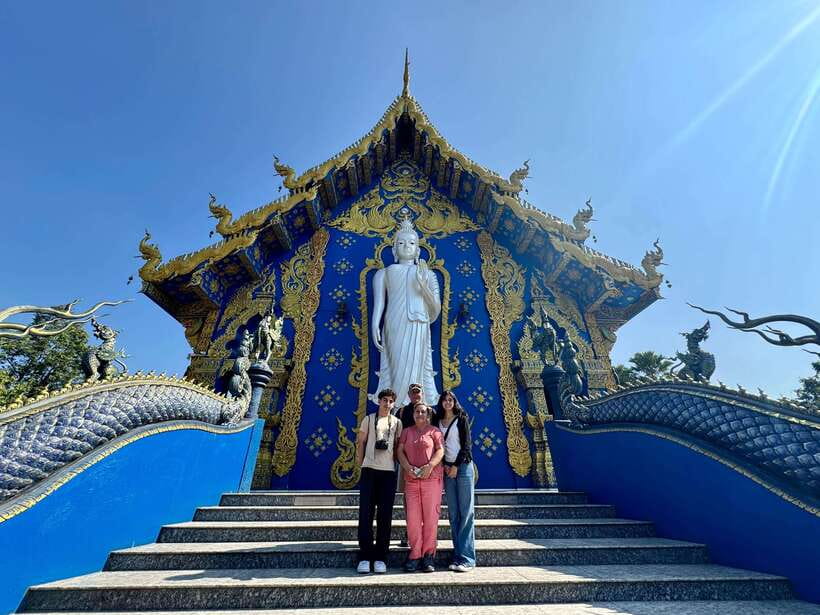
- White and Blue Temple architecture is a head-turner and worth your camera time.
- Golden Triangle + boat time is built around scenic cross-border views.
- Tea tasting at Choui Fong adds a slower, local-feeling break.
- Expect extra tickets and no lunch included, so budget for both.
Choosing Your Chiang Rai Route in One Private Day
The big advantage of this experience is that it’s private and flexible. You’re not locked into a random bus loop. Instead, you pick a route style and then shape the day with an English-speaking local expert.
You’ll see “popular sightseeing” options like a mostly flat, temple-heavy day. There’s also a more mountainous option if you want royal gardens and hill viewpoints, plus a cafe-focused route with stops around Doi areas. The schedule is built for a full day—about 10 hours—so you should decide what kind of Chiang Rai day you want: temples and culture, highland scenery and coffee, or a mix.
One practical tip from the way guides run these days: if there’s a stop you don’t want to do (for example, the longneck village portion), you can ask to rebalance the timing. In real life, that can mean spending more time at other attractions instead of ending early.
You can also read our reviews of more guided tours in Chiang Rai
White Temple and Blue Temple: the Art You Can Walk Around
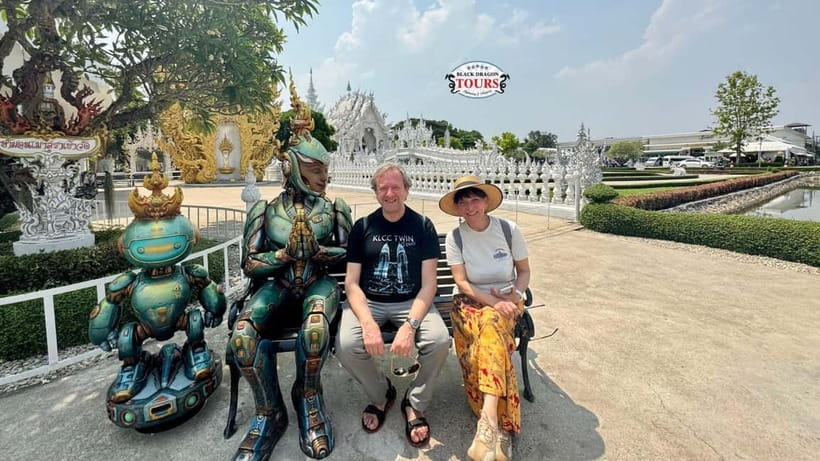
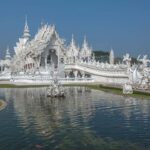
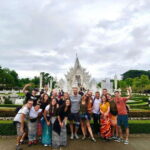
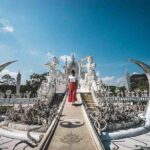
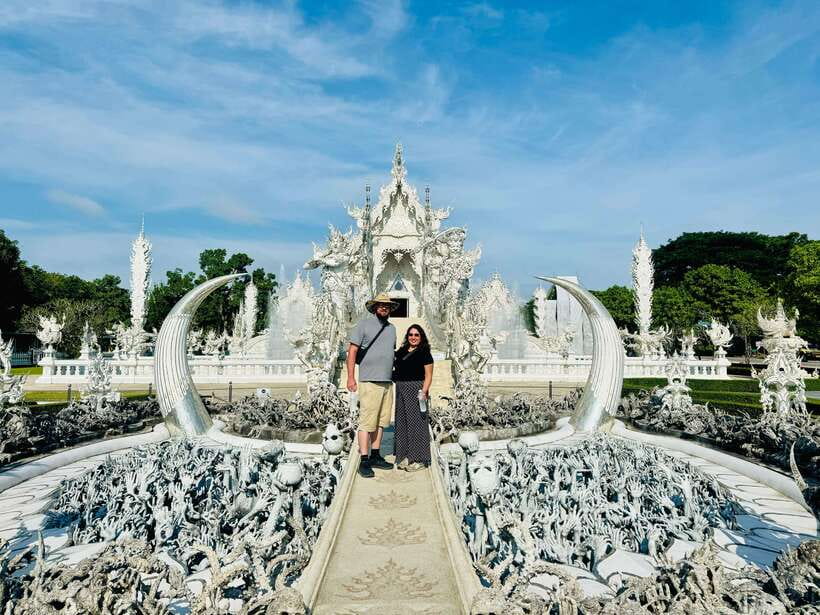
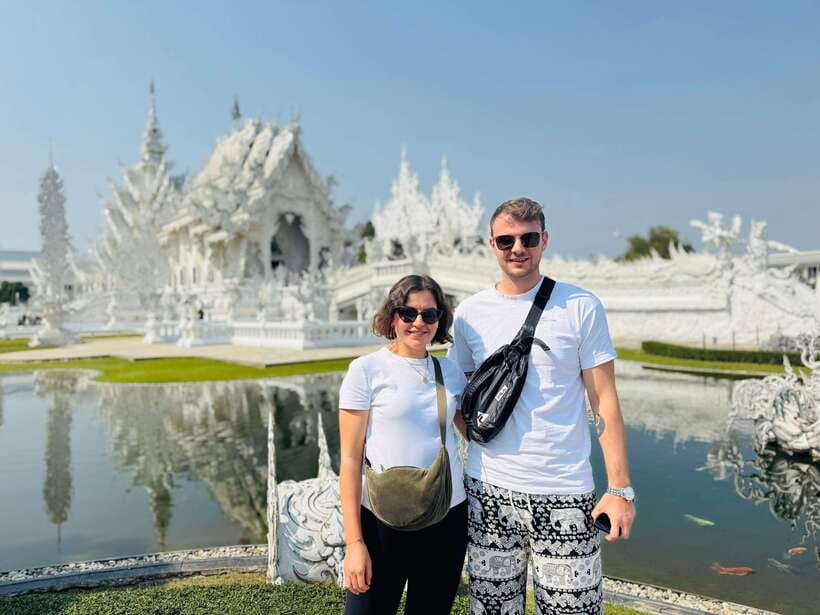
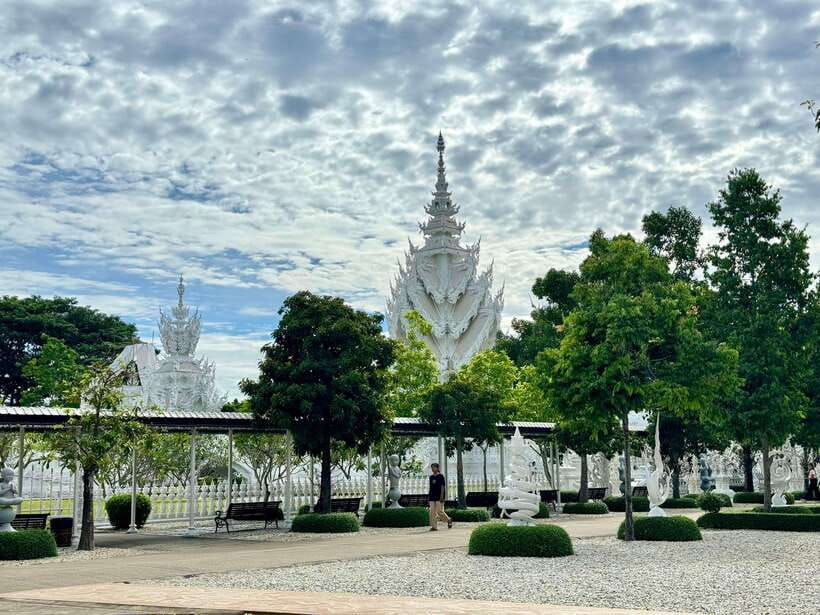
This is the part of Chiang Rai that most people come for, and it’s easy to see why. The Wat Rong Khun (White Temple) and Wat Rong Sue Ten (Blue Temple) aren’t just pretty backdrops. They’re architectural “statements,” the kind that reward walking slowly and taking your time.
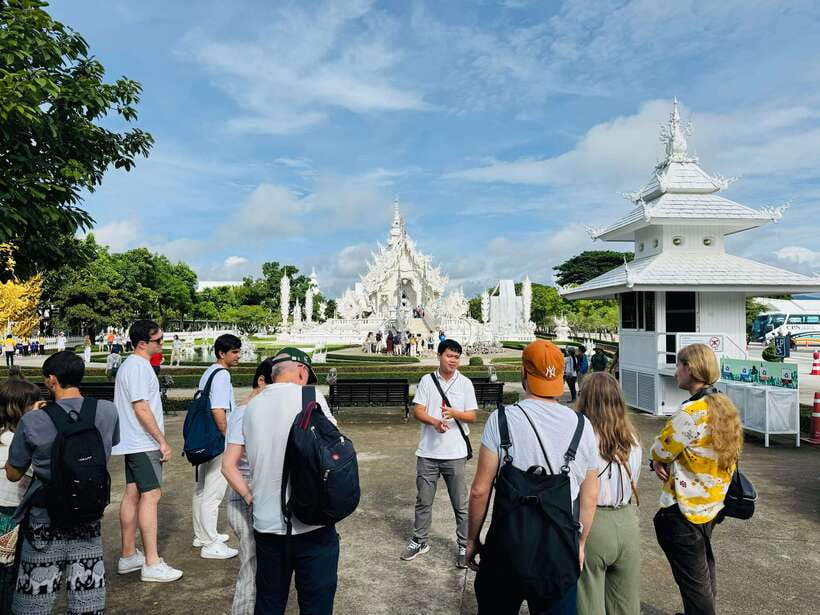
On the White Temple stop, plan for close-up viewing where you’ll want photos at multiple angles. It’s also the kind of place where your guide can help you find good photo spots quickly, so you don’t burn energy wandering.
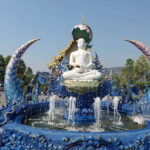
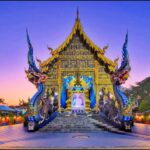
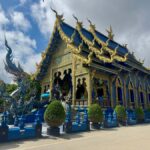
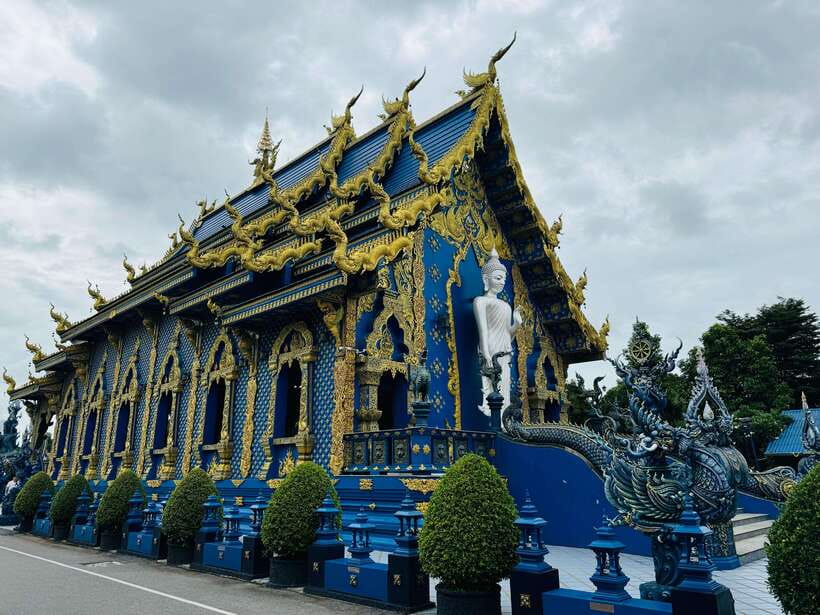
Then comes Wat Rong Sue Ten, the Blue Temple. If the White Temple is all about brightness and detail, the Blue Temple gives a very different mood. You’ll likely notice the color shift right away when you move between them, and it’s a nice way to break up the day visually.
A small but real consideration: these are active sightseeing stops, so bring your sunscreen and don’t wear shoes that hate walking. Comfortable footwear beats style here.
Wat Huay Pla Kang and Wat Pra Kaew: the Sacred Detours Most Days Miss
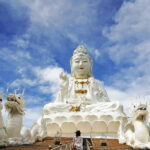
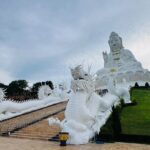
Between the showpiece temples, the itinerary often includes stops like Wat Huay Pla Kang (the Guanyin Lady’s Goddess of Mercy). This is one of those moments where the day feels more like local religious life than a museum tour.
You might also visit Wat Pra Kaew (Emerald Buddha). Even if you’re not the type to chase religious sites, a stop like this can give you context. Chiang Rai’s identity isn’t only about tourist icons. It’s also about everyday reverence and Thai spiritual art, right there in the temple grounds.
These stops are helpful because they keep the day from feeling like a checklist of only the most famous places. They add breathing room and variety in what you’re actually seeing.
Black House Museum and Longneck Karen Village: Culture Stops with Real-World Questions
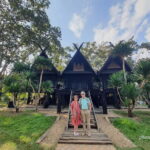
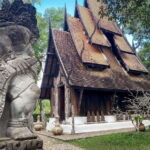
Some of the most memorable parts of Chiang Rai tours are also the ones that require a little thought. Two common cultural stops in this route set are Baan Dam (Black House Museum) and the Longneck Karen Village.
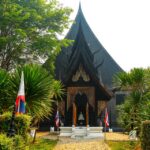
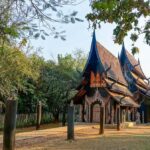
At Baan Dam, you get a chance to see an unusual, dark-themed museum style that’s built around creativity and storytelling. The point here isn’t to treat it like a normal “look, then leave” stop. If you’re curious, it’s the kind of place where your guide’s context helps you read what you’re looking at.
Then there’s the Longneck Karen Village. This is a culturally focused visit, and it’s also one of the stops people sometimes feel conflicted about or simply don’t want to include. The good thing: this tour framework allows you to discuss your preferences. If you decide to skip, the guide can adjust the day so you don’t lose the whole value of being in a private format.
My practical advice: go in with clear expectations. This is a structured visit, not an informal wander. Ask your guide what the stop is meant to show, and then decide based on what you’re comfortable with.
Choui Fong Tea Plantation: a Break That Doesn’t Feel Like a Detour
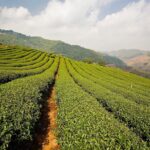
Most full-day Chiang Rai itineraries can turn into a blur of temples. That’s where Choui Fong Tea Plantation helps. You get scenic breaks, plus a chance to taste tea.
The tea stop works well for two reasons. First, it’s a change of pace: fewer crowd-photo scrambles, more time to look around. Second, it adds something local that isn’t just another religious site.
If you’re planning around heat and walking, this is one of the spots where you can reset. You’ll still want sunscreen and water, but you’re not constantly moving between tight, busy interiors.
You can also read our reviews of more private tours in Chiang Rai
Golden Triangle and Mae Khong Views: Where the River Sets the Tone
Then you hit one of Chiang Rai’s signature experiences: the Golden Triangle area. This is built around the dramatic “three countries” geography and the views that come from standing near where borders meet.
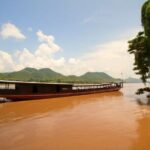
Depending on the route, you may also include a Mae Khong boat trip. If you like sightseeing that feels more like time on the water than time in a queue, the boat piece is a strong add-on. It also helps you experience the river environment rather than only seeing it from land.
This part of the day tends to be photo-heavy. Your guide can help you choose good angles and time your photos so you’re not just shooting into harsh sun. Since the tour is private, you can usually get what you need without holding up a group.
Opium Museum and the Big Buddha by Mae Khong River: history you can talk through
The tour commonly includes the House of Opium / Opium Museum and also a stop with a Big Buddha beside the Mae Khong River. Even if you don’t know much about the region’s past, this is one of those “learn while you look” blocks that makes the day feel more meaningful.
The museum portion is there to explain the history of opium in the region, and your guide’s job is to translate that into something you can actually understand. You don’t need to be an expert. Just go in ready to ask questions—what shaped the region, what changed over time, and what the museum is trying to communicate.
Then the Big Buddha stop acts like a visual reset. It gives you a calmer moment with river views, and it’s a good place to slow down after the heavier subject matter.
If you choose the hills: Doi Tung, Doi Chang Mub, coffee stops, and the Skywalk
If you pick a more highland-leaning route, you’ll likely trade some flat-route temple time for hill viewpoints and gardens.
A typical hill-focused day can include:
- Doi Tung (Royal Villa + Flower Garden) for a more garden-and-view angle
- Doi Chang Mub as another elevated viewpoint stop
- A coffee stop such as Doi Pha Hee (and coffee-shop hopping on some options)
- The Golden Triangle + Mae Khong boat trip as your anchor scenic finale
- Opium Museum
- Wat Pha Ngao (Skywalk) on certain route options
The Skywalk at Wat Pha Ngao is the kind of stop that gives you a dramatic angle on the surroundings. If you like views with a little height, it’s a nice payoff for the driving time.
One more thing to consider with hill routes: you’re still doing a long day. Even with the scenic stops, you’ll be in motion a lot, so plan for walking time and sun exposure.
Timing, transport, and why private pacing matters
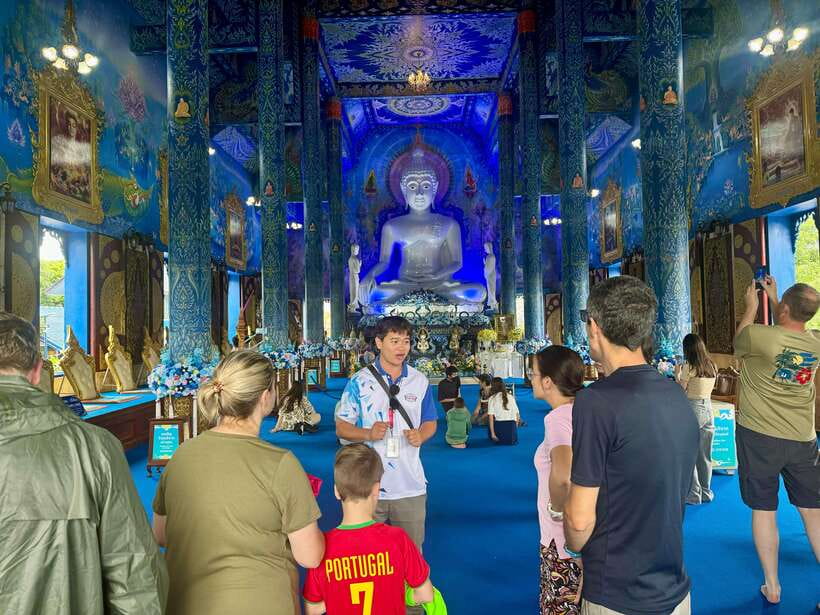
This tour runs for around 10 hours on the main popular routes. That’s long enough that pacing becomes everything. The value of a private setup is that the guide can manage your time so you’re not rushed, and you’re not stuck waiting on others.
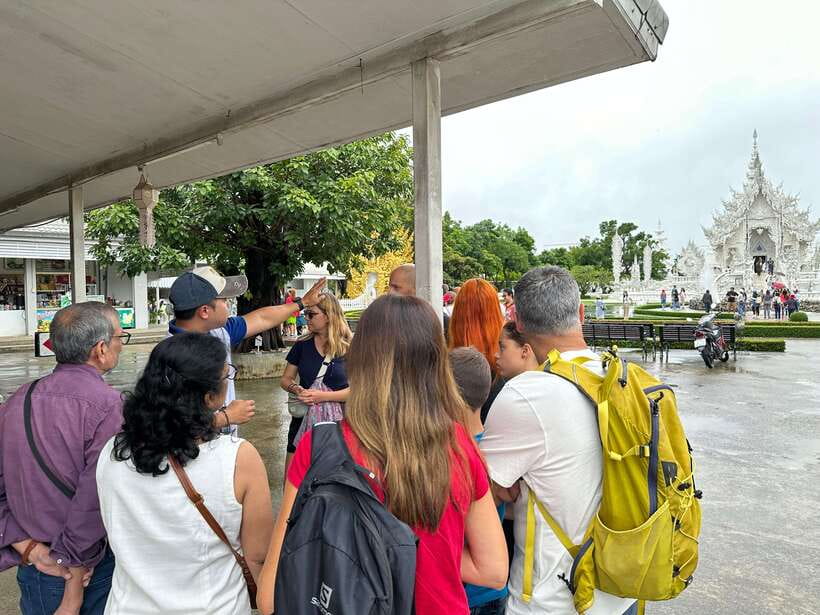
The strongest signal from guide-run days is how often stops are handled with breathing room. You’ll get time to explore, and it’s not only “stand here, take photo, move on.” The guide’s photo help also matters: if you want clear family or couple shots, being able to trust your guide with the camera reduces stress.
Transportation is air-conditioned, and you have hotel pickup and drop-off. For long drives, that alone saves your energy.
Tickets, lunch, and what you should budget
The tour price is listed at $68 per person, but the real cost picture depends on which sites you include. The day usually includes:
- English-speaking guide
- Air-conditioned vehicle transportation
- Drinking water
- Hotel pickup and drop-off
Lunch is not included. You’ll also pay separate admissions for some top stops. For example:
- Wat Rong Khun White Temple: 100 THB per person
- Baan Dam Black House Museum: 80 THB per person
- Longneck Karen Village: 300 THB per person
- House of Opium: 50 THB per person
If you’re budgeting, think of this as base service cost plus site tickets plus lunch. The upside is that private guiding and transport are built around your choices, not a rigid full-day ticket bundle.
What to bring (and what to watch for)
This is a hot-weather region, and your itinerary includes lots of walking and multiple outdoor/photo moments. Bring:
- Comfortable shoes
- Hat and sunscreen
- Camera
- Insect repellent
- Cash
Also, note the basics: smoking is not allowed, and alcohol and drugs are not allowed at the sites.
There are also health fit considerations. This tour is not suitable for wheelchair users and is listed as not suitable for pregnant women, people with back problems, and people with heart problems. It’s also not suitable if you have altitude sickness, and there are weight and age limits listed (over 350 lbs / 159 kg and over 95 years).
The guide factor: why it feels like sightseeing with a friend
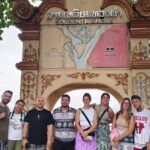
The biggest reason this day tends to land well is the guide relationship. In the case of Bank, you’re getting someone who’s friendly, has excellent English, and knows where to take photos. There’s also a relaxed vibe—you’re not being barked at, and you’re not treated like a number.
Bank’s style also shows up in small decisions. When someone doesn’t want to include the longneck village portion, the day can shift so the schedule still makes sense. That’s what you want from a private tour: flexibility that protects the value of your time.
Should You Book This Chiang Rai Private Customized Tour?
Book it if you want one full day that hits Chiang Rai’s top sights without the stress of planning every turn yourself. The private format is especially worth it if you care about pacing, photo opportunities, and asking questions through an English-speaking guide.
Skip it (or at least rethink your route) if you know you’ll struggle with long walking days, you need wheelchair access, or you’re in a health situation that makes temple steps and uneven areas a problem. Also, if you hate paying extra for admissions and lunch out of pocket, you’ll want to plan that budget up front.
If you like a day that blends art, culture, viewpoints, tea, and a history stop you can understand with a guide, this tour is a strong fit for your Chiang Rai itinerary.
FAQ
How long is the tour?
The main popular routes run for about 10 hours.
What’s included in the price?
You get an English-speaking guide, transportation by air-conditioned vehicle, drinking water, and hotel pickup and drop-off.
Which entrance fees should I expect to pay separately?
Entrance fees are not included for some stops. Examples listed are Wat Rong Khun (100 THB per person), Baan Dam (80 THB per person), Longneck Karen Village (300 THB per person), and the House of Opium (50 THB per person).
Is lunch included?
No. Lunch is not included.
Can I change the plan during the day?
Yes. This tour is customized. If you prefer not to visit a stop (like the longneck village), the guide can adjust the timing to spend more time at other attractions.
What should I bring, and are there rules at the sites?
Bring comfortable shoes, a hat, camera, sunscreen, insect repellent, and cash. Smoking is not allowed, and alcohol and drugs are not allowed at the sites.