REVIEW · CHIANG RAI
Chiang Rai: 7 Major Sightseeing Tour with Thai Buffet Lunch
Book on GetYourGuide →Operated by R U tour and trek · Bookable on GetYourGuide
White temples, blue shrines, and tea views in one day. This Chiang Rai outing strings together the province’s most famous creative sights and meaningful stops, with a Thai buffet lunch included.
What I like most is the mix: Wat Rong Khun and Baan Dam give you two totally different ways artists think about faith and mortality. I also like the pacing for photos and explanations, especially at Wat Rong Suea Ten and the Golden Triangle viewpoints.
One thing to consider: you’ll be on your feet for much of the day, and some stops are not ideal if you have mobility limits or prefer minimal walking. Bring a hat and comfortable shoes, or the heat will tell you your plan needs work.
In This Review
- Key Things That Make This Chiang Rai Tour Work
- First Stops: Wat Rong Khun and the Mirror-Glitter Effect
- Wat Rong Suea Ten: Blue Hues, Gold Accents, and a Tiger Legend
- The Black House (Baan Dam): Art That Talks About Death Without Saying It Loud
- Long Neck Karen Village: Culture, Choice, and Practical How-To’s
- Thai Buffet Lunch: A Simple Break Before the Afternoon Sightseeing
- Choui Fong Tea Plantation: A Calm Walk, Then Tea and Dessert
- Golden Triangle Viewpoint: Where Three Countries Meet
- House of Opium Museum: Small Museum, Heavy Topic
- Price and Value: What $43 Really Buys You
- Logistics That Affect Your Comfort (More Than You Think)
- Who This Tour Suits Best
- Should You Book This Chiang Rai Tour?
- FAQ
- What is the duration of this Chiang Rai tour?
- How much does the tour cost?
- Is lunch included?
- What’s included in the price?
- What admission fees are not included?
- How large is the group?
- Where does pickup happen?
- What time should I be ready?
- What should I bring and wear?
Key Things That Make This Chiang Rai Tour Work
- White Temple at Wat Rong Khun (mirrors and pop-art style murals): you get modern Buddhist design that literally sparkles in daylight.
- Blue Temple, Suea Ten (Dancing Tiger): you’ll learn the legend behind the name while enjoying a calm interior with a central white Buddha.
- Black House (Baan Dam) by Thawan Duchanee: art that confronts death and balance, using animal bones, skins, and horns in the buildings.
- Long Neck Karen Village visit (weaving + brass ring tradition): you can watch traditional weaving and shop for handcrafted souvenirs.
- Choui Fong Tea Plantation tea tasting: you walk through tea fields, then sip brewed tea and eat tea-based desserts.
- Golden Triangle + House of Opium Museum: you stand at Thailand, Laos, and Myanmar’s meeting point and then face the opium trade’s history up close.
First Stops: Wat Rong Khun and the Mirror-Glitter Effect
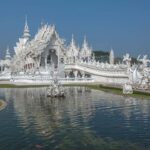
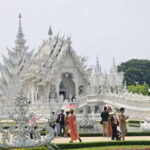
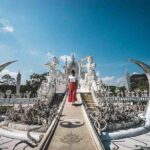
You start with Wat Rong Khun, often called the White Temple. The first thing you notice is how new-school and theatrical it feels. Chalermchai Kositpipat’s work is built to shimmer—mirrored glass catches the sun and makes the temple look like it’s lit from within.
Inside, the murals blend traditional Buddhist themes with modern references. That contrast is part of the point: it’s not a museum-piece copy of old styles. It’s a living creative statement about purity and what spirituality looks like today. If you like art that feels a little weird—in a good way—this is where you’ll grin a lot.
Practical tip: go in with an eye for details. From a distance the temple reads as pure white. Up close you’ll start spotting intricate patterns and the smaller design choices that make the place feel busy even when everything is quiet.
A few more Chiang Rai tours and experiences worth a look

Wat Rong Suea Ten: Blue Hues, Gold Accents, and a Tiger Legend
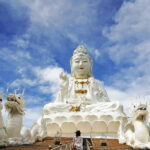
After the White Temple, you head to Wat Rong Suea Ten, sometimes described as the Blue Temple. The color isn’t subtle. Rich blues get accented with gold, and the overall design is a modern interpretation of Lanna architecture.
The inside is calmer than the outside. A serene white Buddha statue becomes the visual center, surrounded by carefully detailed murals. If you want context, the guide explanation helps connect the art to local storytelling—especially the legend that ties the temple’s name, Suea Ten (Dancing Tiger), to tigers once roaming the area.
Photo advice: the lighting changes how the blues look. If your camera struggles with glare, step back and shoot from slightly different angles rather than relying on one spot.
The Black House (Baan Dam): Art That Talks About Death Without Saying It Loud
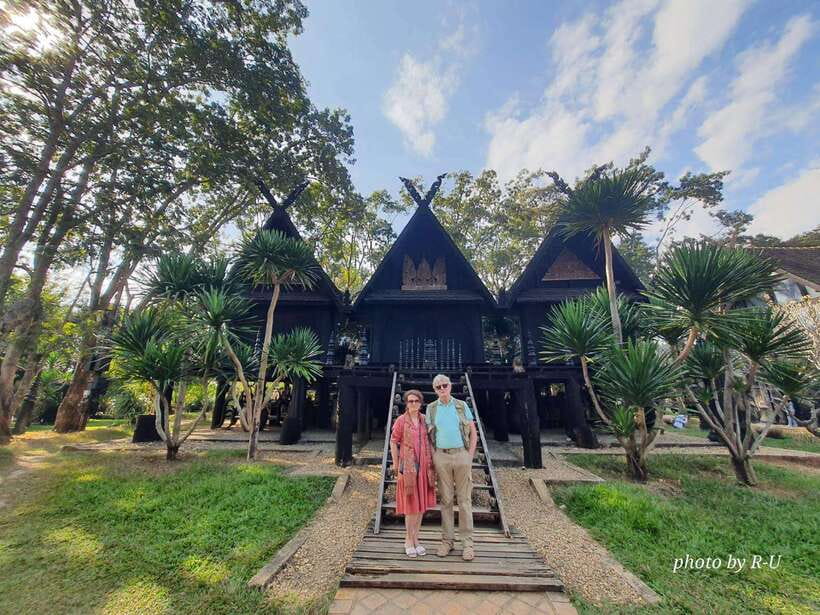
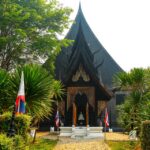
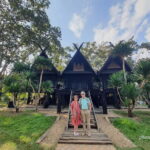
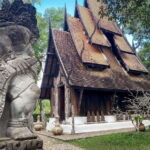
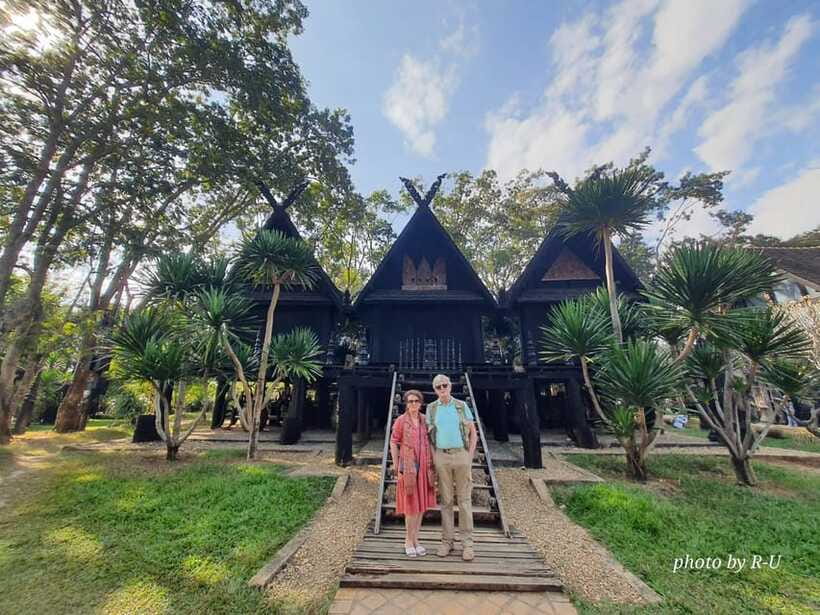
Next comes Baan Dam, an art complex created by Thawan Duchanee. This isn’t a temple you visit to feel “inspired and done.” It’s a place that pushes you to think. The theme is darker—life and death, and the balance between them.
Some buildings are decorated with animal bones, skins, and horns, reflecting local beliefs about mortality and existence. Whether you love it or find it intense, it’s memorable because it doesn’t try to comfort you. Instead, it asks you to look directly at human fears and questions.
This stop is a good reality check after the bright, polished look of the White Temple. If you’ve been treating art as decoration on your trip, this is where your brain switches to deeper mode—still with time to breathe and look at the details calmly.
Long Neck Karen Village: Culture, Choice, and Practical How-To’s
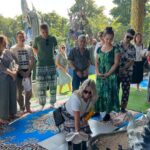
Then you’ll visit a traditional Long Neck Karen village. The signature brass rings around women’s necks are worn as a symbol of beauty and cultural identity, creating the illusion of elongated necks.
At the village, you’ll learn about everyday life—how families live, what skills matter, and what traditions get passed down. You can also observe weaving skills, and you’ll have chances to support local-made souvenirs.
A balanced note for your planning: this is a cultural visit with rules around respect. Dress modestly (shoulders and knees covered is a good rule of thumb across religious and cultural sites), and keep your interactions considerate, especially when photography is involved.
Practical tip: bring cash if you want to buy woven items. The tour includes shopping time, but you’ll be happiest if you’re ready when you see something you genuinely like.
Thai Buffet Lunch: A Simple Break Before the Afternoon Sightseeing
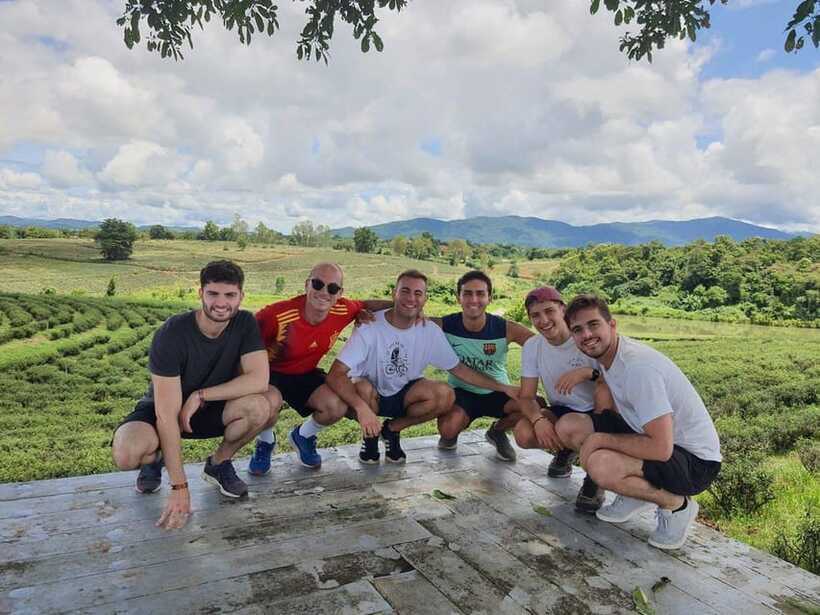
Lunch is included, and it’s a Thai buffet. This is one of the smartest parts of a full-day program like this: it keeps you from chasing food between stops while you’re still adjusting to the pace.
Try to eat before you’re starving. The day includes multiple walking segments and photo stops, and if you leave lunch too late, the heat can make the rest of the day feel longer than it should.
If you’re sensitive to spice, Thai buffet food can vary. You can usually find milder options, but it helps to ask or start with a small portion.
A few more Chiang Rai tours and experiences worth a look
Choui Fong Tea Plantation: A Calm Walk, Then Tea and Dessert
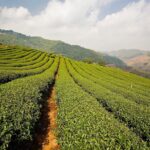
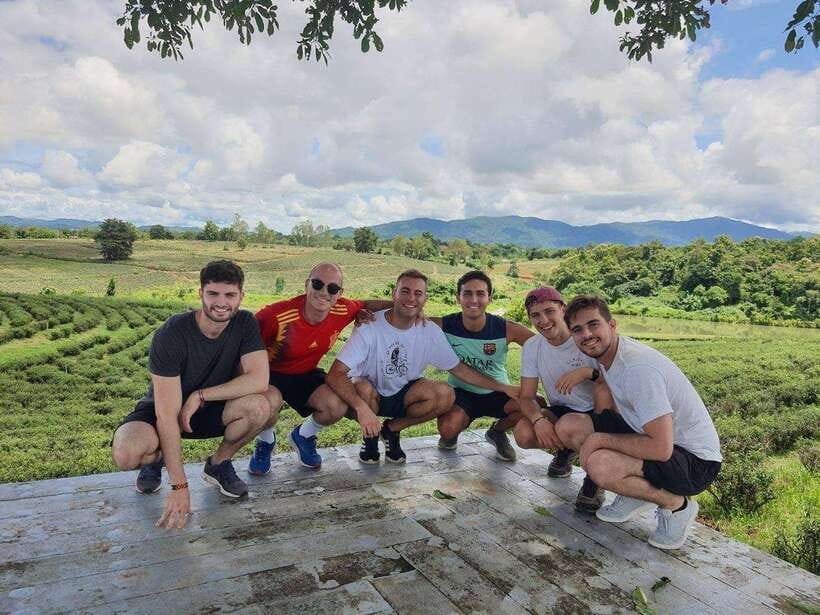
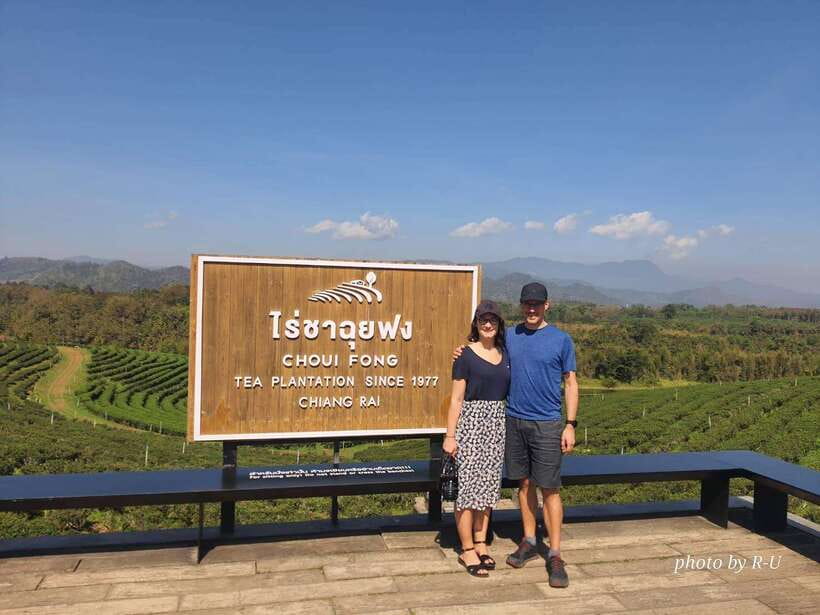
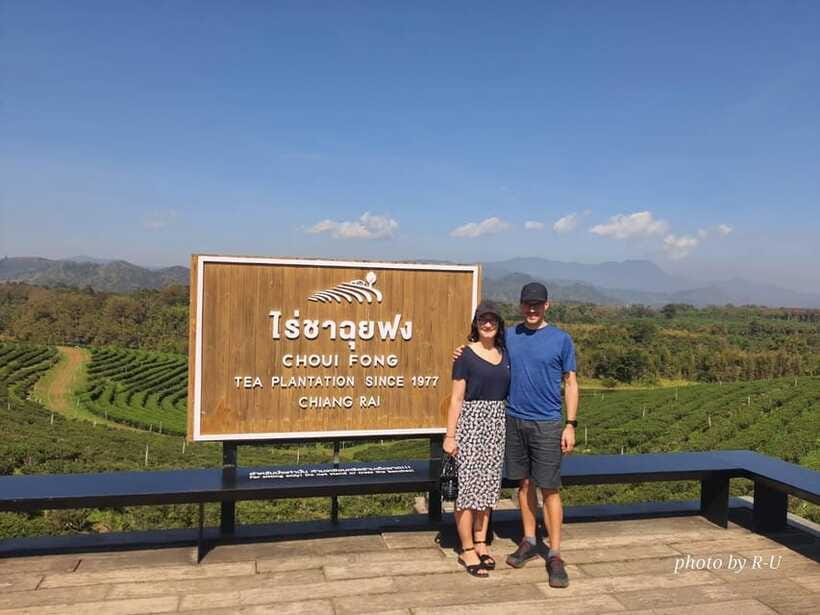
After lunch, you head to Choui Fong Tea Plantation. The setting is rolling green hills and neat tea fields. Even if you’re not a tea nerd, the walk through the fields is relaxing because it slows the pace down.
You’ll get explanations about cultivation—how tea is grown and processed—then you get to taste tea. The stop includes freshly brewed tea, plus tea-based desserts at the café.
What to do with this stop: treat it like a reset. Put your phone down for a few minutes and actually look at the rows and shapes of the fields. Then take your tasting seriously. Tea flavor can be subtle, so it’s worth paying attention instead of rushing.
Golden Triangle Viewpoint: Where Three Countries Meet
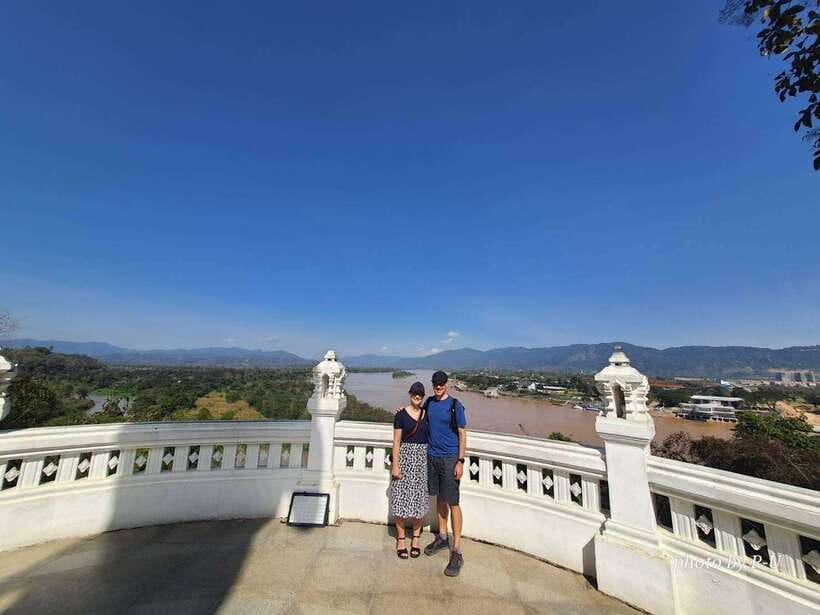
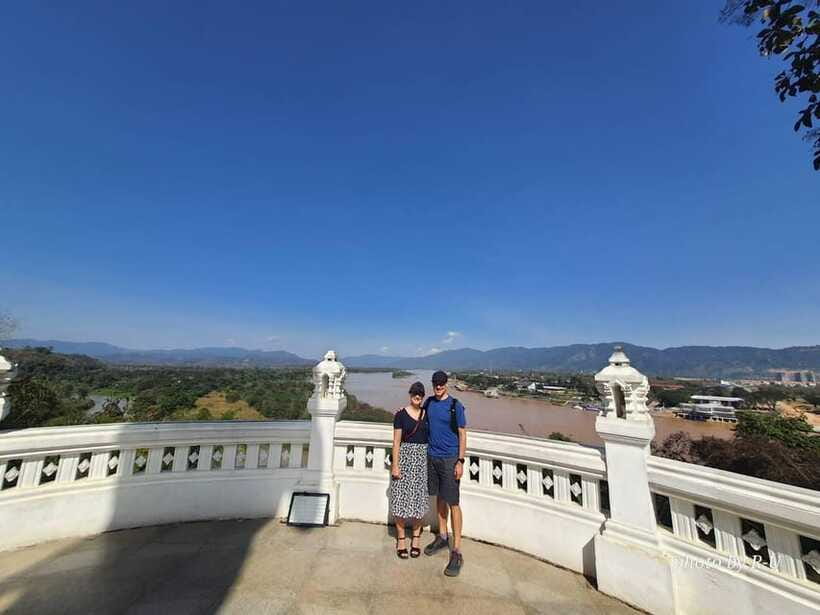
Next is the Golden Triangle area, the meeting point of Thailand, Laos, and Myanmar. You’ll stand at a historic site that’s tied to the opium trade, but the area today is mostly about views and learning—especially the look toward the Mekong and Ruak rivers.
The point here is perspective. This isn’t just a scenic stop. The guide connects what the region once was to how it looks now, with a calmer feel and a stronger focus on what changed.
Photo advice: early afternoon sun can be harsh. If you’re chasing river views, try different angles and use your camera’s exposure settings if you have them. And if you’re tempted to stand too close to edges for a perfect shot—don’t. Take the safe angle and move on.
House of Opium Museum: Small Museum, Heavy Topic
Finally, you visit the House of Opium Museum near the Golden Triangle. This museum is smaller than the headline sites, but the topic is big and direct: the history of the opium trade and how it affected local communities.
You’ll see opium pipes and tools, and you’ll get explanations of cultivation and smuggling processes. It’s a dark chapter, and the exhibits are designed to educate rather than entertain.
If you’re the type who likes to understand context behind place names, this is the stop that turns scenery into meaning. It also helps connect your earlier Golden Triangle learning to something tangible you can point to and remember.
Price and Value: What $43 Really Buys You
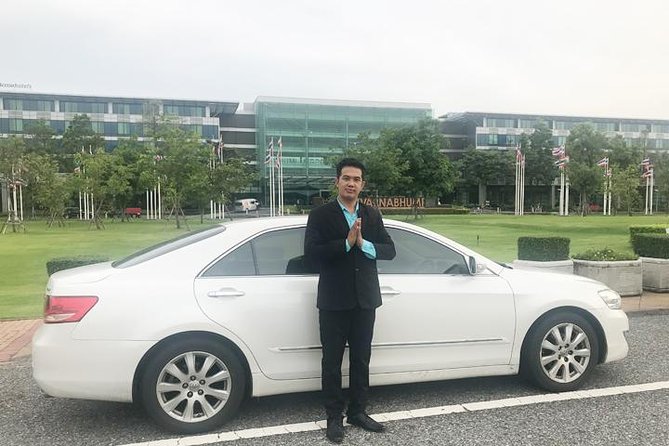
At around $43 per person for a 1-day tour, you’re paying for a lot of structure: pickup and drop-off, a small group with an English-speaking guide, air-conditioned transport, water, insurance, and lunch with a Thai buffet.
The main extra cost is admissions. You’ll pay on-site for:
- White Temple: 100 Baht
- Black House: 80 Baht
- Long Neck Karen Village: 300 Baht
- Opium Museum: 50 Baht
So think of the base price as the logistics + guide time package. The admissions are your variable cost depending on what you value and how long you spend photographing and reading details inside.
If you’re staying in downtown Chiang Rai and you want several major sights in one day, this is the kind of price that makes sense. If you prefer total freedom and don’t care about guided explanations, you might save money by going alone—though you’d also lose the smooth route and the context that helps each stop click.
Logistics That Affect Your Comfort (More Than You Think)
This is a full-day route, and the order matters because the light changes how the temples and viewpoints look.
You’ll generally start in the morning, with pickup from your hotel lobby about 8:00–8:30 AM. The tour runs about 1 day, and you’ll have breaks at multiple stops plus free time for photos and shopping.
Because the group is capped at 9 people, you’ll usually feel like you’re not fighting a crowd for attention. Still, small group doesn’t mean low effort. You should plan on comfortable walking shoes and sun protection—hat and sunscreen are not optional-feeling items here.
Also note: this tour isn’t suitable for wheelchair users or people with mobility impairments, and it’s not designed for babies under 1 year or people over 95 years. If mobility is a concern, it’s worth choosing a shorter, less walking-heavy option in Chiang Rai.
Who This Tour Suits Best
This day trip is a great fit if you want:
- Major Chiang Rai sights in one organized day
- Strong guide explanations in English
- A mix of art, culture, and history—not just temple hopping
It’s especially good for people who like contrasts: bright modern Buddhist art followed by the Black House’s darker themes, then tea fields for a calmer finish before learning about opium’s legacy.
If you hate schedules, have very limited walking tolerance, or want to linger for hours in one place, you might find the day too packed. But if you like variety, you’ll likely feel satisfied by the end.
Should You Book This Chiang Rai Tour?
If you’re visiting Chiang Rai for a short time and want the big hits—White Temple, Blue Temple, Black House, Golden Triangle, tea plantation, Karen village, and the opium museum—this is a strong value. The included transport, lunch, English guide, and small group size keep the day smooth enough that you can focus on seeing and learning.
I’d book it if you enjoy art that makes you think, landscapes that feel peaceful for photos, and history that adds real context. I’d hold off if you want a slow, relaxed day with minimal walking, or if mobility limits might make multiple stops uncomfortable.
If you do book: pack for the heat, bring modest clothing for cultural sites, and plan to pay admissions without surprise. Then enjoy the fact that one day can cover so many different sides of Chiang Rai.
FAQ
What is the duration of this Chiang Rai tour?
The tour lasts 1 day.
How much does the tour cost?
The price is $43 per person.
Is lunch included?
Yes. Lunch is provided as a Thai buffet.
What’s included in the price?
Included are an English-speaking guide, air-conditioned van or car transport, hotel pickup and drop-off, Thai buffet lunch, insurance, and drinking water.
What admission fees are not included?
Admission fees not included are: White Temple 100 Baht per person, Black House Museum 80 Baht per person, Long Neck Karen Village 300 Baht per person, and House of Opium Museum 50 Baht per person.
How large is the group?
The group is limited to 9 participants.
Where does pickup happen?
Pickup is from the hotel lobby. A pickup service is available from within 3 km of downtown Chiang Rai.
What time should I be ready?
You’ll wait in your hotel lobby between 8:00 and 8:30 AM.
What should I bring and wear?
Bring a passport or ID card, comfortable shoes, hat, camera, sunscreen, water, and weather-appropriate clothing. Dress respectfully for religious sites, with shoulders and knees covered.