REVIEW · BANGKOK
Bridge on the River Kwai and Thailand-Burma Railway Guided Tour
Book on Viator →Operated by I Asia Thailand · Bookable on Viator
A dark rail story, told in motion. I like how this day trip strings together the Bridge on the River Kwai with the surrounding POW sites, plus boat and train rides you can actually feel. The hotel pickup and drop-off in central Bangkok makes the logistics simple for a long travel day.
What I really love is the guided commentary that connects the bridge, the camps, and the railroad work, with guides like Oom and Rach getting praised for making details land. You also get a lunch buffet and entrance fees handled, so you’re not constantly calculating what’s still left to pay.
The main drawback to plan for is timing. Even though it’s listed around 11 hours, this is a long Bangkok-to-Kanchanaburi round-trip, and road time plus waiting can stretch the day—so build in a bigger buffer than you’d expect.
In This Review
- Key things to know before you go
- A morning-start day trip that’s actually about the journey
- Bangkok pickup, traffic math, and what to expect from the van
- Khwae Yai River: the long-tailed speedboat moment
- Walking the Bridge on the River Kwai: movie fame vs. wartime reality
- Kanchanaburi War Cemetery: where context turns real
- JEATH War Museum: letters, photos, and the hardest part of the story
- Death Railway train ride: countryside views plus the real-world noise level
- Lunch buffet and small comfort fixes that matter at 7:00 am
- Private vs. shared: who should choose which format
- Price and value: what the $94.53 actually covers
- Practical packing list (so the day stays enjoyable)
- Should you book the Bridge on the River Kwai guided tour from Bangkok?
- FAQ
- What time does the tour start in Bangkok?
- How long should I plan for from hotel pickup to drop-off?
- What’s included in the tour price?
- Is there an extra fee for the Death Railway train ride?
- Do you offer private tours or is it shared?
- Where does hotel pickup happen?
- Can I cancel for a full refund?
Key things to know before you go
- Hotel pickup in central Bangkok keeps the start of the day from feeling like a scavenger hunt
- Speedboat + Death Railway train ride are built into the day, not optional add-ons
- POW-focused stops (cemetery and JEATH War Museum) give context beyond the bridge and movie
- Train seat fee is extra (300 THB), even though the train ride itself is included
- Private upgrade available if you want less group juggling and more attention
A morning-start day trip that’s actually about the journey
This isn’t a quick side trip. You leave Bangkok early, then spend most of the day traveling between Kanchanaburi area landmarks tied to the Thailand–Burma Railway. The payoff is that you experience the story as a route—river to bridge to camps to train.
If you’re coming for the famous bridge alone, you’ll still enjoy the walk and photos. But the stronger reason to go is how the day links forced labor, POW life, and how the rail line shaped the area in World War II.
The most practical mindset: go in expecting a long day with heat, dust, and waiting moments. When you do that, the later train ride feels like a reward rather than a rush.
You can also read our reviews of more guided tours in Bangkok
Bangkok pickup, traffic math, and what to expect from the van
Pickup runs from central Bangkok hotels, and it can happen 30–60 minutes before the stated start time depending on your location. The day starts at 7:00 am, so plan for a slightly painful early wake-up.
Road time matters because Kanchanaburi is about 130 km from Bangkok. Some people report the day running closer to 12 hours or even longer when traffic stacks up, so I’d plan to be out all day and not schedule anything important that evening.
Vehicles are air-conditioned, but here’s the practical catch: for the A/C to work properly, the windows need to stay closed. If you’re the type who likes fresh air, you may have to trade that habit for comfort.
Khwae Yai River: the long-tailed speedboat moment
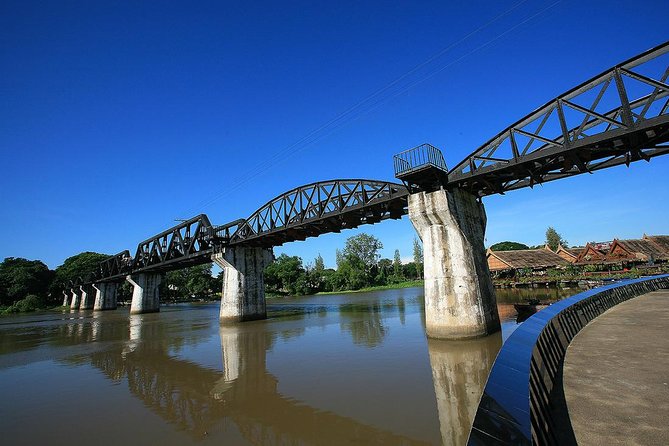
Your river portion is on the Khwae Yai River (also called the Si Sawat). This is where you feel the terrain the railroad had to conquer, and where the day shifts from van time to something more moving.
The tour includes a long-tailed speedboat ride, which many people treat as a highlight because it adds variety after museum and road stops. You also get a change of pace, especially if you’ve been sitting on the drive out.
A small consideration: boat docks and landing spots can be basic. If you’re sensitive to rough surfaces or short, jolting transitions between land and boat, keep that in mind and wear sturdy shoes.
Walking the Bridge on the River Kwai: movie fame vs. wartime reality
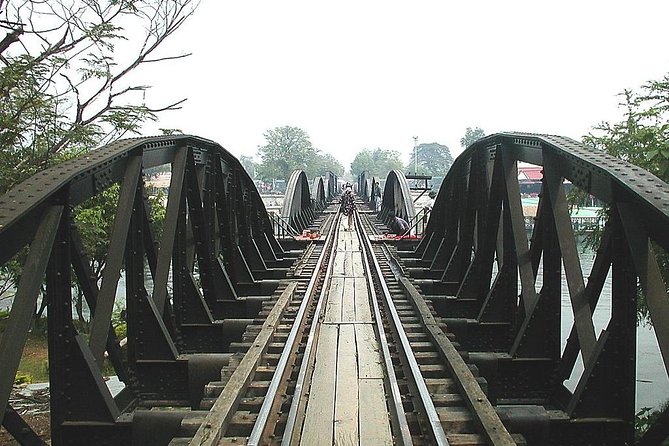
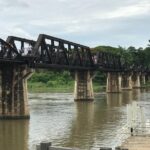
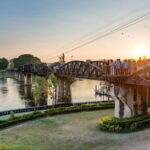
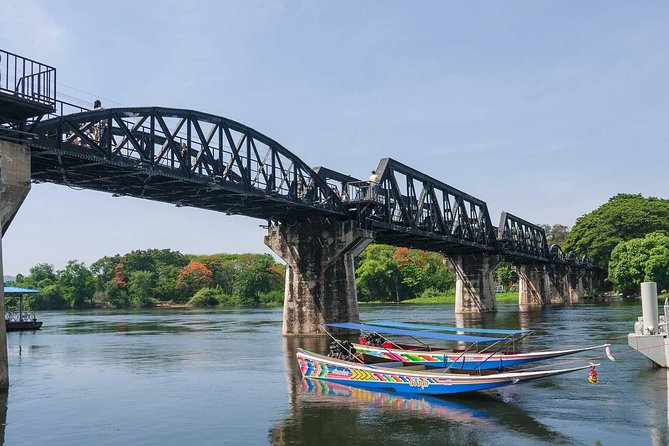
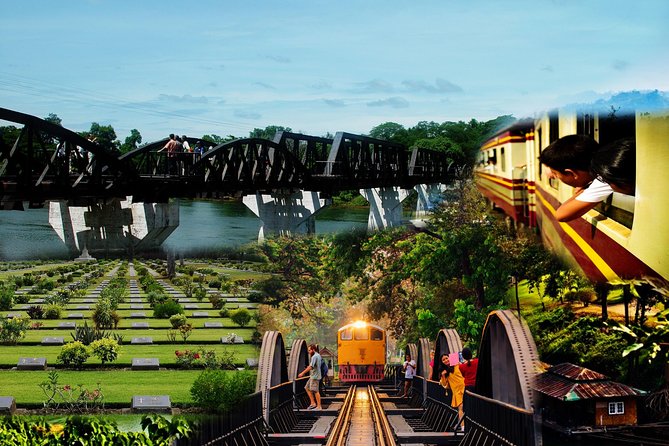
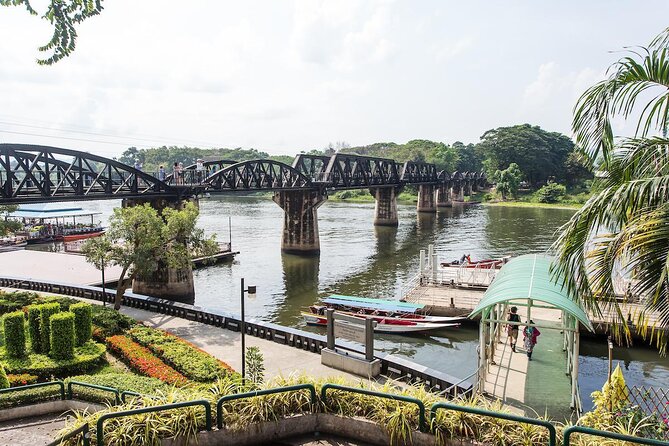
The bridge stop is the headline: the Bridge on the River Kwai connects to the infamous Death Railway, built during World War II (1942–1943). Even if you’ve seen the book or film, the site works best when you treat it as a wartime structure—not just set dressing.
You’ll walk across the bridge area, and the guide’s role here is big. The best tours are the ones that help you connect what you’re seeing to forced labor, transportation, and the POW experience around the line.
One practical tip: the bridge area can be sun-heavy. Bring a hat, and plan for bottled water. If you’re prone to getting warm, a light fan can also help a lot on this route.
Kanchanaburi War Cemetery: where context turns real
The Kanchanaburi War Cemetery is a major POW cemetery connected to those who died after Japanese imprisonment while building the Burma Railway. It’s positioned on the main road through town, Saeng Chuto Road, so it’s not tucked away—it’s meant to be found.
This stop is short in timed minutes, but it’s not a “quick look” kind of place. The value here is that you get grounding: the bridge and train are tied to people who didn’t come home.
If you want to get something out of the short visit, slow down. Look for names, read what you can without rushing, and let the guide add the historical pieces without you trying to do everything at once.


JEATH War Museum: letters, photos, and the hardest part of the story
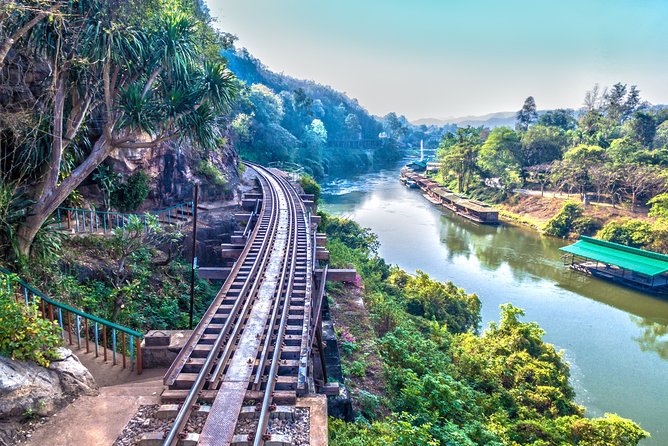
Next up is the JEATH War Museum, a small museum opened in 1977 that focuses heavily on POW ordeals connected to the Death Railway. Expect original materials like photos, letters, and drawings, meant to show harsh conditions and daily life rather than just big battles.
This is one of those stops where the “right” pace differs by person. Some people want more time; others feel it’s too much. Since the museum isn’t included as a long lingering block, it helps to mentally prepare that the time is limited.
I also suggest keeping your expectations straight: this is not a light, hands-on museum. It’s a reminder of suffering, so if you’re visiting expecting only sightseeing, you might leave feeling heavy.
A practical angle: since it can be emotionally intense, it’s smart to bring patience. If you’re easily overwhelmed, give yourself a quick break after the museum before you head back into the more scenic parts of the day.
Death Railway train ride: countryside views plus the real-world noise level
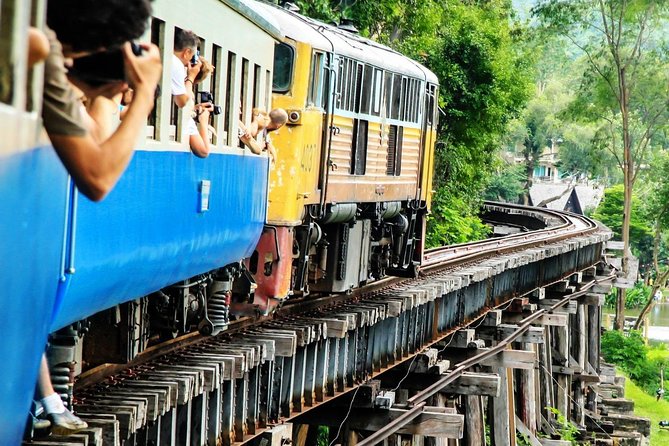
One of the biggest reasons to book is the train ride along the Death Railway. The tour includes the ride itself, but there’s an extra 300 THB seat fee you pay locally for a guaranteed seat.
Plan for cash handling on the spot: that fee is paid at the train station in cash to the guide. If you’re the type who hates surprises, it’s worth setting aside the right amount before you arrive.
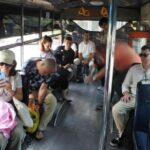
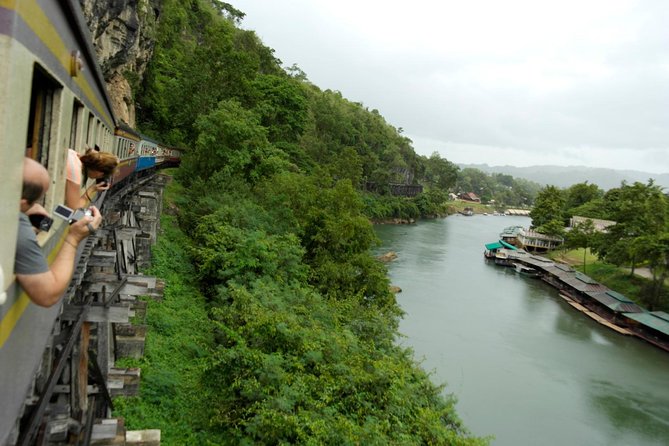
On the comfort side, the train is often described as a standout because you see more of the countryside and travel corridor than you get from the road. On the sound side, the ride can be loud—especially if windows are open. If you’re bothered by noise, consider bringing ear protection.
Lunch buffet and small comfort fixes that matter at 7:00 am
Lunch is included as a buffet. Many people like the meal as a reset point because it comes in the middle of a very long day. One practical note from real-world experience: bathroom facilities on long tours can be inconsistent.
Bring a small pack with tissues/toilet paper, just in case. One handy detail: some rest stops rely on handheld bidet sprayers, which means you’ll want your own supplies if you prefer conventional paper.
Also bring water and plan for sun. Even if you think you’re fine, your body often disagrees once you’ve had hours of travel and sitting in heat.
Private vs. shared: who should choose which format
This tour can be shared with other passengers or upgraded to a private experience with its own vehicle and guide. If you value quiet, slower pacing, or you just don’t want to wait on group movements, private tends to feel less stressful.
In the shared format, the group size is capped at 15 travelers, which helps. It’s small enough that a good guide can manage time between stops without the chaos of a huge coach.
Guides can make a visible difference here. Names that come up often include Oom and Rach, with other guide references like King and driver pairings including Sompol and Jim. When the guide’s pacing is strong, you spend more time at the meaningful parts and less time feeling like you’re just getting moved around.
Price and value: what the $94.53 actually covers
At $94.53 per person, the price can feel like a bargain compared to doing these pieces separately—because the tour wraps together multiple types of transport and key POW sites.
What’s typically bundled:
- Hotel pickup and drop-off in central Bangkok
- Air-conditioned vehicle transport
- Long-tailed speedboat ride
- Death Railway train ride, with the 300 THB seat fee extra
- Lunch buffet
- All entrance fees
- Professional Thai local guide
What’s extra:
- The 300 THB seat fee for the train, paid locally in cash to the guide
So the real value question is simple: does the idea of a single guided day trip fit your style? If you want history plus multiple transport modes, this arrangement usually makes sense. If you prefer total flexibility and independent pacing, you might feel boxed in by the schedule.
Practical packing list (so the day stays enjoyable)
If you want the day to go smoothly, pack like this:
- Hat or cap for sun
- Water bottle (you’ll appreciate it)
- Small fan or cooling item (heat is real on this route)
- Ear protection for the train if you’re sensitive to loud sound
- Tissues/toilet paper for rest stops
- Comfortable shoes for walking across the bridge and museum areas
Also, keep your “patience budget” topped up. The day includes travel time both ways, and sometimes time allocation can feel tight—especially if traffic changes the plan.
Should you book the Bridge on the River Kwai guided tour from Bangkok?
If you want a structured way to see the Bridge on the River Kwai plus the surrounding POW landmarks, this tour is a solid pick. The combination of river ride, bridge walk, cemetery visit, museum stop, and the Death Railway train ride is exactly the kind of route experience that turns famous history into something more grounded.
I’d book if:
- you like guided context that connects sites into one story
- you’re okay with a very long day starting at 7:00 am
- you want transport and entrance fees handled for you
I’d think twice if:
- you hate waiting in vehicles for hours
- you’re sensitive to intense historical content
- you’re trying to squeeze Bangkok activities later that evening with no buffer
Go in prepared for heat and time on the road, and you’ll get a moving, route-based look at one of the most haunting rail stories of the 20th century.
FAQ
What time does the tour start in Bangkok?
The tour start time is 7:00 am.
How long should I plan for from hotel pickup to drop-off?
It’s listed at about 11 hours, but road time can vary with traffic and conditions, so plan for a longer day buffer.
What’s included in the tour price?
Included are hotel pickup and drop-off (centrally located hotels in Bangkok), air-conditioned transport, long-tailed speedboat ride, train ride along the Death Railway, lunch buffet, professional Thai local guide, and entrance fees.
Is there an extra fee for the Death Railway train ride?
Yes. There’s a 300 THB seat fee per person for a guaranteed seat, paid locally in cash to the guide at the train station.
Do you offer private tours or is it shared?
You can do it as a shared tour or upgrade to a private experience with your own vehicle and guide.
Where does hotel pickup happen?
Pickup is available from most central Bangkok hotels. You’ll need to provide your hotel details at booking, or the reservation may be canceled.
Can I cancel for a full refund?
Yes. You can cancel for a full refund if you cancel at least 24 hours before the experience’s start time.