REVIEW · BANGKOK
Bangkok: Street Food Tour in China town
Book on GetYourGuide →Operated by EM JOURNEY CO.,LTD · Bookable on GetYourGuide
A night with Wat Arun and Chinatown food can feel like two trips in one. This tour strings them together with a ferry ride, a golden hour photo stop, and a tuk-tuk route that keeps the energy up. You’ll finish full, smiling, and with a Bangkok rhythm you can’t get from a quick guidebook walk.
Still, it’s a lot of walking and it’s not a fit for everyone—no wheelchair access, and it’s not set up for vegans, vegetarians, or people with food allergies.
What I love most is the mix of big sights and small bites: you get a sunset view of Wat Arun, then you hop around Chinatown to taste lots of street food. I also like that the group is limited to 9 and led by a licensed English-speaking guide—guides like Annie and Peachii are praised for being patient with photos and pushing you toward the best stalls. The main drawback to consider is pace and dietary limits, so if you’re sensitive to walking or food restrictions, this may feel stressful instead of fun.
In This Review
- Key things that make this tour worth your evening
- From Saphan Taksin to the River: the smart way to start at 5:30 PM
- Wat Arun at sunset: why this timing is the whole point
- The tuk-tuk stretch: night views without the hassle of self-planning
- Chinatown street food: how the tastings work in real life
- On-foot time: what you’re really paying for after the food starts
- Food, drinks, and the dietary reality check
- Price and value: what $69 buys you (and what it doesn’t)
- Who should book this Bangkok Chinatown + Wat Arun tour?
- Guides matter: why Annie and Peachii came up for a reason
- Final decision: should you book it?
- FAQ
- What time does the tour start?
- How long is the tour?
- What transportation is included?
- What food and drinks are included?
- Where does the tour end?
- Is the tour suitable for vegans, vegetarians, or people with food allergies?
Key things that make this tour worth your evening
- Wat Arun at sunset photo stop: you’ll time it for the temple’s glow over the river.
- Ferry crossing + boat time: a simple start that helps you feel you’re actually on Bangkok time.
- Tuk-tuk night sights: you pass major landmarks like the Grand Palace and Giant Swing on the ride.
- Chinatown tasting time: lots of snack stops (including dessert) with a guide steering the order.
- Small group focus (up to 9): easier conversations, fewer bottlenecks at crowded stalls.
- Non-alcoholic drinks included + water provided: you’ll stay hydrated while the food keeps coming.
From Saphan Taksin to the River: the smart way to start at 5:30 PM
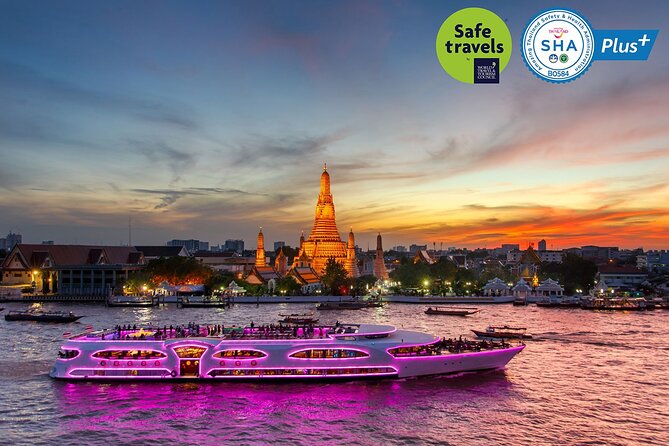
This is a classic Bangkok setup: you meet at Sathorn Pier (by BTS Saphan Taksin, exit 2) and then head out by ferry for an easy first act of the evening. The timing matters. At 5:30 PM you’re in that sweet spot where the city is shifting gears—less heat, more lights, and enough daylight to still catch sunset.
That early river start also does something subtle. It breaks the night into two moods right away: a riverside, temple-focused start, then a Chinatown-focused food sprint later. If you only do temples or only do street food, you miss the way Bangkok changes its mood hour by hour.
One practical note: you’ll want comfortable shoes. Even if the walking parts don’t sound extreme on paper, Chinatown floors, curb steps, and tight stall spaces add up when you’re moving continuously.
You can also read our reviews of more food & drink experiences in Bangkok
Wat Arun at sunset: why this timing is the whole point
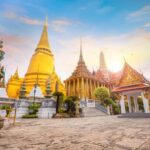
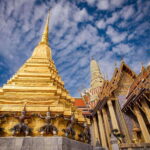
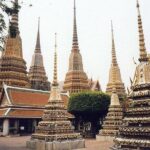
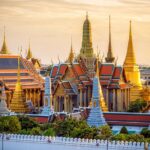
Wat Arun is famous for a reason, but the timing is what turns it into a memory. You’ll get a photo stop and walk timed for sunset, with a short window to watch the temple’s look change as light drops over the river. The spire begins to look almost unreal as the sky darkens and the golden tones soften into nighttime color.
This stop is also practical. You’re not just rushing past a landmark from a bus seat. You’re on foot and in place long enough to get photos from different angles—exactly what matters for a temple like this, where your view changes quickly as you move.
If you like taking photos, pay attention to the group flow and listen to your guide. In the feedback, guides like Annie are specifically praised for being patient with the time spent getting shots. That means you can focus on composition instead of constantly feeling like you’re slowing the whole group down.
The tuk-tuk stretch: night views without the hassle of self-planning
After Wat Arun, you’ll hop into a tuk-tuk ride that keeps the night moving. This isn’t just transportation. It’s your “see the city” segment—small enough to feel fun, and fast enough to keep you from losing time while the lights come on.
On the ride, you’ll pass major landmarks including the Grand Palace and the Giant Swing. Even if you won’t stop at each one, you’re getting a night perspective that you can’t recreate from daytime photos. The streets look different after sunset: signs, reflections, and motion blur make Bangkok feel cinematic.
The tuk-tuk also helps you feel the contrast between zones. The temple area has a calmer rhythm, then tuk-tuk motion nudges you back toward crowded streets. That matters because when you reach Chinatown, you’ll be mentally ready for the sensory overload.
Chinatown street food: how the tastings work in real life
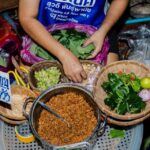
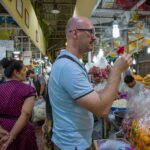
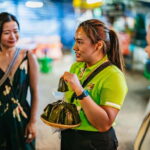
Once you reach Chinatown, the tour shifts to its main event: street food tasting with guided stops. You’ll spend a big block of time here, including time for guided walking and tasting, plus dessert. This is where a guide earns their keep.
A good street-food guide does three things well:
1) They know which stalls are worth your line time.
2) They can balance flavors so you don’t get stuck with only one type of food.
3) They help you eat at the right pace, so you stay curious without feeling sick later.
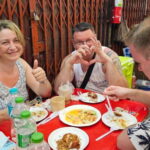
The tour is built for that balance. You’re not handed one massive meal and sent on your way. You’re sampling in a sequence that typically grows your appetite and then finally caps it. In the feedback, people highlight that the Chinatown portion can make you so full you can’t fit in every extra stop—meaning the included tastings are substantial.
Another point: the tour includes food and non-alcoholic drinks. That’s important because Chinatown food is often salty, sweet, and spicy in quick succession. Having drink support makes the tasting more comfortable, and it helps you keep pace for longer.
On-foot time: what you’re really paying for after the food starts
You’ll also have a short on-foot segment, which might seem minor, but it’s part of how a food tour stays true to street reality. In crowded areas, “close by” can still take time when you’re weaving through people, carts, and tight entrances. Walking segments help you reach stalls that aren’t easily accessible by vehicle.
Also, Chinatown food isn’t just about eating. It’s about watching how people order, how dishes arrive hot, and how the night market scene works at human scale. That on-foot time is where you start to understand the logic of the neighborhood.
If you get tired easily, plan your expectations now. This tour works best if you’re okay with continuous movement. The group is small, but you still need to keep up.
A few more Bangkok tours and experiences worth a look
Food, drinks, and the dietary reality check
Here’s the honest part. This tour is not suitable for vegans and vegetarians, and it’s also not suitable for people with food allergies. That doesn’t mean you can’t enjoy Thai street food—but it does mean the tour isn’t designed to swap dishes for restricted diets.
So if you eat vegetarian sometimes, you might still find this tough. The included tastings are chosen for the local street-food style and variety, which often uses meat, fish sauce, or shared prep practices.
On the bright side, you’ll get non-alcoholic beverages and water provided, so you’re not left scrambling for something to drink while you’re tasting your way through Chinatown.
If you’re traveling with an allergy, don’t treat this as a “maybe they can accommodate.” The tour data is clear that it isn’t meant for allergy needs.
Price and value: what $69 buys you (and what it doesn’t)
At $69 per person for about 210 minutes, the value comes from the bundle:
- a guide leading multiple tasting stops,
- transportation by ferry and tuk-tuk,
- and enough food and drink to make the evening feel complete.
A lot of Bangkok street-food plans on your own can be cheaper on paper, but you pay for it in uncertainty: which stalls are good, what’s safe, and how to sequence snacks so you don’t waste your appetite. Paying for a guide is paying for decisions made for you—especially in Chinatown, where the best options aren’t always obvious to first-timers.
Also, you’re not just paying for food. You’re paying for the structure that connects temple sunset photography with a night drive past landmarks, then a focused Chinatown segment. If you want a smooth evening with less self-planning stress, this price starts to make sense.
The one thing you won’t get is hotel pickup/drop-off. So you’ll want to be comfortable reaching Sathorn Pier and finishing near Chinatown or Wat Mung Korn MRT Station.
Who should book this Bangkok Chinatown + Wat Arun tour?
This is a great fit if you want:
- a small group experience (limited to 9),
- a guided street-food crawl that includes snacks, dessert, and non-alcoholic drinks,
- and a sunset moment at Wat Arun rather than just a daytime temple stop.
It’s also a good match for camera lovers. The tour specifically includes a sunset photo stop, and guides are praised for being patient about the time you need to get the shot.
I’d think twice if:
- you use a wheelchair or need mobility accommodations (this isn’t suitable),
- you’re vegan or vegetarian,
- you have food allergies,
- or you hate walking and standing in busy areas.
If your main goal is maximum comfort with minimal movement, you might prefer something more seated and less food-heavy.
Guides matter: why Annie and Peachii came up for a reason
The name recognition in the feedback isn’t just cute trivia. It points to something you feel during the tour: how a guide manages pace.
People specifically praised guides such as Annie and Peachii for friendliness, energy, and knowing which stalls to visit. That matters because Chinatown food can overwhelm your senses fast. A confident guide helps you feel like you’re tasting with a local brain, not just following a route.
And when you’re doing sunset photography, patience becomes part of the quality. If you’re the kind of person who wants a few tries at the same angle, it helps to have a guide who won’t rush you through the best moment.
Final decision: should you book it?
Book this tour if you want an efficient Bangkok evening that blends sunset temple views and Chinatown street food with real local guidance. The price feels fair because you’re not only buying food—you’re also buying transport, timing, and a guide-led tasting structure that helps you eat well without guessing.
Skip it if you have dietary restrictions beyond what the tour can handle, need wheelchair-friendly access, or you’d rather explore on your own with fewer organized stops. This one is built for active, curious eaters who like their Bangkok night with a plan.
If that sounds like you, this is an easy yes.
FAQ
What time does the tour start?
Meet your guide at 5:30 PM at Sathorn Pier (next to BTS Saphan Taksin Station, exit 2, downstairs).
How long is the tour?
The tour duration is 210 minutes (about 3.5 hours).
What transportation is included?
You’ll use a ferry/boat crossing and later a tuk-tuk ride during the tour.
What food and drinks are included?
The tour includes food tasting, snacks, dessert, and non-alcoholic beverages (plus water is provided).
Where does the tour end?
The tour concludes in Chinatown or at Wat Mung Korn MRT Station.
Is the tour suitable for vegans, vegetarians, or people with food allergies?
No. The tour is listed as not suitable for vegans, vegetarians, and people with food allergies.