REVIEW · BANGKOK
Bangkok Classical Bicycle Tour
Book on GetYourGuide →Operated by Co van Kessel Bangkok Tours · Bookable on GetYourGuide
Pedal Bangkok’s side streets. This 3-hour bicycle tour strings together Chinatown’s chaos, the calmer riverside world of Thonburi, and a ferry crossing you’ll actually enjoy. You’ll cycle through narrow lanes where shop houses, spirit houses, and hidden temples sit side by side.
I love how the route shows you real street life, not just big sights: the market energy in Chinatown, the shopfronts with Buddhist amulets, and the odd mix of everyday items—including recycled machinery and truck-engine parts. I also like the Thonburi contrast: a visit to a monastery, plus that feeling of moving through a neighborhood people live in, not a stage set.
One possible drawback: this tour is for riders who feel steady on a bike. Crowded alleys and tight pathways can feel hectic, especially around Chinatown, so go in calm and focused—not stressed.
In This Review
- Why This Tour Feels Different Than Usual Bangkok Sightseeing
- Getting Oriented: Where the Ride Starts and How It Flows
- Chinatown by Bike: The Market Maze You’ll Want to Rewind
- The Guided Market Stop: Snacks, Smells, and Little Cultural Clues
- Crossing to Thonburi: The Switch From Chaos to Calm
- Monastery Stop: A Quiet Pause That Isn’t Random
- The Thonburi Break and Second Ride: How the 3 Hours Stay Balanced
- The Chao Phraya Ferry Crossing: Short, Scenic, and Smart
- Safety and Comfort: What You Should Know Before You Swing a Leg Over
- Price and Value: Why $40 Can Work (If You Want This Style)
- Who This Tour Fits Best (and Who Should Skip)
- What to Bring So You Don’t Fuss the Whole Time
- Should You Book This Bangkok Classical Bicycle Tour?
- FAQ
- How long is the Bangkok Classical Bicycle Tour?
- How much does it cost?
- Where do I meet for the tour?
- Is the tour guide included?
- What’s included in the price?
- Do we cross the river by ferry?
- What should I bring?
- Is there a dress code?
- Can children join?
- Is it suitable for people who can’t ride a bike or have mobility issues?
- Can I get a refund if my plans change?
Why This Tour Feels Different Than Usual Bangkok Sightseeing
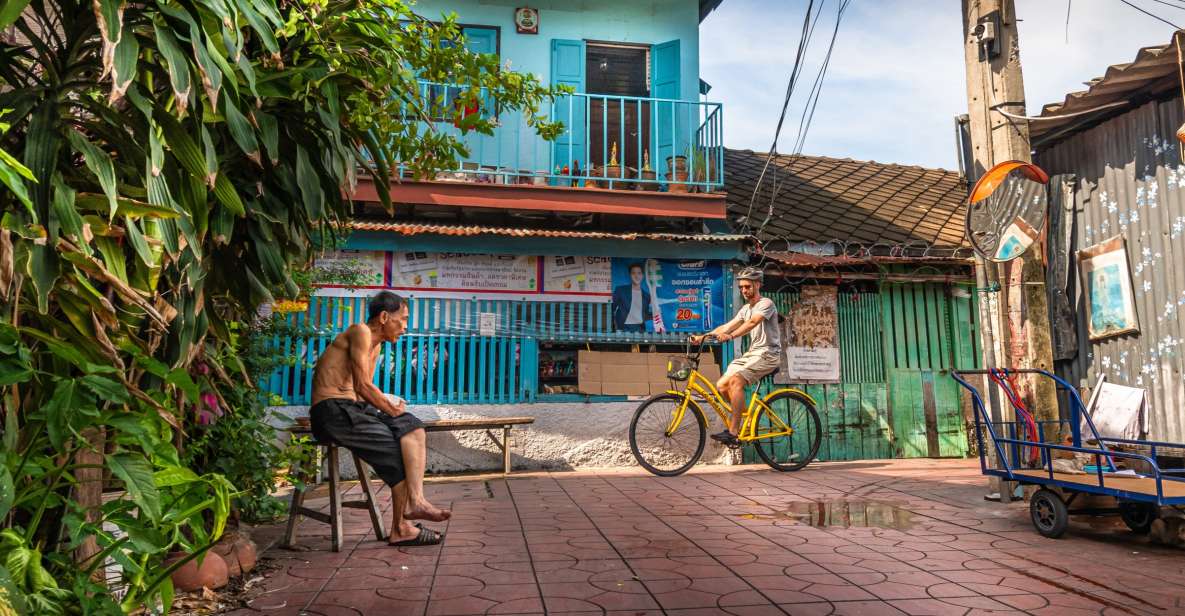
- Chinatown by bike, where you pass shop houses and little temples you’d miss on foot.
- Thonburi, Thailand’s historic third capital, with quieter residential rhythm.
- A short Chao Phraya ferry crossing for skyline views and a needed breather.
- A market stop with snack sampling, including local fruit and sweet treats.
- A monastery visit that fits naturally into the ride, not as a rushed checkbox.
- Guides in yellow shirts (often named Mike, Emma, Bob, Lia, Layla, TT, and others) bring the story in clear English.
Getting Oriented: Where the Ride Starts and How It Flows
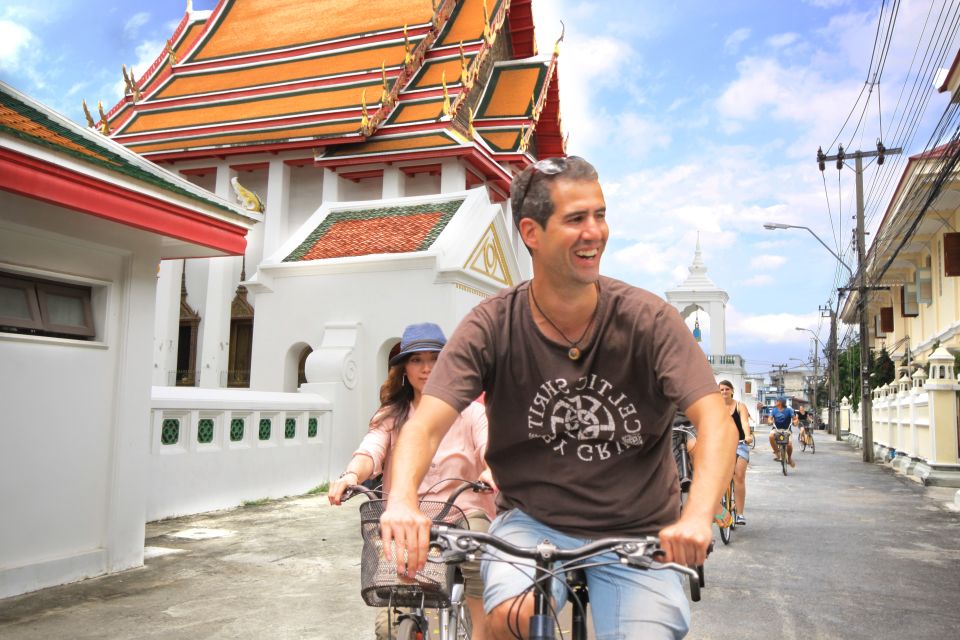
Most Bangkok bike tours start with a lot of “get there first.” This one tries to remove the headache. You meet at 23 Soi Charoen Krung 24, and the operator’s office is about 30 meters to the right of a 7-Eleven at River City Shopping Center—look for the yellow sign.
Once you spot the team in yellow shirts, you’ll get your bicycle and get sorted quickly. The pacing is built for a 3-hour experience, so you won’t feel like you’re wasting half the day waiting or biking in long straight lines with nothing to see.
You can also read our reviews of more tours and experiences in Bangkok.
Chinatown by Bike: The Market Maze You’ll Want to Rewind
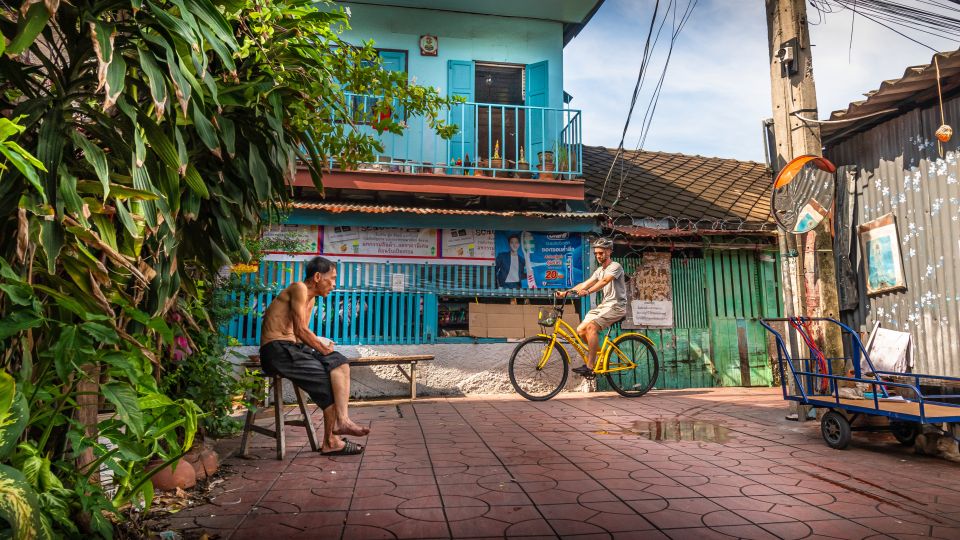
Chinatown is often filmed, photographed, and explained from the sidewalks. Here, you ride it—so the sights hit faster and you catch details you’d otherwise miss. The tour starts in the Chinatown area for about 50 minutes, moving through narrow streets and alleyways with a constant flow of people.
This is where you’ll notice the textures of the neighborhood: shopfronts selling Buddhist amulets, spirit-house displays, ritual paper burning, and everyday items stacked in window bays. One of the best parts is how quickly the guide can point out what’s going on without turning it into a lecture.
You’ll also get a strong sense of contrast within Chinatown itself. It’s frenetic at the “main energy” spots, then you can feel the environment tighten into back lanes—still active, but more layered and local.
Practical note: this is not a “pretend there’s no traffic” situation. It’s more like, guides manage the moment-to-moment movement so you can focus on riding and watching where you’re going.
The Guided Market Stop: Snacks, Smells, and Little Cultural Clues
After the Chinatown cycling segment, you’ll switch to a 30-minute guided sightseeing and visit stop. This is where the tour leans into one of the smartest parts of the experience: short, high-impact time on foot to understand what you just cycled past.
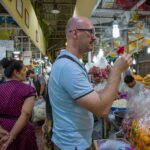
From what the tour tends to include, expect a market-style environment with a stop that often feels like a flower-market area. That matters because it’s not only visual. It’s a sensory break: you’ll have a chance to try local fruit and snack treats, the kind you don’t always pick up when you’re shopping with a tourist map in your head.
This is also a good moment to slow down. Even if you’re a confident cyclist, your brain needs a reset after Chinatown alleys. The snack and tasting stop gives you that without dragging the schedule.
Crossing to Thonburi: The Switch From Chaos to Calm
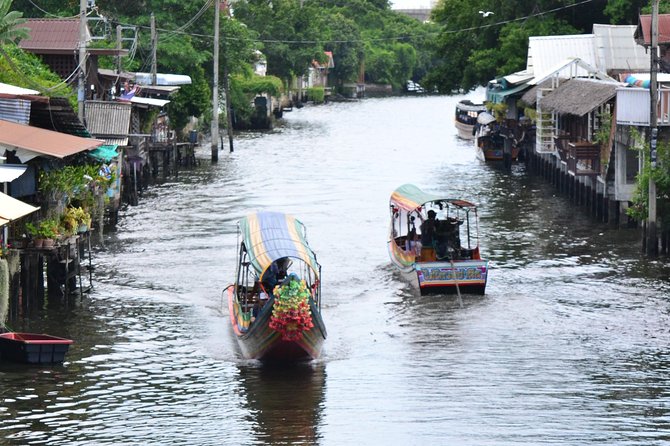
Then comes one of the biggest reasons this tour works: you don’t just circle one neighborhood. You move toward Thonburi, the historic third capital of Thailand, and the vibe starts shifting as you ride.
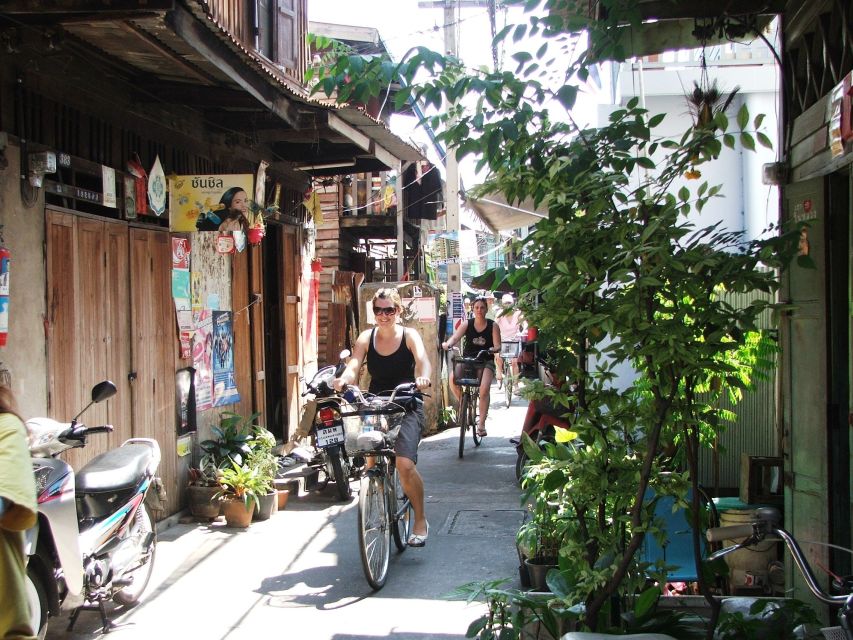
The Thonburi biking time is about 100 minutes, which is long enough to feel like you actually entered another part of the city. You’ll pass through residential communities where the street life looks more everyday: homes, small storefront routines, and locals who tend to greet with smiles rather than just hustle past.
This section also helps you understand something visitors often miss. Bangkok isn’t only skyscrapers and riverside icons. It’s also a city where history and daily life share the same streets.
Monastery Stop: A Quiet Pause That Isn’t Random
In Thonburi, you’ll spend about 30 minutes at a monastery. This is a real change of pace after market crowds and busy lanes. It’s also a meaningful one: the stop connects the area’s identity to the lived spiritual rhythms you saw hints of earlier in Chinatown.
What I like about this placement is timing. It happens after you’ve already been cycling long enough to notice how different neighborhoods behave. Then you get a calm moment where the guide can frame what you’re seeing—so it doesn’t feel like a sudden detour.
Dress tip: the tour notes you should not wear sleeveless shirts. It’s the kind of rule that’s easy to follow and helps you stay respectful at temple sites.


The Thonburi Break and Second Ride: How the 3 Hours Stay Balanced
You’ll have a 30-minute break time in Thonburi, followed by another 40-minute bike ride. That break is more important than it sounds, because it keeps the whole experience from wearing you out.
This is also where you can regroup: sip water, take photos, and reset your posture. Bangkok’s heat and humidity can sneak up on you even during a short ride, so building in rest time is a smart move.
The second cycling stretch helps you end in a way that feels complete. Instead of repeating the same streets, you keep moving so you get more of the neighborhood’s shape.
The Chao Phraya Ferry Crossing: Short, Scenic, and Smart
You’ll cross the Chao Phraya River by ferry boat for about 10 minutes. This is one of those moves that feels small on paper but makes a big difference in a bike tour.
Why? Because it gives you:
- A clean visual break from riding lanes
- A chance to look back at the city skyline
- A change of rhythm after crowded streets
The ferry segment also acts like a reset button. Even if the cycling was never physically intense, the mental load of watching for turns and narrow paths adds up. Ferry time lets you breathe and re-focus.
If you’re a wildlife-spotter, keep your eyes open. One review notes a water monitor lizard during the tour, which is a reminder that river zones can surprise you.
Safety and Comfort: What You Should Know Before You Swing a Leg Over
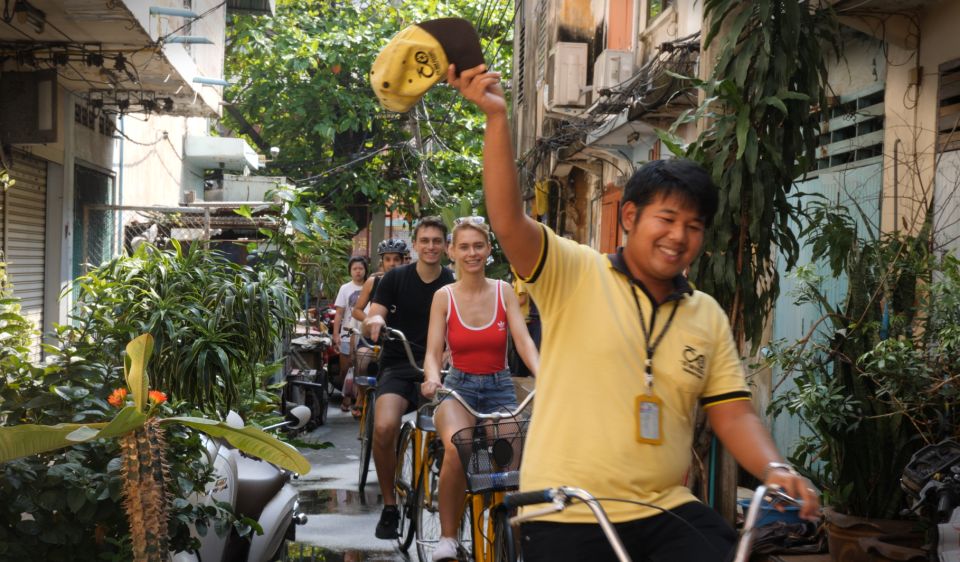
This tour includes bicycle hire, drinks, and snacks en route, and the guides are very involved in keeping the group together. More than one account emphasizes safety and organization, with guides helping you through crowded parts and busy crossings.
That said, this is still a city bike ride in a place where sidewalks and roads can get packed fast. The tour is not described as physically demanding, but you do need bike confidence. Tight paths and crowds in Chinatown mean you can’t be learning to ride at the same time.
If you’re asking whether you can do it, use this quick test:
- If you can ride confidently with occasional braking and weaving around pedestrians, you’re likely fine.
- If you feel shaky or nervous in crowds, consider saving this for another trip later.
The operator also notes it’s not suitable for mobility impairments and it’s not suitable for people who can’t ride a bike. For families, infants (age 0–5) must ride on the back of the bikes, and children age 6–11 can have no charge if they can’t ride on their own and ride on the back of the bike.
Price and Value: Why $40 Can Work (If You Want This Style)
At about $40 per person for a 3-hour tour, the price makes sense if you care about guided access to real neighborhoods. You’re paying for more than a bike. You’re buying:
- Local guides managing the route
- Ferry crossing
- Snacks and drinks
- Bicycle hire
If you tried to replicate this on your own, the hard parts would be route planning and timing through areas like Chinatown. Those narrow, busy lanes are exactly where a guide earns the money. Also, the snack tasting and monastery stop aren’t just “nice stops.” They’re part of how the tour teaches you what you’re seeing as you ride.
The value is best when you want a mix of motion and meaning. If you only want iconic landmarks, you might feel this is less direct. But if you want the Bangkok that lives next door to the tourist Bangkok, the format is a strong deal.
Who This Tour Fits Best (and Who Should Skip)
This tour is a great match if you:
- Like street-level travel and backstreet navigation
- Want Chinatown plus Thonburi in one morning-style block
- Enjoy ferry views and short cultural visits
- Can ride a bike confidently in crowded areas
It’s less of a match if you:
- Can’t ride a bike or aren’t comfortable in tight spaces
- Have mobility limitations that affect getting on/off or balancing
- Are looking for a slow, sidewalk-only walking tour
If you’re traveling with kids, this can work well, but only if the children can fit the riding rules (infants on the back; older kids who can’t ride on their own riding on the back).
What to Bring So You Don’t Fuss the Whole Time
Bring comfortable shoes, a camera, and sunglasses. The ride moves through busy, bright street scenes and temple areas where you’ll want to look up and capture details.
Also keep an eye on the clothing rule: no sleeveless shirts. It’s easy to solve—bring a light top with sleeves and you’ll be set.
Should You Book This Bangkok Classical Bicycle Tour?
Yes, if you want a short, high-satisfaction Bangkok experience that mixes Chinatown energy, Thonburi’s quieter rhythm, and a ferry crossing with skyline views—all without spending your day hopping between distant landmarks.
Skip it if bike crowds make you tense or if you’re hoping for a gentle, no-stress stroll. This is friendly and guided, but you still need enough riding confidence to handle narrow lanes.
If you’re on the fence, this is the kind of tour that’s worth booking early in your stay. It helps you get your bearings fast, because once you’ve ridden these neighborhoods, the rest of Bangkok makes more sense.
FAQ
How long is the Bangkok Classical Bicycle Tour?
It lasts about 3 hours.
How much does it cost?
The price is $40 per person.
Where do I meet for the tour?
You meet at 23 Soi Charoen Krung 24. The office is about 30 meters to the right of a 7-Eleven at River City Shopping Center, and you should look for a yellow sign.
Is the tour guide included?
Yes. You’ll have a live English-speaking guide.
What’s included in the price?
It includes bicycle hire, local guide(s), a ferry crossing, and drinks and snacks en route.
Do we cross the river by ferry?
Yes. The tour includes a ferry crossing over the Chao Phraya River.
What should I bring?
Bring comfortable shoes, sunglasses, and a camera.
Is there a dress code?
Sleeveless shirts are not allowed.
Can children join?
Children age 6–11 can be free if they cannot ride on their own and ride on the back of the bikes. Infants (age 0–5) must ride on the back of the bikes.
Is it suitable for people who can’t ride a bike or have mobility issues?
No. It’s not suitable for people with mobility impairments or for people who can’t ride a bike.
Can I get a refund if my plans change?
You can cancel up to 24 hours in advance for a full refund.