REVIEW · BANGKOK
The Lens: Once-a-Year Moment at Na Satta Park Light Festival
Book on GetYourGuide →Operated by Hari Tour · Bookable on GetYourGuide
Na Satta Park and its light festival happen only once a year, so timing matters. This day trip packs pink pagoda drama, a train-meets-market photo moment, and then shifts gears into glowing installations at night. I like how it mixes temple spectacle, street-level market life, and night photography in one smooth loop.
Two things I especially enjoy about the experience are the set-piece visuals and the way the day is structured for photos. Wat Samphran’s red-pink dragon-wrapped tower gives you everything from close texture shots to a huge panorama from the dragon head, and the Na Satta Light Festival is made for long-exposure shots with colored temple replicas and illuminated sculptures. The main drawback to plan for is that it’s a long day with lots of driving, and market timing can affect what you actually see—if you arrive a bit later, some vendors may already be packing up.
In This Review
- Key photo moments you’ll plan around
- The big reason this day trip works for photographers
- Getting out of Bangkok: late-morning start and a comfy van
- Wat Samphran’s pink dragon pagoda: the shot you’ll remember
- Damnoen Saduak Floating Market: colorful reflections, real-life crowds
- Mae Klong Railway Market: the fold-and-pass photo plan
- Buffalo Amphawa free time: a chance to slow down
- The Na Satta Light Festival: where night photography becomes story
- Guides and pacing: how the day stays smooth
- Price and value: what $154 buys you (and what it doesn’t)
- Who should book this, and who should skip it
- Should you book this Light Festival day trip?
- FAQ
- How long is the tour?
- Where do I meet the tour?
- What’s included in the price?
- What should I bring for the day?
- Is the Na Satta Light Festival admission included?
- Do I need to share personal details for the tour?
Key photo moments you’ll plan around
- Wat Samphran Dragon Temple: dramatic wide shots plus detailed textures on the dragon wrap
- Damnoen Saduak Floating Market: reflections, produce colors, and riverside street life from a paddle-boat view
- Mae Klong Railway Market: get ready for a passing train while stalls fold around the rails
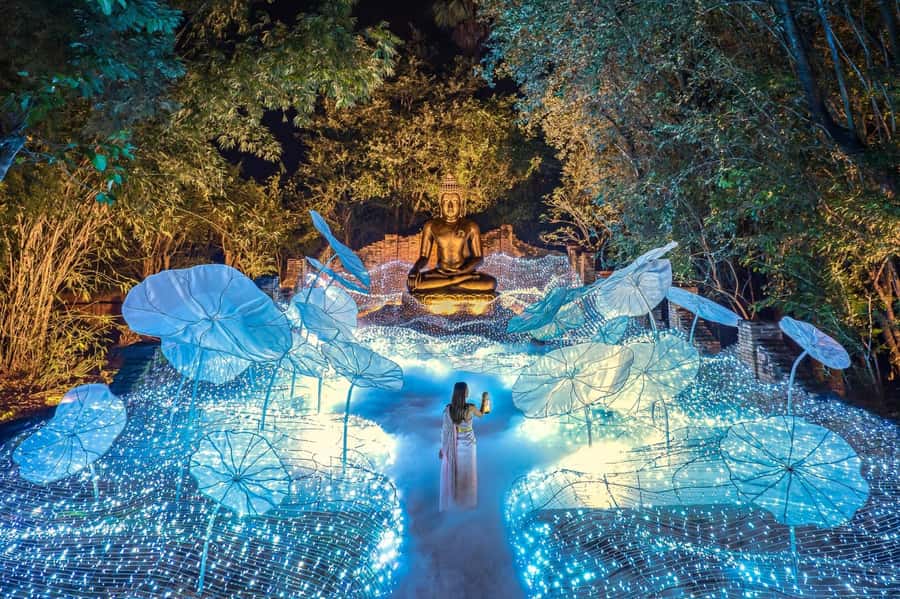
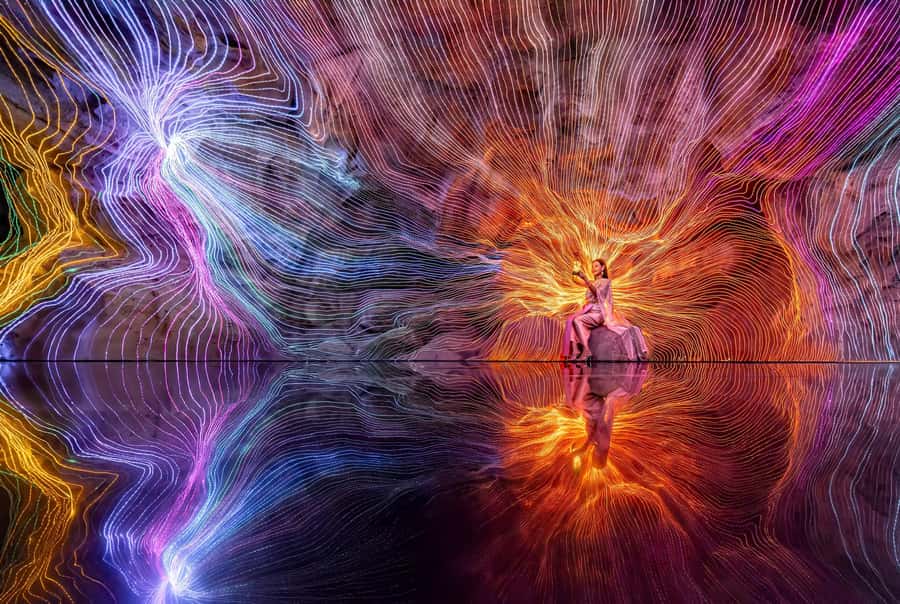
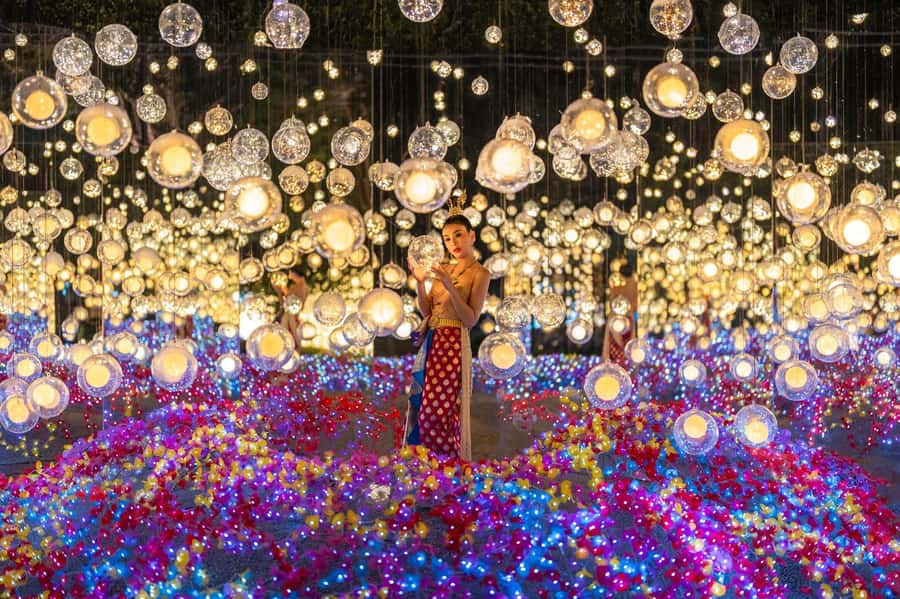
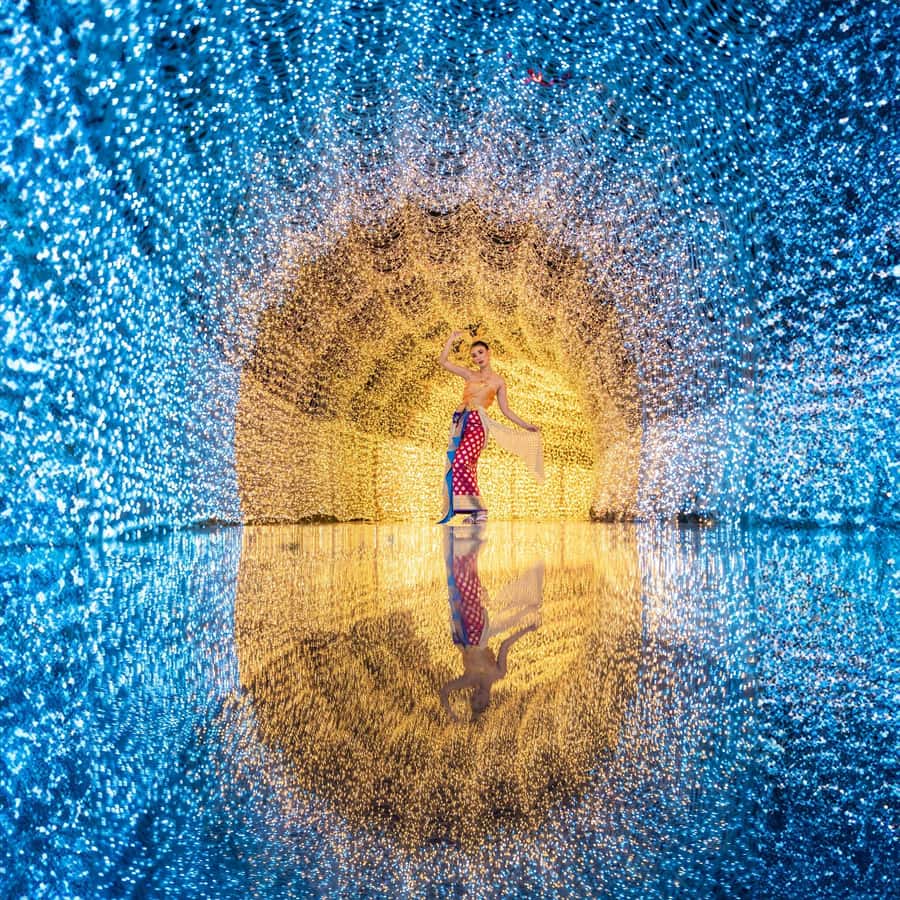
- Na Satta Light Festival: glowing temple replicas and installations that reward long-exposure photography
- Guide-fueled photo help: multiple guides are praised for finding good angles and sharing photos or videos
The big reason this day trip works for photographers
This isn’t a random sightseeing bus ride. It’s built like a photo storyline: start with temple architecture, go to markets that create strong motion and reflections, then finish with a night festival where the lighting becomes part of your subject.
Even though it’s only 10 hours, it covers a lot of variety. You’re moving between three distinct styles of scenes: carved religious detail (Wat Samphran), water-level everyday life (Damnoen Saduak), and high-alert timing (Mae Klong). Then the day ends at Na Satta, where the whole park turns into a light set.
You can also read our reviews of more tours and experiences in Bangkok.
Getting out of Bangkok: late-morning start and a comfy van
You meet at Hug Thai @ CentralWorld, ground floor at the Hug Thai Gate near the Centara Grand Hotel entrance. From there, you take a comfortable air-conditioned van for about 100 minutes to the first stop.
One practical win: the schedule is described as late-morning so you avoid the worst early rush and crowds. In real life, it still feels like a full day, but you’re not starting at some painful pre-dawn time. Also, transportation scores well in the reviews, with 92% of reviewers giving it a perfect score, and the day includes insurance plus water.
What to pack is simple: camera, sunscreen, sunglasses, and a sun hat. That matters because you’ll be outside at at least two daylight stops before the lights come out.
Wat Samphran’s pink dragon pagoda: the shot you’ll remember
Wat Samphran (also spelled Wat Sam Phran) is where the day turns from market life into temple spectacle. The signature sight is a red-pink tower wrapped in a massive dragon spiraling up to the top. It’s one of those places where you don’t just take one photo—you keep finding new frames.
In your hour there, you can work on a few different photo approaches:
- Wide shots: capture the whole tower and the dragon coil against the sky
- Texture shots: zoom in on the dragon’s surface details
- High-angle views: if you climb to the dragon head viewpoint area, you’ll get a more panoramic look of the surroundings
This stop also gives you something culturally useful: you’re not just photographing scenery, you’re learning how Thai temple art uses symbolism and scale to make you feel small in a good way.
Realistic note: this is a temple site, so expect some rules about clothing and respectful behavior. Comfortable shoes also help, because you’ll likely move around a lot to get the best angles.
Damnoen Saduak Floating Market: colorful reflections, real-life crowds
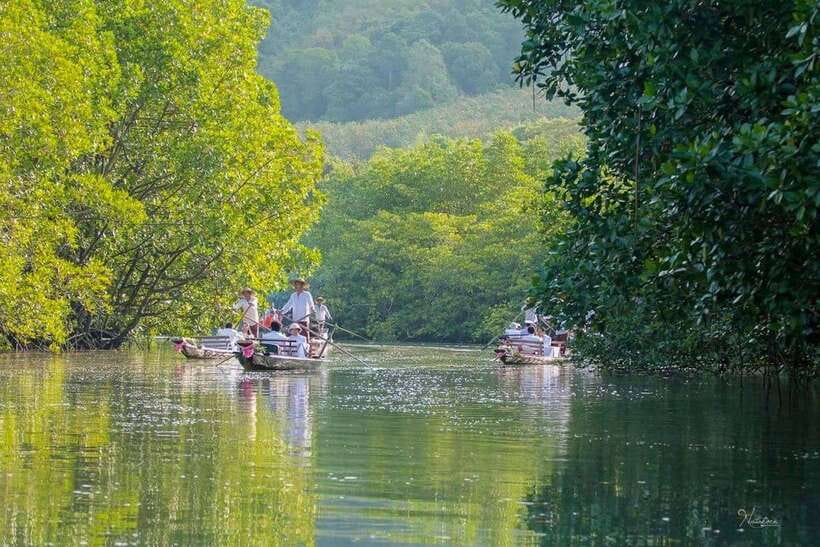
Damnoen Saduak is the classic floating market you picture from Thailand photos, but in practice it’s more than scenery. You’re there for motion: boats gliding through lanes, paddlers and shoppers working around one another, and bright food stalls reflected on the water.
Your time here is about an hour. That’s enough for:
- Reflections: water-surface symmetry can make simple compositions look magical
- Lifestyle portraits: people on boats and riverside activity
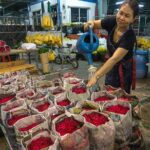
- Street-food color: produce and packaged snacks create easy framing
One review-specific reality check: floating market foods can feel pricey, and it can get crowded. Another practical point is smell and sound—motorized boats and packed spaces can make it harder to linger over details. If you go in expecting a peaceful stroll, you might feel disappointed. If you go in expecting vivid chaos you can photograph, you’ll enjoy it more.
Photo tip: plan your shots in layers. Start with wide reflections, then switch to tighter portrait-style frames when boats and faces align. Bring your patience for a few seconds of chaos—floating markets reward timing.
Mae Klong Railway Market: the fold-and-pass photo plan
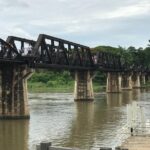
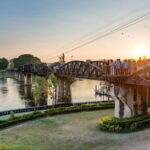
If Na Satta is about light, Mae Klong is about timing. This is the market built right on top of the rail line, and the big moment is when a train passes close enough that you feel it.
During your stop here (about an hour), watch for the rhythm:
- The market stalls and awnings adjust as the train approaches
- Vendors fold away what needs to be cleared
- The train comes through, close enough for dramatic scale in your photos
- After the train passes, the scene starts to reset
It’s an iconic photo moment because the action is fast and visual. You can get strong results with a quick burst mode, and you’ll want to keep your shutter speed high to freeze the train and people.
A fun detail from the experience: you can even high-five passengers when the timing works out. That’s not the main goal, but it’s a great reminder that this is a working market, not a staged set.
Small caution: you need to be mentally ready. This isn’t “slow travel.” It’s fast decision-making with lots going on at ground level.

Buffalo Amphawa free time: a chance to slow down
After the markets, you get about an hour of free time at The Buffalo Amphawa. This is the decompression section of the day—less structured, more you-can-decide.
Use this hour to:
- take a breath after intense photos at the rail market
- grab a snack or drink if you need it (lunch and dinner aren’t included)
- wander at your own pace without the pressure of a timed stop
Because it’s free time, the experience can feel different depending on what you choose to do. Think of it as your buffer. If you’re the kind of photographer who likes to replay scenes in your head, this helps.
The Na Satta Light Festival: where night photography becomes story
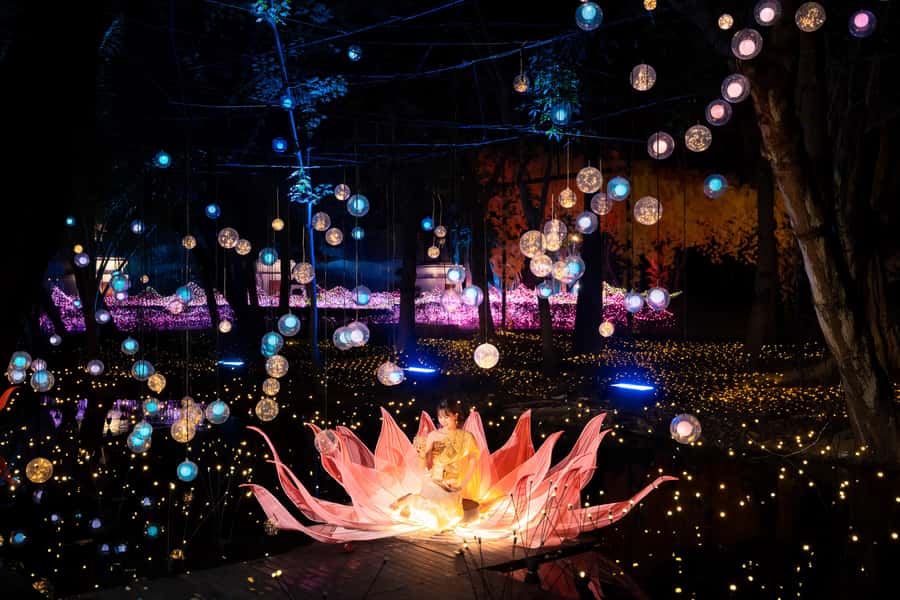
When golden hour fades, the whole day shifts. You head to Na Satta Park and spend about 1.5 hours at the Na Satta Light Festival with an evening ticket included.
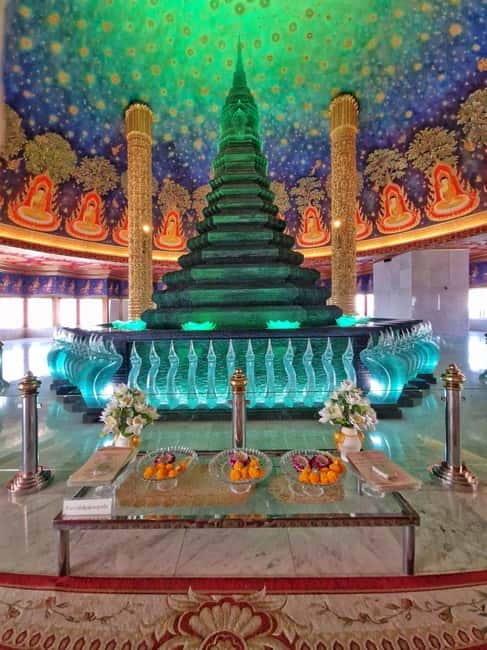
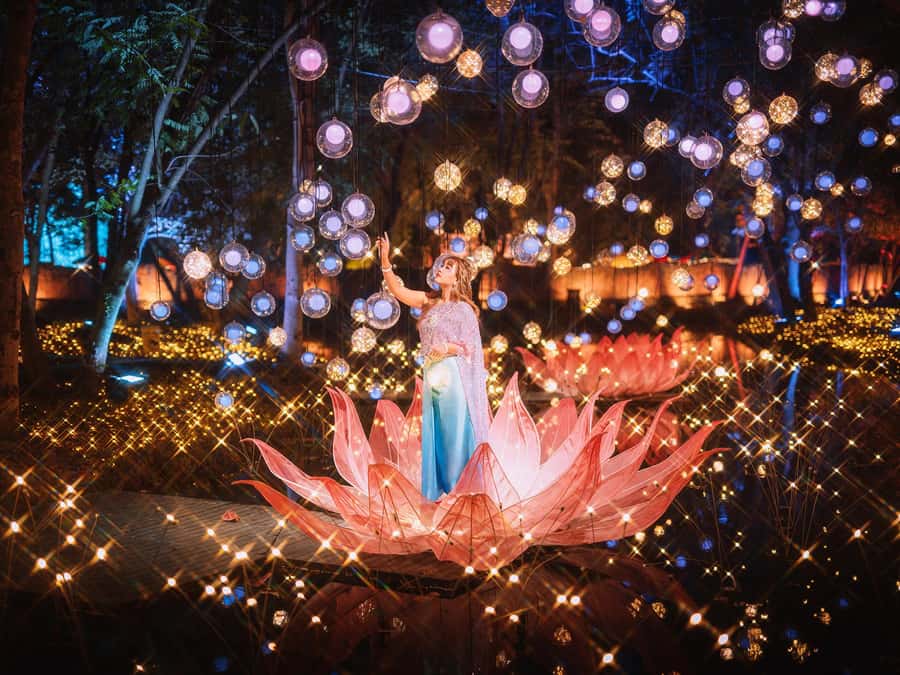
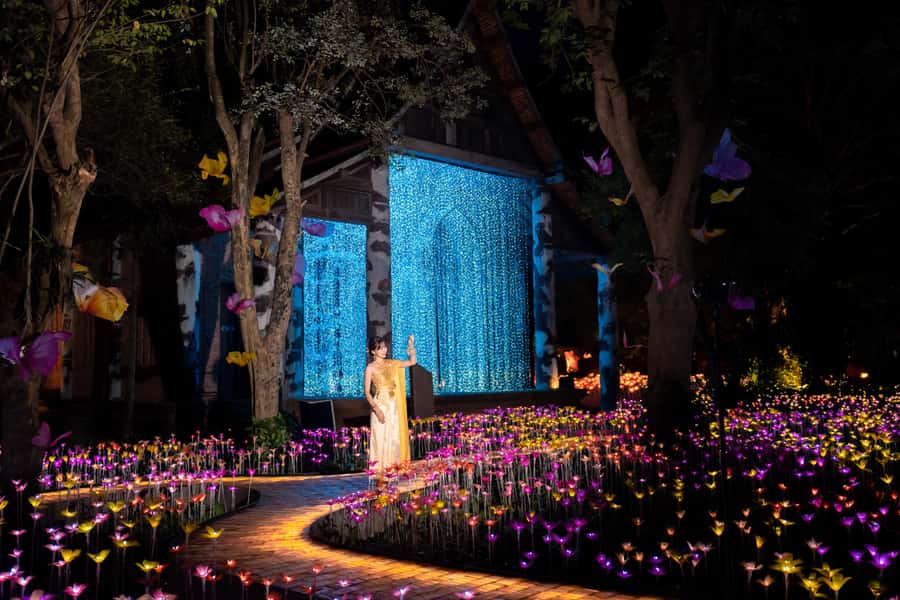
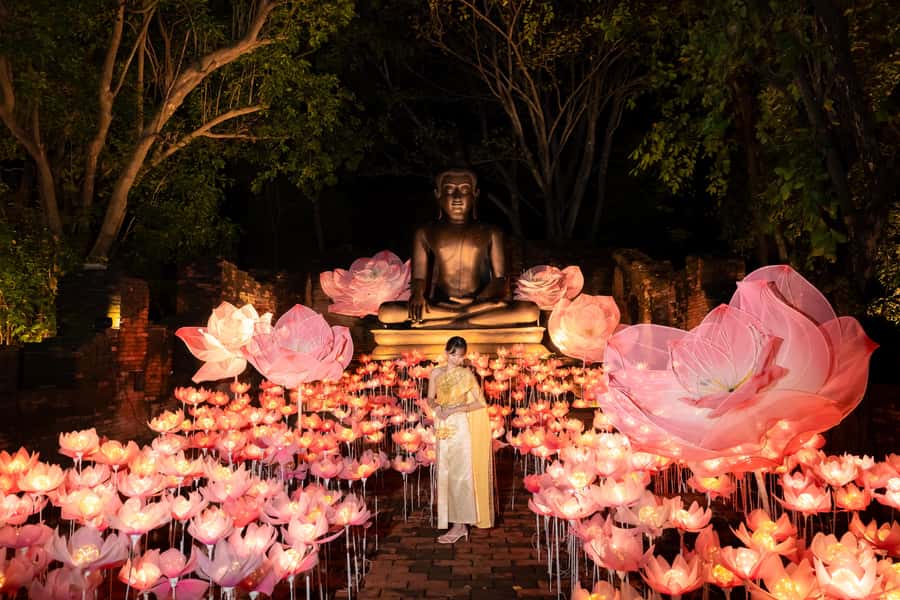
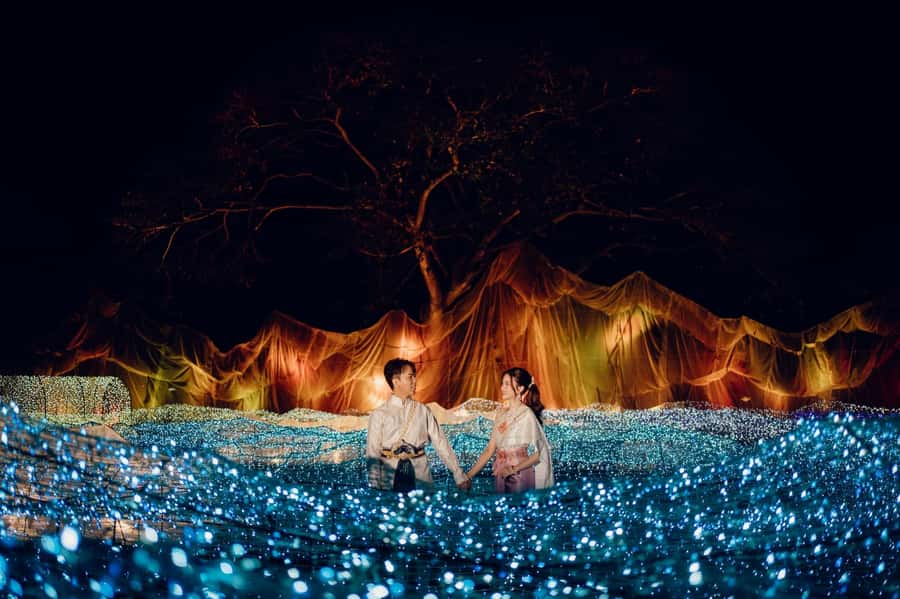
This is where the tour earns its annual reputation. The park is described as a glowing wonderland with dreamlike installations, illuminated sculptures, and temple replicas bathed in color. In plain terms: you’ll get strong subject matter for long-exposure photos and a lot of lighting variety, so you can experiment instead of taking only the safest shots.
What to expect when you arrive:
- lots of light sources across different intensities
- temple-like structures you can use as anchors in your compositions
- enough open paths to set up a few shots rather than being boxed in
Photography strategy for this final act:
- Start with a wide establishing shot, so you remember the scene
- Then move to medium shots with people or statues as scale
- If you shoot long exposure, find stable ground and keep your camera steady
Also keep in mind that Na Satta is timed. You’ll want to use your time efficiently: don’t wait for the “perfect” moment before you’ve grabbed at least a few solid frames.
Guides and pacing: how the day stays smooth
The tour runs as a single organized flow with a live English-speaking guide. Guides are a major part of why this day works well for photos, and names show up repeatedly in feedback.
Yut is frequently praised for being fun, helpful, and strongly focused on practical photo spots. Boyd is also mentioned as arranging smooth moments and attention to comfort and timing. Some guides go beyond directions—sharing lots of photos or videos from the day and explaining history and culture along the way. One traveler even noted that a guide could handle Vietnamese well, which can reduce friction if you run into a language gap.
Pacing is generally described as well planned, with enough time at each stop to actually look around, not just pass by. Still, there’s no way around the big factor: it’s a long day with driving. If you hate being on the move, this may feel like too much.
Price and value: what $154 buys you (and what it doesn’t)
At $154 per person for a 10-hour day, you’re paying for several things that are hard to replicate alone in one go:
- round-trip van transportation from Bangkok
- an English-speaking guide to connect the stops and help you spot better angles
- admission for Na Satta Cultural Park evening lighting
- included entry/activities tied to the temple and festival day
- insurance
- water
- a late-morning departure setup designed to help with comfort and crowd levels
What you shouldn’t expect the price to cover:
- lunch and dinner (not included)
- personal expenses and alcohol
In practice, your food plan matters. Market food can be part of the fun, but it can also add up. One review pointed out that floating market pricing can be high, and that some food is better to look for later. A specific example: pineapple fried rice was called out as a good pick.
So is it worth it? If you want four major photo set pieces plus a night festival, and you’d rather not manage transport between far-flung rural areas, this price starts to feel fair. If you only care about one stop, you could probably do less and spend less.
Who should book this, and who should skip it
This day trip fits best if you:
- care about photography and want specific visual payoffs (temple dragon, railway timing, light installations)
- don’t want to piece together transport from Bangkok
- like a structured day with a guide who helps you make better frames
It’s probably not for you if you:
- hate long travel days (you’ll spend about 200 minutes on the van total)
- need lots of downtime between locations
- want calm, spacious market wandering rather than crowds and motion
The provided suitability notes also matter: it isn’t suitable for children under 4, babies under 1, or people over 95.
Should you book this Light Festival day trip?
I’d book it if Na Satta is on your Thailand bucket list and you want the whole day built around photography, not just sightseeing. The combination of Wat Samphran’s dragon pagoda, the high-energy Mae Klong railway market, and the night festival’s lighting effects is exactly the kind of one-day mix that’s hard to arrange yourself.
I’d think twice if you’re extremely sensitive to crowds or you arrive thinking the floating market will be peaceful and leisurely. It can be crowded and noisy, and the day’s success depends on timing—especially for market stops.
If you want a practical rule: plan to shoot fast in the markets, then slow down at Na Satta. That’s where the light turns every photo into a scene.
FAQ
How long is the tour?
The experience runs for about 10 hours, including transportation time from Bangkok and visits to the main stops.
Where do I meet the tour?
Meet at Hug Thai @ CentralWorld, ground floor at the Hug Thai Gate near the Centara Grand Hotel entrance. The provided Google location is PGWQ+Q8 Bangkok.
What’s included in the price?
Transportation by air-conditioned vehicle, a live English-speaking guide, admission fees to Na Satta Cultural Park (evening lighting festival ticket), activities tied to Wat Samphran and the included cafe/street food market components, water, and insurance are included.
What should I bring for the day?
Bring sunglasses, a sun hat, your camera, and sunscreen.
Is the Na Satta Light Festival admission included?
Yes. Entry fees to Na Satta Cultural Park for the evening lighting festival are included.
Do I need to share personal details for the tour?
Yes. Before the day starts, you’ll be asked to fill out a Google Form with details like date of birth and passport number for insurance purposes, and the information is described as confidential.