REVIEW · BANGKOK
The Erawan Museum: A Cultural Treasure in Bangkok
Book on Viator →Operated by I Asia Thailand · Bookable on Viator
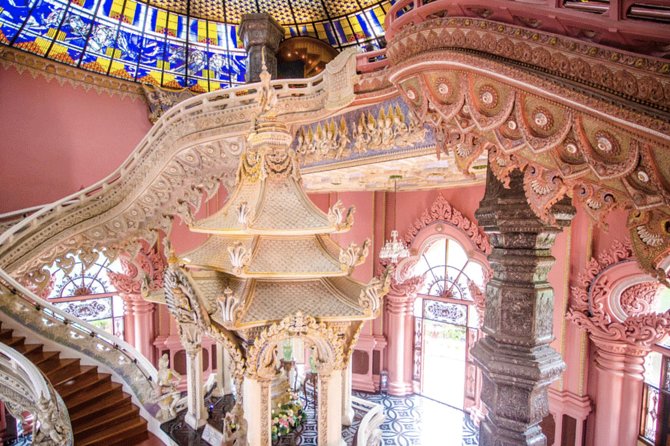
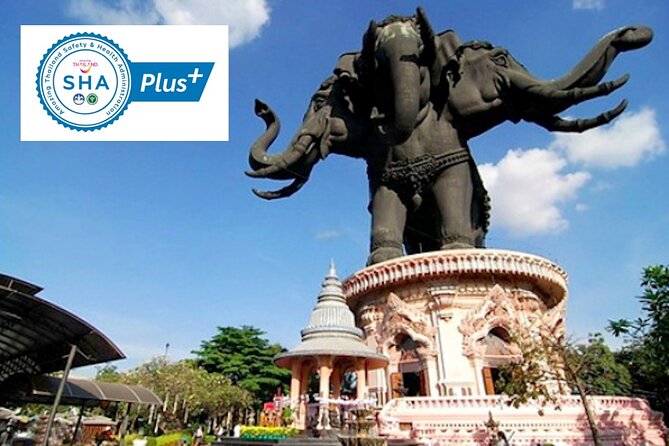
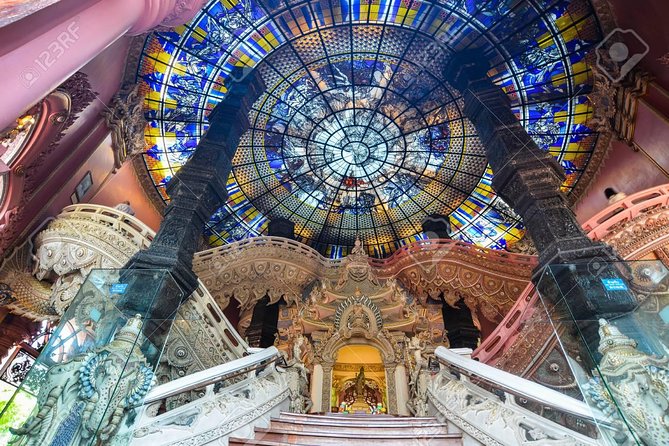
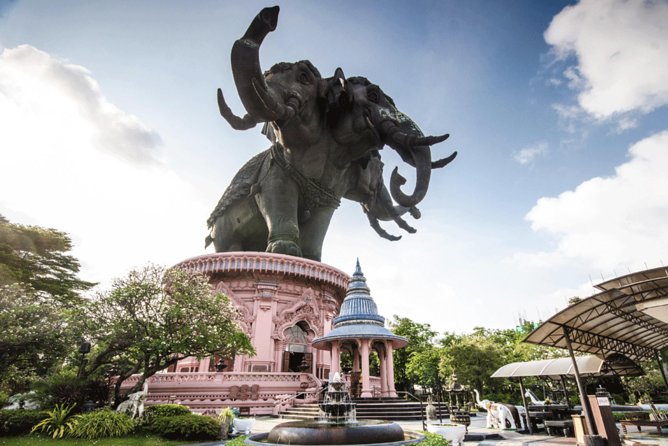
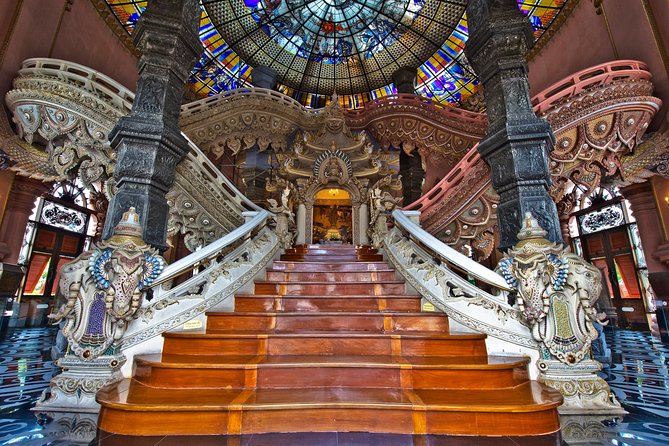
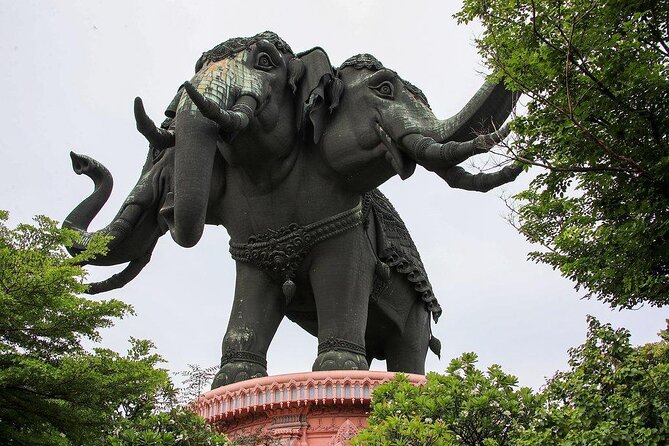
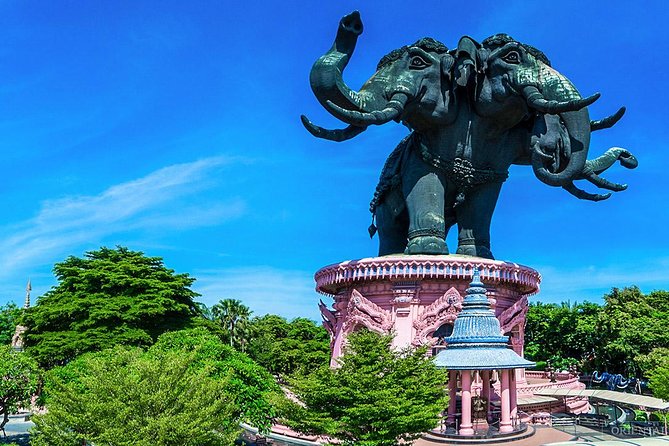
A three-headed elephant sits over Bangkok’s museum. I love the scale of the three-headed elephant and the massive staircase that pulls you upward like you’re in a living Thai temple story. One thing to plan for: it can get busy, so photos at the busiest spots may be a little tight.
This is the kind of stop you can make simple. Grab the BTS to Chang Erawan Station, then walk about 5–10 minutes, and you’re there without wrestling traffic. The gardens and the layers of art inside help you slow down, even if you only have a short window.
If you’re short on time, go in with an idea of what you want. The museum can be quick with the audio guide, but it’s also easy to keep wandering because the building design keeps rewarding a second look.
In This Review
- Key highlights worth knowing before you go
- Why this elephant-shaped museum feels different from a normal museum
- The three levels: underworld to heaven, and why it’s worth following the theme
- Gardens, elephant sculptures, and the photo-spot reality check
- Audio guide timing: use it like a tool, not a homework assignment
- Price and value: what you pay, what you get, and who it suits
- Getting there the easy way: BTS to Chang Erawan Station
- When to go: opening hours and the best use of your time
- Who should book this experience, and who might skip it
- Should you book the Erawan Museum ticket?
- FAQ
- Where is the Erawan Museum?
- What’s the ticket price?
- How long should I plan to visit?
- What are the opening hours?
- How do I get there from Bangkok using public transport?
- Is a mobile ticket used?
- Is an audio guide included, and in what languages?
- What’s included with the admission?
- Is transportation to the museum included?
- Can I cancel or change the booking?
Key highlights worth knowing before you go
- Elephant-on-top architecture that looks impossible until you’re standing in front of it
- Three levels that follow an underworld-to-heaven theme
- Thai antiques and religious statues that make the building feel more than decorative
- Garden space with elephant sculptures, plus a calmer pace than the main entry area
- Audio guide in multiple languages with English and Chinese included
- Items included for a lotus-and-incense water ritual, adding a lived-in cultural touch
Why this elephant-shaped museum feels different from a normal museum
The Erawan Museum isn’t trying to be a quiet “gallery.” It’s built like a full-on Thai cultural structure: a huge three-headed elephant crowns the whole place, and the design keeps steering your eyes upward. The effect is part museum, part temple atmosphere, and part architectural stunt.
Inside, you don’t just look at objects behind ropes. The building itself helps organize the story. You’ll move through three levels that represent the underworld, earth, and heaven, each decorated with religious art and relic-style displays. That “story mode” matters because it turns the visit into a path, not a random walk.
I also like the practical side. Even though the building looks far more dramatic than the average museum, it’s easy to visit without planning a whole day. With an audio guide, you can keep it tight at about 30 minutes, or stretch longer if you enjoy reading details and re-checking the artwork from different angles.
The vibe is calm in the gardens too. Outside, the setting feels green and spacious, and you’ll notice elephant figures around the grounds—enough to make the whole place feel consistent, from the giant elephant outside to the smaller ones around you.
You can also read our reviews of more museum experiences in Bangkok


The three levels: underworld to heaven, and why it’s worth following the theme
The museum is organized into three main floors, and each one maps to a different spiritual “layer” of the world: underworld, earth, and heaven. Instead of treating this like abstract symbolism, I recommend you use it as a guide for your own pacing.
Here’s what that means when you’re actually walking:
- Underworld level: Expect heavier religious artwork and an overall feel that leans more symbolic than decorative. This floor is where you’ll likely slow down because the displays are meant to feel intentional.
- Earth level: This is where the museum’s collections show up in a more “walkable” way—Thai antiques, ancient artifacts, and the religious statues help connect the spiritual theme to real cultural heritage objects.
- Heaven level: The design and decoration shift again, so the top areas tend to feel brighter and more uplifting. It’s a nice moment to take in the building’s architectural details after spending time on the lower levels.
Across all three levels, you’ll see a mix of Thai cultural items: antique-style pieces, ancient artifacts, and revered Buddhist statues. Even if you’re not a deep researcher, you’ll get something from the “what goes where” approach. The museum is teaching you a sequence, not just presenting items.
A good tip for making this work for you: don’t rush upward just because the elephant is above. Take a quick look at the decorations first, then decide whether you want to spend extra time on one level. If you like religious art and symbolism, the underworld/earth/heaven layout makes it easier to choose where to focus.
Gardens, elephant sculptures, and the photo-spot reality check
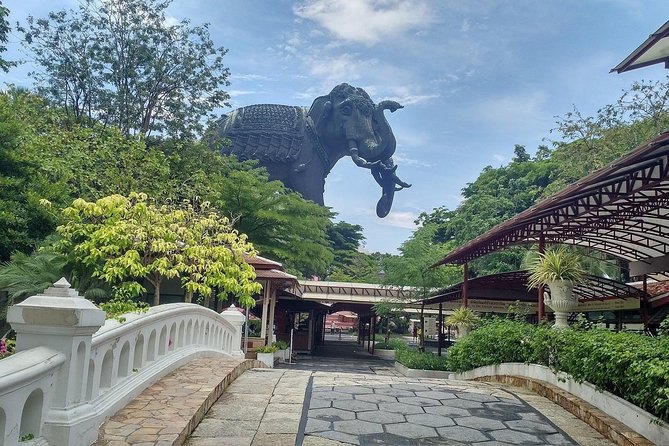
The gardens are part of why this place feels peaceful. You’re not stuck indoors the whole time. The grounds add breathing room, and the elephant sculptures scattered around the property give the museum a unified theme.
One detail I’d keep in mind: crowds can concentrate near the most iconic angles, especially around the big elephant features and popular staircase views. That doesn’t ruin the experience, but it does mean:
- If you want perfect photos, go when fewer people are entering.
- If your main goal is simply seeing the scale, don’t stress about getting the perfect shot. The building is huge in person, even without a staged photo.
Also, the included items add to the sense that this site has real ritual energy. You receive a flower, incense sticks, and a lotus for floating in water. The museum’s exact setup isn’t described here, so you should just watch for the water area and follow any on-site cues. It’s a small thing, but it turns the visit from passive sightseeing into something you participate in for a moment.
If you’re sensitive to incense smells, be aware that the included incense sticks suggest a ritual area is part of the experience.
Audio guide timing: use it like a tool, not a homework assignment
The museum suggests about 30 minutes with the audio guide. That’s a smart time target for most people. You’re not trying to read an entire museum catalog. You’re using the guide to understand what you’re looking at: the symbolism, what the levels represent, and what the collections are.
The audio guide is listed as available in five languages: English, Chinese, Russian, Thai, and Korean. The package information for this experience specifically includes an audio guide device service in English and Chinese. So if you want another language, you may need to confirm availability on the device you receive.
Duration on the booking is wide—about 30 minutes to 10 hours (approx.)—which makes sense. If you’re the type who reads signs closely and re-checks details from multiple spots, you can stay longer. If you want the elephant, the key levels, and the gardens, you can finish quickly.
My practical advice: set your goal before you enter.
- Goal A: quick highlights with the audio guide (~30 minutes).
- Goal B: audio guide plus extra time in the gardens (closer to 1–2 hours).
- Goal C: slow walk, lots of photo angles, and lingering on artwork (longer).
Then stick to that plan. It keeps the experience from feeling endless.
Price and value: what you pay, what you get, and who it suits
This experience is priced at $16.21 per person, and it’s sold as a mobile ticket. Based on the operator’s own statement, it can work out cheaper than buying at the gate (they mention being 40% cheaper than gate prices). Even if you don’t compare yourself, the main value is what’s included.
Here’s what’s included:
- Entry ticket (listed as foreigners only)
- Audio guide device service (English and Chinese)
- Flower, incense sticks, and a lotus for floating in water
Not included:
- Transportation to and from the museum
- Optional donation
- Personal expenses
That foreigners-only note matters. If you’re not sure how your nationality is handled, double-check before you go, because the included ticket description is specific.
Is it worth it? For me, yes—because you’re paying for three things at once:
1) A strong cultural setting (the building is the star)
2) A structured visit via the audio guide and three-level layout
3) A small ritual component with the included flower/incense/lotus items
If you’re only looking for a quick exterior photo and nothing else, you might not feel your money’s worth. But if you want the inside levels plus the gardens, this price looks fair.






Getting there the easy way: BTS to Chang Erawan Station
You don’t need a complicated plan to reach it. The simplest route is built in:
- Take the BTS Skytrain to Chang Erawan Station
- Walk about 5–10 minutes to the museum
This matters because Bangkok traffic can turn a short trip into a long one. A quick Skytrain segment keeps your schedule intact.
Taxis can work too, but the BTS option is the cleaner choice when you want predictable timing. Also, since the experience notes it’s near public transportation, you’ll usually have nearby options if you need to adjust.
When to go: opening hours and the best use of your time
The museum is open 9:00 AM–7:00 PM, Monday through Sunday.
That’s flexible enough to fit into a Bangkok day, including a late afternoon visit. One of the practical advantages is that you’re not forced to rush in the morning. If your Bangkok schedule fills up, you can still go in the afternoon and see the building with daylight around the grounds.
For crowds, you’ll have the best odds earlier in the day, but even later is fine if you accept that photo angles may take patience.
A smart approach:
- If you want the calm garden feel: arrive earlier so you can enjoy the outdoor areas before the heaviest waves.
- If you mostly care about the elephant and three floors: focus your time indoors first, then finish outside.
The museum can be more enjoyable when you don’t feel like you’re chasing a closing time.
Who should book this experience, and who might skip it
This stop is ideal if you:
- Love architecture with a story
- Want religious art and Thai cultural artifacts in a structured building
- Prefer a visit you can keep short (about 30 minutes) or extend with extra wandering
- Like having an audio guide to connect what you’re seeing to what it means
You might skip or reconsider if:
- You hate crowds and want guaranteed quiet photo spots
- You only want a traditional “museum room” experience instead of a building designed as a full scene
- You’re expecting transport to be included (it’s not)
It’s also a good choice if you’re already in Bangkok and want something culturally different from the usual evening routine. The museum’s hours make it easy to add without derailing your day.
Should you book the Erawan Museum ticket?
I’d book if you want an easy, time-friendly cultural visit with real included extras: audio guide, and the flower/incense/lotus ritual items. The mobile ticket helps keep things simple, and the BTS route makes logistics painless.
Skip booking only if you’re purely after exterior photos, or if you’re traveling on a schedule where strict timing matters more than using the audio guide. Otherwise, this is the kind of place where spending a little time inside pays off because the building’s design does half the storytelling for you.
FAQ
Where is the Erawan Museum?
It’s in Samut Prakan Province, near Bangkok.
What’s the ticket price?
The price is listed as $16.21 per person.
How long should I plan to visit?
The suggested time is about 30 minutes with the audio guide, though the overall duration is listed as 30 minutes to about 10 hours (approx.).
What are the opening hours?
It’s open daily from 9:00 AM to 7:00 PM (Monday through Sunday).
How do I get there from Bangkok using public transport?
Take the BTS Skytrain to Chang Erawan Station, then walk about 5–10 minutes.
Is a mobile ticket used?
Yes, this experience uses a mobile ticket.
Is an audio guide included, and in what languages?
An audio guide device service is included for English and Chinese. The audio guide is listed as available in five languages: English, Chinese, Russian, Thai, and Korean.
What’s included with the admission?
Included items are the entry ticket (foreigners only), the audio guide device service, and a flower, incense sticks, and a lotus for floating in water.
Is transportation to the museum included?
No. Transportation to and from the museum is not included.
Can I cancel or change the booking?
No. The experience is non-refundable and cannot be changed for any reason.