
REVIEW · PHUKET
Thai Massage Lesson 3 Hrs in Phuket, Thailand
Book on Viator →Operated by Suuko Cultural Spa & Wellness · Bookable on Viator
Thai massage skills in three hours sounds doable. At Suuko Wellness & Spa Resort in Phuket, this private lesson teaches head-neck-shoulder techniques you can use right away, with guidance on essential oils and where to focus attention.
I love the hands-on training on a model, not just watching from the sidelines. I also like that you get a diagram handbook you can use later, plus time to take notes as you practice.
One possible drawback: the focus is specifically head, neck, and shoulders, so it may feel narrow if you were hoping for full-body Thai massage.
In This Review
- Quick highlights you’ll feel during the lesson
- Suuko Wellness & Spa Resort: the calm start in Phuket
- What you learn: head-neck-shoulder Thai massage for office aches
- The 3-hour flow: coaching, then real practice
- A model-based lesson is the difference between knowing and doing
- Essential oils: how they fit into relaxation (without guesswork)
- The take-home diagram handbook (and the notes you’ll actually use)
- Private lesson value in Phuket: price, attention, and what $110.09 buys
- Who should book this Phuket Thai massage lesson
- Should you book? My practical take
- FAQ
- FAQ
- Where does the Thai Massage Lesson start in Phuket?
- How long is the Thai Massage Lesson?
- Is this activity private or shared with others?
- What exactly do you learn during the lesson?
- Do you get any materials to take home?
- What is the cancellation policy?
- Do teenagers need parental consent to join?
Quick highlights you’ll feel during the lesson
- A private session with no other people joining your group
- Hands-on practice using a model for training
- Essential-oil guidance to enhance the experience
- A diagram handbook to help you repeat the routine at home
- Computer-ache friendly techniques aimed at neck and shoulder strain
Suuko Wellness & Spa Resort: the calm start in Phuket
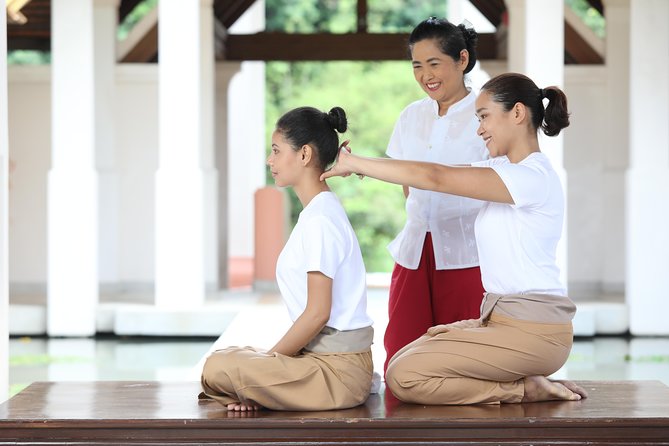
This lesson is based at Suuko Wellness & Spa Resort in Chalong (Phuket). The setting matters, because Thai massage is partly about touch, rhythm, and comfort, not just technique.
From the start, you’ll likely be welcomed in a relaxed way—one review notes a lovely tea on arrival and a property that feels gorgeous and cared for. That small touch is more than fluff. A calm start helps you pay attention during instruction, and it makes the whole 3 hours feel less like a class and more like a slow, focused coaching session.
The meeting point is: Suuko Wellness & Spa Resort, 5 วิชิต 10, Tambon Chalong, Amphoe Mueang Phuket, Chang Wat Phuket 83000, Thailand. The activity ends back at the same place, which keeps your day simple.
A few more Phuket tours and experiences worth a look



What you learn: head-neck-shoulder Thai massage for office aches
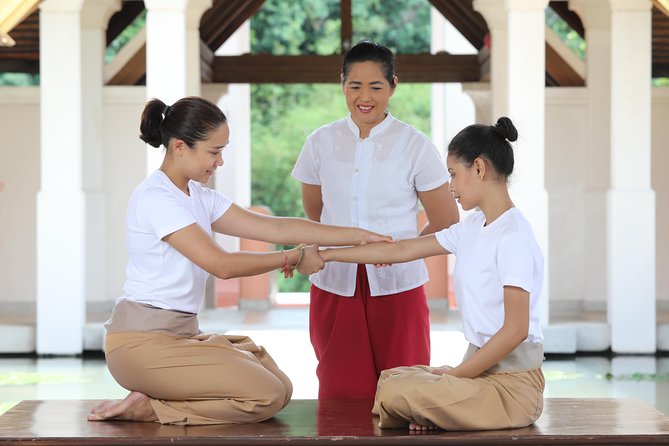
This workshop zeroes in on the head, neck and shoulders. That’s a smart choice for modern life. Most people carry tension from long computer days: rounded shoulders, a forward head posture, and that stiff “I need a reset” feeling by late afternoon.
The lesson is built around learning to give a professional-quality Thai massage to those overworked areas. The goal is easing pain and promoting relaxation, while also showing you where to apply attention so you’re not just moving hands around randomly.
You’ll also get instruction on how to use essential oils as part of the experience. Even if you already know what massage should feel like, learning when oils fit into the routine—and how the therapist frames the experience—helps you recreate a similar vibe at home.
The 3-hour flow: coaching, then real practice
The session lasts about 3 hours, and the structure is designed to move you from understanding to doing. Thai massage instruction works best when you’re allowed to practice early, and this format does that.
Here’s how the lesson experience typically unfolds:
First comes the setup and explanation. Your therapist guides you on what you’re learning and how to approach the massage—especially the idea of focusing attention where the body needs it most. For neck and shoulder work, the “where” matters as much as the “how.”
Then you shift into the hands-on part. The key detail: a training model is provided. That means you’re practicing the motion and pressure on a consistent target, while your tutor corrects technique. One review specifically praised how much hands-on time there was and how much time and care the therapists put into teaching for hours.
You’re not learning by memorizing a script. You’re learning by repeating movements, adjusting as you go, and building confidence while someone who knows the method watches you.
Finally, you leave with the tools to recreate your routine later—both in paper form and in muscle memory. This matters because a massage workshop can be fun, but the real value is whether you can actually use what you learned after you fly home.
A model-based lesson is the difference between knowing and doing
I’m a big fan of lessons that put you in the driver’s seat. A lot of classes stop at demonstrations. This one uses a model for training, which changes the whole experience.
Practicing on a model helps in two practical ways:
- You can focus on technique without worrying about hurting someone.
- You can get feedback on your hand placement, pacing, and consistency.
That’s especially important for head and neck massage, where small changes in where your hands go can make the difference between relaxing and just feeling awkward.
Also, because this is a private activity—only your group participates—you’re less likely to feel rushed or lost. If you want to ask questions, you’re in a position to do it.
Essential oils: how they fit into relaxation (without guesswork)
The workshop specifically mentions that you’ll hear how to use essential oils to enhance the experience. That means you’re not left with a generic suggestion like add a pleasant scent and hope for the best.
Instead, you get guidance from the therapist on how oils connect to comfort and the overall feel of the massage. For many people, the first attempt at incorporating oils at home goes wrong because they don’t know what to do, when to do it, or how to think about the sensory part of massage.
In this lesson, oils are part of the teaching, not an afterthought. Even if you don’t plan to use oils at home, the way the therapist explains them can still help you understand the experience as a whole: touch plus atmosphere plus attention.






The take-home diagram handbook (and the notes you’ll actually use)
You don’t just leave with a story. You leave with a diagram handbook. That’s a big deal for massage learning, because technique fades quickly if it lives only in your memory.
A diagram format helps you do two things:
- Rebuild hand positions and sequences
- Re-check your focus areas when you practice later
One review also mentioned a little book to take notes in. If that’s part of your session too, it’s even better. You’ll remember the lesson longer if you write down your questions and the cues your therapist gave you.
If you’re the type who thinks, I’ll remember this later, be honest: you probably won’t. The handbook is what turns this from a one-time experience into a repeatable skill.
Private lesson value in Phuket: price, attention, and what $110.09 buys
The price is $110.09 per person for about 3 hours. That’s not the cheapest way to get a Thai massage in Phuket. So what makes it worth it?
You’re paying for coaching, not just massage time. And you’re getting a few value drivers that add up:
- Private instruction with only your group
- Hands-on practice with a model
- Take-home materials (diagram handbook)
- A therapist-led approach from Suuko’s professional spa team
There’s also a practical signal from timing: on average, people book about 24 days in advance. That usually means the format is in demand, especially for couples or people who want a structured skill session instead of a random massage stop.
For couples, the private setup can be especially appealing. You can learn a routine that turns into a shared activity at home, rather than a one-off trip souvenir.
Who should book this Phuket Thai massage lesson
This workshop is a strong fit if you want something you can use after you return home.
It’s especially good for:
- People who want to learn the sensation of Thai massage for head, neck, and shoulders
- Anyone dealing with office syndrome or day-after-computer stiffness
- Solo participants who want personal skill-building
- Couples looking for a hands-on, shared experience
It also helps that the session is designed for “most people” to participate, and it includes a model so you’re not thrown into practicing blind.
One more thing to consider: because this is targeted to head and upper body zones, if you need full-body work or stretching-focused Thai massage, you may still enjoy the lesson but should know it’s not trying to replace a full-body Thai massage.
Should you book? My practical take
Book it if you want a private, therapist-taught way to learn Thai massage techniques for your neck and shoulders, with essential oils guidance and a diagram handbook to take home.
Skip it (or think twice) if you expect a full-body Thai massage, a long spa session, or a class that covers everything Thai massage can do. This is focused training. That focus is exactly why it can be valuable.
Also, consider booking if you’re in Phuket for a short stay. A 3-hour lesson is easier to fit than a multi-day course, and the take-home materials help justify the time.
FAQ
FAQ
Where does the Thai Massage Lesson start in Phuket?
The lesson starts at Suuko Wellness & Spa Resort, 5 วิชิต 10, Tambon Chalong, Amphoe Mueang Phuket, Chang Wat Phuket 83000, Thailand.
How long is the Thai Massage Lesson?
The session is approximately 3 hours.
Is this activity private or shared with others?
It’s a private activity. Only your group participates.
What exactly do you learn during the lesson?
You learn how to give a professional-quality Thai massage focused on the head, neck and shoulders, including where to focus attention and how to use essential oils to enhance the experience.
Do you get any materials to take home?
Yes. A diagram handbook is provided so you can take the experience home.
What is the cancellation policy?
You can cancel for free. You must cancel at least 24 hours before the experience’s start time for a full refund.
Do teenagers need parental consent to join?
For ages 13–18, parental consent is required.