REVIEW · KO LANTA
Cooking Class and Market Tour at Lanta Thai Cookery School on Koh Lanta
Book on Viator →Operated by Oh-Hoo · Bookable on Viator
If Thai food is your comfort zone, this makes it practical. You’ll tour a local market and then cook four Thai dishes in a small setting, with an instructor who breaks down herbs and spice. The one catch: you should come ready for a lot of food, so a light lunch plan won’t work.
I like how this class mixes two parts that usually stay separate: buying ingredients with a local-style market tour, then actually learning the techniques behind the flavor. Hotel pickup and drop-off keep it easy, even when Koh Lanta’s plan for the day is already full. One consideration is that kids (ages 7–11) can cook only two dishes, so families might want to plan their expectations.
In This Review
- Key things to know before you go
- Where the Lanta Thai Cookery School Experience Starts on Koh Lanta
- How the Cooking Class Works: 10 Dishes, a Group Vote, and 4 You Cook
- The Fresh Market Tour: Where Thai Flavor Starts
- What You’ll Cook and Eat: Big Portions and Real Techniques
- What You Take Home: Recipe Book, Certificate, and a Way to Recreate It
- Diet, Spice, and the Group Vote: How Personal Control Works
- Price on Koh Lanta: What You Get for About $62.31
- Teaching Style: What Makes the Instructors Work for Beginners
- Practical Tips for a Smooth 10:00 am Start
- Should You Book This Cooking Class on Koh Lanta?
- FAQ
- Where does the cooking class take place?
- How long is the experience?
- What time does it start?
- How many dishes do I cook?
- How are the dishes selected?
- Can the dishes be made vegetarian or vegan?
- What if I’m traveling with kids?
- Do I get anything to take home?
- Is pickup and drop-off included?
- What if someone in my group doesn’t want to cook?
- Is the class guaranteed to run?
Key things to know before you go
- Small-group class (max 10 travelers): more attention while you cook
- Market tour plus cooking: shop for ingredients and learn how locals think about them
- 10 dish options, vote as a group: you’ll cook 4 dishes total
- Flexible diet and spice levels: vegetarian/vegan and mild-to-spicy options are available
- Recipe book and certificate to take home: you’ll leave with something you can use
Where the Lanta Thai Cookery School Experience Starts on Koh Lanta
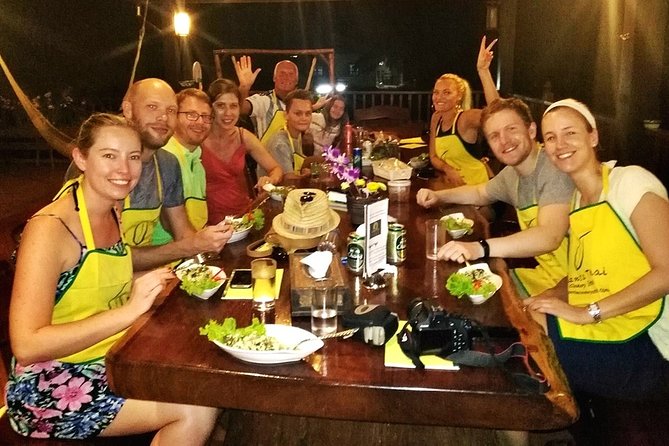
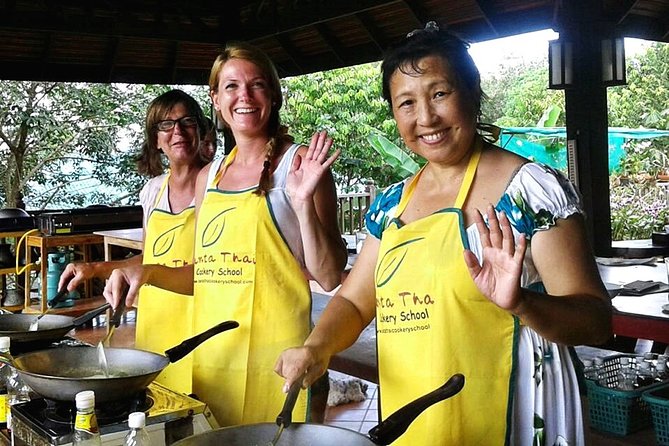
Your day begins with an included hotel pickup and drop-off on Ko Lanta, so you’re not stuck figuring out transport or timing. The school itself sits in the heart of a lush rubber plantation, which gives the whole experience a calm, country feel rather than a rushed cooking demo vibe.
The start time is 10:00 am, and the full experience runs about 4 hours. That’s a sweet length: long enough to do real hands-on cooking, but not so long that it steals your whole day from beach time.
Even if you’re traveling with a flexible schedule, this is the kind of activity that pays off when you show up focused and hungry. You’ll be shopping for ingredients and then turning them into meals, so the timing matters.
You can also read our reviews of more shopping tours in Ko Lanta

How the Cooking Class Works: 10 Dishes, a Group Vote, and 4 You Cook
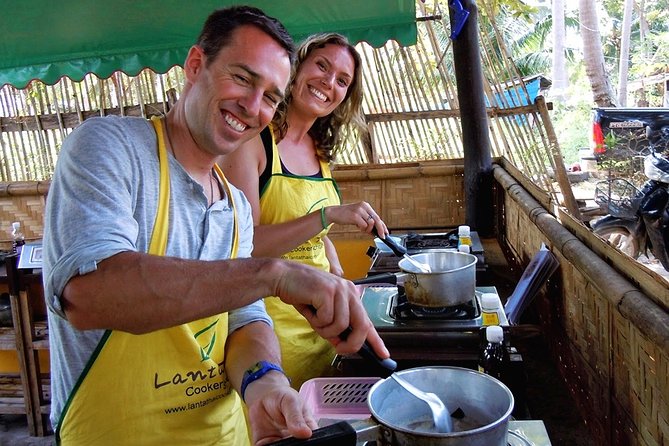
Here’s the part you’ll remember: you don’t just choose what sounds good and then follow a script. You start with a group vote among 10 dish options, and the four with the most votes become the ones everyone cooks.
Once those four are picked, you’ll get ingredient guidance for Thai cooking—what to use and why it matters for the final flavor. Then you’ll cook your chosen dishes with a Thai chef, with step-by-step support while you’re working at your station.
It’s also built to keep things personal. While the group selects the four dishes together, you can still tailor details individually—like meat type (where relevant) and spice level. That’s a big deal if you’re traveling with people who want the same dishes but not the same heat.
Practical note: the class size is limited to a maximum of 12 persons, and the activity itself caps at 10 travelers. Translation: it should feel coordinated, not crowded.
The Fresh Market Tour: Where Thai Flavor Starts
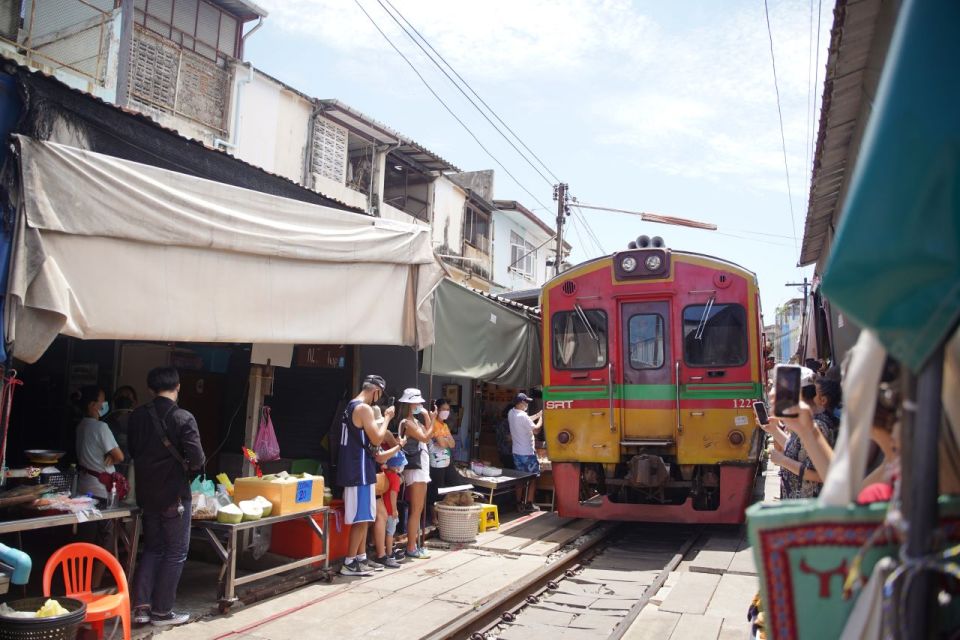
Before the stove time, you’ll head to a fresh market. This isn’t just a quick photo stop. The market visit shows how locals buy and prepare food, and it also gives you the ingredients you’ll use later in class.
This is where Thai cooking starts making sense. You’ll learn about the herbs, vegetables, and spices that give Thai dishes their signature kick. That matters because Thai recipes often hinge on balance—aroma, sour, salty, sweet, and heat—rather than just one “secret ingredient.”
You also get the chance to see the ingredients in real life. When you later chop, grind, or combine them in class, you’ll already have a mental picture of what they look like and how they’re commonly used.
What You’ll Cook and Eat: Big Portions and Real Techniques
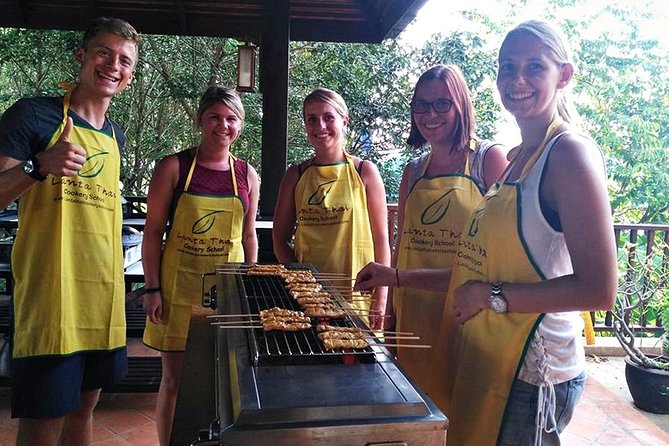
The class is designed so you cook four Thai dishes, and yes—plan for a meal-sized outcome. Multiple instructors and descriptions emphasize that you end up with a lot to eat, so treat this like your main food stop of the day, not a snack activity.
Also, this isn’t only about finishing dishes. The teaching style is built to help you understand methods. Instructors described as happy, energetic, and strong explainers focus on how ingredients work together, not just what to do step-by-step.
You can expect a friendly atmosphere. Names that come up include Sun, San, Prim, and Pan, and across those experiences the consistent theme is clear explanations and solid English. You’ll get support as you cook, which is a comfort if Thai cooking feels intimidating at home.
When you taste what you made with your group, the whole thing clicks. That’s the value of cooking four dishes yourself instead of watching one dish get assembled.
What You Take Home: Recipe Book, Certificate, and a Way to Recreate It
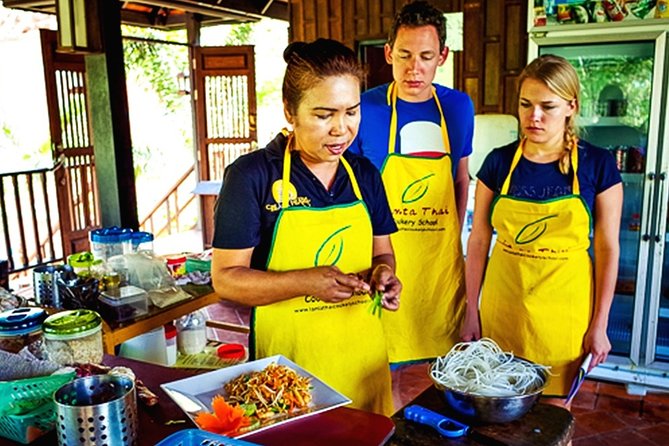
This class doesn’t end when you stop cooking. You’ll take home a recipe book and a certificate, which makes a difference if you actually want to cook Thai food again later.
The recipe book is especially useful because it keeps the methods and ingredient choices in reach. You’re not relying on memory of what looked right or what tasted “about right.” You’ll have a reference you can use when you’re standing in a grocery store back home trying to choose between options.
The certificate is more than a souvenir. It’s a reminder that you didn’t just attend—you learned a set of recipes and techniques you can reproduce.






Diet, Spice, and the Group Vote: How Personal Control Works
Thai cooking can be flexible, and this class is set up to match your preferences. All dishes can be vegetarian, vegan, spicy, or non spicy, depending on what you want.
Here’s how that usually helps in real life: you can join with friends who want different heat levels and still cook the same core dishes. Instead of splitting into separate classes, the class structure lets you adjust spice while staying on the same menu.
Children (ages 7–11) can participate too, with a limit: they can choose only 2 dishes. That’s an important heads-up for families. If your child wants to cook four, they can’t—so consider whether they’ll still enjoy the market and cooking process even with fewer dishes.
And if your group has one person who wants to watch rather than cook, there’s an option: they pay an additional 500 Baht per person. That fee includes a share of food and transportation, so they’re not just sitting around hungry.
Price on Koh Lanta: What You Get for About $62.31
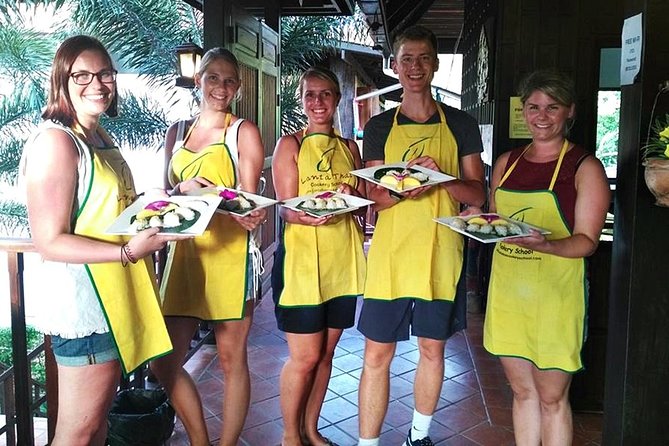
At $62.31 per person, this class looks like a fair price for a half-day that includes real cooking, a market tour, and take-home materials.
What makes the value feel better than many “cooking demo” options is the small-group setup and the fact that you cook four dishes yourself. Hotel pickup and drop-off are also included, which can quietly save time and money on transport—especially on Koh Lanta where you don’t always want to figure out logistics mid-day.
It’s also billed as a small group that helps keep costs down without losing the more personal feel. With a max group size, you’re more likely to get help while you’re cooking, which is the difference between learning and simply following instructions.
In other words: you’re paying for participation plus guidance, not just ingredients and a seat at the table.
Teaching Style: What Makes the Instructors Work for Beginners
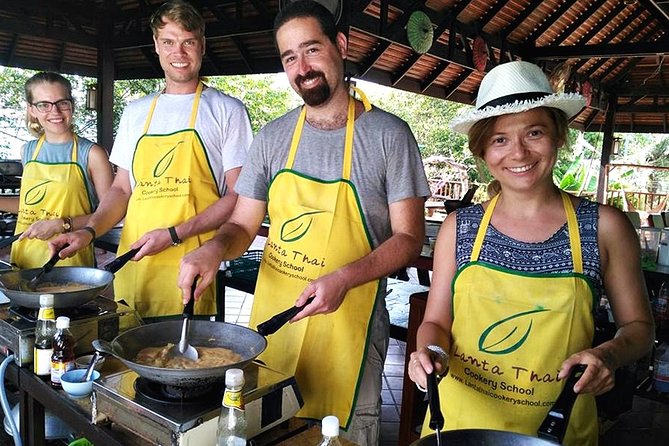
If you’re new to Thai cooking, this is the kind of class that helps you get past the guesswork. The way instructors are described points to a clear goal: you learn how ingredients behave and why certain combinations taste the way they do.
Instructors were repeatedly praised for being friendly, energetic, and strong explainers. Names like Sun, San, Prim, and Pan show up in different classes, and across those accounts the consistent theme is that English and instructions are easy to follow.
That’s useful because Thai recipes often involve ingredients that can be unfamiliar. If you can identify what you’re working with and what role it plays, Thai food becomes less “mystery cuisine” and more repeatable cooking.
You’ll also get the benefit of group momentum. When other people are asking questions or choosing spice levels, you’re more likely to understand the choices you’re making. It’s less intimidating than cooking alone at home.
Practical Tips for a Smooth 10:00 am Start
This is one of those tours where small choices help a lot.
Plan your morning so you arrive with time to settle in. The start time is 10:00 am, and once the market portion begins you’ll be moving. If you’re coming straight from breakfast, go light—then eat what you cook.
Come ready to adjust to taste preferences. You’ll be able to choose spice level, and the menu is picked by vote. That means you’ll likely cook what you came for, but you should still be flexible about the exact dishes if you’re not the one with the most “vote-worthy” picks.
If you’re traveling with someone who doesn’t want to cook, remember the extra 500 Baht per person fee. It includes transportation and food, which is good to know so you can budget calmly.
Finally, keep an eye on your schedule: it’s a roughly 4-hour experience. If you’re trying to fit it between two far-apart activities, you’ll want a buffer for pickup.
Should You Book This Cooking Class on Koh Lanta?
You should book if you want more than a meal out. This is a market-to-stove experience that teaches you why Thai flavor works, not only what to order. The recipe book and certificate make it easier to cook again at home, and the small-group size helps you get real support while you’re working.
Skip it (or at least think twice) if you’re hoping for a quick snack-style activity. This is cooking-focused, and you’ll end up with a lot of food. It’s also built around the group vote system, so the exact dish lineup is shared, not purely personalized.
FAQ
Where does the cooking class take place?
It’s on Ko Lanta, Thailand, at the Lanta Thai Cookery School, located in the heart of a rubber plantation. Hotel pickup and drop-off are provided for convenience.
How long is the experience?
The cooking class and market tour lasts about 4 hours.
What time does it start?
The start time is 10:00 am.
How many dishes do I cook?
You cook 4 Thai dishes in total.
How are the dishes selected?
There are 10 dish options to choose from, and the group votes together to decide which four dishes everyone will cook. You can choose type of meat and spice level individually.
Can the dishes be made vegetarian or vegan?
Yes. All dishes can be either vegetarian, vegan, spicy, or non spicy, depending on what you prefer.
What if I’m traveling with kids?
Children aged 7–11 can join, but they can choose only 2 dishes.
Do I get anything to take home?
Yes. You take home a recipe book and a certificate.
Is pickup and drop-off included?
Yes. Hotel pickup and drop-off are included, and you’ll also have a mobile ticket.
What if someone in my group doesn’t want to cook?
The person who comes but doesn’t want to cook pays an extra 500 Baht per person. That includes a share of food and transportation.
Is the class guaranteed to run?
It requires a minimum number of travelers (at least 2 people) and can be affected by good weather. If it’s canceled due to poor weather or not meeting the minimum, you’ll be offered a different date or a full refund. Free cancellation is available up to 24 hours before the start time.