REVIEW · BANGKOK
Bangkok Three Temples and The City
Book on Viator →Operated by Asia Advisor by Asni · Bookable on Viator
Three temples, one focused morning sounds perfect. This four-hour loop turns Bangkok into a walkable story, starting with the 5.5-ton Golden Buddha at Wat Traimit and ending with the riverfront drama of Wat Arun, locally called Wat Chaeng. I love the smart mix of getting around by train and boat to keep it feeling local, and I also like the comfort factor of an air-conditioned vehicle plus a guide who can adjust on the fly, like Nina did when one stop was going to close early for the Queen’s birthday. The one drawback to plan for: temple timing can shift because of weather, safety rules, or special closures.
I like that the tour is structured enough to cover the highlights fast, but it does not feel rushed inside each site. Each temple visit is about 30 minutes, so you have time to look, take photos, and still move on before the heat and crowds take over your mood. If you’ve got a short Bangkok stay, this kind of tempo is a gift.
Still, you’ll want to dress for temple rules. Shoulders and knees should be covered, even if it’s hot, and that can mean bringing or wearing lightweight layers. Also, keep an eye on timing: drivers can run 15–30 minutes late due to traffic, and the schedule can change with real-world conditions.
In This Review
- Key highlights you’ll care about
- The four-hour temple loop that fits a real schedule
- From BTS Saphan Taksin to the river: how the getting-around works
- Wat Traimit (Temple of the Golden Buddha): where the gold is the point
- Wat Pho and the Reclining Buddha: a huge site in a short visit
- Wat Arun at the Chao Phraya: the riverfront temple effect
- Price and value: what $45.07 actually buys you
- Guides make the difference: flexibility you can feel
- Practical temple advice so you don’t waste time
- Who this tour suits best (and who might skip it)
- Should you book this Bangkok Three Temples and the City tour?
- FAQ
- FAQ
- How long is the Bangkok Three Temples and The City tour?
- Which temples are included in the tour?
- Is the 5.5-ton Golden Buddha included in the tour?
- Are temple admission tickets included in the price?
- What transportation is used during the tour?
- Where is the meeting point?
- Is there pickup and drop-off?
- How many people are in the group?
- What should I wear for temple visits?
- Are tips included?
Key highlights you’ll care about
- Wat Traimit’s 5.5-ton gold seated Buddha: a major Bangkok landmark, dated to the 13th century and nearly 5 meters tall.
- A 30-minute, no-stress temple rhythm: each main stop is timed so you can actually see things without losing your entire day.
- Chaophraya River scenic boat ride: a great breather between temple zones, with river views that match the sights.
- Eco-leaning transport mix: train and boat help you avoid always sitting in traffic.
- Small group size (max 15): easier questions, easier flow, and less chaos at temple entrances.
- Flexible guide energy: guides like Nina, Sunee, Wan, and Toon have been praised for adapting when closures or timing issues pop up.
The four-hour temple loop that fits a real schedule
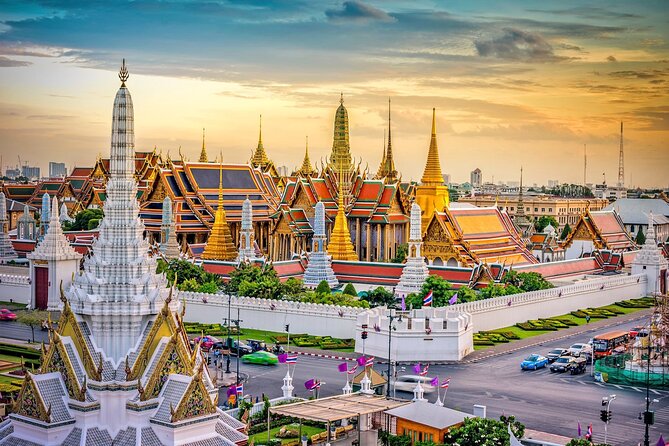
Bangkok can swallow time fast. Traffic eats plans, heat makes long waits miserable, and temples can take forever when you wander off the main paths. This tour’s big idea is simple: hit three of the city’s most important temple icons in a tight window, with enough structure to keep you from feeling lost.
You’ll start from Bangkok’s BTS skytrain area at Saphan Taksin, which is a practical way to begin because it puts you close to the river side and the zones where these temples make sense together. The tour also includes pickup and drop-off back at the meeting point, so you’re not stuck figuring out the end-of-day logistics while you’re tired.
It’s also an easy tour to pair with other plans. Four hours plus travel time means you can still do a food walk or a market afternoon without feeling like temples stole your whole trip.
You can also read our reviews of more city tours in Bangkok

From BTS Saphan Taksin to the river: how the getting-around works
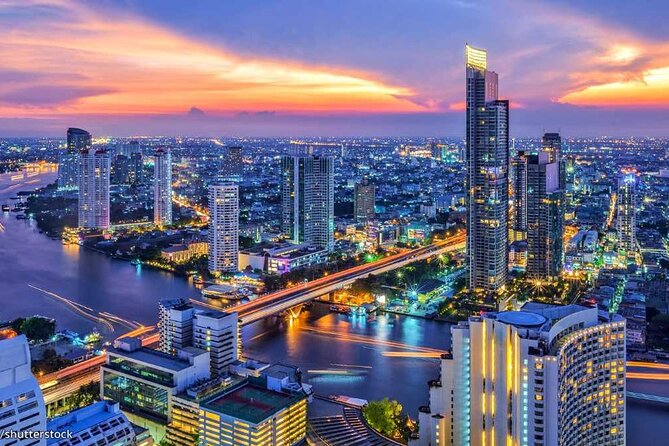
The meeting point is at BTS Saphan Taksin, and the tour is designed to run near public transportation. That matters because Bangkok is built for transit, but most visitors still burn time on grab rides and long waits. Here, you’ll use an air-conditioned vehicle when needed, and you’ll also get a scenic boat ride over the Chao Phraya River.
One of the most practical parts of this experience is the rhythm of moving between temple areas. You’re not just riding in a car for the entire time. The mix of train and boat supports the tour’s eco-tourism approach, and it helps you experience Bangkok from more than one angle. Boat views are a nice reset, too.
Timing can shift. The driver can be late by 15–30 minutes because of traffic, and the tour time can be affected by weather, equipment maintenance, or safety protocols. None of that is unusual in Bangkok, but it’s worth mentally budgeting for a flexible start.
Wat Traimit (Temple of the Golden Buddha): where the gold is the point
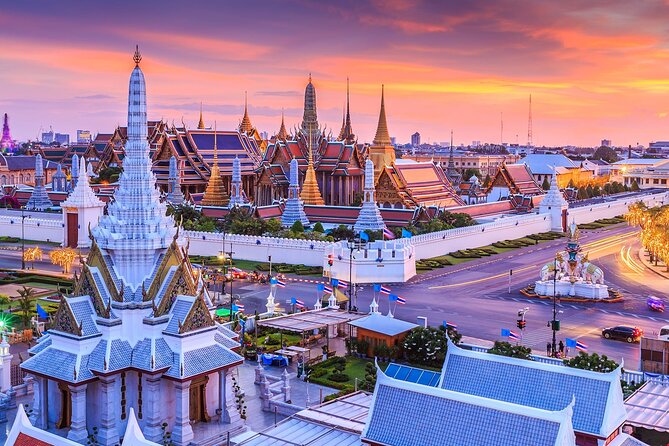
Your first stop is Wat Traimit, the Temple of the Golden Buddha, in Chinatown. This is not just another temple photo spot. The main draw is a 5.5-ton seated Buddha made of gold. The statue dates back to the 13th century and stands nearly 5 meters tall, so when you finally see it, it feels like the whole room is about that one object.
Why this stop works for first-timers: it gives you a clear “anchor” moment. Bangkok’s temple architecture can feel similar if you rush, but the sheer physical presence of this Buddha makes it a standout. It’s also a good way to start before the day gets too hot.
Expect your time here to be focused. The schedule gives about 30 minutes, so you’ll likely have time to look around the main areas without rushing through everything like a checklist. Since admission tickets are not included, you should plan to pay separately for entry when you arrive.
Small tip for comfort: go easy on heavy bags. You’ll want your hands free for photos and quick exits, especially with Chinatown foot traffic.
Wat Pho and the Reclining Buddha: a huge site in a short visit
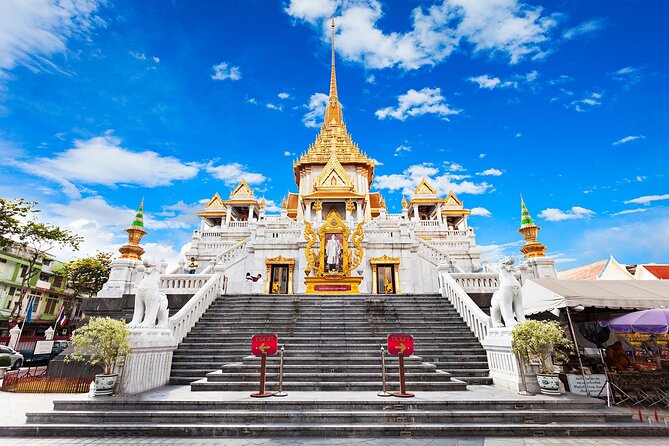
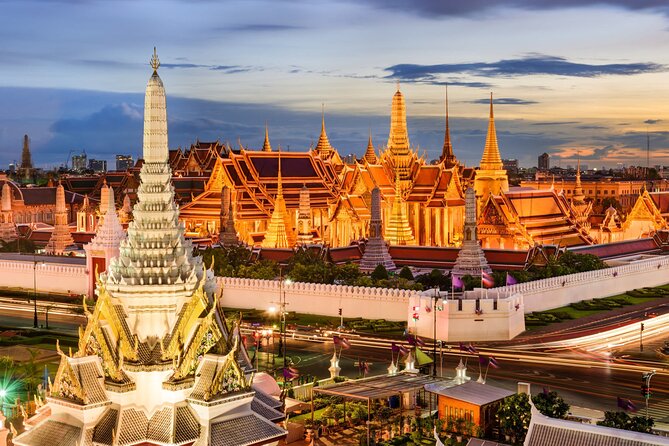
Next is Wat Phra Chetuphon, better known as Wat Pho, the Temple of the Reclining Buddha. It sits right behind the Temple of the Emerald Buddha, so the location alone tells you you’re in the core of Bangkok’s historic temple belt.
Wat Pho is one of the larger temple complexes. That’s also the reason this stop is best with guided structure. A big complex can eat your time if you don’t know where to focus, and a 30-minute window means you want someone’s guidance to help you prioritize.
The Reclining Buddha is the headline, and this is the point in the tour where the atmosphere shifts from “wow, gold statue” to “this is temple space, lived in and respected.” It’s also a good stop for learning what you’re looking at, not just snapping a photo.
Another practical note: admission is not included here either. Wear breathable clothes, keep your shoulders and knees covered, and bring patience for the crowded feel that comes with major sites close together.
Wat Arun at the Chao Phraya: the riverfront temple effect
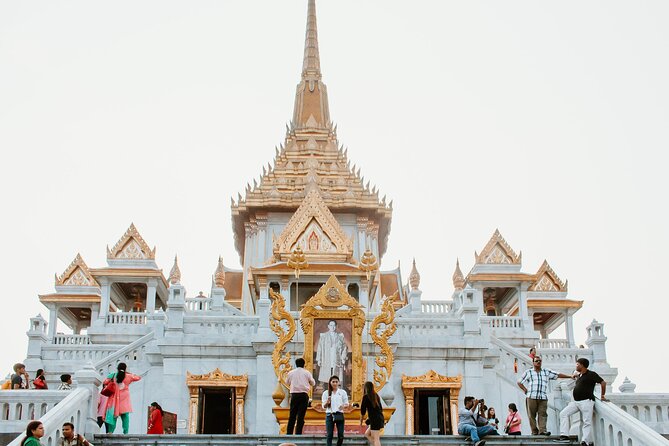
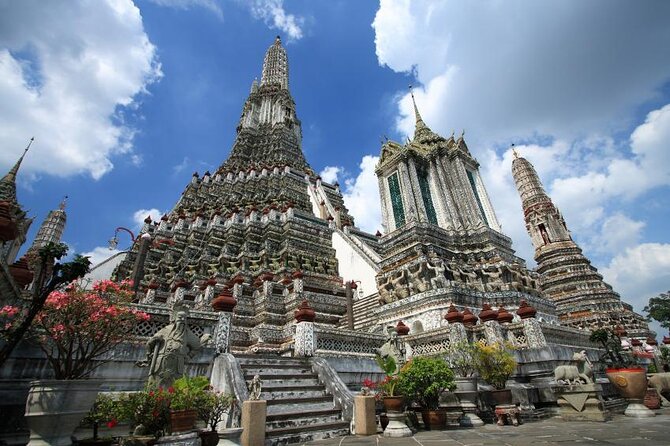
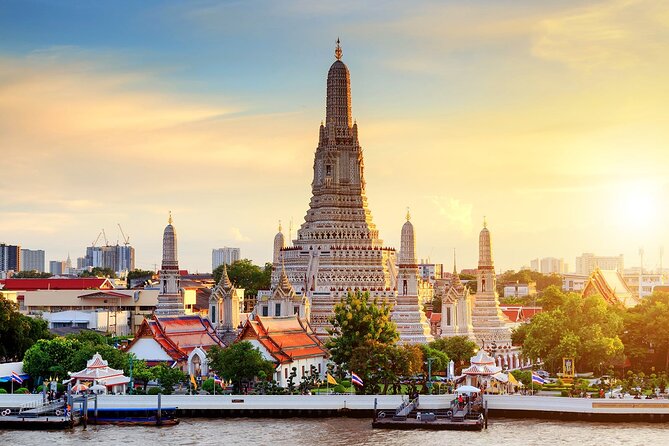
The final temple stop is Wat Arun, the Temple of Dawn. It’s on the west bank of the Chao Phraya River in Thonburi and is known locally as Wat Chaeng. If Wat Traimit gives you weight and Wat Pho gives you scale, Wat Arun gives you drama.
The selling point is the riverside location. Wat Arun is visually striking from the water, and even on a standard tour day, you’ll feel that “Bangkok river” vibe that makes the city different from other temple destinations. This stop is also a nice payoff after the earlier transport breaks, because you’ve got both the temple views and the river experience working together.
Again, time is limited to about 30 minutes. That’s enough to appreciate the main areas without turning the visit into a marathon. Admission tickets are not included, so plan to pay separately at the site.
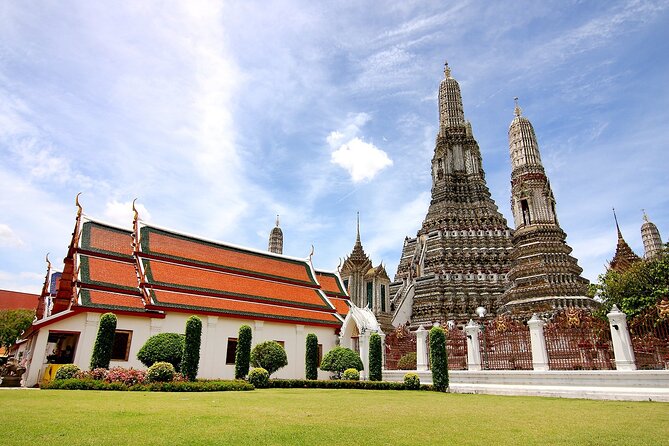
If you care about photos, look up while you’re there. Wat Arun’s design is detailed, and you’ll get better shots when you stop treating it like a flat monument and start viewing it as a layered structure against sky and river.


Price and value: what $45.07 actually buys you
At about $45.07 per person, this tour is priced like a strong “first Bangkok temples” option rather than a budget-only bargain. Here’s what you get for the money that makes the price make sense:
- A professional English-speaking guide. That’s not fluff here; it’s what turns three temples into context instead of three separate stops.
- Meeting point pickup & drop-off, so you’re not solving transit at the hardest part of the day.
- An air-conditioned vehicle plus a route that includes train and boat. In Bangkok, comfort plus smart transit is worth paying for.
- A small group (max 15), which helps the guide keep things moving and lets you ask questions without getting swallowed by the crowd.
- A mobile ticket, which keeps entry smoother once you’re ready to pay for temple admission separately.
What’s not included: tips/gratuity and temple admission tickets. That’s common, but it affects your real total cost. Still, the overall value is solid because the tour combines transportation, guiding, and a curated route through iconic landmarks in just four hours.
If you’re the kind of traveler who likes seeing the main highlights without spending hours planning, this is a good deal. If you’d rather wander completely on your own and you’re already comfortable with Bangkok transit, you may be able to do it cheaper. But you’d likely lose the structure that makes this itinerary work in a tight time window.
Guides make the difference: flexibility you can feel
This tour lives or dies by pacing, and guides matter because temple schedules can change. In particular, Nina has been able to adjust the route when one shrine would close early for the Queen’s birthday. That sort of flexibility is exactly what you want when your time in Bangkok is limited.
Other guides (Sunee, Wan, Toon) have been praised for being kind, patient, funny, and helpful, with Toon especially noted for patience when an accident delayed people at the meeting point. Even if you don’t face a delay, you benefit from that kind of calm approach because it reduces stress.
You’ll also want your guide’s help with the practical stuff: where to go first inside large temple areas, how to respect conservative dress rules, and when to move so you don’t end up waiting in the wrong place.
Practical temple advice so you don’t waste time
This part is simple, but it saves you headaches.
- Dress conservatively: cover shoulders and knees. Loose, lightweight long clothing works well in Bangkok heat and fits temple expectations.
- Plan for a 30-minute stop style: don’t treat each temple like an all-day museum. Use your time for the most important areas and details.
- Be punctual at the meeting point: the tour can reallocate late arrivals if possible, but if you miss it, it can be auto-canceled with a charge. Bangkok transit is easy, but accidents and delays happen.
- Expect timing wobble: weather and safety protocols can affect the schedule. If the day feels slower, it’s usually for a reason.
If you follow those, the day feels smooth. If you don’t, you’ll spend time dealing with entry issues instead of seeing the temples.
Who this tour suits best (and who might skip it)
This tour is best for:
- First-time visitors who want Wat Traimit, Wat Pho, and Wat Arun in one efficient plan.
- Short-trip travelers who only have a half-day to spare and still want the big icons.
- People who prefer guided context and smoother logistics over self-planning.
It may be less ideal if:
- You want a slow, unstructured temple day with long wandering time.
- You’re already set on hitting each temple independently and you don’t need guiding.
- You’re sensitive to schedule changes due to weather or site timings.
The max group size of 15 helps, but it’s still a group tour. You’ll move with the group, not at your own pace.
Should you book this Bangkok Three Temples and the City tour?
I think you should book it if you want the core Bangkok temple experience in one well-run half-day, with guiding, comfort, and a Chaophraya boat ride that adds variety beyond walking and cars. The price feels fair for what’s included, especially when you factor in pickup/drop-off, professional guidance, and a transport plan built around more than just sitting in traffic.
Skip it if you’re the type who enjoys solo exploration all day and you already know how you’ll handle tickets, entry flow, and transit between the three sites. In that case, you might do it cheaper on your own.
If you’re unsure, use this rule: if you have limited time in Bangkok and want the highlights without stress, this tour is a solid, practical choice.
FAQ
FAQ
How long is the Bangkok Three Temples and The City tour?
It runs for about 4 hours.
Which temples are included in the tour?
You’ll visit Wat Traimit (Temple of the Golden Buddha), Wat Phra Chetuphon (Wat Pho), and Wat Arun (Temple of Dawn).
Is the 5.5-ton Golden Buddha included in the tour?
Yes. The tour includes Wat Traimit, which houses the 5.5-tonne solid gold Buddha statue.
Are temple admission tickets included in the price?
No. Admission tickets are not included.
What transportation is used during the tour?
You’ll travel using an air-conditioned vehicle, plus a train and boat component designed for eco-tourism, including a scenic boat ride over the Chao Phraya River.
Where is the meeting point?
The start point is BTS Saphan Taksin (PG97+GJ2, Yan Nawa, Sathon, Bangkok 10120, Thailand).
Is there pickup and drop-off?
Yes. The tour includes meeting point pickup and drop-off, and it ends back at the meeting point.
How many people are in the group?
The tour has a maximum of 15 travelers.
What should I wear for temple visits?
Temple dress standards are conservative. You should cover shoulders and knees, and loose, lightweight long clothing is recommended.
Are tips included?
No. Tips and gratitude are not included.
![Floating & Railway Markets and Erawan Waterfall [Optional Luxury] - Mae Klong Railway Market and the Hoop Rom style experience](https://6.thethailandtraveler.com/wp-content/uploads/floating-railway-markets-and-erawan-waterfall-optional-luxury.jpg)