REVIEW · BANGKOK
Bangkok: Private & Customized Kanchanaburi Tour
Book on GetYourGuide →Operated by TripGuru Thailand · Bookable on GetYourGuide
Kanchanaburi packs a lot into one day. This private, 12-hour customizable trip from Bangkok lets you mix war memorials, caves/temples, and waterfalls based on what you care about most. I like that you’re not stuck on a fixed route—you can shape the day around your priorities while staying comfortable in an air-conditioned vehicle.
The best part for me is the control: you can choose up to four attractions (and your guide helps you make them work together by geography and timing). I also like the option of a real guide who can share context in English, Chinese, Spanish, or German, which matters a lot for places tied to WWII history.
One consideration: it’s a long haul. The drive is about 3 hours each way (150 km one-way), so this is a full-day commitment with plenty of road time before you hit the highlights.
In This Review
- Key things to know before you go
- Why Kanchanaburi Works as a 12-Hour Escape From Bangkok
- Price, What You Get, and Where the Costs Hide
- How Customization Really Plays Out (Choosing 3–4 Attractions)
- Pickup, Drive Time, and the Day Rhythm You Should Expect
- The Historic Core: River Kwai, Death Railway, JEATH, and Hellfire Pass
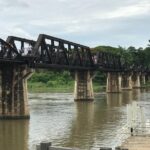
- Bridge over the River Kwai (and Death Railway-linked experiences)
- JEATH War Museum
- Hellfire Pass Interpretive Centre and Walking Trail
- Tham Krasae Bridge railway station and Kra Sae Cave (route-linked stops)
- Waterfalls and River Country: Erawan and Sai Yok Noi/Yai
- Erawan National Park & Erawan Waterfall
- Sai Yok Yai and Sai Yok Noi (Namtok Khao Pang)
- Caves and Temple Stops: Wat Tham Suea and the Tham Complex
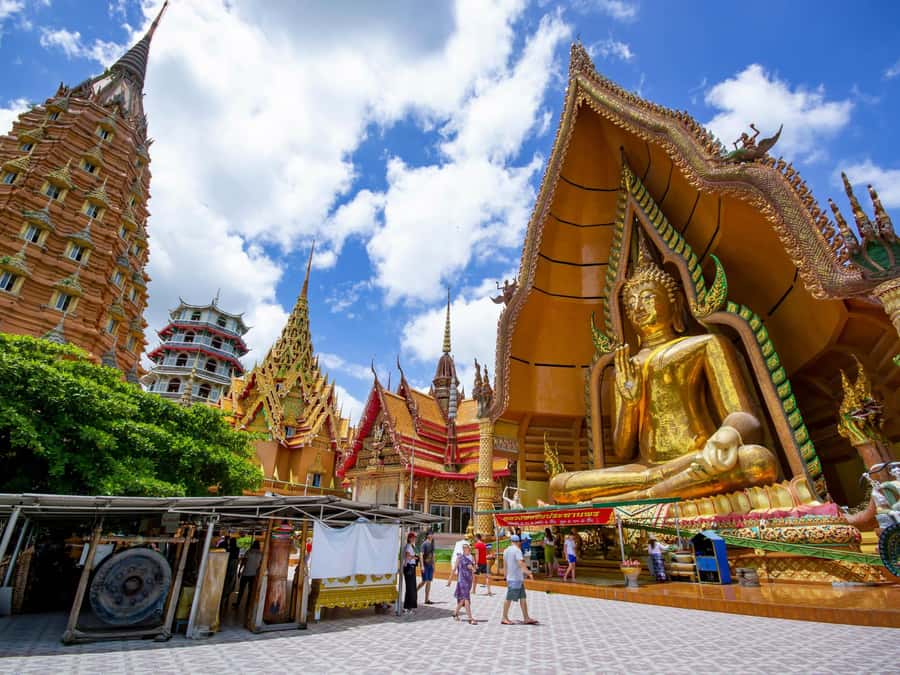
- Wat Tham Suea (Tiger Cave Temple)
- Wat Ban Tham, Wat Tham Mangkornthong, Wat Tham Khao Noi
- Tham Lawa Cave and Wat Tham Mangkon Thong / Wat Ban Tham-style breaks
- War Cemeteries and the Quiet Weight of Chong Kai
- Comfort, Pace, and What the Guides Are Doing for You
- Practical Packing List and Small Tactics to Enjoy More
- Who This Tour Is For (and Who Should Skip It)
- Should You Book This Private & Customized Kanchanaburi Tour?
- FAQ
- How long is the Kanchanaburi tour from Bangkok?
- What attractions can I choose for my customized day?
- Is hotel pickup included?
- How far is Kanchanaburi from Bangkok?
- Is a tour guide included?
- Are entrance fees included in the price?
- Is food included?
- What’s included for comfort during the day?
- How big is the group?
- Who should avoid this tour?
Key things to know before you go
- Pick up to four attractions so you’re not sprinting through Kanchanaburi like a checklist
- Small group size (limited to 9) plus a private vehicle setup keeps the day calmer
- WWII stops are front and center: JEATH War Museum, Hellfire Pass, and Chong Kai Allied War Cemetery
- Waterfall options include Erawan and Sai Yok Noi/Yai, with time to hike and (sometimes) swim if conditions allow
- Caves and temple visits like Wat Tham Suea can involve stair climbing and uneven terrain
- Sustainability touches include drinking water provided and carbon offset for each tour
Why Kanchanaburi Works as a 12-Hour Escape From Bangkok
Kanchanaburi isn’t just one thing. It’s history, religion, jungle river scenery, and waterfalls in the same province—and you can actually hit a smart mix in a single day if you plan well. The biggest reason this tour works is the format: you choose what to prioritize, then the schedule is built around making those stops connect without wasting hours in traffic.
For first-timers, this day-trip style is practical. You get the highlights people talk about (River Kwai/Death Railway sites and Erawan/Sai Yok) without forcing yourself to manage transport, timing, and tickets on your own. And because it’s private and customized, you can keep the day realistic—meaning you’re more likely to spend real time at each place instead of rushing photos.
You can also read our reviews of more private tours in Bangkok

Price, What You Get, and Where the Costs Hide
At $135 per person for a 12-hour experience, the value depends on what you’re comparing it to.
Here’s what you’re paying for:
- Hotel pickup and drop-off within major downtown Bangkok areas
- A comfortable air-conditioned vehicle and insurance
- Drinking water provided during the day
- A professional driver (and optionally a tour guide, if you select the guided option)
What you should budget extra for:
- Entrance fees (not included)
- Food and beverages (not included)
- Personal spending like snacks, extra drinks, and any souvenirs
This matters because the “real cost” isn’t just the tour price—it’s also the entrance fees at sites you choose. Still, if your goal is to see several far-flung places from Bangkok in one shot, a private setup often ends up feeling efficient. You’re buying time and stress relief as much as sightseeing.
How Customization Really Plays Out (Choosing 3–4 Attractions)
The tour is designed around a simple idea: you’re only choosing 3–4 key attractions, and then the guide builds a route that makes sense. That’s the right sweet spot for a long day—enough variety to make Kanchanaburi feel like more than a bus ride, but not so many stops that you spend half your time in the car.
When you choose your attractions, think in “themes”:
- WWII/war history theme: JEATH War Museum, Hellfire Pass Interpretive Centre, and Chong Kai Allied War Cemetery
- River Kwai/railway theme: Bridge over the River Kwai plus Death Railway-linked stops
- Nature/waterfall theme: Erawan National Park & Erawan Waterfall, plus Sai Yok Noi/Yai
- Caves/temples theme: Wat Tham Suea (Tiger Cave Temple) and the “Tham” cave/temple cluster stops
Also, don’t over-plan. A common mistake is picking four stops that all need hiking and climbing, then wondering why you feel exhausted at the end. If you want caves/temples and waterfalls, pick one “active” site (like a waterfall swim/hike or a cave climb) and keep the other stops lighter.
Pickup, Drive Time, and the Day Rhythm You Should Expect
Your day starts early. Starting time is typically between 7–9 am, with pickup from your hotel in major downtown Bangkok areas. You’ll receive confirmation by email the evening before, and your guide meets you holding a TripGuru sign.
Plan for the drive. Bangkok to Kanchanaburi is about 150 km one-way, roughly 3 hours each way. That means you’ll want to treat the car ride like part of the trip, not an inconvenience. Bring sunglasses, hat, and sunscreen, because road sun is real—even when it’s cooler in the province.
The tour is 12 hours total, so the pacing is built around fitting your chosen highlights plus some related stops that help the route flow. If you’re someone who needs slow, unhurried time everywhere, tell your guide early. A good guide will adjust the order and time at each stop without making you feel like the day is out of control.
The Historic Core: River Kwai, Death Railway, JEATH, and Hellfire Pass
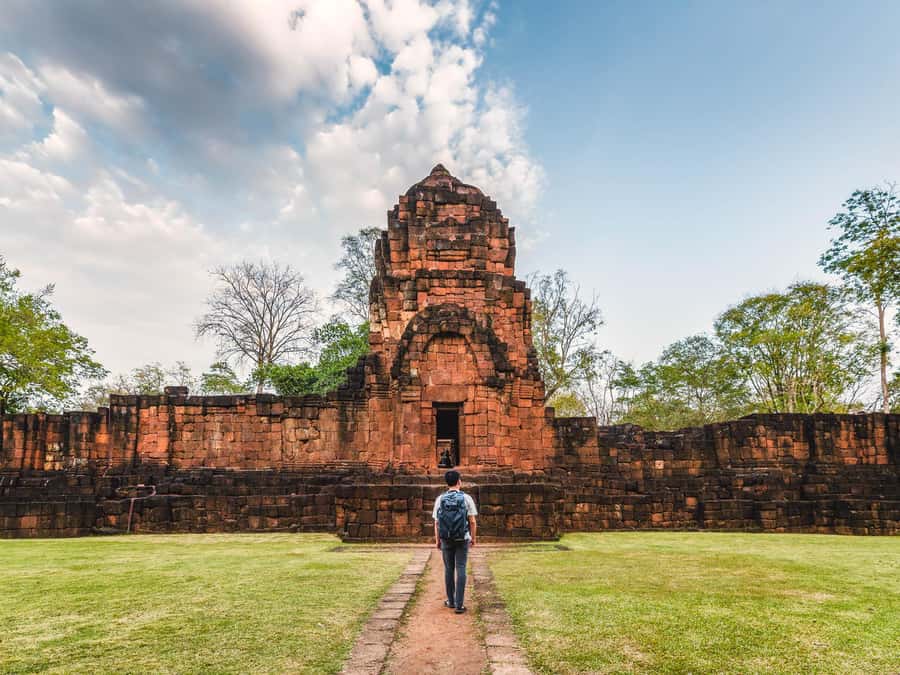
If you’re drawn to WWII history, Kanchanaburi delivers in a way few day trips do. These sites don’t feel like abstract museum facts—they’re tied to landscapes and paths people suffered through.


Bridge over the River Kwai (and Death Railway-linked experiences)
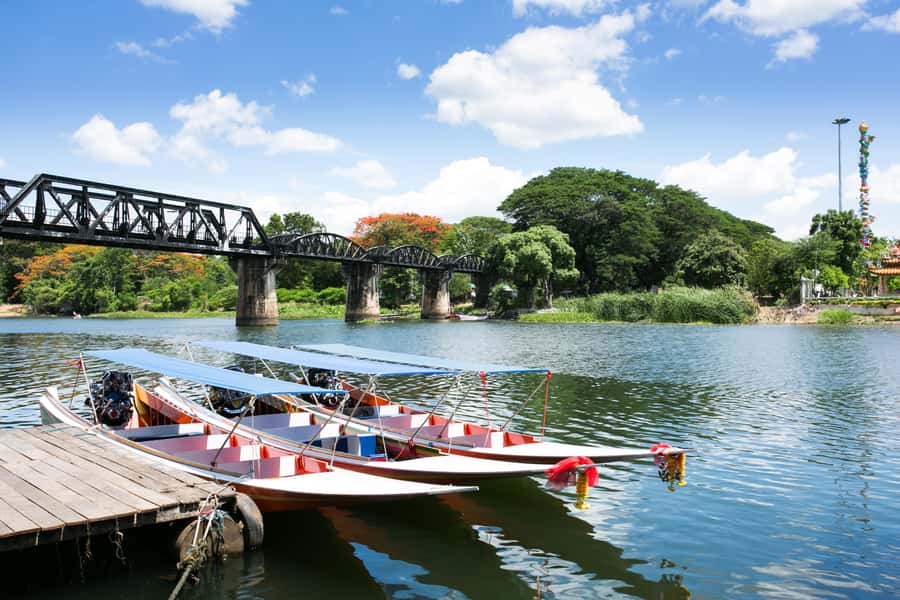
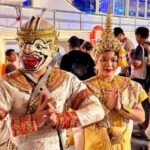
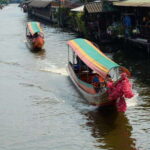
You’ll typically spend time around the Bridge over the River Kwai, which anchors the broader story of the railway. If your choices include Death Railway-related stops, your guide can help you line up the right segment of the experience so you get the best chance for views and timing. Some days include a short train ride along the line, depending on how your route is built.
Practical tip: this area is best when you can stand back, look around, and let the story catch up. If you’re rushing for photos only, you’ll miss the weight of the place.
JEATH War Museum
The JEATH War Museum is one of the most direct ways to connect the story to real artifacts and accounts. It’s not just “facts in a building”—it helps you understand how the railway work was experienced and remembered. Even if you don’t love museums, this one tends to land because it’s focused.
If you choose this stop, plan to slow down. Read signs, look at exhibits, and let the museum do its job.
Hellfire Pass Interpretive Centre and Walking Trail
This is the stop that often makes the biggest emotional impression. The Hellfire Pass Memorial Museum explains what happened there, and the walking trail gives you a sense of the terrain and the scale of the work.
A smart move: wear shoes you trust. The walking trail is part of the experience, and you’ll get more out of it if you’re comfortable.
Tham Krasae Bridge railway station and Kra Sae Cave (route-linked stops)
Some routes also include Tham Krasae Railway Bridge station and Kra Sae Cave. These add variety: rail history plus a more natural cave environment. If you like seeing how the railway threads through the countryside, these are good “bridge points” between history and nature.
Waterfalls and River Country: Erawan and Sai Yok Noi/Yai
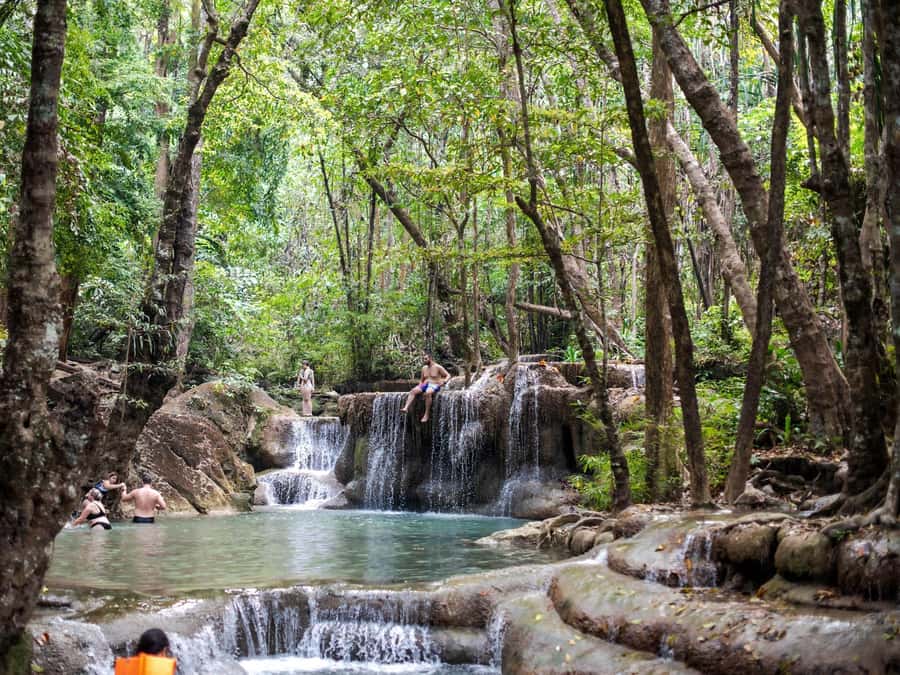
Nature in Kanchanaburi isn’t just pretty. It’s a full sensory reset after the heaviness of the war sites.
Erawan National Park & Erawan Waterfall
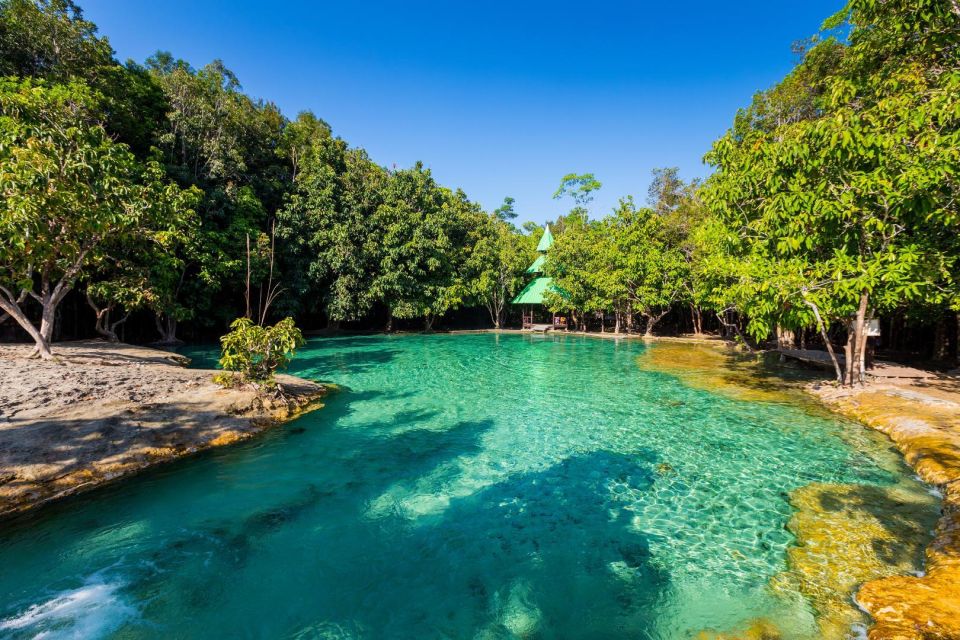
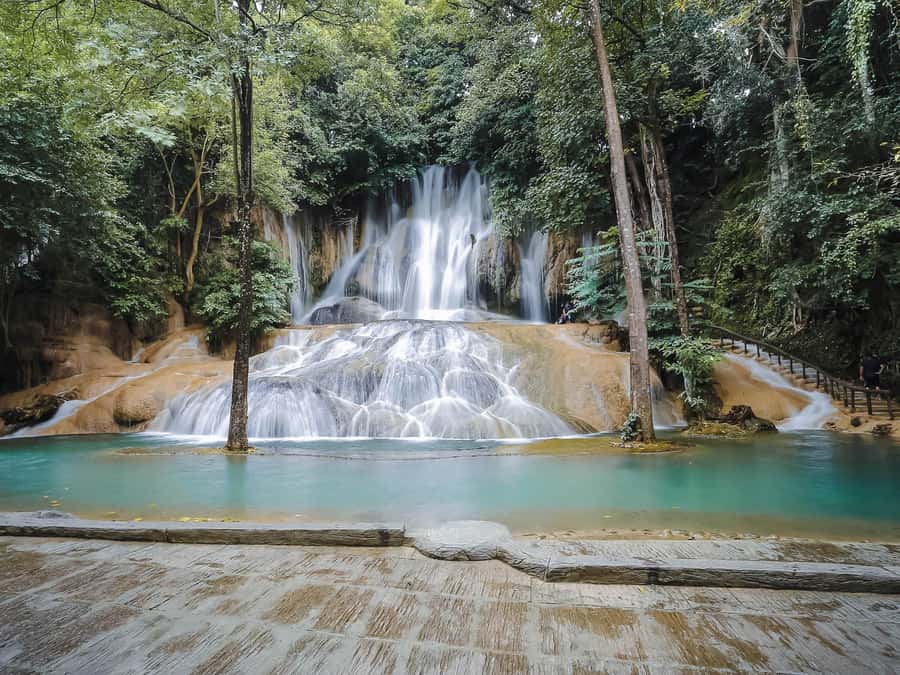
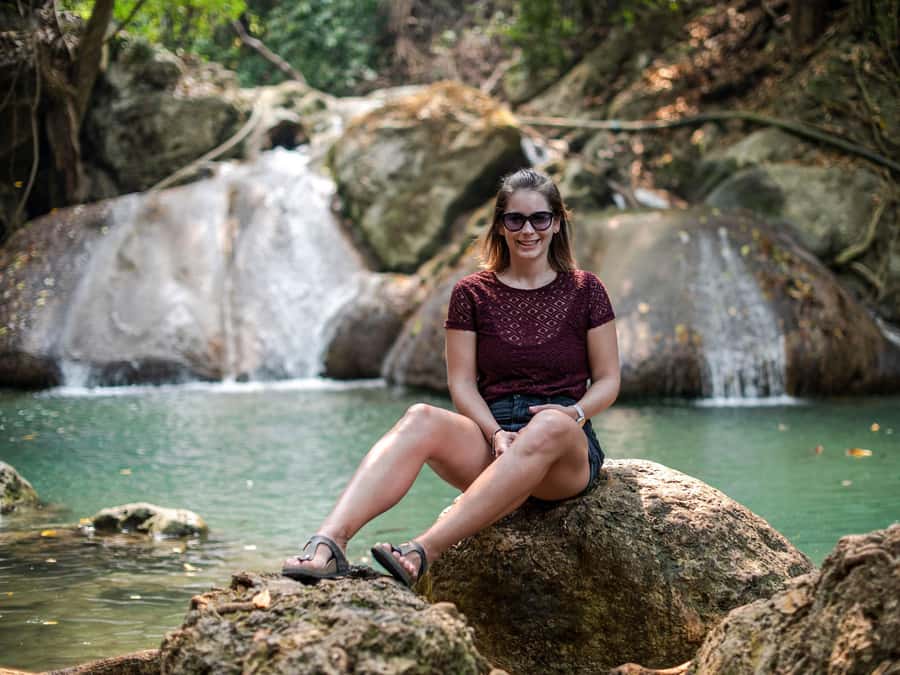
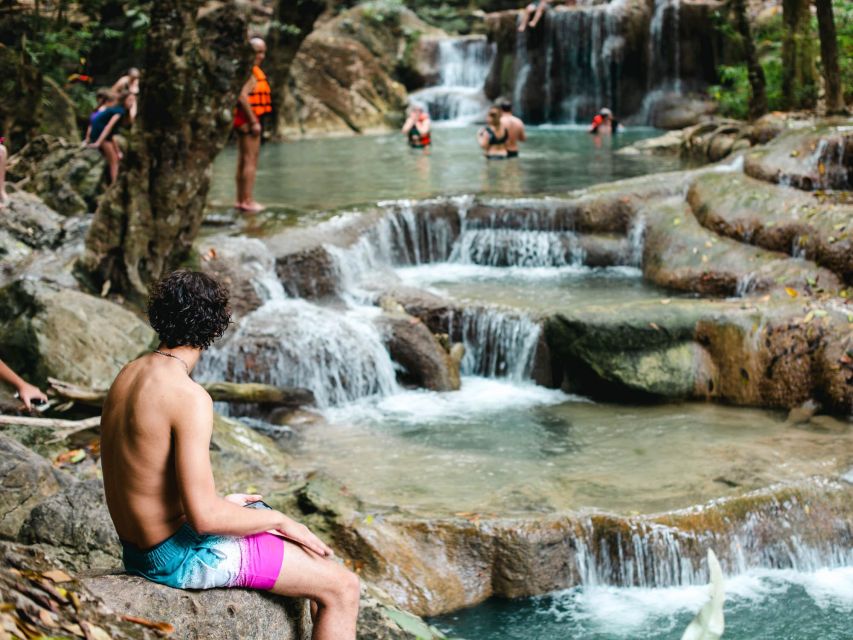
This is usually the top pick for first-timers. The waterfall area is scenic, and time here can include walking/hiking and possibly a swim. One important reality check: swimming conditions can vary with water levels. If swimming is a must for you, ask your guide what conditions look like that day so you’re not stuck planning your whole day around it.
Erawan also has multiple levels. If you want the higher spots, be ready for a tougher climb. Comfortable shoes help. And yes—bring insect repellent even if it looks calm.
Sai Yok Yai and Sai Yok Noi (Namtok Khao Pang)
If you want a change from Erawan, Sai Yok Yai Waterfall and Sai Yok Noi (Namtok Khao Pang) are excellent alternatives. They fit well into a route that also includes river/rail history because the scenery shift is big enough to feel like a true break.
Practical tip: waterfalls mean standing near spray and wet ground. Long pants and a light umbrella can help you stay comfortable as you move around.
Caves and Temple Stops: Wat Tham Suea and the Tham Complex
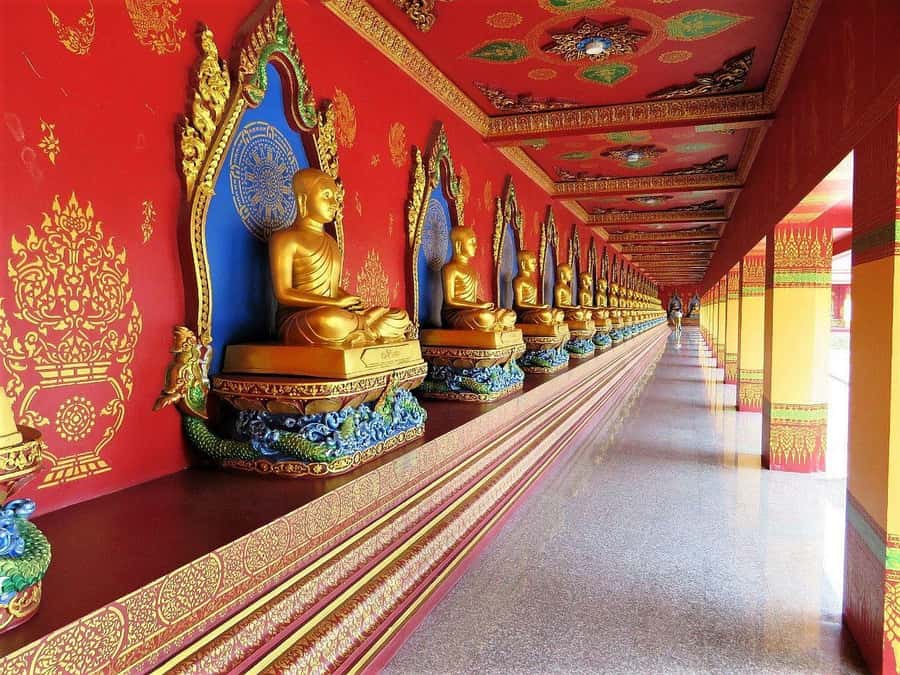
The “Tham” theme is a quiet surprise. Caves and temple complexes can be a calmer, more spiritual counterpoint to the war memorials and railway history.
Wat Tham Suea (Tiger Cave Temple)
Wat Tham Suea is a major highlight for many people. You’ll spend time at this temple site, and it typically involves climbing and time on uneven paths. If you’re planning to go high, pace yourself. A past visitor noted that reaching higher levels can get challenging near the top—so don’t treat it like a race.
If you want photos, go slowly. The best shots often come when you pause and look out, not when you sprint upward.
Wat Ban Tham, Wat Tham Mangkornthong, Wat Tham Khao Noi
These temple stops are part of the same cave/temple zone idea. The experience depends on your route and time, but the value is that you get multiple viewpoints and “temple-in-the-hills” moments without needing separate planning from scratch.
A practical approach: if you’re feeling strong, add more of these stops. If you’re tired, choose the one that excites you most and let the rest be optional through your guide.
Tham Lawa Cave and Wat Tham Mangkon Thong / Wat Ban Tham-style breaks
Caves add a cool, shaded break from sun. They can also involve steps and careful footing. Keep that in mind if you’re balancing caves with a waterfall swim plan.
War Cemeteries and the Quiet Weight of Chong Kai
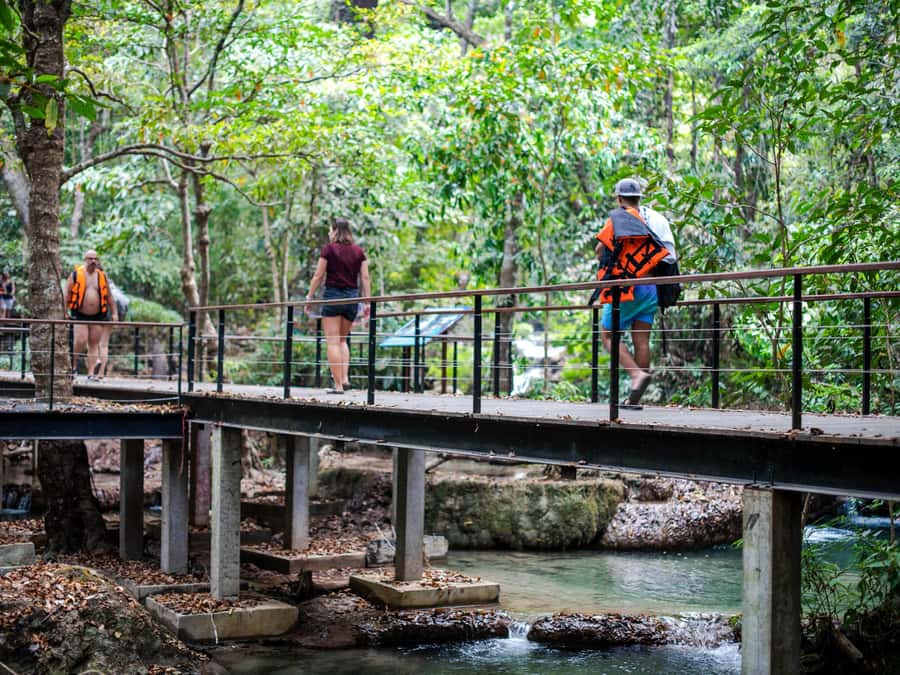
Not every stop is about museum boards. Chong Kai Allied War Cemetery is where the day gets still. A guided visit helps you connect names, sacrifice, and the broader story you’ve been learning earlier in the day.
If you care about this part, give it time. The cemetery benefits from calm. Think of it as the “closing scene” of the history portion before you move back into waterfalls and caves.
Comfort, Pace, and What the Guides Are Doing for You
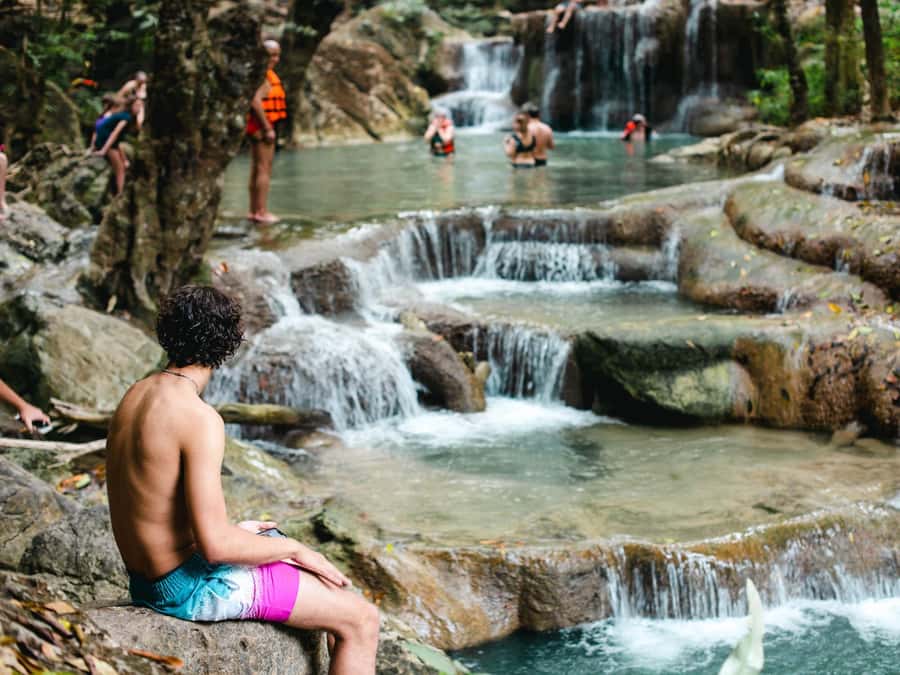
The driving and guiding are a big deal here. The tour uses a professional driver and includes drinking water, and you also have the option of adding a guide who speaks English, Chinese, Spanish, or German.
What a good guide does for you on a day like this:
- Keeps the schedule realistic across far distances
- Helps you choose the right mix based on your preferences
- Adjusts pace if you want more time at one place and less at another
- Shares context that makes the memorials and temples make more sense
I also like the low-impact approach. The tour provides water in glass bottles and offsets carbon emissions for every tour, which is a small touch but consistent with the idea of responsible day trips.
One more practical note: the day can include moments where transport timing gets affected. If something shifts, a flexible guide can reroute so you still hit the major highlights.
Practical Packing List and Small Tactics to Enjoy More
This is a day where small items pay off.
Bring:
- Sunglasses, sunscreen, hat
- Umbrella (rain or sun, depending on conditions)
- Insect repellent
- Comfortable shoes for walking, stairs, and cave paths
- Long-sleeved shirt and long pants
- Cash for entrance fees and any snacks
- A camera (you’ll want it)
Tactics that help:
- If you care about swimming at Erawan, ask about water conditions early.
- Don’t plan “four full-effort stops.” Pick one big hike/climb and keep the rest lighter.
- If you’re sensitive to heat, tell your guide. Your pace can be adjusted on the fly.
Who This Tour Is For (and Who Should Skip It)
This tour is a strong fit if you:
- Want an organized way to explore Kanchanaburi from Bangkok without dealing with buses and timing
- Like mixing history and nature in one day
- Prefer a route that you can shape (up to four attractions) instead of a rigid schedule
- Appreciate a guide who can provide context in your language
It’s not a good fit if you:
- Have mobility impairments or need wheelchair-friendly routes (the tour is marked as not suitable)
- Have heart problems or respiratory issues
- Are pregnant
Also, be honest about energy. The long drive plus walking/stairs at caves and temples means you should treat it like a full day outdoors, even if the vehicle is comfortable.
Should You Book This Private & Customized Kanchanaburi Tour?
If you’re short on time but want real variety—River Kwai/Death Railway history and waterfalls and temple/cave stops—this is a smart way to do it. The customization is the selling point. You’re choosing your day, not absorbing someone else’s schedule.
Book it if:
- You already know which highlights you want and want help fitting them together
- You want the emotional arc of WWII sites without feeling lost
- You’d enjoy adding Erawan or Sai Yok for a clean break from history
Consider skipping it (or picking fewer attractions) if:
- You’re not comfortable with a long drive or expect this to be a “relaxed sightseeing stroll”
- You want fully guaranteed swimming or fully flat walking everywhere
- Entrance fees and meals aren’t something you’re ready to budget for
If you tell your guide your top 3–4 must-dos, you’re likely to get a day that feels personal, not pre-packaged. And that’s the kind of day trip worth the road.
FAQ
How long is the Kanchanaburi tour from Bangkok?
It runs for 12 hours, starting between 7–9 am.
What attractions can I choose for my customized day?
You can choose up to four attractions from a listed selection, such as Erawan National Park & Erawan Waterfall, Death Railway and Bridge over the River Kwai, Wat Tham Suea, Hellfire Pass Interpretive Centre, JEATH War Museum, Sai Yok Noi/Yai waterfalls, and several cave/temple and cemetery sites.
Is hotel pickup included?
Yes. Pickup and drop-off are included for hotels in major downtown Bangkok areas, and the guide meets you holding a TripGuru sign.
How far is Kanchanaburi from Bangkok?
The distance is about 150 km one-way, with a drive of roughly 3 hours each way.
Is a tour guide included?
A tour guide is included if you select the guided option. The guide languages listed are Spanish, English, Chinese, and German.
Are entrance fees included in the price?
No. Entrance fees are not included.
Is food included?
No. Food and beverages are not included.
What’s included for comfort during the day?
You get an air-conditioned vehicle, an English-speaking driver, insurance, and drinking water.
How big is the group?
The group type is described as small group, limited to 9 participants.
Who should avoid this tour?
The tour is listed as not suitable for pregnant women, people with mobility impairments, and people with heart problems or respiratory issues.