REVIEW · BANGKOK
Bangkok: Backstreets and Historic Temples Bike Tour
Book on GetYourGuide →Operated by Discova Thailand · Bookable on GetYourGuide
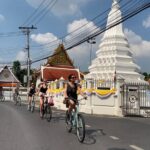
Trade big roads for temple canals. This Bangkok bike tour is built for people who want more than the usual highlights, with a ride that slips into backstreets and canals where everyday life runs the show. You’ll still get real landmark moments, but the best part is how the route keeps changing from busy streets to quiet corners.
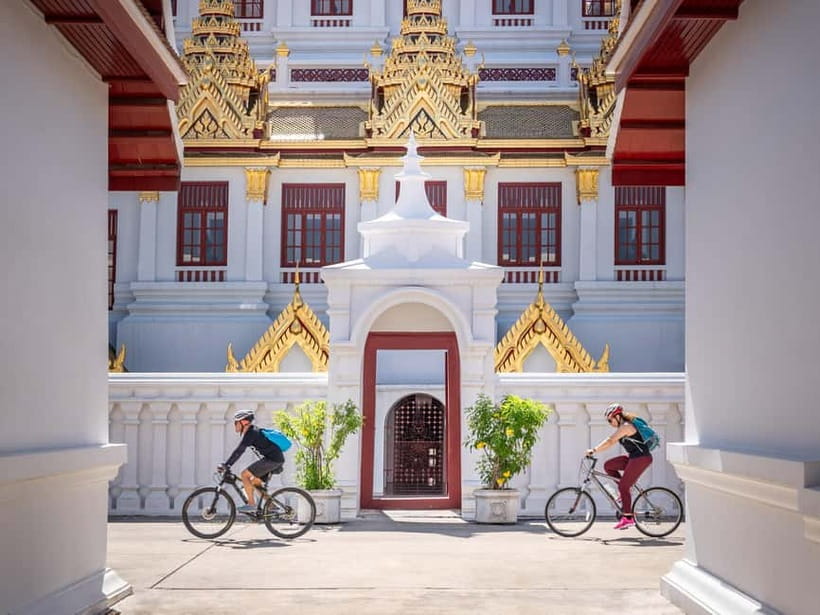
I also like the temple-and-tradition contrast. You’ll pass Wat Suthat and spend time around Giant Swing, including a glimpse of how sacred imagery is made and sold in the area. One heads-up: the lanes can be narrow and busy, so you’ll need to feel comfortable riding and staying alert in traffic, even with a guide managing the flow.
The full experience runs about four hours (meet at 8:30 am for a 9:00 am departure), and it ends back near the shop around 1 pm after roughly 15 kilometers of riding. You get a proper mountain bike, a helmet, plus snacks, drinks, and water—so you’re not doing this half-ready.
In This Review
- Key things I’d circle before you go
- Bangkok on Two Wheels: what this tour is really good at
- Starting at Discova Day Tour Shop: meeting point and what you get right away
- Off Khaosan Road and Into Narrow Lanes: the Bangkok most people miss
- The one thing to respect
- Chao Phraya River stretches and the Rama VIII Bridge moment
- Bangkok Noi: pedal the canal alleys, not the postcard streets
- Baan Bu Bronzework Community: where a market becomes a lesson
- Wat Suthat and the Giant Swing: iconic, but explained in context
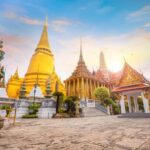
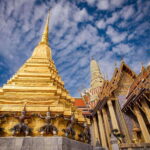
- Grand Palace area walk: a royal-used park you can actually stroll
- Snacks, drinks, and short food moments that keep the ride sane
- Getting back around 1 pm: what the final ride gives you
- Price and value: is $39 reasonable for Bangkok?
- Who this bike tour fits best (and who should think twice)
- Should you book this Bangkok backstreets bike tour?
- FAQ
- Where is the meeting point?
- What time should I arrive, and when does the tour depart?
- How long is the tour and how far do you ride?
- What’s included in the price?
- What should I bring and what should I wear?
- Do you provide helmets and do I get a bike?
- Is the tour suitable for pregnant women?
- Can I cancel or pay later?
Key things I’d circle before you go
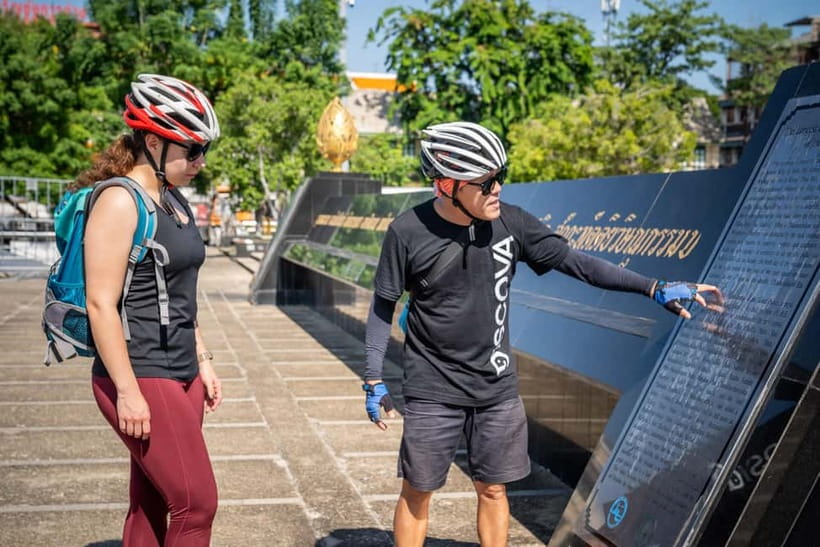
- Off-road-in-feel backstreets: small laneways that show Bangkok beyond the main roads
- Giant Swing + Wat Suthat: iconic landmarks mixed with quieter temple moments
- Bangkok Noi canal lanes: pedal through tiny alleyways tied to Muslim community life
- Chao Phraya crossing by ferry/long-tail: the river becomes your scenic backbone
- Bronzework market stop: watch craft culture up close at a local community
- Guides like Max, Bett, and Seen: praised for making safety and culture feel easy and clear
Bangkok on Two Wheels: what this tour is really good at
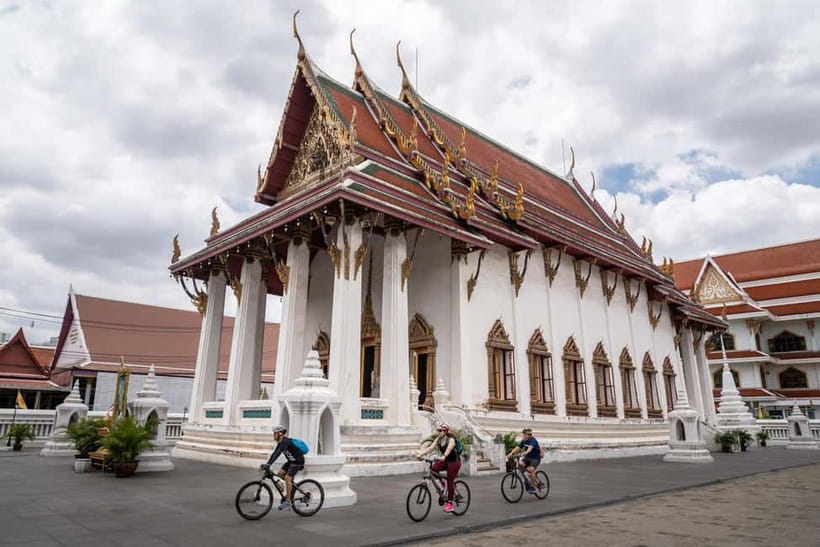
This is a Bangkok bike tour that doesn’t try to win by stacking the most famous sights. Instead, it wins by how the day is sequenced: river edges, then bridges, then canals, then temples, then markets, and finally back to the shop. The result is a city rhythm you can feel in your legs.
If you’re new to Bangkok, this is a smart first-day option because it gives you bearings fast. You’ll see where the tourist zones stop and where neighborhoods begin. And because you’re on a bike, you can move through areas you’d never enjoy crawling through by car.
You can also read our reviews of more cycling tours in Bangkok
Starting at Discova Day Tour Shop: meeting point and what you get right away
You’ll meet at the Discova Day Tour Shop Bangkok at 719 Mahachai Road, near MRT Sam Yot Station. The instructions are clear: arrive 30 minutes early, and expect the bike tour to depart 9:00 am sharp.
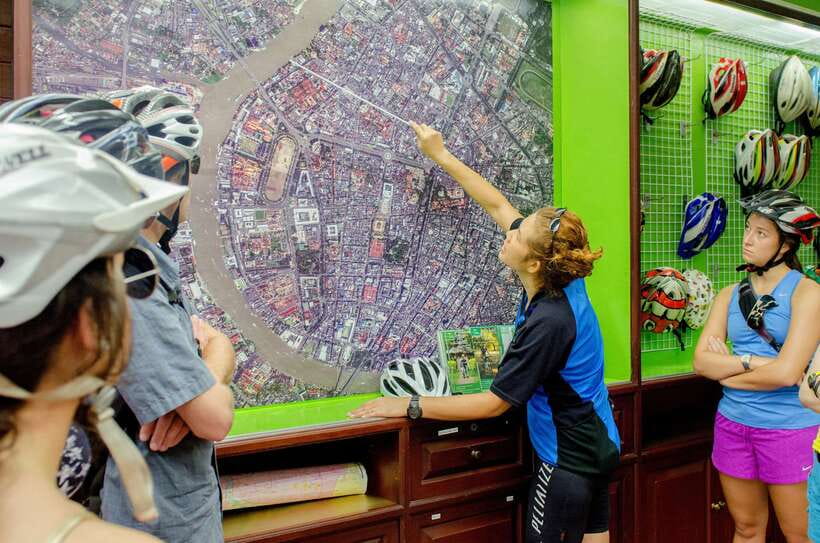
Before you ride, there’s bike fitting and a briefing. That’s not glamorous, but it matters in Bangkok. A good fit makes the difference between a ride that feels smooth and one that has you fighting your own handlebars. You’ll also get a helmet and an imported quality mountain bike, which helps given the mix of pavement and small street edges you’ll encounter.
Off Khaosan Road and Into Narrow Lanes: the Bangkok most people miss
At first, you cycle through the backpacker area around Khaosan Road. It’s brief—and useful. It sets the baseline so you can feel how quickly the city changes once the tour turns off the main roads.
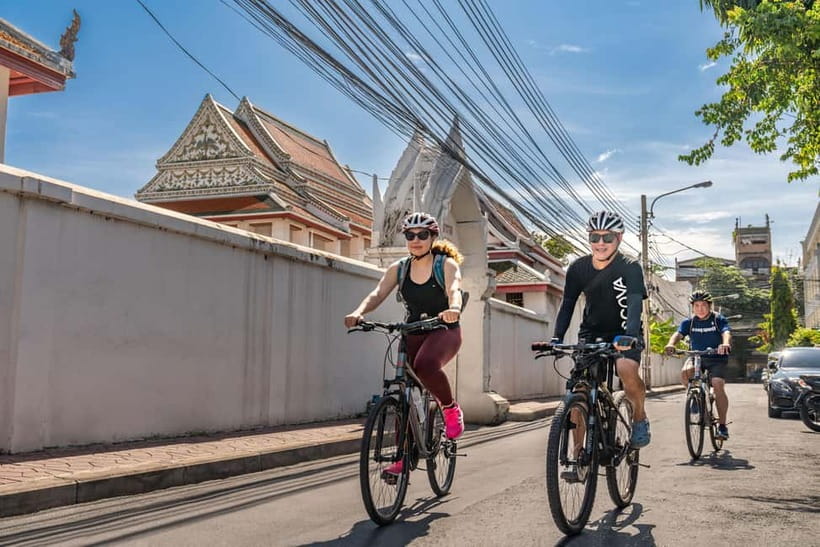
Then comes the core idea: you wind through small laneways, past temples and canals, to see the parts of Bangkok where people actually work and play. Guides can make a big difference here. From the experiences shared, guides such as Max and Bett are repeatedly praised for being friendly, knowledgeable, and good at keeping you comfortable—especially when streets get tight. In other words, you’re not left guessing where to go next.
The one thing to respect
This route is not for you if you want a relaxed, low-traffic cycling fantasy. The alleys can be narrow and the roads busy. You’ll be expected to ride smoothly and follow direction closely. The upside is that the guide controls the group and sets the pace.
Chao Phraya River stretches and the Rama VIII Bridge moment
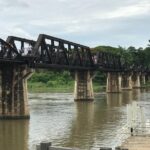
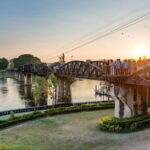
You’ll ride along the Chao Phraya River, then cross using Rama 8 Bridge. That bridge crossing is where Bangkok turns from “close-up street life” into “big-city structure.” It’s a good visual break, and it helps you understand where all the later areas connect.
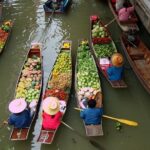
Then the tour keeps using the river as a thread. At one point you’ll take a local ferry to cross back over the river, and later you’ll enjoy a long-tail boat ride as part of the sightseeing day. This matters because it gives you a change of motion. Cycling keeps you connected to neighborhoods. The boat gives you a broader view of the waterways and how people live alongside them.
You can also read our reviews of more historical tours in Bangkok
Bangkok Noi: pedal the canal alleys, not the postcard streets
Bangkok Noi is the name given to a large canal of the Chao Phraya River, and the tour uses it the way it should be used: by slowing down and riding the canal side with purpose.
You bike along the canal through tiny alleyways, including areas connected to a Muslim community. After crossing a bridge, you pedal back the other way. That means you’re not just looking at one strip of water—you’re moving along the canal’s daily texture.
Then you reach another distinct contrast: Buddhist temples appear alongside the urban street life, plus you may pass one of Bangkok’s early train depots. On some days (if it’s open), you can add craft and industry details like a bronze bowl foundry and old steam engines at the Thonburi train depot. That “if open” part is important: it’s a bonus when it works, not something you should assume will always be available.
Baan Bu Bronzework Community: where a market becomes a lesson
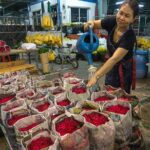
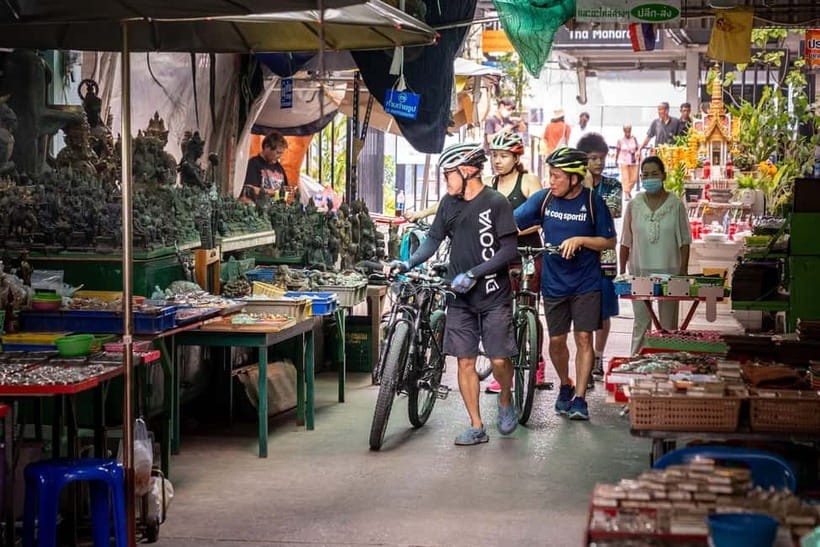
A highlight built into the ride is the Baan Bu Bronzework Community stop. This is an arts-and-crafts market visit, and it’s valuable because it’s not a museum-style experience. You’re seeing craft culture tied to real production and real sales.
Why this is worth your time: Bangkok isn’t only temples. It’s also workshops, supply chains, and small communities that keep traditions going. A bronze-making stop makes the later temple imagery around the day feel more grounded. It’s one thing to see Buddhas and sacred images in worship spaces. It’s another to understand the local work that makes those images available.
If you’re the type who likes to ask “How is this made?” this is your moment.
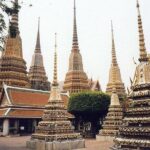
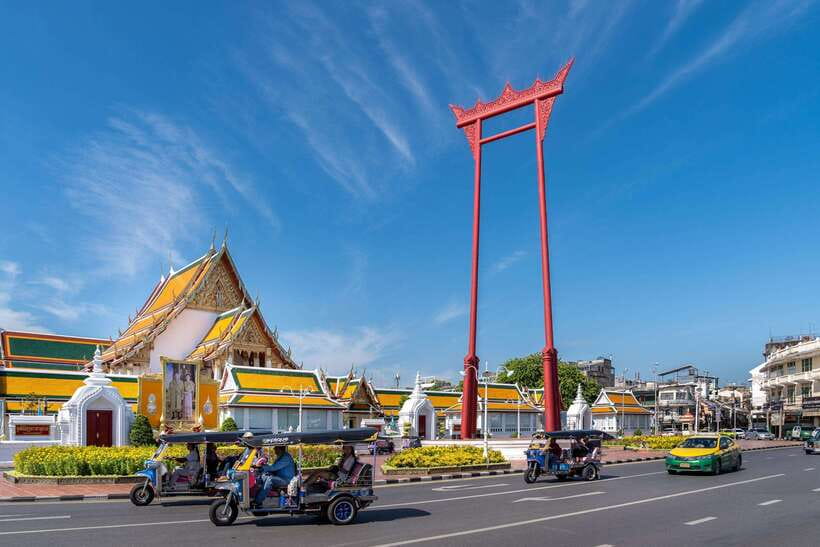
Wat Suthat and the Giant Swing: iconic, but explained in context
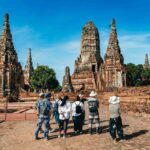
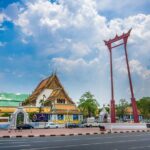
You’ll visit Wat Suthat and the area around Giant Swing. Even if you’ve seen photos before, this stop lands better on a bike because you arrive as part of the neighborhood flow, not as a spectator arriving by bus.
Here’s the context that makes the Giant Swing stop more than a landmark:
- It was once used for an important Hindu ceremony.
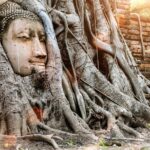
- The area around the swing is where Buddha images are made and sold.
- You’ll see the commercial side of sacred art, with rows of Buddhas and other sacred images.
In the experiences shared, guides like Seen, Tom, and Woody are praised for tying these sights to city culture—so you don’t just take photos, you understand why the place exists in Bangkok the way it does. And there’s also practical pacing here: it’s a shorter stop at the end of a busy morning stretch, so you get time without feeling dragged into a long, slow site tour.
Grand Palace area walk: a royal-used park you can actually stroll
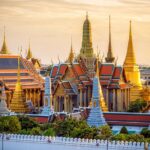
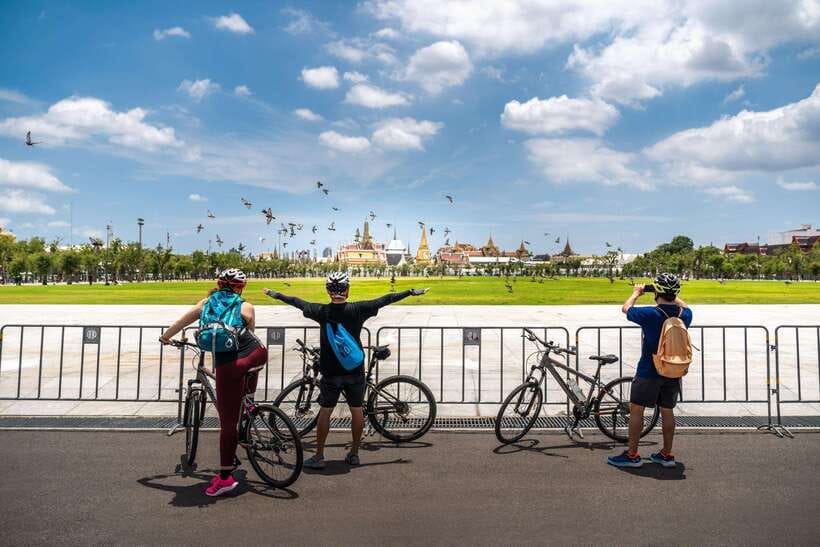
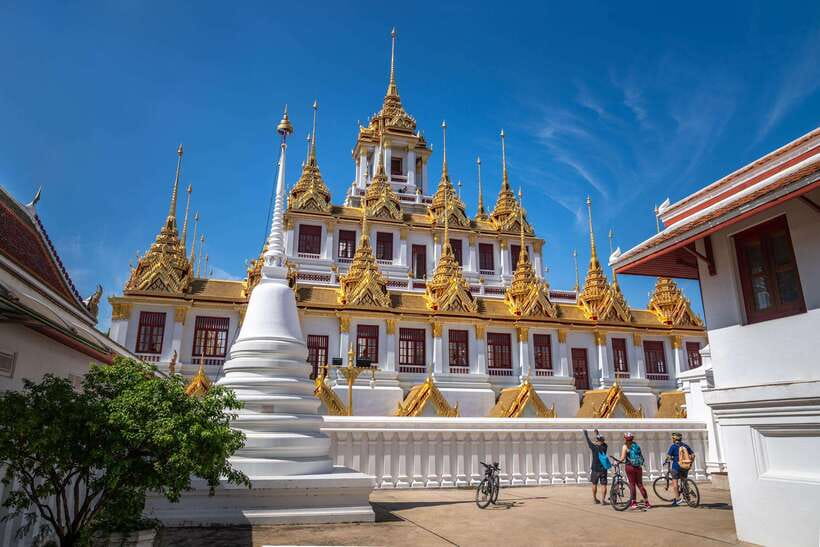
After a ferry crossing back over the river, the ride passes by the Grand Palace area. The tour then includes a walk in a public park that used to be exclusively used by the royal family.
This is a clever addition. The Grand Palace gets most of the attention, but the park moment changes the tone. You get a calmer, green break without losing the old-city atmosphere. It also helps you reset before you continue through more alleyways and sacred-image areas.
Snacks, drinks, and short food moments that keep the ride sane
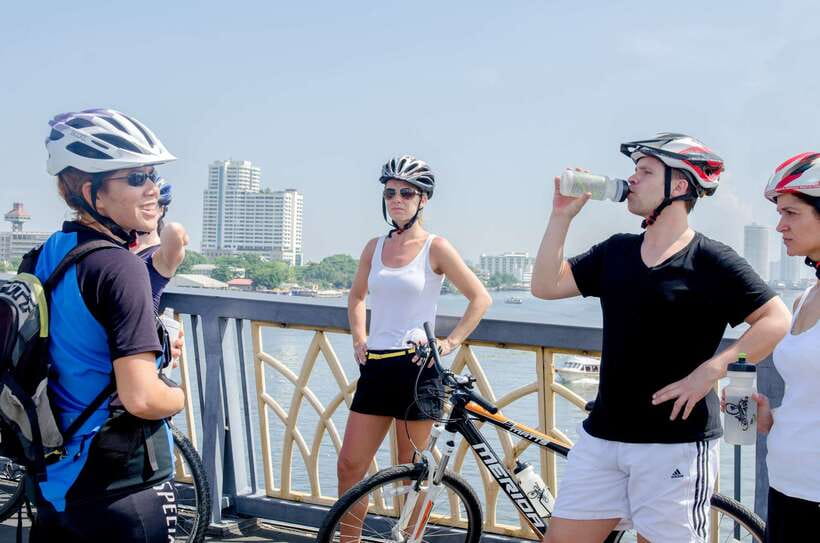
One reason people rate this tour so highly is the practical comfort factor. You’re provided drinks and water, and there are complimentary snacks along the way. In a hot city, that’s not a small detail.
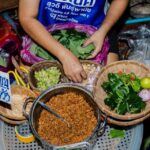
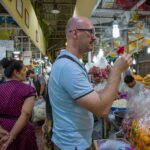
Some guide styles also add small “eat on the move” moments. For example, one experience notes stopping at a market so the rider could grab breakfast on arrival, which is exactly what you want if you land in Bangkok and jump straight into a morning ride. Another mentions a dessert cart stop with Thai sweets—simple, but memorable.
No huge meal structure is promised here, so treat snacks as your energy base and plan to eat more once you’re done.
Getting back around 1 pm: what the final ride gives you
The tour finishes after cycling about 15 kilometers, wrapping up around 1:00 pm back at the shop. That timing is ideal if you’re trying to plan the rest of your day without committing to another major tour.
By the time you’re done, you’ll likely have two kinds of memories:
1) Quiet temple and canal scenes where you can hear the city differently.
2) Street-level glimpses of daily life—markets, craft activity, and sacred-image production—where Bangkok feels less staged.
And if something goes wrong (like a puncture), the guide and mechanic support seems to be taken seriously. There’s at least one story of a tire issue handled calmly without derailing the day, which speaks to how organized the operation is.
Price and value: is $39 reasonable for Bangkok?
For $39 per person and about four hours, the value comes from what’s included, not just the time on the bike:
- A quality bike and helmet
- An English-speaking guide
- Snacks, drinks, and water
- Guided movement through neighborhoods you’re unlikely to explore efficiently on your own
The guided element matters here because Bangkok’s backstreet maze can be confusing fast—especially when you’re trying to ride safely. You’re also getting a mix of walking and cycling, plus a river boat component. For many visitors, that combination is the difference between a fun ride and a “now I finally understand this city” day.
Who this bike tour fits best (and who should think twice)
This is a great match if you:
- Want historic temples without only doing the big-ticket tourist circuit
- Like local neighborhoods and canal life, even when the streets aren’t polished
- Prefer an active morning that still includes cultural stops
- Appreciate guides who explain what you’re seeing, not just where to turn next (names that come up often include Max, Bett, Seen, Tom, Tammy, and others)
You should think twice if:
- You get stressed cycling in narrow lanes with traffic
- You need a very low-effort sightseeing day
- You’re pregnant, since the tour isn’t suitable for pregnant women
Also note the attire rules: shorts and sleeveless shirts aren’t allowed, so plan clothing that covers your legs/arms comfortably for temple areas.
Should you book this Bangkok backstreets bike tour?
If you want Bangkok in motion—temples, canals, markets, and that “how do I get here?” feeling—this tour is a strong pick. The best reason to book is that it’s built around variety: bridges for scale, Bangkok Noi for neighborhood texture, craft culture for context, and Giant Swing for landmark meaning.
I’d skip it only if you’re uncomfortable sharing space with traffic on a bike or you’re after a classic checklist of tourist sights. Otherwise, $39 buys you a full morning of guided city logic, plus snacks and water to keep you going.
FAQ
Where is the meeting point?
You meet at the Discova Day Tour Shop Bangkok, 719 Mahachai Road, Kwaeng Wang Burapha Phirom, Khet Phranakorn, Bangkok 10200. It’s on the next block to Miramar Hotel, the last building next to the canal.
What time should I arrive, and when does the tour depart?
Arrive 30 minutes before the 9:00 am departure. The guide is there at 8:30 am.
How long is the tour and how far do you ride?
The tour lasts about 4 hours and finishes with around 15 kilometers of cycling at roughly 1:00 pm.
What’s included in the price?
Included items are an imported quality mountain bike, an English-speaking guide, a helmet, drinks and water, and snacks.
What should I bring and what should I wear?
Bring comfortable shoes and sunscreen. Shorts and sleeveless shirts are not allowed.
Do you provide helmets and do I get a bike?
Yes. You’ll be given a helmet and an imported quality mountain bike.
Is the tour suitable for pregnant women?
No. The tour is not suitable for pregnant women.
Can I cancel or pay later?
Yes. There’s free cancellation up to 24 hours in advance for a full refund, and you can reserve and pay later.