REVIEW · AO NANG
Ao Nang: Half-Day Thai Cooking Class Krabi Province
Book on GetYourGuide →Operated by Oh-Hoo · Bookable on GetYourGuide
Cooking Thai food in Krabi is surprisingly easy.
What makes this class special is the relaxed, hands-on setup in an open-air hillside kitchen next to a temple, so the whole morning or afternoon feels like an outing—not a chore. I also love how you leave with a recipe book and certificate, which turns a fun meal into something you can actually cook again at home.
One thing to plan for: it’s not a kid-focused activity and it may be tough if you have mobility limits. If you fit the basics, though, you’ll get a lot of food, lots of instruction, and a real sense of how Thai flavors come together.
In This Review
- Key things I’d circle before you go
- The half-day schedule that keeps things fun (and fast)
- Entering the cooking school: views, air flow, and that temple next door
- What you actually do: chopping, pounding, stir-frying, and tasting
- How the instruction works in a 20-person max class
- Your dish choices: 3-course vs 5-course menus
- The shorter option: 3 dishes
- Morning / afternoon / dinner options: 5 dishes
- Spice level and vegetarian choices that don’t feel like a compromise
- The food part: you eat what you make, and then you keep the memories
- The recipe book and certificate: your “cook again tomorrow” tools
- Price and value: is $41 really worth it?
- Getting there from Railay, Centara Grand, or Ton Sai
- Who should book this class, and who should skip it
- Should you book the Ao Nang Thai cooking class?
- FAQ
- How long is the Ao Nang half-day Thai cooking class?
- What’s included in the class price?
- Where is pickup available?
- Are there different menus depending on the time of day?
- Can I choose vegetarian or vegan options, and can I adjust spice?
- Do I get to bring anything home?
- Is there an extra transfer fee for places outside Ao Nang?
- How big are the classes, and is there a minimum number of participants?
- Is this class suitable for children or people with mobility impairments?
Key things I’d circle before you go
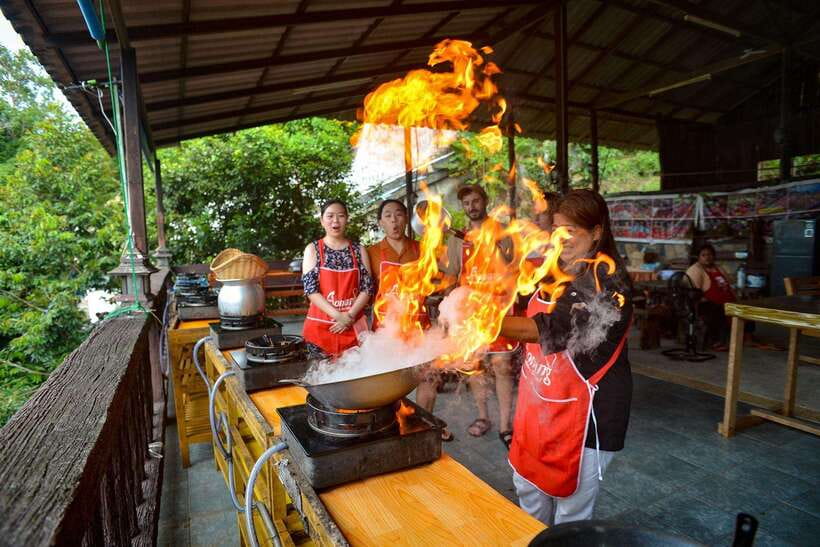
- Open-air hillside kitchen + temple next door: great views while you work, plus an easy extra stop after class
- Curry paste with mortar and pestle: you get the hands-on technique, not just a lesson about it
- Choose-your-dishes menus (5-course options): pick what sounds best, from curries to pad Thai
- Diet and spice can be adjusted: vegetarian/vegan and spicy or non-spicy options are available
- Small class energy: it can be a cozy group (often just a few people in some periods)
- Take-home support: recipe book you can write in, plus take-home food opportunities
The half-day schedule that keeps things fun (and fast)
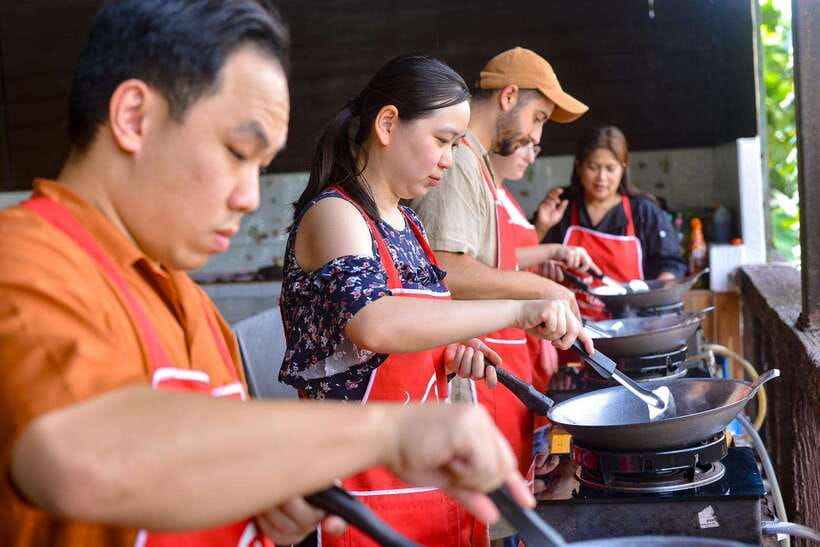
This is a 150 minutes to 4 hours experience, depending on which course you choose and what’s on the menu that day. The pace is brisk in a good way: enough structure that you don’t get lost, but not so rushed that you feel like you’re just watching.
You start with hotel pickup in the Ao Nang area, then you’re transported to the cooking school. After you’ve eaten what you cooked, you’ll get comfortable return transfer back to your hotel. That back-and-forth matters in Krabi, because traffic and heat can otherwise eat up a big chunk of your day.
You can also read our reviews of more cooking classes in Ao Nang
Entering the cooking school: views, air flow, and that temple next door
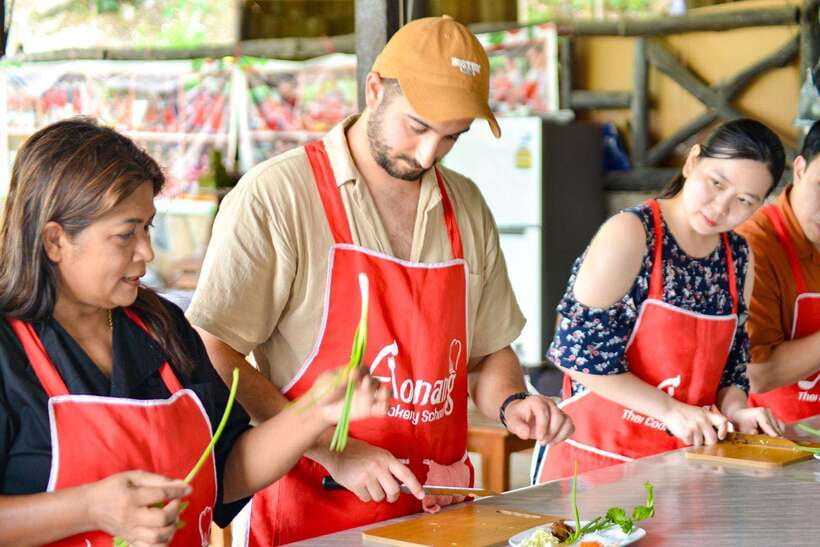
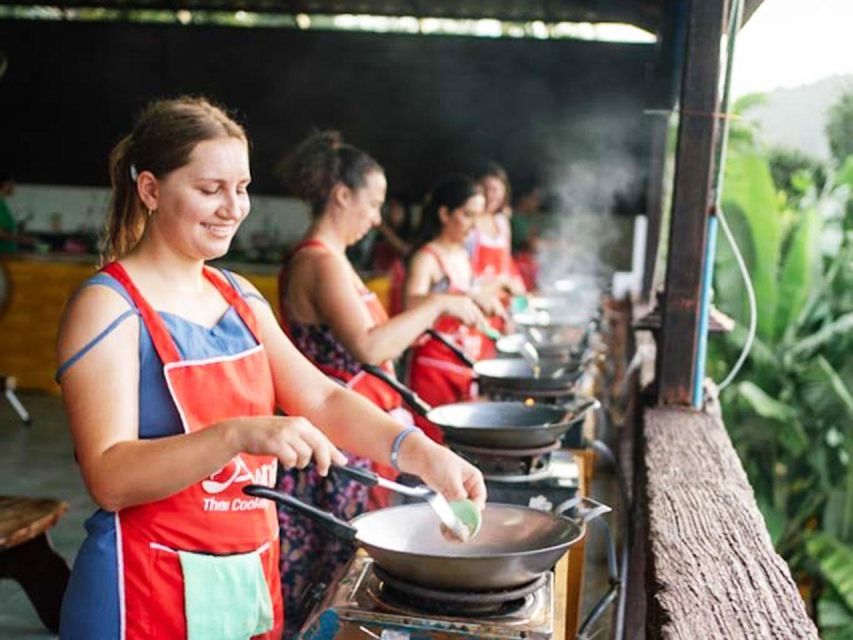
The setting is part of the experience. You cook in an open-air setup on a hillside, and several people call out the view from the raised cooking area as spectacular. The air flow helps too, because you’re working near hot stoves and woks, and Thai cooking can mean serious sizzling.
Then there’s the Buddha temple right beside the building. It’s close enough that you can add a quick visit when class winds down, without needing a separate plan or ride. In a few reviews, people also mention cute cats around the property, which sounds like a small detail until you realize how much it changes the vibe from classroom to local day out.
What you actually do: chopping, pounding, stir-frying, and tasting
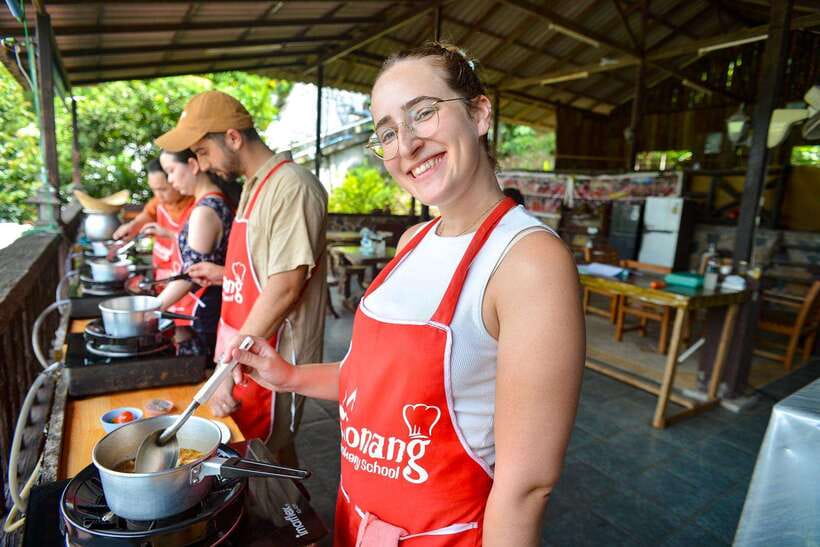
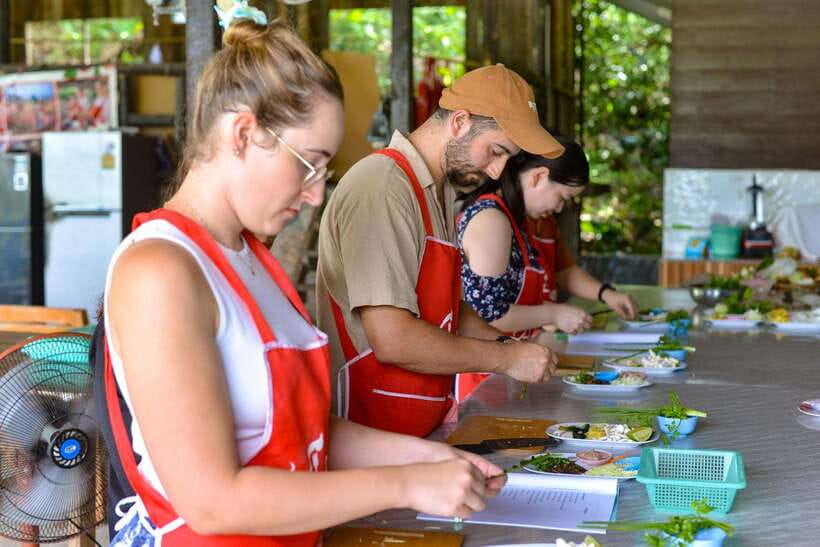
Thai cooking classes can be either hands-on or “stand and watch.” This one leans hands-on, with instructors helping you through each step while you do the work. Expect to spend your time on practical tasks like cutting vegetables, doing basic prep, and cooking at your station.
A big technique highlight is making curry paste with a mortar and pestle. That’s the kind of step that feels simple but changes everything about flavor—crushing aromatics releases oils and makes the curry base smell like you’re already halfway to the finished dish.
Cooking is also about timing, and you’ll learn that in real life. You’ll be taught what to cook first, what needs longer, and when to add things so nothing turns out bland or soggy. And yes, the smell of herbs—especially basil and chili—becomes its own kind of soundtrack while you cook.
How the instruction works in a 20-person max class
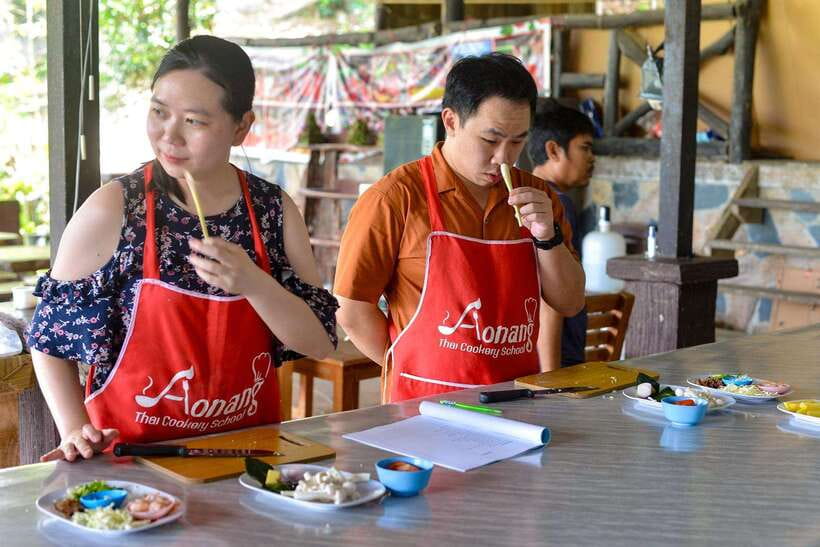
The school caps the class size at 20 people. In practice, it can feel even smaller. People have noted classes of only four, which matters because you get more attention while you’re learning.
English support is available with a Thai and English guide/instructor, and some reviewers specifically mention teachers who speak English well, including Pearl. The teaching style comes through in the way instructions are kept clear and step-by-step, so even if Thai cooking is new to you, you’re not left guessing.
Another practical point: ingredients may be prepared ahead of time, so your focus is on learning the key moves rather than turning the whole class into a grocery-prep marathon.
Your dish choices: 3-course vs 5-course menus
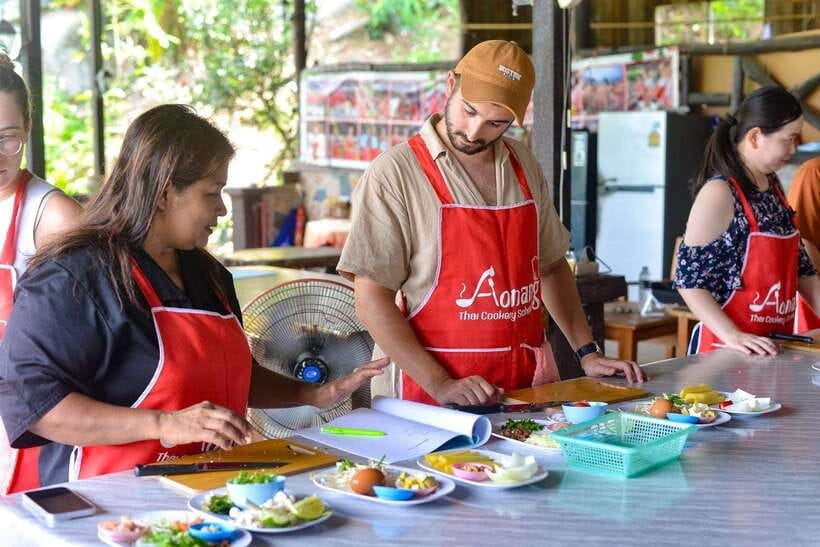
You’ll pick from set course menus depending on the class option. The key to getting value is choosing dishes you’ll actually crave later.
A few more Ao Nang tours and experiences worth a look

The shorter option: 3 dishes
If you go with the shorter 3-dish course, the menu includes:
- Tom Yum
- Pad Thai
- Green Curry
This is a great option if you’re busy, want a simple taste of Thai flavors, and still want a meal that feels complete.
Morning / afternoon / dinner options: 5 dishes
For the bigger 5-dish menu, you can choose a set from the options below.
Morning 5-dish menu options:
- Spring Roll
- Vegetable Tempura
- Tomkha Kai
- Pad Thai
- Fried Noodle in Soy Sauce
- Fried Cashew Nut
- Green Curry
- Panang Curry
- Yellow Curry
- Banana in Coconut Milk
- Sticky Rice Mango
Afternoon 5-dish menu options:
- Spring Roll
- Papaya Salad
- Tom Yum Goong
- Pad Thai
- Fried Rice
- Sweet & Sour
- Massaman Curry
- Yellow Curry
- Green Curry
- Banana Fritter
- Sticky Rice Mango
Dinner 5-dish menu options:
- Spring Roll
- Vegetable Tempura
- Tom Yum Goong
- Pad Thai
- Fried Cashew Nut
- Stir Fried Thai Basil with Minced Chicken
- Massaman Curry
- Green Curry
- Panang Curry
- Sticky Rice Mango
- Banana Spring Roll
If you like variety, pick one noodle dish (pad Thai is common), one curry, and one fresh/sour element like papaya salad or tom yum. That gives you a balanced Thai meal instead of repeating the same flavor profile three times.
Spice level and vegetarian choices that don’t feel like a compromise
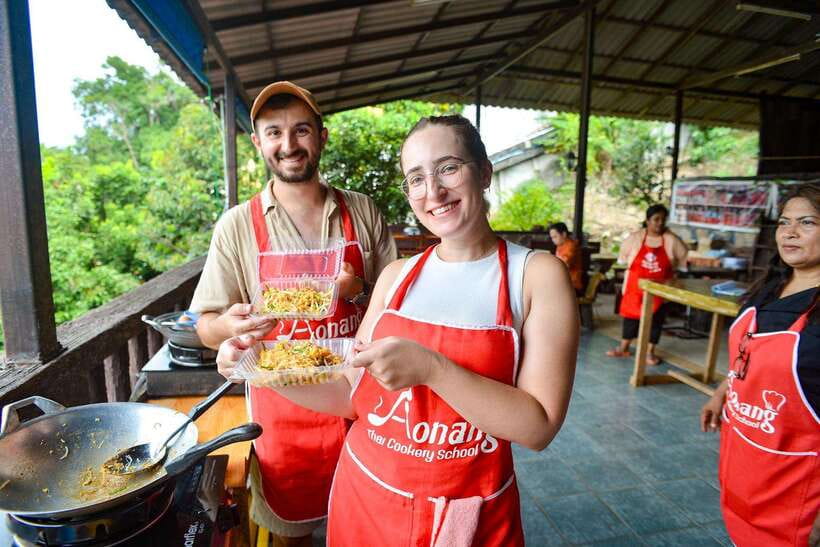
You don’t have to choose between learning Thai cooking and eating what you like. The class offers vegetarian, vegan, spicy, or non-spicy options. That’s useful because Thai food can swing from mild and fragrant to chili-hot fast, and you want control over your own palate.
If you’re cooking for someone else—yourself included—this is also a big practical advantage. You can learn the technique and still keep the food aligned with your diet.
The food part: you eat what you make, and then you keep the memories
This class isn’t a snack. There’s food tasting during the experience, and you’ll end up eating the dishes you prepare. Several people specifically recommend arriving with an empty stomach because you’ll be full by the end.
A few reviews also mention take-home boxes. That’s a big plus if you’re traveling with people or you just don’t want to waste food you worked for. You may also have the chance to purchase curry pastes to help you recreate the flavors later—handy if your home kitchen doesn’t have the same equipment setup.
The recipe book and certificate: your “cook again tomorrow” tools
You get a free recipe book with each course. Multiple reviewers say it’s useful not just for following along later, but for making your own notes while you cook. That matters because Thai cooking isn’t only about ingredients—it’s also about texture, heat level, and how things smell as they cook.
You’ll also receive a certificate at the end. It’s not life-changing paperwork, but it does make the class feel like a real skill-building activity instead of a one-time show.
Price and value: is $41 really worth it?
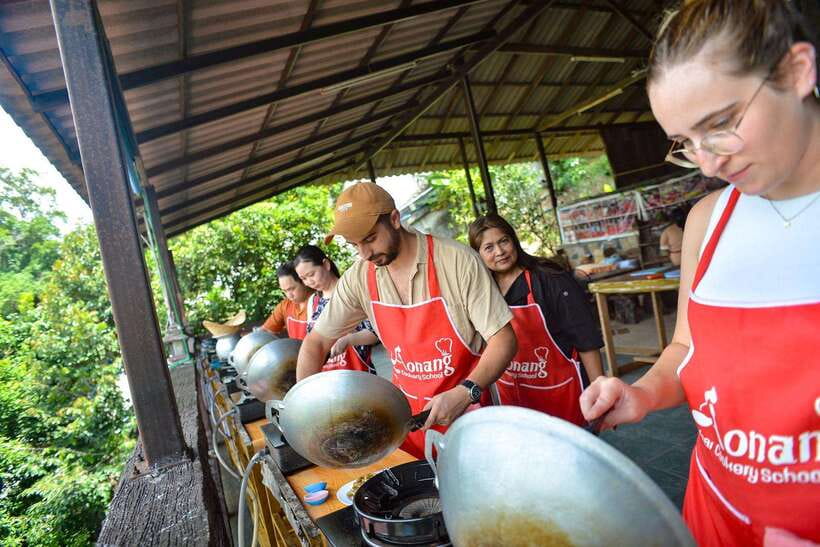
At $41 per person, the class can be a solid value in Krabi—mainly because you’re not paying for a performance. You’re paying for instruction, ingredients, guided cooking time, and meals.
Here’s why it stacks up:
- You eat multiple dishes you make (often a full set of 5)
- Instruction plus a recipe book means you don’t just get a meal—you get the method
- Pickup and drop-off in the Ao Nang area removes a lot of friction
The only “value watch” is that there’s an extra charge for certain areas outside Ao Nang. If you’re in Krabi Town, Klong Muang, or Tub Kaek, there’s a roundtrip transfer fee of 200 THB per person with a minimum of 2 people. If you’re staying outside Ao Nang, double-check this so your total cost stays what you expected.
Getting there from Railay, Centara Grand, or Ton Sai
Pickup is included for hotels within the Ao Nang area, and the operator confirms the pickup time by email. If you’re not in central Ao Nang, the details matter.
- If you’re staying at Centara Grand Beach Resort & Villas, you take the hotel shuttle boat to Nopparat Thara Pier in Ao Nang.
- If you’re staying at Railay Beach, pickup is from the boat ticket office at Ao Nam Mao Pier, which is about a 15-minute longtail boat ride from Railay East.
- If you’re staying at Ton Sai, you meet at Phra Nang Inn reception in Ao Nang.
Also plan to be waiting at the lobby about 10 minutes before pickup. Arriving late can mean your guide has already moved on.
Who should book this class, and who should skip it
This is best for you if you want:
- a hands-on food experience with real technique
- a meal that feels like a Thai dinner, not just a tasting
- a take-home resource (recipe book) you’ll actually use
It’s not suitable if you’re under 12 or if you have mobility impairments. Also, if you’re extremely rushed, remember the class length depends on the course you choose, and you’ll likely want time afterward to walk around the temple area.
Should you book the Ao Nang Thai cooking class?
Book it if you want a straightforward, enjoyable way to learn Thai cooking basics—especially if curry paste and stir-fried flavors are on your list. The open-air hillside kitchen, the temple next door, and the fact you leave with recipes make it feel worth doing even if you’ve got only a short stay.
Skip it if you’re traveling with someone who needs a kid-friendly format or if mobility is a concern. And if you’re staying outside the Ao Nang pickup zone, factor in the extra transfer fee so the final cost stays comfortable.
If you like food that you can cook again at home (and not just eat once), this is a very smart use of a half day in Krabi.
FAQ
How long is the Ao Nang half-day Thai cooking class?
It runs from about 150 minutes up to 4 hours, depending on the course and menu.
What’s included in the class price?
Pickup and drop-off in the Ao Nang area are included, plus a recipe book and certificate for each course, food tasting, and drinking water.
Where is pickup available?
Pickup is available for hotels within the Ao Nang area. The operator confirms the exact pickup time by email.
Are there different menus depending on the time of day?
Yes. There’s a 3-dish course menu (Tom Yum, Pad Thai, and Green Curry), and morning, afternoon, and dinner options with 5 dishes each.
Can I choose vegetarian or vegan options, and can I adjust spice?
Yes. All dishes can be made in vegetarian, vegan, spicy, or non-spicy options.
Do I get to bring anything home?
You receive a recipe book and certificate. You can also take food away, and some people mention take-home containers.
Is there an extra transfer fee for places outside Ao Nang?
Yes. A roundtrip transfer fee of 200 THB per person applies for Krabi Town, Klong Muang, and Tub Kaek, with a minimum of 2 participants.
How big are the classes, and is there a minimum number of participants?
The class maximum is 20 people, and at least 2 participants are required for the class to proceed.
Is this class suitable for children or people with mobility impairments?
No. It’s not suitable for children under 12 or for people with mobility impairments.