REVIEW · KRABI
Siam Cuisine Thai Cookery School Krabi
Book on Viator →Operated by Oh-Hoo · Bookable on Viator
Your knife skills get a Thai upgrade. In Krabi, this cooking class is hands-on from start to finish, and you cook and eat what you make. I also like that you can tailor your food to your preferences with vegetarian/vegan and spice level options, so the meal fits your taste.
One thing to plan around: the session depends on good weather, so if conditions are rough, your date may change or you’ll get a refund.
In This Review
- Key things to know before you go
- Thai cooking in Krabi: why this style of class works
- The 5-hour flow: what you’ll actually do
- Arrival and the welcome moment
- Cooking 6 dishes (and eating them)
- Choosing flavors: herbs, spice, and dietary swaps
- You leave with a recipe book
- Price and value: what $49.89 covers
- Location between Aonang and Ao Nam Mao: logistics that feel easy
- Group size and attention: small enough to matter
- What you learn beyond recipes (the stuff that sticks)
- A couple of realistic drawbacks to consider
- Who this Krabi cooking class suits best
- How to get the best experience from your class
- Should you book Siam Cuisine Thai Cookery School Krabi?
- FAQ
- How long is the cooking class?
- Is hotel pickup included?
- How many dishes do I cook?
- Are vegetarian or vegan options available?
- How big is the group?
- What ticket format do I receive?
Key things to know before you go
- Cook 6 dishes yourself, not a demo-only experience
- English-speaking support from the host and staff (Hanna is one name you might meet)
- Free recipe book for the course material
- Hotel transfer included for Aonang and Ao Nam Mao areas
- Small class size with a max of 12 people in the cooking group
- Diet and spice adjustments are available, including vegan/vegetarian
Thai cooking in Krabi: why this style of class works
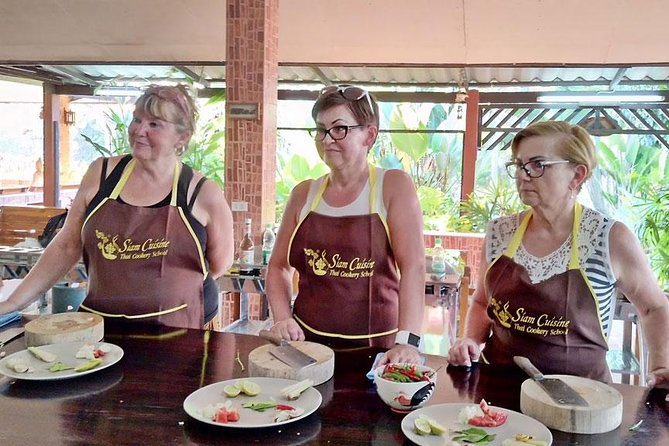
Krabi is known for beaches and limestone cliffs. But if you want a hands-on souvenir that lasts longer than a photo, a Thai cooking class is a solid choice. The reason this one feels especially worth your time is simple: you’re not watching someone else do the work. You’re cooking, tasting, and eating your own dishes as the session moves along.
This is also the kind of activity that gives you real “use-it-at-home” value. Thai food isn’t just about sauce and heat. It’s about balance, fresh herbs, and knowing what to do with ingredients like lemongrass, kaffir lime, and Thai basil-type flavors (even if you’re not naming them, you’ll learn the logic). By the end, you’re not just satisfied—you have a mental map for recreating flavors later.
Finally, it’s set up for practicality. The school sits between Aonang and Ao Nam Mao, and that location matters because you can pair it with other Krabi plans. If you’re basing yourself around Ao Nam Mao, you’ll likely find the logistics straightforward.
You can also read our reviews of more tours and experiences in Krabi.


The 5-hour flow: what you’ll actually do
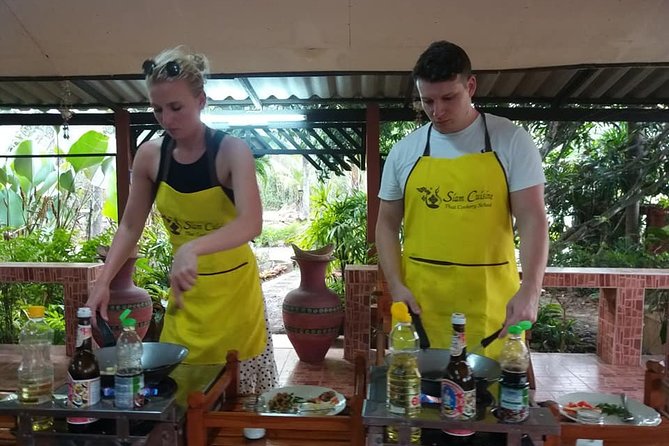
Think of the day as a structured cooking sprint. You’ll be at the professional cookery school for about 5 hours, and the focus stays on making dishes rather than touring a bunch of places.
Arrival and the welcome moment
When you arrive, you’ll start with a welcome drink. It’s a small detail, but it helps you reset quickly—especially if you’ve been walking in humidity. After that, the class moves into the core routine: choosing dishes, learning the steps, then cooking hands-on.
Cooking 6 dishes (and eating them)
A big selling point here is the pace and the output. You’ll learn to cook 6 dishes a day, and you cook each one yourself. That’s not a “one dish each” deal. Expect multiple stations or a rolling workflow, where you go through ingredient prep, then active cooking, then tasting and finishing.
Once you cook, you eat what you made. That sounds obvious, but in many classes the meal is either prepped in advance or it’s a buffet that has little to do with what you just made. Here, you’re taking part in the final table too. You’ll finish with dishes like mango sticky rice—a detail that matters because it’s a classic Thai finish, and it’s often the dish people remember.
Choosing flavors: herbs, spice, and dietary swaps
Before you start cooking, you’ll be able to adjust things to your taste. The class notes say all dishes can be made vegetarian, vegan, spicy, or non-spicy. In practice, this means you should ask early if you want your dish mild, medium, or hotter, and whether you’re avoiding any animal products.
You’ll also learn how to choose Thai herbs and prepare your own dishes. This is where the class becomes more than “follow these steps.” It trains you to recognize aromatic ingredients and understand how they change the dish.
If you’re used to Thai food that’s already cooked in restaurants, this herb lesson is what helps you translate the flavors later. You get a working sense of what smells go together, which usually leads to better results at home.



You leave with a recipe book
You’ll also receive a free recipe book with the course. The promise here is practical: you’ll have written steps to refer to after the smells fade and you’re back in your own kitchen.
Price and value: what $49.89 covers

At $49.89 per person for about 5 hours, this class lands in the “reasonable value” category for Krabi. The key is that price is tied to real output. You’re not paying for a guided food walk or a short tasting. You’re paying for multiple dishes plus a meal you helped create, plus the recipe support.
Transfers matter too. Hotel transfer is included for the Aonang and Ao Nam Mao area. If you’re staying nearby, that inclusion can remove the biggest headache of day tours in Krabi—finding a ride that doesn’t cost more than the experience.
There is additional transportation pricing mentioned for some areas (for example, Krabi Town, Klong Muang, Tub Kaek). If you’re not in the included zones, factor in that extra transfer cost so the total stays in line with your budget.
Location between Aonang and Ao Nam Mao: logistics that feel easy
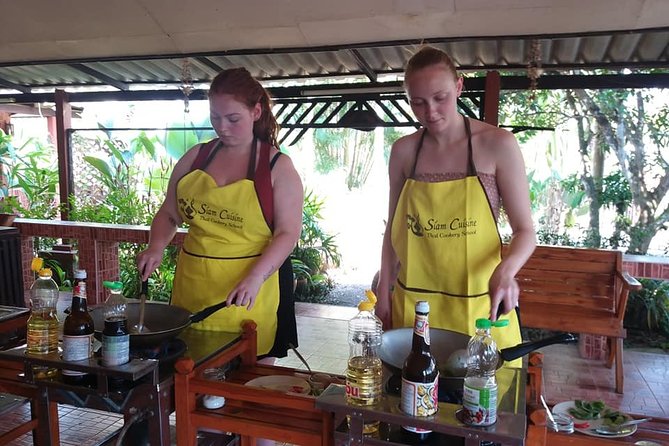
The school is located between Aonang and Ao Nam Mao. That’s not just geography trivia—it can make or break your day plan. If your hotel is in Aonang or Ao Nam Mao, your pickup is part of the deal, and the timing feels more manageable.
One review detail stands out: the class can be super close to the Ao Nam Mao pier. If you’re also planning island hopping or beach hopping, being near that “hub zone” helps you stitch activities together without spending the whole day stuck in transit.
Also, the class is near public transportation. So if you decide last-minute to adjust plans, you’re less trapped than you would be in a remote location.
Group size and attention: small enough to matter
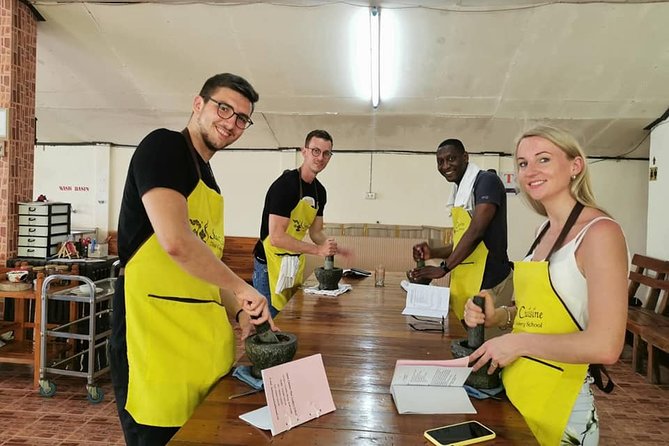
This class keeps things controlled. The cooking class group is limited to a maximum of 12 persons, and it says at least 2 people are required to start the class.
That small-group size is a real quality factor for cooking classes. When there are fewer people, the host can actually correct you when your chopping or stirring goes off-track. It also means you get more chances to ask questions about spice, ingredient swaps, and technique timing.
There’s also an upper cap for the overall experience: maximum 15 travelers. So you’re still in the “human scale” range, not a mass event.
What you learn beyond recipes (the stuff that sticks)
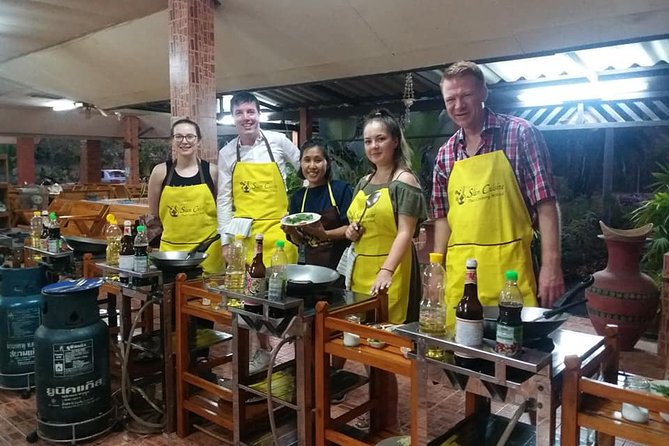
The most valuable part of this class is the combination of structure and flexibility.
You get structured learning: how Thai herbs are chosen, how to prep ingredients, and how cooking steps connect to flavor results. That makes it easier to follow even if you’re not a strong cook.
Then you get flexibility: you can adapt your food to vegetarian/vegan needs and choose spicy vs mild. This matters because Thai cuisine isn’t one fixed flavor. It’s a system you can scale.
And because you cook six dishes and eat them, you’re practicing repeatedly. Taste feedback is immediate. You’ll notice what happens when you adjust ingredients or spice level. That’s how you build intuition instead of just memorizing steps.
If you’re trying to impress friends later, the herb and spice lessons are what give you confidence. Anyone can read a recipe. Fewer people understand why certain flavors belong together.
A couple of realistic drawbacks to consider
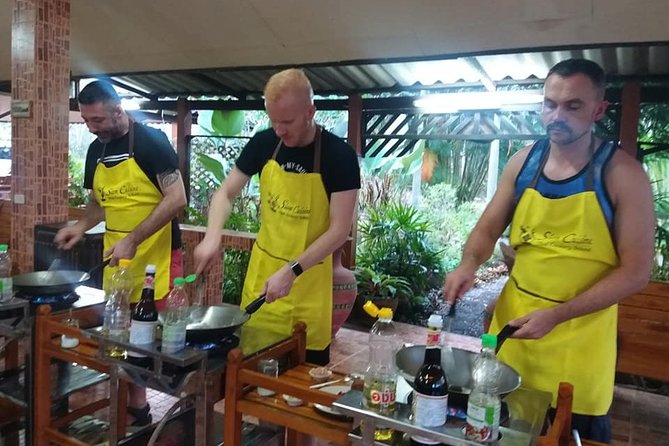
No activity is perfect, and this one has a couple of things you should think about.
First, it depends on good weather. If conditions aren’t right, your experience may be rescheduled or refunded.
Second, the class is a full cooking session. If you’re hoping for a relaxed sit-down activity, you might find the pace active. This is hands-on cooking with ingredient work, not a casual workshop where you only participate lightly.
If you go in knowing you’ll be doing real cooking, you’ll probably enjoy it more.
Who this Krabi cooking class suits best
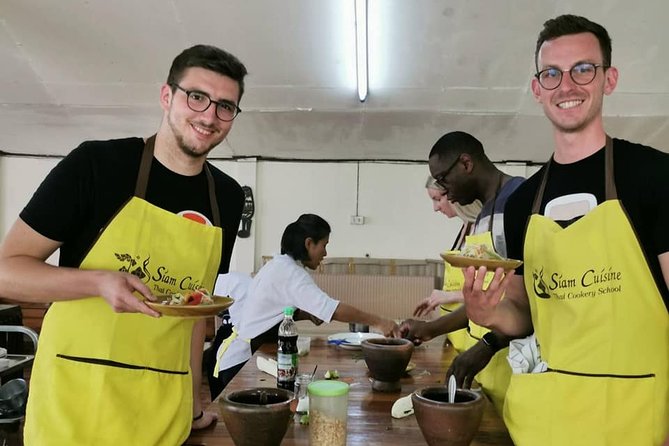
This is a great fit if you want:
- A hands-on activity in Krabi that goes beyond sightseeing
- Real meal value, since you eat what you cook
- A class that can accommodate vegetarian or vegan needs
- A small-group format with enough attention to fix mistakes
- A short “back-pocket skill” you can use later at home
It might be less ideal if:
- You dislike cooking for several hours
- You’re traveling on a tight schedule and can’t handle possible weather-driven changes
- You want a purely cultural tour with minimal time at the stove
How to get the best experience from your class
You’ll have the smoothest time if you come prepared to cook and ask questions.
- Tell the host your spice level early. Mild now can save your whole dish from being wrong later.
- Share dietary needs at the start. The class notes say you can make dishes vegetarian/vegan; early communication helps everything run smoothly.
- Watch how herbs are chosen. Even if you can’t name every herb, you can learn the pattern: smell, texture, and how aromatic ingredients get added.
- Take notes during cooking. Even with a recipe book, tiny timing cues matter. If you’re not sure what you should be doing at a step, ask right away.
- Don’t skip the eating part. You’ll understand the class better when you taste what you created.
Also, with a host named Hanna mentioned in one experience and an assistant involved, it’s clear the class uses support staff to keep things moving. That’s a good sign: you’re more likely to get help when you’re mid-stir.
Should you book Siam Cuisine Thai Cookery School Krabi?
Book it if you want a practical Krabi activity with clear value: multiple dishes, small-group attention, and a meal you make yourself. The price makes sense when you factor in the included hotel transfer for Aonang and Ao Nam Mao, the welcome drink, and the free recipe book. Most importantly, the class teaches you methods (herbs, prep, spice choices), not just what to put in the pot.
Skip it if weather uncertainty would stress you out, or if you’re looking for a low-effort tour. This is an active cooking experience, and that’s part of why it works.
If you’re already planning beaches and caves, this is the kind of day that gives your trip a flavor of its own.
FAQ
How long is the cooking class?
The class runs about 5 hours.
Is hotel pickup included?
Free hotel transfer is included for the Aonang and Ao Nam Mao area. Free hotel pickup is also available for Krabi town, Ao Nang, Klong Muang, and Tub Kaek. A roundtrip transfer to some areas is not included and is listed as 500THB.
How many dishes do I cook?
You will learn to cook 6 dishes in the class, and you cook each dish yourself.
Are vegetarian or vegan options available?
Yes. All dishes can be adjusted to be vegetarian, vegan, spicy, or non-spicy to match your preferences.
How big is the group?
The class size is limited to a maximum of 12 people, and the overall experience has a maximum of 15 travelers. At least 2 people are required to start the class.
What ticket format do I receive?
You receive a mobile ticket, and confirmation is received at the time of booking.