REVIEW · SAMUT PRAKAN
Samut Prakan: The Erawan Museum Admission Ticket
Book on GetYourGuide →Operated by OTO TRIP SERVICE CO., LTD · Bookable on GetYourGuide
A bronze Airavata guards the museum gates. That exterior three-headed elephant is the attention-grabber, but the museum is more than a selfie stop—it’s built around myth, sacred objects, and a museum collection meant to survive for future generations. I like how the place gives you a clear theme from the moment you arrive to the moment you leave.
What I also love is the way the museum is split into Underworld, Earth, and Heaven, so you’re not wandering randomly—you’re moving through a story. Each section supports the bigger idea of protection, prosperity, and spiritual symbolism.
One possible drawback: if you plan your timing around the free shuttle tuk-tuk pickup from Chang Erawan Station, build in a backup plan. One review specifically called out missing the free ride.
In This Review
- Key highlights you’ll care about
- Erawan Museum’s three-headed elephant: the myth you can walk around
- Price and value: why $12 can make sense here
- Getting there from BTS Chang Erawan Station (E17): easy route, one timing note
- The museum route that makes sense: Underworld → Earth → Heaven
- Underworld: where you’ll set the mood
- Earth: the connection point
- Heaven: the closure
- Asian art and philosophy: what you’re really looking at
- Photos, incense, and respectful rules: how to get the most without slowing others down
- Planning your day: making an 8-hour ticket feel worth it
- What’s included (and what you’ll need to handle yourself)
- Who should book this ticket?
- Should you book the Erawan Museum admission ticket?
- FAQ
- How much is the Erawan Museum admission ticket?
- How long is the ticket valid?
- Where can I get to the museum using BTS?
- What sections of the museum can I visit?
- Is food and drink allowed inside the museum?
- Are photos and videos allowed?
- Can I cancel and get a refund?
Key highlights you’ll care about
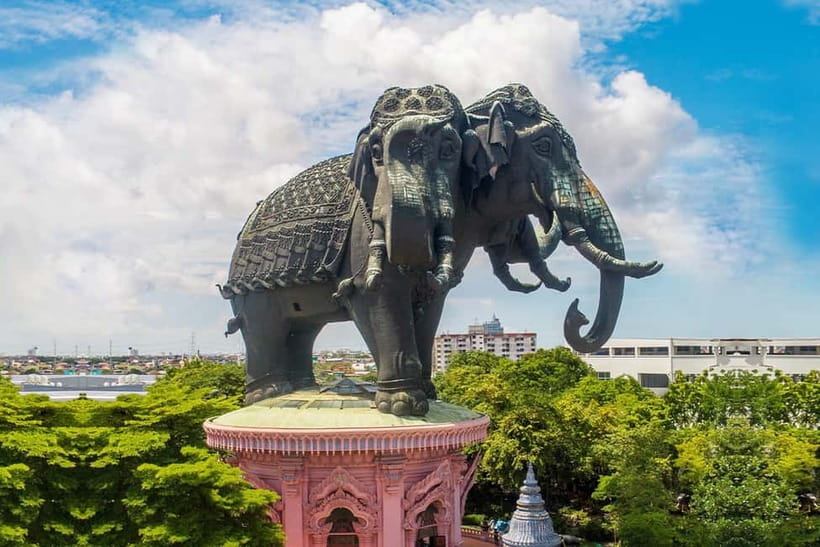
- A massive three-headed bronze elephant outside sets the tone instantly, Hindu mythology included
- Three museum zones (Underworld, Earth, Heaven) help you follow the theme without getting lost
- Included ritual items (flowers, incense, and a lotus flower) add meaning beyond normal admission
- Lots of photo spots, both exterior and interior, with clear rules for respectful use
- Airavata symbolism + “protecting the earth” design turns the building itself into an exhibit
- Dress code is strict (no shorts, sleeveless tops, short skirts), so you’ll want to pack smart
Erawan Museum’s three-headed elephant: the myth you can walk around
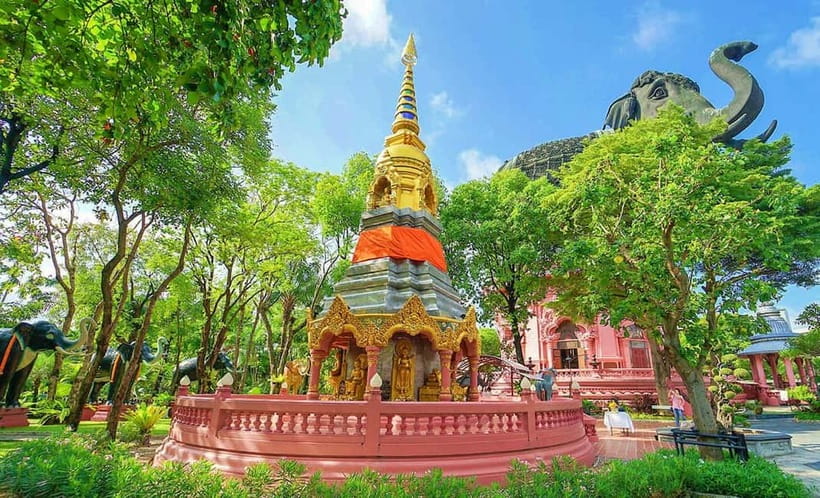
The Erawan Museum in Samut Prakan isn’t just famous for looking dramatic. It’s designed around the mythological Airavata, the three-headed elephant connected to Hindu belief systems, including its role as a vehicle for Indra. You feel that intention right away because the building doesn’t behave like a neutral museum box.
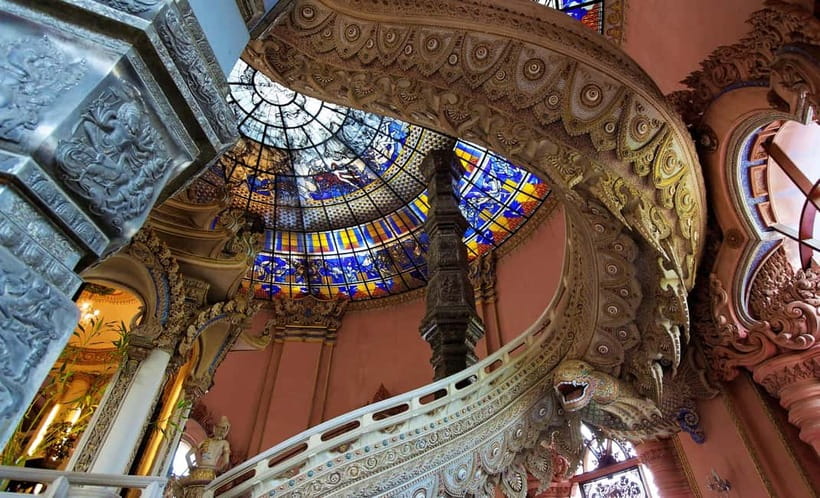
The three-headed bronze elephant is described as standing on a sphere—basically a symbolic globe. The symbolism is practical for your visit: it tells you to look at the museum as something that “holds” the sacred objects inside, rather than a random collection in separate rooms. Even if you don’t know the mythology, the structure nudges you toward that mindset.
The museum’s backstory also matters. It was built by antique collector Lek Viriyapant, with the plan to preserve precious antiques as heritage for the next generation. After the design, the work was handed to his son, Pagpean Viriyapant, for construction. What’s striking is that worship and gatherings reportedly happened even before construction finished, and the family continued the mission even after Lek and Pagpean passed away before completion. So when you walk through, you’re stepping into a place created with preservation and devotion in mind.
A few more Samut Prakan tours and experiences worth a look
Price and value: why $12 can make sense here
At $12 per person, this admission ticket is in the sweet spot for a day-trip attraction in central Thailand. It’s not only entry to a building with rooms of art—you’re also getting a full architectural experience and a structured route through three concept-driven sections.
Here’s where the value comes from:
- You’re paying for three distinct areas (Underworld, Earth, Heaven), not a single gallery loop.
- You’ll have access to areas surrounding the museum, which means the outdoor elephant setting is part of the experience, not just decoration.
- Your admission includes ritual items: flowers, incense, and a lotus flower. That’s unusual compared to typical museum tickets and adds a more participatory feel.
- You’re set up to skip the ticket line, which helps if you’re on a timed schedule.
The museum also gives you the kind of trip rhythm that’s easy to manage: it’s designed for photo opportunities and visual discovery, but it doesn’t require advanced planning to enjoy. You can go in with minimal prep and still understand what you’re looking at, thanks to the clear “three worlds” layout.
Getting there from BTS Chang Erawan Station (E17): easy route, one timing note
If you’re using public transit, this is one of the easier ways to reach the Erawan Museum area. Take the BTS Skytrain Green Line and exit at Chang Erawan Station (E17) Exit 2. From there, there’s a free pick-up service by shuttle tuk-tuk every day.
That said, here’s the practical caution: plan as if the shuttle may not be perfectly timed for your specific moment. One review mentioned not receiving the free tuk-tuk ride as expected. So I’d treat the shuttle as convenient, not guaranteed—especially if you’re arriving right at the start of your booked entry time.
Good news: the visit itself is designed to loop back to the meeting point, so you’re not stuck figuring out a complicated return plan after you’re done.
The museum route that makes sense: Underworld → Earth → Heaven
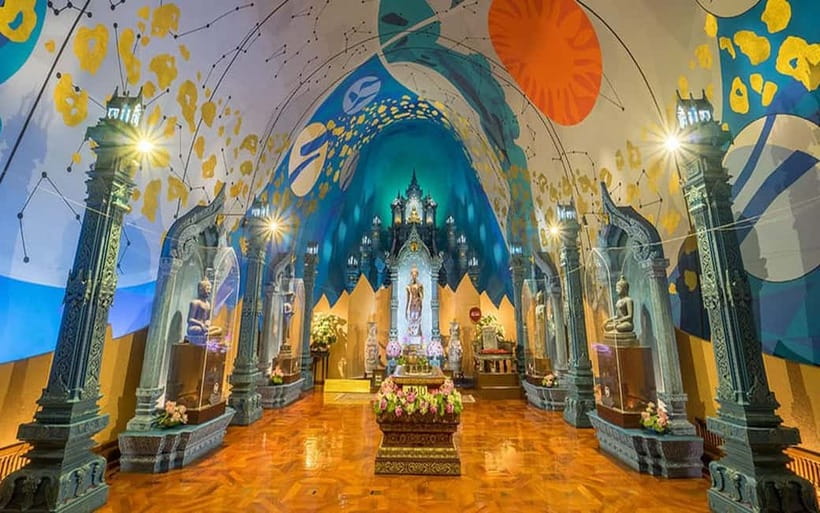
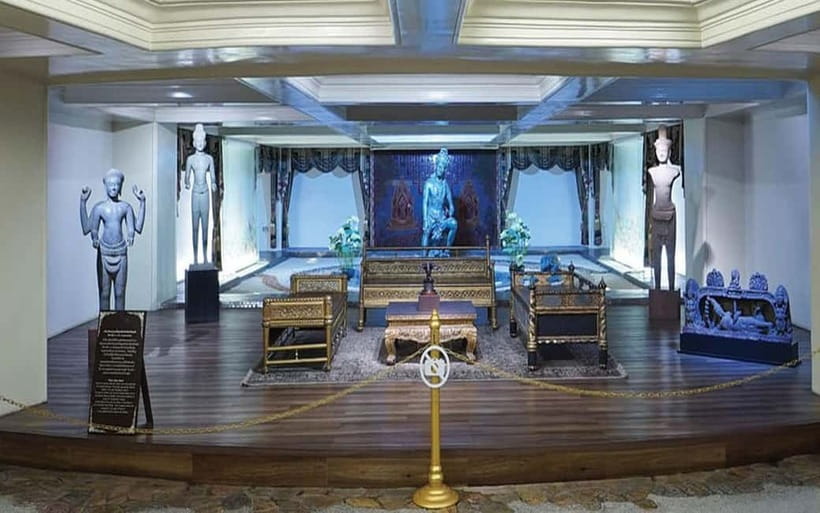
The museum experience is built around three sections: Underworld, Earth, and Heaven. That matters because it turns your visit into a guided feeling, even without a formal guide telling you where to stand.
Underworld: where you’ll set the mood
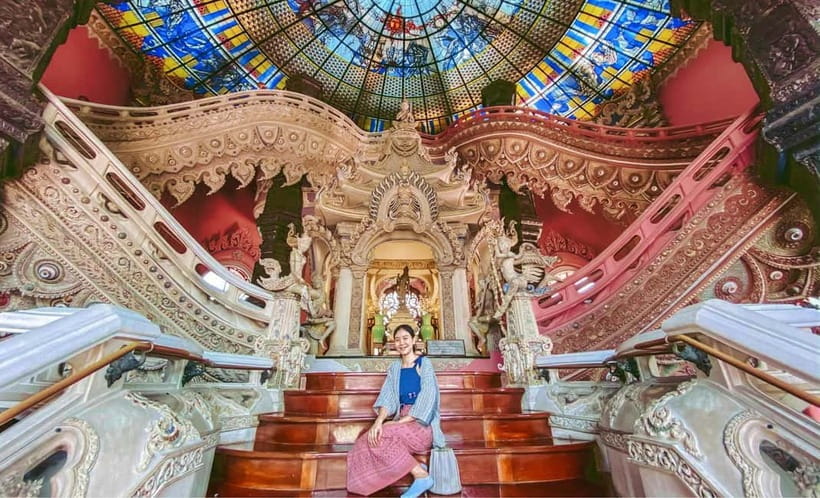
Expect the Underworld section to be the most “serious” and symbolic. This is where your eyes tend to adjust first—your brain is learning the museum’s visual language. If you want photos, this is also where lighting can change quickly as you move through interior spaces, so it helps to pause, then shoot, then move.
Earth: the connection point
The Earth section is where the museum’s protective symbolism starts to feel more grounded. Since the elephant stands on a sphere meant to represent a globe, the Earth zone is essentially the “center” of that idea. If you like exhibitions that have a theme you can feel in the architecture, this is likely your favorite transitional stop.
Heaven: the closure
Heaven tends to feel like the emotional finish. If you’ve been following the story across the three zones, this section helps you read the collection as more than decoration. The design goal—preserving sacred antiques and objects intended to bring blessings and prosperity—lands more clearly when you reach the final part.
If you’re trying to keep the experience calm, don’t rush all three sections back-to-back. I’d do Underworld first, Earth next, then take your time in Heaven, especially if you’re there for photos. Your attention will naturally narrow as you move; giving yourself a slower pace can make the symbolism stick.
Asian art and philosophy: what you’re really looking at
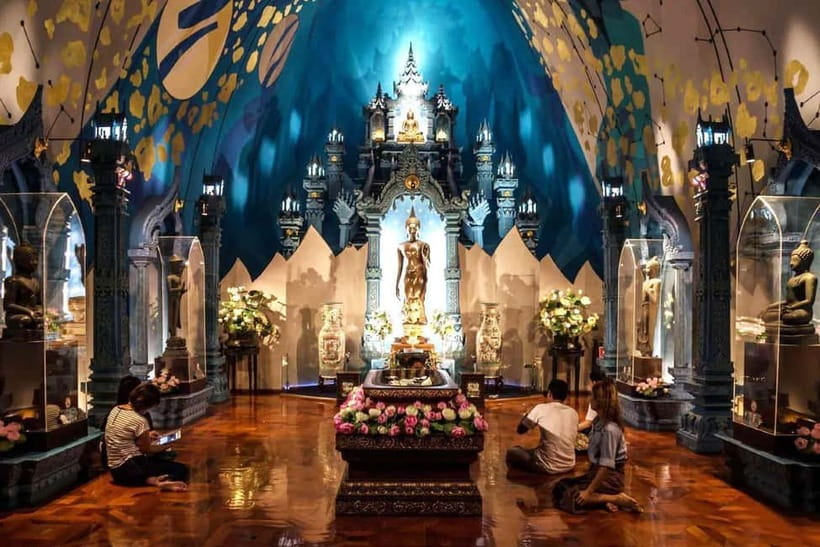
Beyond the elephant itself, the museum is described as focusing on Asian art and philosophy. That combination changes how you should look at the exhibits.
Instead of treating each display as an isolated artwork, try looking for the connecting idea: the sacred objects and antiques are tied to beliefs that they would bring blessing and prosperity to the land. The museum’s creator family wanted these items preserved and passed down as cultural memory. So even if you only spend a portion of your day reading labels, your job is mostly to observe how objects are presented and how the three worlds connect.
A key detail in the museum’s concept is that the sacred objects included in the collection could date back to ancient times—times when people believed objects held spiritual value. You might not recognize every item instantly, and that’s fine. The experience works best when you let the museum act like a guided narrative through space: Underworld for the deeper symbolism, Earth for the connection to protection, Heaven for the spiritual wrap-up.
Photos, incense, and respectful rules: how to get the most without slowing others down
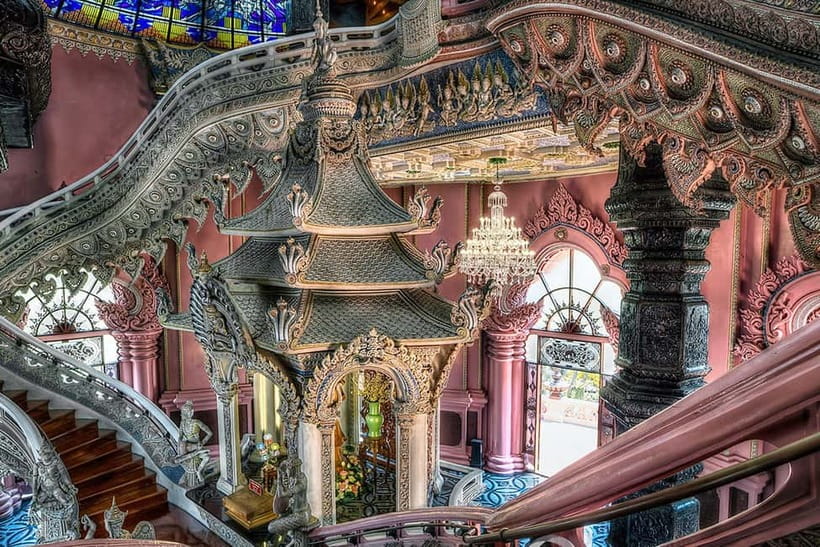
This is a museum where photos are a big part of the appeal. You’ll have plenty of photo opportunities inside and outside—including the exterior elephant that’s visually the star of Samut Prakan.
But rules matter here, and they’re clearly set:
- Taking pictures or videos for commercial purposes is not permitted inside.
- Food and drinks are not permitted.
- You should be quiet and respectful during your visit.
- Pets are not allowed.
- Alcohol and drugs are not allowed.
There’s also a dress code. You’ll want to plan ahead with clothing that fits the rules: no shorts, no short skirts, no sleeveless shirts, and no alcohol-related surprises in your bag.
The included ritual items—flowers, incense, and a lotus flower—can also shape how your visit feels. Even if you don’t know exactly what you’ll do with them, the fact that they’re included tells you the museum isn’t only about viewing. It’s also about respectful participation in a cultural space.
If you’re the kind of person who likes taking your time with photos, do a quick lap first to choose locations, then slow down for the shots. That keeps you from bumping into other visitors while you’re still figuring out angles.
Planning your day: making an 8-hour ticket feel worth it
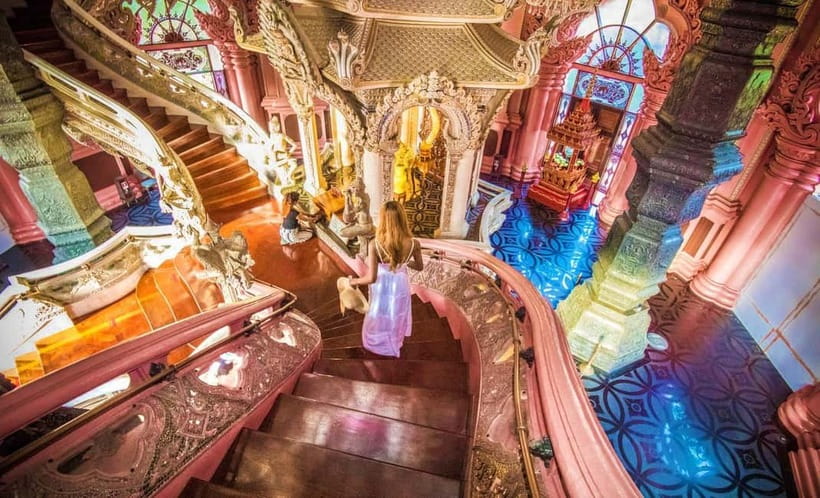
Your ticket is valid for 8 hours (and you need to enter only on the specified date and time after booking). That’s a helpful window because it gives you room for a slow, photo-friendly visit across three zones.
Here’s a practical pacing approach you can use:
- Start with the exterior elephant area so you get the big picture first.
- Move indoors and follow the Underworld → Earth → Heaven flow.
- Spend extra time where you feel drawn—usually Earth and Heaven for many people.
- Leave a final buffer to take photos again after you understand the space.
One more timing tip: because you’re booked to a specific date and time, don’t treat “arrival whenever” as a strategy. Get there early enough to handle the shuttle situation calmly. If the free tuk-tuk pickup is late—or you arrive at a moment when it’s not convenient—having buffer time is how you avoid stress.
What’s included (and what you’ll need to handle yourself)
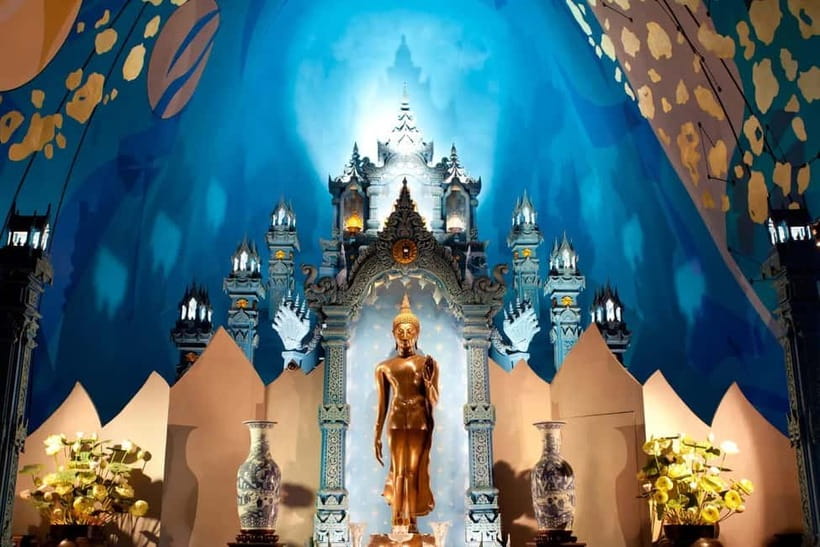
Included in your admission:
- Admission ticket to the Erawan Museum
- Flowers, incense, and a lotus flower
- Access to areas surrounding the museum
- All taxes and fees
Not included:
- Transfers
- Other personal expenses
So yes, admission covers entry and the ritual items, but it won’t cover your personal spending or any private transport you might arrange beyond what the meeting point suggests.
Also keep food and drinks in mind. Since they’re not allowed, you’ll either need to eat before you arrive or plan to grab food afterward.
Who should book this ticket?
This is a great fit if you want:
- A museum with a strong visual centerpiece (the three-headed elephant) plus structured indoor zones
- A day activity that mixes art, architecture, and philosophy rather than only history reading
- A calm cultural stop where you can take photos and still move with purpose
It’s also a good option if you like museums that have a clear “through-line.” The Underworld/Earth/Heaven structure gives you that.
It may be less ideal if:
- You need to eat during the visit (food and drinks are not permitted)
- You’re not willing to follow the modest dress code
- You’re counting on the free tuk-tuk pickup as your only transport solution
Should you book the Erawan Museum admission ticket?
If you’re visiting Samut Prakan or passing through central Thailand and want a memorable, story-based museum experience for $12, I think it’s worth booking. The combination of a dramatic exterior elephant, three organized sections, and included ritual items makes it feel like more than a standard ticket.
My one deciding check is this: make your transport plan flexible around the free shuttle pickup. If you handle that, you’ll get a smooth experience with plenty of time to enjoy Underworld, Earth, and Heaven at your own pace.
FAQ
How much is the Erawan Museum admission ticket?
The price is listed as $12 per person.
How long is the ticket valid?
The ticket is valid for 8 hours, based on available starting times.
Where can I get to the museum using BTS?
Use the BTS Skytrain Green Line and exit at Chang Erawan Station (E17) Exit 2. There is a free shuttle tuk-tuk pickup service there every day.
What sections of the museum can I visit?
You can visit three sections: Underworld, Earth, and Heaven.
Is food and drink allowed inside the museum?
No. Food and drinks are not permitted.
Are photos and videos allowed?
Yes for normal visiting, but taking pictures or videos for commercial purposes is not permitted inside the museum.
Can I cancel and get a refund?
Yes. Free cancellation is available up to 24 hours in advance for a full refund.