REVIEW · PHUKET
Phuket’s Cultural Heart: Wat Chalong & Old Town Tour
Book on Viator →Operated by Excursion Phuket · Bookable on Viator
Phuket moves fast. This half-day tour threads Wat Chalong and Phuket Old Town into one easy plan, with a couple of tasty side stops along the way. I especially like how it mixes sacred temple sights with real street-level neighborhoods you can still feel living.
Two things I really like: the short, focused temple visit at Wat Chalong (including its local legend tied to Luang Pho Chaem and Luang Pho Chuang), and the Old Town walk where Chinese and Portuguese influence shows up in the Sino-Portuguese shophouse facades. It’s the kind of day where you get your bearings fast without signing up for a full day of driving.
One consideration: the Big Buddha is currently inaccessible, so you’ll go to a nearby viewpoint instead. Also, if you’re picky about animal welfare, do a quick stop-list check with the operator before you lock it in.
In This Review
- Key points to know before you go
- Price and value: what $24 gets you in Phuket time
- Pickup, small-group pace, and how to use the time
- Chalong honey farm: learning beekeeping and tasting the sweetness
- Mook Phuket stop (or Wang Thalang Jewelry): coffee, souvenirs, and time limits
- Cashew Nut Factory: how the crunch gets made (and what to taste)
- Wat Chalong (Chaithararam / Wat Chaiyathararam): the temple that anchors the day
- Big Buddha viewpoint: when the main steps are off-limits
- Old Phuket Town: Sino-Portuguese shophouses, streets you can actually wander
- Animal-welfare and guide-performance: two things to double-check
- Who should book this Phuket cultural heart tour
- Should you book? My honest call
- FAQ
- What time does the tour start?
- How long is the tour?
- Does this tour include hotel pickup?
- What happens to the Big Buddha stop right now?
- Are admissions included for the listed stops?
- How many people are in the group?
Key points to know before you go
- Wat Chalong in about 30 minutes gives you the essentials, not a half-day lecture
- Old Phuket Town is the payoff for Chinese-Portuguese Sino-Portuguese architecture
- Honey farm and cashew stops turn snack time into a quick cultural lesson
- Small group (max 12) helps you move at a steadier pace than big buses
- Big Buddha access is limited, so plan for viewpoint photos instead of the main steps
- Shopping breaks are real time, so decide what you’re actually buying for
Price and value: what $24 gets you in Phuket time
At around $24 for a roughly 5-hour outing, this tour is priced like a “hit the highlights” sampler. You’re not paying for a long, story-heavy guided march all day. Instead, you’re buying structure: a driver, an air-conditioned vehicle, and a route that makes the timing painless.
That’s not a bad deal, because Phuket distances add up. Even within one area (like Chalong and Old Town), you lose time to traffic and finding your way. This plan keeps things tight: temple time, Old Town time, and a couple of food-and-gift stops that are more interesting than you might expect.
Just keep your expectations grounded. If you want a deep, minute-by-minute historical talk, you might find the schedule moves on quickly. If you want good sights plus a comfortable way to connect them, the value is pretty solid.
You can also read our reviews of more tours and experiences in Phuket.


Pickup, small-group pace, and how to use the time
The tour starts at 1:00 pm and includes hotel pickup. You’ll also have coffee and/or tea, which is a small detail but helpful when you’re bouncing around in Thailand heat.
The group limit is 12 travelers, which matters more than it sounds. In a small group, you’re less likely to get stuck in a chaotic crowd scene at the places that get busy. It also helps with logistics—drivers can usually find you faster and guides can manage transitions without turning every stop into a waiting game.
One practical tip: treat the shopping stops as optional targets, not surprise activities. The itinerary includes a stop at Mook Phuket (ร้านมุกภูเก็ต, ถนนขวาง) for about 30 minutes. Depending on traffic, it may swap to Wang Thalang Jewelry. That’s a short, fixed window—so if you want to browse calmly, do it with a game plan (and a budget).
Chalong honey farm: learning beekeeping and tasting the sweetness
The first stop is in Chalong, where you get a ~30-minute visit to a local honey farm. The big idea here is simple: Thailand has lots of honey products, but this is one of those stops that explains how they’re made instead of just selling jars.
You’ll learn the basics of beekeeping, then sample honey and honey products. The taste part is the real motivator—honey is one of those things where your brain goes from “marketing” to “oh, that’s actually different” in seconds.
What’s worth your attention: ask what makes their honey distinct. Even without a long workshop, you can usually figure out if they’re talking about flower sources, handling, or the production process. If you’re the type who likes to bring home edible souvenirs, this is usually the easiest “yes” purchase from the day because it’s tied to what you see.
Mook Phuket stop (or Wang Thalang Jewelry): coffee, souvenirs, and time limits
Next up is Mook Phuket (ร้านมุกภูเก็ต, ถนนขวาง) for about 30 minutes. The stop is basically a controlled browse: you can pick up souvenirs, and there’s time for coffee or tea.
The itinerary notes that, depending on traffic conditions, you may instead visit Wang Thalang Jewelry. So if you’re hoping for one specific store vibe, plan for a swap. That’s also why you should use your time wisely: if you want postcards, small gifts, or something sweet for a friend, do it early in the allotted time.
If you’re not into shopping at all, the silver lining is that it’s quick. You’re not trapped for hours. Still, it’s a good moment to set your expectations: the tour is not only temples and streets. It includes commercial stops.
Cashew Nut Factory: how the crunch gets made (and what to taste)

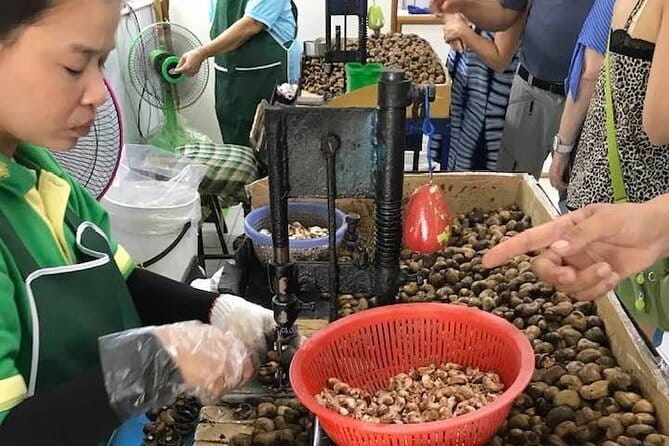
Then comes the cashew nut factory, another time-boxed stop (about 30 minutes). Here the focus is the journey from tree to product: harvesting, roasting, and turning cashews into packaged snacks.
You’ll likely taste different cashew products and then have the chance to purchase souvenirs. I like this kind of stop because it’s practical. Cashews are a Phuket export in the real-world sense: you’ll see them everywhere, so learning how they’re processed helps you judge what you’re buying.
Keep an eye out for freshness claims and how they’re stored. If they’re roasting or processing onsite, you’ll often see the product turnaround right there. If not, it’s still a chance to compare flavors—like salted vs. flavored options—so you can buy something you’ll actually eat later, not just stuff in a drawer.






Wat Chalong (Chaithararam / Wat Chaiyathararam): the temple that anchors the day
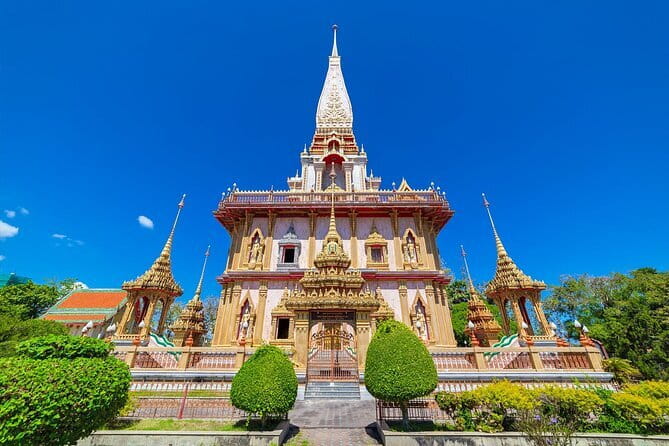
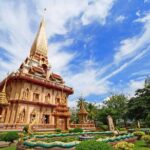
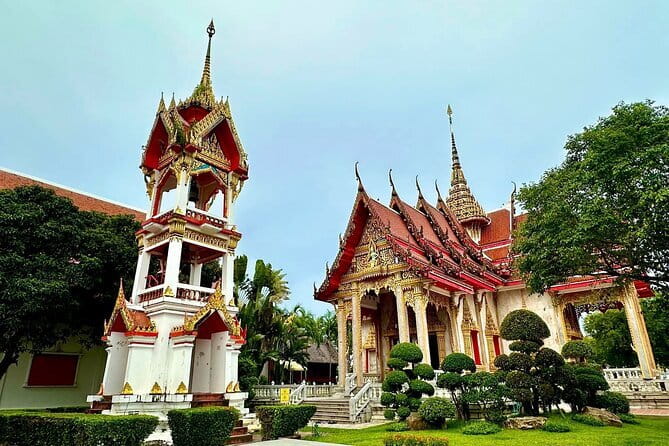
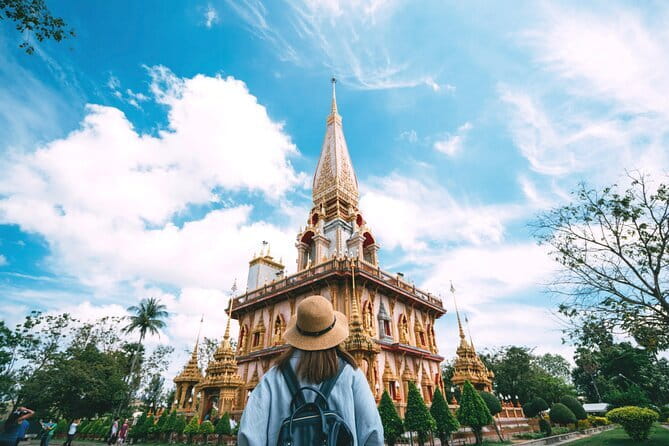
This is the spiritual centerpiece: Chaithararam Temple, officially Wat Chaiyathararam. You’ll spend about 30 minutes here, which is enough time to understand the layout and catch the key visual moments without rushing yourself to exhaustion.
Wat Chalong is Phuket’s most revered Buddhist sanctuary. The story attached to it is very specific and local: in the 19th century, two monks—Luang Pho Chaem and Luang Pho Chuang—led locals during resistance connected to Chinese tin miners and later provided medical help to the injured. That kind of detail matters because it turns a temple visit into a place with memory, not just a photo stop.
What to look for during your short visit:
- Architectural details and how the structures relate to the main worship areas
- Any areas where relics of the Buddha are referenced
- The way visitors move through the space (you’ll see a lot of “how locals do it” by watching)
Practical note: dress codes are usually strict at Thai temples. If you want zero hassle, wear breathable pants or a long skirt and bring something light for shoulders. This is one of those days where comfort plus modest coverage keeps things smooth.
Big Buddha viewpoint: when the main steps are off-limits
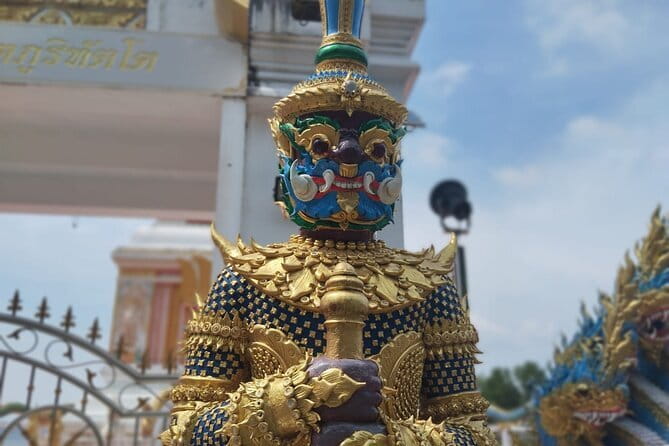
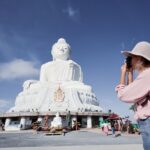
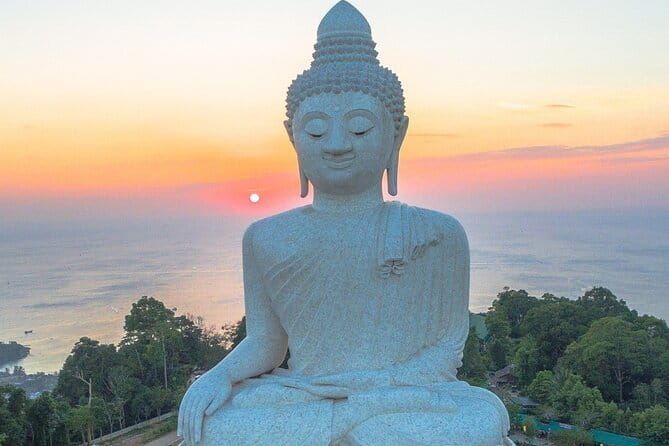
The tour notes a safety change: the Big Buddha is currently inaccessible, so you won’t go up to the main area. Instead, you’ll visit a nearby viewpoint to admire its grandeur.
That can be a good thing if you’re realistic. Viewpoints still give you the scale, and it’s usually easier on your feet. The tradeoff is fewer “up close” moments and less time for photos at the monument itself.
When you’re taking pictures from a viewpoint, shoot a couple of angles: one wide shot to show scale, then a closer frame where the statue fills more of your image. If you’re with a group, do it quickly so your stop time stays stress-free.
Old Phuket Town: Sino-Portuguese shophouses, streets you can actually wander
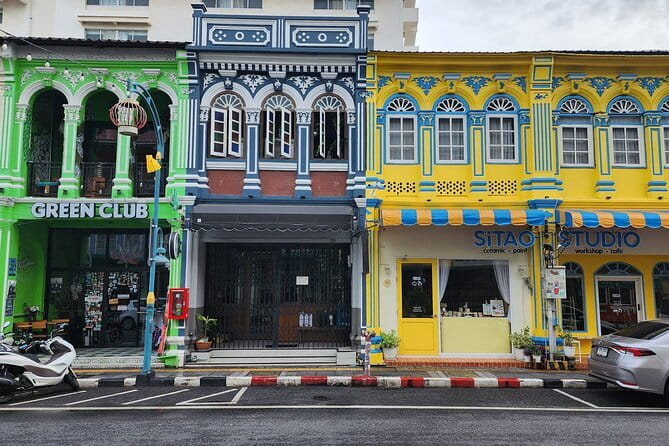
After the temple side of the day, you head to Phuket Old Town. Expect around 35 minutes once you arrive, and you’ll move at walking pace through an area shaped by trading history.
This part is where the tour earns its keep. Old Phuket Town is known for Chinese and Portuguese influence, visible in Sino-Portuguese architecture. Look for the colorful shophouses and the decorative details on facades. Even in a short walk, you can spot patterns—arched windows, tilework, and signage styles—that reflect centuries of commercial life.
The backstory you’ll get here is tied to the island’s tin economy. Once the town was a tin mining center, prosperity in the 19th century helped shape the grand buildings you see today. Chinese immigrants played a major role in culture and commerce, and that imprint still shows up in the street life.
Today, the area has been restored and is now a mix of history, art, and food. Your best strategy in the short time you have:
- Do a slow “first loop” for photos
- Then use the second half to pick one or two snacks or drinks
- If there’s a market corner or a small side street, choose one and go, don’t bounce everywhere
Old Town rewards you for making quick choices. It’s not a “wander forever” plan in 35 minutes.
Animal-welfare and guide-performance: two things to double-check
Two issues are worth your attention before you book.
First, animal welfare. Even if this particular itinerary looks like honey, cashews, temples, and streets, I strongly suggest you confirm the full stop list with the provider and ask whether any animal-related encounters are included. There have been complaints in this travel category about animal issues and being surprised by added stops. If this is a dealbreaker for you, put it in writing when you ask.
Second, guide energy and context. A quiet guide can still be fine if you don’t need much explanation, but if you want insight—especially for Sino-Portuguese architecture—you’ll likely get more out of the day if your guide is willing to point out what matters. If communication feels thin, ask a direct question early, like what to look for in the shophouse facades or what part of Wat Chalong is most important to understand.
You don’t need a speech. You just need a few clear pointers to make short stops feel meaningful.
Who should book this Phuket cultural heart tour
This tour is a good match if you:
- Want Wat Chalong + Old Town in one half-day plan
- Prefer a structured route with pickup and air-conditioning
- Enjoy food souvenir stops like honey and cashews
- Like architecture enough to appreciate it even without a full-day guided lecture
- Want a small group experience (max 12)
It may not be the best fit if you:
- Refuse any animal-related encounters, even if they’re brief
- Want Big Buddha time at the actual monument (you’ll only get a viewpoint)
- Need a heavily guided, hour-by-hour commentary in every stop
If you fit the first group, this is a practical way to see Phuket’s cultural core without burning an entire day.
Should you book? My honest call
I’d book this tour if your goal is straightforward: Wat Chalong, Old Phuket Town, and a couple of quick, taste-based stops that make the day feel local. The $24 price (for pickup, air-conditioned transport, and multiple major stops) is the kind of value that can work well if you’re traveling smart and flexible.
But book with eyes open. Confirm the animal-welfare situation in advance, because that’s non-negotiable for many people. And if you care a lot about the architecture and temple meaning, come ready to ask questions. In a half-day schedule, a couple of well-timed questions can turn a short visit into a memorable one.
FAQ
What time does the tour start?
The tour start time is 1:00 pm.
How long is the tour?
The duration is about 5 hours (approximately).
Does this tour include hotel pickup?
Yes, pickup is offered, and the tour includes travel by air-conditioned vehicle.
What happens to the Big Buddha stop right now?
The Big Buddha is currently inaccessible, so the tour includes a nearby viewpoint to admire it.
Are admissions included for the listed stops?
The itinerary notes admission ticket free for the stops listed.
How many people are in the group?
The tour has a maximum group size of 12 travelers.
If you tell me your hotel area (Patong, Kata, Karon, Old Town, etc.) and what you care about most (temples, architecture, food, shopping), I can help you judge whether this timing is ideal for you.