REVIEW · PHUKET
Phuket Elephant Sanctuary: Half-Day with Vegetarian Meal
Book on GetYourGuide →Operated by Phuket Elephant Sanctuary · Bookable on GetYourGuide
Elephants, but no circus tricks. At Phuket Elephant Sanctuary you’ll watch Asian elephants roam, forage, and bathe freely, then walk above them on a long, elevated jungle path.
What I love most is the ethical approach (no riding or tricks—just respectful observation) and the chance to experience Thailand’s longest canopy walkway while elephants do their own thing.
One drawback to plan for: it’s an outdoor walk for most of the 210 minutes, so bring your patience for sun, humidity, or rain. The good news is the sanctuary supplies practical rain gear and walking help.
In This Review
- Key highlights that make this half-day worth it
- Phuket Elephant Sanctuary’s ethical setup: what you’re really supporting
- Tree Top Lounge start: snacks, video, and a quick reality check
- Fruit basket feeding until 31 March 2026: the moment people remember
- Thailand’s longest canopy walkway: walking above the action
- Natural trails and ponds: watching elephants bathe and socialize
- The vegetarian Thai meal: fuel after a serious, emotional visit
- Price and value: what $96 buys you here
- Getting there and meeting up: what to plan for
- What to wear and bring: practical gear for Phuket weather
- Who should book this half-day, and who might want to rethink
- Should you book Phuket Elephant Sanctuary Half-Day with Vegetarian Meal?
- FAQ
- How long is the Phuket Elephant Sanctuary half-day program?
- What’s included with the half-day tour?
- Is elephant feeding included?
- Do I get to walk on the canopy walkway?
- Is the meal vegetarian?
- Is hotel pickup available?
- What if I don’t select transfers?
- What language is the guide?
- What should I wear?
- Is rain gear provided?
Key highlights that make this half-day worth it
- Fruit basket feeding included until 31 March 2026 for some of the elephants, from a respectful distance
- Walk Thailand’s longest canopy walkway with the jungle unfolding below
- Guides teach elephant-by-elephant stories, with named guides like Woody, Patty, Alex, Minnie, Uma, Tour, and Thomas showing up in recent tours
- Vegetarian Thai meal at the end (with reviews noting it’s more than an afterthought)
- Rain-ready walking setup: socks, boots, umbrellas, and rain coats provided
Phuket Elephant Sanctuary’s ethical setup: what you’re really supporting
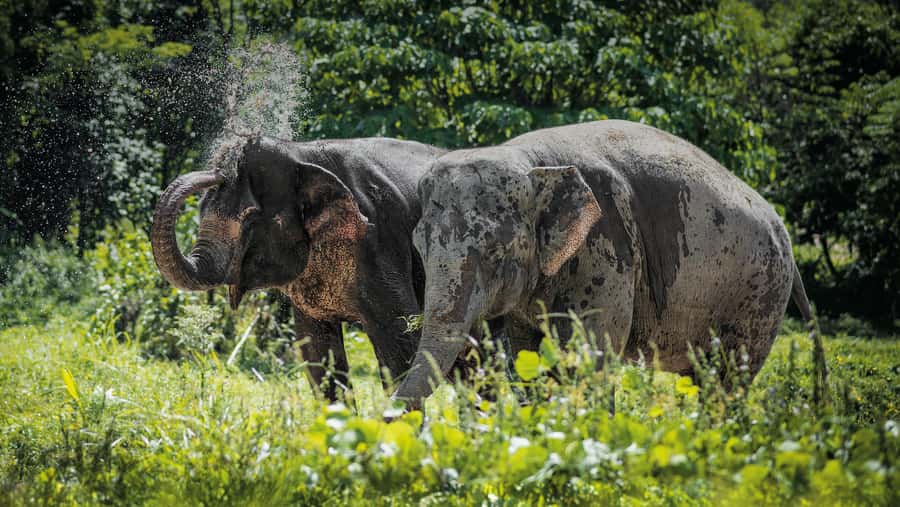
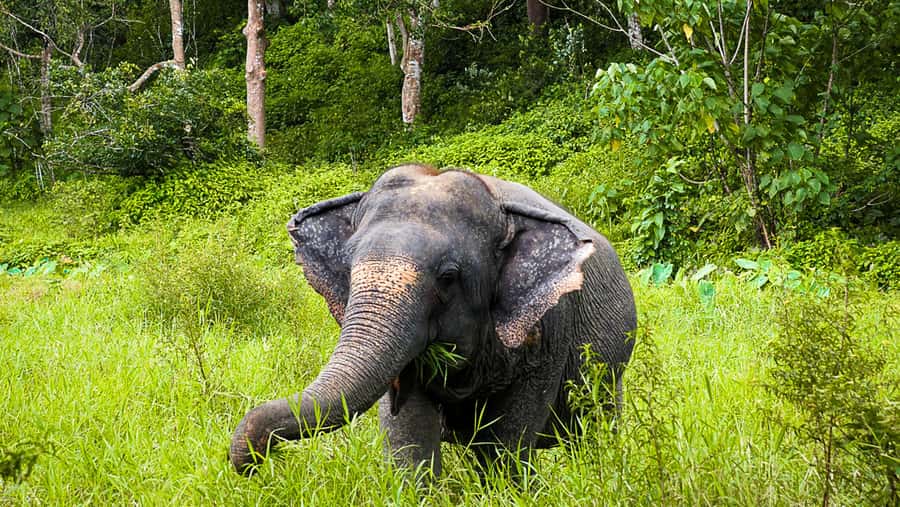
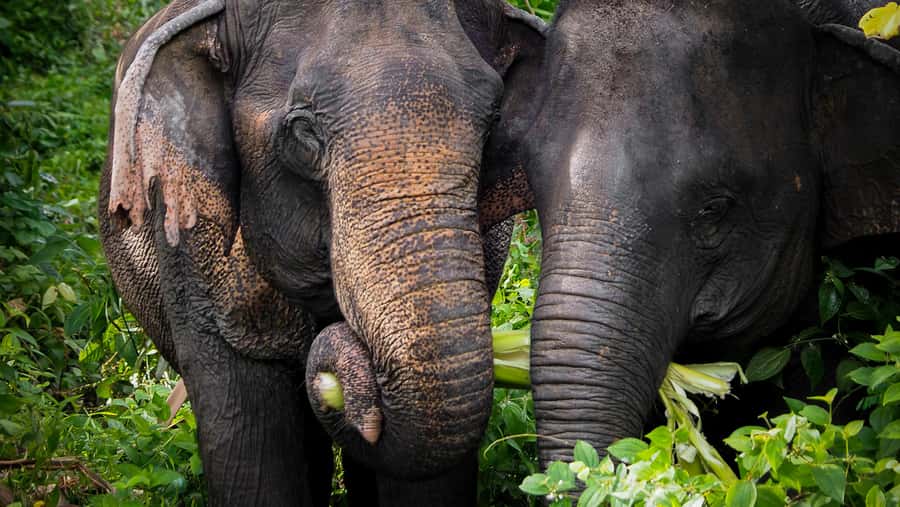
This half-day is built around one clear idea: elephants should live like elephants. Instead of performances, you’re there to observe natural behaviors—roaming, foraging, and yes, bathing—without crowding them or pushing them into a routine.
You’re also supporting a sanctuary model that treats rescued elephants as long-term residents, not short-term attractions. The tour includes a short educational documentary/video at the start, and guides then connect what you see to why the sanctuary exists. Several guides named in the program have a habit of explaining the personal stories of each elephant, which matters because it turns the animals from scenery into individuals.
And you’re not just there for vibes. The feeding is part of the program too: you may feed elephants their daily fruit baskets (included until 31 March 2026), then later you’ll spend time moving through the sanctuary’s trails on foot. It’s active, but it’s also controlled and respectful—built for safety and for animal welfare.
A few more Phuket tours and experiences worth a look



Tree Top Lounge start: snacks, video, and a quick reality check
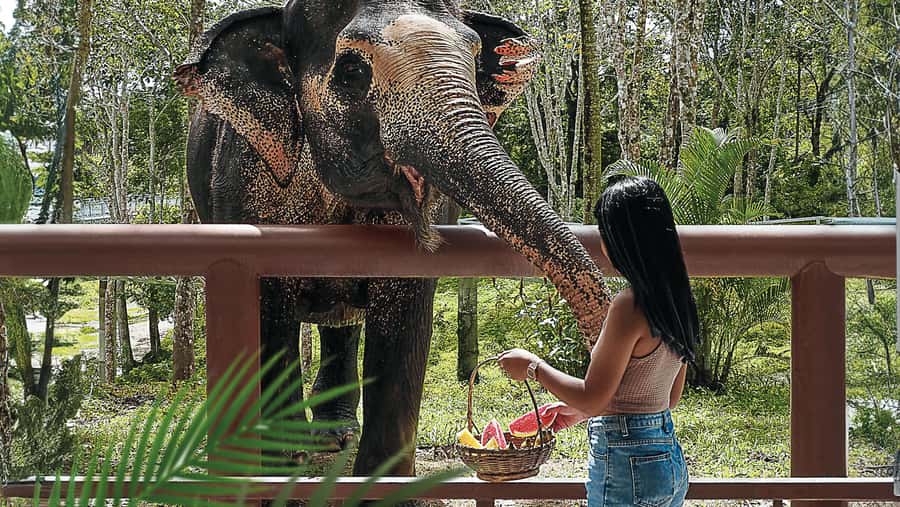
Your day usually begins with a scenic drive through a local village and an arrival at the Tree Top Lounge. Here you’ll find complimentary snacks and beverages, plus a calm place to get oriented before you head deeper into the sanctuary.
Next comes the educational video/documentary. This is one of the smartest parts of the program because it explains what you’re about to see and why the sanctuary’s approach is different from the older “elephant tourism” playbook. Reviews also highlight the emotional side of this intro—people leave understanding that these animals often arrive with tough histories.
Practical detail that I think you’ll appreciate: you’re given a walking-ready setup if weather shifts. The tour provides socks, boots, and rain gear (umbrellas and rain coats) plus mosquito spray and filtered water. That means you can pack light and still be comfortable.
Fruit basket feeding until 31 March 2026: the moment people remember
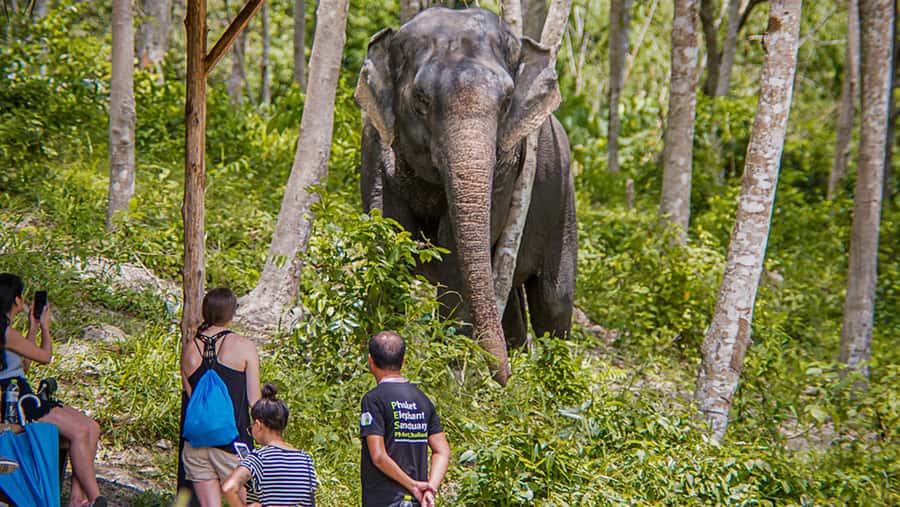
Feeding is one of the most talked-about parts for a reason. You get the chance to feed some of the elephants their daily baskets of fruits, and it’s included in the program until 31 March 2026.
The key is how it’s handled. You feed from a safe, respectful distance as your guide keeps things orderly. You’re not trying to make selfies happen or force contact. Instead, it’s a short, structured moment where you’re basically invited into the elephants’ rhythm.
In a lot of elephant experiences, visitors want the “close-up” without thinking about what close-up means for animal welfare. Here, the emphasis is on the elephants choosing what they do next. Even when elephants come nearer, the program’s safety rules aim to keep the interaction gentle and non-intrusive.
If you’re picky about ethical tourism, this is also a helpful moment to judge the operation. Look for how staff position themselves, how they manage space, and whether elephants can disengage when they want.
Thailand’s longest canopy walkway: walking above the action
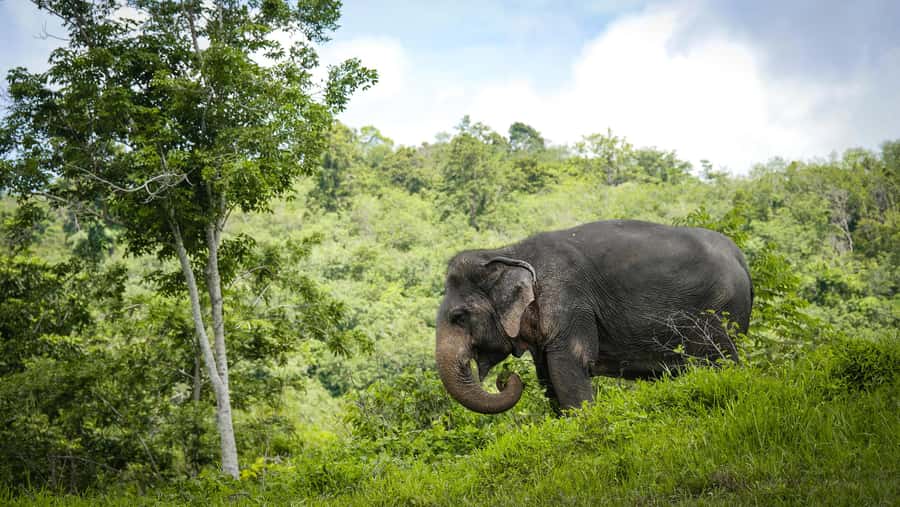
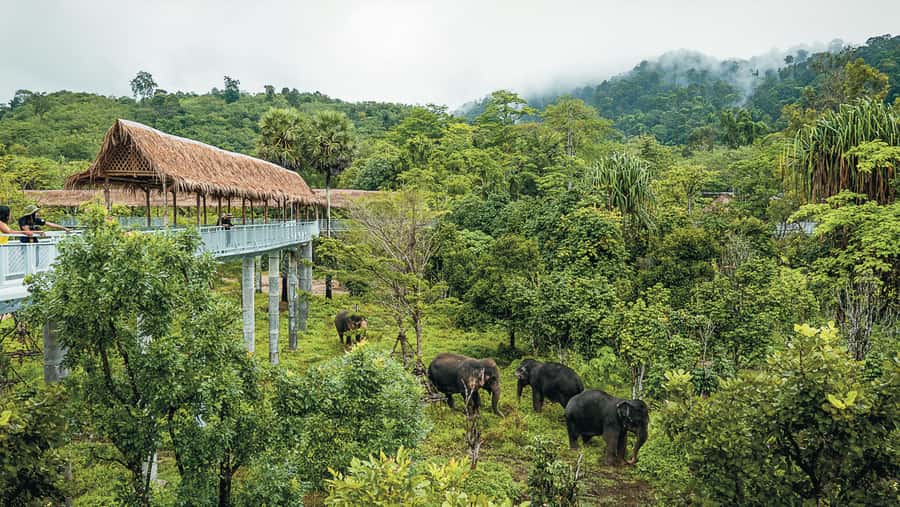
After the lounge and feeding session, the tour shifts into a true “walk-and-watch” format. You’ll head into the sanctuary and take on Thailand’s longest canopy walkway.
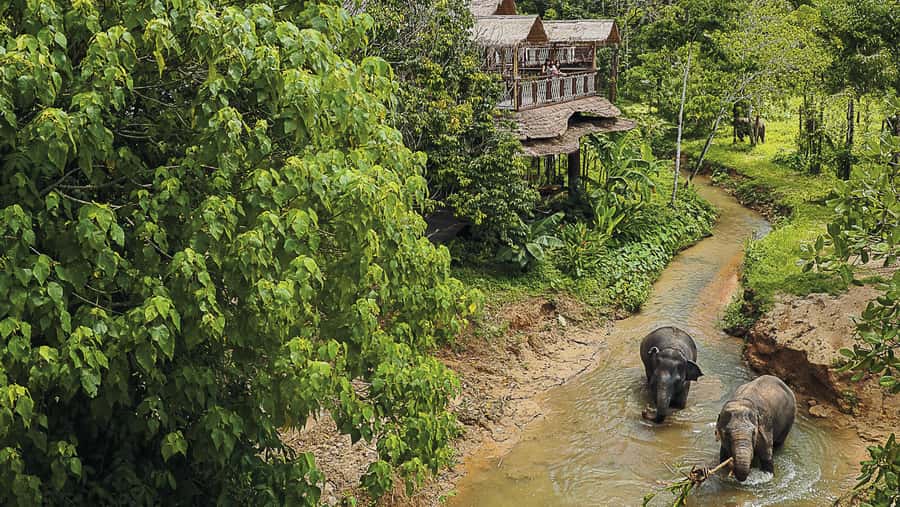
This elevated route is special for two reasons. First, it gives you long views across the treetops, so you’re not only looking at the animals on the ground—you’re also seeing the sanctuary’s jungle ecosystem as a system. Second, it lets you watch elephants foraging and bathing below you without stepping into their space.
The canopy layout also helps with pacing. You’re moving, but you’re not constantly stopping and rushing. That matters in places like this, because the animals’ behavior isn’t a show you can predict. Your guide helps connect what you’re seeing to the elephants’ individual stories, so the time doesn’t feel empty if the elephants decide to move slowly.
It’s also where the day becomes memorable in a “quiet awe” way. You’re up above, hearing the jungle sounds, while massive animals live their normal day out of sight until they wander into view.
Natural trails and ponds: watching elephants bathe and socialize
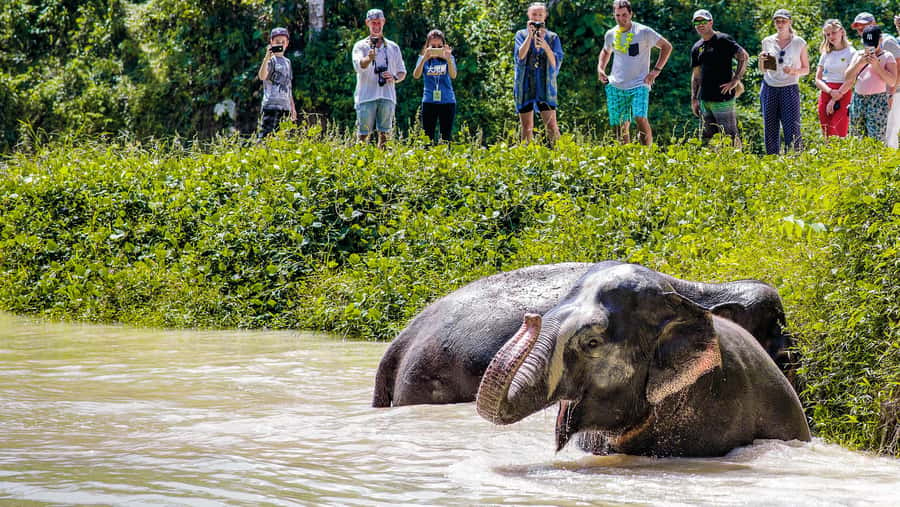
Beyond the canopy walkway, you’ll explore natural trails to locate elephants and observe them at work—without taking control of their behavior. Your guide keeps a respectful distance while you watch the elephants forage, play, and socialize.
Bathing is part of the elephants’ natural routine here. The tour experience is described around watching elephants bathe freely, not participating in some forced interaction. And because you’re in walking areas (plus viewing from the walkway), you get a front-row view of normal behavior without turning the day into a crowd-management problem.
One practical thing: elephants can be unpredictable about where they go next. That’s not a flaw—it’s the point. But it does mean you should expect some waiting and some walking changes while your guide tracks the group.
If you like seeing how a sanctuary handles “real life,” this is also where you may notice the behind-the-scenes care. Reviews mention staff/handlers managing hygiene when elephants are in water, which signals that the sanctuary is thinking about animal health, not just visitor satisfaction.




The vegetarian Thai meal: fuel after a serious, emotional visit
At the end of the program, a vegetarian Thai meal is waiting for you. This isn’t just a token snack. Multiple reviews call the meal delicious and note it’s satisfying after time on your feet.
You’ll likely have a buffet-style setup with a good variety of options. Some guests also mention that the half-day schedule can include breakfast along with the meal, depending on timing. Either way, it’s a relief to know you won’t be hunting for food right after a tour that can hit you emotionally.
Diet notes from reviews: one guest mentioned the staff managed dairy/gluten-free needs without drama. That’s a good sign if you have restrictions, but you’ll still want to tell your guide or the team what you need at the start so they can help properly.
Price and value: what $96 buys you here
At $96 per person for about 210 minutes, this isn’t a budget activity. But it also isn’t “pay for tricks.” You’re paying for an ethical sanctuary model that funds ongoing care—especially for rescued elephants who may live their entire retirement in this protected environment.
Here’s where the value clicks into place:
- You get more than one experience: lounge start with snacks and an intro video, fruit feeding, canopy walkway, guided elephant spotting, and the vegetarian Thai meal.
- The interaction is structured for welfare: feeding is included until 31 March 2026 and happens at safe distance, with guides managing what you do and where you stand.
- Logistics reduce friction: hotel transfer is optional, and transport is rated highly (96% of reviewers gave a perfect score). That means you’re not turning your day into a transportation puzzle.
If you’ve compared it to cheaper elephant activities, the price difference usually comes down to what visitors are allowed to do. Riding and forced performance don’t cost the operator nothing, and “cheap” often means animals pay later. Here, you’re paying for a model that tries to prevent that later cost.
Getting there and meeting up: what to plan for
The meeting point is easy to spot—marked by a large banner with the provider’s logo. There’s ample parking right next to the building. Once you arrive, you’ll head inside for registration.
If you choose the hotel transfer option, the driver waits for you at the lobby of your hotel or accommodation at the confirmed pick-up time. Your guide and transport plan may pick up other visitors in the same area too, so show up a few minutes early and you’ll stay relaxed.
If you don’t select transfer, you’ll need your own way to reach the sanctuary meeting point. Either choice is straightforward; just match it to your comfort level with Phuket traffic and timing.
What to wear and bring: practical gear for Phuket weather
Even with rain gear provided, you’ll want to dress for walking. Wear comfortable clothes you can move in, and bring a hat and sunscreen for sun and heat.
The sanctuary supplies:
- socks and boots
- umbrellas and rain coats if it’s rainy
- mosquito spray, refreshments, and filtered water
So you don’t need to guess your way through what the ground will be like. Still, it’s smart to bring a small day bag for personal items like your phone, wallet, and any extra sunscreen (even if you’ll be using some of theirs).
Also, expect your footwear to matter. If you’ve ever done jungle-adjacent walking in the tropics, you know the fastest way to ruin a good morning is sore feet. Let the provided boots do the heavy lifting, and keep your socks dry when you can.
Who should book this half-day, and who might want to rethink
This tour fits best if you:
- care about ethical elephant tourism and want a sanctuary-style visit
- want a meaningful encounter (feeding + watching), not a show
- appreciate guided interpretation that gives each elephant a story
- like a schedule that feels efficient, with a meal at the end
It may feel like a lot for you if:
- you hate walking outdoors in humid weather
- you want an ultra-fast, minimal-footprint option
- you’re expecting a hands-on petting experience (this is about safe, respectful distance and structured interaction)
For most people who want to see elephants in a way that feels responsible, this half-day is a strong pick.
Should you book Phuket Elephant Sanctuary Half-Day with Vegetarian Meal?
If you’re choosing between elephant experiences in Phuket, I’d lean toward booking this one if your priority is welfare over entertainment. The program gives you multiple meaningful parts—feeding (until 31 March 2026), Thailand’s longest canopy walkway, guided observation of natural behaviors, and a real vegetarian Thai meal—without turning the elephants into a ride or a trick.
Book it if you can handle an outdoor walk and you want your time to feel respectful and educational. Skip or reconsider if you want a totally hands-off, fully seated tour, because you’ll be moving through the sanctuary for most of the 210 minutes.
If you’re on the fence, a simple test helps: pick the option where the elephants’ needs shape the visitor experience. This one is built that way.
FAQ
How long is the Phuket Elephant Sanctuary half-day program?
The duration is 210 minutes.
What’s included with the half-day tour?
Included items are welcome snacks and refreshments, an educational video documentary, elephant feeding (until 31 March 2026), a guided tour to observe elephants, a vegetarian Thai meal, and hotel transfer if you select that option.
Is elephant feeding included?
Yes, elephant feeding is included until 31 March 2026 as part of the program.
Do I get to walk on the canopy walkway?
Yes. The program includes walking Thailand’s longest canopy walkway while elephants roam in the jungle below.
Is the meal vegetarian?
Yes, you’ll enjoy a vegetarian Thai meal at the end of the program.
Is hotel pickup available?
Hotel transfer is optional. If you select it, the driver waits at your hotel lobby at the confirmed pick-up time.
What if I don’t select transfers?
Transportation to and from the sanctuary is not included if you don’t choose the hotel transfer option.
What language is the guide?
The live tour guide is English.
What should I wear?
Wear comfortable clothing for walking. You should also bring a hat and sunscreen.
Is rain gear provided?
Yes. Socks, boots, umbrellas, and rain coats are provided if it’s rainy, along with mosquito spray, refreshments, and filtered water.