REVIEW · PHUKET CITY
Old Phuket Farm Ticket – Countryside Local Life Culture
Book on GetYourGuide →Operated by Oh-Hoo · Bookable on GetYourGuide
Phuket farm life makes the island make sense. Old Phuket Farm is a short walk from the usual beach rhythm, where you get real context for how southern Thailand feeds itself. I especially like the hands-on bits, from tin panning to coconut grating, because it turns agriculture into something you can actually picture (and remember).
Two things really lift this experience. First, you follow the work through buffalo farming, rubber tapping, and rice growing—not as a scripted demo, but as a chain of jobs that connect. Second, the guide quality is a standout; one English-speaking guide named Bernie was called out for answering lots of questions clearly, and that matches what you want from a 2-hour cultural tour.
One consideration: your ticket doesn’t include meals, so don’t assume a full lunch is part of the price. You’ll get tastings and fresh produce, but if you want more than that, plan on buying food at the on-site restaurant and arriving ready for warm, outdoor walking.
In This Review
- Key things that make Old Phuket Farm worth your time
- Old Phuket Farm: countryside agriculture, not a theme park
- Buffaloes and the first lesson in Thai farming
- Rubber tapping and the Phuket industries you can test with your eyes
- Rice fields, rice work, and why the method matters
- Coconut grating, curry paste-making, and the taste-side of the farm
- How the 2-hour visit actually plays out
- Price and value: what $36 buys in Phuket farm time
- Small-group energy and why your guide matters
- Who should book this Phuket farm tour
- Should you book Old Phuket Farm?
- FAQ
- How long is the Old Phuket Farm tour?
- Where is the meeting point?
- What languages are available for the guide?
- What’s included in the ticket price?
- Are meals included?
- Is there a child ticket option?
- Can I cancel for a full refund?
- Is it possible to reserve and pay later?
Key things that make Old Phuket Farm worth your time
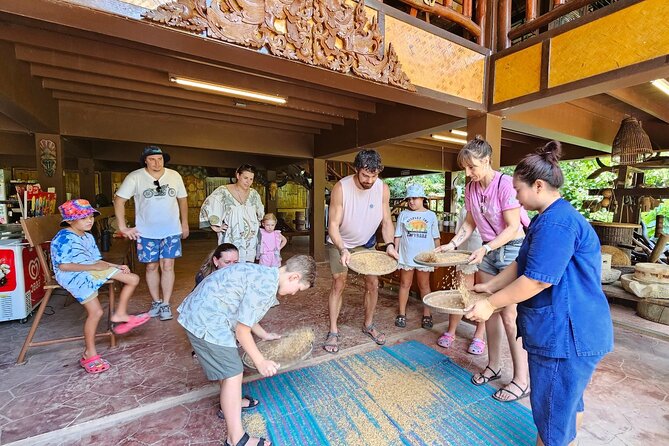
- Buffaloes first: you start with the animal that shaped traditional Thai farming.
- Rubber tapping on-site: you watch how sap turns into sheets.
- Tin panning: a hands-on nod to Phuket’s tin mining past.
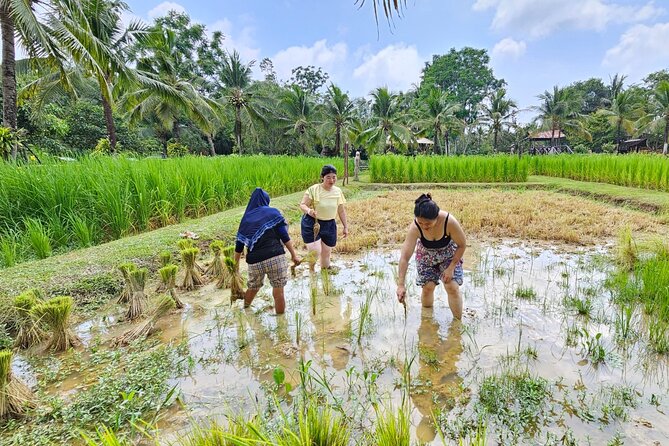
- Rice field work: you learn planting and harvesting methods as part of daily life.
- Coconut and curry paste: you get to handle ingredients used in Thai cooking.
- Small-group feel: the tour runs with a low headcount, so it’s easier to ask questions.
Old Phuket Farm: countryside agriculture, not a theme park
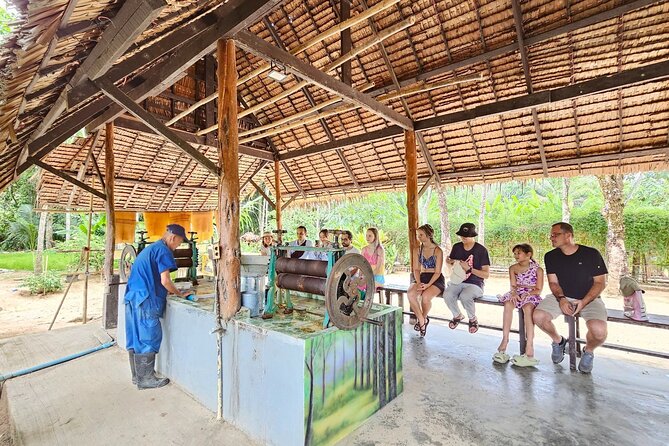
Old Phuket Farm is built around everyday work. That’s the big difference between this and the more theatrical cultural stops you sometimes see in Thailand. Here, the focus stays on how farms operate and why certain crops matter in the Gulf of Thailand region.
I like that the tour gives you a “whole system” feeling. You’re not just shown one product. You move through animals, plantations, and field work, so rice, rubber, pineapples, and coconut come across as parts of a local economy—not just photo props.
You also get a working-farm setting with plenty of outdoor time. That’s good for most people, but it also means you should come prepared for sun, insects, and some uneven ground.
A few more Phuket City tours and experiences worth a look



Buffaloes and the first lesson in Thai farming
Your visit begins with an experience that sets the tone right away: meeting the buffaloes. In traditional Thai agriculture, those animals weren’t just background—they were tools for moving through fields and helping with labor.
This matters because it gives you a historical lens before you get to the crops. If you understand why buffalo farming shaped routines, the later lessons about planting schedules and field work make more sense. Even if you’ve seen farm animals before, starting here grounds the tour in agriculture as a daily practice.
Expect to spend time observing and learning rather than rushing through. The guide’s job is to connect what you see to how people worked in the past, and this is where you’ll get your first batch of practical context for the rest of the tour.
Rubber tapping and the Phuket industries you can test with your eyes
Next up is rubber trees. You can watch the process of tapping sap and creating rubber sheets. For many visitors, rubber feels like a “product” they know by brand or price, not something with an actual process behind it. Here, you get to see the steps in plain sight.
What I like about this stop is that it sits naturally beside the other farming segments. Rubber tapping is labor-intensive and time-bound, which mirrors what you’ll learn later about rice and crop cycles.
Then you shift into tin panning. This is a neat contrast: plantations on one side, and a very different Phuket story on the other. Tin panning is explained as a nod to Phuket’s tin mining history, and the interactive angle is what makes it click. Instead of only hearing about it, you try it yourself, so the concept becomes tangible.
If you’re the type who likes “show me” experiences, this double section—rubber and tin—delivers. If you hate hands-on tasks, you can still watch, but the fun of the tour is the doing.
Rice fields, rice work, and why the method matters
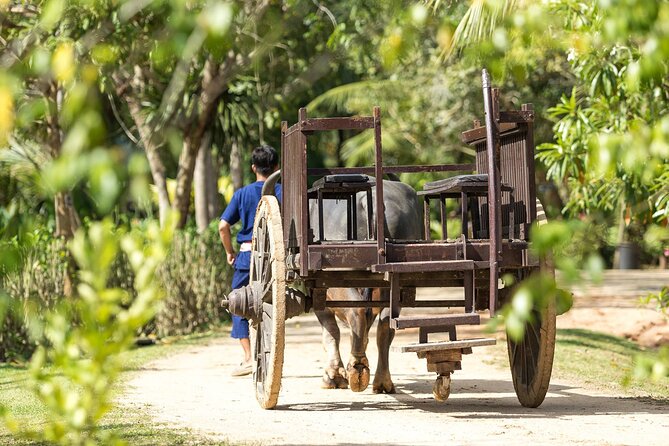
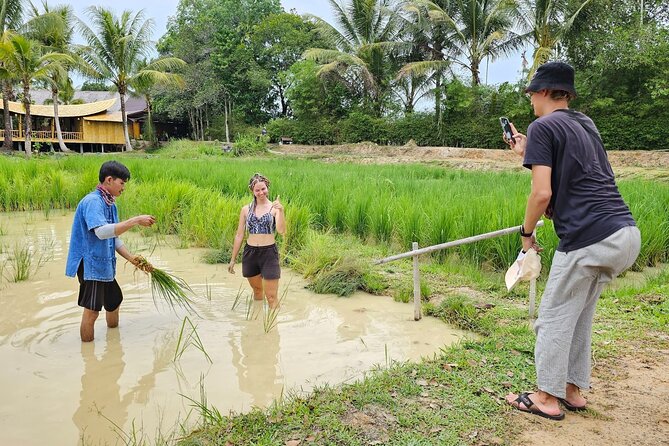
Rice is a staple across Asia, and on this tour it’s not treated as a generic grain. You get to witness time-honored planting and harvesting methods and see how rice fits into the rhythm of farm life.
This is one of the key cultural payoffs. People often think farming is just growing plants. On a rice farm, the details—timing, field preparation, and seasonal work—carry the story. When you see the method presented on-site, you stop treating rice as an abstract food and start connecting it to labor and land.
Also, rice fields look great in photographs, but that’s not why I value this stop. I value it because it explains the logic of agriculture. You can almost feel how the day gets structured around the next job.
Coconut grating, curry paste-making, and the taste-side of the farm

After working your way through the big industries, the tour turns to Thai home cooking basics. You visit a traditional Thai house area where you can observe coconut grating and curry paste-making using fresh farm ingredients.
This segment works on two levels:
1) It’s hands-on and sensory, with ingredients you can see and smell.
2) It ties the farm back to the table, so the tour doesn’t end with plants—it ends with food.
Coconut and curry paste are perfect teaching tools because they’re used daily in Thai cooking. When you learn how the ingredients are prepared, you understand why freshness matters. The tour also includes tastings—fresh pineapples and local produce—so you don’t leave just with knowledge. You leave with flavor memories.
One practical note: curry paste-making can get a little messy depending on how active you want to be. If you’re wearing light, delicate clothes, consider bringing something you don’t mind getting farm-dust on it.
A few more Phuket City tours and experiences worth a look


How the 2-hour visit actually plays out
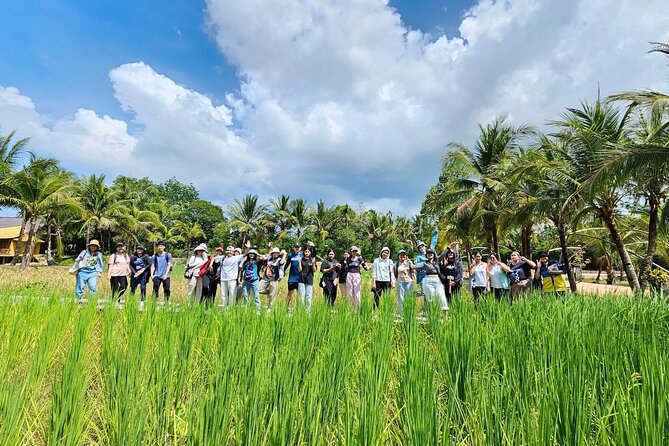
The tour duration is 2 hours, and that’s ideal if you want culture without losing half your day. It’s paced for seeing, listening, and trying activities, without feeling like you’re sprinting.
You also get a photo stop and scenic views along the way. The walking isn’t described in detail, so I can’t promise it’s all flat. Still, expect typical farm surfaces: sun-baked paths, grass edges, and occasional uneven ground.
Because the tour wraps up on-site, it’s easy to keep moving afterward. That’s helpful in Phuket, where you may want to pair this with a beach afternoon, dinner in town, or another attraction.
If you want the experience to land, arrive ready to participate. This is the kind of activity where being engaged—asking questions, trying the tasks—improves everything.
Price and value: what $36 buys in Phuket farm time
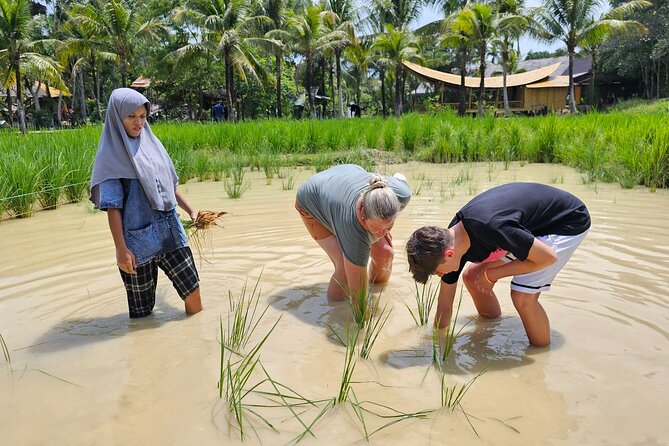
At about $36 per person for a 2-hour guided visit, the price sits in the middle-to-fair range for Phuket. What makes it feel worth it isn’t just admission. You get an English guide, full insurance, and a schedule that balances multiple farm topics: buffaloes, rubber, rice, tin panning, and Thai cooking practices.
Meals are listed as not included, which is the one way the cost stays controlled. But you still get tastings of farm produce like pineapple, and the cooking segment gives you a food-focused education without turning the tour into a long restaurant stop.
My rule for value here: you should book if you want practical cultural learning in a short window. If you’re looking for a beach day or a purely relaxing outing, you may find the schedule a bit “active.” If you like learning by doing, the mix of agriculture and interactive tasks is exactly why this price works.
Small-group energy and why your guide matters

This tour’s quality shows up in the human details. Reviews highlight a small-group experience—around ten people in at least one account—which changes the feel fast. When the group is small, you can hear the guide better, ask follow-ups, and actually get time at the hands-on stations.
Guide communication is also repeatedly praised. English clarity is a big deal on tours like this, because agriculture terms and food-making steps aren’t always intuitive. Bernie’s name comes up specifically as an excellent guide who spoke fluent English and answered many questions. If you’re worried about language gaps, this is the part of the experience you can feel good about.
You’re also getting a live guide in both English and Thai settings, since the tour lists English and Thai languages. Even if you speak only a little Thai, English guidance is part of what you’re paying for.
Who should book this Phuket farm tour
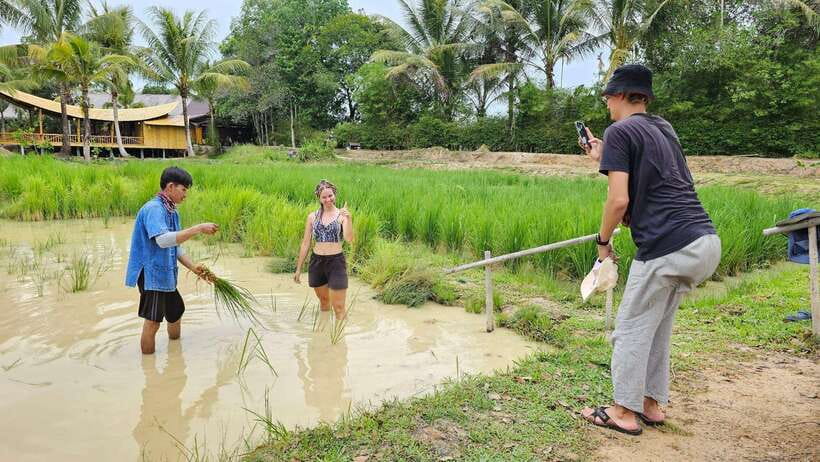
Old Phuket Farm is a great fit if you:
- want a countryside experience that explains daily life, not just sightseeing
- like interactive activities like tin panning, coconut grating, and curry paste-making
- want a short, guided cultural stop that still covers several major crops and local practices
- enjoy learning from a guide with time for questions
It’s less ideal if you:
- want a long, seated meal experience (meals are not included)
- hate outdoor walking in the heat
- prefer only passive viewing, since several tasks are hands-on by design
Should you book Old Phuket Farm?
I’d book this tour if you want Phuket to feel like more than scenery. The best part is the way it connects animals, fields, and food. Buffaloes lead you into traditional farming logic, rubber and tin give you a wider Phuket economy picture, and coconut/curry paste keeps the story anchored to what people cook and eat.
Skip it only if you’re chasing a lazy day or you need a guaranteed lunch included in the ticket price. Otherwise, for a short 2-hour block, it delivers strong value and a learning experience that sticks.
FAQ
How long is the Old Phuket Farm tour?
The tour duration is 2 hours.
Where is the meeting point?
The meeting point is Old Phuket Farm, and you can come by yourself.
What languages are available for the guide?
The guide is listed in English and Thai.
What’s included in the ticket price?
The included items are the admission fee, an English guide, and full insurance.
Are meals included?
No. Meals are not included.
Is there a child ticket option?
Yes. The child ticket age is between 4 and 11 years.
Can I cancel for a full refund?
Yes. You can cancel up to 24 hours in advance for a full refund.
Is it possible to reserve and pay later?
Yes. You can reserve now and pay later, keeping your travel plans flexible.