
REVIEW · KRABI
Krabi: Observation-Only Elephant Sanctuary Half-Day & Meal
Book on GetYourGuide →Operated by Krabi Roaming Elephant Sanctuary Co., Ltd · Bookable on GetYourGuide
You’ll come away calmer than you expected. This Krabi half-day sanctuary experience puts you close to elephants without touching, starting with their stories and ending with hands-on food prep and a creative souvenir. I like the hands-off approach and the chance to watch gentle behavior during tray feeding.
My other favorite part is doing real activities that connect you to the elephants: making Thai Sticky Rice Banana Wraps as their treats and painting your own fabric bag to take home. The one drawback to plan around is that this visit is strictly observation-based—no riding and no physical interaction—so if you’re expecting selfies-in-close-range, you’ll be disappointed.
In This Review
- Key Things You’ll Notice Right Away
- Krabi Elephant Time: A Half-Day That Fits Real Schedules
- The Hands-Off Sanctuary Rules (And Why They Shape the Experience)
- Meeting Time: Stories, Mission, and Getting Oriented
- Tray Feeding: Offering Treats Without Taking Over the Moment
- The Stroll Alongside Them: Roaming Freely, You Watching Carefully
- Thai Sticky Rice Banana Wraps: Turning Cooking Skills Into Elephant Treats
- Paint Your Own Fabric Bag: A Souvenir That Won’t Feel Hollow
- Vegetarian Meal Afterward: Refuel in a Peaceful Setting
- Price and Value: Does $90 Make Sense Here?
- What to Bring, What to Know, and What to Skip
- Who Should Book This Krabi Elephant Sanctuary Visit
- Should You Book This Observation-Only Sanctuary Half-Day?
- FAQ
- How long is the elephant sanctuary experience?
- How much does it cost?
- Is this a hands-off experience?
- Can I ride the elephants?
- What will I do when feeding the elephants?
- What food activity is included besides feeding?
- What souvenir do I take home?
- Is the meal included vegetarian?
- Is the tour suitable for wheelchair users?
- Can I cancel and get a refund?
Key Things You’ll Notice Right Away

- Observation-only time with elephants so you’re watching and listening, not grabbing for contact.
- Tray feeding where you offer treats and then step back to let the elephants do their own thing.
- Thai Sticky Rice Banana Wraps made as elephant snacks, not a random craft stop.
- A painted fabric bag you create yourself as a souvenir.
- A vegetarian meal after the activities in a peaceful setting.
Krabi Elephant Time: A Half-Day That Fits Real Schedules
This is a half-day experience, which matters in Krabi. You get a meaningful chunk of elephant time without eating an entire day—handy if you’ve got beaches, temples, or an island boat day on your list.
The day is built around a clear rhythm: learn first, observe second, then switch gears into food-making and a simple craft. By the end, you’re not just leaving with photos—you’ve done the prep work that supports the sanctuary’s day-to-day feeding routine.
A few more Krabi tours and experiences worth a look



The Hands-Off Sanctuary Rules (And Why They Shape the Experience)
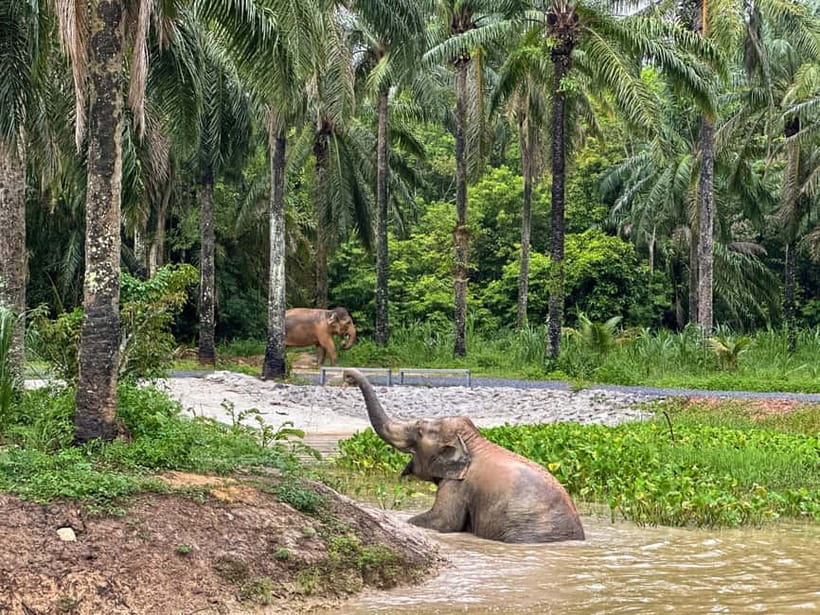
The big promise here is respect: you observe without touching. You also won’t ride the animals, and the whole visit is designed to avoid physical interaction and keep elephants behaving naturally.
This approach changes your mindset fast. Instead of trying to control the moment, you learn to read it—watching how elephants move, pause, and approach (or don’t). If you’ve ever been around animals where people crowd them, you’ll feel the difference immediately.
One practical note: the tour is not suitable for wheelchair users, and it’s also not suitable for people with animal allergies. That’s not a minor detail—if either applies, it’s worth choosing a different type of animal experience that you can enjoy comfortably.
Meeting Time: Stories, Mission, and Getting Oriented
Before you’re anywhere near feeding, you’ll get an introduction to the sanctuary’s mission and the elephants’ stories. That part isn’t fluff. It helps you understand why the rules are strict and why “hands-off” isn’t just a marketing line.
You’ll also be told what to expect from the observation-based format: you offer treats and watch the elephants roam, then later you make additional elephant snacks. When you know the order, you can relax and focus on what’s happening rather than wondering what’s next.
Language is English, so you won’t need to play catch-up. And you’ll get the kind of explanation that makes the day feel more purposeful and less like a quick stop.
Tray Feeding: Offering Treats Without Taking Over the Moment
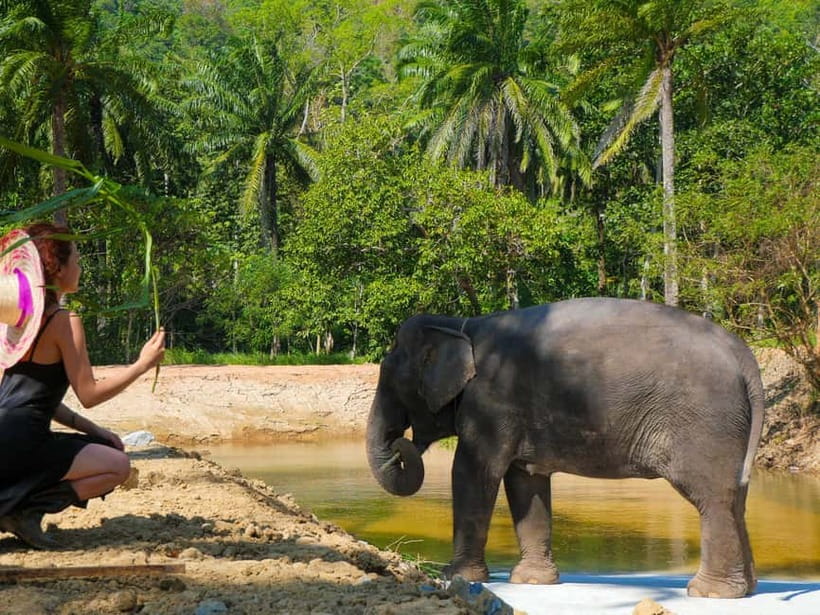
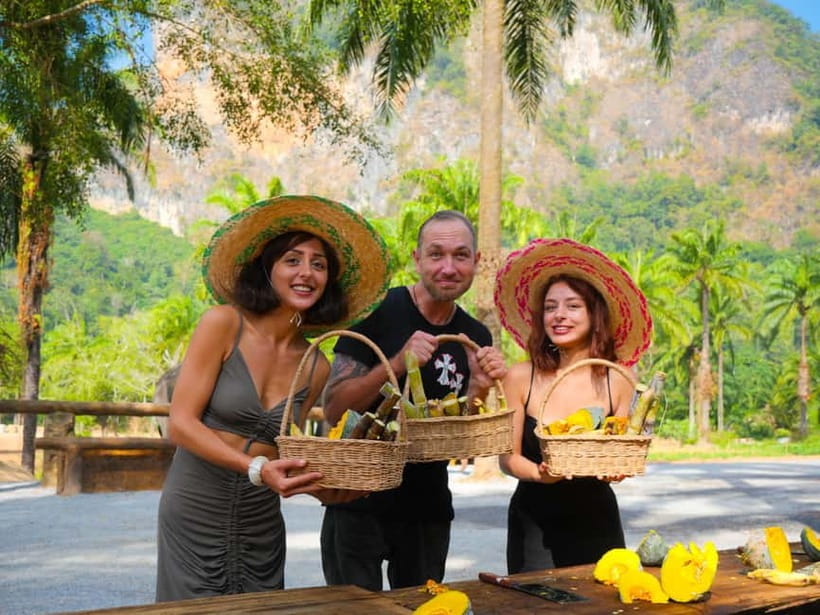
This is the part many people remember: offering elephants treats on a tray. You prepare fruit and vegetable for elephants earlier, then use that tray to present the treats during the observation segment.
Here’s what to look for. Elephants often approach when they feel comfortable, and they may also ignore the tray at times. That’s normal. Your job is to offer, then step back and watch the elephant respond at its own pace.
Because you’re not touching them, you’re paying attention to calm behaviors: how they take treats, how they move through the area, and how other elephants in the vicinity react. It’s a slower way to “meet” an animal, but it’s also the way that feels most respectful.
A small tip from the practical side: wear comfortable clothes and shoes because you’ll be on your feet during the walk. Sunglasses and sunscreen help too, since you’ll be outdoors and you don’t want to spend the day wiping sweat and squinting.
The Stroll Alongside Them: Roaming Freely, You Watching Carefully
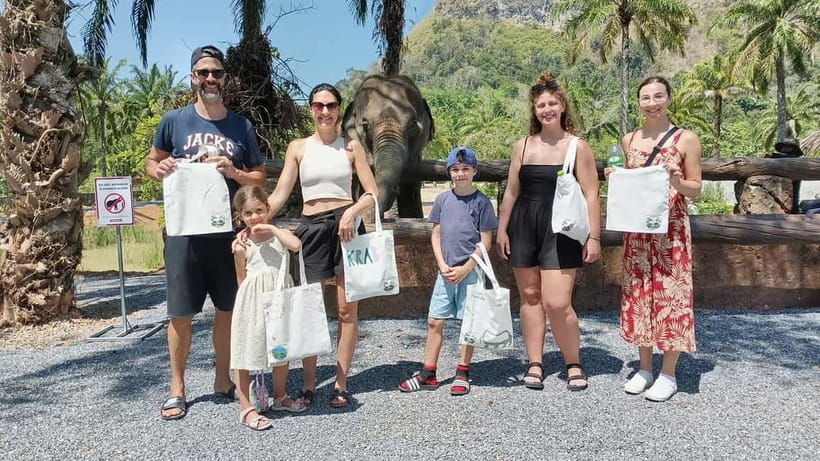
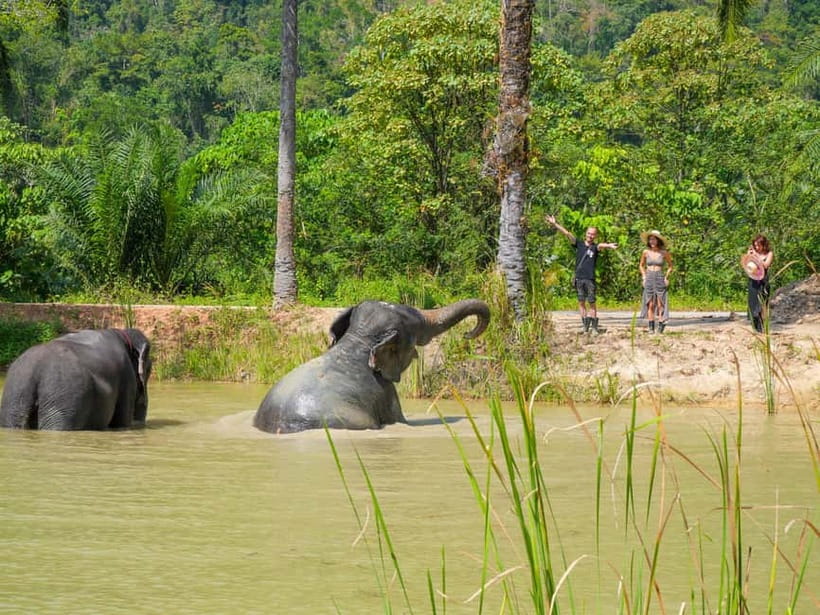
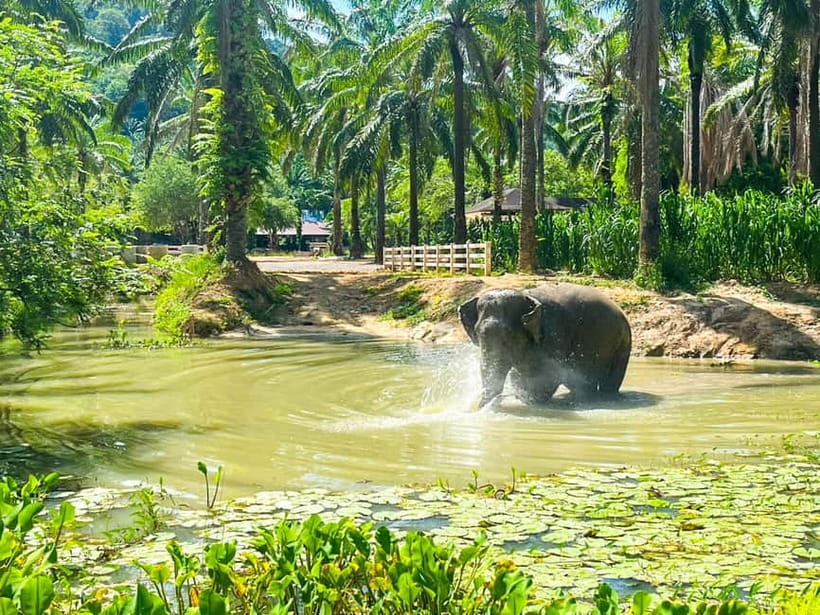
After the initial orientation and tray feeding, you’ll stroll with the elephants as they roam freely. You’re walking in the same general area, but the key is that it stays observation-focused. You’re not leading them, and you’re not interacting physically.
This segment is where the experience becomes truly personal. Watching elephants move through their environment—calmly, methodically—makes them feel less like a photo opportunity and more like living beings with their own rhythms.
You’ll also want insect repellent. Outdoor time in Thailand can bring mosquitoes, and you don’t want to cut the walk short because you’re distracted by bites. Socks can help too if you’re wearing shoes that don’t feel great for long periods.




Thai Sticky Rice Banana Wraps: Turning Cooking Skills Into Elephant Treats
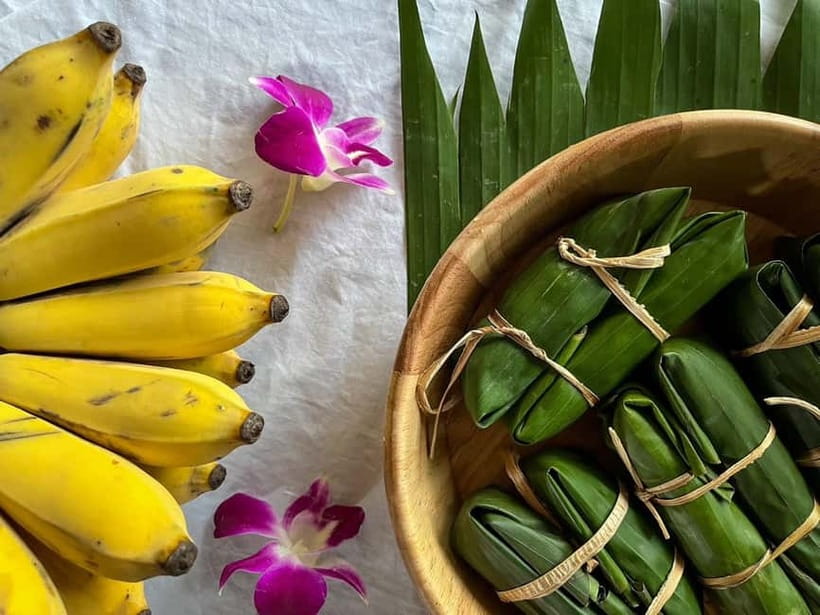
Then you get hands-on: you’ll make Thai Sticky Rice Banana Wraps as elephant treats. This is a special kind of activity because you’re not just crafting for yourself—you’re preparing food that fits the elephants’ daily routine in a sanctuary context.
What I like about this part is that it gives you something to do during a transition away from animal-focused observation. You’ll focus on simple steps, and you’ll leave with a better understanding of food preparation beyond the typical tourist routine.
It also adds meaning to the feeding time earlier. When you’ve made the treats yourself, the tray feeding stops feeling like a “show” and starts feeling like part of a practical workflow.
Paint Your Own Fabric Bag: A Souvenir That Won’t Feel Hollow
Next comes a creative keepsake: you paint your own fabric bag to take home. This is one of those activities that works well after an animal-focused morning because it’s calm and low-stress.
You bring your own energy to it, and the result is something you can actually use later. Even better: it doesn’t pretend to be a substitute for the elephant experience. It’s just a reminder of the day, not a replacement for it.
If you like arts-and-crafts while traveling, this is a nice pairing. If you’re not into crafts, you can still enjoy it as a short, relaxing reset before the meal.
Vegetarian Meal Afterward: Refuel in a Peaceful Setting
After the activities, you’ll enjoy a vegetarian meal. It’s served after you’ve finished the elephant and crafting parts, so you’re not eating in the middle of the excitement—you can actually sit, recover, and talk about what you saw.
Two details matter here. First, the meal is vegetarian only. Second, you should tell the team about any dietary restrictions or allergies in advance, because there’s no on-site option to order additional food.
So if you have nut allergies, dairy limits, or egg restrictions, share them before the meal time. The experience is designed around communication and a smooth schedule, and it’s best to handle dietary needs early.
Price and Value: Does $90 Make Sense Here?
At $90 per person, you’re paying for a lot more than “stand near an elephant.” You’re getting:
- sanctuary education and elephant context
- preparation of fruit and vegetable
- tray feeding and a walk in an observation-only setup
- making elephant treats (Thai Sticky Rice Banana Wraps)
- a take-home painted fabric bag
- a vegetarian meal
In other words, you’re covering both animal time and a full half-day program with included activities. If you compare this to cheaper animal experiences that include riding or physical interaction, the value equation shifts. Here, the focus is on respectful observation, plus you still get hands-on experiences and a meal—so it feels complete for the time you invest.
Also, the “pay later” option helps value your planning. You can reserve and pay nothing today, which is useful when your Krabi itinerary is still in motion.
What to Bring, What to Know, and What to Skip
Here’s your practical checklist.
Bring:
- Comfortable shoes
- Sunglasses and sunscreen
- Comfortable clothes
- Insect repellent and socks
- Camera
- Cash
- Passport (a copy is accepted)
Skip:
- Alcohol and drugs
- Alcoholic drinks in the vehicle
- Riding the animals
The tour also has clear expectations about interactions: no touching, and you’re there to observe. That’s part of what keeps the day respectful, and it also keeps the rules simple for you to follow.
Who Should Book This Krabi Elephant Sanctuary Visit
This experience is a great fit if you want:
- a hands-off elephant encounter focused on observation
- a structured half-day with multiple included activities
- hands-on Thai food prep and a take-home craft
- a vegetarian meal included after you’re done walking and creating
It’s not a good match if you:
- need wheelchair accessibility
- have animal allergies
- are hoping for riding or close physical interaction
If you’re a calm, patient kind of traveler, this day will reward you. If you’re the type who expects instant action on command, you might feel less in control than you hoped—but you’ll also learn why that control is exactly what elephants don’t need.
Should You Book This Observation-Only Sanctuary Half-Day?
I’d book this if you want an elephant day that feels thoughtful and structured, not rushed and not based on forcing an interaction. The combination of tray feeding, a roaming walk, Thai sticky rice banana wrap prep, a painted fabric bag, and a vegetarian meal makes it feel like a real program rather than a quick photo stop.
Skip it if you’re chasing close contact. This is observation-first, and that’s the point. If you respect that style—offer treats, watch carefully, follow the guide’s lead—you’ll likely leave with memories that feel quieter, kinder, and more real.
FAQ
How long is the elephant sanctuary experience?
It’s a half-day experience.
How much does it cost?
The price is $90 per person.
Is this a hands-off experience?
Yes. The tour focuses on observing elephants without physical interaction or touching.
Can I ride the elephants?
No. Riding the animals is not allowed.
What will I do when feeding the elephants?
You’ll prepare fruit and vegetable, then offer elephant treats on a tray and observe their behavior during a walk.
What food activity is included besides feeding?
You’ll make Thai Sticky Rice Banana Wraps as elephant treats.
What souvenir do I take home?
You paint your own fabric bag to take home.
Is the meal included vegetarian?
Yes. Vegetarian meals are served only, and you should share any dietary restrictions or allergies in advance.
Is the tour suitable for wheelchair users?
No, the tour is not suitable for wheelchair users.
Can I cancel and get a refund?
Yes. You can cancel up to 24 hours in advance for a full refund.