REVIEW · KHAO LAK
Historical And Cultural Day Tour To Takuapa Old Town From Khao Lak
Book on Viator →Operated by Oh-Hoo · Bookable on Viator
A day trip that starts with temples and ends with reflection. This Takuapa Old Town visit is built around the town’s tin-era Sino-Portuguese architecture and a powerful stop at the International Tsunami Museum. I also like that you get a real mix of scenes, from quiet shrines and preserved old walls to a local market and even a taste of Taosor cake. The main drawback to factor in: you’ll spend the morning and early afternoon on the road, and the experience depends on good weather.
I like that the tour runs about 6 hours with pickup from the Khao Lak area and a small cap of 10 people, so it usually feels like a calm day out rather than a cattle-car schedule. If the group is small, you may even move through stops at a relaxed pace, which makes the old-town streets more enjoyable to wander. Still, it’s not for everyone: the operator notes it isn’t recommended for people who are pregnant or have high blood pressure, heart disease, or bone diseases.
You’ll be exploring an area about 32 km north of Khao Lak, where the town’s identity is tied to its former tin-mining boom. Takuapa is also known as Takola, and the old buildings reflect that trading-and-wealth era. If you care about how architecture tells a community story, this tour gives you that context—and then asks you to remember why it matters.
In This Review
- Key highlights you’ll actually feel during the day
- Takuapa Old Town: why this place feels different from a typical stop
- The 9:00 AM start, pickup, and how the timing plays out
- Stop 1 and 2: Guan Yin shrine and the Chinese shrine at Le Méridien
- Takua Pa Walking Street and the local market browsing time
- The Taosor cake stop: a sweet connection to the district
- Walking the ancient wall: the governor’s residence area
- Nam Kem Cultural Centre: meeting the town through a clay-made museum
- The International Tsunami Museum and memorial reflection time
- Group size, guides, and why the experience depends on who you get
- Price and value: is $70.83 for 6 hours fair?
- Who should book this day trip from Khao Lak?
- Should you book the Historical and Cultural Day Tour to Takuapa Old Town?
- FAQ
- FAQ
- How long is the Takuapa Old Town tour from Khao Lak?
- What time does the tour start?
- How far is Takuapa Old Town from Khao Lak?
- What does the tour cost per person?
- Does the tour include pickup and a mobile ticket?
- How many people are in a group?
- Is admission included for the stops?
- What stops are included during the day?
- Who might not be recommended to join?
- What’s the cancellation rule if my plans change?
Key highlights you’ll actually feel during the day
- Sino-Portuguese streets and preserved old-town walls that you can walk up close, not just see from a distance
- International Tsunami Museum for a focused, respectful look at the 2004 Boxing Day Tsunami impact
- Local market time on the Takua Pa Walking Street, plus a sweet stop for Taosor cake
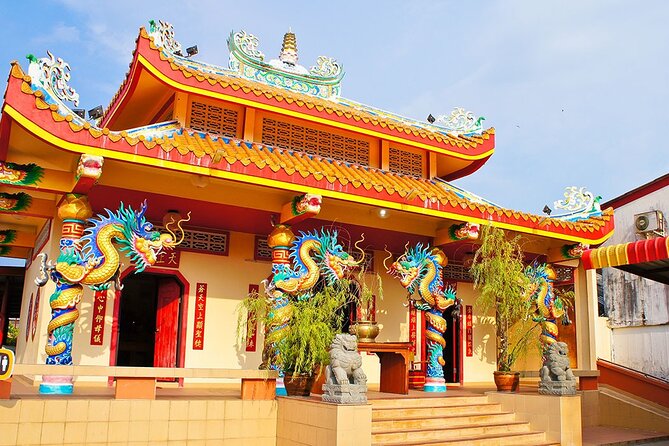
- Shrine visits including a Guan Yin shrine and a Chinese shrine at Le Méridien Khao Lak Resort & Spa
- A small group experience, with a maximum size of 10 people (and on some departures it can be very small)
- Admission tickets built in for the main sites, so you’re not constantly pulling out your wallet
Takuapa Old Town: why this place feels different from a typical stop
Takuapa Old Town is one of those destinations where you can see history on the street. The town’s character is shaped by tin mining, and you can read that era in the preserved Sino-Portuguese architecture—buildings that carry a mix of Chinese and Portuguese influences. It’s not staged. It’s still a town, with side streets, everyday businesses, and small places where people pause for coffee.
I like that the tour gives you both visuals and context. You start your morning with religious and cultural stops, then move into walking areas where the old façades are close enough to notice details. By the time you reach the museum, you’re already in the right mindset: you’ve seen what was there before the 2004 tsunami, and you’ll understand why the memorial is so careful with its message.
If you’re the kind of traveler who enjoys “slow sightseeing,” you’ll probably enjoy this more than the usual grab-and-go tour. The old-town route works because it mixes short visits (shrines and dessert) with longer time (the walk and the museum), so your brain doesn’t feel overloaded.
You can also read our reviews of more historical tours in Khao Lak
The 9:00 AM start, pickup, and how the timing plays out
The tour begins at 9:00 am, lasts about 6 hours (approx.), and includes pickup. The listing also notes the meeting point is near public transportation, and you’ll receive a mobile ticket. That matters in real life: you can plan for a straightforward morning without complicated logistics.
On days when the group is small, the schedule tends to feel flexible. I’ve seen examples of trips running as a private experience with a dedicated driver, which makes it easier to ask questions and slow down where you want to linger. On bigger days, you’ll still keep that small-group feel, since the maximum is 10 people.
One practical consideration: it’s a full morning drive-and-walk day, so you’ll want to plan around heat and sun. The route includes street time and a one-hour stop at an old-wall area, plus two hours at the tsunami museum. If you’re sensitive to longer indoor-outdoor transitions, plan to take your time and pace yourself.
Stop 1 and 2: Guan Yin shrine and the Chinese shrine at Le Méridien
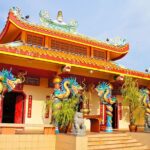
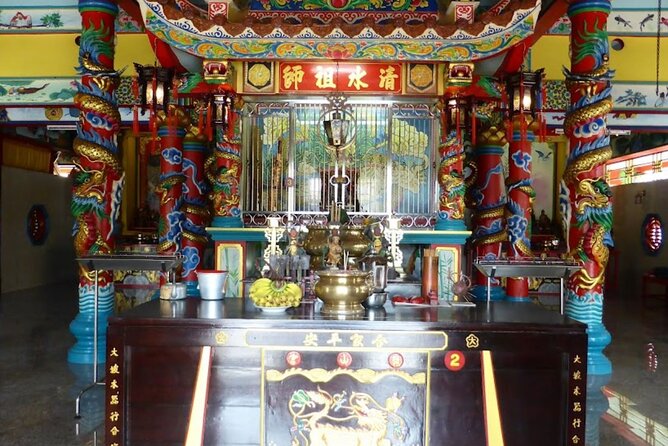
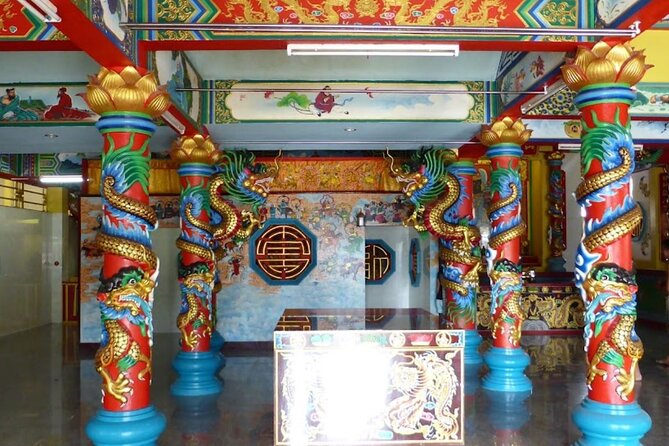
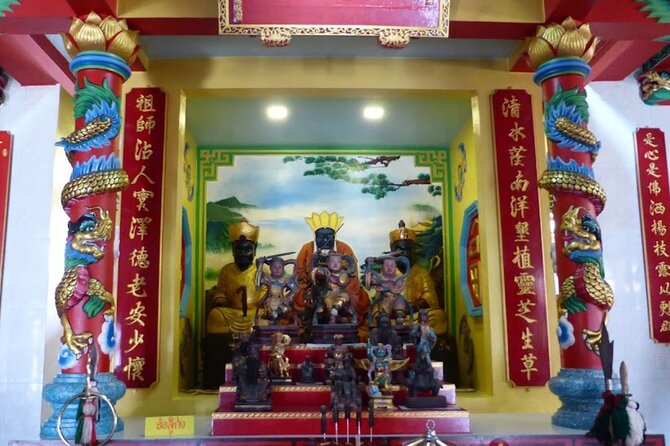
Early in the day you visit a Chinese shrine: first a Guan Yin shrine for about 30 minutes with admission included. Then you head to another Chinese shrine stop at Le Méridien Khao Lak Resort & Spa for another 30 minutes.
These aren’t just quick photo breaks. The intent is to set the cultural tone. Guan Yin is a well-known figure in Chinese Buddhism, and seeing this shrine early helps you understand the community influences that shaped Takuapa. The second shrine stop works as a different setting, and it also helps frame how religious sites appear in everyday life and local spaces.
If you’re hoping for a lot of deep narration at every shrine, keep in mind that time is fairly tight at each stop. Still, even with short durations, these moments are useful waypoints that prevent the day from becoming all streets and museum floors.
Takua Pa Walking Street and the local market browsing time
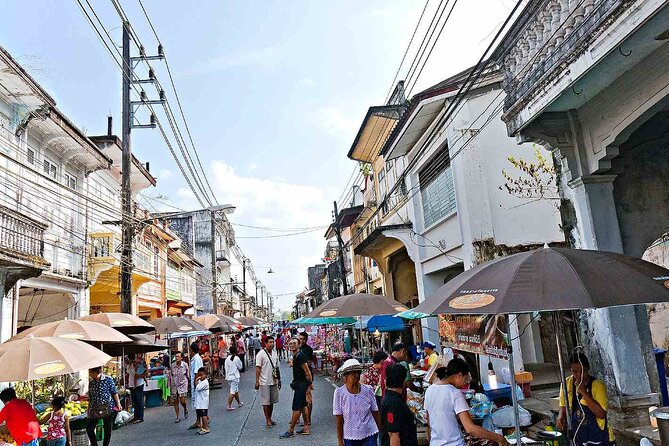
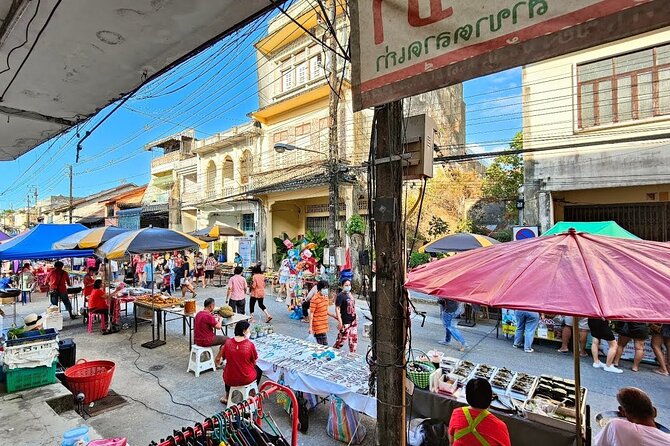
Next comes a more lively, street-level segment: about one hour at Takua Pa Walking Street to browse the local market area, with admission included.
This is where the tour helps you get grounded. Old towns can be pretty, but markets make them real. You’ll get to wander among everyday storefronts and see what locals gravitate toward now, not just what mattered during the tin-mining boom.
I like that the stop is scheduled as browsing time rather than a checklist. Markets reward curiosity: you can pause for a drink, look at goods, and get a feel for how the town functions day to day. If you love photography, this is often the easiest part to shoot without rushing.
A small drawback: one hour can feel short if you enjoy lingering. If you’re the type who always goes a side street too far, you may wish you had more time. Still, the day’s longer museum stop balances the pace.
The Taosor cake stop: a sweet connection to the district
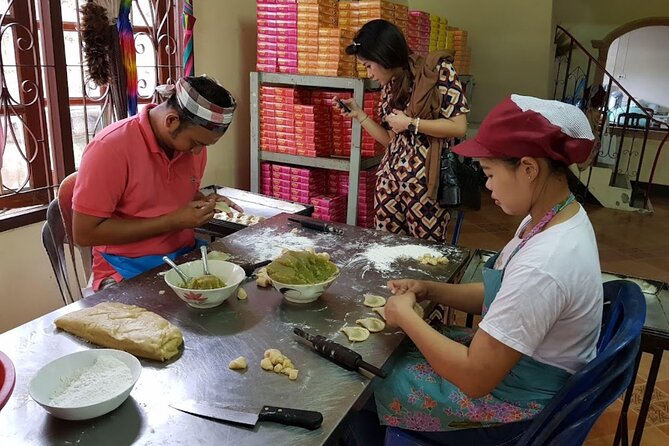
After the market time, there’s a dessert-focused break: Taosor cake at a popular spot in the Takua Pa district area. The tour schedules this for about 30 minutes, and the description notes the cake is similar to a Chinese mooncake but smaller.
This is a practical win. Food stops often turn into “look but don’t buy” moments, but here it’s clearly part of the cultural route. Even if you don’t love sweet treats, the value is in tasting something tied to the district rather than grabbing a generic snack on the road.
If you’re traveling with a sensitive stomach or food allergies, do what you’d do anywhere: ask what’s in it before you bite. The tour includes time for the stop, so it’s not rushed to the point of pressure.






Walking the ancient wall: the governor’s residence area
Then you shift to a preservation-focused view: the ancient wall of the governor’s residence for about one hour, with admission included.
This is where Takuapa’s Sino and Portuguese architectural story becomes more physical. The description emphasizes that the architectural styles are preserved, and the walk lets you see the way life of the old town was shaped. The one-hour duration helps because it’s enough time to notice structure, not just glance and move on.
I like this stop because it isn’t dependent on museum displays. It’s outside, walkable, and you can connect the earlier shrine and market experiences to what the town looked like when authority, wealth, and trade influenced the streets.
The main consideration is the usual outdoor sightseeing reality: you’ll likely be exposed to sun and humidity at least some of the time. Wear comfortable shoes and plan for pauses if you start to feel overheated.
Nam Kem Cultural Centre: meeting the town through a clay-made museum
Your overview also includes Nam Kem Cultural Centre, described as a museum run by locals and interestingly made out of clay. The goal here is to connect the preserved architecture and daily scenes to the broader story of the town and its past.
Even though the center is mentioned in the overall plan rather than the stop list, it fits the theme perfectly: it’s a local-run place that reflects how residents interpret and present their own community identity. A clay-built museum can also make a space feel more grounded and “of the place,” not like a generic exhibit hall imported from elsewhere.
I’d treat this part as your storytelling bridge. After seeing old walls and browsing the market, you’ll likely understand better why the town’s tin-mining origins and architecture matter. And with the tsunami memorial next, it also sets up why remembrance is part of the community’s modern identity.
The International Tsunami Museum and memorial reflection time
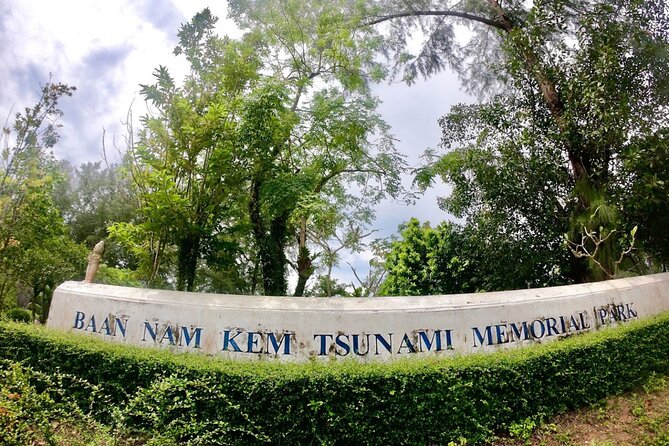
The final major stop is the International Tsunami Museum, scheduled for about two hours with admission included. The museum’s purpose is to show and preserve the tragic story of the 2004 Boxing Day Tsunami that devastated the area, and the overview notes thousands of lives were lost.
This part of the day is emotionally heavy, but that’s also the point. I appreciate tours that don’t sugarcoat it. You’re not just visiting a pretty monument. You’re learning how a disaster changed real lives and a coastal community, and you’re given time to take it in.
Some guides on this route bring personal connection. For example, there are cases where a guide is a tsunami survivor and shares their experience as part of the explanation. That can make the museum feel less like a collection of facts and more like a living act of remembrance.
The itinerary also frames time for reflection through the Tsunami Memorial Park concept. So, after the museum viewing, you should expect a quieter, respectful mood where you can slow down and process what you’ve just learned.
If you’re traveling with kids, consider how your family handles serious topics. The tour does list child ticket ages, but it doesn’t say it’s softened for younger visitors.
Group size, guides, and why the experience depends on who you get
The tour caps at 10 people, and it requires a minimum of 2 people to operate. In practice, that can mean anything from a small group car day to a very personal experience with just a couple of people in the vehicle.
This is where your day can feel different. When the tour runs with a dedicated guide who knows the area well and shares personal or local context, the whole route clicks. I’ve seen examples of guides named Moo, Sayan, Maek, and Mark, each bringing a different style—some with deep local storytelling, some with careful driving, and some with personal tsunami experience.
That also helps you understand a potential drawback. On one low-staff scenario, the day might feel more like an accompaniment than a full guided interpretation. If you want real narration throughout, ask questions early—especially during the museum and the old-town architecture stops.
Price and value: is $70.83 for 6 hours fair?
At $70.83 per person for an approximately 6-hour outing, this tour isn’t the cheapest option around Khao Lak—but it can be good value when you look at what’s included. You’re paying for pickup service, an efficient driving loop to Takuapa (about 32 km north), and admission tickets tied to multiple stops.
Also, the schedule packs in several different “types” of cultural learning:
- shrines and cultural spaces,
- old-town walking areas and preserved walls,
- a local dessert stop tied to the district,
- and then the two-hour tsunami museum experience.
That mix is what makes the price feel reasonable. If you were to DIY this with separate entry fees and time spent figuring out local timing, costs and effort could rise fast.
The bigger value question is your interest level. If you care about architecture plus meaningful community remembrance, the tour’s structure matches your interests. If you just want beaches and casual sightseeing, you might find the memorial portion heavy and the old-town walking less exciting.
Who should book this day trip from Khao Lak?
This tour is best for you if you:
- like small-group cultural days rather than rushed bus tours,
- want to see how Sino-Portuguese architecture shows up in everyday town life,
- value context about what happened in 2004 and how communities remember,
- enjoy markets and local food stops like Taosor cake.
It may not be the right choice if:
- you’re expecting a lightweight, fun-only day,
- your mobility is limited for outdoor walking segments,
- you’re pregnant or managing health conditions the operator lists (high blood pressure, heart disease, bone diseases).
Also, if you’re traveling with a time-tight schedule, the 6-hour duration is a workable compromise: you get the main story beats without losing an entire day.
Should you book the Historical and Cultural Day Tour to Takuapa Old Town?
I think this is a strong pick for many visitors to Khao Lak because it balances beauty with meaning. You’ll walk old streets, taste something local, and then spend time in a museum that takes the tsunami seriously. That blend is rare in day trips that usually focus only on sightseeing.
Book it if Takuapa’s architecture and the tsunami story are on your must-see list. If you’re sensitive to emotional content, plan how you want to handle the museum visit. And if you want the day to feel guided, make sure you’re comfortable asking questions—especially at the points where interpretation matters most.
If your travel style is flexible and reflective, this one can become the day you remember most from your time in southern Thailand.
FAQ
FAQ
How long is the Takuapa Old Town tour from Khao Lak?
It runs for about 6 hours (approx.).
What time does the tour start?
The start time is 9:00 am.
How far is Takuapa Old Town from Khao Lak?
Takuapa Old Town is about 32 km north of Khao Lak.
What does the tour cost per person?
The price is $70.83 per person.
Does the tour include pickup and a mobile ticket?
Yes, pickup is offered and you receive a mobile ticket.
How many people are in a group?
The tour has a maximum of 10 travelers.
Is admission included for the stops?
Admission tickets are included for the listed stops such as the shrines, ancient wall area, and the tsunami museum.
What stops are included during the day?
You’ll visit Chinese shrine stops, Takua Pa Walking Street market time, a Taosor cake dessert stop, the ancient wall of the governor’s residence, and the International Tsunami Museum (with a focus on the 2004 tsunami).
Who might not be recommended to join?
The operator says it is not recommended for pregnant guests or for guests with high blood pressure, heart disease, or bone diseases.
What’s the cancellation rule if my plans change?
You can cancel up to 24 hours in advance for a full refund.