REVIEW · PHUKET
Dive Trip to Phi Phi from Phuket for certified divers
Book on Viator →Operated by Phuket dash Scuba dot Com · Bookable on Viator
Phi Phi underwater time in one packed day. This certified-only Phuket trip gives you three guided scuba sessions with a small group size (up to four per guide), and the day is built around real reef time plus proper breaks. The best part, in my book, is that the guide support is hands-on, like Mischa taking photos/videos and spotting hard-to-find nudibranchs, while also refreshing your gear so you feel set up right.
I also like how the onboard package keeps life simple: breakfast, a filling buffet lunch, fruit, water, and hot drinks are included, so you’re not hunting food between sites. One thing to consider is logistics: transfer timing can be stressful if your hotel pickup details aren’t perfect, and on some days the boat experience can feel crowded or delayed at the start.
In This Review
- Key things to know before you go
- Phi Phi in one day: why this Phuket departure makes sense
- Getting to the harbor: pickup zones and the 8:00 am start
- The day’s route: three underwater sessions with different personalities
- Stop 1: Koh Bida Nok (usually your opener)
- Stop 2: Koh Bida Nai or Phi Phi Leh (the middle character)
- Stop 3: Shark Point or Koh Doc Mai (return leg)
- Small-group guiding: where the trip becomes more than a schedule
- Boat, gear, and onboard comfort (what you truly get)
- What’s included
- What’s not included
- Return ride
- Price and value: $103.26 plus the extras you should budget
- Timing and weather: how to avoid the small frustrations
- Who should book this Phi Phi scuba day trip
- Should you book? My quick decision checklist
- FAQ
- Is this trip only for certified scuba participants?
- How many underwater sessions are included?
- What time does the trip start?
- Where are pickup and drop-off offered in Phuket?
- What’s included in the price?
- What’s not included?
- Can non-divers join the boat?
- How big are the groups?
- Where does the trip usually stop for the first underwater session?
- What happens if weather is bad?
Key things to know before you go
- Small-group guiding (max four per guide), often with a more personal feel
- Three different underwater sites in one day: Koh Bida Nok, a second Phi Phi-area stop, then usually Shark Point or Koh Doc Mai
- Meals and drinks included: breakfast, buffet lunch, fruit, water, coffee/tea, plus snacks during the surface interval
- Tanks and weights included, with rental sets available for 600 THB if you need them
- Marine park fee is extra at 600 THB per person
- Weather can change plans, with rescheduling or refund if the trip can’t run
Phi Phi in one day: why this Phuket departure makes sense
If you want Phi Phi’s reefs without turning the trip into a whole vacation chapter, this format fits. You leave from Phuket at a set morning time, spend the bulk of the day on the water, then head back to your area the same day in an air-conditioned van.
The key value here is structure. You get breakfast onboard, then a planned sequence of sites with guided support, then lunch and downtime, then the next set. For certified scuba people, that means you’re not guessing what comes next, where to be, or when you’ll get your next time in the water.
Also, this isn’t a “certification improv class” kind of trip. You’re required to show proof of experience (either 10 dives total, or that your last dive was within the previous six months). That matters because it usually helps the group stay calmer and the guide can focus on spotting wildlife and managing buoyancy cues instead of basic skills.
You can also read our reviews of more tours and experiences in Phuket.

Getting to the harbor: pickup zones and the 8:00 am start
The trip starts at 8:00 am, with the main meeting point at Chalong Pier (ท่าเรือฉลอง). In practice, you’ll likely meet the operator via hotel pickup, and those pickups are offered for areas including Patong, Karon, Kata, Chalong, Rawai, and Nai Harn.
Here’s the practical takeaway: if you’re staying anywhere outside those listed zones, pickup may not be included, so double-check how you’re getting to the pier. And because you’re dealing with the morning rush, be ready early. One downside that shows up in real-world operations is that transfer mistakes can happen—like being sent to the wrong accommodation—so you want the exact pickup details locked in before the day begins.
If you can, I’d also plan for a little buffer time. When boats and schedules are tight, even a short delay can turn into waiting on the surface.
The day’s route: three underwater sessions with different personalities
This itinerary is built to give you variety, not repeat the same view three times. In most cases, you’ll do:
- First underwater session at Koh Bida Nok
- Second underwater session at another Phi Phi site such as Koh Bida Nai or Phi Phi Leh
- Third underwater session on the return leg, often Shark Point or Koh Doc Mai
A lot of the time you’ll be on drift-style profiles, which is common for these reefs. That can feel fantastic when conditions are right because you cover more reef while the guide manages the flow. If you’re the kind of diver who hates moving with current, this is something to keep in mind.
Stop 1: Koh Bida Nok (usually your opener)
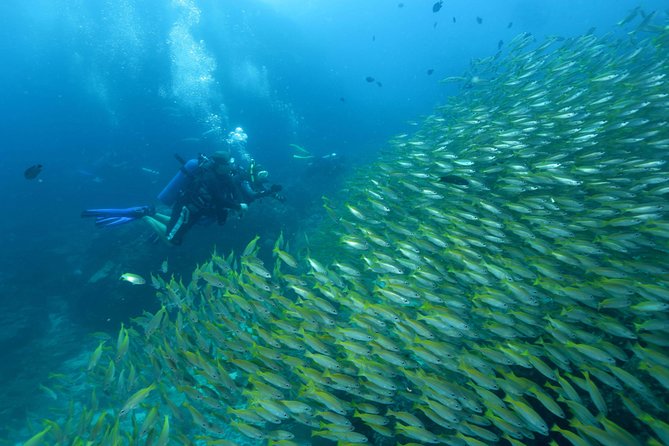
Koh Bida Nok is known for good visibility and a reef scene that’s friendly to classic snorkeling-photo moments—except you’re underwater and breathing. Expect lovely corals and plenty of schooling fish. Often, you can also see predator-prey action: the snapper are frequently hunted by trevallies.
This first session usually works well as an icebreaker. If you’re used to reading a reef and keeping neutral buoyancy, it’s the kind of place where your attention gets rewarded quickly—coral formations, fish behavior, and the sense that something is always happening.
Stop 2: Koh Bida Nai or Phi Phi Leh (the middle character)
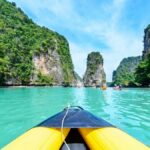
For the second stop, you’ll go to another site in the Phi Phi mix—either Koh Bida Nai or Phi Phi Leh. This is where the day typically starts to feel more “Phi Phi” in the full sense: towering limestone setting above you, reef life building below, and more chances for wildlife spotting.
What I like about a second Phi Phi-area session is that it keeps you from getting mentally stuck on one type of reef. If the first site is about corals and schooling fish, this one may shift toward fish behavior around rock structure and bigger underwater scenery.




Stop 3: Shark Point or Koh Doc Mai (return leg)
On the way back to Phuket, you usually do the third underwater session, and this is where you get a major change in underwater style.
- Shark Point is known for underwater pinnacles with lots of hard and soft corals and abundant marine life. There’s also a chance of seeing leopard sharks, which is the sort of wildlife moment people remember long after the boat ride.
- Koh Doc Mai is described as a wall dive with two caverns. If you like macro life—small stuff, critters, and tight details—this is the kind of setting where you can slow down and really look.
One useful detail: on some departures, the operator may swap where you go based on conditions. For example, in one case a trip included sites like Turtle Rock, and in another situation the operator talked about adjusting destinations such as Racha Noi and Racha Yai when conditions made them better. So if you’re booking with an open mind, you’ll likely feel more satisfied.
Small-group guiding: where the trip becomes more than a schedule
The trip is designed around small groups—up to 20 travelers total, and a maximum of four scuba participants per guide. That ratio changes the whole day. When your guide isn’t juggling large numbers, you get more check-ins, better guidance on what to watch, and less time drifting past the good parts.
Mischa is one guide name you’ll hear for this kind of trip, and his style is exactly what I look for when I’m picking an operator. He’s described as taking photos and videos, pointing out stunning wildlife including hard-to-spot nudibranchs, and doing a gear refresh when people need it. That combination matters: it’s not just spotting for spotting’s sake, it’s helping you stay comfortable and safe so you can actually enjoy what you’re seeing.
Even when the water is moving, a good guide helps you keep control. On a drift-style day, that means clearer expectations, faster regrouping, and more consistent underwater moments rather than a chaotic spread of buoyancy levels.
Boat, gear, and onboard comfort (what you truly get)
This is a day-trip format, so comfort is practical rather than luxury. What you do get is the support that keeps you from thinking too hard.
What’s included
You typically get:
- Breakfast onboard
- Buffet lunch
- Fresh fruits
- Drinking water
- Coffee and tea
- Hot drinks (also mentioned)
- Tanks and weights
- A scuba guide
- Personal accident insurance
Food quality comes up in the feedback in a positive way: people describe the meals as yummy and plentiful, and they like the snacks during surface intervals.
What’s not included
You’ll need to plan for:
- Rental dive equipment (if you don’t bring your own) for 600 THB for a full set
- The Phi Phi from Phuket admission fee at 600 THB per person
If you don’t read one thing else, read this: marine park fees and equipment rentals can add up. The trip price sounds simple, but it’s the extras that change your final total.
Return ride
After the last underwater session, you head back in an air-conditioned van. That’s a nice finishing touch because you’re usually warm, salty, and slightly tired—AC helps you get back to normal without a long wait.
Price and value: $103.26 plus the extras you should budget
The listed price is $103.26 per person, and for a one-day Phi Phi trip, that’s not just about “being on a boat.” You’re paying for the logistics and the underwater infrastructure.
Here’s what that amount already covers:
- Hotel pickup/drop-off in specific areas of Phuket (Patong, Karon, Kata, Chalong, Rawai, Nai Harn)
- Boat day with planned stops
- Guide support
- Tanks and weights
- Big portions of the day’s food: breakfast, lunch, fruits, and drinks
- Personal accident insurance
So you’re not paying separately for a guide, a tank, or most meals. For certified scuba participants, that usually means better value than piecing it together day-of.
To budget correctly, add:
- 600 THB marine park fee per person
- Optional equipment rental at 600 THB if you don’t bring your own set
Once you include those, the price is still often competitive because you’re getting a full program in one day instead of juggling multiple vendors. But you should go into it expecting that the total is not exactly the headline number.
Timing and weather: how to avoid the small frustrations
This is weather-dependent. If conditions are poor, you’ll be offered a different date or a full refund. That’s fair, since safety comes first.
The frustrating part is less about weather and more about how mornings can run. In real operations, pickup and boat timing can occasionally cause stress. Examples include:
- A transfer going to the wrong accommodation, which then triggers frantic coordination
- A boat not arriving at the scheduled pickup point after the first underwater session, leading to a surface wait
- A vessel feeling crowded or less considerate depending on who else is on board
You can’t control the operator’s calendar, but you can reduce the chance of avoidable hassle:
- Confirm pickup location details carefully
- Be at the meeting point / pickup area early
- Keep a calm mindset about waiting on the water
- Pack patience as if it’s part of the dive kit
If you’re flexible and ready to roll with minor delays, the day tends to be worth it because the underwater experience is where the effort pays off.
Who should book this Phi Phi scuba day trip
This trip makes the most sense if:
- You’re scuba certified and can show proof (10 dives total, or last dive within six months)
- You have at least a moderate fitness level for a full morning-to-afternoon program
- You want three different underwater sessions with guided attention
- You like reef variety: corals and schooling fish at Koh Bida Nok, structural reef scenes around Phi Phi Leh/Koh Bida Nai, then pinnacles or cavern-wall exploring on the return
Non-diving relatives can join the boat, which is useful if you’re traveling with a partner who wants sea views, not scuba time.
If you’re a brand-new diver or you don’t have the experience proof, this is probably not your best match. It’s built for people who already know their kit, buoyancy, and basic underwater flow.
Should you book? My quick decision checklist
Book it if you want:
- Three planned underwater sessions in one day from Phuket
- A small ratio of guide to scuba participants
- Meals included so your day stays simple
- Strong wildlife opportunities like nudibranchs and a possible leopard shark sighting at Shark Point
Skip or consider alternatives if:
- You’re sensitive to morning logistics and you hate any chance of transfer confusion
- You’re expecting a quiet, private boat experience every time
- You’re not prepared to budget the 600 THB marine park fee and possibly 600 THB gear rental
If you’re certified, organized about your pickup info, and you’re the kind of person who enjoys comparing one reef scene to the next, this is a good value way to hit Phi Phi hard in a single day.
FAQ
Is this trip only for certified scuba participants?
Yes. It’s for certified divers only, and you’ll need proof of diving experience (either 10 dives total or that your last dive was within the previous 6 months).
How many underwater sessions are included?
You’ll get three guided underwater sessions in total: two at the Phi Phi Islands area and one on the way back to Phuket.
What time does the trip start?
The start time is 8:00 am.
Where are pickup and drop-off offered in Phuket?
Hotel pickup and drop-off are offered for areas including Patong, Karon, Kata, Chalong, Rawai, and Nai Harn.
What’s included in the price?
Included are breakfast, lunch, fresh fruits, drinking water, coffee and tea, a scuba guide, tanks and weights, and personal accident insurance. Pickup and drop-off within the listed areas are also included.
What’s not included?
Dive equipment rental is not included (600 THB for a full set), and the Phi Phi from Phuket admission fee is not included (600 THB per person).
Can non-divers join the boat?
Yes. Non-diving relatives are welcome to join the boat.
How big are the groups?
The trip has a maximum of 20 travelers, and there is a maximum of four divers per guide.
Where does the trip usually stop for the first underwater session?
The first underwater session is normally at Koh Bida Nok.
What happens if weather is bad?
If the experience is canceled due to poor weather, you’ll be offered a different date or a full refund.