REVIEW · AYUTTHAYA
Colors of Ayutthaya: UNESCO Heritage 6 hour Bicycle Tour
Book on GetYourGuide →Operated by Recreational Bangkok Biking · Bookable on GetYourGuide
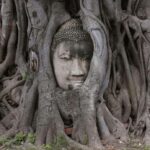
Ayutthaya by bicycle feels like time travel on two wheels. I like the mix of countryside riding and big temple stops, especially the eerie Buddha head at Wat Mahathat. You’ll also appreciate a well-timed Thai lunch and a small group size that keeps things feeling personal. One drawback to consider: if the guide’s English is harder to follow for you, the temple history can feel less clear than you want.
This is one of those tours where the route matters as much as the sights. You start near Ayutthaya train station, pedal through villages and rice paddies, then work your way into the old capital’s ruins, ending back across the river. And yes, it’s a long day—perfect for active travelers, less ideal if you want a very relaxed pace.
In This Review
- Key highlights at a glance
- Why Ayutthaya looks different from a bike saddle
- Meeting point near PomPhet Fort: start smart, ride easier
- The countryside pedal: villages, rice paddies, and a real elephant site
- School visit (when open): a quick human moment
- Lunch at 12:30: what to know before you get hungry
- Entering the old capital: Wat Mahathat and Wat Phra Si Sanphet
- Wat Mahathat: the roots and the face
- Wat Phra Si Sanphet: royal pagodas and a clear layout
- Market snack stop: baked and fried local favorites
- Luang Phor Lokayasuttha: the large reclining Buddha stop
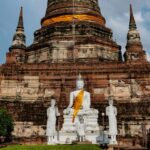
- Wat Chaiwatthanaram on the west bank: the temple finish that sticks
- Price and value: what $70 really covers
- Group size, pace, and who this tour fits best
- Small details that can make or break the day
- Should you book Colors of Ayutthaya?
- FAQ
- How long is the Colors of Ayutthaya bicycle tour?
- Where is the meeting point?
- What’s included in the price?
- Do I need to bring a bicycle or helmet?
- Is lunch included, and what kind is it?
- Do we cross the river during the tour?
- How many people are in the group?
- What is the minimum age to join?
- What languages does the guide speak?
- What is the cancellation policy?
Key highlights at a glance
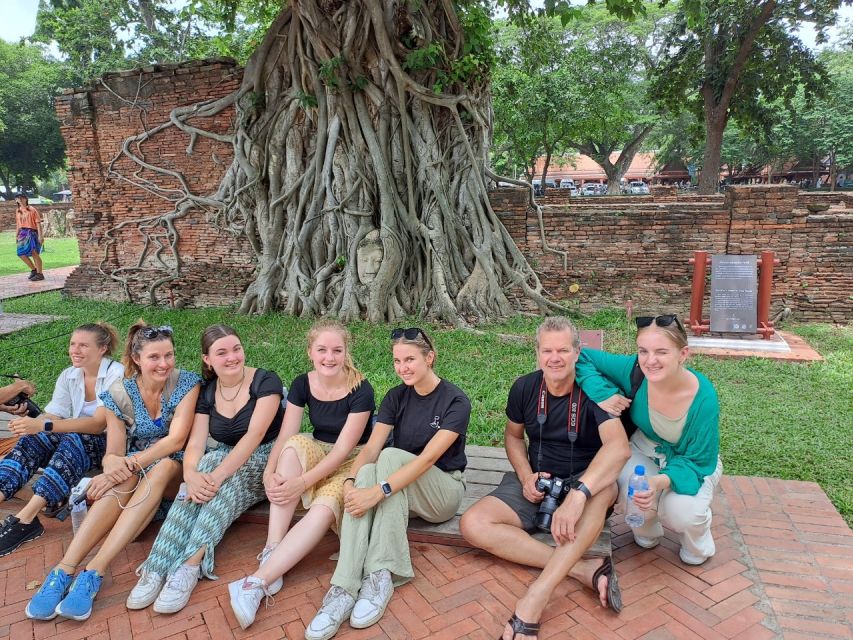
- Small group (up to 9 riders), which helps on narrow lanes and busy temple entrances
- UNESCO-area temple sequence, including Wat Mahathat and Wat Phra Si Sanphet
- Real-life route building, with the countryside ride setting up the ruins you’ll see next
- Elephant history stop at Phaniat Royal Elephant Kraal, a fascinating pre-ancient-history contrast
- West bank finish at Wat Chaiwatthanaram, one of Ayutthaya’s most photogenic temple viewpoints
- Lunch and included sights, so you’re not constantly hunting for food or tickets
Why Ayutthaya looks different from a bike saddle
Ayutthaya can be handled as a quick temple checklist if you’re on a strict schedule. But on a bicycle, it changes. You feel the distance between the old capital and the everyday countryside. That shift matters because Ayutthaya isn’t only ruins—it’s a living province with villages, schools, and fields you ride past before you hit the temple stonework.
I also like that this tour is built around a classic Ayutthaya storyline. You’re led from the outside in: countryside first, then the old capital, then the temple cluster that people remember. It makes the architecture feel earned, not random.
You can also read our reviews of more historical tours in Ayutthaya
Meeting point near PomPhet Fort: start smart, ride easier
The day starts at the tour office near PomPhet Fort on Uthong Road. It’s close enough to Ayutthaya’s train station that you can treat the tour as your main event without needing a complicated extra transfer.
Before you roll out, there’s a bike fitting. That sounds basic, but on a long ride it’s a big deal. The tour runs for about 330 minutes (roughly 5.5–6 hours depending on pacing), so you want the seat height and handlebar reach to be comfortable. A correct fit helps prevent the end-of-day arm burn that ruins photos and patience.
The group is guided by an English/Thai speaking leader, and the tour runs daily starting at 10:00. Small group limits (up to 9 participants) keep traffic management more realistic, especially when you’re moving through local roads.
The countryside pedal: villages, rice paddies, and a real elephant site
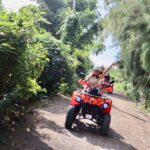
The ride heads north along everyday roads—this is where the tour earns its name Colors of Ayutthaya. You’ll pedal through idyllic villages and alongside rice paddies, and that scenery sets the tone for everything ahead. Temples are impressive, but they can feel like museum stops. Countryside riding makes them feel connected to place.
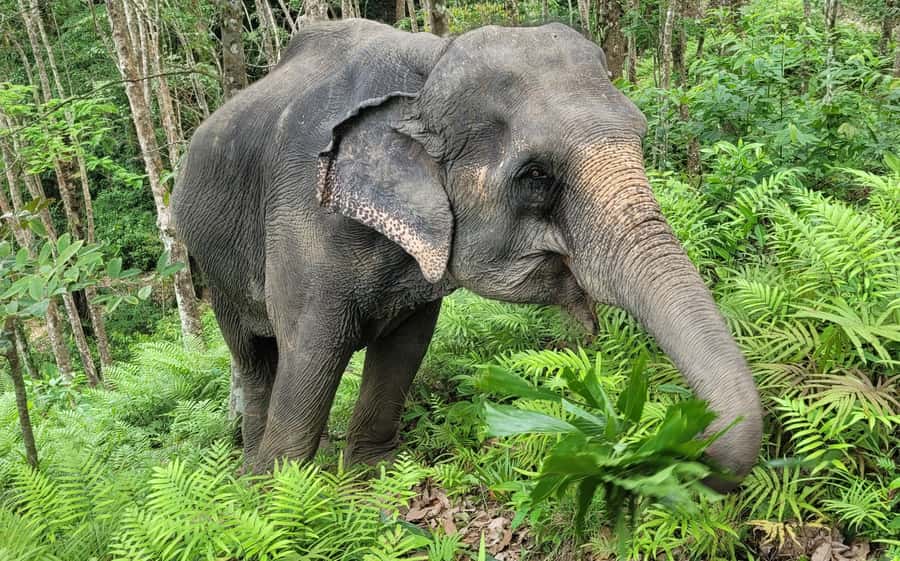
One of the stops on the ride is Phaniat Royal Elephant Kraal. This structure links Ayutthaya’s power to wildlife capture: during the kingdom’s heyday, it was used to trap wild elephants herded down from the north. The tour explains how elephant round-ups were traditionally presided over by Ayutthaya kings, who selected strong elephants for war and labor.
Even if you’re not into history in a classroom way, this stop works because it gives you a different lens. You’re not just seeing sacred ruins; you’re learning how the kingdom functioned and how elephants played a role in that system.
School visit (when open): a quick human moment
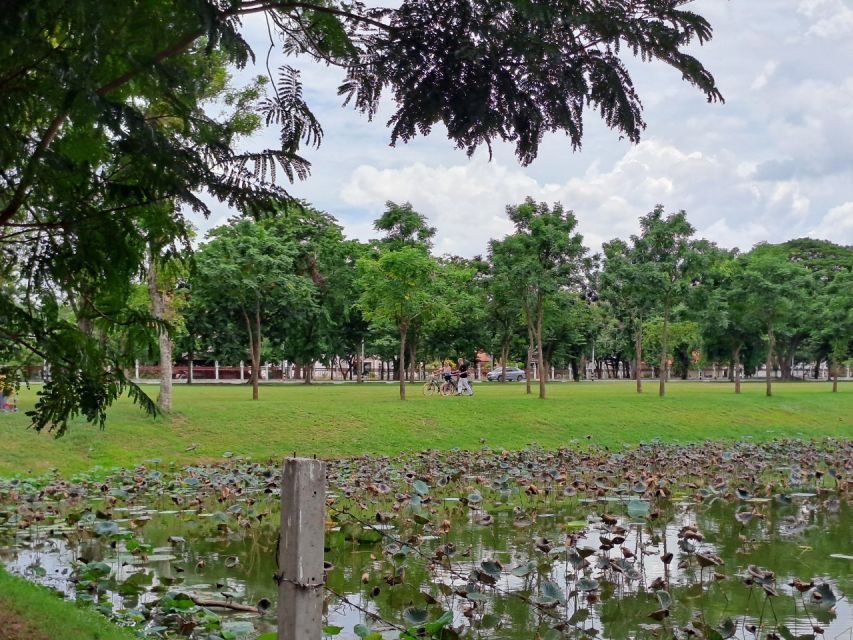
If the day allows, you’ll visit a local elementary school and interact with children. This is usually the kind of stop that people remember because it’s human and unscripted—just be prepared for the reality that school access depends on whether it’s open that day.
To get the most out of it, approach with simple respect: keep interactions light, follow the guide’s cues, and remember you’re visiting local life, not staging a photo shoot. Even a short exchange can make the rest of the day feel more grounded.
Lunch at 12:30: what to know before you get hungry
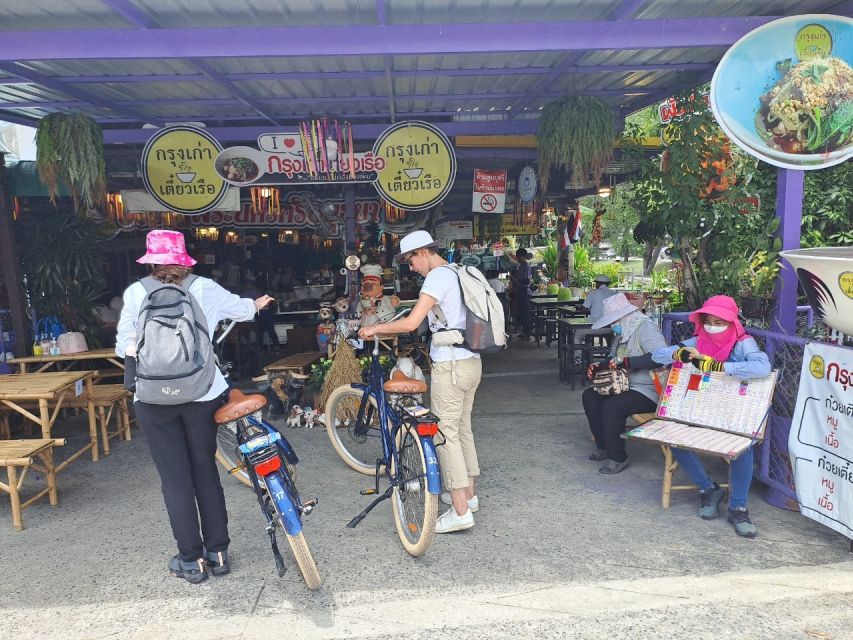
Around 12:30, you stop for lunch at a riverside restaurant. This timing is smart because it prevents the late-day crash before the most memorable temples. The meal is Thai, and the quality tends to be a highlight for many people.
Still, there’s one practical consideration: lunch portions can feel a bit modest if you’re a big eater. Plan to treat it as a proper meal, but don’t assume it will fully replace a hearty second breakfast. If you have a higher appetite, pack a small snack for yourself as a backup (water and basic needs are included, but extra calories are on you).
Entering the old capital: Wat Mahathat and Wat Phra Si Sanphet
Once you’re inside the old capital area, the tour shifts from countryside calm to the intensity of temple ruins. This is the heart of Ayutthaya’s UNESCO identity, and the guide walks you through what you’re seeing—how the temples reflect royal power, religious devotion, and the city’s rise and fall.
Wat Mahathat: the roots and the face
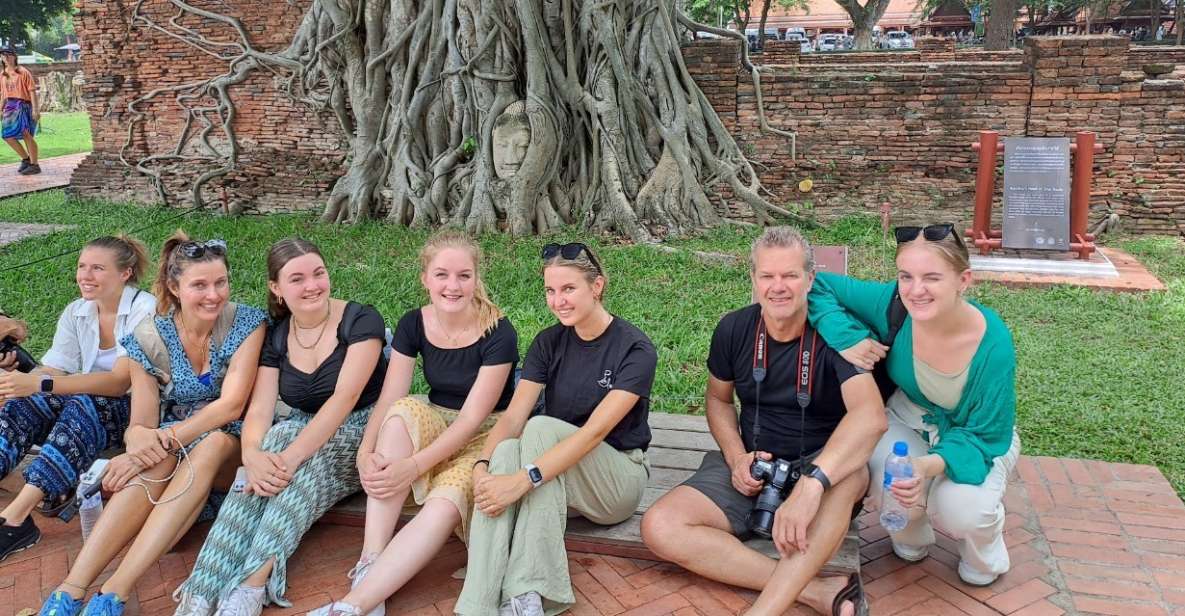
Wat Mahathat is the emotional centerpiece. The famous scene is the Buddha head intertwined within tree roots. It’s one of those images you’ve probably seen online, but seeing it in person has a different weight. The roots don’t look like a special effect—they look like time working slowly, quietly, and continuously.
This stop is worth slowing down for. Spend time looking at how the stones frame the face and how the surrounding ruins create context. It’s not only a photo opportunity; it’s a story about survival, collapse, and nature reclaiming what humans built.
Wat Phra Si Sanphet: royal pagodas and a clear layout
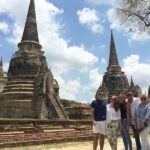
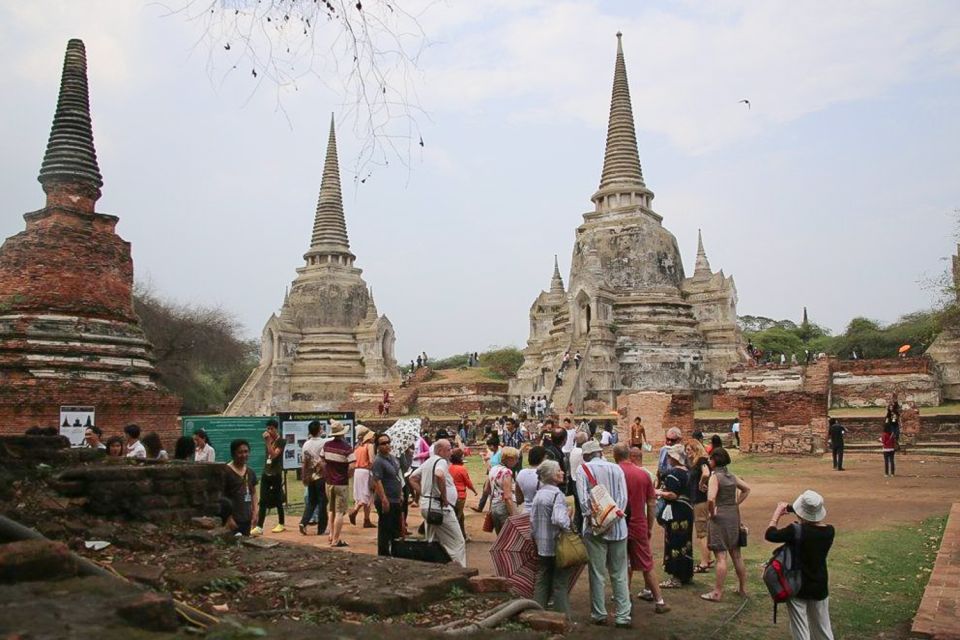
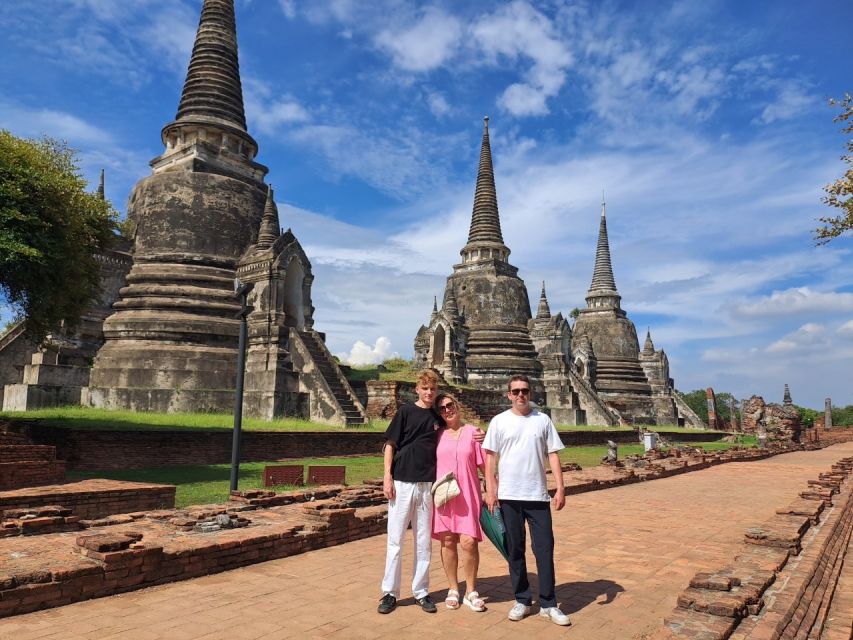
Next comes Wat Phra Si Sanphet, known for its three distinctive pagodas. Compared with the chaotic drama of Wat Mahathat, this place reads more like royal architecture at full volume. The pagodas give you a strong visual anchor, making it easier to understand why the site mattered in Ayutthaya’s heyday.
One advantage of this sequence—Mahathat first, then Phra Si Sanphet—is that it keeps your brain organized. You go from a memorable symbol to a clearer architectural statement, which helps the guide’s explanations land better.
Market snack stop: baked and fried local favorites
After the temple time, you take a short ride to a local market. The goal here is simple: see typical baked and fried delicacies and get a feel for daily snacking culture around Ayutthaya.
This is also where you can adjust your day. If lunch left you hungry, this market stop is your chance to top up with something small and local. If you’re not sure what to buy, don’t guess too wildly. Ask the guide what looks popular, or stick to one or two items you can eat without making a mess. You’re still riding afterward.
Luang Phor Lokayasuttha: the large reclining Buddha stop
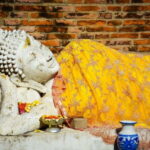
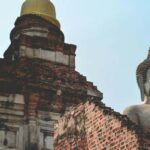
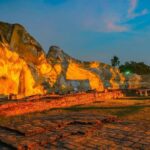
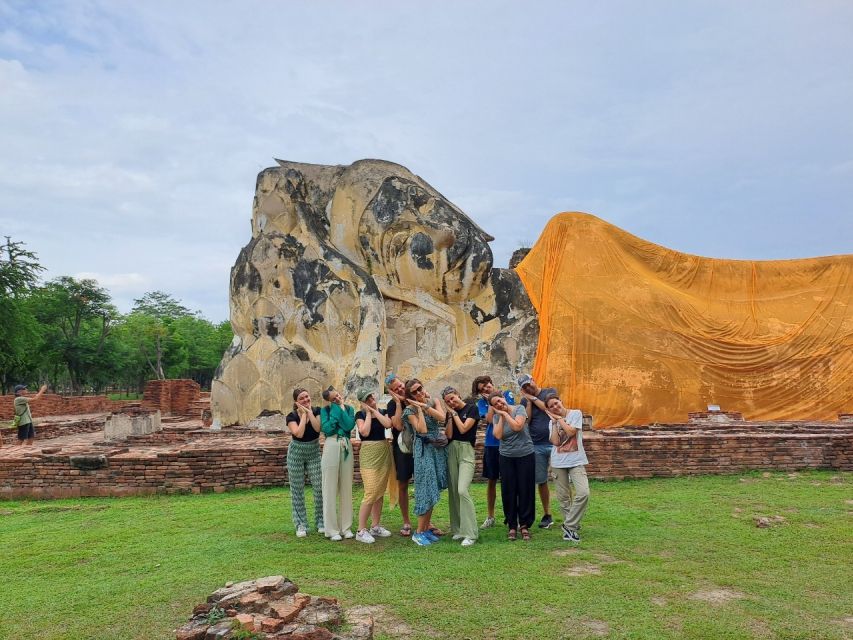
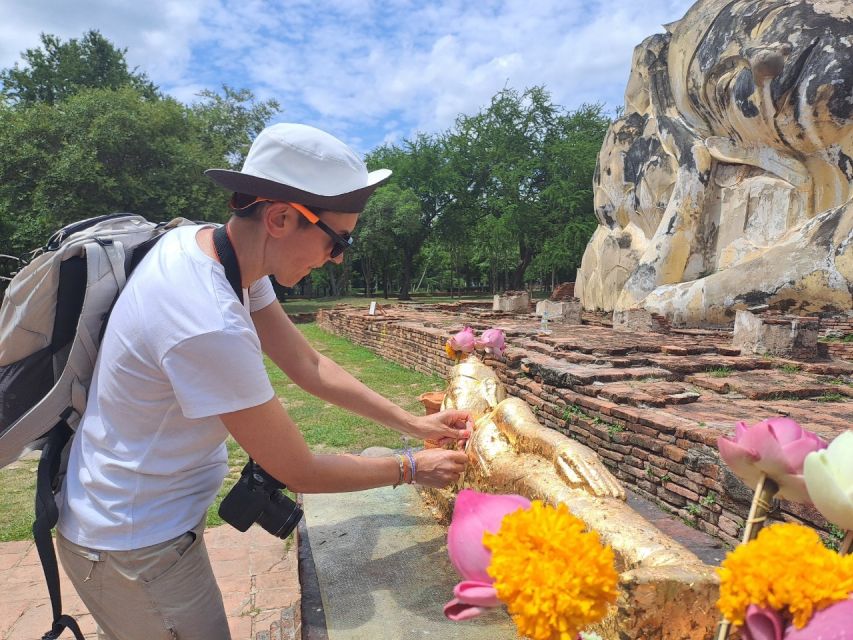
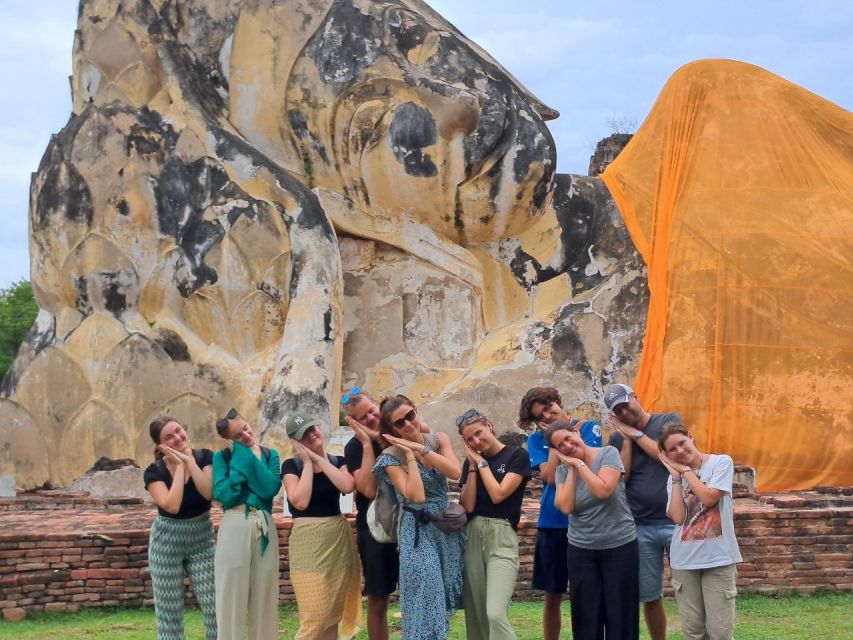
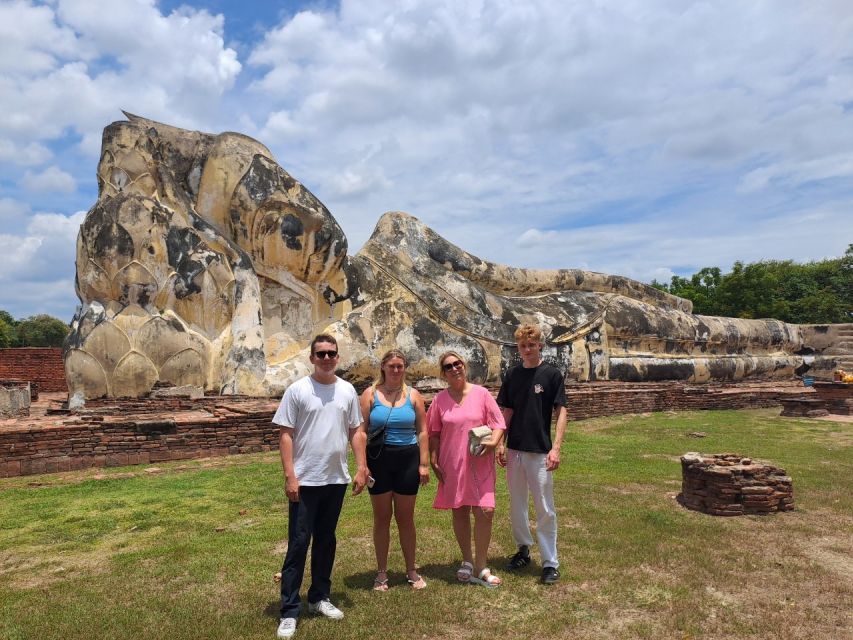
The route continues to the huge reclining Buddha statue at Luang Phor Lokayasuttha (also spelled in slightly different ways depending on the sign). This stop is all about scale. Big Buddha statues are impressive anywhere, but in Ayutthaya the size reads as a statement of devotion and community effort, not just a single standout attraction.
If you’re traveling with limited time, this is the kind of location that you can’t replace with a quick glance. Give yourself a few minutes to take in the proportions and how people move around the statue area.
Wat Chaiwatthanaram on the west bank: the temple finish that sticks
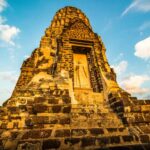
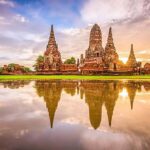
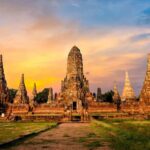
As you pedal along the west bank of the Chao Phraya River, the tour builds toward Wat Chaiwatthanaram. This is described as one of Ayutthaya’s most impressive temples, and the timing and location help it land as the day’s visual climax.
The temple was constructed in 1630 by King Prasat Thong, and the tour connects it to royal memory: it was built as a memorial of his mother’s residence in the area. That detail matters. When you understand the why, the temple’s placement along the river feels more meaningful than just a pretty postcard spot.
Even if you’re not chasing photos, the riverbank views help you reset after temple ruins. The ride ends near the pier, and you cross the river to return to the city—another practical touch that avoids backtracking the whole way on the bike.
Price and value: what $70 really covers
At $70 per person, this tour isn’t a bargain bike rental. It’s a guided heritage experience with real inclusions. Here’s what you’re paying for:
- Bike rental and helmet
- Guide (English/Thai)
- Boat crossing
- Drinking water
- Thai lunch
- Entrance fees at Wat Mahathat, Wat Phra Si Sanphet, and Wat Chai Wattanaram
That’s the key: temple entrance fees and the boat crossing are the kinds of extras that add up fast when you do Ayutthaya independently. Add the benefit of a small group and a planned route through multiple major sites, and the price starts to look more reasonable—especially if you want to avoid figuring out temple timing and transport logistics on your own.
The one value trade-off is the language clarity. A few details can be missed if the explanation doesn’t click for you. If you’re the type who wants deep historical nuance, you’ll want to make sure you can follow your guide’s pace and English level.
Group size, pace, and who this tour fits best
With a maximum of 9 participants, the ride stays manageable. That size matters because it affects how easily you can move past traffic and how quickly the guide can check on riders. It also makes it easier to feel like you’re not just part of a mass tour stream.
Minimum age is 12. That’s also a clue about the tour’s physical demands: it’s meant for riders who can handle steady biking for hours. If you prefer leisurely walking tours or you’re recovering from knee or back issues, you might feel the ride time in a way that’s less fun.
This is best for you if you:
- Want temples plus countryside in one day
- Like guided context (not just photos)
- Enjoy being active while still seeing major Ayutthaya landmarks
Small details that can make or break the day
A few practical notes can help you have a smoother experience:
- The tour lasts about 5.5–6 hours, so plan your energy like it’s your main activity.
- You’ll ride through areas with traffic and sun, even if much of the route feels calm.
- You’ll stop for temples and a market, so bring a small bag you can manage while biking.
- Consider how you handle heat and time. Temples will offer shade in spots, but the ride legs need hydration and sun protection.
And on the people side, guide quality can change your day. In some outings, guides like Bung, Beam, or Spike lead the tour, and names like these often come up because they’re comfortable giving clear, friendly explanations and adjusting to the group. If you’re sensitive to language nuance, arriving with questions in mind can help you catch the history points that matter to you.
Should you book Colors of Ayutthaya?
Book it if you want an Ayutthaya day that feels connected: countryside riding → old capital temples → market snack stop → reclining Buddha → west bank grand finale. The route stitching is the magic here, and the included bike, helmet, lunch, river crossing, and key entrance fees make it a solid value for what you get.
Skip or rethink if you:
- Know you struggle with guided explanations and need very clear language
- Prefer a short, slow sightseeing day over a multi-stop bike ride
- Want a very large lunch or lots of free time between sights
If you’re the kind of traveler who likes seeing how a place functions beyond the biggest postcard monuments, this tour is a smart way to spend your day in Ayutthaya.
FAQ
How long is the Colors of Ayutthaya bicycle tour?
The tour runs for about 330 minutes, starting at 10:00 daily.
Where is the meeting point?
The meeting point is near PomPhet Fort on Uthong Road.
What’s included in the price?
Bike rental and a helmet, a live guide, boat crossing, drinking water, Thai lunch, and entrance fees for Wat Mahathat, Wat Phra Si Sanphet, and Wat Chai Wattanaram are included.
Do I need to bring a bicycle or helmet?
No. Bike rental and a helmet are provided as part of the tour.
Is lunch included, and what kind is it?
Yes. You’ll have Thai lunch at a local restaurant around 12:30.
Do we cross the river during the tour?
Yes. There is a boat crossing as part of the route, and the tour ends after returning across the river.
How many people are in the group?
The tour is a small group limited to 9 participants.
What is the minimum age to join?
The minimum age is 12 years old.
What languages does the guide speak?
The guide provides live commentary in English and Thai.
What is the cancellation policy?
Cancel up to 24 hours in advance for a full refund. If you cancel between 24 and 48 hours before the tour, a 50% cancellation fee applies. Less than 24 hours before the tour or no-shows are subject to a 100% cancellation fee.