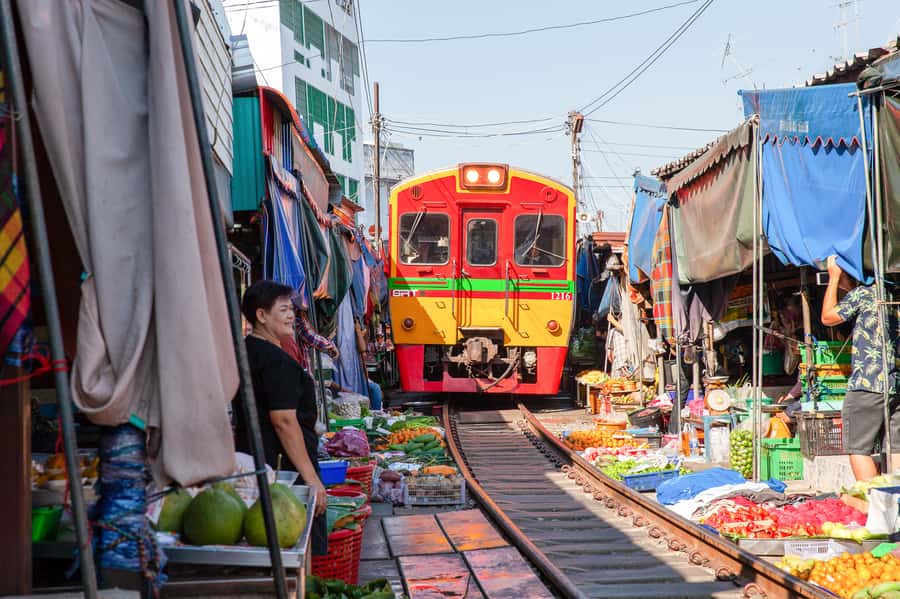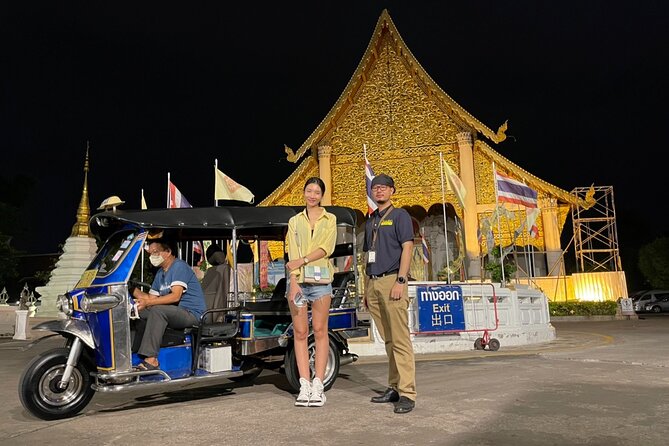
Bangkok tastes better when someone else drives. This small-group tour is built around tuk-tuk rides plus Michelin-recommended stops, so you get guided food without the map-and-traffic headache. I especially love the mix of old-school comfort food like K. Panich mango sticky rice and the showy Michelin-star Pad Thai stop with a kitchen fire moment. The one watch-out: you’ll be eating a lot, and some tuk-tuk boarding/exiting can feel tight, so come ready for an active evening.
You’ll also be in good hands with an English-speaking foodie guide, and the vibe is often described as warm and fun—names I’ve seen associated with the guiding team include Tae, Tom, Bo, Su, Amy, and Joe. With a maximum of 8 travelers and 3 hours 30 minutes on the clock, it’s designed for first-timers who want a fast, high-quality taste of Bangkok’s food neighborhoods rather than a slow wander.
In This Review
- Key points before you lock it in
- Tuk-tuk hotel pickup and the 4:30 pm start
- Wat Ratchanatdaram Worawihan sets the tone in Rattanakosin
- K. Panich Sticky Rice (since 1932): the mango sticky rice anchor
- Pad Thai Fai Ta Lu: Michelin-star pad thai with a fire moment
- Rattanakosin tuk-tuk passes: classic landmarks without the full sightseeing day
- Krua Apsorn on Dinso Road: classic Thai flavors from family recipes
- Yaowarat Chinatown: chrysanthemum tea and Chinese donuts to finish strong
- Price and value: what $89.68 buys you in real terms
- What can feel challenging (and how to handle it)
- Who this tour suits best
- Should you book Bangkok Michelin Food by Tuk Tuk?
- FAQ
- How long is the Bangkok Michelin Food by Tuk Tuk tour?
- What time is pickup at my hotel?
- Is hotel pickup and drop-off included?
- How many people are in the group?
- How many food stops and dishes should I expect?
- Which areas of Bangkok are included?
- Are food and transport included in the price?
- Is the tour in English?
- Are admission tickets included for each stop?
- Can I cancel for a refund?
Key points before you lock it in
- Hotel pickup and drop-off by tuk-tuk means you skip the worst parts of Bangkok logistics and just start eating.
- Four-plus Michelin eateries and 10+ dishes gives you variety in one night, not one restaurant and a hope.
- Rattanakosin old-town temple time adds context, so the food doesn’t float in a bubble.
- A Michelin-star Pad Thai stop with a fire show turns dinner into a mini spectacle.
- Yaowarat Chinatown dessert focus often includes chrysanthemum tea and Chinese donuts—great for finishing strong.
- Max 8 travelers keeps the group small enough that you actually get answers, not just announcements.
Tuk-tuk hotel pickup and the 4:30 pm start
This is the kind of Bangkok evening plan that feels easy from minute one. Your pickup happens at 4:30 pm from your hotel. Your driver meets you in the lobby with a signboard that has your name, then you’re moved into the tuk-tuk for the ride circuit.
Why that matters: at this hour, traffic can be unpredictable, and the city’s food zones are scattered. Having round-trip transfers built in is a real quality-of-life upgrade. You’re not trying to coordinate Grab, taxi lines, and where to meet the next spot.
The tour runs for about 3 hours 30 minutes, and it’s paced with short food stops (typically 20–45 minutes) plus a temple and an old-town driving segment. With only up to 8 people, you’re less likely to feel like you’re in a conveyor belt.
You can also read our reviews of more food & drink experiences in Bangkok
Wat Ratchanatdaram Worawihan sets the tone in Rattanakosin
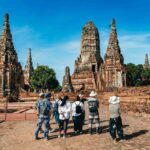
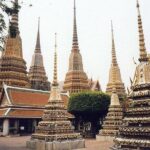
The evening begins with a stop at Wat Ratchanatdaram Worawihan, with about 30 minutes on-site and an admission ticket included.
This is more than a photo stop. Starting in Rattanakosin, Bangkok’s old city area, gives you a sense of where the culture and the royal-era city planning started. Then your food route links into neighborhoods that feel totally different once the tuk-tuks start moving again.
Practical note: this is a temple, so dress and behavior matter. Bring something respectful (shoulders and knees covered) and plan for walking through uneven temple grounds.
K. Panich Sticky Rice (since 1932): the mango sticky rice anchor
Next you head to K. Panich Sticky Rice (Kor Panich Mango Sticky Rice). This is a short stop—around 20 minutes—and the admission portion is free.
What makes it special is the long timeline. The shop has been open since 1932, and its mango sticky rice reputation goes way beyond trend cycles. The story tied to the place is that their recipe and dish were served to Thai kings, which helps explain why people treat this as an actual institution rather than just another dessert counter.
What you can expect: a classic serving of mango sticky rice that leans into balance—sweet mango, chewy sticky rice, and that signature coconut richness. This stop is a smart choice early because it trains your palate for what’s coming next: fruit sweetness, then savory Thai dishes, then Chinese-influenced treats.
Pad Thai Fai Ta Lu: Michelin-star pad thai with a fire moment
The tour’s first big “sit down and pay attention” meal is Pad Thai Fai Ta Lu on Dinso Road. This stop is about 20 minutes, with admission included.
Here’s the standout: this restaurant has a Michelin star for multiple years (listed as the past 5 years), and the kitchen adds drama. You’re welcomed with a fire show from the kitchen’s ring-burner. That doesn’t just entertain—it also signals that this is a place where technique matters, not just ingredients.
For your meal, focus on timing and texture. Pad Thai is one of those dishes that can vary wildly from place to place depending on sauce balance and the noodle stage. In a guided setup, you get to try it without standing in long lines or guessing what to order.
If you’re sensitive to spice, tell the guide before the food arrives. That’s also a good moment to mention preferences, because you’ll keep eating through the night.
Rattanakosin tuk-tuk passes: classic landmarks without the full sightseeing day
Between food stops, there’s also time to experience Bangkok’s Old Town vibe while traveling by tuk-tuk. On the drive, you pass landmarks such as the Grand Palace area, which gives you context even if you’re not spending hours inside major attractions.
This segment works especially well for people on a tight schedule. You get the visual geography—palace walls, temple spires, and old-city layout cues—without turning your evening into a museum marathon. It also helps the food stops feel connected, because different neighborhoods in Bangkok developed in different eras for different reasons.
Best tip: keep your phone camera charged, because tuk-tuk movement can make quick shots easier than it sounds.
A few more Bangkok tours and experiences worth a look
Krua Apsorn on Dinso Road: classic Thai flavors from family recipes
After the old-town segment, you head to Krua Apsorn on Dinso Road. This stop runs longer—about 45 minutes—and admission is included.
This is another Michelin-recommended Thai kitchen, but the vibe here is more about classic cooking than spectacle. The tour route highlights that it has a simple exterior, but the food stands out through unique dishes and family secret recipes that have been served to special guests over time.
Why this stop is valuable on a guided route: Thai dishes often depend on small decisions—how flavors are built, when ingredients are added, and the balance between sour, salty, sweet, and heat. Sitting down at a place with deep roots means you get a more reliable sense of what Thai “standard” should taste like, then you can compare it to what you try later in the evening.
Plan to slow down a bit here. This is where “come hungry” becomes “you’re going to need a moment.”
Yaowarat Chinatown: chrysanthemum tea and Chinese donuts to finish strong
The final neighborhood leg takes you into Chinatown (Yaowarat), known as Dragon Street. You get about 1 hour here, with admission listed as free.
Chinatown is one of Bangkok’s most energy-heavy food zones, and this stop is shaped around what you’d miss if you only did quick street browsing. The route’s examples include chrysanthemum tea and Chinese donuts—the kind of treats you may see, but not always know how to order or how to eat without making a mess.
The most talked-about finish is usually the Chinese donut dessert. In the route experience, you may get them with a choice of two sauce styles—one described as custard and another as caramel. That pairing matters because it turns the donuts from a simple snack into a dessert with texture contrast: warm, crunchy outside with a softer interior, plus creamy or caramel sweetness.
If you’re thinking about what to do after the tour: you’ll likely be full enough that you only need water and maybe a light walk back toward your hotel.
Price and value: what $89.68 buys you in real terms
At $89.68 per person, this tour isn’t a bargain like a casual street-food crawl. But value-wise, it checks several boxes at once:
- You’re getting 10+ Michelin-Guide dishes across 4+ Michelin eateries, not just “one fancy dinner.”
- Food, transport, and the English-speaking guide are fully included, which is the part that quietly eats budgets in Bangkok.
- You’re also paying for guided decision-making: you don’t have to figure out which counters are worth your time, where lines are longest, or what order makes sense.
The pacing also counts as value. Short, targeted stops mean you’re not burning your evening in transit or waiting. And because the group is kept small (up to 8), you have a better chance of receiving real answers about what you’re eating and how it connects to Bangkok’s neighborhoods.
If you’re short on time in Bangkok and you want a structured route, this can be a smart way to spend money without feeling like you’re missing out.
What can feel challenging (and how to handle it)
Let’s be honest: a food tour that packs in Michelin spots means you should show up prepared. Here’s what to plan for.
First, the volume. With multiple dishes (10+), you’ll likely eat past the point where you feel “maybe I should save room.” That’s exactly how these tours are designed—so don’t treat it like a light tasting.
Second, the tuk-tuk reality. Tuk-tuks are fun, but they can feel tight, and getting in and out can be a little awkward, especially when street traffic forces quick stops. Wear shoes you’re comfortable moving in, and keep bags secure.
Third, timing. The pickup starts at 4:30 pm, so you’re committing to an evening schedule. If you’re the type who wants a late dinner, this may feel early—though it’s also one reason you get comfortable access to dinner kitchens and Chinatown night flavors.
Who this tour suits best
This is a strong fit if you:
- Want a first-night Bangkok plan that covers multiple areas without requiring you to map everything yourself.
- Love food variety and want more than one “signature dish” experience.
- Prefer a small group where your guide can answer questions.
- Like the idea of adding old-city sight context (Rattanakosin and temple time) to your dinner.
You might hesitate if you:
- Want a purely independent wandering style where you pick every stop.
- Have very strict dietary needs and are not comfortable confirming alternatives in advance.
Should you book Bangkok Michelin Food by Tuk Tuk?
I’d book this if you want a guided, high-quality Bangkok food evening with built-in transport and a clear route through old city sights and Chinatown desserts. The biggest strengths are the sheer amount of food across Michelin-recommended stops and the experience-friendly format—hotel pickup, short timed stops, and tuk-tuk rides that make the city feel close up.
If you go, do it hungry, wear comfy shoes, and treat it like a planned night out rather than a casual snack run. If you’re the kind of person who enjoys learning while you eat, this route gives you a lot to chew on—literally and culturally.
FAQ
How long is the Bangkok Michelin Food by Tuk Tuk tour?
It lasts about 3 hours 30 minutes (approx.).
What time is pickup at my hotel?
The pickup time is listed as 4:30 pm.
Is hotel pickup and drop-off included?
Yes. Round-trip transfers from Bangkok hotels are included.
How many people are in the group?
The tour has a maximum of 8 travelers.
How many food stops and dishes should I expect?
You’ll visit 4+ unique Michelin-Guide eateries and try 10+ Michelin-Guide dishes.
Which areas of Bangkok are included?
You cover Rattanakosin (Bangkok’s old town area) and Chinatown/Yaowarat.
Are food and transport included in the price?
Yes. All the food, transport, and guide are fully included.
Is the tour in English?
Yes. The guide is English-speaking.
Are admission tickets included for each stop?
Admission is listed as included for some stops (like Wat Ratchanatdaram Worawihan, Pad Thai Fai Ta Lu, and Krua Apsorn). Sticky rice and Chinatown list admission as free.
Can I cancel for a refund?
Yes, you can cancel up to 24 hours in advance for a full refund.