REVIEW · BANGKOK
Bangkok: Hop-On Hop-Off Bus with 24, 48 or 72-Hour Validity
Book on GetYourGuide →Operated by Elephant GoGo · Bookable on GetYourGuide
Bangkok can be a traffic puzzle. This hop-on hop-off bus turns it into a simple route you can ride in chunks. I love the GPS tracking and map/app help that keep you from wandering in circles, and I also like the pre-recorded audio guide that works in multiple languages right as you pass sights.
The only real watch-out is time: the bus runs only in the daytime, and Bangkok traffic can slow things down fast, so you’ll need a smart plan if you want multiple stops.
In This Review
- Key things to know before you hop on
- Why this bus pass works in Bangkok
- Price and time math: 24 vs 48 vs 72 hours
- Siam Paragon and Central World: where you start (and how boarding actually works)
- How the GPS audio guide makes your ride easier
- The route in order: what each stop is good for
- Siam Paragon (starting point)
- MBK Center
- Samyan Mitrtown / Wat Hualumpong
- Golden Buddha Temple / Wat Trai Mit
- Chinatown
- Grand China Bangkok / Dragon Temple Kammalawat
- Loha Prasat / Pra Tu Phee
- Khao San Road
- Wat Suthat and the Giant Swing
- Wat Pho
- Sanamluang / Royal Grand Palace
- Wat Rakhangkhositaram
- Wat Arun Rajvararam
- ICONSIAM
- Mahanakorn Skywalk
- Patpong Night Market
- Central World (last stop in the list)
- Getting the most out of your hop-on plan (without wasting a day)
- Small issues I’d plan around
- Who should book this bus pass?
- Should you book this tour?
- FAQ
- What validity options are available?
- How does the time validity work?
- Do I need a live guide on the bus?
- What languages are included for the audio guide?
- Are earphones included?
- Where are the main meeting points?
- Do I have to redeem the ticket at the meeting point?
- When do the buses run?
- How long does the route take from first stop to last stop?
- Is the bus wheelchair accessible?
Key things to know before you hop on

- 24, 48, or 72 hours of unlimited hopping, but the clock starts when you board
- GPS-triggered audio with free earphones in 7 languages
- Open-air vs sheltered seats on the double-decker, so you can balance sun, heat, and comfort
- A route designed to hit temples, markets, and modern lifestyle stops without planning every transfer
- Buses run about every 35–40 minutes from late morning to mid-afternoon
- Stop signage isn’t obvious, so the app + the included guide map really matter
Why this bus pass works in Bangkok
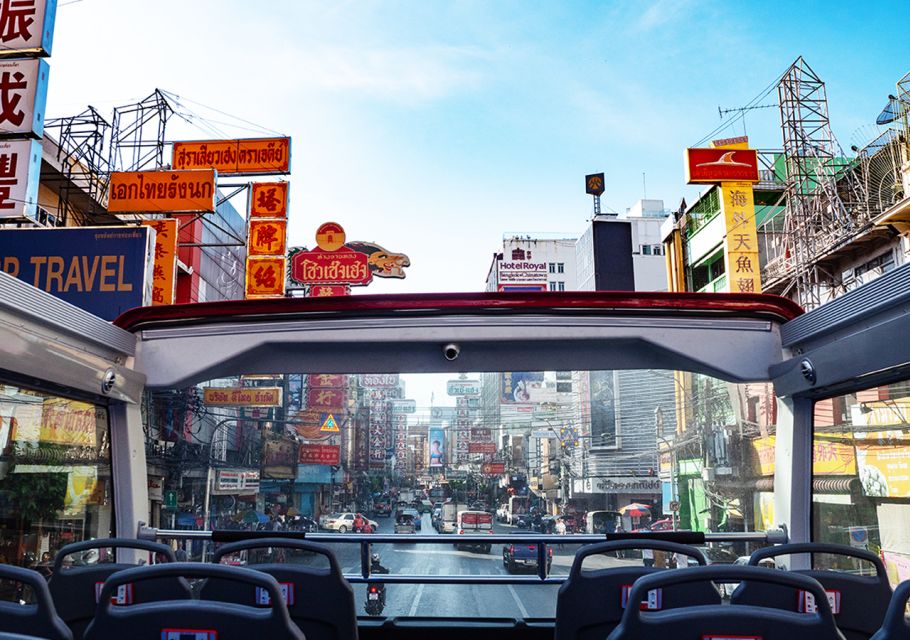
Bangkok is huge, and the distances can fool you. This bus gives you a moving backbone so you can see a lot without constantly figuring out transport.
The best part is not just that it’s a loop. It’s that it’s a loop with purpose: major religious sites, big market areas, and well-known modern stops are all on the same route. You can ride nonstop for an overview, or hop off for a temple visit, shop stop, or a meal area, then catch the next bus to keep moving.
And yes, the bus feels like a break. It’s a comfortable way to reset between heat and crowds—especially when you choose sheltered or air-conditioned seating for the hottest hours.
You can also read our reviews of more tours and experiences in Bangkok.



Price and time math: 24 vs 48 vs 72 hours
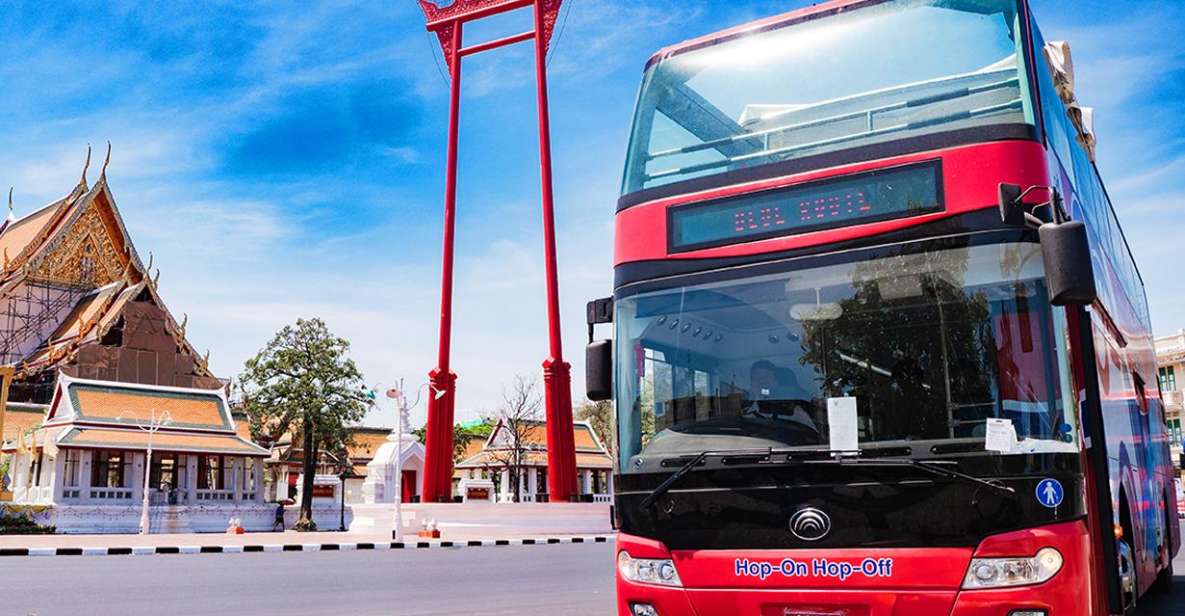
The price is $25 per person, and you get unlimited hop-on hop-off access for your selected validity window (24, 48, or 72 hours). That makes the value mostly about how many times you want to get off and actually do things, not just ride past them.
Here’s the simple way to choose:
- 24-hour pass: best if you’re efficient and only plan for a few key stops.
- 48-hour pass: the sweet spot for most first-timers, because it gives you a second chance when traffic or timing gets messy.
- 72-hour pass: for slower sightseeing days, or if you want to return to a favorite area rather than forcing everything into one go.
One important timing wrinkle: your ticket validity runs based on the time you first board. If you start late in the day, you’ll lose time the next day because your 24/48/72-hour window is still counting down. Bangkok doesn’t care about your schedule, so pick a boarding time that keeps your main temple or market day available when you still have enough hours left.
Siam Paragon and Central World: where you start (and how boarding actually works)
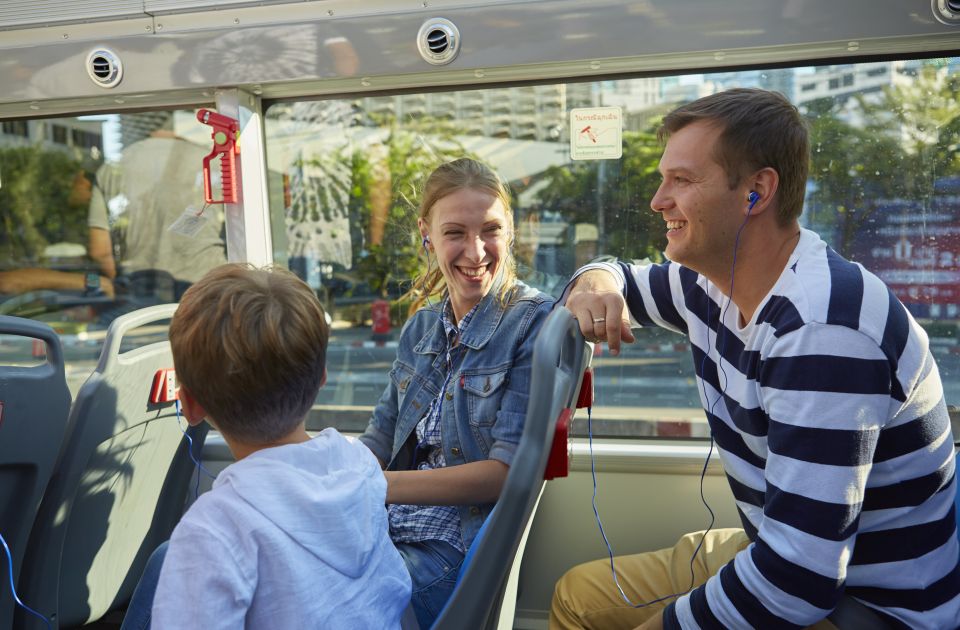
You’ll find the service counter at two points:
- Siam Paragon, in front of LOCK BOX Plus+ on the Ground Floor, South Gate (next to Bangkok Bank)
- Central World, in front of Hug Thai Gate on the 1st Floor
You don’t need to redeem anything at the counter. Bring your confirmation and show it to the staff or driver at the bus stop. The driver issues the ticket, and you hop on.
Do arrive early. Aim for 10–15 minutes before the bus leaves. Traffic and road slowdowns can happen, so being early is the easiest way to avoid stress when you’re waiting outside in Bangkok heat.
One more practical note: some stops can be hard to spot, and you may not see big red hop-on signs. The included map and the app’s bus location tracking help you line up with the correct stop.
How the GPS audio guide makes your ride easier
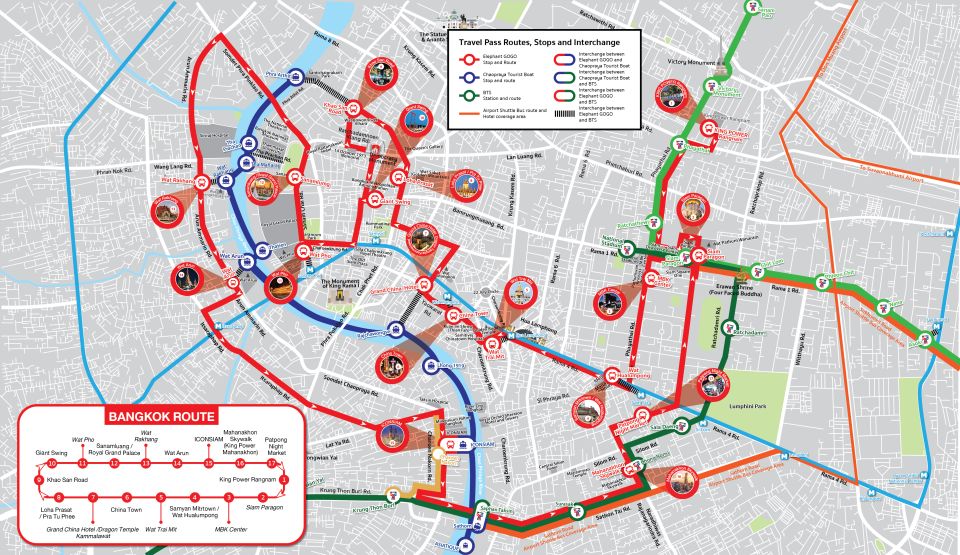
This is a narrated bus route, but you’re not relying on a live guide. The audio is triggered by GPS, and it’s pre-recorded in 7 languages:
English, Spanish, Chinese (Mandarin), Korean, German, French, and Thai.
The audio also comes with free earphones, which is a big deal in Bangkok. You can move through crowds without hunting for a tour group, and you don’t have to keep reading captions while the bus is rolling.
A small real-world tip: don’t treat the audio like a “sit back and everything is explained forever” situation. If you miss a section because you were getting ready to hop off, you can catch it again when the bus passes a similar area on another run.
The route in order: what each stop is good for
The bus lists 15 stops along the route, and you can hop on and hop off as often as you want during your validity window. The route is built to be time-efficient, but the order matters when you’re trying to see the right mix on the right day.
Below is a practical “what you’ll likely do here” guide by stop, plus the one downside to watch.




Siam Paragon (starting point)
This is a strong starting anchor because it’s easy to find and connects well with Bangkok’s rail network. It’s also a convenient place to set your plan before you start hopping around.
Downside: if you’re starting at the mall, you might lose a bit of time indoors before you even board.
MBK Center
MBK Center is a shopping stop that fits well if you want something casual and flexible between temple visits. It’s also a good spot to reset with air-conditioning before you head back out.
Downside: shopping areas can eat time, so don’t let “just browsing” turn into “it’s suddenly 3:00 PM.”
Samyan Mitrtown / Wat Hualumpong
This stop pairs a modern shopping area with the nearby temple zone. It’s handy if you want the calm of a temple visit and the option to shop or snack nearby.
Downside: you may have to choose which direction you walk once you’re off, depending on what you’re trying to prioritize.
Golden Buddha Temple / Wat Trai Mit
This is one of the route’s temple stops, and it’s ideal if you want a cultural pause without booking separate transportation. Step off, look around, and use your pass like a time toolbox.
Downside: temple visits often take longer than you expect, especially when you want photos and a slow look.
Chinatown
Chinatown is built into the route as a major stop, which makes it useful for street-life browsing and food-adjacent wandering. If you want to understand the layout of the city, this is a key area to see from the bus and then again on foot.
Downside: you can get pulled into side streets quickly. If you want more temple stops later, keep your hop time tight.
Grand China Bangkok / Dragon Temple Kammalawat
This area gives you another temple-and-neighborhood feel, paired with a more well-known landmark name. It’s a good “in-between” stop when you want atmosphere without committing to a full day.
Downside: like many cultural districts, it’s easy to spend time just walking around, then realize your next bus timing slipped.
Loha Prasat / Pra Tu Phee
This stop focuses on a specific temple landmark name, so it’s a good target if you want a “go see that” moment. Hop off, do the quick look, and if you love it, you can come back during your longer pass.
Downside: this kind of stop can be visually impressive, which can also slow your pace.
Khao San Road
Khao San Road is one of the route’s most well-known street areas, and it’s a useful stop if you want the backpacker-meets-city energy side of Bangkok. It’s also a convenient “base” location if you’re trying to regroup between other attractions.
Downside: it’s easy to feel pulled into the scene. If you’re aiming to see temples too, keep your schedule firm.
Wat Suthat and the Giant Swing
This is a temple-and-icon-style stop, and it’s exactly the kind of place that works well on a hop-on bus. You get the landmark in context from the street and then can explore at your pace.
Downside: the bus can drop you off at a point that’s perfect for photos but not always the easiest place to stroll slowly. Give yourself extra time if you want to look around thoroughly.
Wat Pho
Wat Pho is one of the major temple stops on the route. It’s a great choice when you want a serious sightseeing block without negotiating multiple rides.
Downside: temple areas can be time-heavy. If you’re on a 24-hour pass, you may need to prioritize which parts you do well.
Sanamluang / Royal Grand Palace
This is the kind of stop that can turn into your biggest time sink. It’s worth it if you want to connect the city’s religious and royal landmarks in one day.
Downside: you’ll need to plan around crowds and the reality that this stop often demands more than a quick photo stop.
Wat Rakhangkhositaram
Another temple stop that fits well into a day of religious sightseeing. Use it as either a main event or a “bonus” stop after you’ve already done a palace or big temple area.
Downside: if you’re temple-weary by this point, it may help to shorten your time here and save energy for later.
Wat Arun Rajvararam
Wat Arun is a temple stop that makes sense after you’ve already seen other religious landmarks on the route. It’s also a strong candidate for your “I want one more iconic temple” moment.
Downside: timing is everything. If you’re behind schedule, you may not have enough buffer to enjoy it properly.
ICONSIAM
ICONSIAM is one of the modern lifestyle stops on the route, and it’s useful for a breather: shopping, people-watching, and the kind of “new Bangkok” contrast you can’t get from temples alone.
Downside: malls and large complexes can be time traps if you’re hungry and tempted by every option.
Mahanakorn Skywalk
This stop is a modern viewpoint-style destination name on the route. It’s a good choice if you want a different angle on the city beyond street level.
Downside: you might feel like you’re rushing through it if your previous hop took longer than planned.
Patpong Night Market
Patpong Night Market is the route’s night-market stop, which means it’s best when your day runs late or when you want to shift gears from temples to evening street energy.
Downside: because the bus runs daytime, you’ll likely time your hop-off earlier and plan your evening around where you end up.
Central World (last stop in the list)
Central World is the return-friendly option at the end of the stop list. It’s a strong place to finish your loop because it’s another recognizable hub for food and getting your bearings.
Downside: if you’re tired, it’s tempting to call it a day here and miss a final hop you planned earlier.
Getting the most out of your hop-on plan (without wasting a day)
Your biggest tool is not the bus. It’s your plan for hops.
I suggest this rhythm:
- Do one “anchor” stop that takes longer (palace area, major temple, or a big market district).
- Do one or two shorter stops right before and after it.
- Keep the bus as your reset. Ride to cool down, then get off with a clear target.
Also, use the app’s live bus location tracking. It’s there for a reason. Some stops don’t look like typical hop-on locations, and you don’t want to stand around guessing.
Finally, watch bus capacity. On busy days you can find buses full, and waiting for the next one is the cost of Bangkok crowds. Build in buffer time, especially later in the day when delays pile up.
Small issues I’d plan around
Even with a great route, Bangkok can still throw curveballs.
The recurring friction points are:
- Traffic delays can make your day feel like more “ride time” than “sight time”
- Stop finding can be tricky if you expect bold hop-on signage
- The late-day window is limited, so missing your last practical return can turn into an extra effort to get around
That last part matters if you’re on a 24-hour pass. Your best strategy is to schedule your biggest must-see earlier, not later.
Who should book this bus pass?
This is a great fit if you:
- want freedom to craft your own itinerary without booking multiple guided transfers
- are short on time and want a fast way to cover temples, markets, and modern stops
- prefer the comfort of a narrated ride with earphones
- want an easy way to map the city for future self-guided exploring
It’s less ideal if you:
- want a very “hands-on” live guide experience (there isn’t one; it’s GPS audio)
- plan to hop off for everything with no time management. A few “quick visits” can become a whole afternoon
Should you book this tour?
If you’re doing Bangkok for the first time, I’d book it. The value is strongest when you use it like a planning tool: ride the route to understand where everything is, then hop off where it truly fits your day.
Choose the 48-hour pass if you can. Bangkok traffic and timing issues are real, and the extra day often turns a frustrating schedule into a calm one.
Skip or reconsider only if you know you’ll want lots of off-route stops every hour, or if you’re the type who hates planning around a timetable at all.
FAQ
What validity options are available?
You can choose unlimited hop-on hop-off access for 24, 48, or 72 hours.
How does the time validity work?
Your ticket is valid based on when you board. For example, if you start a 24-hour ticket at 2 PM, it runs until 2 PM the next day. The buses don’t run 24 hours, so plan around the daytime schedule.
Do I need a live guide on the bus?
No. The bus is fully narrated using a GPS-triggered pre-recorded audio guide.
What languages are included for the audio guide?
The audio guide is available in English, Thai, German, Spanish, Korean, Chinese (Mandarin), and French.
Are earphones included?
Yes. The audio guide comes with free earphones.
Where are the main meeting points?
The service counter is at Siam Paragon (in front of LOCK BOX Plus+ on Ground Floor, South Gate) and at Central World (in front of Hug Thai Gate on the 1st Floor).
Do I have to redeem the ticket at the meeting point?
No. You just show your confirmation to the driver or staff at the bus stop, and the driver issues the ticket.
When do the buses run?
Buses depart from the first stop daily from around 10 AM (or 10:10 AM) until 3:25 PM, with departures about every 35–40 minutes depending on conditions.
How long does the route take from first stop to last stop?
From the first stop to the last stop without getting off, it takes about 3–3.5 hours, depending on traffic and road closures.
Is the bus wheelchair accessible?
Yes, the activity is wheelchair accessible.