REVIEW · PATTAYA
Art in Paradise Pattaya Entrance (Ticket Only)
Book on Viator →Operated by Tycoon Thai DMC Co.,Ltd · Bookable on Viator
Touch 3D art in Pattaya. I like that Art in Paradise turns flat paintings into photo-ready illusions you can step into, and I also love the hands-on rules: you can touch, climb, and pose with the scenes. It is one of those rare indoor stops where the whole experience is basically built for making pictures, not just looking at frames.
The one catch is the moving-photo effect. You’ll want to download the app ahead of time, because the process can take a few minutes and the fun drops if you skip it. If you only want a quiet, traditional gallery vibe, you might feel ready to move on faster than you expect.
In This Review
- Key things to know before you go
- Why Art in Paradise Pattaya is a smart swap for beach days
- Ticket-only entry: where you go and what you get
- Inside the museum: five interactive zones and what to expect
- Aqua and Safari: watery scenes and wild-life adventures
- Classic Art: the museum mood shift
- Fantasy: temples, special effects vibes, and high-energy poses
- Nature: calmer scenes, still built for interaction
- Modern Art: the last stretch and a final photo reset
- AR and moving photos: what you should do before you arrive
- Time, crowd flow, and photo tips that actually help
- Price value: what $8.07 gets you (and what it doesn’t)
- Who this is best for (and when it might not fit)
- Should you book Art in Paradise Pattaya?
- FAQ
- How long does Art in Paradise Pattaya take?
- Where do I redeem my ticket?
- What are the opening hours?
- Is the entrance ticket included?
- What’s not included with the ticket?
- Is this a good activity for kids and adults?
- Do I need an app for the moving-photo effect?
- Can I cancel or change the booking?
Key things to know before you go
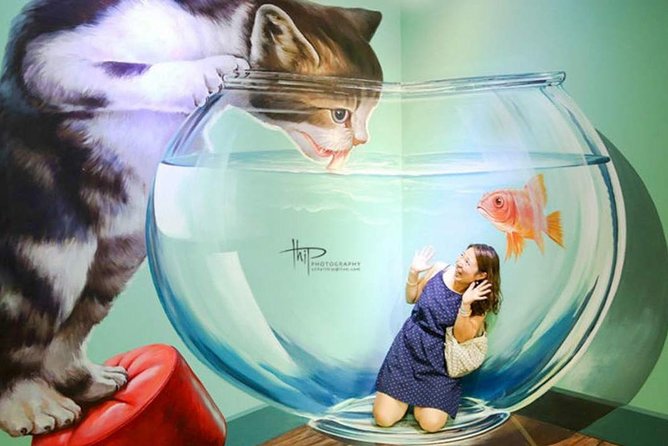
- Interactive 3D illusion art that looks flat until you’re right in front of it
- Five themed zones built for different photo styles and moods
- A rainy-day winner when Pattaya heat and sun feel like too much
- All-in fun for kids and adults because the museum asks you to participate
- AR moving photos may require a pre-downloaded app for best results
- Plan 1 to 2 hours so you don’t feel rushed or bored
Why Art in Paradise Pattaya is a smart swap for beach days
Pattaya can be a lot of outdoors. When you want shade, air, and an easy plan, Art in Paradise is an underrated change of pace. This is an art gallery built around optical illusions that make 2D paintings look 3D, and the museum leans hard into the part you’re supposed to do: get close, interact, and take photos where the illusion lands.
What I like most is that it doesn’t treat visitors like spectators. The exhibits are designed for action—touching the elements, climbing onto parts of the scene, and posing in a way that makes the artwork feel like it’s happening around you. That matters because it turns a standard museum visit into something more like a playable experience.
It’s also built around variety. You don’t get one theme repeated over and over. You move through different zones—each with its own look—so your brain stays interested and your camera keeps finding new angles.
A few more Pattaya tours and experiences worth a look

Ticket-only entry: where you go and what you get
This experience is ticket-only. You’re not buying a guided tour of the artwork; you’re buying admission, then exploring at your own pace. The payoff is flexibility. If your group includes fast walkers and slow photographers, you can still stay together without constantly waiting for someone to translate or explain.
For redemption, go to: Art In Paradise Pattaya, 78/34 หมู่ที่ 9 Thanon Pattayasaisong, Muang Pattaya, Amphoe Bang Lamung, Chang Wat Chon Buri 20150, Thailand. The museum is open daily from 9:00 AM to 6:00 PM, and the typical visit runs about 1 to 2 hours.
Price-wise, the ticket you’re looking at is $8.07 per person, which is a big part of why this place is so popular for families and casual day-trippers. You’re paying for an indoor activity that feels like an event, not a quiet stop that depends on deep art knowledge.
Inside the museum: five interactive zones and what to expect
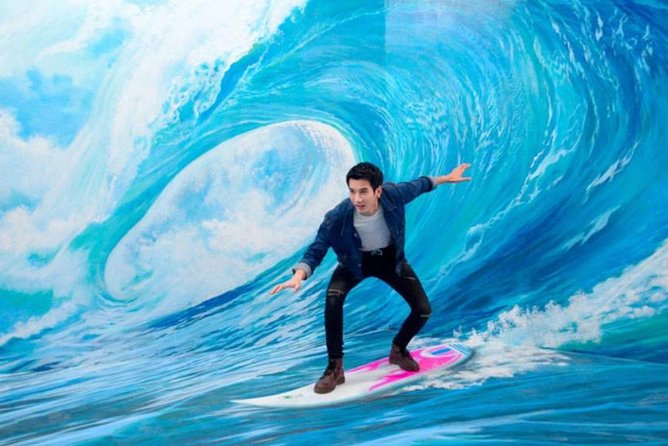
Art in Paradise is set up as a walkthrough of themed areas. The museum is described as having five zones: Aqua and Safari, Classic Art, Fantasy, Nature, and Modern Art. Each zone uses the same core trick—optical illusion perspective—but the scenes are different enough that the experience doesn’t feel repetitive.
Here’s how to think about the zones as you plan your time and photos:
Aqua and Safari: watery scenes and wild-life adventures
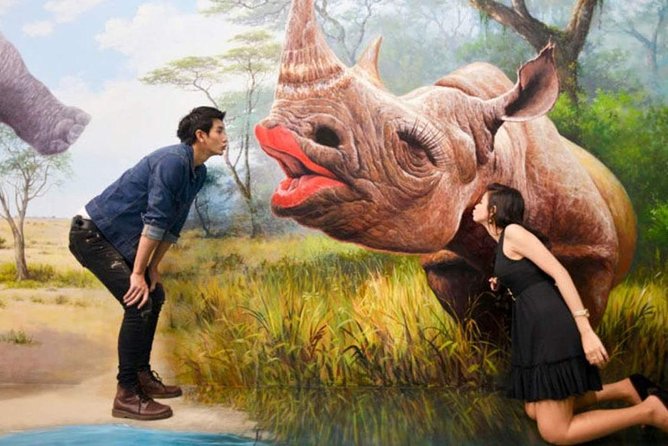
This is where the museum shifts into big, cinematic sets. Expect underwater or aquatic-style visuals along with safari-life themes. Even without special effects, these zones tend to be very photogenic because the illusion usually depends on strong foreground elements and clear “where to stand” cues.
If you like photos that look like you’re part of the scene, this zone is often where you’ll start getting the hang of the museum’s perspective rules.
Classic Art: the museum mood shift
You’ll move from action-y animal scenes into a more traditional “art gallery” feel. Classic art in this kind of attraction usually means you’ll see illusion setups that feel like familiar art styles, but with the twist that they are still interactive.
This is a useful zone to slow down for a moment. Try different spots and heights with your phone or camera. The illusion works best when you line up the perspective, not when you guess from far away.




Fantasy: temples, special effects vibes, and high-energy poses
Fantasy is where the museum goes big. You might see scenes described with elements like jungle exploration and ancient temples, plus a high-drama sequence like a shark-attack moment. The point here is not realism; it’s theatrics.
Bring your “play mode” here. This is the area where climbing, posing, and touching the artwork usually feels most natural, and it’s also where groups often spend extra time because everyone wants one more shot.
Nature: calmer scenes, still built for interaction
After the high-energy fantasy sets, nature scenes give you a breather. Even here, you’re not just looking. The illusion setups still encourage interaction, and you’ll likely find easier “frame this, stand here” photo moments compared with the more chaotic scenes.
I find nature zones good for couples and adults who want a few great photos without the constant chaos of a more action-heavy set.
Modern Art: the last stretch and a final photo reset
Modern art usually means cleaner, bolder visuals and another angle on the 2D-to-3D trick. By the time you reach this section, you’ve already learned the museum’s basic trick: step in closer, line up the perspective, and let the artwork do the heavy lifting.
This is also a practical zone to use as your “second chance.” If you rushed earlier, you may get better results now because you understand how the illusions want you positioned.
AR and moving photos: what you should do before you arrive
One reason Art in Paradise can feel more “modern” than other optical-illusion attractions is the AR side. A key detail from actual visitor experience: the moving-photo effect depends on an app, and you may need to download it before you go. In one case, the download took about five minutes, and skipping it reduced the fun.
So here’s my practical advice: before your day out, make sure your phone is ready. Check that you can download the app and that you have enough battery. Once you’re inside, time passes quickly—1 to 2 hours goes fast once you start posing in multiple zones.
If you’re traveling with kids, the AR feature can be a huge motivator. If you’re traveling as adults who mainly want still photos, the regular optical illusion setup still works, but you’ll likely enjoy the visit more if the moving-photo options are in play.
Time, crowd flow, and photo tips that actually help
The museum visit is best planned as a 1 to 2 hour activity. That’s not just a random number. Optical illusion art works like this: the longer you hang around, the more opportunities you get to fine-tune your position and take photos that actually match the perspective.
Here’s how to pace it:
- Start strong. Your first zone usually gives you the easiest “wow” shots.
- Midway, slow down for a couple of sets where the illusion feels slightly tricky.
- Leave yourself buffer time. The last zones are where you’ll typically get your best photos because you finally stop guessing.
Crowd flow is real in any photo-focused attraction. If you see a cluster at one spot, don’t fight it. Move to another angle, then come back. The museum design encourages you to walk, turn, and reposition, so waiting doesn’t waste the whole visit.
For photos, don’t stand too far back. Optical illusions often need you close to the artwork’s “stage.” Instead of zooming and hoping, step in carefully, then compose. Also, try a couple of heights—kneeling, standing on tiptoes, or slightly changing your distance—to see what makes the illusion click.
Price value: what $8.07 gets you (and what it doesn’t)
At $8.07 per person, you’re buying admission to an interactive museum built around five themed zones and photo-ready optical illusions. Entrance is included with the ticket.
What’s not included is the rest of life stuff:
- Food and drinks
- An air-conditioned vehicle (this is not a transport-included package)
For value, the question is simple: will you get time and energy out of a hands-on indoor activity? If you want something your group can do without hunting down reservations or weather-dependent plans, this price feels fair for what you get—especially as a break from outdoor heat.
Also, the fact that it’s ticket-only means you can choose your rhythm. You’re not paying for a rigid schedule. That tends to make the experience feel like it costs less than it does, because you control how long you stay in the zones that work best for your style.
Who this is best for (and when it might not fit)
Art in Paradise Pattaya is built for mixed groups. It’s described as fun for both kids and adults, and the structure supports that. Kids usually enjoy the chance to touch, climb, and pose, while adults often end up staying because the illusions are genuinely hard to resist once you’re inside the scenes.
This is also a solid pick if you want a rainy-day plan. When Pattaya’s outdoors feels like too much, you still want something that feels like an outing, not a chore. A 1 to 2 hour indoor photo playground fits that role well.
When might it not fit? If you want a quiet museum visit where you read labels and study art like it’s a university seminar, this one may feel too playful. And if you were hoping for moving-photo magic, you’ll want the app downloaded ahead of time; otherwise the extra layer of fun can be limited.
Should you book Art in Paradise Pattaya?
Yes, you should book if you want an easy, flexible indoor activity with big photo payoff and you’re comfortable participating. The ticket price is low enough that it works as a “don’t miss, backup plan” day activity, and the five zones keep it from turning into a one-note experience.
I’d skip or reconsider if you hate crowd-photo bottlenecks, dislike interactive attractions, or you’re traveling with no interest in the AR or moving-photo features. Otherwise, this is one of those Pattaya experiences that feels worth it because it keeps you moving, laughing, and taking pictures the whole time.
FAQ
How long does Art in Paradise Pattaya take?
Plan about 1 to 2 hours for your visit.
Where do I redeem my ticket?
Redeem at Art In Paradise Pattaya, 78/34 หมู่ที่ 9 Thanon Pattayasaisong, Muang Pattaya, Amphoe Bang Lamung, Chang Wat Chon Buri 20150, Thailand.
What are the opening hours?
The museum is open Monday through Sunday from 9:00 AM to 6:00 PM.
Is the entrance ticket included?
Yes. The ticket includes entrance to Art in Paradise.
What’s not included with the ticket?
Food and drinks are not included, and there is no air-conditioned vehicle included.
Is this a good activity for kids and adults?
Yes. It’s described as entertaining for both kids and adults.
Do I need an app for the moving-photo effect?
Some parts of the experience use an app for moving-photo features, so it’s a good idea to download it ahead of time to avoid losing enjoyment on-site.
Can I cancel or change the booking?
No. This experience is non-refundable and cannot be changed for any reason.