REVIEW · PHUKET
Open water scuba certifiication course with beach dives
Book on Viator →Operated by Kiwidiver Dive Centre · Bookable on Viator
A smooth path to open-water certification. In Phuket, this 3-day course pairs pre-arrival e-learning with pool skill practice and beach training, capped at just four people for a calmer pace.
What I like most is the small-group set-up that keeps your instructor close when you need help, not when you are guessing.
Day one starts with paperwork and gear fitting, then you move to a pool session to lock in the basics. Day two and day three are beach-based training sessions, and if you pass, you leave with your logbook and open-water scuba diver certification. One practical consideration: you need good weather and you also must meet health and fitness rules, because the course starts at 9:00 am and runs on fixed beach training days.
In This Review
- Key Highlights You’ll Feel on Day 1
- Where This Course Starts in Phuket: Kiwidivers at Karon
- The 3-Day Flow: From E-Learning to Pool to Beach
- Day One: Paperwork Check + Gear Fitting + Pool Session
- Day Two: Beach Training Sessions 1 and 2
- Day Three: Beach Training Sessions 3 and 4 (Your Final Checks)
- Why Pre-Arrival E-Learning Makes This Course Feel Easier
- Pool Training: The Part That Sets Your Safety Foundation
- Beach Training Sessions 1 and 2: Learning Under Real Conditions
- Beach Training Sessions 3 and 4: Finishing Strong and Getting Your Cert
- Marine Life Expectations (and How to Enjoy It Without Forgetting Skills)
- Instructor Matters: Why Charles’ Teaching Style Gets Praised
- Price and Value: Is $503 Reasonable for a 3-Day Course?
- Who This Course Fits Best (and Who Should Pause)
- Weather, Flying Time, and That One Day You Can’t Rush
- Practical Tips to Make Your 3 Days Easier
- Should You Book This Open-Water Course in Phuket?
- FAQ
- What certification do I earn at the end?
- Do I need to complete anything before I arrive?
- What happens on day one?
- What happens on days two and three?
- Where do we meet?
- How many people are in the course?
- What are the age and supervision rules?
- What if the weather is poor?
Key Highlights You’ll Feel on Day 1
- Pre-arrival e-learning so pool time is about doing, not just listening
- Four structured beach training sessions across days two and three
- Small group (max 4) for more personal coaching and fewer waits
- Instructor-led safety skills with clear, step-by-step guidance
- Equipment fitting on day one, so you’re not scrambling later
- Logbook and certification at the end after successful completion
Where This Course Starts in Phuket: Kiwidivers at Karon
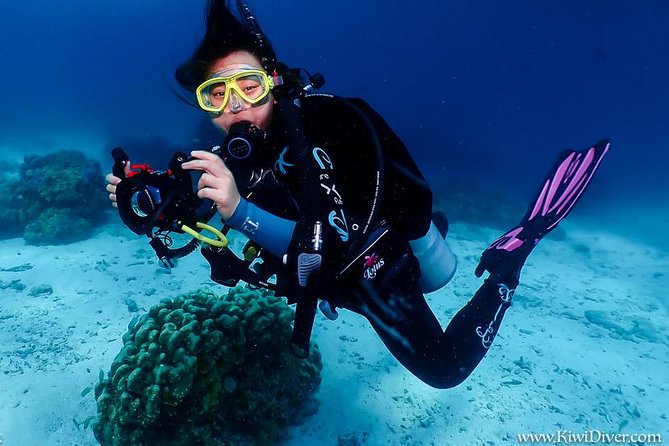
Your meeting point is Kiwidivers Phuket in Karon, at 20 Soi Lam Sai, Tambon Karon, Amphoe Mueang Phuket, Chang Wat Phuket 83100, Thailand. The start time is 9:00 am, and the activity ends back at the same place.
I like having a fixed home base. It reduces the mental load on a busy holiday. You’ll also know where to return after each training day, which matters because scuba training has a lot of little steps: rinse gear, double-check paperwork, and get ready for the next session.
Also, with a max of 4 travelers, you’re less likely to feel like you’re sharing attention with a crowded classroom. That can make a real difference when you’re learning buoyancy, breathing control, and safety procedures.
You can also read our reviews of more scuba diving tours in Phuket
The 3-Day Flow: From E-Learning to Pool to Beach
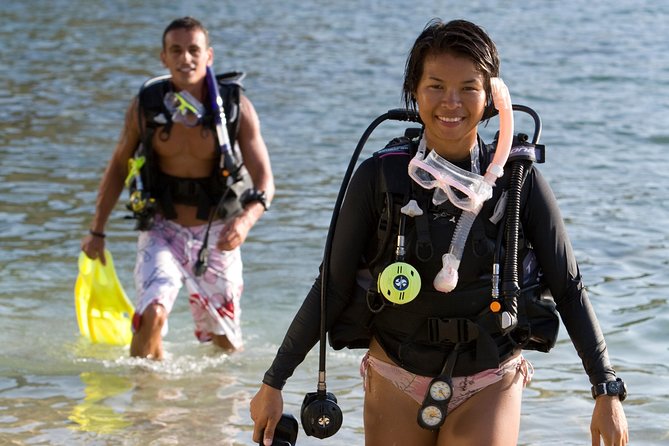
This course is designed to build you up in order: learn the why, practice the how, then prove you can do it consistently in open water.
Day One: Paperwork Check + Gear Fitting + Pool Session
On day one, you meet your instructor to review paperwork and go over the training material you already completed through e-learning. This is where you catch gaps early—before you ever get in open water.
Then comes equipment fitting. Getting fitted correctly affects everything: comfort, buoyancy, and how easy it is to control your breathing. After that, you attend a pool training session. The goal here is simple: you practice the core skills in controlled conditions, so when you’re later in real conditions, you’re not meeting the basics for the first time.
Day Two: Beach Training Sessions 1 and 2
On day two, you meet at the beach for training sessions 1 and 2. This is where the training shifts from controlled water to something that feels more like the real world—surge, surface conditions, and the natural rhythm of the ocean.
If you get even a little nervous, this is the day to lean on the instructor’s pace. A good coach doesn’t just tell you what to do; they walk you through why it matters. You want to finish the day feeling capable, not confused.
Day Three: Beach Training Sessions 3 and 4 (Your Final Checks)
On day three, you return to the beach for training sessions 3 and 4. By now, you should be more comfortable with the equipment, your breathing, and the sequence of safety skills.
If you complete the required training successfully, you’ll receive your logbook and your open-water scuba diver certification. That end-of-course moment is not just paperwork—it’s proof you met the standards with real instruction, not just borrowed confidence.





Why Pre-Arrival E-Learning Makes This Course Feel Easier
This course uses e-learning for the educational elements ahead of time. That matters more than it sounds.
When you arrive on day one, you’re not starting from zero. You already know the terminology, safety concepts, and what each skill is trying to accomplish. So the day one meeting with the instructor becomes reinforcement instead of a crash course.
You’re also less likely to waste the most limited resource you have on vacation: time and focus. Instead of spending a precious morning trying to absorb everything, you’re using that time for gear fitting and pool practice.
If you hate homework, keep it practical: knock out the e-learning before your trip so you can show up calm. You’ll thank yourself later.
Pool Training: The Part That Sets Your Safety Foundation
The pool session is where you learn to feel the system—your body, your regulator breathing, and the gear setup.
Even without a long explanation, pool training usually helps you build three things fast:
- Comfort with the equipment you’ll rely on in open water
- Skill repetition until movements feel automatic
- Safety procedures in a low-stakes environment
A strong training style is crucial here. The instructor for this course, Charles, has been described as highly experienced and very professional, with a background that includes being an ex serviceman from the UK and working as an instructor since 2000. That kind of experience matters in pool work because it’s where small errors become habits—good instructors spot them early.
From a value standpoint, pool time is worth it even if you feel like you already know how to float. It’s not about fitness tricks. It’s about safety, controlled breathing, and managing buoyancy so you can relax later.
Beach Training Sessions 1 and 2: Learning Under Real Conditions
Day two moves to the beach for training sessions 1 and 2. This is where the water stops being perfectly “pool-like.” Ocean conditions can change how easy it feels to maintain position and control your breathing.
This is also where instruction style matters most. You want coaching that’s not vague. You need step-by-step guidance, plus real explanations for decisions you’re making. In the feedback about this course, Charles is praised for being detailed and for explaining the why behind safety skills and equipment usage. That approach usually reduces panic because you understand what you’re trying to accomplish.
Practical tip: go into day two ready to slow down. If you rush the sequence of skills, you’ll waste energy and feel less confident. Your goal is smooth control, not speed.
Beach Training Sessions 3 and 4: Finishing Strong and Getting Your Cert
On day three, you do training sessions 3 and 4. By this point, you’ve already done the “hard parts” in pool conditions and then tested them at the beach. Now you’re refining.
The finish is designed to confirm you can perform required skills consistently. If you’ve stayed relaxed and kept practicing the instructor’s cues, day three typically feels more like applying skills than learning brand-new ones.
Once you pass, you get your logbook and certification. Having those documents in hand means you can plan your next water outing with less guesswork and more credibility with future instructors and operators.
Marine Life Expectations (and How to Enjoy It Without Forgetting Skills)
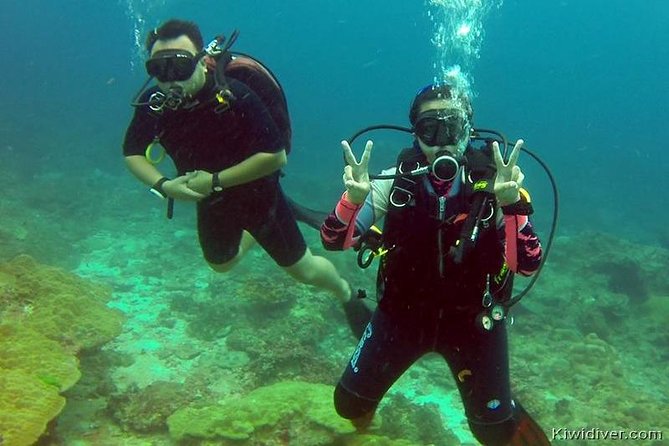
This course is about certification, so your focus will be training. Still, Phuket’s marine life is a big part of why people do the course here in the first place.
You’ll be learning skills while looking around for natural life, and that’s a great mix if you manage your attention. Here’s the mindset that works:
- Do the skill sequence first
- Only then take a quick look around
- Keep your buoyancy steady so you’re not fighting the water
If you go in expecting every second to be sightseeing, you might feel disappointed. If you go in expecting meaningful training plus real glimpses of marine life, you’ll likely feel satisfied—especially because the beach sessions are designed to get you out into natural settings.
Instructor Matters: Why Charles’ Teaching Style Gets Praised
What stands out most in the feedback is not just that people completed the course. It’s how the training felt while they were doing it.
Charles gets described as:
- Very organized and professional
- Experienced enough to guide people confidently
- Detailed in teaching the why of skills and scenarios
- Focused on making you feel safe in open water
That last point is huge if you’re learning for the first time or if you’re bringing a younger family member. One account even described a 12-year-old working through the course with clear, precise instruction, with a parent present. The structure matters, but the tone matters too: calm, confident coaching helps you learn faster because you’re not burning energy worrying.
If you’re trying to decide between centers, ask yourself a simple question: do you want a teacher who just runs you through tasks, or one who helps you understand what keeps you safe?
Price and Value: Is $503 Reasonable for a 3-Day Course?
$503 for a 3-day open-water scuba certification course in Phuket is a price that often makes sense when you look at what you’re actually buying.
You’re paying for:
- E-learning completed in advance
- Day one instructor time for paperwork review and equipment fitting
- A pool training session
- Two beach training days with the required practice sessions
- Your logbook and certification after successful completion
- Instruction for up to four people, not a large crowd
From a value perspective, the most expensive part of certification is usually not the gear. It’s the instructor-led time and the safety oversight while you build real competence. A smaller group can make that time feel more useful, which is why the group cap matters.
If you compare this to taking random lessons, learning skills out of order, or skipping structured checks, the $503 fee starts to look less like a cost and more like insurance against sloppy learning.
Who This Course Fits Best (and Who Should Pause)
This is not a “try it once” activity. It’s a real training program with standards.
You must be:
- Over 10 years old
- Comfortable in the water with a reasonable fitness level
- Free of medical conditions (you’ll also fill out a health questionnaire)
Also, children under 18 must have a parent supervise, and that parent must join the activity.
If you have known medical conditions (examples given include asthma and heart conditions), you may be prevented from diving, and you’re told to check with your doctor. In other words: don’t self-diagnose based on past comfort. Do the questionnaire seriously.
If you’re afraid of water, this course might still work, but you’ll need to be honest with your instructor from day one about where your concerns are.
Weather, Flying Time, and That One Day You Can’t Rush
This experience requires good weather. If it’s canceled due to poor weather, you’ll be offered a different date or a full refund.
That’s not just fine print. Scuba training is schedule-dependent because the beach sessions rely on conditions that affect safety and training quality. If your Phuket plans are tight, keep a little flexibility around those three days.
There’s also a travel timing warning: diving within 24 hours of flying is not recommended. Even if you feel fine, this is a safety guideline you should respect. It’s especially relevant if you’re flying long-haul and arriving already exhausted.
Practical Tips to Make Your 3 Days Easier
A few small habits make a big difference for open-water training courses:
- Show up on day one with a clear head. If you can, finish the e-learning before travel so you’re not learning under stress.
- Hydrate and eat normally before each session. Training days can take more energy than you expect.
- Be upfront about any concerns with the instructor right away. It’s easier to adjust early than correct later.
- Bring an open mindset for pool and beach work. Your confidence grows by doing, not by reading.
And one more thing: keep your expectations realistic. Your first priority is learning safe technique. The marine life is a bonus you’ll notice more once you stop fighting the basics.
Should You Book This Open-Water Course in Phuket?
Book it if you want:
- A structured, safety-first pathway to open-water scuba diver certification
- A small group with hands-on coaching
- A course that starts with e-learning and builds through pool to beach sessions
- Experienced instruction, including organized guidance that focuses on why things matter
Skip it (or pause and ask questions) if:
- Your schedule is too tight to handle weather changes
- You don’t meet the health and fitness expectations or have medical conditions that could bar you
- You dislike pre-work and need everything explained from scratch in person
If you match the requirements, this is exactly the kind of certification course that can feel both professional and manageable. Phuket gives you the tropical setting. The training structure gives you the competence. And the coaching style helps you keep your calm while you learn.
FAQ
What certification do I earn at the end?
If you successfully complete the required training, you receive your logbook and your open water scuba diver certification.
Do I need to complete anything before I arrive?
Yes. The educational elements are handled through e-learning in advance, and then you reinforce the material with your instructor on day one.
What happens on day one?
You meet the instructor to review paperwork and training material, you get fitted for scuba equipment, and you attend a pool training session.
What happens on days two and three?
On day two you meet at the beach for training sessions 1 and 2. On day three you meet at the beach for training sessions 3 and 4.
Where do we meet?
You start at Kiwidivers Phuket, 1, 20 Soi Lam Sai, Tambon Karon, Amphoe Mueang Phuket, Chang Wat Phuket 83100, Thailand, and you return there at the end of the activity.
How many people are in the course?
The group size is limited to a maximum of 4 travelers.
What are the age and supervision rules?
You must be over 10 years old. Children under 18 must be supervised by a parent, and the parent must join this scuba diving activity.
What if the weather is poor?
This experience requires good weather. If it’s canceled due to poor weather, you’ll be offered a different date or a full refund.